blazing trails in search for the memex · writing #Clojure @griffinbank · native 🇨🇴 speak 🇺🇸🇨🇳 learn #elixirlang 🇮🇹🇰🇷
Joined December 2010
- Tweets 2,552
- Following 1,477
- Followers 514
- Likes 8,719
467 Photos and videos








Excelente charla de @freddier sobre América Latina: economía, empresas, cultura, migración. youtu.be/Swa06LTaVW0
1
119
Hablando de emprendimiento, ya casi es "10:00am, 7 de julio del 2026, Venezuela" 🚀 @freddier pa’ cuándo el Capítulo 16!? Me ENCANTÓ esa historia… Año de releerla. guiadeemprendimiento.com/
1
53
Jorge Zaccaro · 张豪 retweeted

May 27
Many self-directed Chinese language learners start with high enthusiasm, promising to study intensively or travel abroad, yet find themselves running swiftly in the wrong direction. Without a clearly defined plan, hard work can become an exhausting, aimless effort.
This article of mine addresses independent students determined to conquer Mandarin by introducing a tactical roadmap for self-study.
We explore three often neglected, fundamental pillars: aligning your daily practice directly with your core goals, utilizing contextual metrics rather than isolated word counts, and embedding regular analytical reviews into your routine.
Moving away from rigid, robotic memorization, discover how treating Chinese as a topic-prominent, contextual language will ensure your energy is spent efficiently, keeping you firmly on the path to genuine real-world fluency.
Full article here:
mslmaster.com/index.php/teac…
1
1
41

May 21
闭嘴 and take my money 🤩

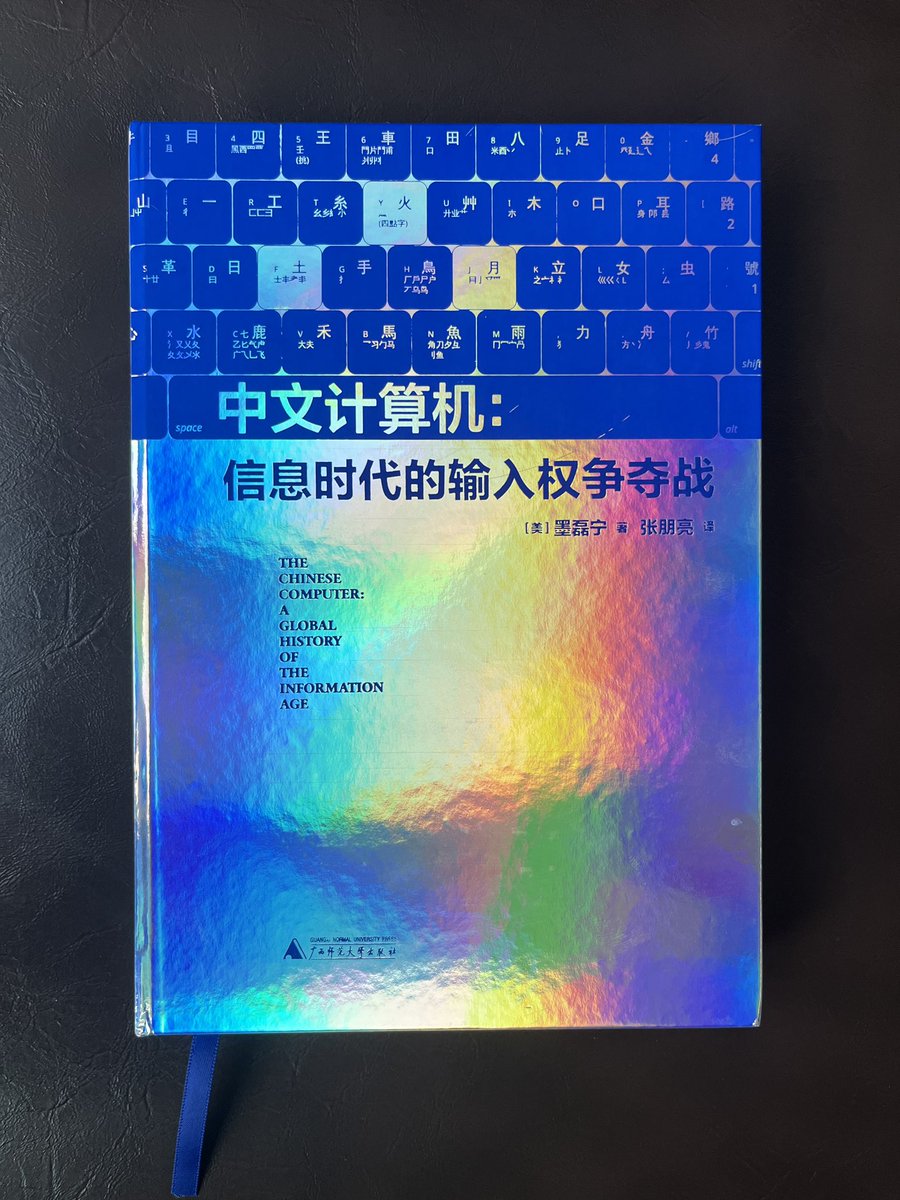
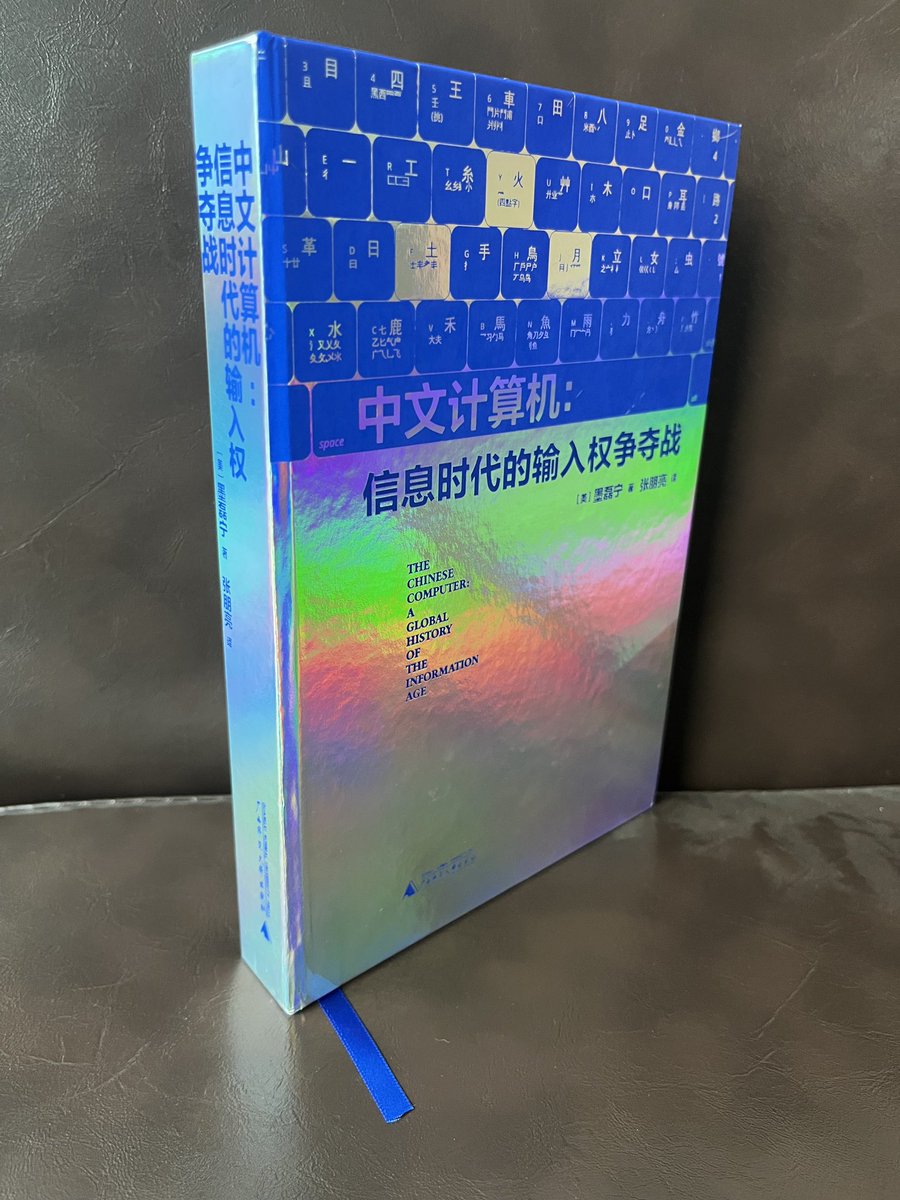
32
Jorge Zaccaro · 张豪 retweeted
May 20
Mastering Mandarin is a challenge for students, but effectively teaching it presents an even greater hurdle. Beyond possessing fluency, a successful educator must command a diverse, specialized skill set designed to navigate the unique complexities of the language.
This article of mine outlines eleven essential competencies every modern Chinese teacher needs to cultivate—from integrating core literacy skills and teaching distinct grammatical systems to managing classroom behavior and embracing digital learning tools.
Moving away from rigid, mechanical instruction, this guide advocates for an immersive approach that fosters authentic communication, builds cultural competence, and assesses students fairly based on individual progress.
Full article here:
mslmaster.com/index.php/teac…
1
2
21
🎤

Introducing the new Stripe Treasury:
• Hold funds in multiple currencies and stablecoins.
• Instantly transfer money to US businesses on Stripe for free.
• Pay anyone in 160 countries with just their email address.
• Earn credits on balances to apply towards Stripe fees.
• Spend funds with a Stripe card.
• Get 2% cash back on card purchases.
• View balances in the Stripe mobile app.
• Use Treasury from any AI app with the Stripe MCP.
1
22
Jorge Zaccaro · 张豪 retweeted

Apr 30
We just announced a large raft of improvements at @Stripe Sessions. My meta reflections:
• It feels that the entire economy is replatforming right now.
• Many charts at Stripe are inflecting in quite dramatic ways. What GitHub recently reported for commits we are seeing in economic activity (such as new company formations).
• It is increasingly clear that agents will be responsible for most transactions in the not overly distant future.
• Stripe was always developer-centric, but AI is making developer-centricity strategic in a new way: agents are even hungrier for good DX than developers themselves are.
• Things that we’re launching are increasingly network products at heart. (Instant transfers between Stripe businesses, new kinds of fraud prevention with Stripe Radar, stablecoin payouts to anyone with Link.) "How can we turn Stripe's economies of scale into user benefits?" is increasingly the relevant question.
• Between Privy, Bridge, Tempo, and Stripe’s core capabilities, we’re now doing a lot in stablecoins/crypto, and companies like DoorDash, Ramp, Meta, and Klarna are using our crypto stack to deploy meaningful new functionality in production. “But where’s the production use?” is rapidly becoming stale when applied to crypto.
• After more than a decade of building, we seem to have hit some kind of critical mass of core platform capabilities such that building new things now feels easier and faster than before. (AI also helps.) We announced Stripe Treasury last year (originally called Financial Accounts); since then, we’ve added multi-currency support, global payouts, card issuance and rewards, and a bunch of other sophisticated functionality. By the end of this year, Treasury will support 15 more currencies and be available to businesses in 160 countries.
On the launches themselves, a small selection that I thought were cool, though this is really just a subset:
• The @Link AI wallet. Point your agent to github.com/stripe/link-cli and ask it to make purchases on your behalf with secure single-use tokens. (To test it, I asked Claude Code to buy a small gift for me yesterday. It purchased HTTPZine on Gumroad.)
• New payment methods for Link, including Pix (largest payment method in Brazil) and UPI (largest payment method in India). We’re also adding stablecoin support to Link (which I think will be huge if we execute well).
• We’re adding a lot of new Machine Payments Protocol functionality, including micropayment and recurring payment support.
• We announced Checkout studio: a sophisticated dashboard for managing your checkout flow, including things like transaction replays and A/B tests. Today this tends to require a lot of fussy edits to production code.
• Adaptive Pricing (which automatically localizes the price and currency that customers see) now supports subscriptions. We’ve seen pretty huge (4–5%) conversion rate improvements after enabling it — customers really like paying in their home currency.
• New Stripe Terminal reader (the T600) with a customer-facing screen that can run native apps, plus support for 15 new international markets for Stripe Terminal.
• General availability for Stripe Managed Payments, our merchant of record solution. (Natively handles tax, disputes, fraud.) Maybe sounds a bit arcane, but it’s one of those iykyk products. It saves a lot of schlep.
• Fraud is a *much* bigger priority for customers than it was 2 years ago (AI makes fraud easier unlike software, tokens can be resold), so we’ve been extending Stripe Radar to support things beyond payments fraud: free trial abuse, multi-account abuse, pay-as-you-go abuse. Early results are extremely positive. We also announced Stripe Signals — new scoring APIs for customers, businesses, and other objects, not just payments on and off Stripe.
• Usage-based billing is also becoming the de facto business model of the AI era, and we launched a bunch of new pricing models in @getMetronome and features like low-balance alerts, automatic credit top-ups, and multidimensional pricing structures.
• We showed streaming payments built on @Tempo and Metronome — track usage and get paid the instant value is delivered. Hard to predict, but I think this could be big. (Why wouldn’t you want to get paid as costs are incurred?)
• We added automatic US tax filing in Stripe Tax.
• We announced Stripe Database -- a hosted PostgreSQL database with all of your Stripe data, updated in real time. Read-only to start but we’ll make it read-write.
• Stripe Workflows are now GA.
• We showed Stripe Console, a full agentic execution environment built directly into the Stripe Dashboard. It’ll happily write code and use tools to answer your questions.
• We previewed custom objects: model your business data directly in Stripe, with custom objects, typed fields, and relationships.
• As mentioned above, Stripe Treasury accounts will support storage in 15 currencies by the end of the year. And instant/free(!) transfers between US Stripe businesses.
• You can use a Stripe card with your Treasury balance and get 2% cash back on purchases.
• We’re massively expanding our Global Payouts coverage -- soon 100 countries with fiat rails and 160 with stablecoins.
• Atlas companies can now raise money directly within Stripe.
• We launched the platform growth studio, which uses Stripe’s network data to generate specific recommendations for optimization/growth.
• We announced the Stripe Managed Risk API — platforms can outsource risk handling to Stripe while maintaining full UI/UX control.
• Connected accounts now benefit from networked onboarding, which hugely increases conversion rates.
• We’re launching Treasury for Platforms. Connected accounts can get spend cards with just a few lines of code. (Plus cash rewards, cash acceptance, check acceptance, real-time payments…)
• We announced Issuing for agents: easily create cards for agents.
But that’s really just a subset of a subset. (See stripe.com/roadmap for more.) The Stripe team is cooking! And if you’re interested in building the economic infrastructure for this new world, we’re hiring.
74
123
1,215
146,495
Apr 28
I like this take:
Apr 28

people don’t actually want agent micromanagement
they want delegated intelligence with a unified personality/context
1
1
17
Apr 22
Delightful UI.
Apr 22

we are renting out a cocktail bar with a basement of mahjong tables in SF ! come for free drinks, food, lots of mahjong, and a fun time with the @modal team
p.s. if you're new to mahjong, there will be instructors at the event, plus a visual mahjong guide coming soon ! 🀄️
50
Jorge Zaccaro · 张豪 retweeted

Apr 20
Today is UN Chinese Language Day—a perfect moment to celebrate one of the most influential writing systems in human history.
For thousands of years, the cultures of China, Japan, Korea, and Vietnam were deeply shaped by Chinese civilization. Until the early 20th century, Classical Chinese served as the shared literary and scholarly language across East Asia, much like Latin did in Europe. Chinese characters (汉字 / 漢字) became the common script of the region, later adapted locally as Kanji in Japan, Hanja in Korea, and Chữ Hán in Vietnam.
Over time, each country developed its own writing innovations to better express their spoken languages:
• Japan created Hiragana (平仮名) and Katakana (片仮名).
• Korea invented Hangul (한글).
• Vietnam eventually adopted the Latin-based Vietnamese alphabet.
Yet the story of Chinese characters themselves is truly fascinating.
🇨🇳 The Legend of Cangjie
According to ancient Chinese tradition, the characters were invented by Cangjie (仓颉), a legendary scribe under the Yellow Emperor around the 27th century BCE. While observing the tracks of birds and animals, the patterns of nature, and the constellations in the sky, he created the first symbols—zì (字). Legend says that on the day he succeeded, grains of rice rained from the heavens, and that night ghosts wept—because humanity had just gained the power of written wisdom.
UN Chinese Language Day is observed annually on April 20, which was chosen as the date "to pay tribute to Cangjie, who is presumed to have invented Chinese characters about 5,000 years ago".
Chinese characters are the world’s oldest continuously used writing system and one of the most widely used by number of speakers.
In Chinese mainland since the 1950s, the government promoted simplified characters to boost literacy. Meanwhile, traditional characters continue to thrive in Taiwan, Hong Kong, and Macau. You’ll still see both versions depending on the context—books, signs, calligraphy, or digital media.
🇯🇵 Japan: Kanji Kana
Chinese writing reached Japan around the 5th century CE. The Japanese adapted the characters as kanji and cleverly developed two new scripts from them:
• Hiragana, flowing and cursive, used for grammar and native words.
• Katakana, angular and sharp, mainly for foreign loanwords and emphasis.
Modern Japanese is an effective mixture: kanji carry the core meaning of words, while hiragana and katakana handle the rest. Japanese students learn 2,136 joyo kanji by the end of high school, with many more used in daily life.
🇰🇷🇰🇵 Korea: From Hanja to Hangul
For most of Korean history, Literary Chinese written in Hanja (한자) was the official script—from the Gojoseon era all the way through the Joseon Dynasty. Even after King Sejong the Great created the beautiful Hangul alphabet in 1443, it took centuries for it to fully replace Literary Chinese in official and scholarly writing.
Today, Hanja is still essential for reading historical documents, classical literature, and academic texts. Anyone seriously studying Korean history or the humanities needs a solid command of Chinese characters.
🇻🇳 Vietnam: From Chữ Hán to Quốc Ngữ
In Vietnam, Chinese characters (Chữ Hán) dominated official and scholarly writing until the early 20th century.
Around the 13th century, Vietnamese scholars created Chữ Nôm—a unique system that combined Chinese characters with newly invented ones to write the Vietnamese language. It was especially popular for recording folk poetry and literature.
During French colonial rule, the Latin-based Vietnamese alphabet (Quốc Ngữ) gradually took over. Today, Chinese characters and Chữ Nôm are mostly reserved for cultural and ceremonial purposes—like traditional calligraphy, temple inscriptions, and cultural festivals.
Happy UN Chinese Language Day!
Apr 19

明天就是 #联合国中文日 啦!
我们跟随 #清华大学 的陈楠老师,一起去探索汉字承载的智慧吧。
汉字作为中华文明从未中断的核心视觉符号,兼具信息、审美与文化传承功能,是中外文明交流互鉴的重要桥梁。
#中文 #汉语
10
242
1,069
51,040
Apr 19
下次一定要去!
Apr 17

Map of Chongqing's metro system in 3D.
Chongqing is called the "mountain city". Building metro here is more difficult than in plain cities.
Chongqing’s metro total length ranks 7th in the world, with over 550 km.
25
Apr 18
“generating text is the LEAST important part of the writing process” 🎯
Apr 18

In the same vein, writing ≠ generating text
In fact, generating text is the LEAST important part of the writing process
So many people mistake LLMs as good writers just because it can generate text well
17
Jorge Zaccaro · 张豪 retweeted

Apr 15
For those interested in China, it's a good idea every few weeks to check China Books Review and look through the reviews and interviews.
@chinabksreview
chinabooksreview.com/
3
38
213
17,538
Jorge Zaccaro · 张豪 retweeted

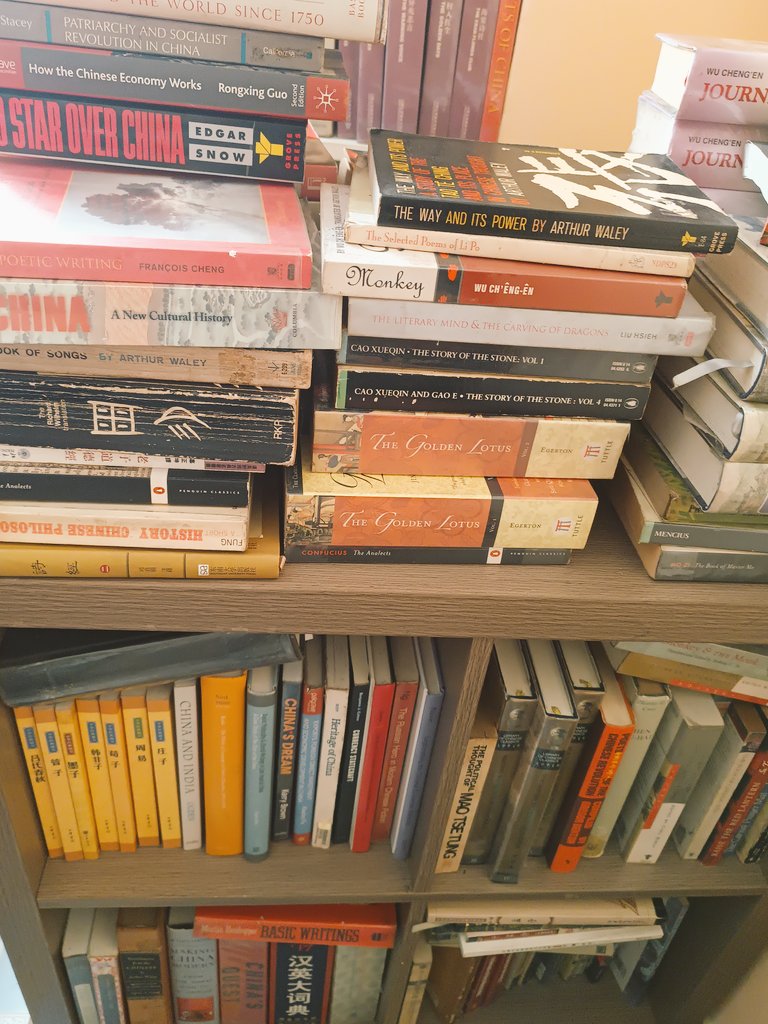
My China collection in Leyte. Still incomplete. Sometimes I feel like Li Qingzhao on the run. Saving & arranging take so much work. More Chinese stuff around the house. & more in Hong Kong & S/Z. The collection covers from Zhougong to Zhou En Lai, & from Shi jing to Xi Jinping.

2
10
94
3,095
Apr 11
Want it.

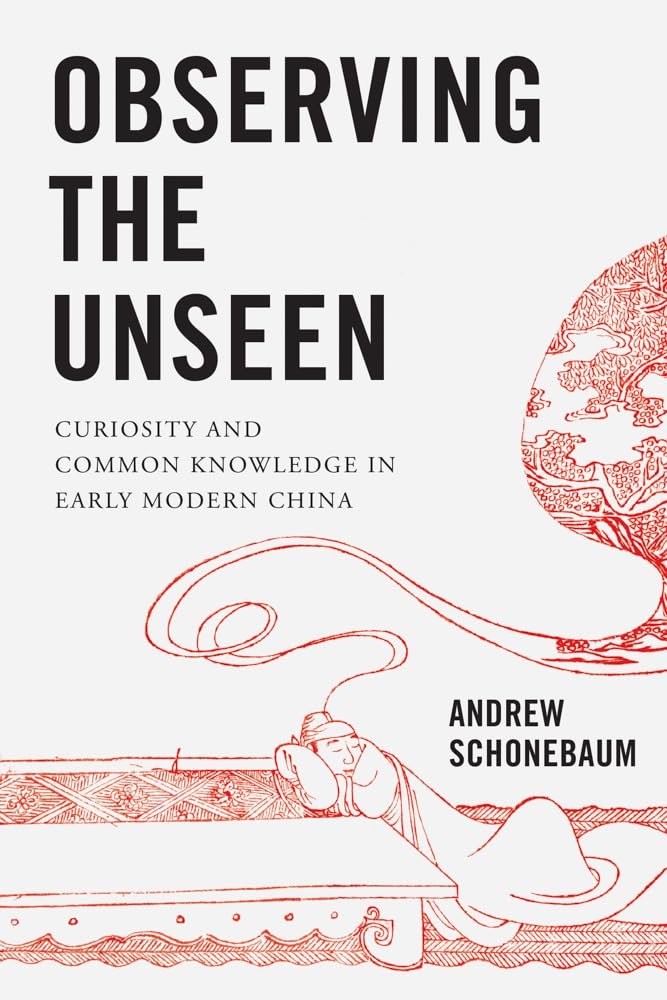
New Book Announcement: “Observing the Unseen: Curiosity and Common Knowledge in Early Modern China” by Andrew Schonebaum @UWAPress asianreviewofbooks.com/new-b…
22
“not for what you already know, but for what you don’t know”
EXACTLY 🎯

one direction from this that excites me: a learning base instead of a storage one: not for what you already know, but for what you don't.
made one for deep reading of plato's timaeus.
2 things i carried over: non-rag, indexed fs, and /raw-is-sacred to separate sources from generated content.
a few features i find genuinely helpful:
25
LLMs meet PKM:
Apr 2

LLM Knowledge Bases
Something I'm finding very useful recently: using LLMs to build personal knowledge bases for various topics of research interest. In this way, a large fraction of my recent token throughput is going less into manipulating code, and more into manipulating knowledge (stored as markdown and images). The latest LLMs are quite good at it. So:
Data ingest:
I index source documents (articles, papers, repos, datasets, images, etc.) into a raw/ directory, then I use an LLM to incrementally "compile" a wiki, which is just a collection of .md files in a directory structure. The wiki includes summaries of all the data in raw/, backlinks, and then it categorizes data into concepts, writes articles for them, and links them all. To convert web articles into .md files I like to use the Obsidian Web Clipper extension, and then I also use a hotkey to download all the related images to local so that my LLM can easily reference them.
IDE:
I use Obsidian as the IDE "frontend" where I can view the raw data, the the compiled wiki, and the derived visualizations. Important to note that the LLM writes and maintains all of the data of the wiki, I rarely touch it directly. I've played with a few Obsidian plugins to render and view data in other ways (e.g. Marp for slides).
Q&A:
Where things get interesting is that once your wiki is big enough (e.g. mine on some recent research is ~100 articles and ~400K words), you can ask your LLM agent all kinds of complex questions against the wiki, and it will go off, research the answers, etc. I thought I had to reach for fancy RAG, but the LLM has been pretty good about auto-maintaining index files and brief summaries of all the documents and it reads all the important related data fairly easily at this ~small scale.
Output:
Instead of getting answers in text/terminal, I like to have it render markdown files for me, or slide shows (Marp format), or matplotlib images, all of which I then view again in Obsidian. You can imagine many other visual output formats depending on the query. Often, I end up "filing" the outputs back into the wiki to enhance it for further queries. So my own explorations and queries always "add up" in the knowledge base.
Linting:
I've run some LLM "health checks" over the wiki to e.g. find inconsistent data, impute missing data (with web searchers), find interesting connections for new article candidates, etc., to incrementally clean up the wiki and enhance its overall data integrity. The LLMs are quite good at suggesting further questions to ask and look into.
Extra tools:
I find myself developing additional tools to process the data, e.g. I vibe coded a small and naive search engine over the wiki, which I both use directly (in a web ui), but more often I want to hand it off to an LLM via CLI as a tool for larger queries.
Further explorations:
As the repo grows, the natural desire is to also think about synthetic data generation finetuning to have your LLM "know" the data in its weights instead of just context windows.
TLDR: raw data from a given number of sources is collected, then compiled by an LLM into a .md wiki, then operated on by various CLIs by the LLM to do Q&A and to incrementally enhance the wiki, and all of it viewable in Obsidian. You rarely ever write or edit the wiki manually, it's the domain of the LLM. I think there is room here for an incredible new product instead of a hacky collection of scripts.
1
30
Jorge Zaccaro · 张豪 retweeted

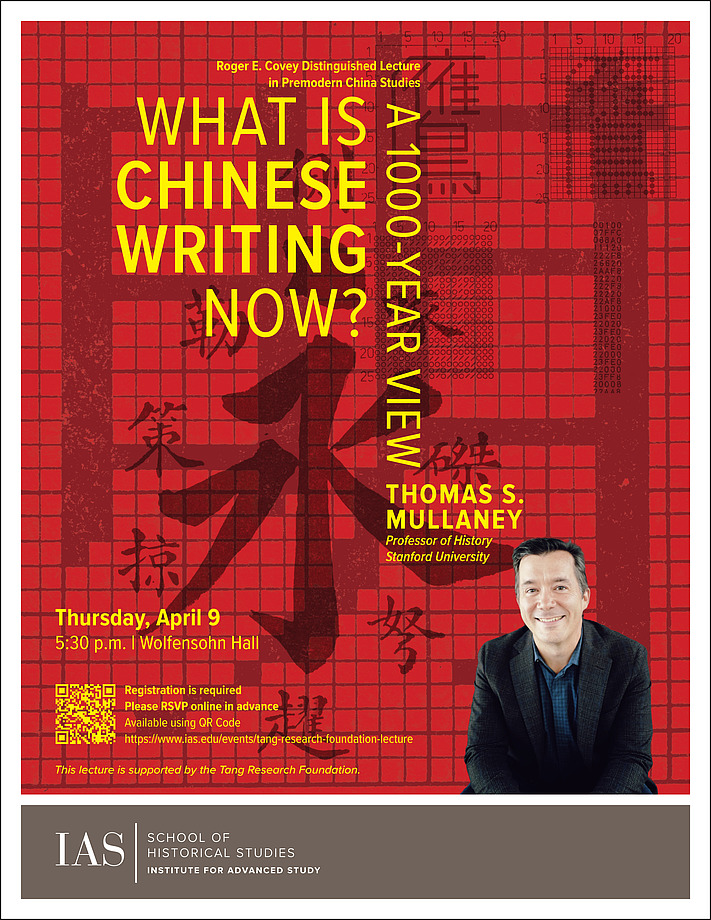
Join @tsmullaney, author of "The Chinese Typewriter" & "The Chinese Computer," for a mind-bending 1000-year journey through the evolution of Chinese characters.
Thursday, April 9 | 5:30 p.m. | Wolfensohn Hall. Register: ias.edu/events/roger-e-covey… @the_IAS
3
5
41
3,759