
Changing the YouTube game. Co-founder @subscribrai
Joined December 2021
- Tweets 16,464
- Following 822
- Followers 27,411
- Likes 24,924
1,212 Photos and videos



Pinned Tweet

Jun 3
AI Avatars are the next BIG trend of YouTube.
The future is already here.
Get on or get left behind

4
13
2,402
Your brain cannot tell the difference between a real friend and a stranger you've watched on a screen 30 times.
This is why you'd trust a YouTuber you've never met over a doctor you met once. It's not stupidity. It's wiring. The part of your brain that decides who's "safe" evolved in tribes of 50 people, where the only faces you saw repeatedly were people who actually knew you. It never got the update that screens exist.
So when it sees the same face, same voice, same room, week after week, it files that person under "someone I know." Familiarity gets processed as trust. Repetition gets processed as relationship.
Marketers have spent billions fighting this and losing. A polished ad from a brand you've seen 400 times still feels like a stranger, because the brand has no face. Meanwhile some guy in his car talking to a phone builds a more loyal following than a Fortune 500 company, because his face shows up the same way every time.
The whole trust economy now runs on one thing. Not credentials. Not production budget. Not being right. Showing up with the same face until the watching brain gives up and calls you family.
Which is either depressing or the biggest opportunity of your life, depending on what you do with it.
2
85
YouTube is paying channels that don't have a real person on camera more money per view than channels that do.
That sounds backwards. Here's why it's not.
YouTube's algorithm doesn't measure "authenticity." It measures session time. How long a viewer stays on the platform because of YOUR video. That's it. That's the entire ranking system.
A channel with a consistent AI-generated host filming 12-minute videos about military history keeps viewers on the platform for 9 minutes on average. A channel with a real person doing 60-second vlogs keeps them for 40 seconds. YouTube pays the first one 15-20x more per view.
The algorithm does not care if the face is real. It cares if people watch.
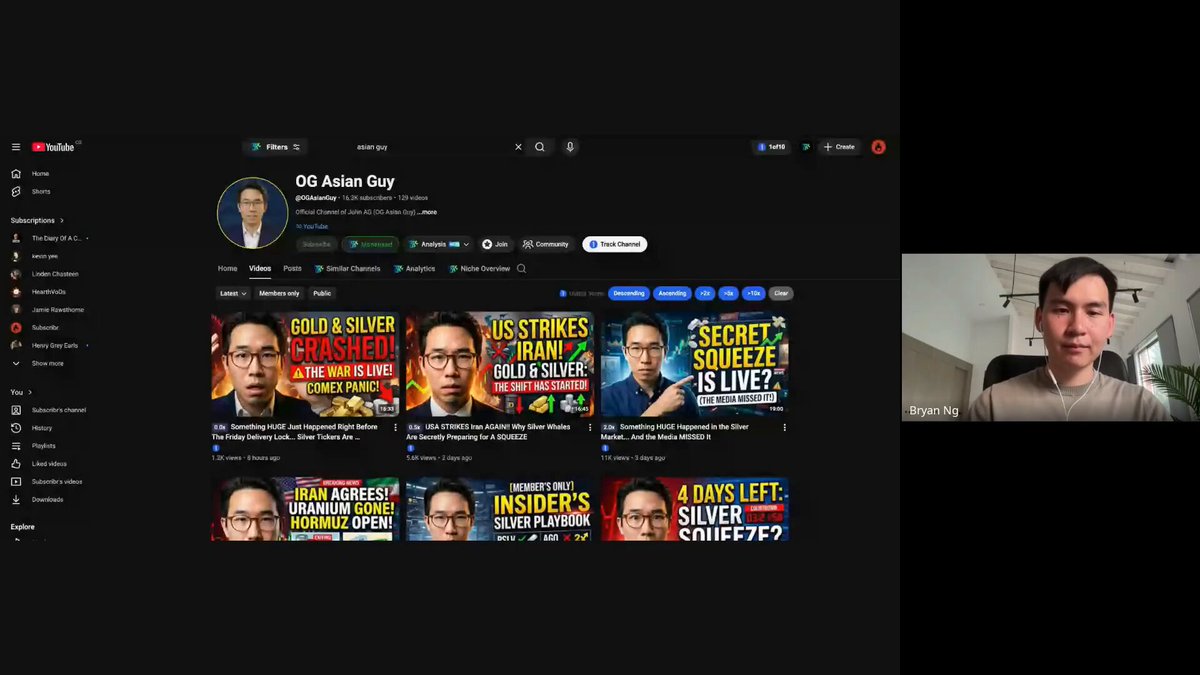
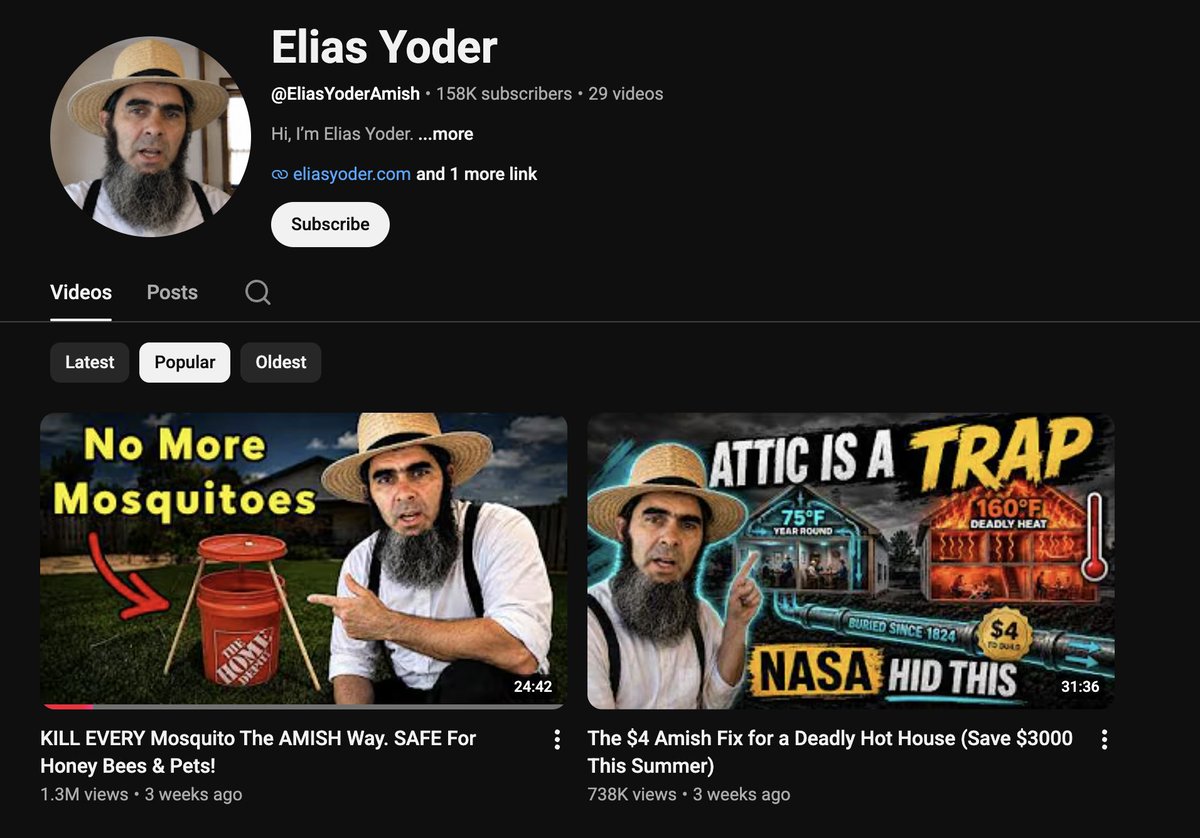
This is why a fake Amish man has 158,000 subscribers and sells an ebook. Why an AI-generated character runs a cooking channel with 200K followers. Why a channel about abandoned places narrated by someone who doesn't exist pulls 500,000 views/month and earns $8,000 in ads alone.
These aren't scams. YouTube knows they're AI. Google literally built the AI tools these channels use. They're not penalizing AI characters. They're penalizing AI slop. Completely different thing.
Slop = random stock footage robot voiceover no personality same template every video. YouTube is wiping thousands of these channels right now because they add nothing to the platform.
A character channel = same face every video, same voice, same look, a real point of view, real research, videos that people actually watch to the end. The algorithm treats this identically to a real person because to the algorithm there is no difference. A view is a view. A minute watched is a minute watched.
The business model underneath this is stupid simple.
Layer 1: YouTube AdSense. $4-$18 per 1,000 views depending on your niche and audience age. Older audiences = higher pay. US/UK/Canada/Australia = higher pay.
Layer 2: Affiliate links. Every video mentions products. Links in description. You earn 5-40% commission on every sale.
Layer 3: A digital product. Ebook, guide, template. $19-$97 price point. Even 0.2% of viewers buying = thousands per month from a channel that runs on autopilot.
Layer 4: The channel itself is a sellable asset. YouTube channels with consistent revenue sell for 3-10x annual earnings. A channel doing $8,000/month sells for $288,000-$960,000.
You can build all 4 layers without ever turning on a camera. Without ever showing your face. Without hiring an editor or managing a freelancer.
The tools to generate a consistent AI host exist right now. A year ago they didn't. The quality gap between "AI face" and "real face" on a YouTube video has gotten small enough that most viewers can't tell. And the ones who can tell don't care because the content is good.
We built Subscribr to be the entire production stack. You pick the niche, you bring the knowledge, Subscribr handles script, AI host, and finished video. One tool. No camera. No film crew.
Waitlist link is in bio. Spots are limited.
1
12
653
There are people making $1.2 million selling YouTube channels they built in under 18 months.
Not selling products through YouTube. Selling the channel itself. The subscriber base, the video library, the brand, and the monthly revenue stream. Packaged as a media asset and sold to private equity.
A guy I talked to last month built a channel about World War II history. No face on camera. AI-generated narrator. A kid editing for $100/video. Total operating cost over 14 months: about $41,000.
He sold the channel for $1.2 million to a PE firm that now operates it like a rental property. Consistent monthly cashflow, low maintenance, appreciating asset.
The buyer's math: channel does $11,400/month in AdSense sponsors. That's $136,800/year. They paid roughly 8.7x annual revenue. They'll make their money back in under 9 years and the channel keeps growing.
The seller's math: $41,000 in. $1,200,000 out. 14 months.
Private equity has spent over $4 billion buying individual YouTube channels in the last 5 years. They treat them like digital real estate. Buy the asset, plug in an operations team, collect the cashflow.
But here's what most people don't realize. The channels that sell for the HIGHEST multiples are the ones where no specific person's face is on camera.
A channel built around one person's face is worthless to a buyer. If that person leaves, the audience leaves. The asset dies. No PE firm touches that.
A channel built around a concept, a character, or a format where the owner can walk away and nothing changes? The videos keep earning. The subscribers keep watching. The buyer plugs in their team and keeps uploading.
That's the whole insight. If you're building a YouTube channel with your face as the product, you're building a job. if you're building one without your face, you're building an asset you can sell for 7 figures.
The highest-value channels being acquired right now: history, geopolitics, true crime, finance explainers, health for older demographics. All aimed at 45-65 year old viewers in the US, UK, Canada, and Australia. High ad rates, long watch times, loyal audiences that stick for years.
Boring niches. Massive exits.
And the game shifted again in the last 12 months. There are AI tools now that generate a consistent host character for your channel. Same face, same voice, every video. A real-looking person that doesn't exist. The audience builds a relationship with the character. The character is an asset you own. Not a person who can quit.
A YouTube channel with a consistent AI host, documented systems, and 12 months of stable revenue is the most sellable digital asset on the internet right now. And almost nobody is building them because almost nobody knows this market exists.
We built Subscribr to build these channels from scratch. Niche, character, script, finished video. The entire pipeline designed to produce a sellable asset from day one.
Waitlist link is in bio. Spots are limited.
3
1
28
3,243
The AI avatar niche map sorted by liability risk.
High liability. Avoid these even if RPMs look good.
AI doctors selling supplements or weight loss advice. The Ozempic knockoff sellers are getting wiped. Real doctors and pharmacists are exposed to license issues.
AI lawyers giving specific legal advice. State bar associations are circling. One wrong opinion and the channel is gone.
Low liability. Run these confidently.
AI religious commentary. Pastor, priest, imam, rabbi. Almost zero regulation. Massive returning viewer rate. Older audience.
AI news commentary. Easy to disclose AI usage upfront. Sponsorships flowing.
AI real estate education at the national level. Big TAM. Low risk if framed as commentary, not advice.
AI lawyer reviewing historical cases. Pure commentary on closed cases. Zero liability.
AI veterinarian covering pet health generally. Lower regulation than human medicine.
AI space, UFO, conspiracy theory commentary. Zero liability. Massive curiosity-driven audience.
The principle. If wrong information could harm someone or get you sued, skip it. If the worst case is the audience disagrees, run it.
The liability map decides which niches scale and which ones get flamed out by year 2.
Pick the safe ones. Build the moat before the risky operators figure out their channels are time bombs.
2
11
1,120
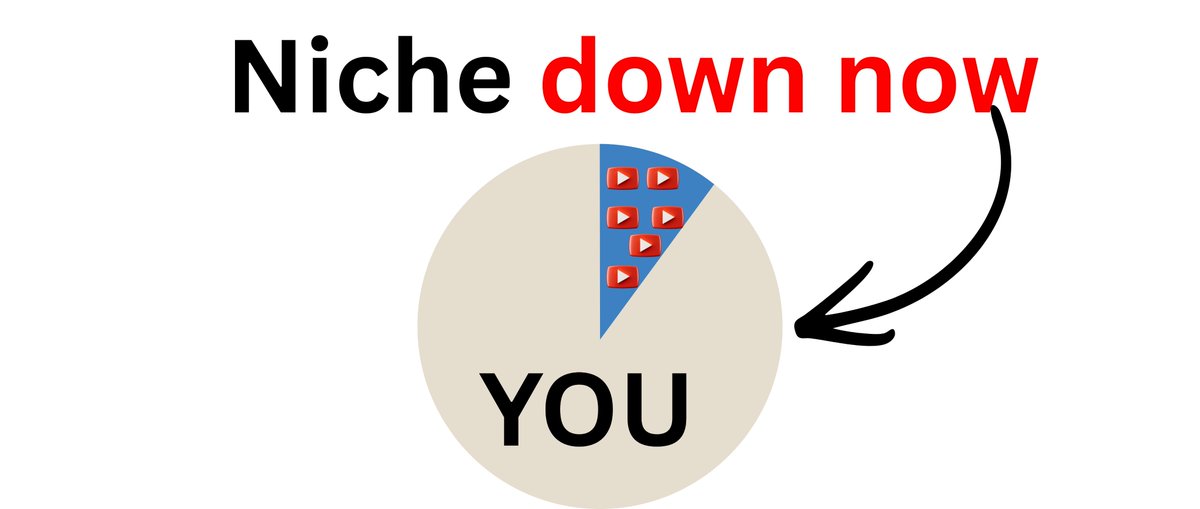
The smaller the niche, the faster you scale on YouTube.
100,000 subscribers in a niche of 100 million people is a rounding error.
The algorithm has no idea who to surface your channel to.
The audience is too diluted to form a tribe.
The returning viewer rate stays under 20%.
The channel never builds momentum because the audience never realizes they belong to it.
100,000 subscribers in a niche of 500,000 people is dominant market share.
You are now 20% of the entire addressable audience.
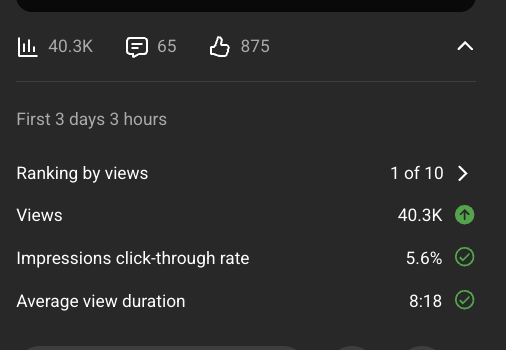
Every video gets pushed harder because the algorithm knows exactly who to serve it to.
The returning viewer rate climbs past 40%.
The audience starts identifying with the channel because being part of it actually means something.
The math nobody runs.
Big niche. 0.1% market share at 100K subs. Invisible.
Small niche. 20% market share at 100K subs. Dominant.
Same subscriber count. Completely different business.
Most operators pick the biggest niche they can find because they think a larger pool means more potential viewers.
The opposite is true. Big niches mean more competition, less differentiation, and lower returning viewer rates.
The pros pick a niche so specific the audience cannot pretend they belong anywhere else. Vintage typewriter restoration. Rare cactus collecting.
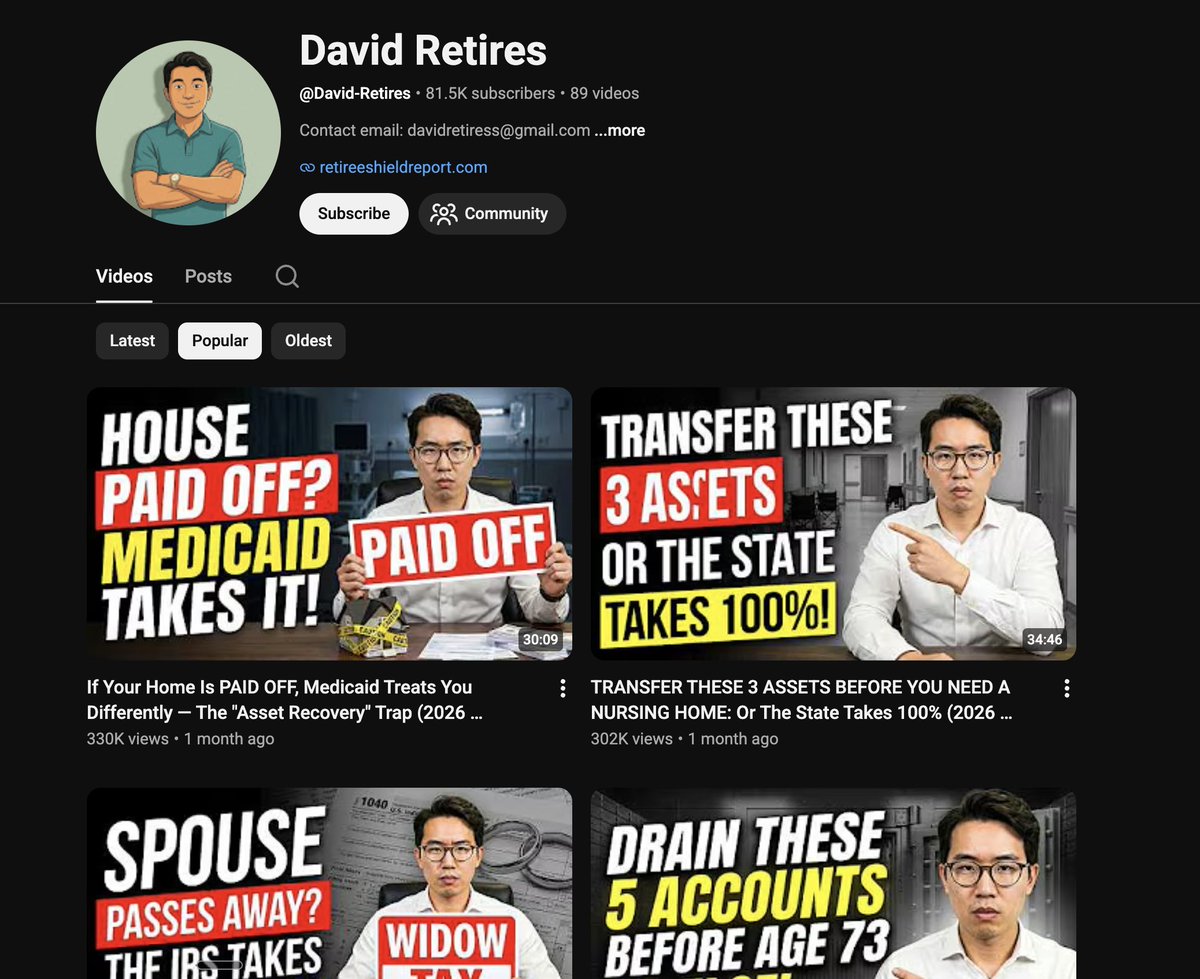
Insurance options for retired veterans. Pre-1970 car part sourcing.
The smaller the niche, the deeper the bond with the audience. The deeper the bond, the higher every retention metric the algorithm cares about.
The higher the metrics, the faster the channel compounds.
Pick a niche so small your competitors think it is not worth it. Then dominate it before anyone else figures out the math.
The riches are in the niches. Literally.
1
1
8
543
A Letter to anyone starting a YouTube channel in 2026
You picked the right year.
AI killed every excuse that kept smart people off the platform for the last decade.
You do not need a camera. You do not need a voice.
You do not need editing skills. You do not need a presence on screen.
The tools that took $50,000 to access in 2020 cost $30 a month now.
You are also competing against more channels than any creator in YouTube history.
60% of internet content is fully AI generated.
The supply has tripled.
Most of what you upload will get buried. This is not a bug of the new era. It is the entire condition.
The fix is the opposite of what most people think.
Stop trying to be original. Start studying what already works in your niche.
Stack proven titles, proven thumbnail structures, proven hook frameworks, and proven topic angles.
Ship enough volume for the math to play out.
The creators who win in 2026 are reverse engineering outliers, not inventing categories.
Pick a 55 Tier 1 audience. US, UK, Canada, or Australia. Higher RPM. Higher retention. Higher returning viewer rate.
The audience your peers ignore because it is not cool to make content for it.
Run 3 channels in parallel for the first 90 days. Not 1. The trust score lottery only gets solved by volume.
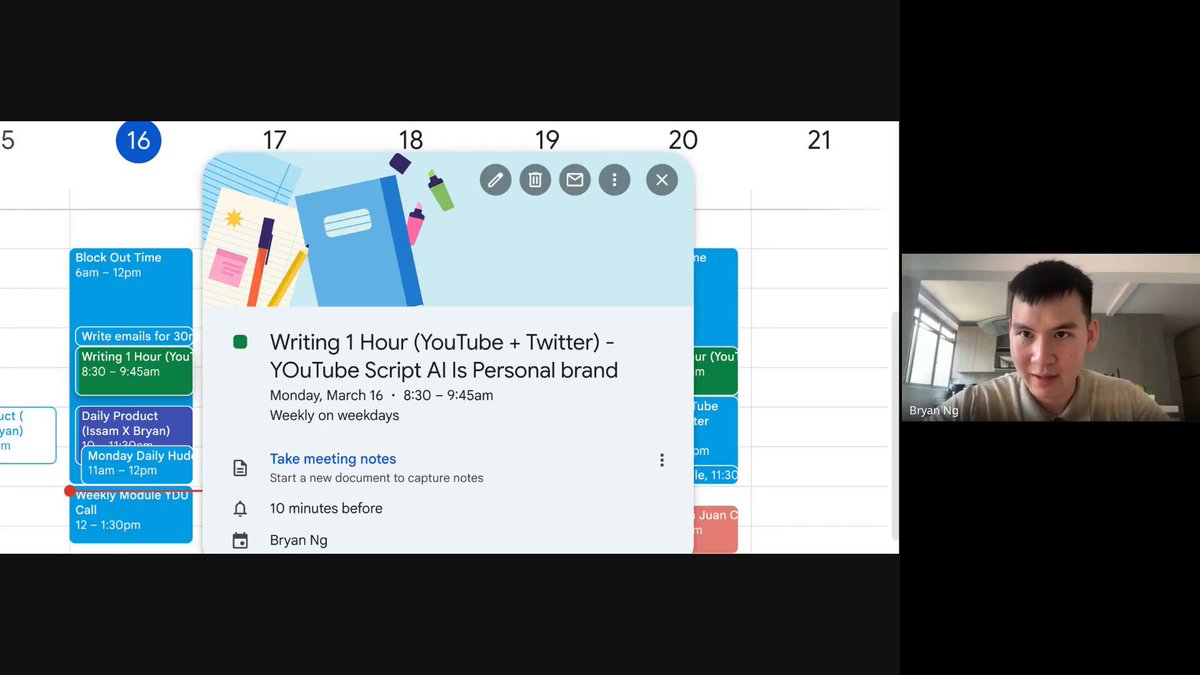
Block 1 hour every morning for manual writing before you touch any AI tools.
The thinking is the moat. The AI is the multiplier. Get those in the wrong order and your channel will sound like everyone else's.
A
Ship the first video this weekend. The math is not impossible. It is just uncomfortable.
The window closes faster than anyone expects.
1
2
11
579
Bryan Ng retweeted

3 YouTube niches I would start a brand new faceless channel in right now.
1/ AI doctor and health for the 55 crowd.
Highest RPM on the platform. Older audience with disposable income that advertisers chase with premium ad spend.
Evergreen topics that never die.
Easy to layer in a $27 ebook or longevity guide on top of AdSense.
Avatar channels in this space monetize fast and almost never get flagged because the educational value is obvious to the algorithm.
2/ AI financial advisor and retirement planner.
Same older Tier 1 audience. $4 to $7 RPMs consistently.
The audience watches 20 minute videos start to finish and pays for the consultations afterward.
The US is saturated. The UK, Canada, and Australia are wide open right now.
3/ 4K travel documentaries. Country breakdowns.
$5.54 RPM. 30 to 45 minute videos that pack in more ad slots.
Older audience that watches every second.
Real footage based which means almost zero risk of inauthentic content flags.
The common thread across all 3.
55 Tier 1 audience. High RPM. Evergreen topics. Real value per video. Low demonetization risk.
If you are picking a niche this month, pick one of these. Commit for 12 months.
The math works. The data works. The audience is already there.
Stop picking niches because they sound cool. Pick the ones the algorithm pays.

3
2
14
615
A roofer in Texas told me he spends $14,000/month on Google Ads to get leads.
Then he showed me a plumber in his same city spending $0 who gets more calls than him.
The plumber has a YouTube channel. 26 videos. All shot on an iPhone in under 60 seconds. A kid on Discord edits them into 8-minute how-to videos for $85 each.
"How to fix a running toilet."
"Why your water heater is making that noise."
"3 signs your pipes are about to burst."
Boring as shit. That's the whole point. Nobody is making this content. Search any basic home repair question on YouTube right now. The top results have 2-4 million views on channels with barely any subscribers.
The plumber's videos rank on the first page of YouTube AND Google. Google owns YouTube, so YouTube videos show up in Google search results. Someone in his zip code googles "why is my shower pressure low," his face pops up explaining it, and they call the number in the description.
He gets about 14 calls a month from YouTube. Closes 10. Average job: $1,800. That's $18,000/month in new business from a free channel.
His total production cost: $85/video x 8 videos/month = $680.
The roofer is paying $14,000/month to show up in search results that disappear the second he stops paying. The plumber paid $680 and his videos show up forever. Every video he's ever posted is still generating calls 2 years later.
This works in every single service niche. HVAC, electrical, landscaping, pest control, pool cleaning, pressure washing, garage doors. The less sexy the trade, the less competition on YouTube, the easier it is to rank.
And here's the part that should really fuck with you.
The plumber doesn't even need to be on camera anymore.
There are tools now that generate a consistent AI character. A host that looks and sounds like a real person. Same face every video. You give it your expertise and it gives you a finished video. No filming, no lighting, no "let me do one more take." Just a channel that runs whether you're on a job site or asleep.
Your competitors are still handing Google $14,000/month for ads that vanish overnight. A YouTube channel costs less than their morning coffee budget and runs forever.
We built Subscribr to handle the full pipeline. You bring the knowledge, it builds the channel. Script, host, finished video.
Waitlist link is in bio. Spots are limited.
4
1
13
955
Jun 13
80,000 people are trusting a fake financial advisor with their retirement
He's not a CFP. He's not registered with the SEC. He's not even a real person. He's an AI-generated character on YouTube who posts weekly videos about Roth conversions, tax-loss harvesting, and how to retire 10 years early.
And his audience is getting better financial advice from him than from the real advisors they're paying $400/hour.
That's not a joke. I watched 30 of his videos. The research is meticulous. Every claim has a source. Every strategy references the actual IRS code. He explains backdoor Roth IRAs in 9 minutes better than most CFPs explain it in a 45-minute meeting they bill you $600 for.
His audience is 50-68 year old professionals with six figure portfolios. The exact people every wealth management firm in America is spending millions trying to reach. And they're ignoring their advisors' emails to watch a character that was rendered on a laptop.
He makes money four ways and none of them require being real.
YouTube AdSense: $14-$22 RPM because financial content aimed at wealthy older Americans is the highest-paying niche on the platform. At 400,000 views/month that's $5,600-$8,800/month just from ads.
Affiliate links: Every video mentions a brokerage, a tax tool, or a financial app. Links in description. Financial affiliates pay 30-50% recurring commissions. One of his Wealthfront links alone probably does $2,000-$3,000/month based on typical conversion rates for this audience.
A $50 retirement planning spreadsheet template: Literally a Google Sheet with formulas that calculate your retirement number, optimal Social Security claiming age, and Roth conversion ladder. He sells it in every video description. Even at 0.3% of monthly viewers buying, that's $5,600/month from a spreadsheet he built once.
Sponsorships: Financial brands will pay $5,000-$15,000 per video to get in front of this audience. He runs one per month.
Conservative estimate: $18,000-$35,000/month. From a person who does not exist. Talking about money he's never personally managed.
Now here's the part that actually matters for you.
This guy didn't succeed because he's a finance expert. He succeeded because he found a niche full of wealthy older people who google their financial questions, and nobody credible was answering them on YouTube.
Your business has the same opportunity sitting right in front of you and you're ignoring it.
If you're a real estate agent: there are 50-65 year olds googling "should I downsize after retirement" and "how to sell a house I've lived in for 30 years" every single day. Nobody good is answering them on YouTube. The ones who are have 2-5 million views with zero competition.
If you run an insurance agency: "do I need life insurance after 60" gets searched thousands of times a month. The top YouTube results are garbage. Your expertise would crush them.
If you're a tax professional: every single tax strategy video on YouTube is either a 22 year old reading an article or a boring CPA in a suit mumbling into a webcam. The bar is on the floor.
If you're a lawyer: "what happens if I die without a will" has 3 million views across the top results. Estate planning content aimed at older Americans is a goldmine with almost nobody in it.
If you sell B2B services: your clients' questions are being googled right now. "How to choose a payroll provider." "Best CRM for small business." "How to fire an employee legally." Every one of these is a video that ranks forever and sends you leads while you sleep.
The fake financial advisor didn't know more than real advisors. He just showed up on the platform where their clients were already searching. Consistently. Every week. Same face. Same voice. Same format. Until 80,000 people trusted him more than the professionals they were actually paying.
You have real expertise. Real credentials. Real client results. And you're losing to a generated character because he posts on YouTube and you don't.
The production excuse is dead. You don't need to be on camera. You don't need to hire an editor. You don't need to learn video. There are AI tools now that build a consistent host character for your channel. Same face, same voice, every video. You feed it your expertise and it hands you a finished video.
We built Subscribr to do exactly this. You bring 20 years of knowing your shit. It handles everything else. Script, AI host, finished video, done.
Waitlist link is in bio. Spots are limited.
3
3
41
2,963
Jun 13
This is like having a hot girlfriend dump you
Jun 13

The US government, citing national security authorities, has issued an export control directive to suspend all access to Fable 5 and Mythos 5 by any foreign national, whether inside or outside the United States, including foreign national Anthropic employees.
The net effect of this order is that we must abruptly disable Fable 5 and Mythos 5 for all our customers to ensure compliance.
Access to all other Claude models is not affected.
We apologize for this disruption to our customers. We believe this is a misunderstanding and are working to restore access as soon as possible.
Read our full statement: anthropic.com/news/fable-myt…
2
8
815
Jun 12
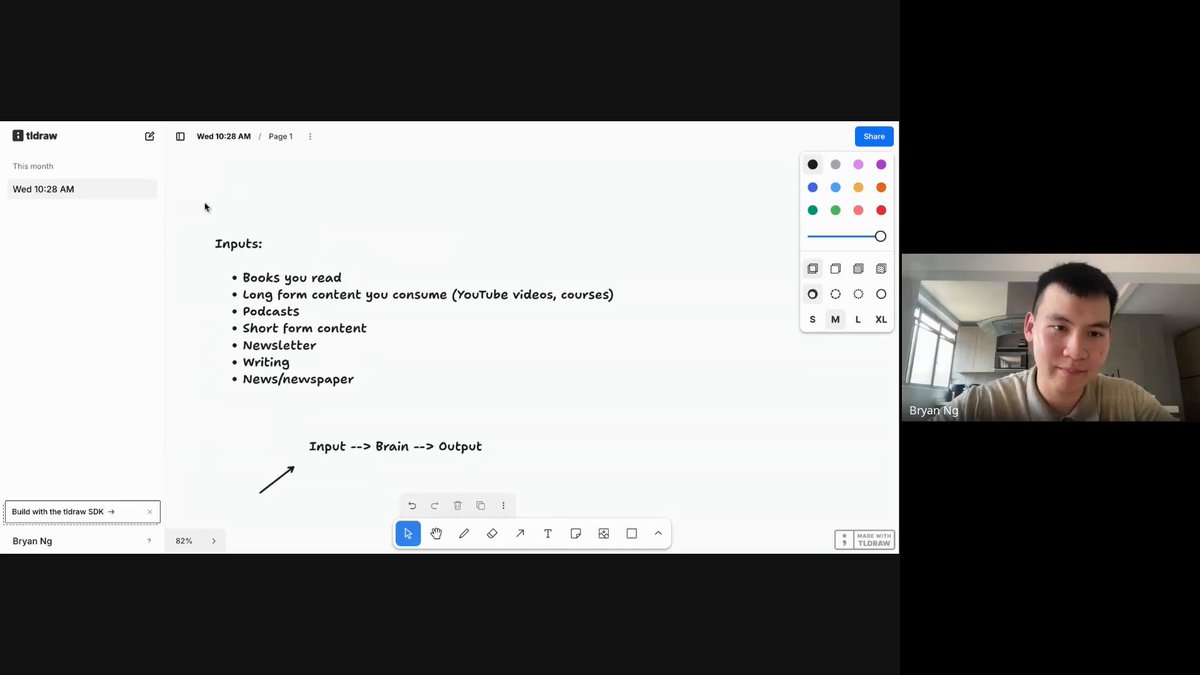
Your YouTube scripts are bad because your daily inputs are garbage.
Garbage in. Garbage out.
This is the rule that decides whether your channel ever scales past 10K subscribers.
If your daily consumption is TikTok, Instagram Reels, and short form scrolls, your scripts will sound exactly like that. Shallow. Fragmented. Attention deficient.
Forgettable.
If your daily consumption is books, long form podcasts, niche newsletters, and deep YouTube videos in your category, your scripts will reflect that.
Layered. Researched. Worth watching for 12 minutes. Your brain is a script writing machine.
The output is only as good as what you feed it.
The fix is brutal but simple. Cut the short form.
Add 1 book a month minimum. Subscribe to 5 long form podcasts in your niche.
Read newsletters that go deep. Watch the top 10 videos in your niche every week with a notepad.
Most creators want better output without improving the input. It does not work.
The pros are reading. The amateurs are scrolling.Pick which one you are going to be by the end of this year.
1
24
1,280
Jun 12
You do not have a writing problem. You have a process problem.
Most creators sit down to write a YouTube script and immediately get stuck because they have no framework for how the output actually gets built.
They blame writer's block. The real issue is they skipped 4 specific layers.
Layer 1. Research source. Where do you actually research? Claude. Subscribr. Perplexity. Reddit. Pick the source and commit. Bouncing between 5 platforms every time you research a video kills consistency.
Layer 2. Medium. Are you typing the ideas, writing them by hand, or voice dictating them? Each one activates a different part of the brain. The ideas you get from typing are not the ideas you get from speaking. Pick the medium that fits the stage.
Layer 3. Environment. Where do you do this work? Walt Disney famously had 3 separate rooms. One for dreaming. One for brainstorming. One for editing. Different rooms produced different output. Most creators do all 3 from the same desk and wonder why their ideas all sound the same.
Layer 4. Outlining and editing framework. The actual structure you apply to turn raw ideas into a finished script.
Most creators skip 3 of the 4 layers and call it "writer's block." The pros codify all 4 and ship consistently.
Pick the layers. Codify the process. Stop calling it inspiration.
1
2
18
1,114
Jun 12
The single habit that separates 7 figure creators from the ones stuck at 10K.
A 1 hour writing block every morning.
Non-negotiable.
Most creators try to write whenever they have time.
They never have time. The day fills with calls, edits, emails, and busywork.
The writing never happens.
The pros block the first hour of the day before anything else starts.
Phone off. Slack closed. No meetings.
Pure writing time.
The math is brutal. 1 hour a day on weekdays equals 5 hours a week. 20 hours a month.
240 hours a year of focused script writing, ideation, or editing.
You will not match that with "I will write when I feel inspired. "In the AI era this matters more than ever.
The temptation to outsource every thought to Claude or Subscribr is real.
The fix is not avoiding AI. The fix is keeping your own thinking sharp by writing manually for an hour every day before you ever touch a tool.
The AI executes faster when your input is sharper. Your input only stays sharp if you train it daily.
Block the hour. Protect it. Write.
The rest of the day takes care of itself.
3
16
818
Jun 12
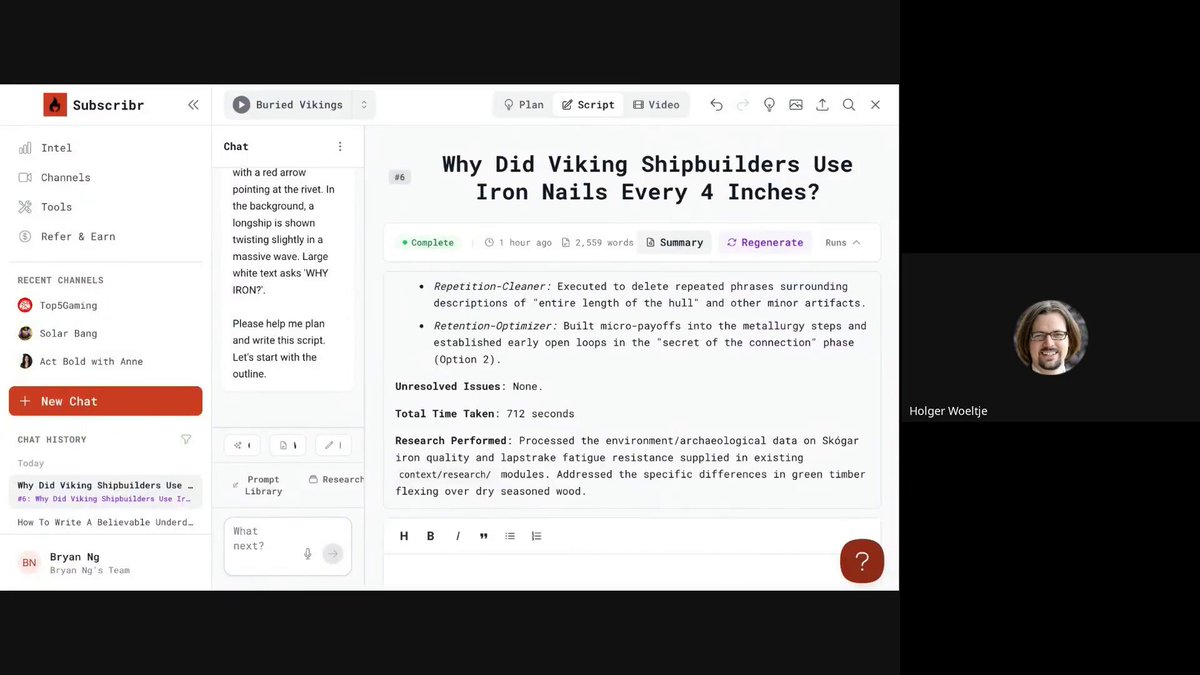
The hidden workflow inside the Script Agent nobody is using yet.
Record yourself speaking the topic in your own voice.
Raw. Unscripted. Just talk to camera for 10 minutes about what you know.
Upload the transcript to the Script Agent. Let it polish.
The agent removes the filler.
Tightens the pacing. Rewrites weak transitions.
Adds hook variations. Optimizes for retention. Humanizes the language.
What comes out is your script. In your voice.
With your expertise. Refined by the agent into something tight enough to ship.
This is the workflow professionals should be running.
Doctors. Lawyers. Coaches. Founders.
Anyone with deep expertise but no time to write polished scripts.
Talk for 10 minutes. Let the agent do the rest.
You bring the knowledge. The agent brings the structure.
That is the entire future of AI scripts. Not replacing the human voice. Polishing it.
1
6
719
Jun 12
Your ElevenLabs voice sounds robotic because the training data is broken.
Most operators upload 5 minutes of raw audio with "ums," pauses, mismatched tones, and bad recording quality, then wonder why the output sounds like a robot reading a script.
The fix is in the training data.
Step 1. Pull 2 hours of yourself speaking.
Podcast clips. Voice notes. Recorded calls. Anywhere your real voice exists.
Step 2. Cut every "um," every "uh," every long pause, every off-tone moment. Strip the audio down to the cleanest version of your voice possible.
Step 3. Stitch the clean audio together. Export as one file.
Step 4. Upload to ElevenLabs. Train the voice on the curated version, not the raw recording.
The output now sounds like the best version of you. Not the worst.
Most operators feed ElevenLabs raw audio and ship the result.
The pros curate the training data first and ship a voice nobody can distinguish from a real recording.
The model is only as good as what you feed it.
1
28
1,807
Jun 11
A $200/hr consultant and a $200/hr consultant walk into the same market
One of them has a YouTube channel with 40 videos. the other doesn't
The one with 40 videos:
> gets inbound calls from people who already watched 5-10 videos and decided they trust him
> his close rate on those calls is 60-70%
> he doesn't negotiate on price because the buyer already believes he's worth it
> he turns down clients monthly
> his pipeline is 3-4 months deep
The one without:
> cold outreaches 50 people a week
> gets on 10 calls
> closes 2 (20% close rate)
> spends half the call justifying his rate
> pipeline is whatever he drums up this week
> takes every client because he can't afford to say no
Same skill. Same rate. Same market. Completely different life
the 40 videos didn't make him better at consulting. they made him FINDABLE. and "findable" turned out to be worth more than any skill improvement he could've made
because by the time someone finds you through a video, watches 2-3 more, subscribes, and eventually reaches out... they've pre-sold themselves. the trust is built. the authority is established. your job on the call is basically just to not fuck it up
cold outreach is the opposite. you're starting from zero trust every single time. the prospect has no idea who you are, why they should care, or whether you're legit. so you spend the first 20 minutes of every call proving you're not a scam
one model compounds. the other resets to zero every monday
and you don't need 40 fancy produced videos. you need 40 answers to questions your clients already ask you on the phone. scripted in your own words (~20 min each), delivered by an AI avatar that looks and sounds like a real professional, posted 3-4x a week
6 months. 75 videos. a pipeline that fills itself
subscribr .ai builds the pipeline. your expertise in, avatar videos out, no filming or production team needed. waitlist in bio
link in bio
1
4
474
Jun 11
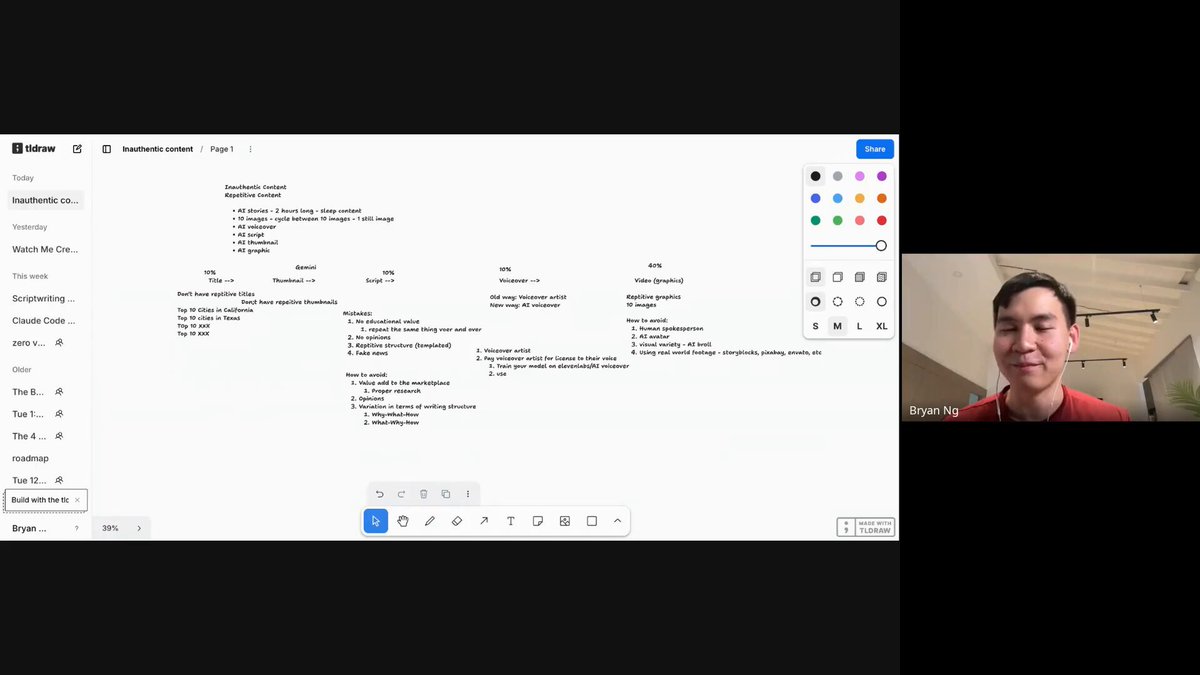
The 3 script mistakes that get YouTube channels flagged as inauthentic content.
1/ No educational value. The script repeats the same point in different words for 2 hours. No deep research.
No new insight. Just paraphrased filler. The classifier reads it as recycled content.
2/ No opinions. The script states facts without any creator perspective. No takes. No personality. No "I believe" or "in my experience" moments.
AI defaults to neutral writing because it has no opinions. The classifier reads that as a fingerprint.
3/ Repetitive structure. Every video opens the same way. Every section follows the same paragraph rhythm.
Every closer is identical. The classifier reads the consistency across 20 uploads and flags the channel as templated.
The fix is in the script humanization pass.
Add opinions to every section. State what you believe and why. Vary the script structure across videos.
Use the why-what-how framework on one video and what-why-how on the next. Mix it up.
Real research per video. Real perspective per section. Real variation across the catalog.
This is the difference between an AI workflow that survives and one that gets wiped.
1
6
24
1,960
Jun 11
The actual infrastructure for running multiple YouTube channels safely in 2026.
1/ Separate Gmail for every channel. Always. No exceptions.
2/ Separate AdSense for risky niches. Politics, AI storytelling, controversial content.
One AdSense termination wipes every channel tied to it. The risky ones need their own AdSense.
3/ Multiple LLCs for separate AdSense accounts. Wyoming LLCs work for most operators. Each LLC has its own tax ID and AdSense.
4/ Proxies for each account. Not VPNs. Proxies. Rent a static IP per channel.
Switching IPs constantly is a red flag to Google. One proxy per channel keeps the IP signature consistent.
5/ Safe niches can share an AdSense.
Up to 5 channels under 1 AdSense if the content is clean and the niches are not in the high-risk category.
Most operators run all their channels under 1 Gmail and 1 AdSense and lose everything in a single termination email.
The pros structure the infrastructure like a real business from day 1.The setup takes 1 weekend. It saves you from losing 5 channels in 1 day.
3
1
18
1,074
Jun 11
8 patterns will get your YouTube channel flagged as inauthentic content.
1. Robotic voice cadence. Default AI voices that hit every word with the same energy.
The classifier matches them against thousands of other channels instantly.
2. Identical title structures. "Top 10 places in X" with only the country swapped.
Same template across 50 uploads.
3. Identical thumbnail layouts. Same colors. Same background. Same arrows. Same fonts. Templated visuals seen from a mile away.
4. Repetitive script structure. Same paragraph rhythm. Same intros. Same transitions. The AI fingerprint nobody humanizes.
5. Zero educational, entertainment, or artistic value. Generic recycled information anyone could write.
6. Robotic voice. Default stock voices used by 30,000 other channels.
7. Visual sameness. Same 10 images cycled on every video.
8. Content optimized for ads, not viewers. Sleep videos. Passive content. Audiences that do not engage.
4
5
57
3,768