Exploring the depths of Scripture through Biblical exegesis, seeking knowledge of the Holy. Father. Hobby farmer. Software architect.
Joined April 2009
- Tweets 1,741
- Following 107
- Followers 104
- Likes 1,817
49 Photos and videos





The Open Book 📖 retweeted

Jun 13
You know what I’ve been thinking about? There are far more racist people in this country than I ever realized.
I have been blown away watching people celebrate the death of a White teenage boy simply because the person who killed him was Black.
This teenager was not on drugs. He was not a troublemaker.
He had never committed a crime.
He played sports, made good grades, respected his parents, and was loved by so many people.
Yet some people have found joy in his death because they care more about race than right and wrong.
That is not justice. That is racism, hatred, and pure evil.
A teenage boy lost his life. Anyone celebrating that should be ashamed.
1,201
8,185
41,324
291,408

Jun 11
It's often argued that the detailed predictions in Daniel 11 show that God knows all future events exhaustively, and complete and infallible foreknowledge is essential to God's omniscience. It follows that true prophecies must be identified by the certainty of their claims. I find that a careful analysis of the text, however, actually supports an open view of the future.
Through the first thirty-nine verses, the text aligns with ancient Greek history with remarkable precision. At verse forty, the narrative abruptly diverges from the established historical record. It describes a final campaign in which Antiochus IV overwhelms Egypt, enters the glorious land, and comes to his end near the holy mountain. However, historical records place Antiochus's death not in Judea after a final Egyptian campaign, but in the eastern regions of his empire, apparently from illness.
Many respected scholars, including John Goldingay, argue that the text of Daniel reached its final form during the Maccabean crisis in the second century B.C. The book preserves older court tales, many of them in Aramaic, and combines them with later Hebrew visions shaped for a persecuted Jewish community. The result is Daniel's distinctive bilingual structure: Hebrew in the opening, Aramaic through the central court narratives and visions, and Hebrew again in the final apocalyptic visions.
Given this understanding, Daniel 11 is not simply a "spoiler" of events in a fixed future. Rather, it likely recounts history up to the writer's own crisis with extraordinary detail (around 165 BC), then moves into theological expectation. The author draws on scriptural patterns to declare the theological certainty of the vision: the arrogant oppressor will fall, and God will vindicate the faithful.
For a traditional exhaustive-foreknowledge model, this creates a significant interpretive challenge, often requiring the passage to shift suddenly from Antiochus IV to a distant future end-times figure. For Open Theism, however, Daniel 11 gives evidence that future events are not exhaustively fixed in advance. Prophecy then is a dynamic declaration of God's character, intentions, warnings, and sovereign goals.
Prophecy is intended to be responded to.
3
61
Jun 10
God is time. He upholds the universe and enables change.
The universe is just a clock, where gravity and speed introduce errors in our measurement of it.
Consider this:
1) God had a moment in His existence without the universe.
2) God had a moment in His existence without a thought about the universe.
If you believe those two things, congratulations! You’re not a fatalist, and God is genuinely free.
But notice the implication: distinct moments in God’s life before creation mean time existed before the universe. God’s "deliberation" took place over successive moments, distinct from the initial moment where He simply was.
This seems to me to be the best explanation for the age-old question "What is time?"
(Check out the work of @rtmullins for the deep, eloquent dive into temporal theism)
6
5
342
Jun 10
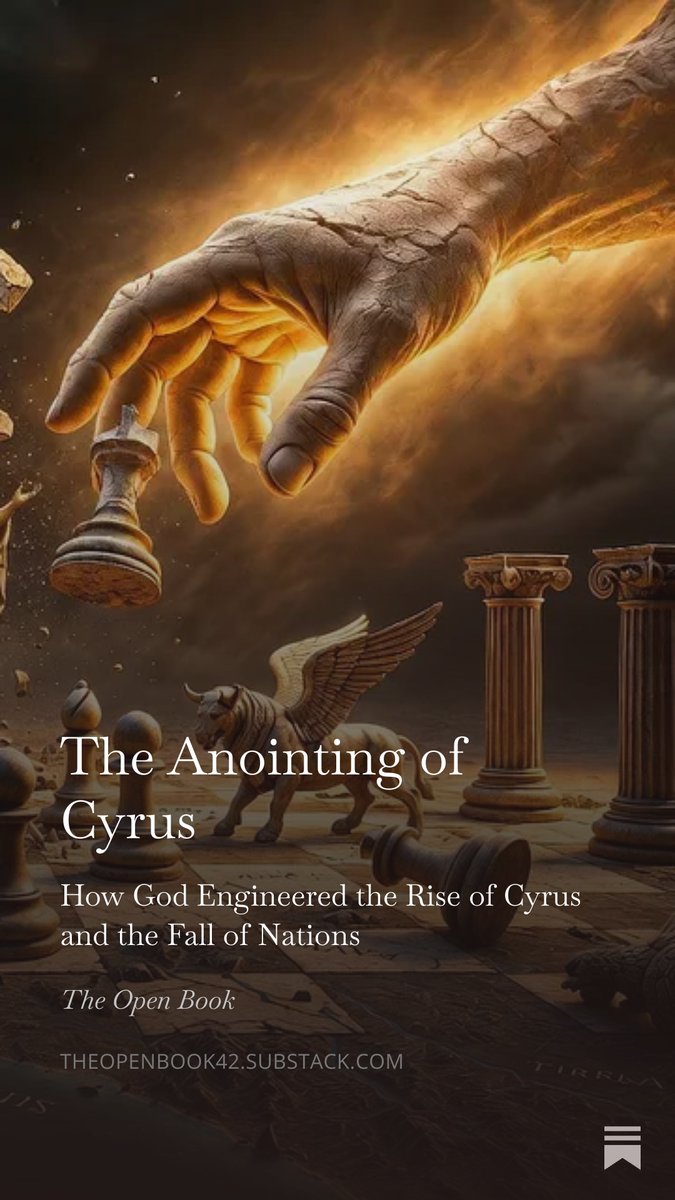
The ancient Greek historian Polybius famously noted that Rome’s sudden and astonishing rise to global dominance was entirely directed by a purposeful “Fortune” (Tyche) that forced all global events to incline toward Roman victory.
God acting, ensuring his declared plans obtain.
Read more: theopenbook42.substack.com/p…
28
The Open Book 📖 retweeted

Jun 7
Romans 9 has nothing to do with the election of individuals to salvation it has to with the election of the nation of Israel.
452
73
1,060
196,352
The Open Book 📖 retweeted

I respectfully disagree that John 10:28 teaches “Once Saved, Always Saved.”
Jesus said:
“I give them eternal life, and they will never perish. No one can snatch them away from me.” (John 10:28)
The problem is that this verse is often quoted without the context of the preceding verse:
“My sheep listen to my voice; I know them, and they follow me.” (John 10:27)
Who are Christ’s sheep? They are the ones who are listening to His voice and following Him. The promise of security is given to those who continue in that relationship.
John 10:28 says no one can “snatch” Christ’s sheep from His hand. That means no outside force, Satan, persecution, false teachers, or any enemy, can forcibly take a believer away from Christ. But the passage does not say a person cannot stop following Christ, reject Him, or walk away from the faith.
If John 10:28 taught unconditional eternal security, then the many warnings in Scripture about falling away would be meaningless.
Why would the Bible warn believers:
“Once people have seen the light… and who then turn away from God…” (Hebrews 6:4-6)
“If we deliberately continue sinning after we have received knowledge of the truth…” (Hebrews 10:26)
“When people escape from the wickedness of the world by knowing our Lord and Savior Jesus Christ and then get tangled up and enslaved by sin again…” (2 Peter 2:20)
“Remain in me, and I will remain in you.” (John 15:4)
Jesus never taught, “Follow Me for a while and you’re guaranteed heaven no matter what happens afterward.” Instead, He consistently taught perseverance, faithfulness, and endurance.
John 10:28 is a beautiful promise that no external power can take a believer from Christ’s hand. It is not a promise that a believer cannot choose to stop being one of His sheep by refusing to listen to His voice and follow Him.
The question isn’t whether Christ can keep His sheep secure, He absolutely can. The question is whether a person can cease being one of His sheep. John 10:27-28 says His sheep are those who continue hearing His voice and following Him.
4
1
6
888
Jun 5
I wish more people would be concerned about defending God's character than they are about defending their systematic.
3
2
17
1,391
The Open Book 📖 retweeted
Jun 3
This word predestined, it means that you're guaranteed to be conformed to the image of His Son if you're in Christ. It doesn't mean you don't have a choice.
119
59
722
35,360
Jun 2
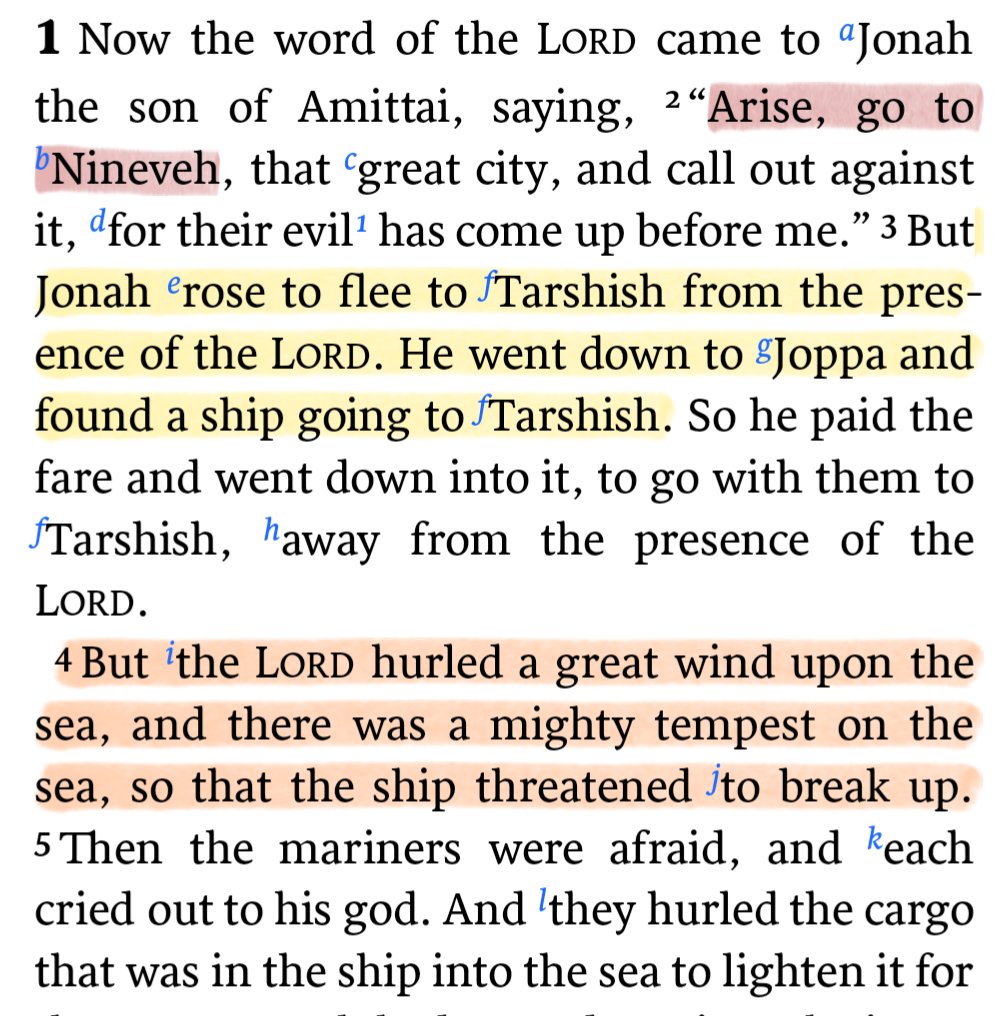
🤔 Open theists are often asked how God can make His plans happen without some form of determinism.
Let's look at Jonah. God commands him to go. Jonah refuses and flees. God sends a ⛈️storm and a 🐋fish to accomplish what a simple command didn't.
Throughout Scripture, we see God's incredible toolkit. He changes the weather. He uses animals. He sends dreams. He convicts via the Holy Spirit. He sends messengers.
God has infinite ways to work within history to guarantee His outcomes, but nowhere in the Bible does it say He compels human wills irresistibly.
7
1
11
396
Jun 2
Apparently God doesn't have the ability to create genuine moral agents.

No, because that would be to deny himself, deny his sovereignty. The potter cannot give the clay the ability to shape itself all on its own.
1
1
69
May 28
Platonism ➡️ Neoplatonism ➡️ Calvinism
Neoplatonism's vision of the "One" as the perfect, unchanging source from which all reality emanates ➡️ God who is utterly transcendent, in complete control, with no potentiality or dependence on creation ➡️ Augustine absorbed this and passed it forward, framing God’s will as the ultimate determining reality.
---
The Platonic/Neoplatonic idea that the soul returns to the divine only through higher illumination (not unaided effort) ➡️ humans are so corrupted they cannot initiate their own salvation ➡️ God must sovereignly elect, draw, and regenerate... grace works irresistibly on the chosen.
---
Plato’s sharp contrast between the active, immortal divine realm and the completely passive material realm ➡️ unaided human effort is futile so God must unilaterally regenerate the soul before a person can even believe.
---
The Great Chain of Being and participation in eternal Forms ➡️a hierarchical reality where the divine initiative alone pulls the elect back to the source
---
🤔Am I describing Calvinism or Platonism?: "Merit or free-will cooperation becomes secondary or illusory; everything flows from the One/Good."
2
1
91
May 27
The Living God wants us to build the future together.
He loves us.
Sin harms that relationship, but it doesn't just grieve God - it impacts all of creation, and must be dealt with. God is good when he judges sin.
I'm so thankful that the living God has been patient with me.
1
4
324
May 27
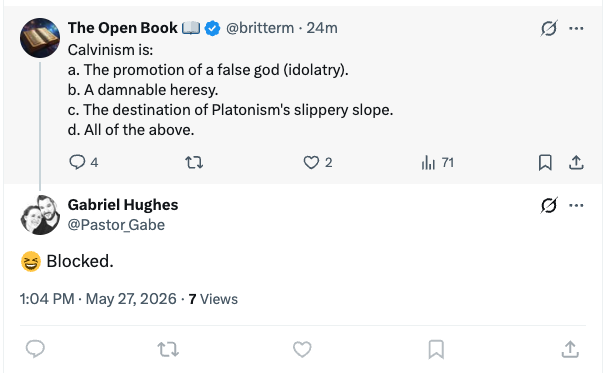
Calvinism is:
a. The promotion of a false god (idolatry).
b. A damnable heresy.
c. The destination of Platonism's slippery slope.
d. All of the above.
41
1
25
12,639
May 27
If God is impassible, He wouldn't care a whit about Creation. There would be no reason at all to create anything.
Scripture agrees. God repents, is grieved, is angry, pleased, relents...
I reject "Classical Theism".
1
87