
No issues. It's just me, living every moment, making the most out of it👨🏻⚕️🔜👨🏻⚖️Bleeds 💚Plays🎾#OccupationalMedicine #MedicalResearch #CaviteMedicalSoc
Joined July 2009
- Tweets 4,970
- Following 517
- Followers 1,723
- Likes 5,194
854 Photos and videos


Pinned Tweet

7 Dec 2021
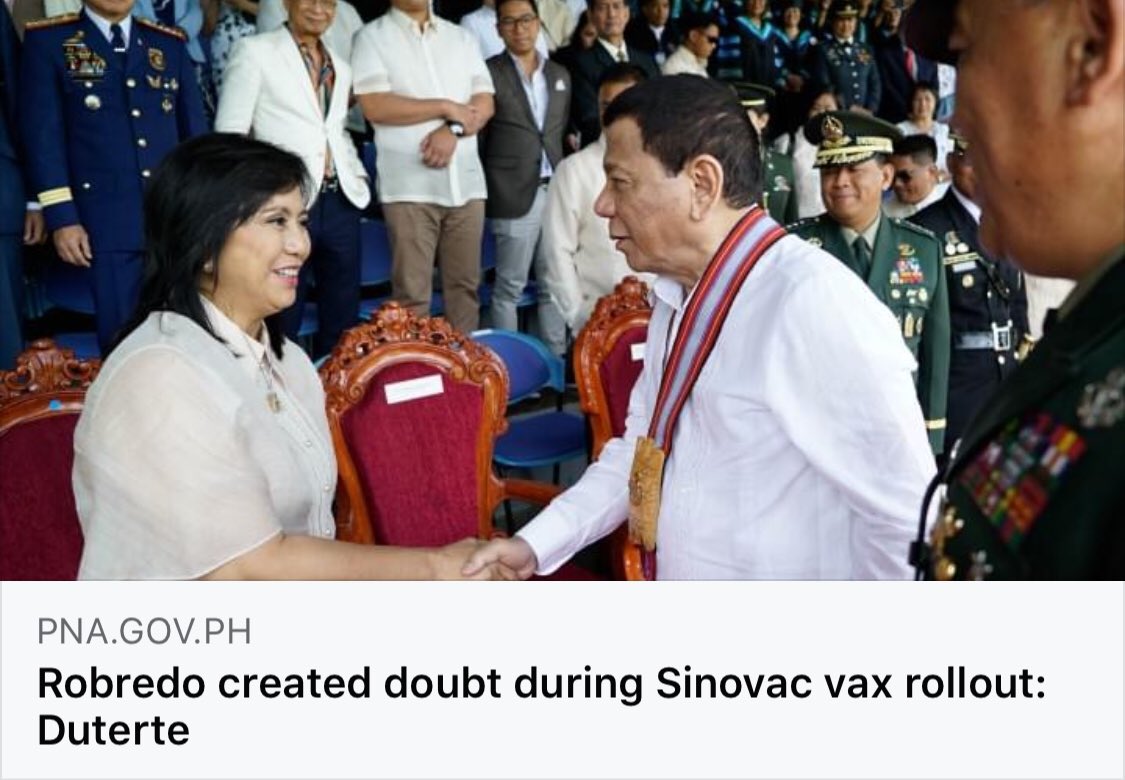
Kung meron man akong gustong ipagpasalamat kay Pangulong Duterte, ay yung pag-sunod niya sa eksperto(50% vaccine efficacy is enough in the setting of a pandemic)at hindi natinag sa pamumulitka laban sa #Sinovac Imagine kung natinag siya sa mga batikos noon, ewan ko nalang talaga!
87
284
1,112
13 May 2025
That RILLO-SUNTAY realness talaga ang sobrang wild 🔥 for me. Sinubaybayan ko talaga ‘til the end. That’s the product of REAL JOURNALISM! Pwedeng @Netflix_PH series!!
#halalan2025
1
1
6
657
13 May 2025
The not-so-disappointing #Halalan2025
I voted for Bam Aquino and a few from PDP-Laban. I’m now relieved — and honestly, for me, it is something to celebrate since not most of the unqualified candidates made it, and with that, everyone in the Senate has to level up their game.
Even Sen. Bong Go, Sen. Bato, and others — no one is spared. Everyone’s being watched. The vloggers and voices from both ends of the spectrum, and that turned out to be the game changer.
I’d really like to thank them — those who keep speaking up, researching, questioning, and standing firm in their beliefs. They’re the real heroes here. They don’t stop, and they don’t back down. That dedication is something the youth should emanate. We should all stand up to what we believe in.
Also noticed that the voting public is now more diverse in their views — it’s no longer about siding with just one force. And that’s a step in the right direction. It pushes our leaders to be better. Because at the end of the day, we all want change — just through different paths. And that’s how democracy should work. 🕊️
2
1
8
850
12 May 2025
Congratulations Sen. Bong Go and Sen. Marcoleta sooo happy!! 💚🥹 #Halalan2025 #Halalan2025 #Election2025
1
13
118
4,208
18 Mar 2025
Emotions? I did not even shed a tear when I signed my mother’s death certificate since I have to be strong for everyone. Last post na ‘to, I’ll devote more time in prayer, that’s more powerful. 🙏 #BringPRRDhome
2
12
31
777
16 Mar 2025
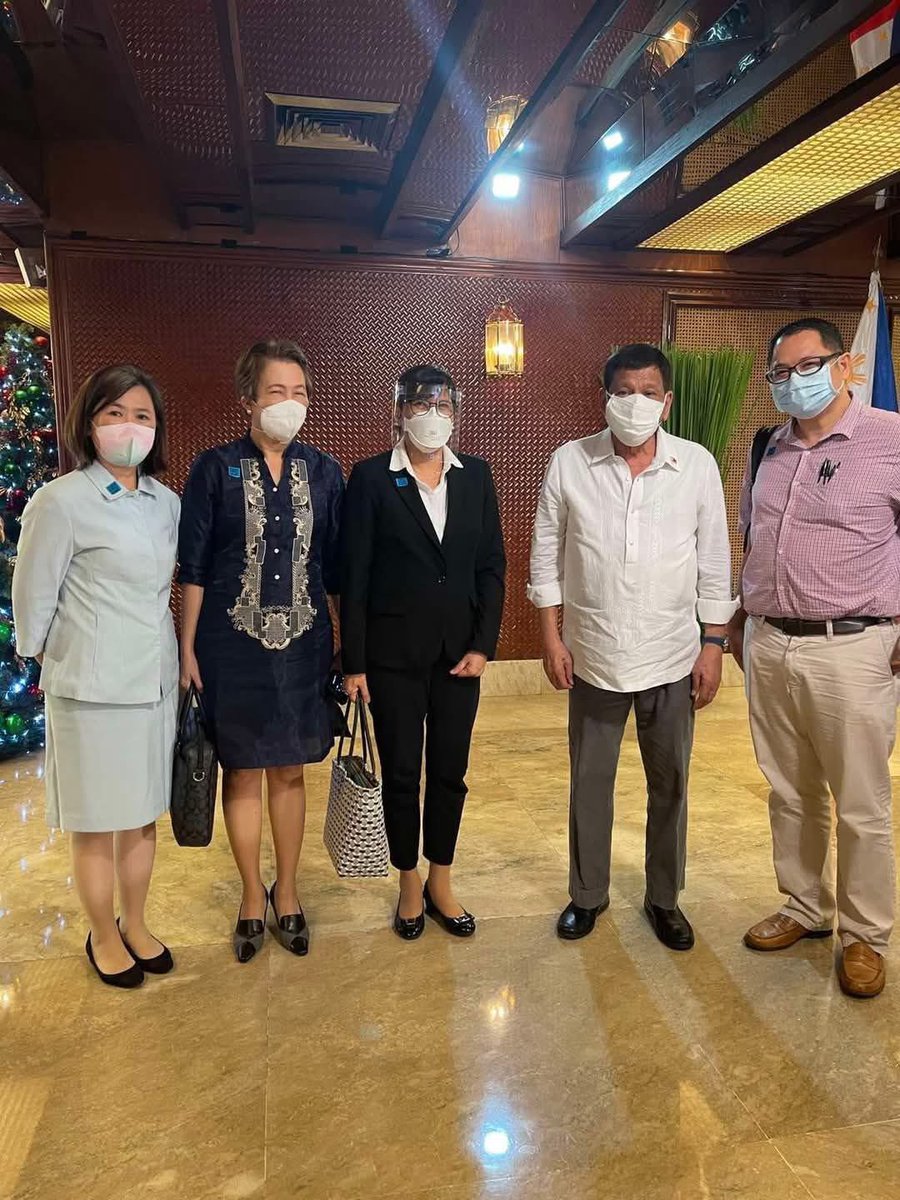
Thank you, ‘Tay for your love to us. No one comes close to you. #BringPRRDhome
19
95
321
9,210
15 Mar 2025
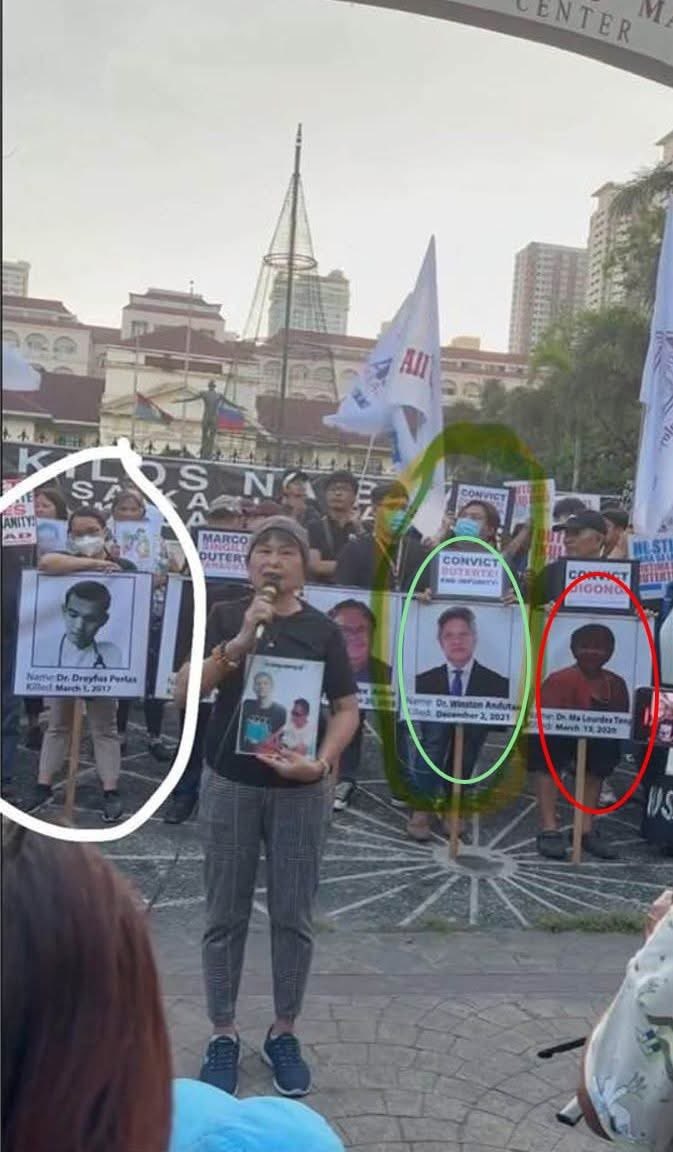
THE CPP/NPA GROUP MAKABAYAN BLOC HAS GONE DERANGED.
1. The one encircled in white is Dr. Dreyfus Perals. He was killed in March 2017 in Lanao del Norte. The assailant, Mohammad Nabel Langi Banding, was captured in January 2022. Not an EJK. Nothing to do with Duterte. (philstar.com/nation/2022/01/…)
2. The one encircled in green is Dr. Winston Andutan in December 2021. The assassin has ben arrested by the police. Not an EJK. Nothing to do with Duterte.
(ucanews.com/news/philippine-…)
3. The one encircled in red isDr. Ma. Lourdes Tangco. Bulatlat, a newspaper of CPP/NPA, has claimed that she was a one of them. Dr Tangco died during with an encounter with the Philippine army in Baguio.
(bulatlat.com/2020/04/04/lou-…)
CTTO: Sass Sasot thru Maricar Serrano
7
40
67
9,847
14 Mar 2025
Say a little prayer for Tatay Digs tonight. Mag-re-ready nalang talaga ako sa Martial Law. #BringHimHome
32
24
147
16,993
14 Mar 2025
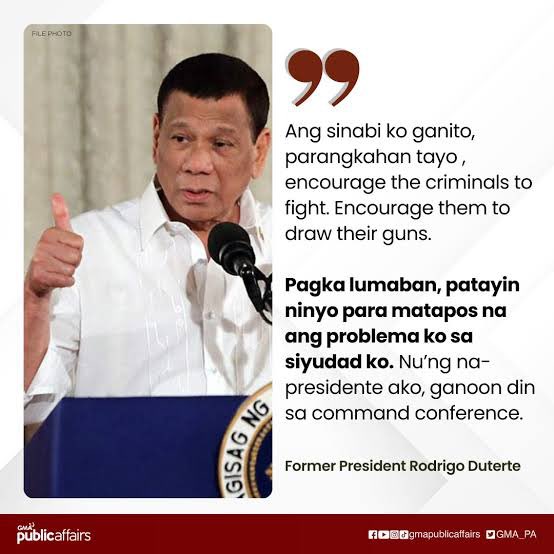
DUTERTE: MAMAMATAY TAO
“…pagka lumaban, patayin ninyo..” are his strong words that most of us saw as a green light for violence. However, legally, his administration never issued an order allowing extrajudicial killings.
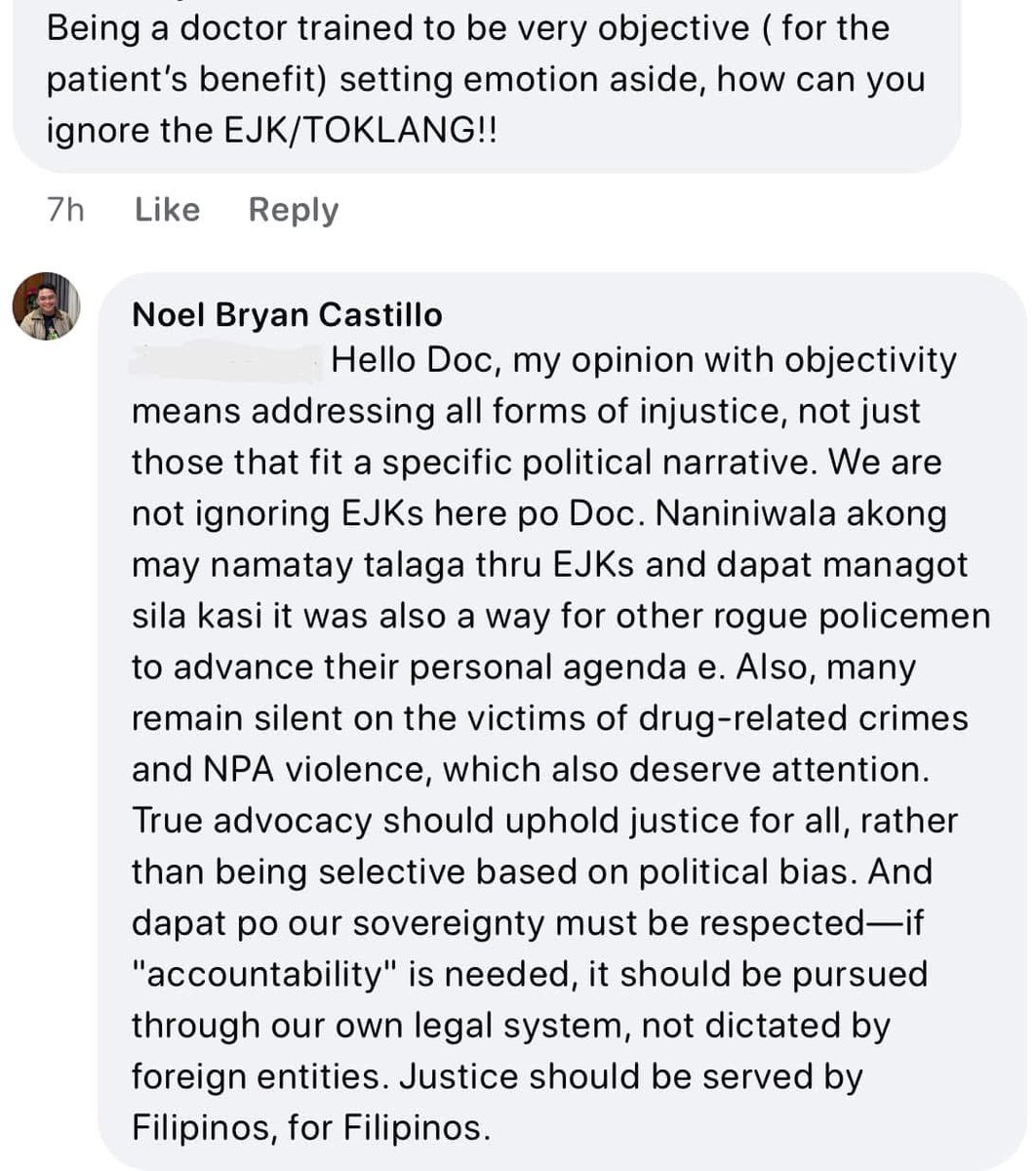
Some would say that Tatay Digs’ words can kill and that his rhetoric emboldened rogue police officers, leading to abuse and vigilante-style killings. Some of them used this to steer their motives. But the question is, were the law enforcers mandated to kill? Legally, no. They are mandated to arrest and not execute. However, in actuality, many police officers reported fought-back (nanlaban) cases, which makes the distinction between justified self-defense and excessive force blurry until now.
As an OSH Physician who advocates health and safety, it’s common knowledge that self-defense cases are only justifiable based on Art 11 Par 1 of the RPC only if:
1. There was unlawful aggression (the suspect posed an imminent threat and danger to someone’s life)
2. The force used was necessary and reasonable
3. The person claiming self-defense did not provoke the attack.
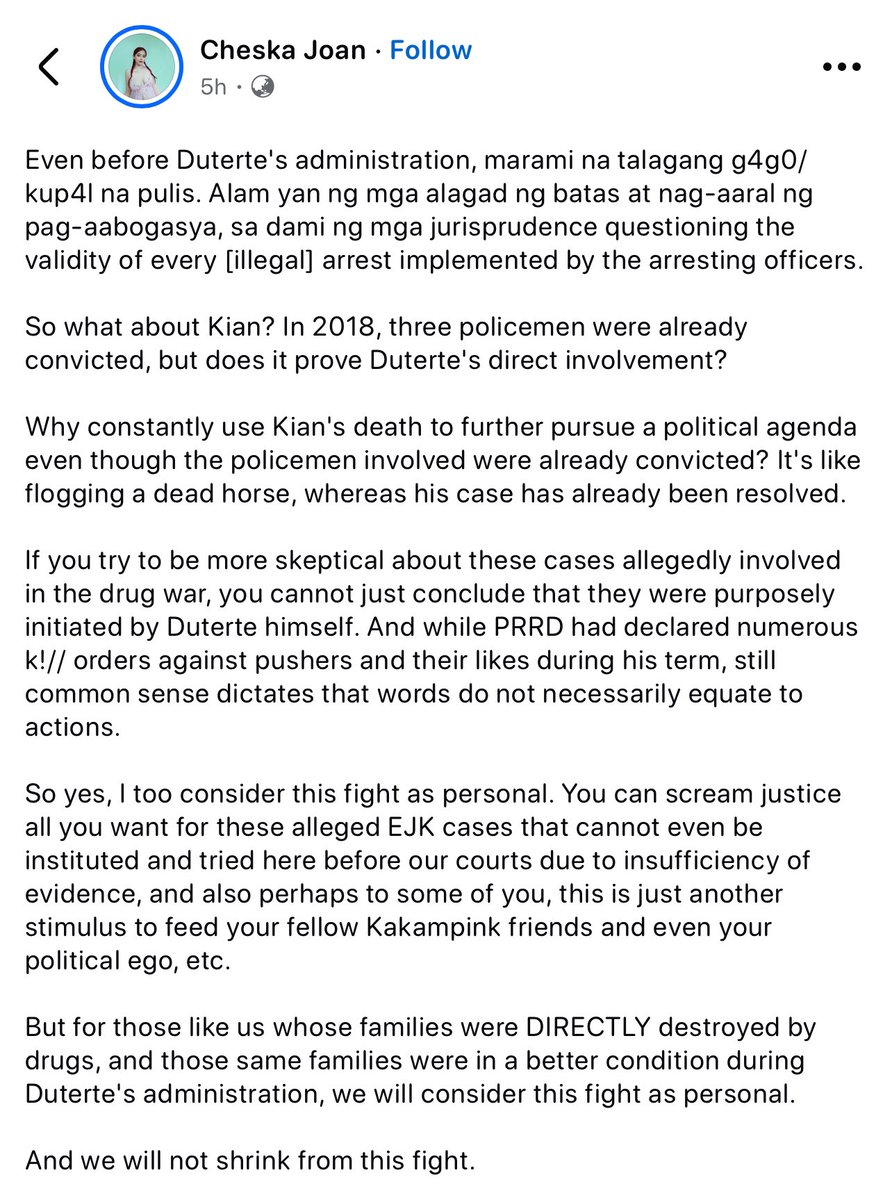
Justice should be based on facts, not politics. We must hold individuals accountable for crimes instead of assuming blanket guilt. In self-defense cases, we must look at each situation, ensuring that true criminals face justice while protecting the innocent from wrongful accusations, as in Kian Delos Santos’ case, whom the police officers are now convicted.
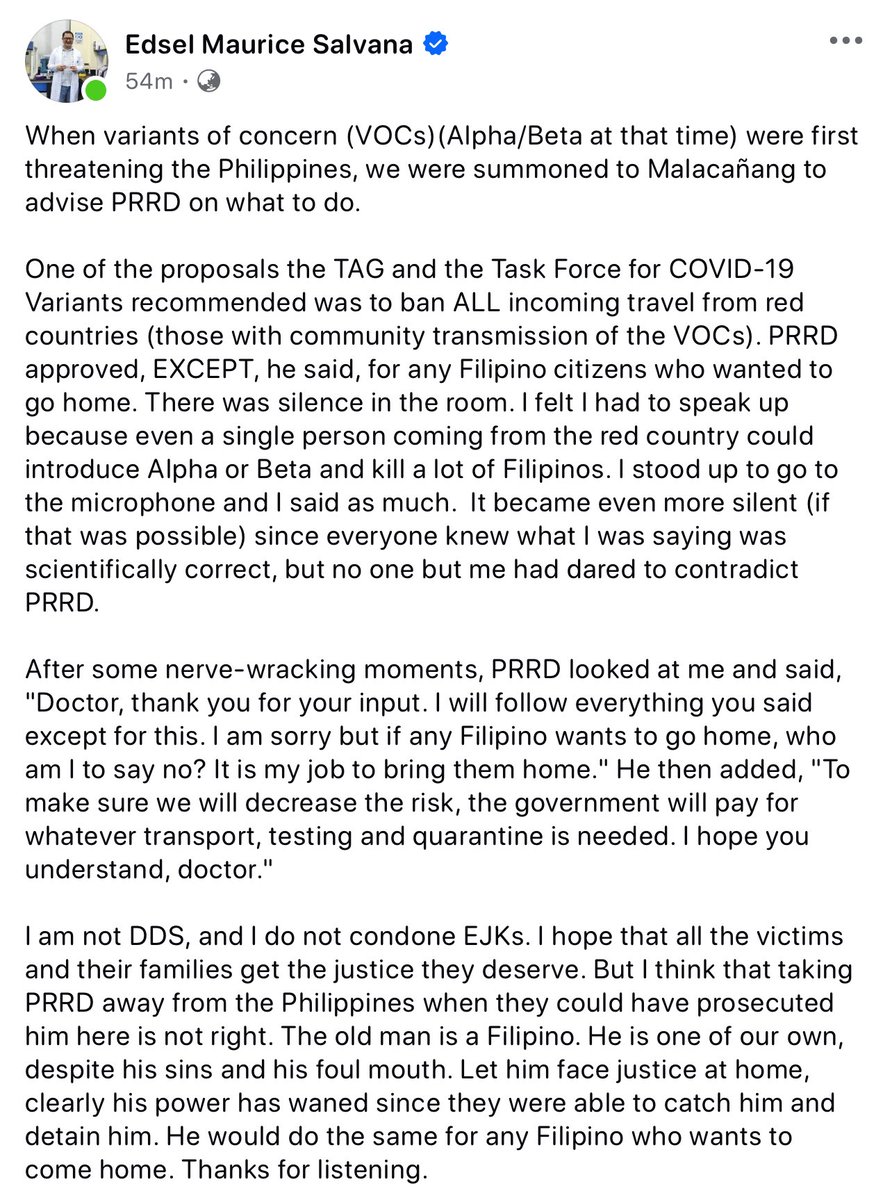
Despite criticisms, Tatay Digs’ leadership style (palamura, blunt and unfiltered) worked for the majority because they felt he was real—not just another scripted politician. We felt like we were his own children, eating the same meals and living in the same household. Love him or hate him, his presidency left an undeniable impact on Philippine politics, and will never cease to do so.
📸: GMA Public Affairs
18
50
8,083
13 Mar 2025
MAGPAKATOTOO TAYO
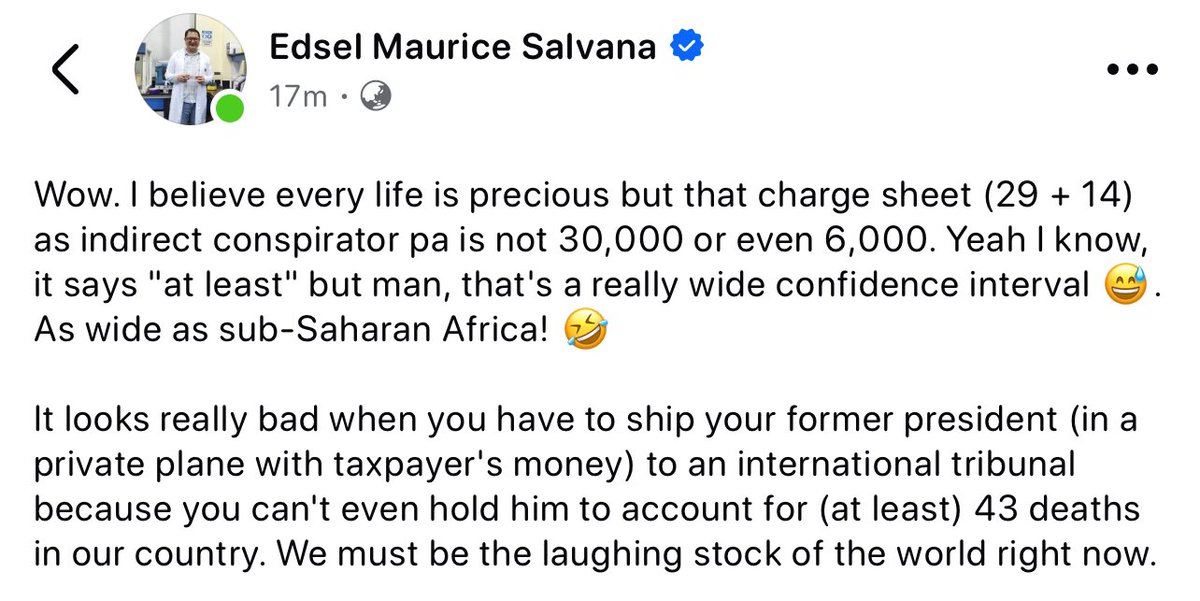
Duterte isn’t the most loved President for nothing. The attempt to submit him to the ICC isn’t just about accountability; it reeks of political maneuvering that undermines our country’s sovereignty.
92
133
741
1,134,859
13 Mar 2025
If this is allowed to happen repeatedly, what will stop foreign bodies from interfering in our governance whenever it suits their agenda? This isn’t just about Duterte—it’s about who has the power to decide the fate of our leaders. Are we willing to let outsiders dictate what happens in our country?
16
3
41
44,589
13 Mar 2025
They think removing Duterte from the picture will silence his legacy, but this will just ignite a fire they can’t control. #BringPRRDHome
5
3
34
32,936