Using engineering to better humanity. Family and Running. Co Founder, HappyFunCorp (Acquired by Tiny) // TezLab. CEO TezLab.
Joined September 2007
- Tweets 2,779
- Following 970
- Followers 2,117
- Likes 918
63 Photos and videos


Jun 15
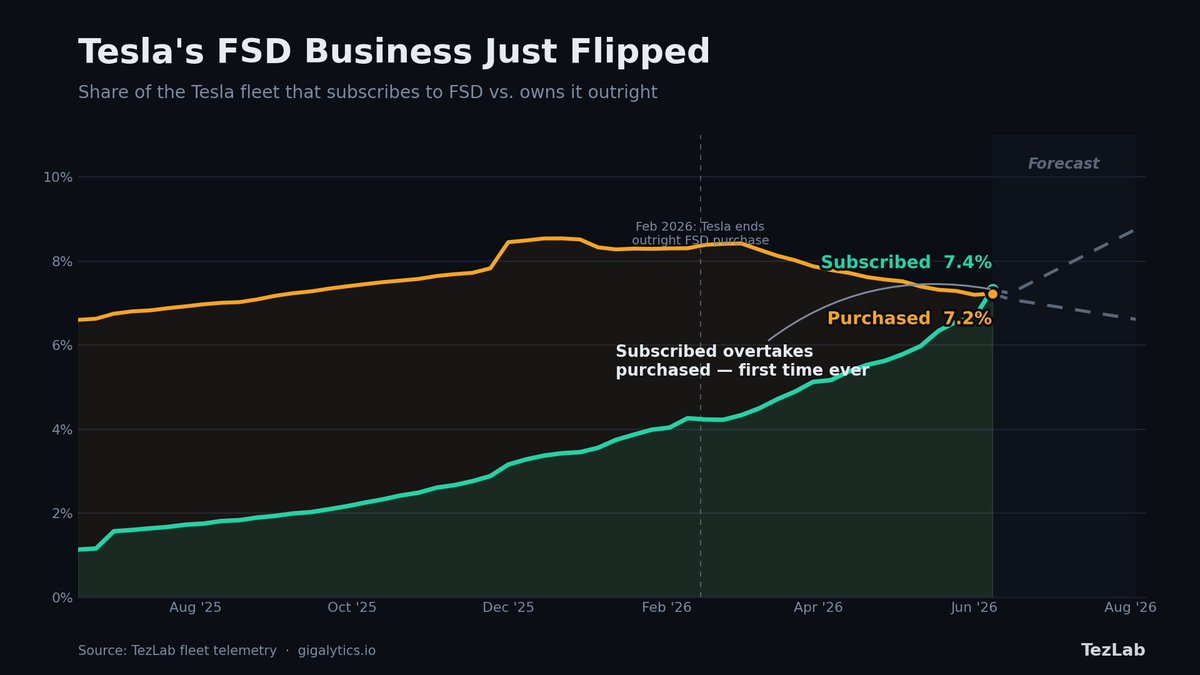
The crossover ! It happened.
For the first time ever, more of Tesla's fleet subscribes to FSD than owns it outright.
Subscribed: 7.4%
Purchased: 7.24%
The lines crossed last week. Tesla killed the one-time purchase in February. Only one of these can go up from here.
The rate is accelerating. Will share more on this soon.
@wholemars @SawyerMerritt @herbertong @CernBasher @TezLabApp
14
30
247
14,016
Ben Schippers retweeted

Jun 2
Big Battery Health update, live now! ⚡🔋
• Way faster across the board
• Squashed a bunch of bugs
• Sharing your numbers is so much cleaner
• Smoother flow start to finish
The honest number on your Tesla's battery how you stack up against the whole fleet. Give it a spin! 🔥
iOS now, Android soon 👉 batteryhealth.app
Please consider giving us a 5 star review - apps live and die with 5 stars. Thank you.
@teslaownersSV @DirtyTesLa @tesla_raj @Tesla
4
4
17
7,012
Ben Schippers retweeted

May 31
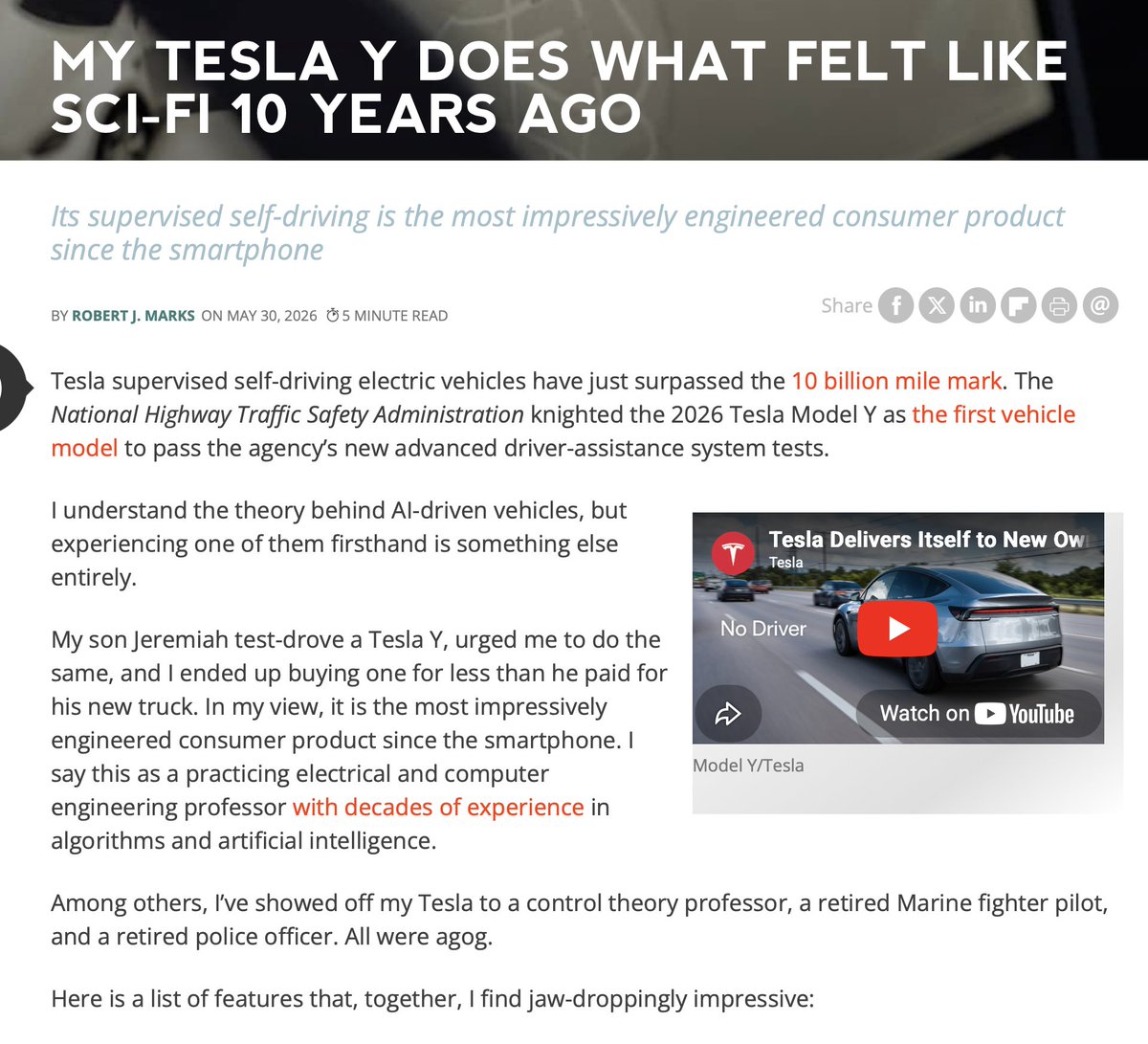
Robert Marks on @Tesla FSD (Supervised) after buying a Model Y:
"Its self-driving is the most impressively engineered consumer product since the smartphone. I say this as a practicing electrical and computer engineering professor with decades of experience in algorithms and artificial intelligence.
Among others, I’ve showed off my Tesla to a control theory professor, a retired Marine fighter pilot, and a retired police officer. All were agog.
Whether Tesla ultimately dominates the future of transportation or merely helps ignite it, one thing is clear: the automobile is being reinvented before our eyes. For those like me who grew up thinking of cars as engines, gears, and gas tanks, stepping into a Tesla feels less like buying a new car and more like getting a glimpse of tomorrow."
Full article: mindmatters.ai/2026/05/my-te…
70
403
2,664
130,153
Ben Schippers retweeted
May 23
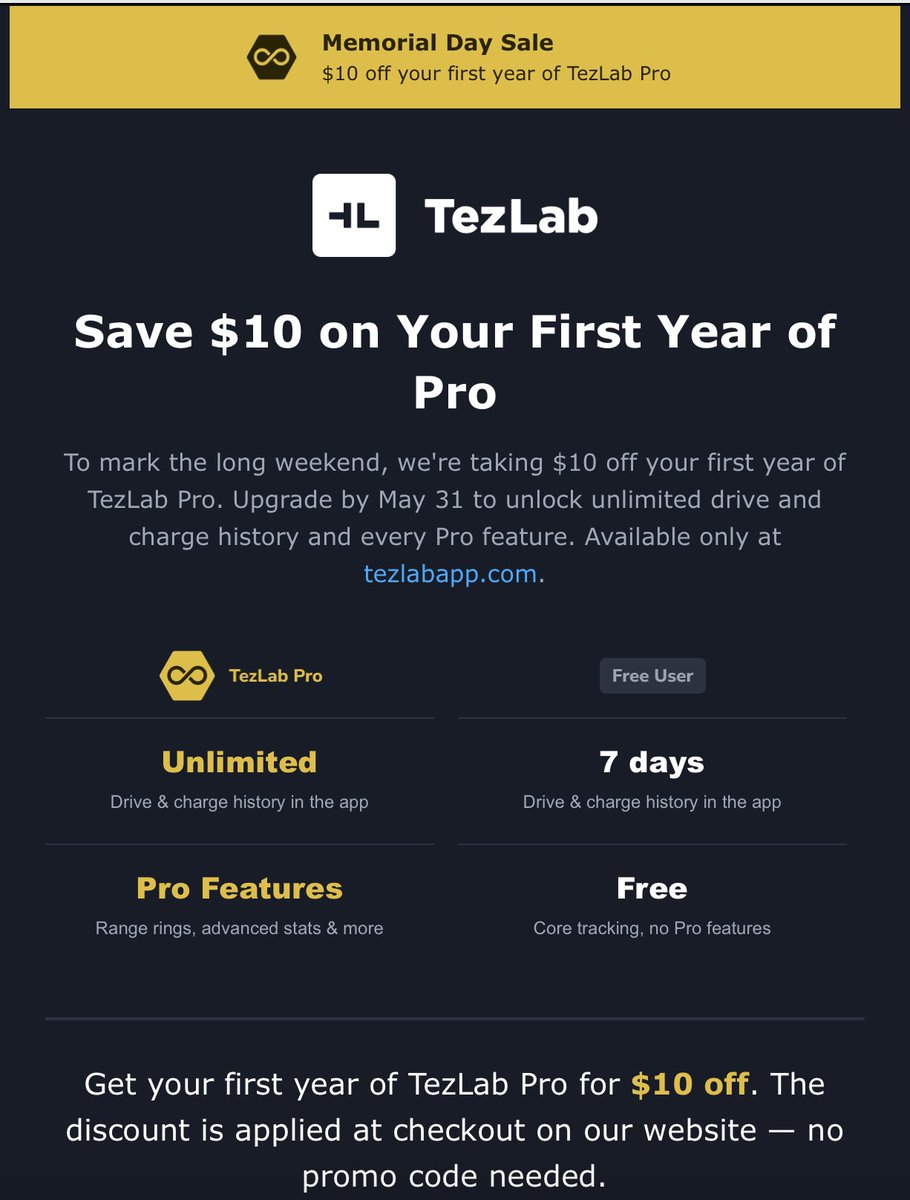
📷Memorial Day Sale
$10 off your first year of TezLab Pro📷
Save $10 on Your First Year of Pro
To mark the long weekend, we're taking $10 off your first year of TezLab Pro. Upgrade by May 31 to unlock unlimited drive and charge history and every Pro feature.
Available only at tezlabapp.com.
Get your first year of TezLab Pro for $10 off. The discount is applied at checkout on our website — no promo code needed.
tezlabapp.com
@DirtyTesLa @wholemars @TesLatino @teslaownersSV
3
5
8
4,405
Ben Schippers retweeted
May 13
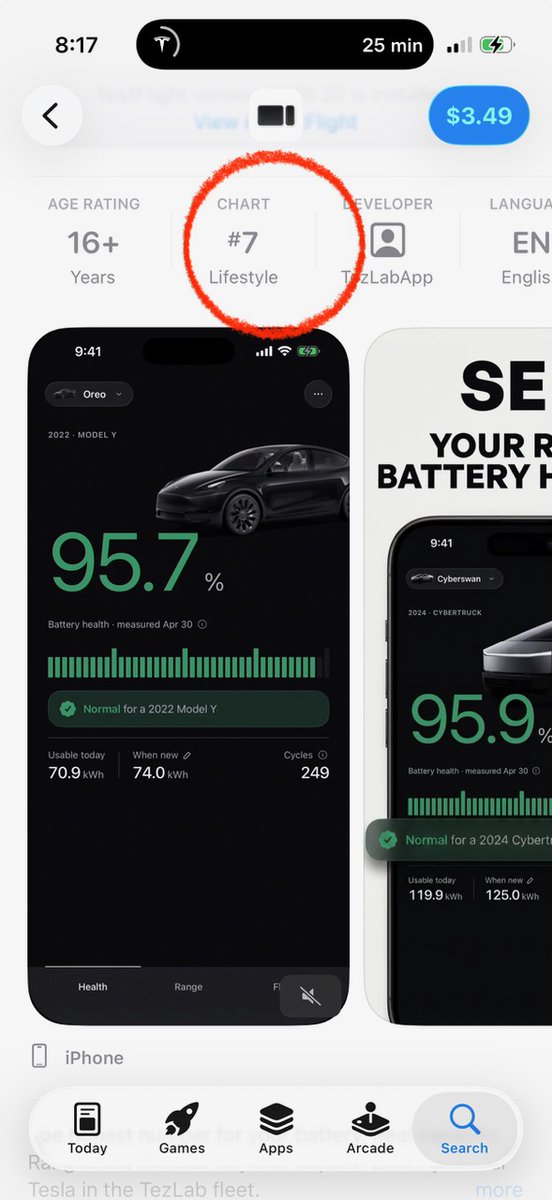
After a few days in the app store, BatteryHealthTesla is #7 under Lifestyle. To the many of you who downloaded, thank you - means the world. Please share around so we can break top 5.
@wholemars @DirtyTesLa @Tesla @herbertong @CernBasher @teslascope
18
8
55
36,603
Ben Schippers retweeted
May 12
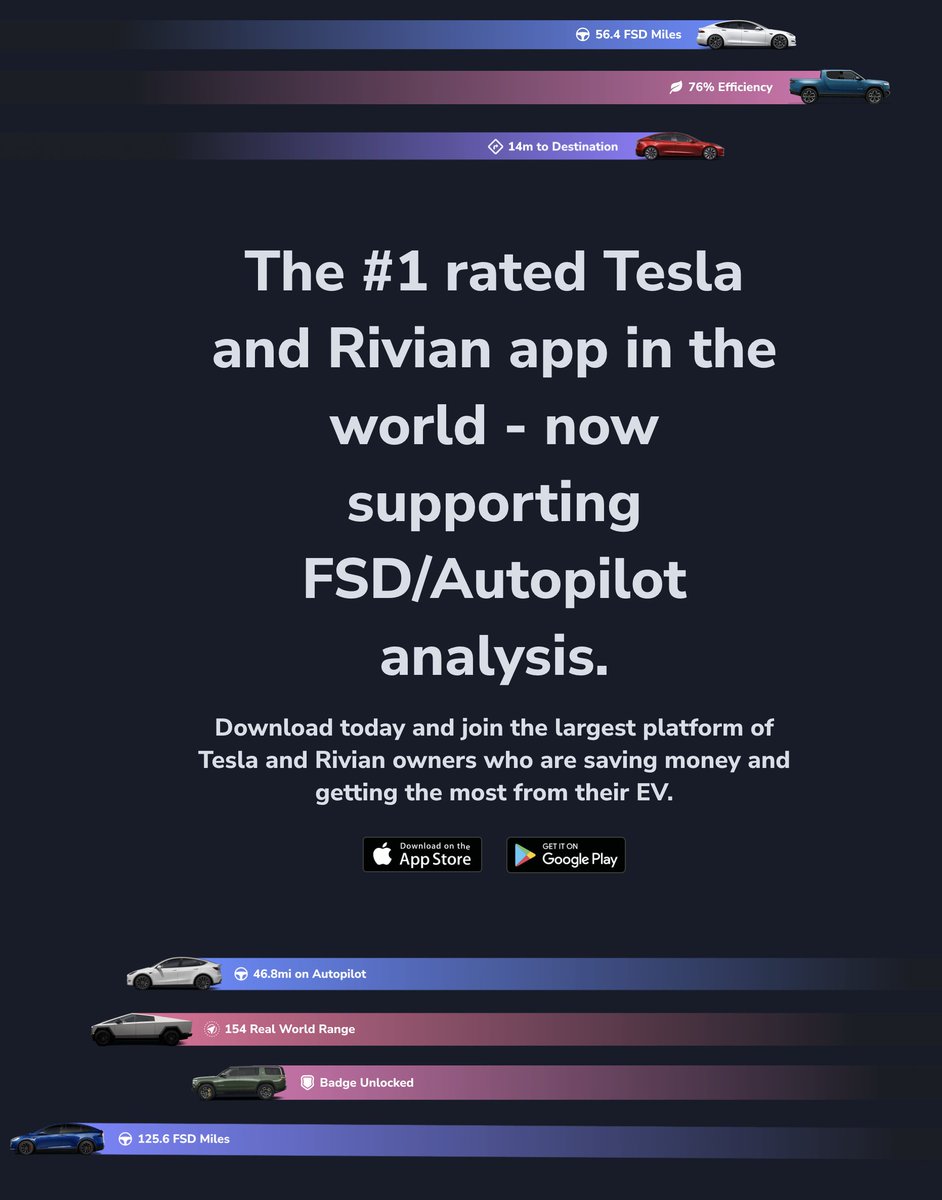
We updated the entire @TezLabApp backend. 🔥
Months of heads-down work that doesn't show up in a release notes page — a complete update. As of this week it's all live, and you should feel it the moment you open the app.
If you have a lot of TezLab history (and so many of you do), you know what I'm talking about — the spinner, the slow charger map, the FSD breakdowns that took a beat. That's mostly gone now.
🚗 Trip data loads instantly
🤖 FSD analysis crunches in seconds
📍 Road trip planning is alive
⚡ The charger map populates the moment you pan
🔥 The Zaps feed actually keeps up
🚀 And every smaller thing too
Plus — we just launched a brand new app: Battery Health for Tesla 🔋
The honest number for your battery, max range plotted over time, and how you stack up against every similar Tesla in the TezLab fleet.
iOS now · Android coming soon
→ batteryhealth.app
Already a TezLab Pro customer? You already have all of this in the main app.
Free 14-day trial: tezlabapp.com/subscribe
Founders Series (lifetime access): tezlabapp.com/founders
Cheers — Ben and the larger TezLab team.
@DirtyTesLa @wholemars @TesLatino
5
4
14
1,318
Ben Schippers retweeted
May 7
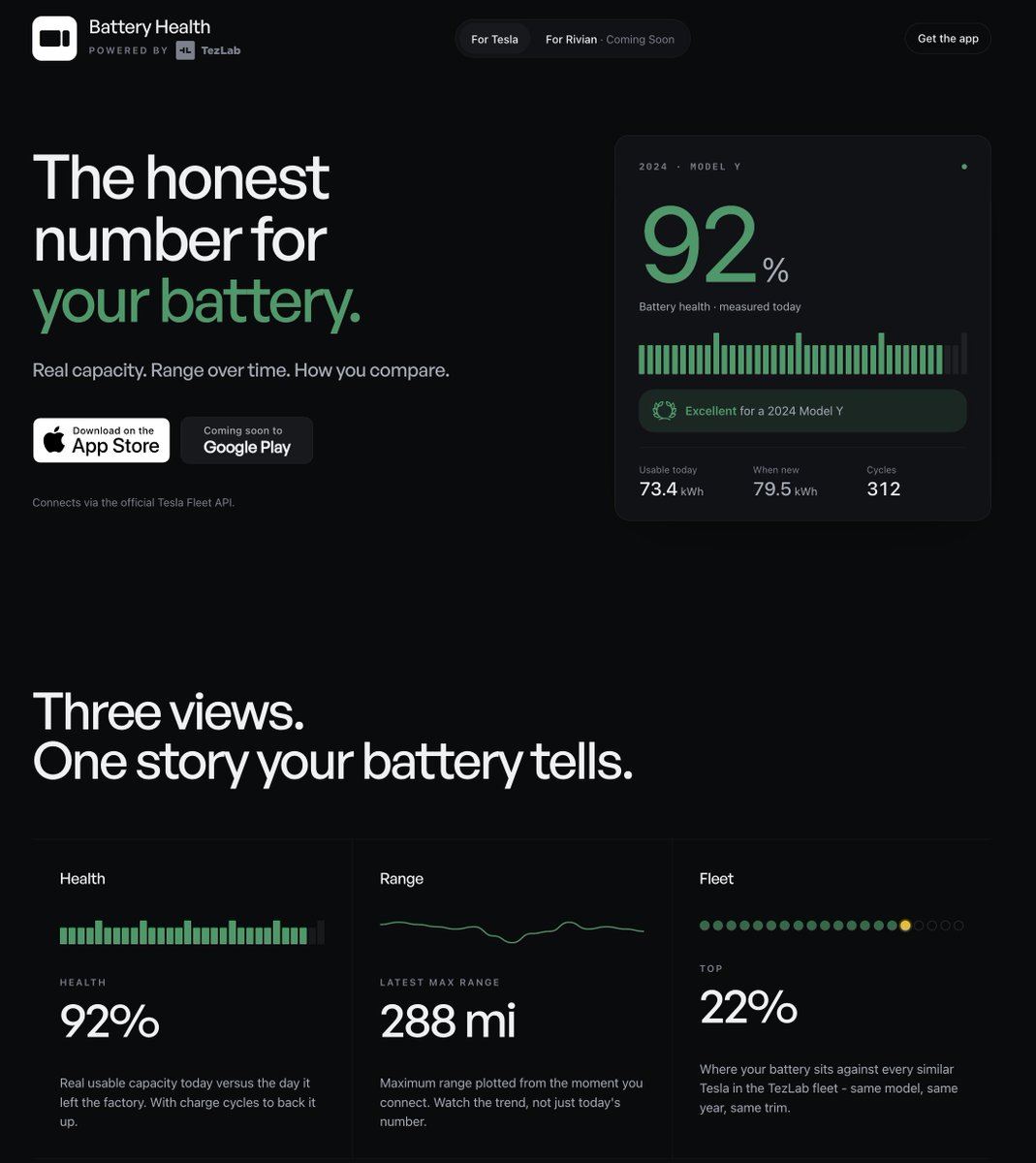
We've been hard at work building what we do best, the absolute best in class apps. This time, Battery Health. There's always so much speculation around battery health, so we wanted to wrap it up in a nice, dedicated experience. This is also in the core TezLab app, but if you're new to the community or want a beautiful, focused app, look no further than Battery Health For Tesla.
Share the love and spread some sugar (reviews on it). Simple and beautiful - work of art. And if anyone was actually in doubt, Tesla Batteries Are Incredibly Durable!
@wholemars @DirtyTesLa @elonmusk @teslaownersSV
@ThomasAlxDmy
batteryhealth.app/
6
6
35
7,561
Apr 17
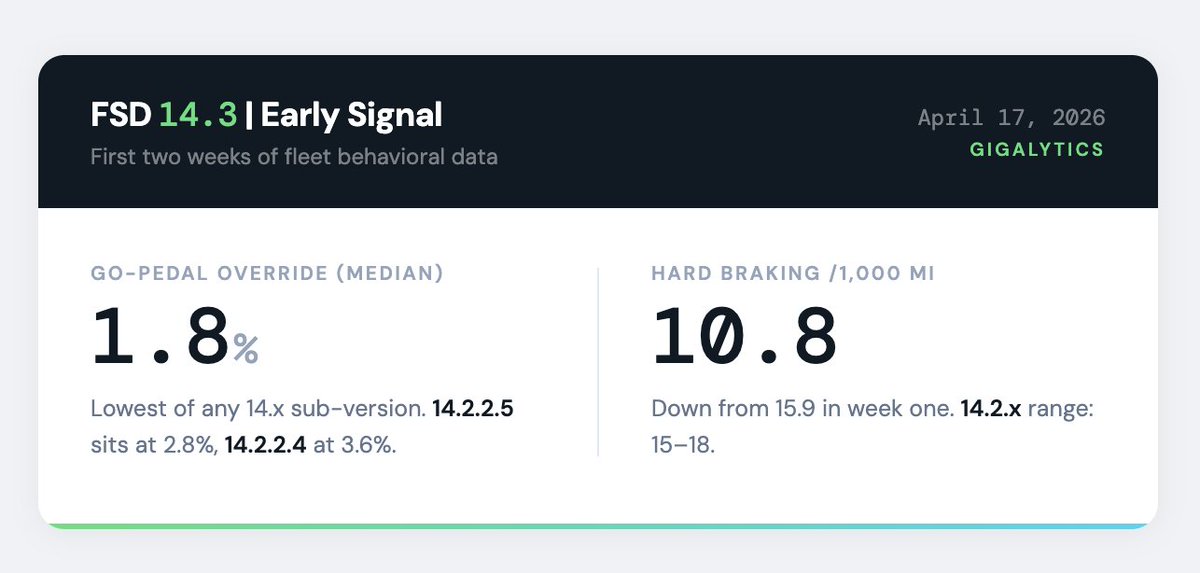
FSD 14.3 is two weeks old in our fleet data. Too early for conclusions, but the behavioral signal is clean.
Go-pedal override (median): 1.8%. That's the lowest of any 14.x sub-version we've tracked. For context, 14.2.2.5 sits at 2.8%, 14.2.2.4 at 3.6%.
Hard braking: 10.8 per 1,000 miles vs 15-18 for mature 14.2.x builds.
Whole-drive autonomy is right at 50%, in line with the broader 14.x average.
The caveat: small sample, early adopter bias is real, and two weeks of data isn't a trend. But when go-pedal AND hard braking AND whole-drive all point the same direction from day one, it's worth paying attention.
We'll keep tracking. Gigalytics data. @TezLabApp @munster_gene @wholemars
24
24
513
30,798
Apr 16
The FSD subscription flywheel is real, and nobody's tracking it.
Here's what's actually happening inside Tesla's FSD business right now, from our fleet telemetry data at @TezLabApp.
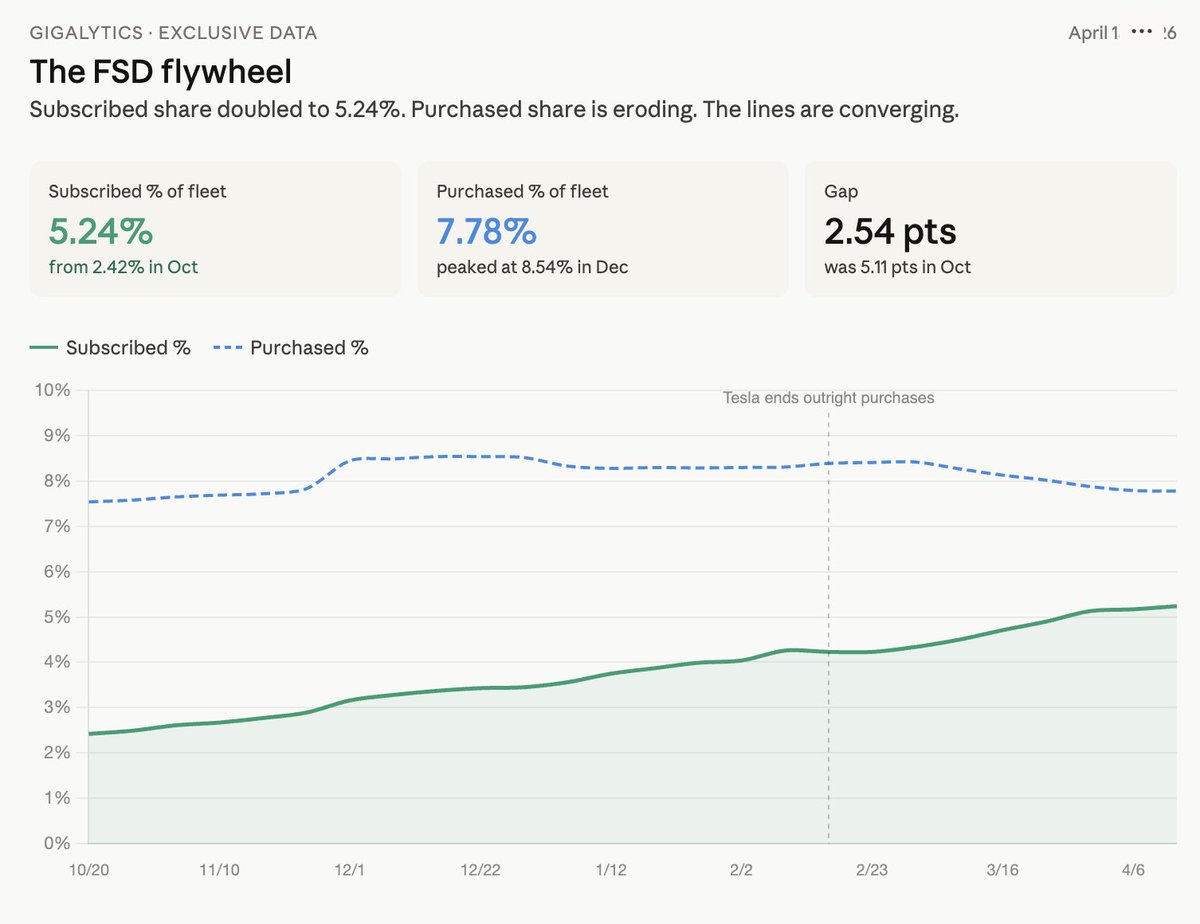
The metric nobody's watching: subscribed % of fleet.
Oct '25: 2.42%
Jan '26: 3.56%
Apr '26: 5.24%
That's more than doubled in six months. And it's accelerating. Subscribed share added almost a full point in March alone (4.34% → 5.13%).
To understand why, you have to go back to what Tesla did over the holidays.
In late November 2025, Tesla pushed a free 40-day FSD v14 trial to roughly 1.5 million HW4 vehicles. Biggest trial deployment they've ever run, timed perfectly for holiday road trips. In our data, December's new subscriber cohort was 84% trial users, just 16% paid. Tesla was betting that seat time would convert free users into paying customers.
That trial expired January 8.
What happened next is the interesting part. Trial volume collapsed. December's cohort was overwhelmingly trial, but January flipped to 78% paid. By March: 97% paid.
April is tracking 96%.
The trial-as-funnel strategy didn't produce mass conversion. But what it did do is clarify the subscriber base.
Look at M1 retention (the percentage still subscribed after one month) by subscriber type:
Paid M1 retention is consistently in the 86–100% range across cohorts with meaningful sample sizes. Remarkably stable.
Trial M1 retention: 81% in October, 41% by March. And by M2 (two months), trial retention drops to single digits. The December holiday cohort, Tesla's biggest bet, retained just 1% at M2. Essentially nobody who got the free trial stuck around.
Here's the thing people will miss. The overall M1 retention number for March looks great at 91.1%. But it looks great because the composition changed, not because retention "improved" in the abstract. When 97% of your cohort is paid subscribers who retain at 92% , the blended number naturally rises. That's not a retention improvement. It's a base quality improvement. Important distinction.
Then on February 14, Tesla ended outright FSD purchases entirely. No more $8,000 one-time buy option. It's $99/month or nothing. (as of today:)
This is where the compounding kicks in.
The mechanics: new paid subscribers enter each month. They retain at 87% even four months in (the October '25 paid cohort, our oldest with M4 data, is still at 87%). Very few leave. Each new month's cohort stacks on top of the ones still there. Since the trial churn cleared in late January, activations have exceeded churns every single week. 12 straight and counting. That's how you get subscribed share doubling.
Meanwhile purchased % peaked around 8.5% in December and has been slowly eroding. 7.78% and declining. Natural attrition as people sell vehicles, trade in, etc. Since Tesla killed the purchase option, that line can only go down from here. The subscribed line can only go up. At the current trajectory, they cross sometime this year. (A few older subscribers transferred FSD to HW4 but that's a very small number.)
One more corroborating signal worth paying attention to: the people who subscribe aren't casual about it. FSD now accounts for 50.5% of driving distance and 63.1% of driving duration among users. These aren't people toggling it on occasionally. FSD is their default driving mode. The gap between distance and duration is itself interesting. FSD overindexes on city and slower-speed driving versus highway, which is where the higher duration percentage comes from. That's consistent with what we see in the whole-drive autonomy data: v14.x users complete 50% of their drives entirely on FSD without intervention.
What this doesn't tell you: whether the holiday trial "failed." You could frame 1.5 million free trials with near-zero conversion as a waste. Or you could frame it as Tesla stress-testing the funnel at massive scale and learning that the product now sells itself to people who are ready to pay. No free taste needed. The fact that Tesla followed the trial by killing outright purchases suggests they're betting on the second interpretation.
Either way, the observable outcome is this: the casual users washed out, the purchase option is gone, and what's left is a subscription base that compounds because retention is high enough that inflows consistently beat outflows.
That's the flywheel. And it's the number to watch going forward.
Exclusive data from @TezLabApp fleet telemetry · gigalytics.io @CernBasher @herbertong @wholemars @DirtyTesLa @farzyness
43
85
614
112,211
Ben Schippers retweeted

Apr 16
FSD was just approved in the Netherlands on Friday & is going for EU wide approval. They’re hiring 100s of people for Robotaxi fleet management across 34 US cities. Tesla outsold BYD EV and is #1 again globally….
24
31
663
10,343
Apr 13
Hard Breaking Rate
An under appreciated metric in FSD performance: hard braking rate.
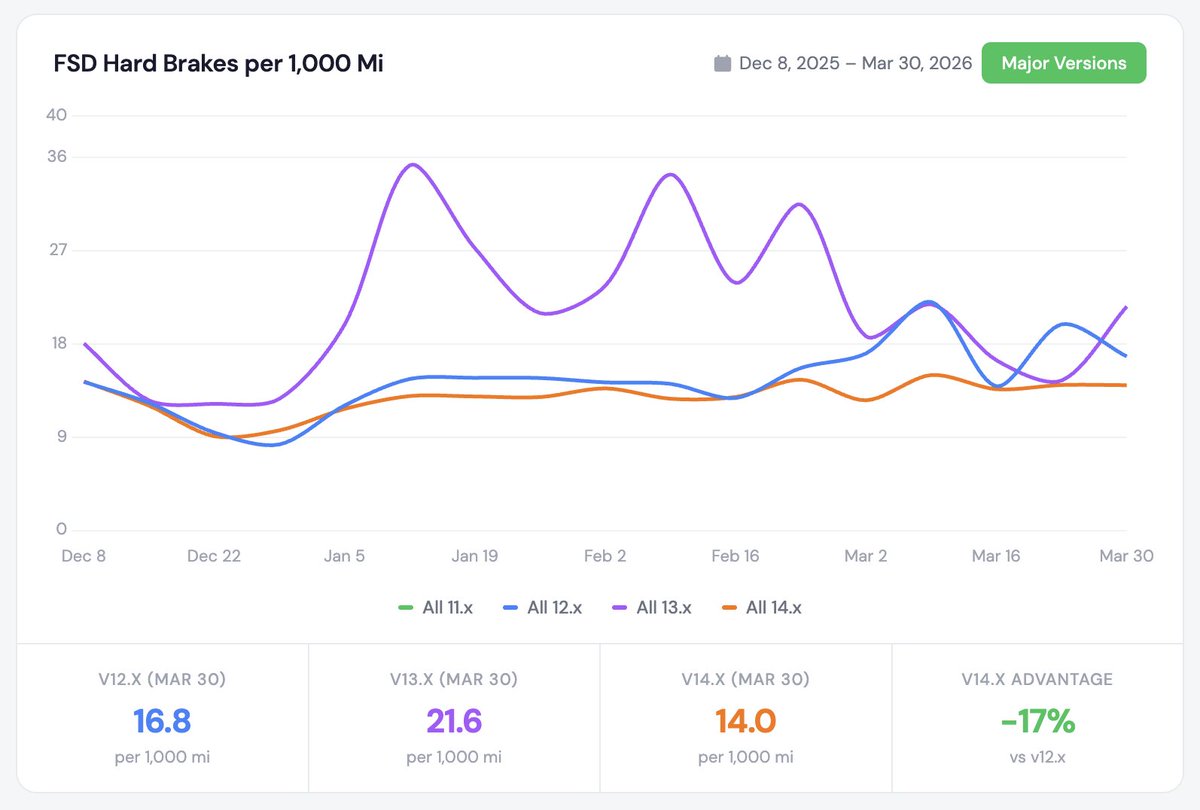
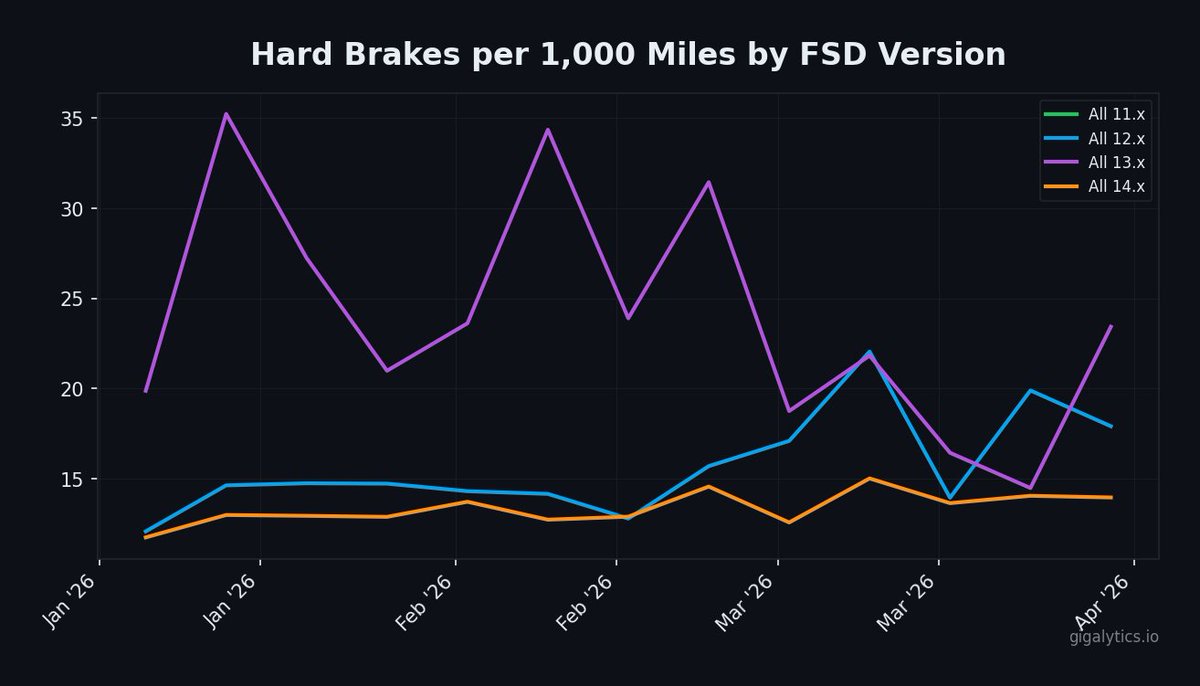
We track hard braking events per 1,000 miles across every major FSD version in the Gigalytics fleet. Here's what 17 weeks of data shows:
v14.x: holding steady around 14 per 1,000 miles since December. Remarkably flat — the tightest band of any version in the dataset.
v13.x: swinging between 12 and 35 per 1,000 miles, sometimes doubling week to week. The volatility alone tells a story.
v12.x: averaging around 15, but increasingly noisy as its active user base shrinks and small sample effects creep in.
A few things worth saying about what this metric does and doesn't tell you.
A hard brake isn't always the system making a mistake. Route mix matters — city-heavy driving naturally produces more braking events than highway cruising. Traffic density, weather, and time of day all factor in. And just like with go-pedal overrides, driver preference plays a role. Some drivers brake harder by habit, and FSD adapts to that context differently across versions.
But here's what makes v14 stand out: it's not just the lowest rate — it's the most consistent. When a version holds a tight range for 17 consecutive weeks across a large and diverse fleet, that's not luck. That's a system handling deceleration decisions more predictably across conditions. The variance matters as much as the average.
And this lines up with everything else we're seeing in the v14 data. Whole-drive completion rates around 47–50%, go-pedal overrides at their lowest ever, and now the smoothest braking profile in the dataset. These aren't independent signals — they're all pointing at a version that drives more like a human expects it to.
v13.x's spikes aren't necessarily regressions either. With a smaller and shrinking user base, a handful of unusual drives can move the weekly number dramatically. That's the nature of fleet telemetry at the edges — you're measuring real behavior, not controlled tests.
We'll keep watching this one, especially as 14.3 starts rolling out to more vehicles and shifts the version mix.
📊 gigalytics.io | Data from @TezLabApp fleet telemetry.
@CernBasher @herbertong @elonmusk @wholemars @ChuckCook
12
5
84
12,308
Ben Schippers retweeted

Apr 10
77
124
700
242,429
Ben Schippers retweeted

Apr 9
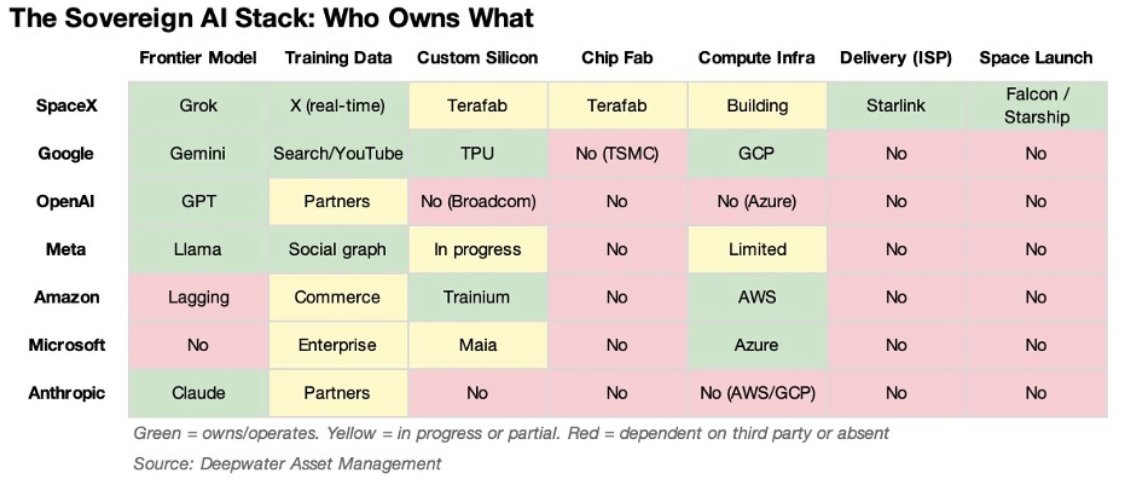
SpaceX, across Musk’s constellation of assets, has a plausible path to owning every single layer. Chips. Models. Data. Internet delivery. And the rockets to put it all wherever physics allows. No other company has that opportunity.

85
278
1,576
167,155
Apr 7
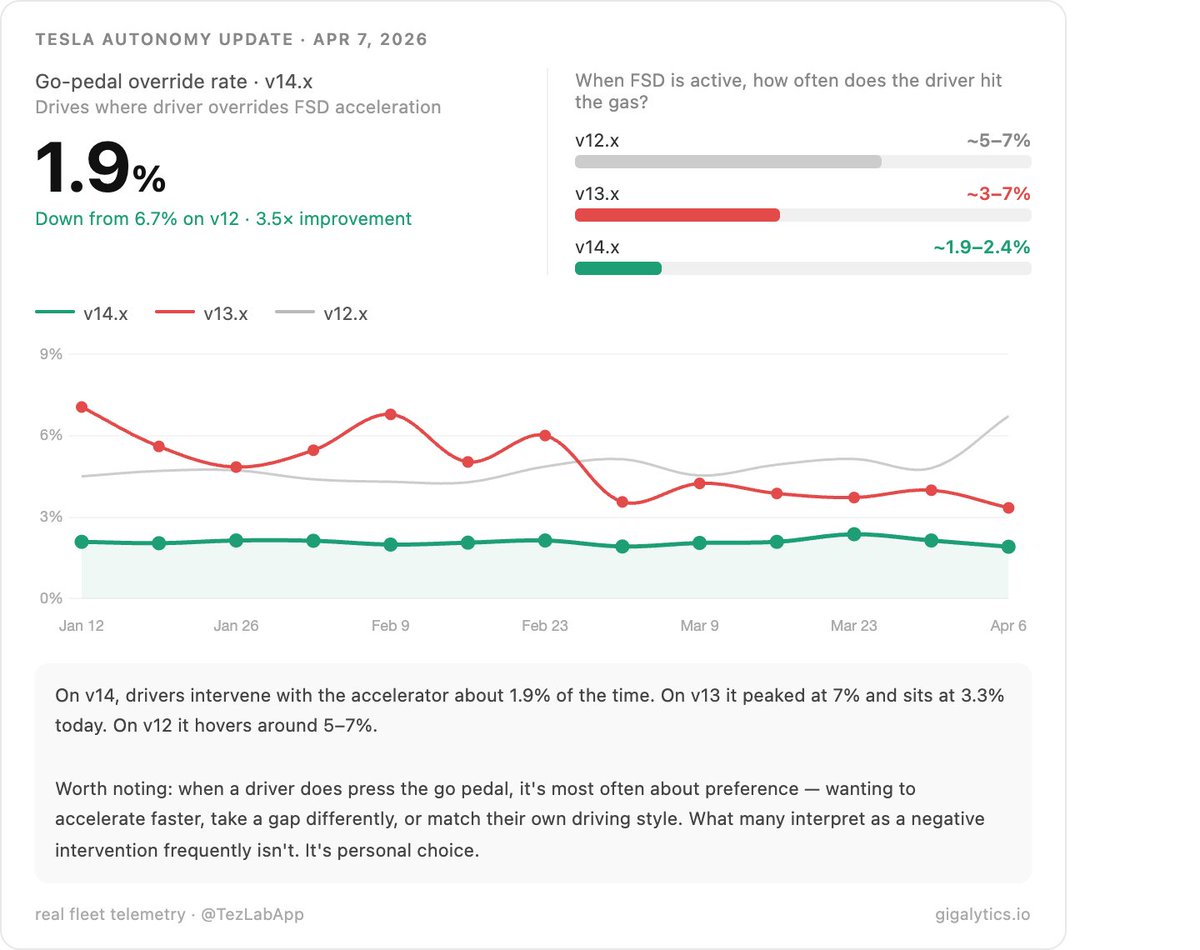
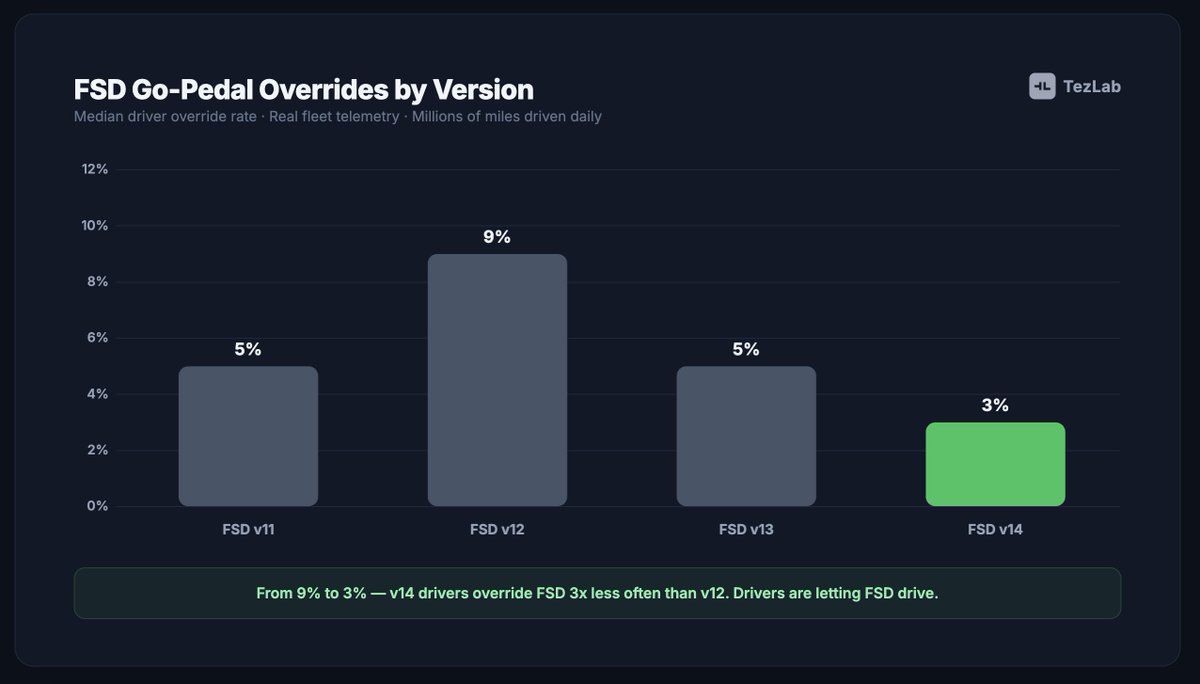
Here's an underreported FSD metric: go-pedal override rate — how often a driver presses the go-pedal while FSD is active.
On v14, drivers intervene with the accelerator about 1.9% of the time. On v13 it peaked at 7% and sits at 3.3% today. On v12 it hovers around 5–7%.
Worth noting: when a driver does press the go pedal, it's most often about preference — wanting to accelerate faster, take a gap differently, or match their own driving style. What many interpret as a negative intervention frequently isn't. It's personal choice.
This is a metric I'll be covering a lot more with real data to back it up. There's an enormous opportunity for @Tesla to do incredible story telling here and broadly about FSD. Hope they do. Happy to help.
@CernBasher @wholemars @herbertongg2 @DirtyTesLa
60
21
342
26,327
Apr 6
Here's something that snuck up quietly.
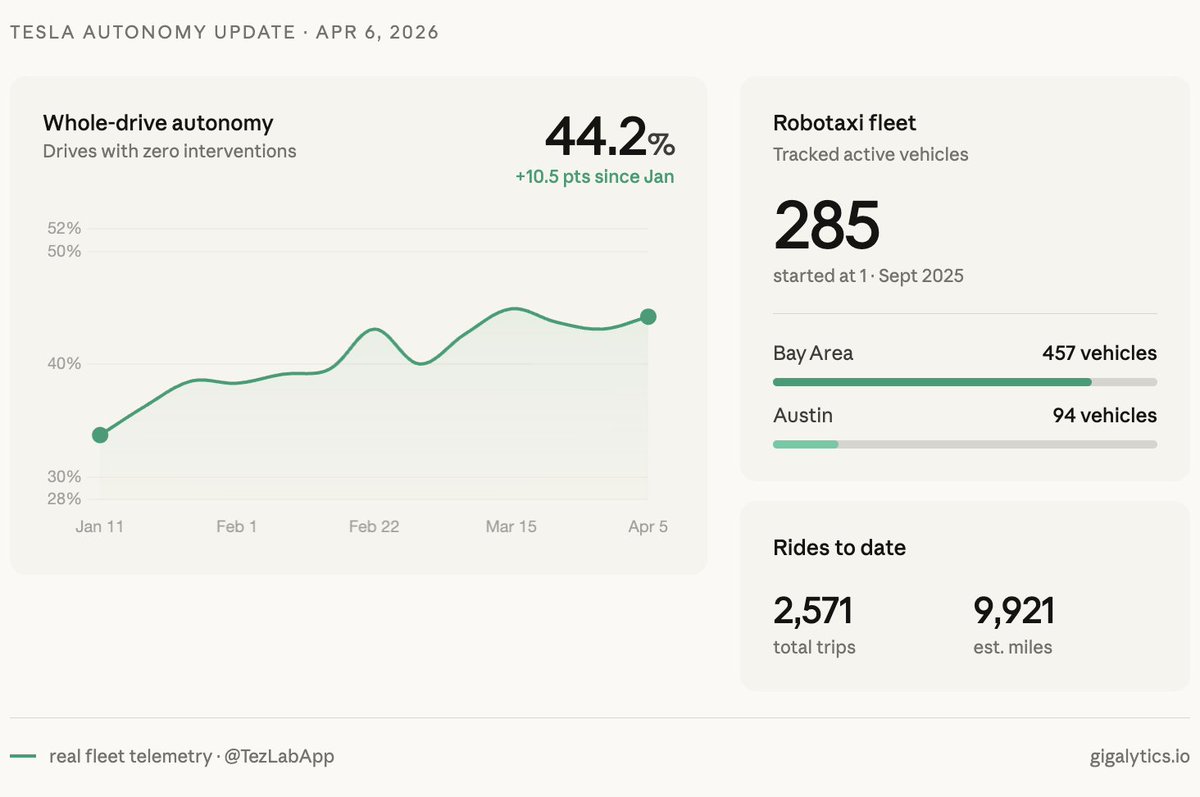
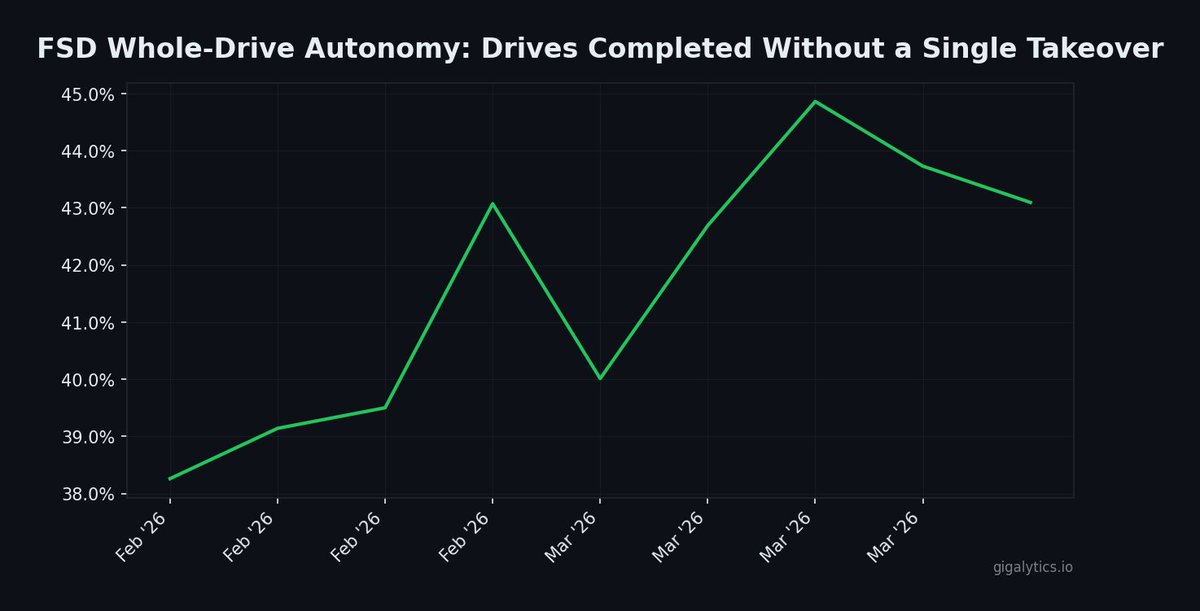
In January, 1 in 3 FSD drives finished without a single human intervention.
Last week it was nearly 1 in 2.
44.2% whole-drive autonomy. No takeovers. Hands never touched the wheel.
13 weeks. 10 percentage points. While mainstream is following the stock price, @Tesla is deploying some of the most consequential technology for the many years to come. @CernBasher @wholemars @herbertongg2 @farzyness
Sharing the truth - Real fleet data from @TezLabApp / Gigalytics
23
22
297
21,754
Ben Schippers retweeted

131
279
2,540
252,702
Apr 2
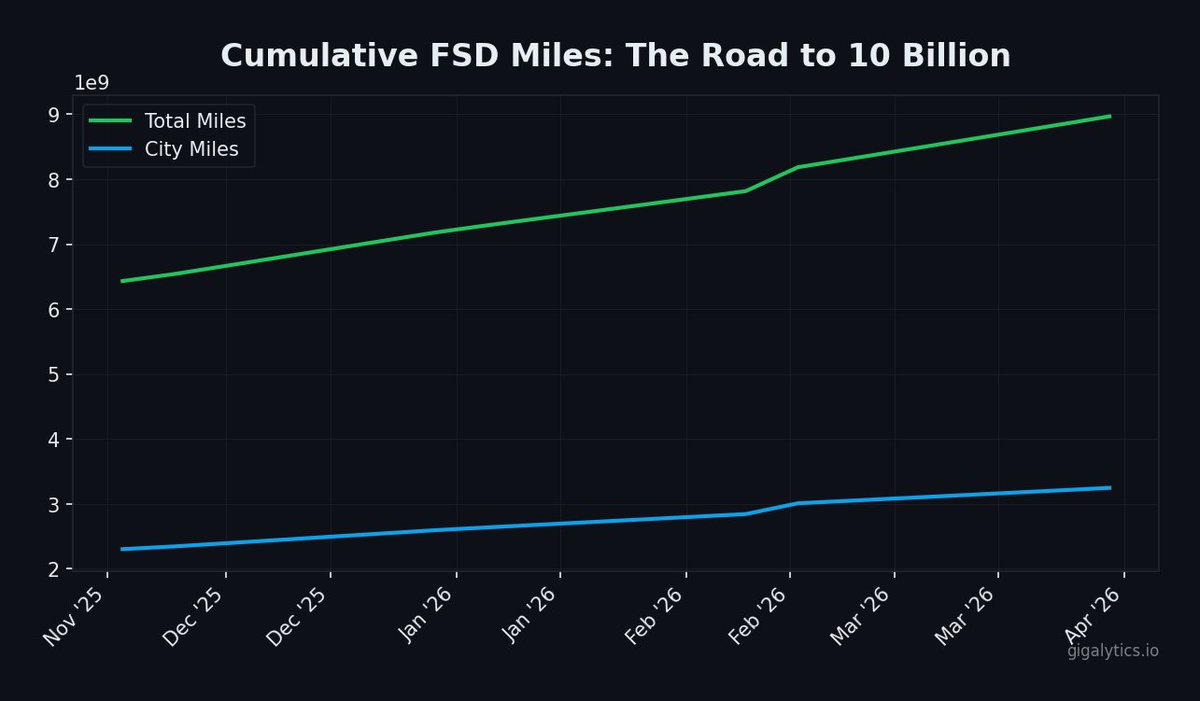
1/ FSD crossed 9 billion miles last night. A few numbers worth knowing. 🧵
2/ 9B total miles. 3.25B of those are city miles. ~130M miles added every week. At that rate, 10 billion lands in early June.
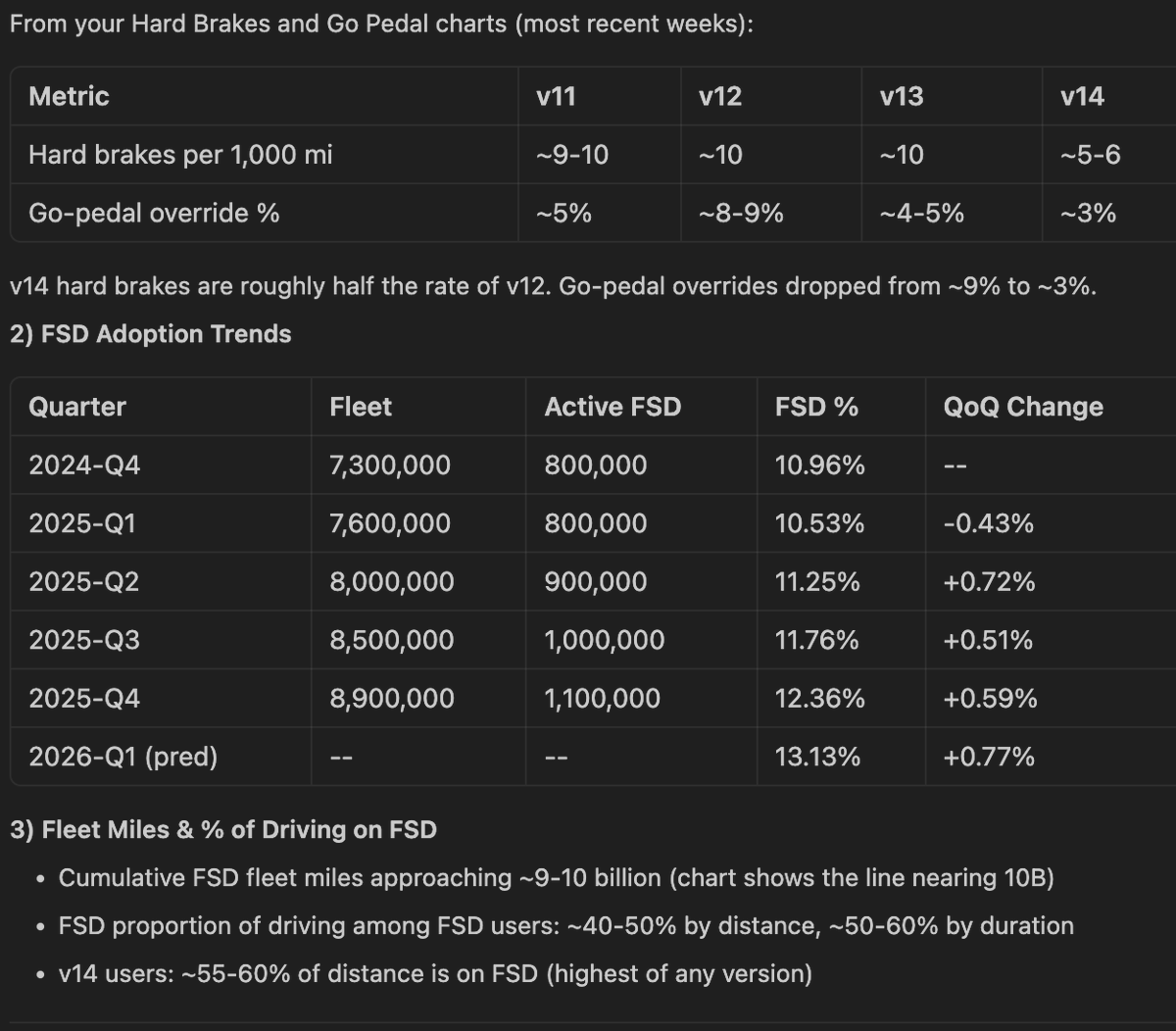
3/ Fleet adoption: 13.18% as of last week. 8 straight weeks of growth. Q1 2026 was the biggest quarterly gain we've tracked — 0.77 points QoQ. Over 1.1M active FSD vehicles.
4/ Whole-drive autonomy went from 38% in January to 44% in March. v14 hard brakes: ~13/1,000 mi. v13 has averaged more than double that over the same period.
5/ Robotaxi fleet: 16 vehicles on Jan 1. 280 by end of March. 549 today. 17x growth in 3 months.
6/ More miles. Better model. More trust. More usage. More data. Sharing the truth using real numbers.
@TezLabApp Gigalytics @CernBasher @wholemars @herbertongg2
2
5
55
2,617
Apr 2
FSD 14.3. --> We are and will continue to track all 14.3 releases and share all FSD related information related to trends as they come in. We expect to have clear pictures soon. We'll keep everyone posted. @TezLabApp @wholemars @herbertongg2
1
4
191
20,068
Apr 1
The people paying for FSD — no trial, no promo, no discount — are staying. And they're driving hands-free more than ever. Here's what the fleet data actually shows. 🧵
1/ Organic FSD subscriber retention is sitting at ~90% after month 1. These aren't trial users. These aren't holiday deal chasers. These are people who opened the app and decided to pay. That number has held steady across Oct, Jan, and Mar cohorts. Three in a row.
2/ The ones who stay? They're handing over the wheel more every month. In January, ~38% of FSD drives completed entirely without intervention — door to door, zero takeovers. By March: 44%. Nearly half of all FSD drives now complete themselves. Think about that for a second.
3/ Baseline adoption keeps climbing quarter over quarter — even after every promo wears off, the floor keeps rising. Q4 2024: 10.96% → Q1 2026 est: 13.13%. Each cycle ends higher than the last.
The headline isn't that trial users churn. Of course they do. The headline is that the product is earning real loyalty — and the people who stay are going increasingly hands-free every single month. That's the story Wall Street is going to wake up to. @CernBasher @herbertong @wholemars
Data: real fleet telemetry via @TezLabApp / Gigalytics
9
25
189
20,482
Mar 25
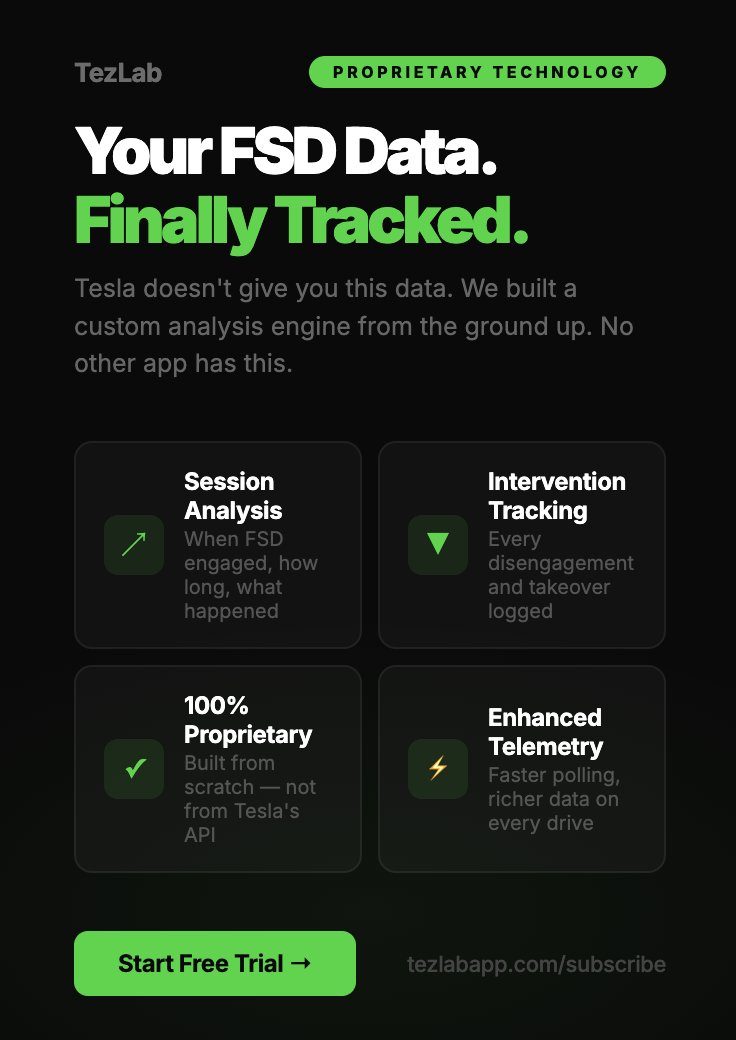
We spent a long time building this. FSD tracking that's 100% proprietary — no one else has it because Tesla doesn't expose this data through their API.
Every session. Every takeover. All tracked.
14-day free trial: tezlabapp.com/subscribe
6
4
44
7,672