
Bob of Speakers’ Corner, Christian Evangelist & Apologist
Joined November 2019
- Tweets 53,760
- Following 13,885
- Followers 59,151
- Likes 19,946
1,188 Photos and videos

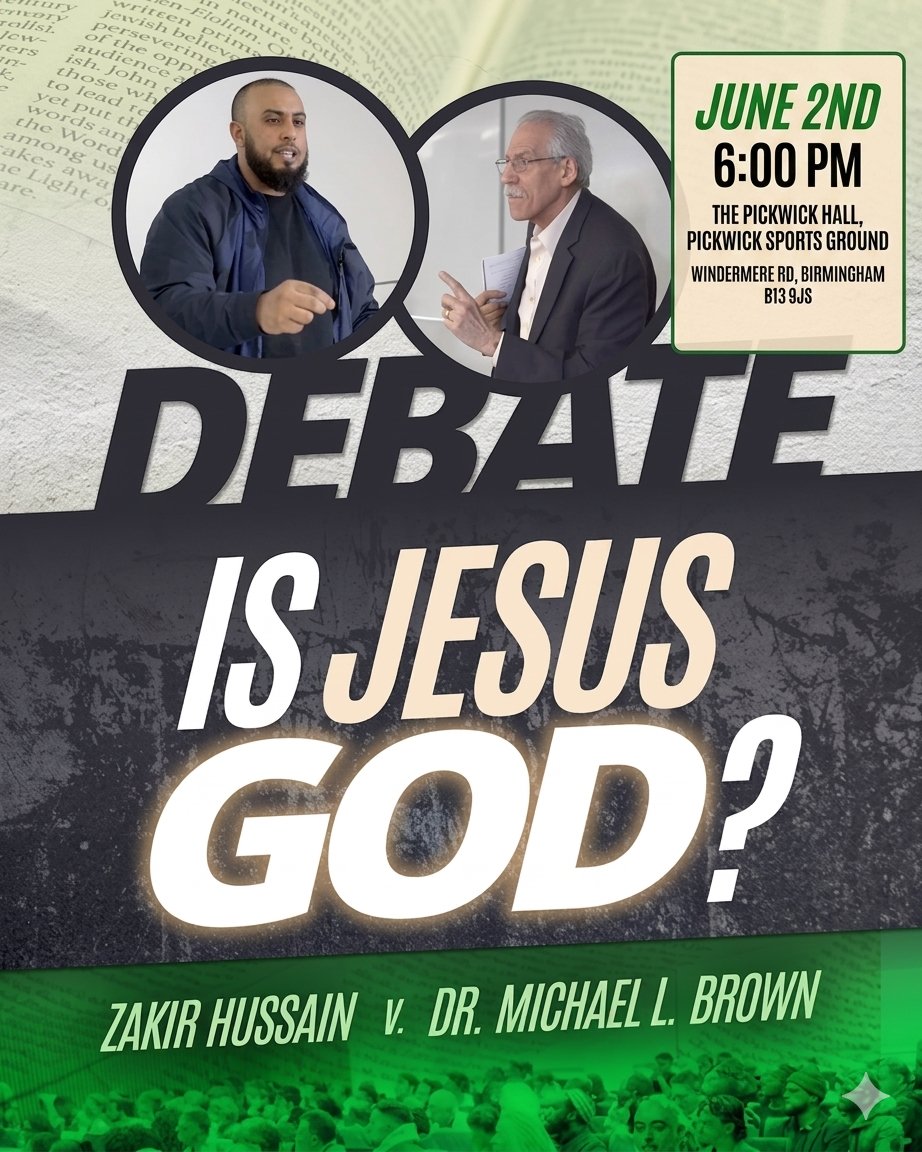




...but the families are still reading them... They could just say no...

🚨BREAKING: A number of people have stepped forward to claim that a Government Organisation named RICU hide the truth from the British people whenever a migrant attack happens and manage the response
This includes writing statements for bereaved families to read out 😳
The government are trying to comtrol the narrative!

1
1
11
469
Open anti semitism in Liebours London! Stand with Britain's Jews!

Disgusting antisemitism on the streets of Sadiq Khan's London.
1
6
445
This is such a simple fix it's baffling as to why it's not been done already. Here is my guess, the supermarkets know that halal meat will be left on the shelf!

Religiously slaughtered meat needs to be clearly labelled.
We have a right to know what we are eating and how it has been killed.
4
2
11
404
Bob of Speakers Corner retweeted

Religiously slaughtered meat needs to be clearly labelled.
We have a right to know what we are eating and how it has been killed.
461
772
4,135
41,365
Bob of Speakers Corner retweeted

Important !
22h

The MUSLIM PROTECTION UNIT has put a message out in social media calling for Muslims in the UK to prepare for civil unrest.
What are they planning?
180
1,241
3,091
62,327
The elites are being taken from mugs! #theelitesmustgo

Thousands of foreign students vanish from Britain after failing to pay nearly £900MILLION in loans
gbnews.com/money/migrant-cri…
6
379
Bob of Speakers Corner retweeted

This may shock people, but it is possible to answer everyone's questions for free and still raise support to survive. I try to answer every question on a Live Q&A; the difference is superchats are placed on screen.

...I've never once asked for a super chat to answer a single question... My QnAs on my channel are completely free and I answer as many questions as possible in a two hour session. I am able to do this because Covenant Partners through donations, permit me to pay my bills, and have a wage, I then help everyone I can rich or poor believer or unbeliever and never ask for a dime! Just last night I offered to help a church run a mission week - they offered to pay me 1k - I said no I don't accept payments!
1
3
289
Bob of Speakers Corner retweeted

I find Catena a very easily accessible source for Bible commentaries. You can even choose your own Christian "tradition". There is a great app as well. catenabible.com/mt/1
1
2
1,321
Bob of Speakers Corner retweeted


Either @OrthodoxEthos or Fr Stephen De Young would be the best people to have it with. Would love to see that.
1
1
1,808
Hi reply to my saying feel free to arrange it! Lol honestly this is why I don't really engage people on their twitter replies most of them are just bad actors who poison the water.
Feels like ur ducking ngl
4
8
734
amplify his voice, raise awareness about his plight!

⚠️ONLY 1 DAY LEFT.
Tomorrow Egypt may sentence me to life — or death — for my Christian faith.
@egyptianppo — FREE SAID ABDELRAZEK NOW!
@elonmusk @realDonaldTrump
Pray for me. RT if you stand against this injustice. Follow @SaidAbuMustafa
#FreeSaidAbdelrazek
1
61
126
2,133
Christians in France need to adopt the Benedict Option; the Parish system no longer works and no longer viable.
Jun 13

🚨⛪ 𝗔𝗟𝗘𝗥𝗧𝗘 — Un incendie a ravagé la médiathèque de Condom, dans le Gers, située au-dessus du cloître de la cathédrale Saint-Pierre, classée Monument historique depuis 1840.
Près de 400 m² de toiture ont été détruits et 3 000 archives historiques sont parties en fumée.
6
31
1,118
...it is not enough... they need to prosecuted for their behaviour...
Council enforcement officers sacked after threatening to 'knock out' man for 'messing with our money'
gbnews.com/news/harrow-counc…
5
11
96
2,067
Yes - apart from a handful of people I've blacklisted, but yes, I am willing to debate my ecumenism with any takers.
Will you debate anyone on your “Christian ecumenism” stance?
4
1
27
1,586
Anger - will not fuel us through the fight we face; because eventually our anger destroys us; or burns out; and if all we have is anger towards something as our motivator; then - when the anger is gone, we are left only beholden to the thing we were angry with. We win; when we motivate ourselves by what we are FOR not what we are AGAINST; by what we LOVE not what we HATE; because then we seek to build and not destroy. I am not fighting against Islam - that battle is already won; by Christ alone; I am seeking to build up the Church in every way! Politically, culturally, socially, economically, spiritually; and I am seeking to bring Muslims into the salvation found only in the Church!
1
5
30
720
Insights for studying the scriptures:
1) read a translation you can understand
2) read a study version of that translation
3) start in the new testament
4) read the commentaries - readily available on the web as you read scripture
5) follow the liturgical readings of the calendar for your first three years
6) decide if you are reading for prayer or study and then act accordingly
7) always assume you know less than you think you do
8) remember scripture is not meant to be read as rule book - but a story book; that you soak yourself in the narrative and begin to frame your life and actions within that story
9) the scripture holds within it an icon of Christ; ask yourself, can you see him in the book you are reading
10) scripture is not to be understood outside of the teaching tradition of the Church held over the last 2000 years, if you think you have found something no one ever noticed before and has not been taught by the church before - you've most likely got the wrong conclusion.
3
3
14
614
I am convinced scripture requires women to cover their head when they pray or prophesy. I believe this practice was abandoned due to the rise of feminism; which launched a sustained campaign against it; and that Christians should recover this venerable practice of our people. It is not an issue to divide over however, infact, it's quite a low tier issue; but those of us that can should be encouraging sisters in the faith - to practice this tradition of the Apostles; so evident in scripture; without making it a stumbling block or a cause of strife within our fellowships. I've actually been blacklisted from a famous Oxford Church for suggesting that women should do - and my wife has started doing so when attending mass. We have much to recover as Christians; and the time is now - for sisters to reclaim Christian practice in its fullest and embody a Christian Feminism. The head covering is not about modesty of dress; people can cover their heads and still look and more importantly behave immodestly; it is about the reverence we owe to GOD in being His creatures, made in His image; and the order He has established.
26
7
106
4,412
If Jesus died for your sins, you can just keep on sinning. The west is corrupt and Christians drink alcohol and have sex outside of marriage.
So goes the accusation - here is the response!
This view of the west is based on ignorance and prejudice. The west is not Christian and the behaviour that is lampooned, such as the hedonistic culture of the west, has nothing to do with Christianity, but rather with the rejection of Christianity.
Christianity has no truck or partnership with the evils of alcohol abuse and sexual promiscuity, which are commonplace in the west. We will take each one of these in turn, beginning with the sin of promiscuity:
•Hebrews 13: 4 states clearly that the marriage bed should be protected. The Church interprets this as being both before and during marriage, for GOD will judge the sexually immoral.
•1 Corinthians 6: 9 lists the sexually immoral as being those that will not inherit the Kingdom of GOD.
•Ephesians 5: 3 speaks as if sexual immorality should not be known amongst the Church.
•Colossians 3: 5 call Christians to ‘put to death’ sexual immorality.
•Galatians 5: 19 – 21: lists the sexual immoral amongst those who will not inherit the kingdom of GOD, while also placing it on a par with idolatry.
It is therefore a stereotype among Muslims to think that Christianity teaches sexual licentiousness; it is a perception based on what is not know about the Christian faith, not upon what is known.
We will turn our attention to the matter of alcohol. Yes, Christians can drink alcohol, though some Christians, in the liberty of faith, abstain completely from the drink. Christians have, in the past, fought against the culture of drinking to excess, which is common in the liberal world of individual escapism; and was rampant in the harsh realities post the industrial revolution. Christians accept the use of alcohol as a gift; it can and does make men merry and joyful, see psalm 114: 14 – 15; and Ecclesiastes 9: 7.
The holy Scripture does not reject the drinking of alcohol, but rather the abuse of it; see:
•Ephesians 5: 18: in which we are commanded plainly to not ‘get drunk’.
•Proverbs 23: 29 – 35: warns against the dangers of wine (alcohol).
•1 Corinthians 6: 12; 2 Peter 2: 19: highlight the reason for the Christian position: we are to be masters of ourselves and not mastered by any kind of addiction or intoxication, whether chemical or imaginary. Our lives are to be free from the slavery to sin, so that we can do all things in their proper place, and proportion. We must do everything to the glory of GOD and that involves what we drink, how much we drink and why and when and where we drink, this precludes therefore the possibility that we can drink to the point of the loss of self-control. Simply, historically speaking as a practical point, people used watered down alcohol as a way of purifying water and making it safe to drink – as Timothy was advised to do by Paul; this was common wisdom; and is still wise today when water is impure (something Muhammad thought was impossible): 1 Timothy 5: 23 & Sunan An Nasai 326.
Muslims might think that any amount of drinking alcohol is a problem, and we can accept that is their position, however, we see this as less of a problem than the fact that Islam permits some abortion, some slavery, some polygamy and some secret marriages. We believe, on balance, that Christianity is fine; and has nothing to learn morally from a religion that permits such things. These are far greater evils in society; than a moderate occasional drink of alcohol.
However, then, lets deal with the deeper theological point: since Christ died for our sins, does that mean we Christians can continue sinning? This very argument is addressed in Romans 6: 1 – 14:
What shall we say then? Are we to remain in sin so that grace may increase? 2 Absolutely not! How can we who died to sin still live in it? 3 Or do you not know that as many as were baptized into Christ Jesus were baptized into his death? 4 Therefore we have been buried with him through baptism into death, in order that just as Christ was raised from the dead through the glory of the Father, so we too may live a new life. 5 For if we have become united with him in the likeness of his death, we will certainly also be united in the likeness of his resurrection. 6 We know that our old man was crucified with him so that the body of sin would no longer dominate us, so that we would no longer be enslaved to sin. 7 (For someone who has died has been freed from sin.) 8 Now if we died with Christ, we believe that we will also live with him. 9 We know that since Christ has been raised from the dead, he is never going to die again; death no longer has mastery over him. 10 For the death he died, he died to sin once for all, but the life he lives, he lives to God. 11 So you too consider yourselves dead to sin, but alive to God in Christ Jesus. 12 Therefore do not let sin reign in your mortal body so that you obey its desires, 13 and do not present your members to sin as instruments to be used for unrighteousness but present yourselves to God as those who are alive from the dead and your members to God as instruments to be used for righteousness. 14 For sin will have no mastery over you, because you are not under law but under grace.
It is quite clear that we Christians cannot, should not, and must not use our faith in the abundant mercy of GOD to be a licence to sin. The ancient commentators also saw this same truth in this passage; we will cite some of the commentators as evidence that Christians have never understood the faith as being licence to sin:
The believer who returns to his former way of life rejects the kingdom of God’s grace and returns to sin, i.e., to the pattern of his previous life. For we have received mercy for two reasons: first, that the kingdom of the devil might be removed, and second, that the rule of God might be proclaimed to the ignorant, for it was by this means that we came to desire this dignity.
Commentary on Paul’s Epistles. – Ambrosiaster
Shall we continue in sin that grace may abound? He puts and rejects the same objection as before. (Chap. iii. ver. 7.) And having set forth in the last chapter the grace and advantages by Christ's coming, he now exhorts them to avoid sinning and live in the grace of God.
(Witham[HA8.1]) – George Leo Haydock
Paul says: “Consider yourselves” … because complete freedom from sin is not a reality as yet…. We are told to live for God in Jesus Christ our Lord and to lay hold of every virtue, having Jesus as our ally in the struggle.
John Chrysostom
In the Scriptures we learn that there are three kinds of death. The first is when we die to sin and live to God. Blessed is that death which, escaping from sin and devoted to God, separates us from what is mortal and consecrates us to him who is immortal. The second death is the departure from this life…. The third death is that of which it is said: “Let the dead bury their dead.”
Ambrose of Milan
Clearly therefore, it is wholly inadequate and false to conclude that Christians believe that because Christ died for our sin, Christians believe we can go on sinning. Please show us the Christian teacher, respected by the Church, who teaches that we can go on sinning. We do, however, want to be clear that, as Christians, we believe in the mercy of GOD and in his forgiveness. So that when we sin - and all men do, including Christians - we can approach GOD with confidence in the knowledge of His mercy towards our repentance, our struggle to change the way we think, so that our lives are once again orientated towards GOD and not our sin; and travel along His way .There is no ‘forgiveness followed by punishment’ for Christians as there is in Islam for Muslims.
In Islam it is claimed that Muslims will be forgiven by Allah but then punished in any case, with a period in hell – consider:
See Quran 19: 71 and Ibn Kathir tafsir is clear, all Muslims will pass through hell at different speeds, depending on the weight of their sin. Where then is the forgiveness? Where then is Allah’s mercy whom having said he has forgiven the Muslim as the all merciful, punishes Muslims with a stint in hell anyway! According to the sunnah, Muslims will answer for their sin, so how then are they forgiven?
6
8
58
2,035
The slow death of Europe can only be stopped by abandoning Liberalism completely and adopting a new governing ideology. When you have had enough of Liberalism - Christian Nationalism is ready to be adopted!

Hier une Chapelle à Tregastel est en feu mais aussi un cloître à Condom où des livres du XVIe siècle partent en fumée (plus de 4300 livres archivés).
C'est quand même curieux tous ces édifices religieux qui font la fierté de la France et ses racines chrétiennes qui brulent!
Et comme l'Etat n'a plus de moyens (enfin sauf financer l'immigration de masse, l'Ukraine...!), la fondation du Patrimoine devrait lancer un appel aux dons pour rénover l'édifice dans les prochaines semaines!!!
2
18
80
1,524
Church you need to get serious about winning! Man up and stop playing at being impactful Christians... Unite, organise, train, mobilise, build... We need church LEADERS of the people of God - not church curators of a weekly timetable in a social club!
22h
The MUSLIM PROTECTION UNIT has put a message out in social media calling for Muslims in the UK to prepare for civil unrest.
What are they planning?
5
38
112
2,317