
Helping to make computer software happen.
Joined September 2010
- Tweets 3,710
- Following 198
- Followers 266
- Likes 356
253 Photos and videos





10 Oct 2024
17
Steven Mackenzie retweeted

11 May 2024
On a software development team, you'll be on a better trajectory if you think of requirements specifications as requirements speculations.
3
7
51
2,787
30 Dec 2023
I unlocked £29.50 Rush tickets for Back To The Future @TodayTixUK! todaytix.com/london/shows/22…
28
Steven Mackenzie retweeted
26 Sep 2023
Often, reducing batch size is all it takes to bring a system back into control. Eli Goldratt
2
7
527
Steven Mackenzie retweeted

18 Sep 2023
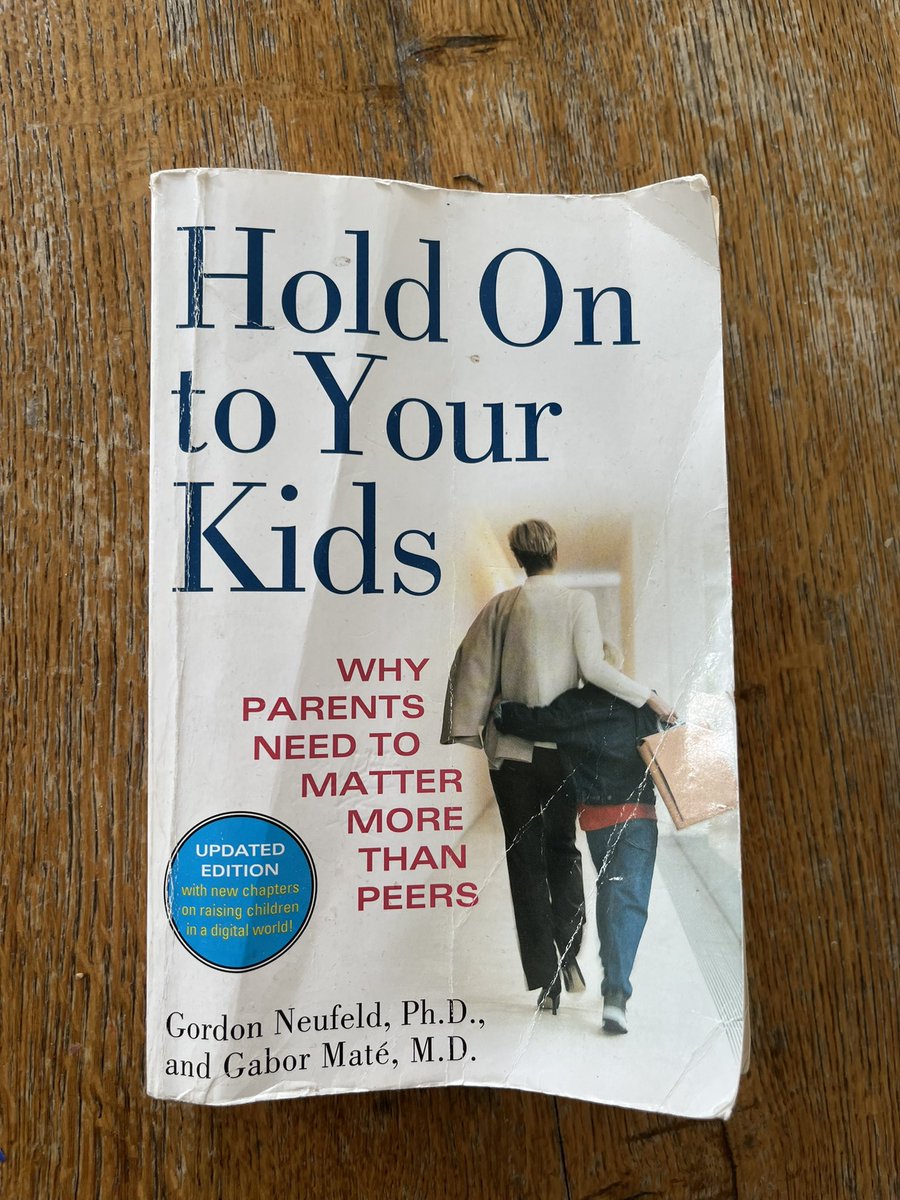
Before kids, I didn’t have strong opinions on how I wanted to educate my own. I thought “good grades, good schools, the rest will work itself out.”
Then I read this book and my mind exploded.
*Dr. Maté showed how*:
• me being stressed as a parent might be the number 1 worst thing I can do to my children
• why my children having healthy attachment to the nonstressed version of me might be the number 1 best thing I can support
• why it’s great for my kids to have friends but not for those friends to become more important than the parental bond
• why delaying social media and phones as long as possible is advantageous
• why homeschooling might not be a crazy idea after all
*After reading it, we*:
• started considering homeschooling (and we might actually do it next year)
• decided our boys won’t have phones or social media until at least teenage years
• doubled down on building career flexibility so that we can spend more time pursuing epic adventures with our kids as a family
• started consciously trying to de-stress in all aspects of our life, especially when our children are around
• acknowledged the big slice of humble pie that we just ate, and reminded ourselves to remain intellectually humble.
The book was especially meaningful to me because coming out of the pandemic (and having homeschooled the boys during that time) I FELT many of these things but didn’t have the community or the words and science to back up what I was feeling. The book did that for me.
My oldest is 8. I still feel like I’m figuring it all out. And I like it that way.
I’ve come to enjoy having my belief systems challenged. “Hold onto Your Kids” by Dr. Gabor Maté did that in such a beautiful way.
165
879
6,303
1,336,218
Steven Mackenzie retweeted

15 Sep 2023
I just finished working with @jboogie teaching OKRs & Story Mapping live. I think we’ve really got this stuff down. You should join us for the quick 2-hour version Oct 3!
bit.ly/okr-sm-oct2023
5
16
4,679
5 Sep 2023
I've voted for ZOE Science & Nutrition - podfollow.com/1611216298 in the @britpodawards Listeners' Choice Award. Vote for your fave: britishpodcastawards.com/vot….
26
Steven Mackenzie retweeted

23 Aug 2023
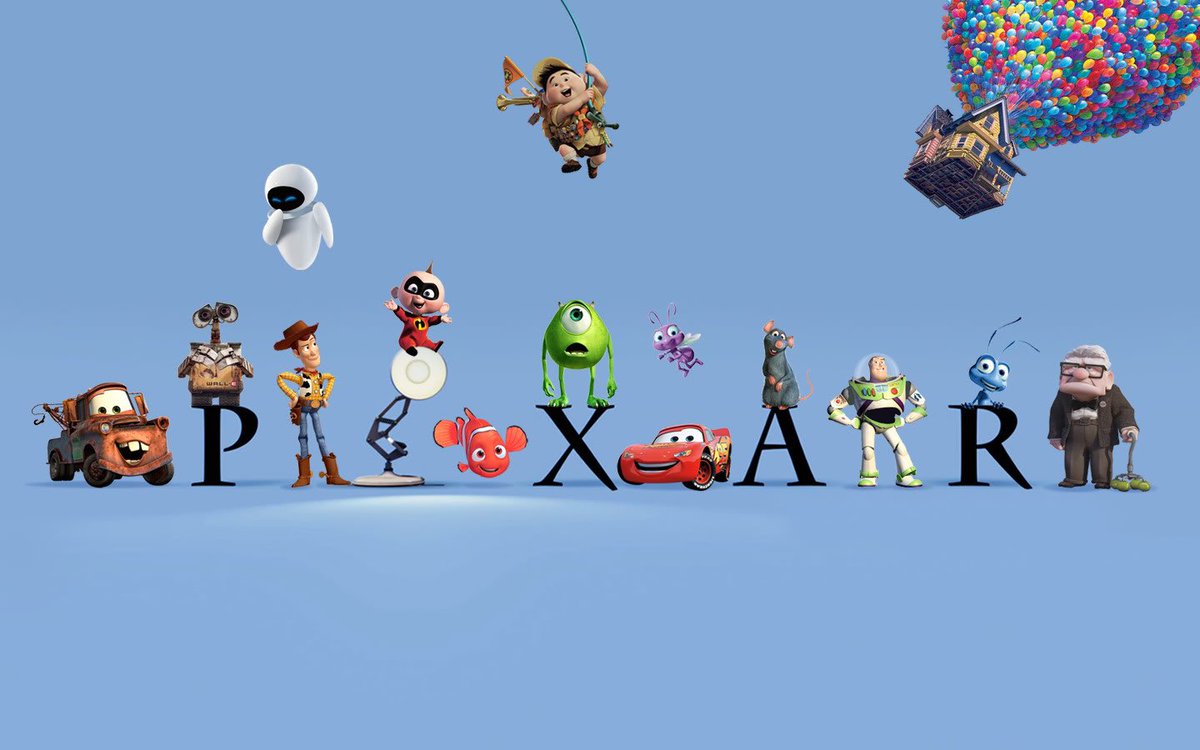
In 1991, Pixar struck a deal with Disney to make the first computer-animated movie.
At the time, Pixar co-founder Ed Catmull explained, “We didn’t have any storytellers among us.”
Catmull and most of his employees were computer scientists.
To learn how to tell a good story,
The team attended STORY—a 3-day storytelling seminar taught by screenwriter and story consultant Robert Mckee.
The Pixar team left the seminar, one Pixar employee said, “as true believers [in] McKee’s doctrine that...character emerges most realistically and compellingly from the choices that the protagonist makes in reaction to his problems . . .
This became the law of the land at Pixar.”
Essentially, McKee teaches that the beating heart of a good story is a character who wants something and has to overcome a series of problems to get it.
Guided by this principle, the Pixar team wrote a story about a toy named Woody who wants to keep his position as a boy named Andy’s favorite toy.
“Woody's world is rocked,” Catmull writes in summing up the plot, “when a shiny new rival, a space ranger named Buzz Lightyear, arrives on the scene and becomes the apple of Andy's eye.”
That problem would become the beating heart of “Toy Story,” which released in 1995 and was a critical and commercial sensation.
Following the success of Toy Story, Pixar returned repeatedly to McKee’s principle. One of Pixar's character designers said, “We really really followed McKee almost to the letter of the law.” The former Head of Pixar's Creative Development team added,
“Our movies are very conventional, in terms of story conventions like character arcs. If you look at all of our movies, there’s a protagonist who...goes on a journey and comes out the other end a better person . . . or rat . . . or fish.”
Takeaway 1:
The decision to attend the storytelling seminar was rooted in a lesson Catmull learned when he was 12 years old in 1957.
That year, the Soviets launched the first artificial satellite (Sputnik 1) into Earth's orbit.
"Since we’d been taught that the Communists were the enemy," Catmull writes, "the fact that they’d beaten us into space seemed pretty scary—proof that they had the upper hand."
The U.S. government responded by recruiting the country's best minds and creating something called ARPA (Advanced Research Projects Agency).
The architects of ARPA, Catmull points out, said in response to a serious threat: 'We'll just have to get smarter.'
The Pixar team attended the storytelling seminar because, Catmull writes,
“The lesson of ARPA had lodged in my brain: When faced with a challenge, get smarter.”
Takeaway 2:
Woody's response to the Buzz problem, ARPA's response to the Sputnik 1 problem, Catmull's response to the storytelling problem—as Robert McKee likes to say, “What’s true of life is true of fiction,” and what’s true of fiction is true of life:
“True Character is revealed in the choices [made] under pressure—the greater the pressure, the deeper the revelation, the truer the choice to the character’s essential nature.”
- - -
“When faced with a challenge, get smarter.” — Ed Catmull
Follow @bpoppenheimer for more content like this!
31
200
1,565
715,831
Steven Mackenzie retweeted
25 Jun 2023
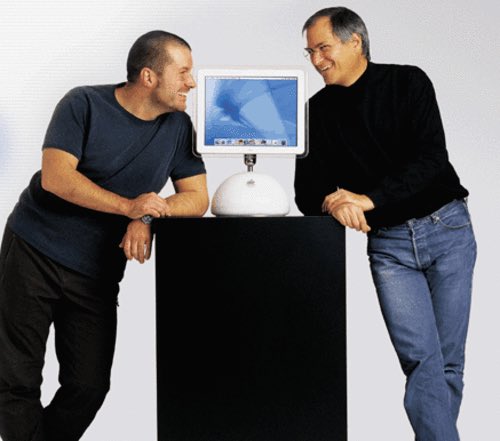
Shortly after Steve Jobs returned as the CEO of Apple in 1997, he met with Jony Ive, Apple’s Senior VP of industrial design.
Apple had 40 products on the market.
“Jony, how many things have you said no to?” Jobs asked.
Ive was confused.
“You have to understand,” Jobs said,
“There are measures of focus, and one of them is how often you say no.”
“What focus means,” Jobs taught Ive, “is saying no to something that you—with every bone in your body—think is a phenomenal idea, and you wake up thinking about it, but you say no to it because you're focusing on something else.”
Jobs walked up to a whiteboard and drew a 2 x 2 grid. On top, he wrote “Consumer” and “Professional.” Down the side, “Portable” and “Desktop.”
Four products—meet Apple’s new radically focused product line, Jobs said.
After that meeting, over the next two decades, Jobs and Ive—focused on making a few high-quality products while saying no to everything else—transformed a dying, near-bankrupt company into one of the most valuable companies in the world, worth over $2.9 trillion.
Takeaway 1:
The philosopher Marcus Aurelius pointed out that the focus of doing less “brings a double satisfaction.”
You get the satisfaction of having fewer things to do. And…you get the satisfaction of doing those fewer things at a higher level.
You get “to do less, better.”
During Steve Jobs’ first visit to Jony Ive’s design studio, he looked around, and then he said, “Fuck, you’ve not been very effective, have you?”
It was clear to Jobs that Ive was full of ideas and potential he wasn’t able to execute or fulfill under Apple’s previous leadership.
In the Jobs era of “doing less, better,” Ive was very effective.
Some products he designed include: iMac, iPod, iPhone, iPad, Apple Watch, and AirPods.
Takeaway 2:
Even though he slashed the product line down to four products, Jobs loved to have and hear ideas.
“Steve used to say to me,” Ive said, “and he used to say this a lot, ‘Hey, Jony, here’s a dopey idea.’ And sometimes they were: really dopey. Sometimes they were truly dreadful.
But sometimes they took the air from the room, and they left us both completely silent.”
It made me think of what Jerry Seinfeld identifies as the ultimate skill of the artist: “taste and discernment.”
“It’s one thing to create,” Seinfeld says. It’s one thing to have ideas.
“The other is you have to choose. ‘What are we going to do, and what are we not going to do?’” What are we going to add to the product line, and what are we not going to add?
“This is a gigantic aspect of [artistic] survival,” Seinfeld continues.
“It’s kind of unseen—what’s picked and what is discarded—but mastering that is how you stay alive.”
- - -
“Everything just got simpler. That’s been one of my mantras—focus and simplicity.” — Steve Jobs
Follow @bpoppenheimer for more content like this!
377
3,849
25,584
12,834,641
Steven Mackenzie retweeted

13 Jun 2023
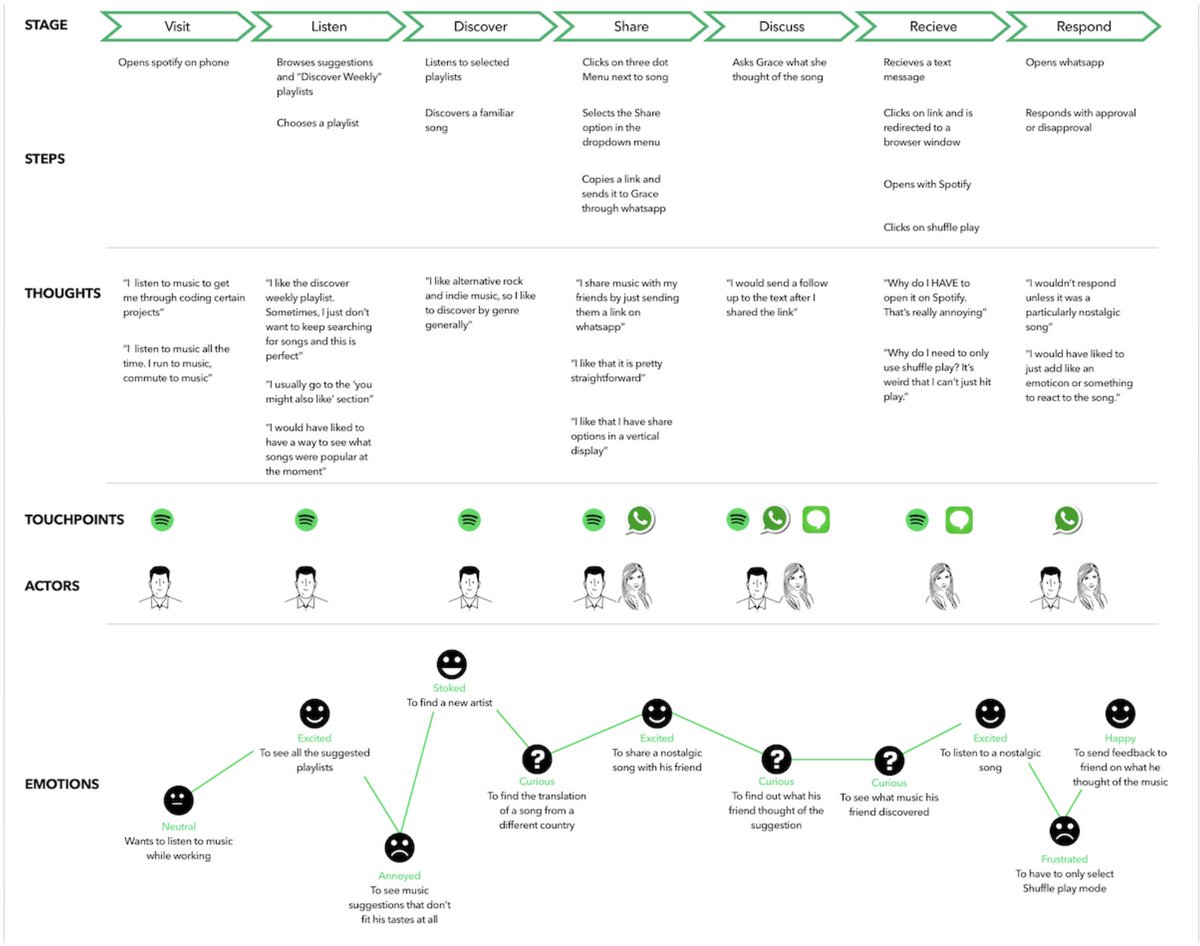
4 years ago I took a job as a Service Designer for a business that turned over $1 billion.
The MOST important lesson:
Mapping the customer journey is THE most important step in building an incredible service.
Here's the 7-step guide (it'll level up your one-person business):
11
67
583
81,957
Steven Mackenzie retweeted

16 May 2023
We will always make plans. And those plans will always be wrong to some extent. The sooner we can learn where we planned poorly, the sooner we can adjust the plan. jeffgothelf.com/blog/forget-…
2
3
40
4,117

I'll be talking about Cynefin, Constraints, Wardley Mapping and Crossing the Chasm(s) at Lean Agile London #LALDN23 next week. Last-minute tickets are still available!
leanagile.london/tickets/
1
2
11
2,459
11 Oct 2022
Here's a last minute reason to visit Southampton tonight...
I'm leading a (free) session tonight using the classic arcade game Asteroids to call out ideas that are often helpful for us to think about in our real-world jobs. Fun :)
meetup.com/agile-south-coast…
See you there?
1 Apr 2021
Am I really expected to know the right answer for this question? What is the right answer? I assume that OneDrive (part of Windows) uses encrypted protocols and it's safe, but then why is the Windows firewall asking me at all? These firewall prompts make me unhappy.
1
1 Apr 2021
Plus, I'm currently at home connected to my home WiFi. Just turned on my PC. Why is the prompt on my screen? If I cancel, will it ask me again later if I'm really outside my home, or will OneDrive just silently fail to work?
1
Steven Mackenzie retweeted

9 Mar 2021
We're looking forward to Carl Adamson joining us tonight - can you be with us too?
meetup.com/Agile-South-Coast…
1
2 Mar 2021
“BADASS AGILE - Elite Feedback” with @badass_agile, Michael Caron and Mike Huber. Thursday, 11 Mar at 11:00 pm GMT on @joinclubhouse! joinclubhouse.com/event/xq4e…
Steven Mackenzie retweeted

30 Jan 2021
Was the "something that looks like a moon" that you snapped to test this theory, in fact, the actual moon? And can you see the problem with that?
1
19