
Joined February 2024
- Tweets 1,404
- Following 7
- Followers 338
- Likes 2,493
258 Photos and videos


Pinned Tweet

Feb 23
𝗕𝘄𝗮𝘃𝗲𝗦𝗰𝗮𝗻 𝗹𝗮𝘂𝗻𝗰𝗵
Today, human presence becomes verifiable infrastructure.
Introducing BwaveScan -
The Human Presence Ledger powering the Bluewave Protocol.
A decentralized settlement layer designed to record, verify, and finalize authentic human activity on-chain.
A 🧵
51
18
104
5,908
Bluewave retweeted

Jun 10
A guy in Lagos opens an app every morning, completes a mission, builds a streak, 90 days straight.
A brand in Singapore pays $50,000 to reach people exactly like him.
He sees $0 of it.
This isn't a rare case. This is every single one of us.
25
6
60
427
Jun 8
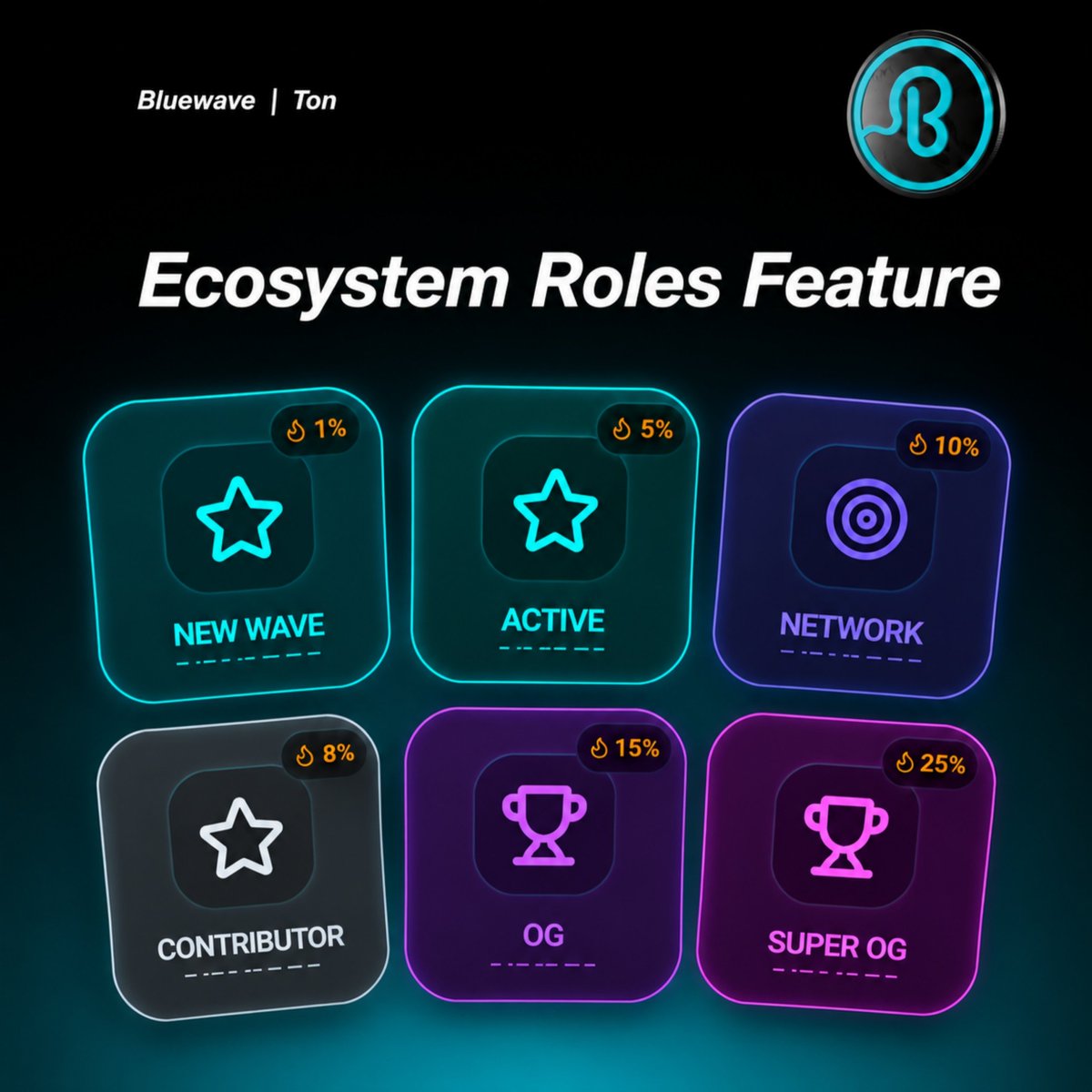
Every role earned represents a measurable contribution to the network and contributes directly to your overall reward potential.
Let's Talk About The Community progression Roles
→ New Wave is the starting point for every participant entering the ecosystem.
→ Active is earned through consistent engagement and ongoing participation.
→ Network reflects your ability to grow and strengthen the human layer of the protocol through referrals and community building.
→ Contributor recognizes members who actively create value for the ecosystem.
→ OG acknowledges sustained commitment and long-term participation.
→ Super OG represents the highest level of community progression, reserved for members who consistently demonstrate exceptional dedication to the network.
These roles serve a purpose beyond recognition.
Each Community Progression Role contributes to your Role Boost, increasing the amount of $BWAVE received when claiming Activated Presence rewards. As your progression grows, so does your earning potential.
The ecosystem is designed to reward participation, not inactivity.
Progression is maintained through continued engagement, network growth, and meaningful contributions to the community.
As the New week begins, review your profile and assess your progression.
→ Which roles have you unlocked?
→ Which role are you working toward next?
→ How much is your current Role Boost contributing to your claims?
Every role tells a story.
Every contribution strengthens your reputation.
Every step forward increases your impact within the BlueWave ecosystem.
Build consistently. Progress deliberately. Earn proportionally.
16
11
37
221
Jun 6
𝗕𝗹𝘂𝗲𝗪𝗮𝘃𝗲 𝗪𝗲𝗲𝗸𝗹𝘆 𝗨𝗽𝗱𝗮𝘁𝗲
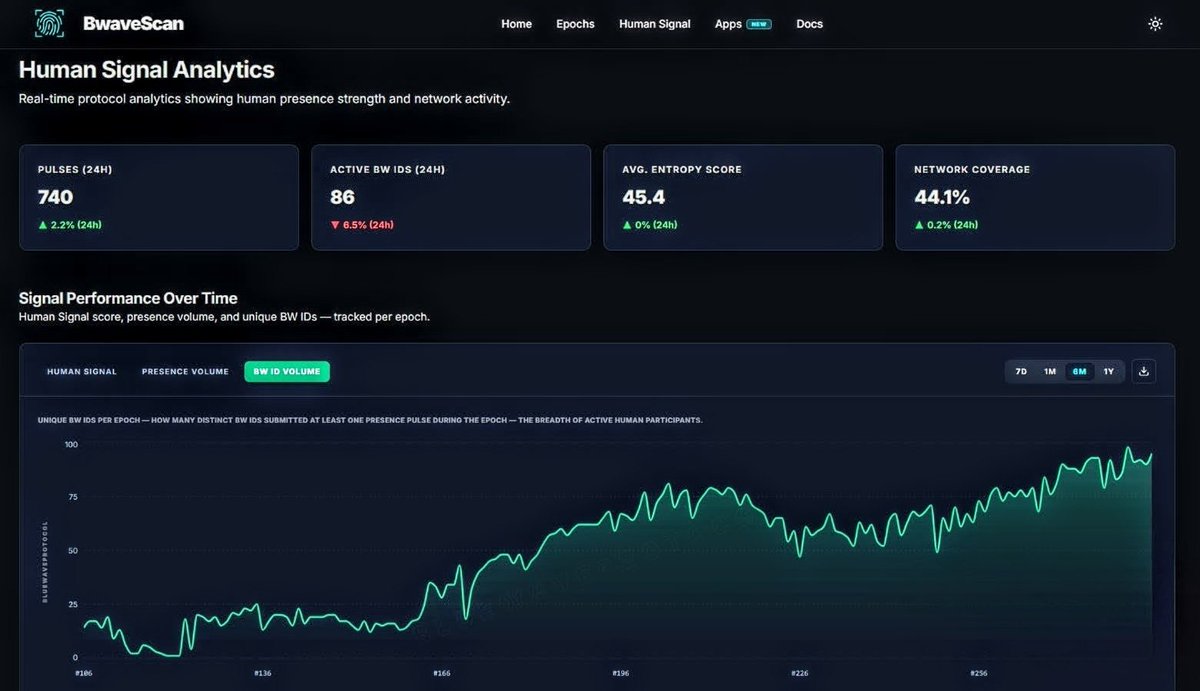
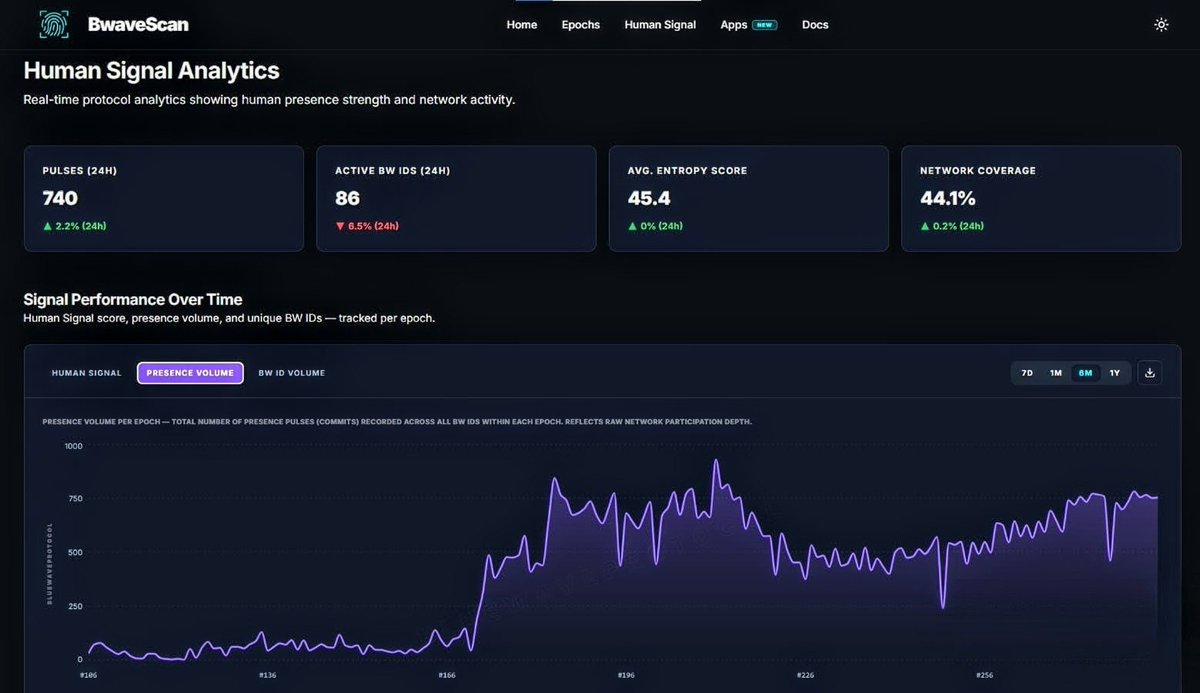
Another week of gradual network expansion driven by consistent human participation across epochs.
→ 740 Presence Pulses recorded in last 24H
→ 86 Active BW IDs contributing signals
→ Network Coverage reached 44.1%
→ Avg. Entropy Score sustained at 45.4
The Presence Volume and BW ID Volume charts continue showing something important:
steady behavioral consistency.
No artificial spikes.
No inflated activity loops.
Just real humans continuously building presence signals across the network over time.
Every epoch adds another layer of verifiable participation into the Human Presence Ledger.
Keep activating.
Keep contributing.
Keep compounding your presence.
The network strengthens when humans consistently show up.
Have a presenceful weekend, Wavers
20
15
40
294
Jun 5
𝗥𝗼𝗹𝗲𝘀 𝗮𝗿𝗲𝗻'𝘁 𝗷𝘂𝘀𝘁 𝗯𝗮𝗱𝗴𝗲𝘀. 𝗧𝗵𝗲𝘆'𝗿𝗲 𝗽𝗿𝗼𝗼𝗳 𝗼𝗳 𝗽𝗮𝗿𝘁𝗶𝗰𝗶𝗽𝗮𝘁𝗶𝗼𝗻.
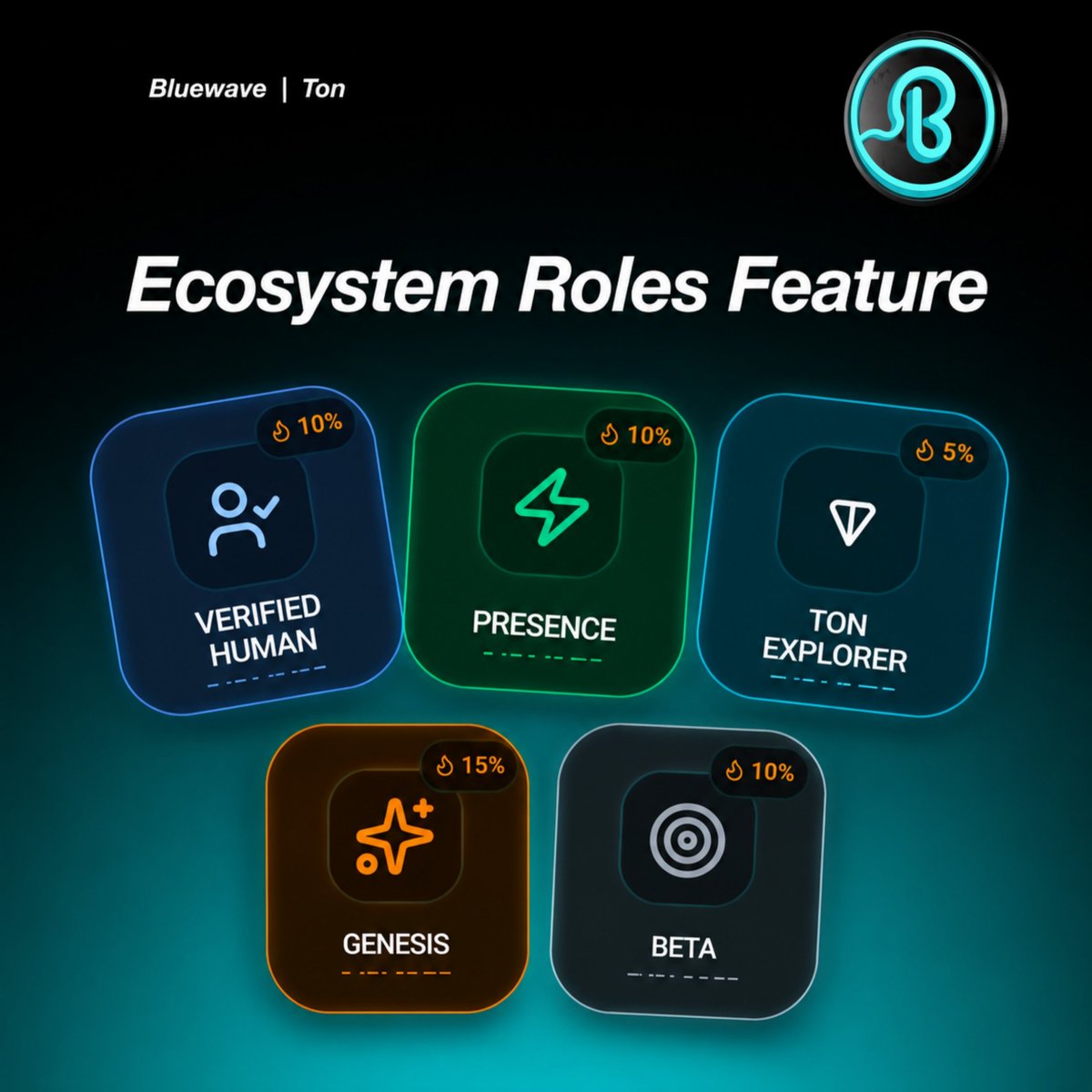
Inside BlueWave, your Identity & Presence Roles reflect the actions you take across the ecosystem.
They're designed to reward consistent engagement and strengthen your earning potential over time.
🔹 Verified Human confirms your identity and helps establish trust within the network.
🔹 Presence is earned through active participation and maintaining your presence in the ecosystem.
🔹 Additional roles like TON Explorer, Genesis, and others unlock as you continue your journey.
One thing to keep in mind:
These roles are not permanent. If activity stops, certain roles can be lost,
including Verified Human and Presence.
BlueWave rewards ongoing participation, not one-time actions.
You can view all of your active roles directly from the Roles section in your profile and track your progression as you unlock new credentials.
Why do roles matter?
Because every role carries value. The more qualified roles you hold, the more they can boost your numbers when claiming your Activated Presence, increasing the rewards you receive from your activity across the ecosystem.
Stay active.
Maintain your Streaks.
Build your reputation.
In BlueWave, your roles tell the story of your contribution. 🌊🩵
17
19
39
243
Jun 4
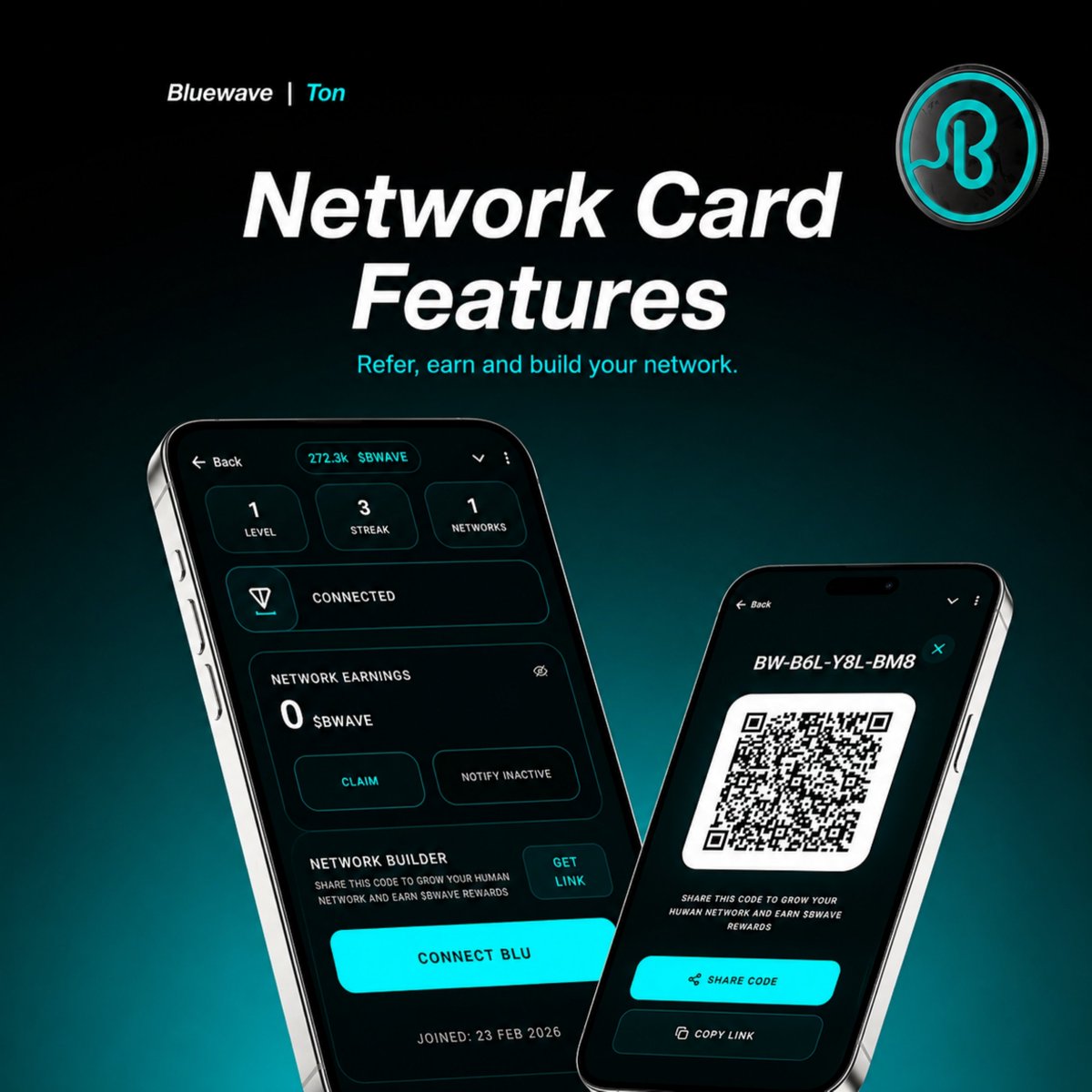
Your network is one of the most important parts of the BlueWave ecosystem.
Inside the BlueWave Mini App, you can generate your referral link and start inviting others to join the Human Presence Layer.
Every person who joins through your link becomes part of your network, and you can track all of it through your Network Card.
See who's active. See who's inactive. Monitor your network's growth in real time.
And if someone stops showing up, you can send them a notification directly from the Network Card and encourage them to reactivate their presence.
As your network grows and participates, you also earn $BWAVE rewards.
Simple.
Share your link. Build your network. Stay connected. Earn together.
Because the Human Presence Layer grows one connection at a time. 🌊
20
20
46
289
Jun 3
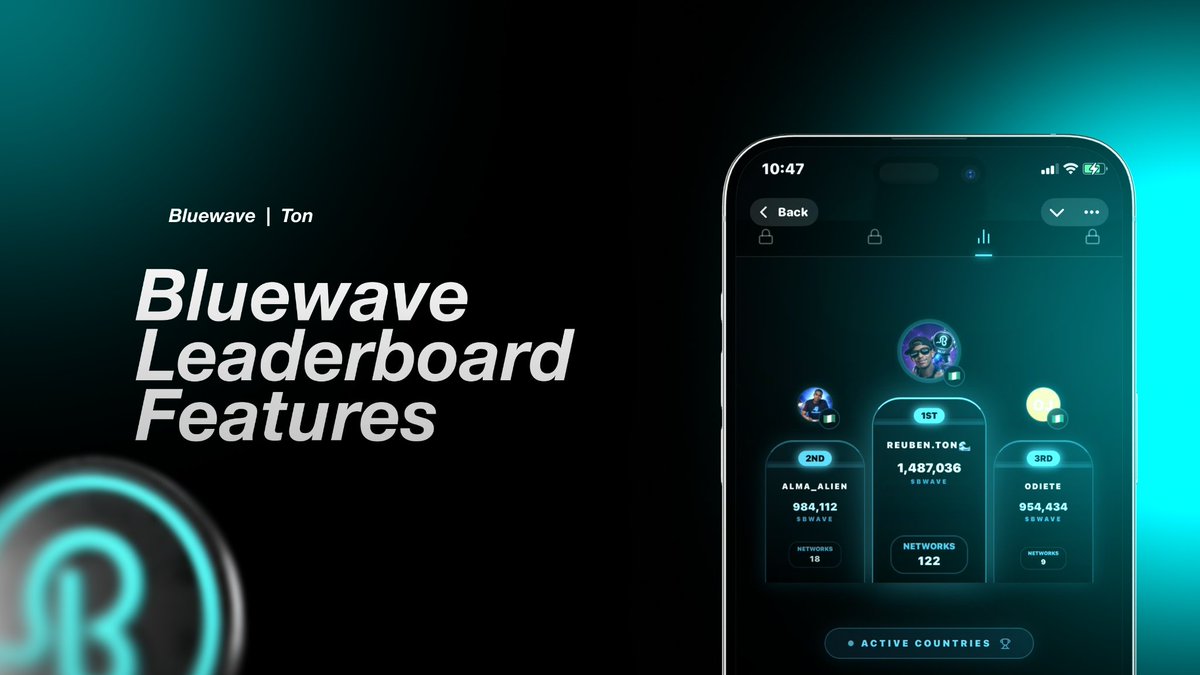
𝗧𝗵𝗲 𝗟𝗲𝗮𝗱𝗲𝗿𝗯𝗼𝗮𝗿𝗱 𝗜𝘀 𝗮 𝗪𝗶𝗻𝗱𝗼𝘄 𝗜𝗻𝘁𝗼 𝗡𝗲𝘁𝘄𝗼𝗿𝗸 𝗚𝗿𝗼𝘄𝘁𝗵
Most people look at a leaderboard and see rankings, We see something else.
We see the visible expansion of the Human Presence Layer.
Every position on the BlueWave Leaderboard represents accumulated participation across the ecosystem. Not a snapshot. Not a one-time action. A reflection of consistent contribution over time.
The leaderboard exists to make network growth transparent.
As members invite others into the ecosystem, build their networks, accumulate $BWAVE, and remain active, their position evolves alongside the growth of the broader community.
This is why you'll notice two important signals throughout the leaderboard:
• Network Size
• Accumulated $BWAVE
Together, they provide a real-time view of how participation is spreading across the ecosystem.
The network metric reflects the communities people are building, every invitation is more than a referral, It is a new participant entering the Human Presence Layer.
And as those networks expand across regions and countries, the leaderboard becomes a living map of ecosystem growth.
The goal is not simply to reach the top.
The goal is to build something meaningful.
A stronger network.
A larger presence footprint.
A deeper contribution to the ecosystem.
What makes the leaderboard valuable is not competition alone.
It is visibility.
Visibility into who is consistently participating.
Visibility into how the network is expanding.
Visibility into the emergence of a truly global presence economy.
And the leaderboard allows everyone to watch it happen in real time.
26
18
49
270
Jun 2
This week, we're taking a closer look at some of the features powering the BlueWave Mini App.
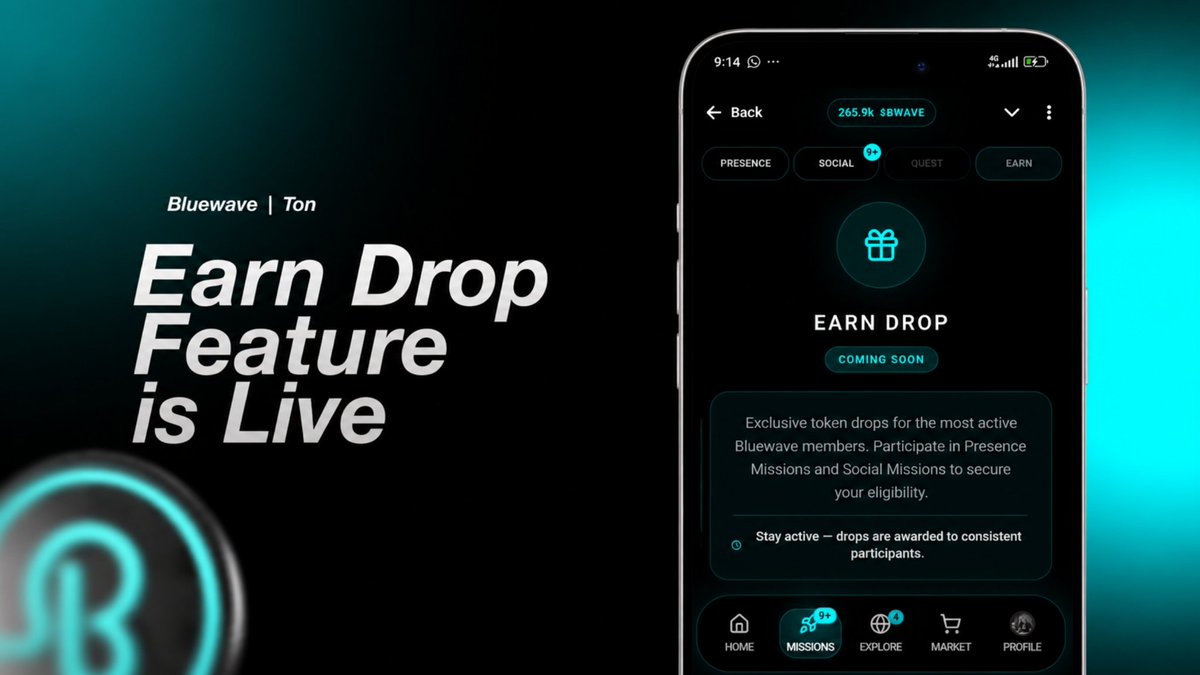
Today: Earn Drop.
At first glance, it may look like just another section inside the app.
It's not.
Earn Drop is designed to connect meaningful participation with future opportunities across the ecosystem.
As BlueWave continues to expand, projects, protocols, and ecosystem partners will increasingly need access to active, verified, and engaged communities. Not inactive wallets. Not bots. Real human participants.
That's where Earn Drop comes in.
The feature is built to identify and reward members who consistently contribute through:
→ Daily Presence Activations
→ Social Missions
→ Ecosystem Participation
→ Long-term Community Engagement
When opportunities become available, eligibility won't be determined by luck.
It will be determined by participation.
The goal is simple: create a system where value flows toward those who actively help strengthen the Human Presence Layer.
Your activity today becomes your reputation tomorrow.
Stay active. Build consistently. Strengthen your presence.
Because in BlueWave, participation is more than engagement.
It's an asset. 🌊
22
18
45
331
Bluewave retweeted

May 19
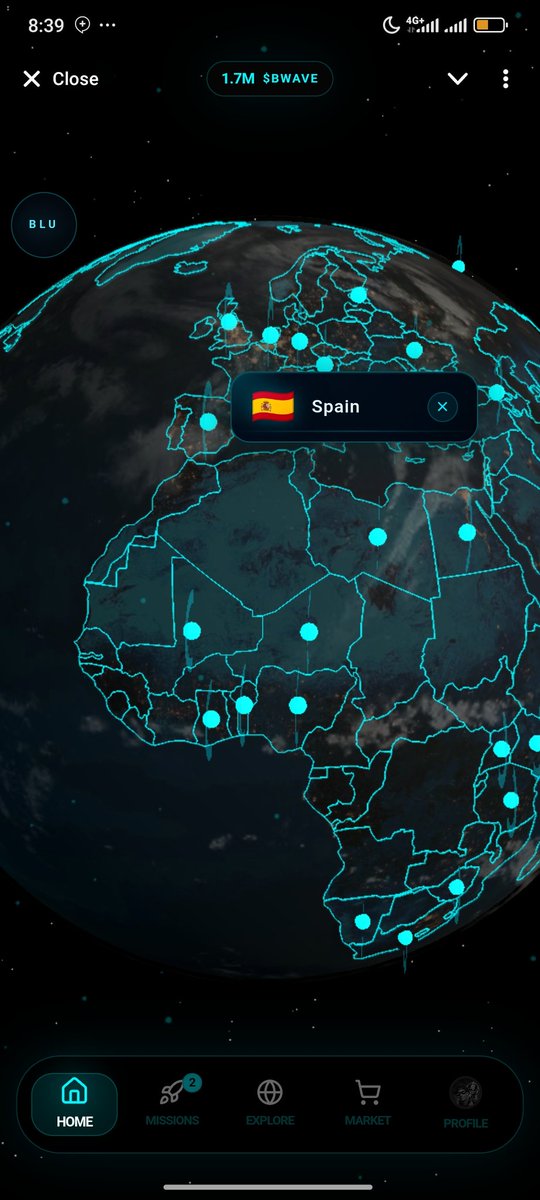
The human presence layer
33 countries now
Spain joined
Spain node on the global presence
we keep building

4
1
11
229
Jun 1
A new month begins.
Most people enter a new month thinking about what they want to earn.
Few think about what they want to become.
The strongest communities aren't built on incentives alone.
They're built on identity.
On people who show up consistently.
People who contribute when nobody is watching.
People who understand that every action leaves a signal.
The internet has spent years measuring attention.
The next era will measure participation.
Not who shouted the loudest.
• But who showed up.
• Who contributed.
• Who helped build.
This is why Presence matters.
Not because of a daily activation.
But because of what those activations represent over time.
A growing record of consistency.
A history of participation.
A proof of humanity in an increasingly automated world.
As we step into a new month, remember:
The future won't belong to the people who appear once.
It will belong to the people who keep showing up.
Have a productive Monday, BlueWave community. 🌊
Let's continue building the Human Presence Layer together.
28
16
45
329
May 31
Most valuable things don't grow overnight.
Trust compounds quietly.
Reputation compounds quietly.
Consistency compounds quietly.
And so does Presence.
Every day you activate, you're adding another signal to your digital footprint. Another proof point. Another layer of participation within the network.
One activation may seem small.
But over time, those signals accumulate into something much larger—a living record of consistency, contribution, and human presence.
This is how long-term infrastructure is built.
Not through a single moment, but through thousands of small actions repeated over time.
The strongest networks aren't created in a day.
They're built by people who keep showing up.
Happy Sunday. Don't forget to activate your presence. 🌊
20
16
46
274
May 30
𝗜𝗻𝘁𝗿𝗼𝗱𝘂𝗰𝗶𝗻𝗴 𝗕𝘂𝗴𝘀 & 𝗦𝘂𝗴𝗴𝗲𝘀𝘁𝗶𝗼𝗻𝘀 ⚡
The strongest networks are built with their communities, not just for them.
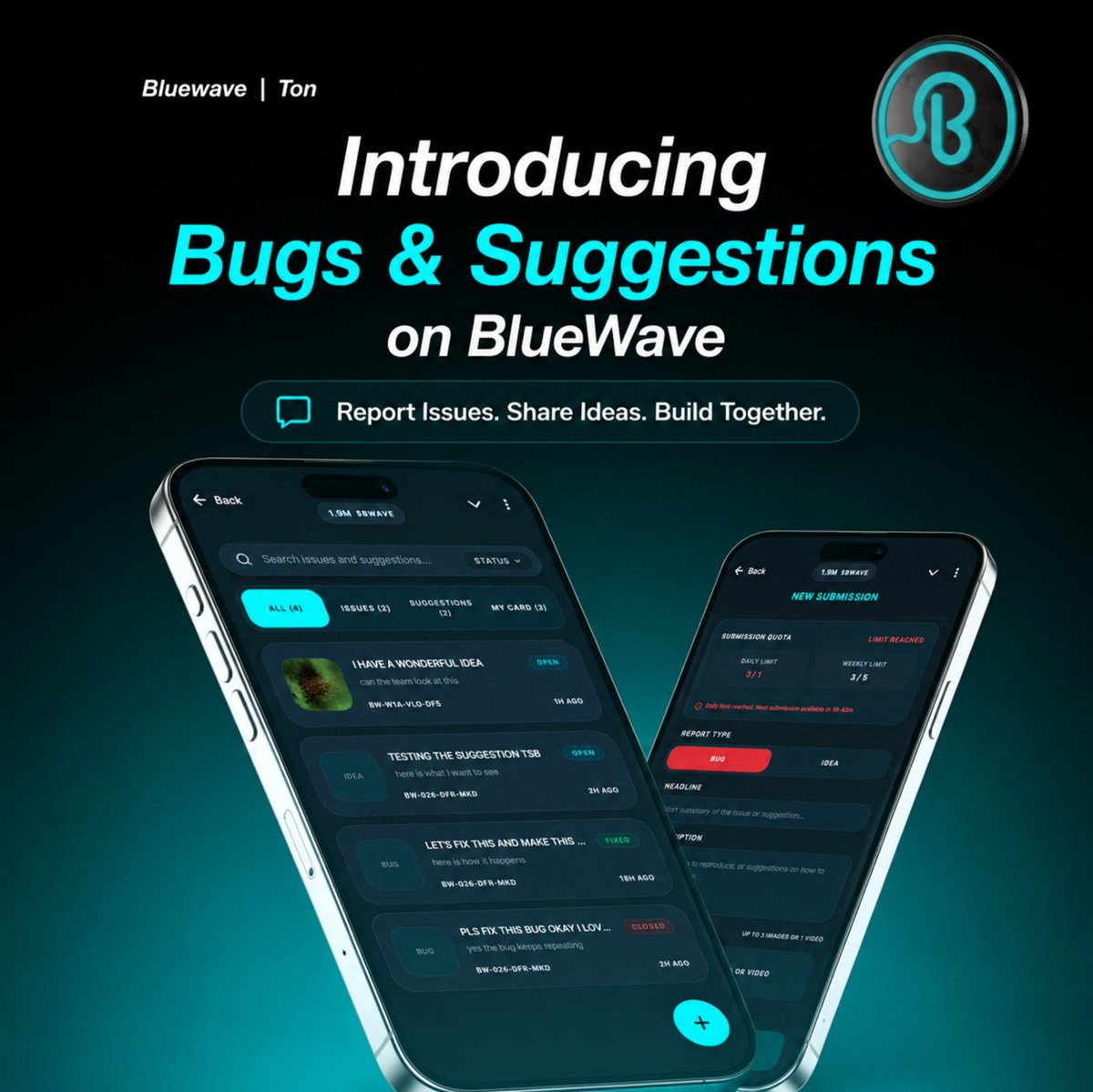
Following our recent scaling upgrades and maintenance, we're introducing a new Bugs & Suggestions system inside the BlueWave Mini App.
Now, community members can:
→ Report bugs directly to the team
→ Submit ideas and feature suggestions
→ Track the status of submissions in real time
→ Build a visible contribution history inside the ecosystem
At BlueWave, we've always believed that the best improvements come from the people using the network every day.
That's why we're creating a direct channel for every voice, every idea, and every contribution to help shape what comes next.
Every bug identified makes the network stronger.
Every suggestion submitted helps improve the experience.
Every contribution becomes part of BlueWave's evolution.
Because building PresenceFi isn't just about showing up.
It's about helping build the future of the network you participate in.
This is another step toward a more transparent, community-driven BlueWave ecosystem.
The Human Presence Layer keeps evolving.
26
13
47
407
May 29
The internet normalized surveillance so gradually that most people stopped questioning it.
Face scans. Iris scans. Government-linked verification.
All to prove you’re human online.
But biometric identity creates permanent liabilities. You can reset a password. You cannot reset your face.
That’s why BlueWave approaches human verification differently.
Inside the mini app, your presence is verified through behavioral consistency over time.
Your activity. Your rhythm. Your consistency. Your participation.
Not through invasive identity extraction.
Because bots can imitate spikes. But sustained authentic human behavior becomes much harder to fake.
Every activation records a presence signal through BwaveScan.
Not as social activity. As infrastructure.
And as AI floods the internet with synthetic engagement, authentic human presence becomes increasingly valuable.
That’s the layer BlueWave is building on TON.
No biometric database. No invasive KYC. Just portable human presence owned by the human building it. 🌊
22
18
46
343
May 28
𝗪𝗵𝘆 𝗧𝗢𝗡 𝗠𝗮𝗸𝗲𝘀 𝗛𝘂𝗺𝗮𝗻 𝗣𝗿𝗲𝘀𝗲𝗻𝗰𝗲 𝗜𝗻𝗳𝗿𝗮𝘀𝘁𝗿𝘂𝗰𝘁𝘂𝗿𝗲 𝗦𝗰𝗮𝗹𝗮𝗯𝗹𝗲 🌊
Most people still underestimate what @ton_blockchain actually solved.
TON was built for scale from the beginning.
Not just financial scale.
Human scale.
➪ Massive throughput.
➪ Low transaction costs.
➪ Native Telegram distribution.
Frictionless onboarding for millions of users already interacting inside one ecosystem.
That architecture matters deeply for what BlueWave is building.
Because the Human Presence Layer cannot exist on slow infrastructure.
You cannot coordinate persistent human activity globally if transactions are expensive, onboarding is difficult, or interaction feels fragmented.
BlueWave requires continuous ➠ Presence signals.
➠ Daily activations.
➠ Behavioral consistency.
➠ Long-term participation recorded over time.
TON makes that scalable.
And Telegram makes it natural.
The mini app removes friction between humans and infrastructure itself.
People do not need to learn complex systems before participating.
They simply connect a TON wallet and begin building presence history.
That simplicity becomes powerful at scale.
Especially in a future where authentic human presence becomes increasingly valuable across the internet.
TON provides the rails.
BlueWave builds the Human Presence Layer on top of it. 🌊
15
12
34
197
May 27
Happy 5th Birthday, @ton_blockchain
The next era of the internet will be built on verifiable human presence,
And BlueWave is proud to be building that layer on TON. 🌊
4
1
10
170
Bluewave retweeted

May 27
i remember a time when I thought followers were everything.
If someone had a big audience, I automatically believed they were important. If a post had thousands of likes, I assumed it had value.
But over time, I started noticing something strange.
Some of the smartest people online barely had attention. Meanwhile, some of the loudest accounts disappeared the moment the hype stopped.
That was when I realized something important. Maybe the internet has been measuring the wrong things all along.
Imagine an internet where your value was not based on likes or followers.
Imagine if your consistency mattered more.
➟ The way you show up daily.
➟ The way you contribute over time.
➟ The way people slowly learn to trust your presence.
That would change everything, because real value is not built in one moment.
It is built through repeated presence.
This is exactly why @bwaveprotocol feels important right now.
Bluewave is helping turn presence into something measurable.
Not just attention or temporary hype, but real participation over time.
Your streaks, your missions, your consistency and your activity inside the ecosystem.
All of these becomes proof that you are genuinely present.
Honestly, that feels like the future.
You see in a world where followers can be bought and engagement can be faked, consistency becomes one of the few signals people can still trust.
Now think about the people you genuinely respect online.
Was it one viral post that made you trust them?
Was it the fact that they kept showing up again and again until their presence became impossible to ignore?
Imagine if the internet started rewarding consistency instead of noise.
Be honest. Would your online presence still have value?
ALT BWAVE
May 25

Most people still think crypto is only about coins.
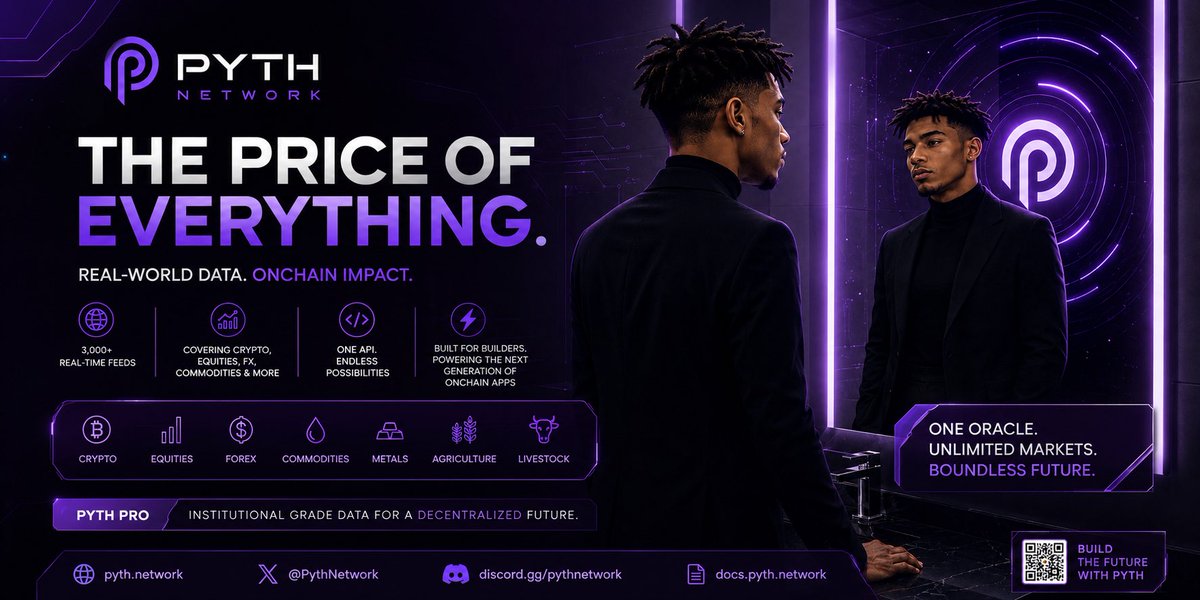
Meanwhile @PythNetwork is quietly bringing real world markets onchain.
Coffee, Cocoa, Gold and Oil. Even live cattle now all accessible through one infrastructure.
This is bigger than people realize because builders can now create trading apps, prediction markets and financial products using real global market data in real time.
The future is not just crypto onchain, it is the price of everything.
What market do you think comes onchain next?
56
2
69
1,026
Bluewave retweeted

May 27
imagine an internet where your presence actually had value…
not your follower count, not how viral your last post was, not how often the algorithm decided to notice you.
but your consistency over time.
showing up, contributing, building context.
leaving a recognizable trail of participation across communities, platforms, and ecosystems.
right now, most of the internet rewards attention spikes.
a single viral moment can outperform years of meaningful contribution, while people quietly creating value every day often go unnoticed.
but what if reputation evolved beyond metrics built around popularity?
what if presence itself became measurable..not just “who posted the loudest,” but:
• who stayed active during quiet periods
• who consistently contributed ideas
• who helped shape conversations over time
• who remained aligned with a community long before hype arrived
because long-term participation creates signal that algorithms can’t easily fake.
story-driven identity could become more important than vanity metrics.
your history, consistency, relationships, and contributions would form a living reputation layer one that reflects who you actually are online, not just your best-performing moment.
the future internet may not reward the loudest users.
It may reward the people who stayed present long enough to matter.
May 22

the internet used to reward attention.
Now it’s starting to reward presence.
for years, online communities were built around reach, impressions, and visibility. but people are realizing that attention alone doesn’t create strong communities.
presence does.
Not just:
“Did you post?”
But:
“Did you consistently show up?”
“Did you contribute?
“Did you help shape the culture?”
that’s why I think we’re seeing the rise of presence-based communities ecosystems that value long-term participation over short-term hype.
and that’s where @bwaveprotocol fits in for me.
the model feels less focused on temporary engagement and more focused on building aligned communities around consistency, contribution, and real participation.
in the long run, communities built on presence tend to last longer than communities built purely on attention.
80
4
104
2,906
May 27
Human presence already powers trillion-dollar platforms.
The next shift is humans finally owning the layer they’ve been building all along.
That’s why wallet binding matters.
Inside the BlueWave mini app, your presence is not tied to a platform account that resets every time you move ecosystems.
It is tied to your wallet.
Your activations.
Your consistency.
Your behavioral history.
Your accumulated presence signals.
All connected to a persistent layer you control.
This changes the architecture completely.
Because the future internet will not operate around isolated platforms anymore.
It will operate around portable human presence.
A verified human signal that can move across apps, communities, marketplaces, protocols, and digital environments without starting from zero each time.
That is where the Human Presence Layer becomes powerful.
Your wallet stops being just a financial address.
It becomes your presence anchor.
Connect your TON wallet.
Start building your signal early. 🌊
25
17
40
277
May 26
Last year alone, billions of dollars were lost across the internet through bots, fake engagement, Sybil attacks, and synthetic activity.
Not because the internet lacks users.
Because the internet increasingly struggles to distinguish real humans from automated behavior.
That problem is becoming structural.
Platforms can inflate numbers.
AI can generate content infinitely.
Bots can coordinate engagement at scale.
But none of that creates authentic human presence.
And that’s the gap BlueWave is solving.
A🧵
22
14
43
252
May 26
This matters because authentic human presence is becoming increasingly scarce online.
And scarcity creates value.
Future applications will not only compete for attention.
They will compete for verified humans interacting consistently at scale.
That’s the deeper direction behind PresenceFi.
Not farming attention.
Building presence.
Owning presence.
Monetizing presence.
The mini app is the first layer of that infrastructure.
1
4
67
May 26
And this is why BwaveScan matters.
It records persistent human behavioral signals into the Human Presence Ledger.
Not inflated engagement.
Not synthetic coordination.
Real humans.
Real consistency.
Real presence
The people building presence today are positioning early for a shift most of the internet still hasn’t fully understood yet.
Connect your TON wallet.
Activate your presence. 🌊
1
1
5
60