
Seeking justice. No dms or calls. Thanks.
Joined March 2012
- Tweets 17,593
- Following 2,653
- Followers 9,122
- Likes 4,380
66 Photos and videos


Jun 14
Additional Coal Combustion Residuals and Coal Ash Disposal and Beneficial Use Information
Post 2 of 2
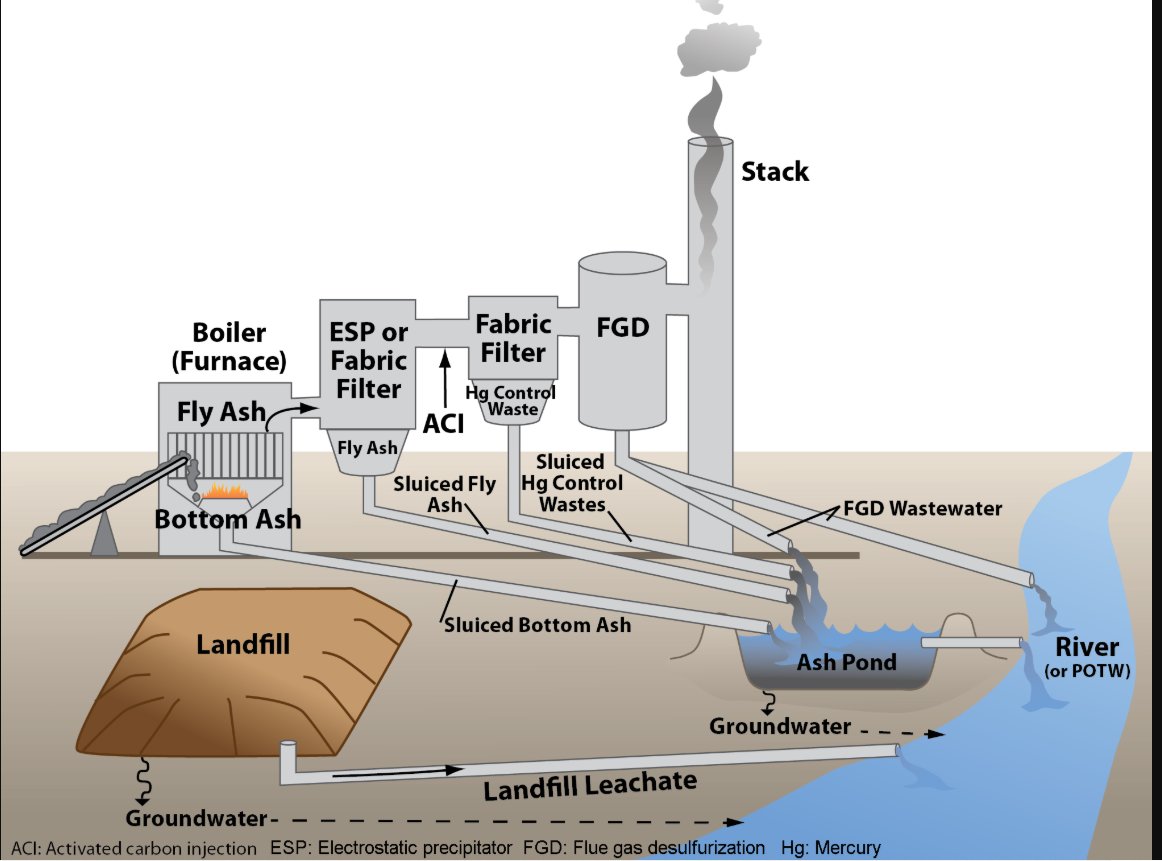
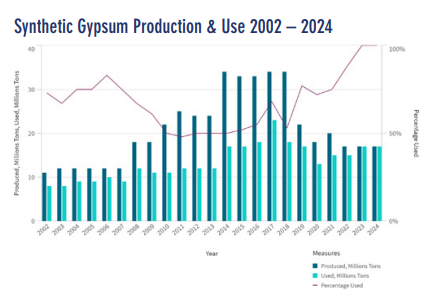
Following the post re CCRs (Coal Combustion Residuals), these are graphs showing 1) a common leachate system for disposal of coal ash--one worries the coal user has built one rather than just dumping or burying and worries about precipitation and topping; and
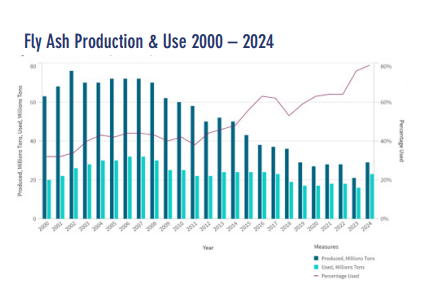
2) beneficial uses bar charts from sales of fly ash (out the top of the stack); this is usually a direct substitute for Portland cement; and sales of flue gas desulfurization FGD synthetic gypsum. These two bar charts follow.
7
2
10
267
Jun 14
Additional Coal Combustion Residuals and Coal Ash Disposal and Beneficial Use Information
Post 1 of 2
Following the post re CCRs (Coal Combustion Residuals), these are graphs showing 1) a common leachate system for disposal of coal ash--one worries the coal user has built one rather than just dumping or burying and worries about precipitation and topping; and
2) beneficial uses bar charts from sales of fly ash (out the top of the stack); this is usually a direct substitute for Portland cement; and sales of flue gas desulfurization FGD synthetic gypsum. First chart here; next two bar charts follow.
1
2
11
144
Jun 14
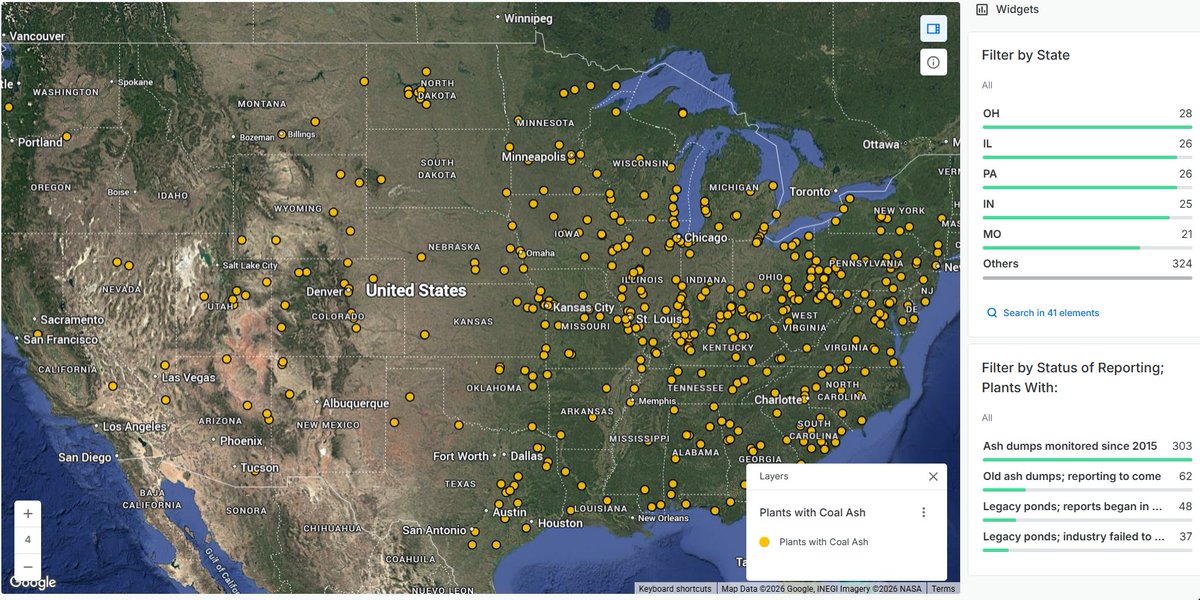
Map of Coal Ash Producing States
This is in furtherance of coal ash regulations to clean up coal combustion residuals so that coal can be burned as a fuel source for generators at data centers and new large manufacturing facilities.
When coal is burned, it leaves residuals that either are
(1) used, as BENEFICIAL USES such as fly ash which is a direct substitute for Portland cement, or flue gas gypsum which is sold as synthetic gypsum or
(2) DISPOSED OF in accordance with procedures and regulations to keep the toxic residuals from seeping into our soil and draining into our water.
Most of the Coal Ash problem is in the PJM, MISO, and SERC regional transmission organizations in the Eastern US .
I do not approve of any of this, but I suppose it is necessary for data centers. Use of natural gas would be far cleaner and gas turbines can be arrayed for maximum flexibility. Both can use BESS. Transmission interconnections are a problem. Some states such as TX have advised the data centers to set up their own island and not lean on ratepayers for capacity or to generation & ancillary services shift costs.
Here is a map to show where the coal ash plants are. Note their predominance in the eastern US. Separate photos show a disposal pond and bar charts for fly ash and flue gas beneficial sales.
2
7
54
Jun 12
EPA extends comment deadline to June 29 for Disposal of Coal Combustion Residuals From Electric Utilities
The Environmental Protection Agency (EPA or the Agency) is extending the comment period for the proposed rule entitled “Hazardous and Solid Waste Management System: Disposal of Coal Combustion Residuals From Electric Utilities; Legacy/CCRMU Amendments.” EPA is extending the comment period until June 29, 2026, in response to stakeholders’ requests for a comment period extension.
I am glad someone did this extension, so maybe a few others will weigh in. This regulation about benefits and extensions for new coal plant owners who just got tons of benefits by having their clean air requirements eliminated and getting capacity markets that can pay for remediation was an absolute time hole and a stinker, totally written in gibberish. I am going to finalize mine tonight to get it off my desk.
8
2
17
414
Jun 6
#COALFIREDPOWERPLANTS #EPARULEMAKINGS #CCRandRECLAMATION
EPA PROPOSES REVISIONS TO FEDERAL WASTEWATER AND COAL ASH REGULATIONS
Newsletter Posted on June 1, 2026
Comments on both proposals are due Jun 12 2026
(If you wish to submit comments, you can navigate to the EPA Rule page, which will have the docket number and links to all comments filed for the proposal if you wish to pick up ideas or clarify these technical regs.)
The U.S. Environmental Protection Agency (EPA) recently proposed two major revisions to federal environmental regulations affecting coal-fired power plants, signaling a significant shift in federal policy and a broader effort to support continued coal-based electricity generation. The proposed changes, announced in a pair of rulemakings in April and May 2026, will revise portions of the 2024 Effluent Limitations Guidelines and the Coal Combustion Residuals (CCR) rules that had imposed stricter treatment and disposal requirements on utilities.
EPA Moves to Ax Requirement that Coal Plants Treat Toxic Wastewater Seeping into Lakes and Rivers
EPA proposes to rollback requirements on the amount of arsenic and mercury that coal power plants are allowed to discharge
COAL COMBUSTION RESIDUALS (CCR). 2026 Proposed Amendments to the Coal Combustion Residuals Regulations epa.gov/coal-combustion-resi…
CCR Rule Summary
On April 9, 2026, EPA announced a proposal to amend several provisions of the federal regulations governing the disposal of CCR in landfills and surface impoundments and the beneficial use for CCR in Title 40 of the Code of Federal Regulations in Part 257.
Coal combustion residuals (CCR) can be used in different products and materials. CCR can be beneficially used to replace virgin materials removed from the earth, conserving natural resources.
EPA encourages the beneficial use of CCR in an appropriate and protective manner because this practice can produce environmental, economic, and product benefits such as:
**reduced use of virgin resources.
**reduced cost of coal combustion residuals disposal.
**improved strength and durability of materials.
Coal surface mining reclamation ties in directly with EPA disposal rules when operators use "minefilling"—the practice of placing toxic coal ash or Coal Combustion Residuals (CCR) from power plants back into active or abandoned mine voids. This couples land reclamation goals with federal waste and water protection standards.
On April 9, 2026, EPA announced a proposal to revise the definition of beneficial use, add a definition of CCR storage pile, and exclude specific beneficial uses from the federal CCR regulations.
While the beneficial use of coal combustion residuals has these potential benefits, the environmental impacts associated with their use should also be considered.
Cite: An EPA Proposed Rule by the Environmental Protection Agency on 04/13/2026
federalregister.gov/document…
7
1
26
1,015
Jun 5
#MoonSettlementStructures #Nanoporous #MOCHI
Aerogels For Moon Settlements, Nanoporous Structures, MOCHI
Need for simultaneous use of multiple forms of aerogels especially transparent aerogel for thermal insulation, photosynthesis, clear vision
The Moon poses unique extreme environmental challenges for human settlement and operations. Numerous studies focus on developing advanced thermal insulation materials, such as thermosetting resins and glass ceramics , innovative energy storage systems, including dish-type solar thermal power generation and laser wireless power transmission , and thermal protection technologies, such as thermal control systems integrated with organic Rankine and jet refrigeration cycles.
The basaltic lunar regolith, abundant on the Moon surface and rich in silicon dioxide, significantly supports in-situ aerogel manufacturing on the Moon. It is thought that the in-situ processes would be easier, more versatile, and less expensive than transport from Earth.
Various forms of silica aerogels, known for their exceptional thermal insulation properties, have gained significant attention in recent years for applications in extreme environments . Their excellent high-temperature resistance, optical transparency, and ultra-lightweight properties make them uniquely suited for thermal management and radiation protection in lunar base applications.
The extremely low thermal conductivity of silica aerogel effectively inhibits heat transfer, maintaining stable internal temperatures within the lunar base. Kistler demonstrated that the thermal conductivity of silica aerogel at ambient temperature is lower than that of still air.
This remarkable performance is attributed to the nanoporous structure, which effectively suppresses heat conduction in both gas and solid phases.
The high optical transmittance of silica aerogel makes it ideal for applications like windows and photovoltaic panel coverings. Solar panels could likewise be encased in the material to protect the solar panels from the constant pitting due to solar winds and bombardments.
By maximizing sunlight transmission, it offers natural lighting for the base and supports photosynthesis in plant growth areas. However, increasing the transparency of silica aerogels slightly raises the thermal conductivity. Ren et al. found that adjusting the ratio of two silicon sources gradually increased the aerogel transmittance at the cost of higher thermal conductivity. The thermal conductivity was 0.0286 W m-1 K-1 when the transmittance reached 80.8 %. Günay et al. fabricated silica aerogels using tetramethyl orthosilicate, achieving an average solar transmittance of 88 %, but with a relatively higher thermal conductivity of 0.13 W m-1 K-1. During lunar daytime, intense solar radiation causes a rapid increase in the surface temperature. According to the thermal conduction theory, the thermal conductivity of silica aerogels increases sharply with increasing temperature. Transparent aerogels, due to their more uniform structure and higher density, exhibit greater sensitivity of thermal conductivity to temperature, which reduces the insulating performance of the aerogels, thus affecting the temperature stability within the base.
Silica aerogels with high solar transmittance also have limitations in UV shielding, making them ineffective in protecting against the intense UV radiation on the lunar surface. For instance, Zhao et al. prepared silica aerogels by increasing the concentration of alkaline catalysts, achieving a transmittance of 94.8 %, but the UV transmittance exceeded 70 %. Improving the UV shielding performance of silica aerogels requires a trade-off with their visible light transmittance. Although the visible light transmittance of silica aerogels prepared by Niu et al. is 81.5 %, their UV spectral transmittance remains above 30 %. This can be attributed to the suppressed UV absorption of the Si-O framework, which allows UV radiation to penetrate the aerogel easily. Given the much higher UV radiation intensity on the lunar surface and the lack of atmospheric protection, the UV shielding capability of aerogels must be further optimized to withstand this extreme environment. It is evident that existing thermal insulation materials still face critical challenges, such as poor thermal performance and excessive weight.
While silica aerogels are promising candidates owing to their ultra-low thermal conductivity and lightweight properties, their performance in extreme lunar environments is still limited (and this needs to change). Additionally, current materials lack spectral selectivity, a critical feature for enabling sustainable lunar base construction.
These limitations underscore the urgent need for a multifunctional material that simultaneously addresses thermal management, UV protection, and spectral optimization to enable sustainable lunar base construction.
Mesoporous materials exhibit highly controlled nanoscale structures, often templated by liquid crystalline assemblies of surfactants, with emergent and often designable physical properties. However, scaling their fabrication to be suitable for uses such as envelopes of buildings is challenging as is shown by the U Colo Boulder physicists below.
A group of physicists from U Colorado Boulder used a material, called Mesoporous Optically Clear Heat Insulator, or MOCHI. MOCHI and New window insulation blocks heat, but not your view. Currently MOCHI comes in large slabs or thin sheets that can be applied to the inside of any window. So far, the team only makes the material in the lab, and it’s not available for consumers. But the researchers say MOCHI is long-lasting and is almost completely transparent.
==================================
Sources:
Acta Astronautica
Volume 233, August 2025, Pages 344-359
sciencedirect.com/science/ar…, accessed 05/05/2026
Authors Amit Bhardwaj et al Science Vol. 390, No. 6778
science.org/doi/10.1126/scie…, accessed 05/05/2026
7
2
29
674
Jun 4
#LavaLunarTubes
Lunar lava tubes; 330’ Deep Pit: First cave on Moon
330’ Deep Pit: First cave on Moon found as scientists reveal why 330ft deep pit could be perfect home for human colonists to live in.
Lunar lava tubes are special underground caves thought to be formed by volcanic eruptions. If existing, they are considered as ideal natural shelters and scientific laboratories for lunar base construction.
An empty lava tube could shield space explorers from extreme temperatures and radiation.
“Humans evolved living in caves, and to caves we might return when we live on the Moon,” said David Paige, a co-author of the 2022 paper published in the journal Geophysical Research Letters.
An underground moon cave stretching deep into the lunar surface has been discovered close to where Apollo 11 landed 55 years ago.
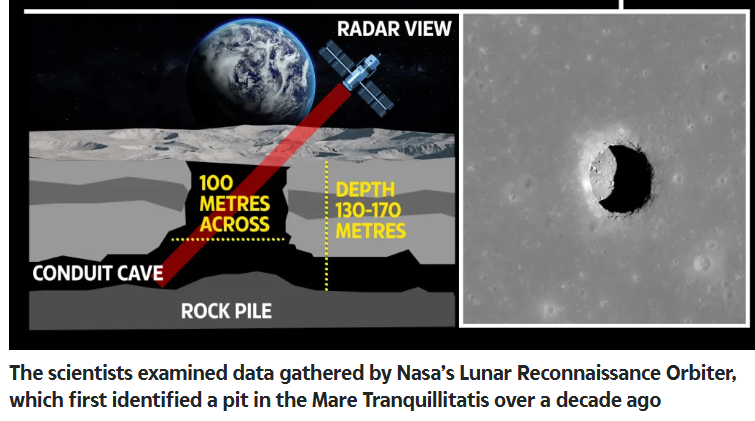
A lunar observer found radar evidence of an accessible cave conduit on the Moon below the Mare Tranquillitatis pit.
Researchers made the finding near the Sea of Tranquillity rising hopes that it could be used as a potential base for future astronauts.
These lava tubes would need to exist below the regolith.
Weighin in where the matter has not been discussed in the cited materials, the aperture to the surface and walls to underground could be lined with newer hard glass that can be wired (subject for later post) which could be manufactured on the Moon.
Several potential subsurface openings have been observed on the surface of the Moon. However, it remains uncertain whether such pits provide access to cave conduits with extensive underground volumes.
The pic below stylizes radar images of the Mare Tranquillitatis pit (MTP), an elliptical skylight with vertical or overhanging walls and a sloping pit floor that seems to extend further underground.
How calculations of the shape of the cave were done to determine shape of the lunar cave. The images were obtained by the Mini-RF instrument onboard the Lunar Reconnaissance Orbiter in 2010. A portion of the radar reflections originating from the MTP can be attributed to a subsurface cave conduit tens of metres long, suggesting that the MTP leads to an accessible cave conduit beneath the Moon’s surface.
This discovery suggests that the MTP might be a promising site for a lunar base, as it offers shelter from the harsh surface environment and could support long-term human exploration of the Moon (but it does not offer the water at the poles).
nature.com/articles/s41550-0…
The findings were published today in the journal Nature Astronomy.
“These caves have been theorized for over 50 years, but it is the first time ever that we have demonstrated their existence,” co-author Lorenzo Bruzzone explained.
BACKGROUND
The lava tubes have been the subject of analysis by NASA's Lunar Reconnaissance Orbiter (LRO) which began its journey in 2009. It's purpose was to gather information about the Moon's surface and environment and to that end has a plethora of scientific equipment.
LRO has been mapping the lunar surface using high resolution imagery capturing temperature, radiation levels and water ice deposits. All with a view to identifying potential landing sites for future missions.
A team of scientists from around the world have been working together to make a breakthrough in the quest to understand these tubes. The research was led by the University of Trento in Italy and the results published in Nature Astronomy. They have identified the first, confirmed tunnel just under the surface of the Moon that seems to be an empty lava tube. Until now, their existence was just a theory, now they are a reality.
The discovery would not have been possible without the LRO and its Miniature Radio-Frequency instrument. In 2010 it surveyed Mare Tranquilitatis - location for Apollo 11's historic lunar landing in 1969 - capturing data which included the region around a pit. As part of this new research the data was reanalysed with modern complex signal processing techniques. The analysis revealed previously unidentified radar reflections that can best be explained by an underground cave or tunnel. Excitingly perhaps is that this represents an underground tunnel on the surface of the Moon but it is an accessible tunnel too.
CONSTRUCTION
NASA published a comprehensive review of lunar lava tube base construction and field research on a potential Earth test site in 2024, and work is proceeding on an Earth-based model.
Earth-based Boring technology, in its earth form is too heavy for the moon’s gravity.
SOURCES:
sciencedirect.com/science/ar…
International Journal of Mining Science and Technology, Volume 34, Issue 9, Sep 2024, pp 1201-1216
Data & availability
The Mini-RF data are available through NASA’s Planetary Data System Geoscience Node (pds-geosciences.wustl.edu/). Wagner and Robinson’s17 internal morphology point cloud of the MTP is available at zenodo.org/records/6622042. The LROC NAC images and DTMs used in this study are publicly available through the Planetary Data System LROC Node at wms.lroc.asu.edu/. The data supporting this study are openly available at Zenodo via doi.org/10.5281/zenodo.11005… (ref. 28).
Code availability
All the relevant analyses on the experimental data were performed with MATLAB. RaySAR is open source and available at github.com/StefanJAuer/RaySA….
And that isn’t all. Cosmic and solar radiation are over 100 times stronger on the lunar surface than on Earth.
Exposure to these emissions can damage DNA and alter the biochemistry of cells and tissues.
The pits – and, by extension, the tunnels – would serve as thermally stable sites for lunar exploration, shielding astronauts against the Moon’s harsh climate.
SOURCES:
Pic: Radar evidence of an accessible cave conduit on the Moon below the Mare Tranquillitatis pit
Carrer, L., Pozzobon, R., Sauro, F. et al. Radar evidence of an accessible cave conduit on the Moon below the Mare Tranquillitatis pit. Nat Astron 8, 1119–1126 (2024). doi.org/10.1038/s41550-024-0…
RaySAR, using MATLAB is open source and available at github.com/StefanJAuer/RaySA….
Mackenzie Tatananni , Science and Tech Reporter
Published: 17:25, 15 Jul 2024
the-sun.com/tech/11930454/mo…
5
5
27
568
Jun 2
#MicrometeroidImpacts #MicrometeoroidandSolarWinds
Micrometeroid Impacts on the Moon: Impact Analysis & Relationship to Water
VELOCITY. The Moon faces an invisible bombardment more relentless than any terrestrial storm, a constant rain of micrometeoroids, tiny fragments of rock and metal travelling at speeds up to 70 kilometres per second. This is in addition to solar winds.
SIZE. In the Moon's vacuum, every micrometeoroid that approaches the lunar surface makes contact at hypervelocity. A key challenge is understanding the threat from these micrometeoroid impacts, which NASA says are too small to monitor directly.
A new analysis led by Daniel Yahalomi quantifies just how intense this bombardment will be. Using NASA's Meteoroid Engineering Model, the researchers calculated impact rates for a hypothetical lunar base roughly the size of the International Space Station. The numbers are sobering, between 15,000 and 23,000 impacts per year from particles ranging from a millionth of a gram to ten grams.
MODEL RESULTS-LONG-TERM HABITATION IS FEASIBLE AT POLES. Their model results indicate that (1) the lunar poles are optimal for sustained habitation, (2) gravitational focusing by Earth dominates over its geometric shielding for this micrometeoroid flux, and (3) current shielding technology can reduce micrometeoroid threats by nearly five orders of magnitude, making long-duration lunar habitation feasible.
LUNAR WATER CYCLE & RELATIONSHIP BTWN SOLAR WINDS & MICROMETEOR IMPACTS
Solar winds continuously deliver the ingredients (hydrogen) to make water molecules, which get trapped in glass grains and micro-pits across the lunar surface.
NASA’s theory is that micrometeoroid impacts act as the catalyst for water. Their kinetic energy and heat release this trapped water from the soil grains, sending the molecules into a transient hovering state.
From there, some of these water molecules migrate across the surface until they become permanently frozen in the dark, extremely cold craters at the lunar poles.
MICROMETEOR IMPACTS LOCATION, ENERGY, & RATES
The author Mark Thompson stresses that the micrometeor impacts aren't gentle impacts. Even a particle massing just one microgram which would be invisible to the naked eye, strikes with enough energy to crater metal and potentially puncture equipment.
Further, the study found that impact rates vary by lunar location, with the lunar poles experiencing the lowest bombardment. (NASA has targeted the south pole for its first Artemis base.) The highest impact rates occur near the sub-Earth longitude, the region that perpetually faces our planet. Between these extremes, impact rates vary by a factor of roughly 1.6.
Location of the impacts is thought to be tied to the Moon's complex relationship with Earth and the Sun. The Moon's orbit shields certain regions from meteoroid streams, while other areas remain more exposed. Understanding these patterns helps mission planners choose sites that offer natural protection alongside other necessities like water ice access and communication with Earth.
Using NASA's Meteoroid Engineering Model 3 (\texttt{MEM~3}), the Arxiv authors estimate micrometeoroid impact rates on a base comparable in size to the International Space Station (100\,m 100\,m 10\,m).
The authors find that a lunar base would experience 15,000--23,000 incident impacts per year by micrometeoroids with a mass range of --~g, depending on location -- with minima at the lunar poles, a maximum near the sub-Earth longitude, and a factor of 1.6 variation between the two.
To assess the mitigating effect of protection systems, the Arvix authors present a functional relationship describing the number of impacts that penetrate the shielding as a function of the minimum meteoroid mass capable of penetrating the shield -- the ``critical mass.'' They estimate that state-of-the-art Whipple shields protect against 99.9997\% of micrometeoroids. By re-running \texttt{MEM~3} with a minimum mass equal to the critical mass of modern Whipple shields, they determine that a shielded lunar base would experience 0.024--0.037 penetrating impacts per year -- again with minima at the poles and a maximum near the sub-Earth longitude.
=============================
Sources:
Comments from this post were abstracted from “Micrometeoroid Impact Rate Analysis for an Artemis-Era Lunar Base”, arxiv.org/abs/2511.04740, accessed 31/05/2026 and were summarized in “ Lunar Micrometeoroid Storms” By Mark Thompson - November 11, 2025 09:23 PM UTC | Planetary Science, universetoday.com/articles/t…, accessed 31/05/2026.
The NASA reference is JGR Planets Journal of Geophysical Research: Planets: Volume 130, Issue 3, March 2025,”Hydroxylation and Hydrogen Diffusion in Lunar Samples: Spectral Measurements During Proton Irradiation” agupubs.onlinelibrary.wiley.…
3
22
362
May 31
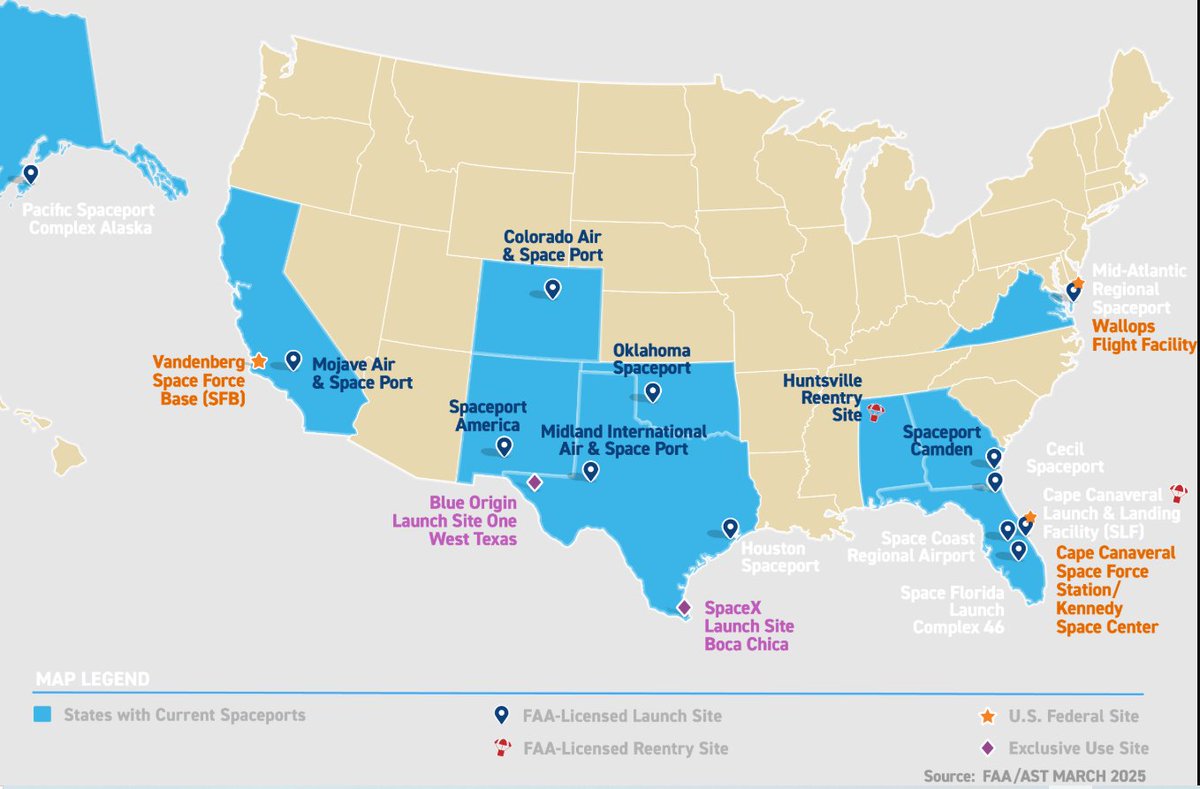
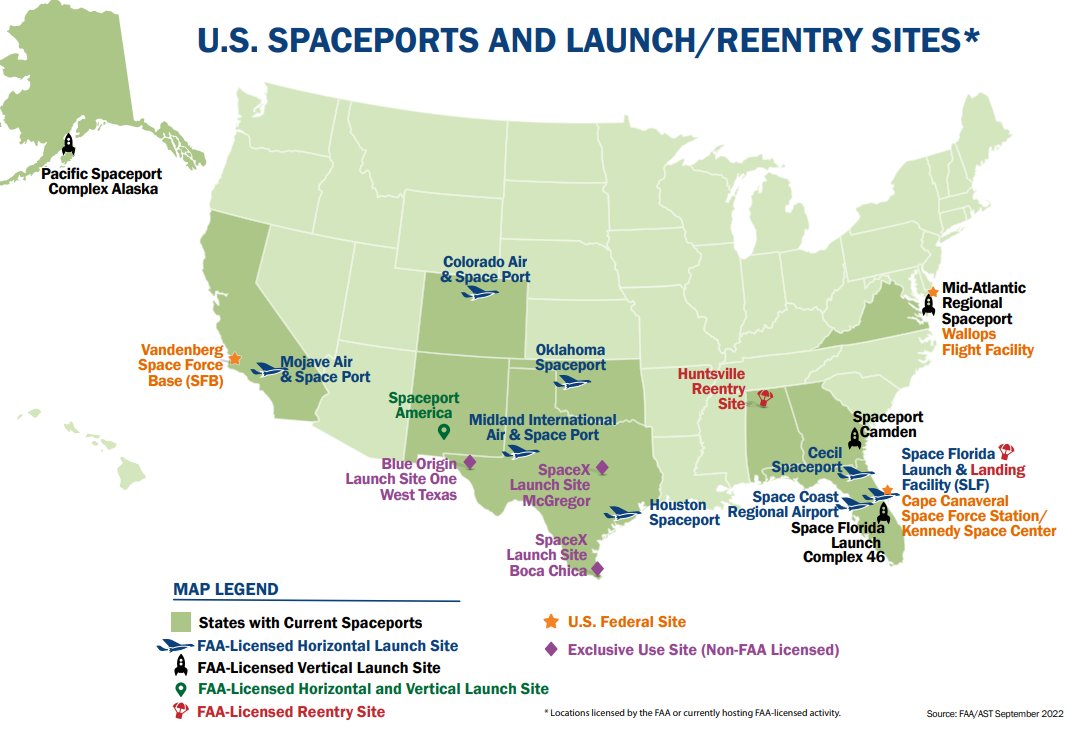
FAA Chart of US Spaceports Updated as of Mar 2025
in conjunction with post re basics of space law
4
26
387
May 31
#SPACELAW #LAUNCHREENTRY #SMALLSATELLITES
SPACE LAW PART 2: This part of the post is taken from 14 CFR Parts 450, 420, & 433 as well as a summary of FCC regulations re satellites
Part 450 LAUNCH AND REENTRY LICENSE REQUIREMENTS
14 CFR PART 450 sets forth, among other things, scope of a vehicle operator license, a key concept.
In conjunction with licensing, it provides an integrated definition of scope of launch and scope of reentry as well as compliance requirements for and payload determinations for the enumerated classes of payloads including safety reviews. This also includes small satellites below.
On March 17, 2026, FAA announced by press release that it would Streamline Commercial Space License Approvals under Part 450 in support of American commercial space innovation. faa.gov/newsroom/faa-streaml…
All licensing will now occur under the Part 450 rule, which consolidates four old rules into one.
For five years, the old and new regulations were in effect simultaneously to provide a transition period for operators to obtain a Part 450 license.
Part 450 reduces the number of times an operator needs an FAA license approval and allows one license for a portfolio of operations, different vehicle configurations and mission profiles, and even multiple launch and reentry sites.
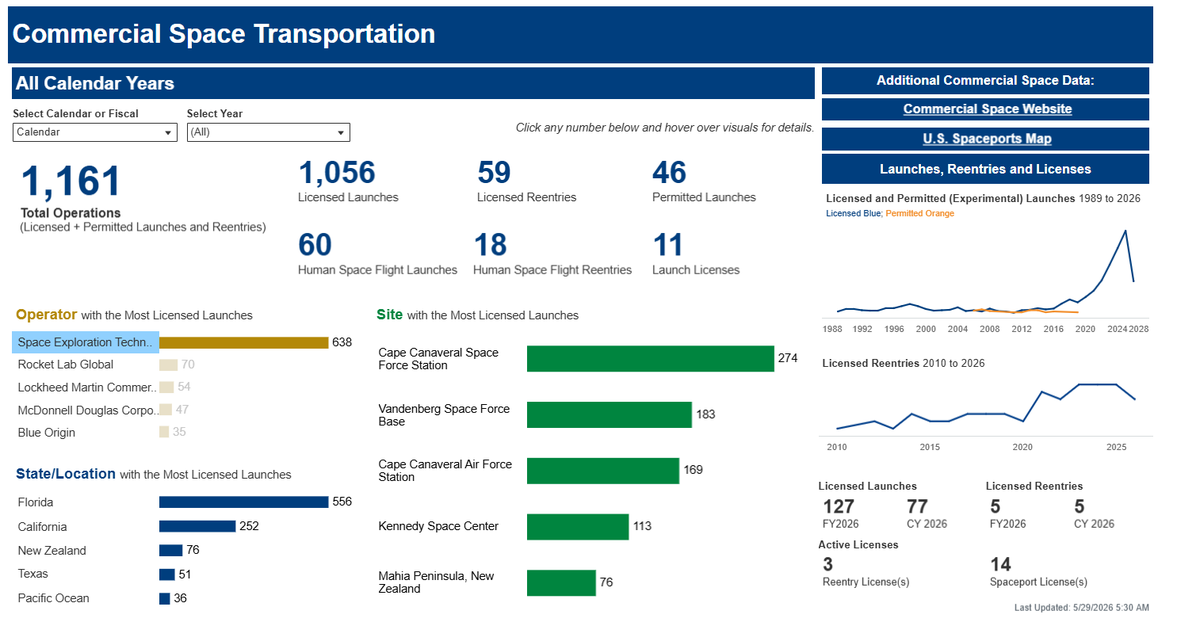
Attached is a bar chart of the number of licensed launches to date. Look at SpaceX!!! cf to others.
========================================
Part 450 SMALL SATELLITE OPERATOR & FCC PROVISIONS
450.43 Payload review and determination.
General. If applicable, the FAA issues a favorable payload determination for a launch or reentry to a license applicant or payload owner or operator if—(1) The applicant, payload owner, or payload operator has obtained all required licenses, authorizations, and permits; and (2) Its launch or reentry would not jeopardize public health and safety, safety of property, U.S. national security or foreign policy interests, or international obligations of the United States.
(b) Relationship to other executive agencies. The FAA does not make a determination under paragraph (a)(2) of this section for—(1) Those aspects of payloads that are subject to regulation by the Federal Communications Commission or the Department of Commerce; or (2) Payloads owned or operated by the U.S. Government.
The payload owner/operator may also apply for the determination.
=======================================
FCC Small Satellite and Small Spacecraft Licensing Process
fcc.gov/space/small-satellit…
In 2019, the FCC created an alternative, optional application process for small satellites and spacecraft with non-Earth orbit missions in its Report and Order on Streamlining Licensing Procedures for Small Satellites (IB Docket No. 18-86; FCC 19-18). This process enables small satellite and spacecraft applicants to take advantage of an easier application process with lower application fees, generally shorter processing times, forbearance from the performance bond requirement for one year, and exemption from processing round rules.
The Order sets forth qualifying characteristics generally relating to size, duration, radio frequency, operational debris and collision risk.
The applicant must provide a demonstration that the satellite operations can share spectrum with current and future operators. This usually involves a demonstration, for example, that the satellites are communicating with a limited number of earth stations or otherwise have limited spectrum use.
Streamlined Small Spacecraft Licensing
This process is also adopted for small spacecraft with planned non-Earth orbiting missions, such as commercial lunar missions. Applicants for these missions are exempt from several of the characteristics, but are subject to others:
In addition to the specifying compliance with the qualifying criteria, applicants for small satellite license or grant of market access must provide the following:
An overall description of system facilities, operations, and services and an explanation of how uplink frequency bands would be connected to downlink frequency bands;
Public interest considerations in support of grant;
A description of means by which requested spectrum could be shared with both current and future operators, (e.g., how ephemeris data will be shared, antenna design, earth station geographic locations) thereby not materially constraining other operations in the requested frequency band(s);
For space stations with any means of maneuverability, including both active and passive means, a description of the design and operation of maneuverability and deorbit systems, and a description of the anticipated evolution over time of the orbit of the proposed satellite or satellites.
In any instances where spacecraft capable of having crew aboard will be located at or below the deployment orbital altitude of the space station seeking a license, a description of the design and operational strategies that will be used to avoid in-orbit collision with such crewed spacecraft shall be furnished at time of application.
Other information is required as described in the Part 25 Space Station Checklist.
==================================
SPACEPORTS: LAUNCH SITES AND REENTRY SITES
An updated FAA spaceport chart from Mar 2025 is posted separately
14 CFR PART 420—sets forth the regulations to obtain a LICENSE TO OPERATE A LAUNCH SITE (Authority: 51 U.S.C. 50901-50923 Docket No. FAA-1999-5833, 65 FR 62861, Oct. 19, 2000, unless otherwise noted)
Part 420 prescribes the information and demonstrations that must be provided to the FAA as part of a license application, the bases for license approval, license terms and conditions, and post-licensing requirements with which a licensee shall comply to remain licensed. 420 also contains definitions such as liquid propellants, safety, environmental, and other terms and conditions such as agreements with the Coast Guard and FAA, scheduling, handling of mishaps, and distance requirements.
Requirements for preparing a license application are contained in part 413 of this subchapter.
14 CFR PART 433—sets forth the regulations to obtain a LICENSE TO OPERATE A REENTRY SITE (Authority:51 U.S.C. 50901-50923, Docket No. FAA-1999-5535, 65 FR 56665, Sept. 19, 2000, unless otherwise noted.)
Section 433.3 Issuance of a license to operate a reentry site. (a) The FAA issues a license to operate a reentry site when it determines that an applicant's operation of the reentry site does not jeopardize public health and safety, the safety of property, U.S. national security or foreign policy interests, or international obligations of the United States.
A license to operate a reentry site authorizes the licensee to offer use of the site to support reentry of a reentry vehicle for which the three-sigma footprint of the vehicle upon reentry is wholly contained within the site. The regs specify compliance with NEPA, first an EA, then an EIS or CE as appropriate.
1
1
20
309
May 30
#SpaceLaw
Space Law Basics Part 1
Streamlined Small Sat Regulations ( in Part 2)
The US Space Launch Competitiveness Act of 2015
digitalcommons.unl.edu/space…
The U.S. Commercial Space Launch Competitiveness Act of 2015 (also known as the SPACE Act, Public Law 114-90) is landmark legislation enacted to stimulate the private space sector. It establishes property rights for U.S. citizens who mine resources in space and extends regulatory and liability protections for commercial spaceflight providers.
The enabling statute for commercial space operations is Commercial Space Launch Act of 1984 (51 U.S.C. § 50901-50923). This was amended by Commercial Space Launch Amendments Act of 2004. .
The principal agencies regulating space law are DOT/FAA/Office of Commercial Space Transportation and NOAA and FCC. (The FAA licenses launch and reentries for U.S. citizens and from U.S. territory.)
Statute and multiple executive policies have directed the U.S. government to, when possible, use commercial space launch services to promote the U.S. commercial space industry and to improve cost effectiveness. The Commercial Space Act of 1998 (P.L. 105-303) directs the federal government to "acquire space transportation services from United States commercial providers whenever such services are required in the course of its activities," with certain exceptions (e.g., if transportation services that meet specific mission requirements would not be reasonably available from U.S. commercial providers). Commercial Space Act of 1998 (P.L. 105-303), Title II, codified at 51 U.S.C. §50131.
Major amendments were provided for in the aforementioned US Space Launch Competitiveness Act of 2015, summarized by its 4 Titles.
The Act encompasses four titles:
I. Spurring Private Aerospace Competitiveness and Entrepreneurship (acronym: SPACE),
II. Commercial Remote Sensing,
III. Office of Space Commerce, and
IV. Space Resource Exploration and Utilization.
LICENSING OF LAUNCHES: Title I amends the Commercial Space Launch Act, which comprises the licensing regime for launches, reentries, and launch port activities, including those carrying spaceflight participants on board.
Definitions of many of the terms are found in the regulations. For example, 14 C.F.R. §401.5 defines reentry vehicle as "a vehicle designed to return from Earth orbit or outer space to Earth substantially intact. A reusable launch vehicle that is designed to return from Earth orbit or outer space to Earth substantially intact is a reentry vehicle."
Use the official Spaceport License resources to view application checklists (faa.gov/space/licenses/space…), or check the Spaceports by State directory for details on individual sites (faa.gov/space/spaceports_by_…).
LICENSING OF COMMERCIAL SATELLITE REMOTE SENSING OPERATIONS: (Satellites covered in a followup post.) Title II amends the Land Remote Sensing Policy Act, which allowed for the licensing of private commercial satellite remote-sensing operations, and essentially requires the Secretary of Commerce to provide an overview of licensing practices in this sector so far and any perceived need to update the statutory regime in this respect.
Title III relabels the existing Office of Space Commercialization as Office of Space Commerce and rephrases its purposes.
PRELIMINARY SPACE RESOURCE EXPLOITATION: Title IV, the Space Resource Exploration and Utilization Act (Chapter 513 of 51 USC), addresses in a preliminary fashion space resource exploitation—the most innovative and disputed part of the Act, certainly in an international context.
Space Resource Rights (Title IV): Grants U.S. companies the legal right to own, possess, transport, use, and sell resources extracted from asteroids and other celestial bodies. It explicitly states that the U.S. does not claim sovereignty over celestial bodies, but ensures private entities can legally profit from space mining.
Commercial Spaceflight Indemnification: Extends the federal government's indemnification of commercial launch providers for catastrophic third-party losses.
Regulatory "Learning Period": Extends the Federal Aviation Administration (FAA) "learning period," which restricts the government from imposing strict passenger safety regulations on the burgeoning commercial spaceflight industry, allowing room for innovation.
Government Astronaut Definition: Formally defines "government astronaut" in statute to ensure U.S. government employees (like NASA astronauts flying on commercial spacecraft) are properly protected under existing liability frameworks.
Satellites: Remote Sensing & Space Commerce: Streamlines regulations for the private remote-sensing (satellite) industry and renames/reorganizes the Office of Space Commerce to better support the growing commercial aerospace sector.
ALT FAA Map date: 09/22
1
12
214
May 29
Florida Registered Voters - Omitted from post on 5/28/2026 re numbers of registered voters
I was going on about low voter turnout (and implicit apathy and what it costs) in Texas. I compared our large number of registered voters to other states.
I listed California as having the country's largest number of registered voters (23,092,098), then Texas (18,662,785) as having the second largest set of registered voters.
Then I listed New York as next with 12,498,691. That is not correct, and I apologize for the omission to Florida. As of May 2026, Florida has 13,361,000 registered voters; then New York with 12,498,691.
So the wonderful, very well managed state of Florida, not New York, is third, and my apologies to Gov, Sec State, and citizens of FL.
2
2
7
133
May 29
California Primary Jun 2 - Please Vote ; Texas Primary - Paxton v Cornyn & Talarico
California has the greatest number of registered voters: 23,092,098.
Texas is second: 18,662,785.
The others are far behind: NY: 12,498,691; IL: 8,399,862.
If you are going to vote in the CA primary, I recommend you vote for Steve Hilton to keep the strength altogether.
Voter turnout is low. We have 18,662,785 registered voters in TX, and in the hard fought race between Paxton and Cornyn, the votes statewide were
Cornyn: 51,896; Paxton: 93,727
The percentages voting in the Texas primary run-off were 6.71% and for Dems, 2.61%, or a total turnout of 9.32% deciding the serious issues we had in this election.
1
1
5
142
May 25
Texas Primary Run-off Election Day: May 26, 2026
The primary run offs are tomorrow May 26 for both the republican and democrat parties. Please take the time to go vote if you did not do early voting. The Buck and Clay radio show is reporting very low voter turn out for early voting which ended Saturday. There is at least one important state wide primary race you should weigh in on: For Senate: Repub: Cornyn v Paxton. I am with Cornyn because I think he has a better chance of beating the Dem Talarico, but I am unexcited about both. Pres T endorsed Paxton, but I am not sure DJT knew about all the baggage hanging around Paxton. I do not want to hear about that for the general election.
3
1
15
508
May 24
#Mars #Moon #MagneticFields
Magnetic Field of Mars; Mini-Magnetospheres;
What sort of magnetic fields, if any, does Mars currently have
If the Moon has remanent magnetic fields that might provide protection from solar winds, does Mars also have them
The post is not technical and is based on two general NASA studies. It is provided for info and as an adjunct to the Moon posts regarding remanent, isolated magnetic fields.
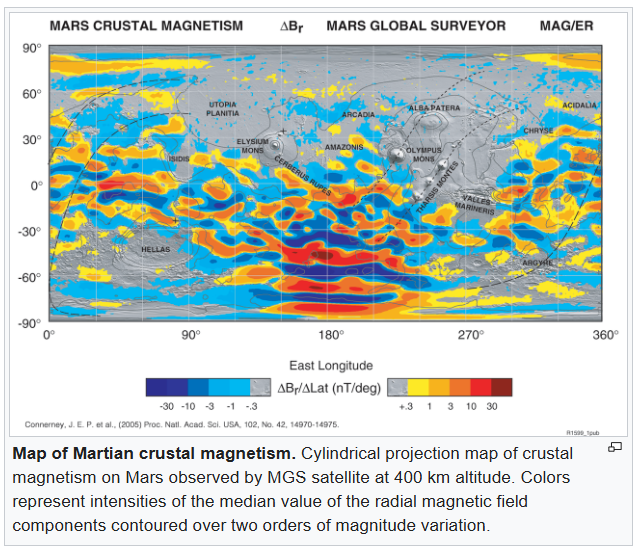
While the Martian northern lowlands are largely unmagnetized, the southern Mars hemisphere possesses strong remanent magnetization, showing alternating stripes. Scientific understanding of the evolution of the magnetic field of Mars is based on the combination of satellite measurements and Martian ground-based magnetic data.
Mini-Magnetospheres: Because of their unique positions and strengths, these local fields act as scattered "umbrellas" or mini-magnetospheres, shielding patches of the Martian atmosphere from direct erosion by the solar wind.
The Mars Global Surveyor spacecraft obtained globally-distributed vector magnetic field measurements approximately 400 km above the surface of Mars. These have been compiled to produce the first complete global magnetic field maps of Mars. Crustal magnetization appears dichotomized, with intense magnetization mainly confined to the ancient, heavily cratered highlands in the south.
A cylindrical map displaying magnetism from Mars Global Surveyor study follows.
Data Summary: The field measured at mapping orbit altitude is dominated by sources in the Mars crust (remanent magnetism) and external fields arising from the interaction of the solar wind with Mars' atmosphere. This external field is highly variable, ranging from a few nT in magnitude to as much as (rarely) ~100 nT. The magnetic field due to crustal remanence reaches a maximum of ~220 nT at mapping altitude.
Study Interpretation: the Martian northern lowlands are largely unmagnetized, the southern hemisphere possesses strong remanent magnetization, showing alternating stripes. Scientific understanding of the evolution of the magnetic field of Mars is based on the combination of satellite measurements and Martian ground-based magnetic data.
The Connerney paper contains data source, interpretation, and extensive citation, but is a bit old.
There is no mention of such remanent spheres in the Moon or other bodies without a global core.
Mars Global Surveyor magnetic fields investigation suggests these improvements, among others, for the NASA studies.
**Besides getting better data, the NASA study includes among tasks:
**Studying the interaction of Mars with the solar wind provides information on how the atmosphere has been stripped away over the age of the solar system.
**Improving the magnetic field map of crustal sources for dating the age of the crust and correlating with geology.
=========================
Cites, accessed May 23, 2026
mgs-mager.gsfc.nasa.gov/publ…
mgs-mager.gsfc.nasa.gov/
en.wikipedia.org/wiki/Magnet…
ALT Mars Global Surveyor cylindrical map of Mars crustal magnetism
4
2
19
682
May 25
One shocking thing I did not note is that NASA thinks these large magnetic fields are much stronger, possible 20-50x, than on Earth. That deserves significant research.
2
1
10
138
May 21
#Moonbase #Regolith #RemanentMagneticFields
Part 2: Lunar Regolith Ventures - Lunar Remanent Magnetic Fields - Technical Background
Background re lunar remanent magnetic fields. This is a representative, but no means complete, summary of theories re remanent magnetic fields on the Moon.
Scientists have known for decades that the moon holds remnants of a strong magnetic field.
Samples from the surface of the moon, returned by astronauts on NASA’s Apollo missions of the 1960s and 70s, as well as global measurements of the moon taken remotely by orbiting spacecraft, show signs of remnant magnetism in surface rocks, especially on the far side of the moon.
CAUSATION AND TIMELINE: There is disagreement as to the cause (and duration) of such magnetism, ranging from ages of billions to paleo earth geology timeline to some scientists even suggesting that the astronauts themselves caused this magnetism when they discovered it!!! [Editor note: nothing is too offbeat about lunar magnetism—well maybe this is: This theory might lead one to speculate that you could fly satellites around the moon in order to magnetize it, i.e. create your own magnetic field.].
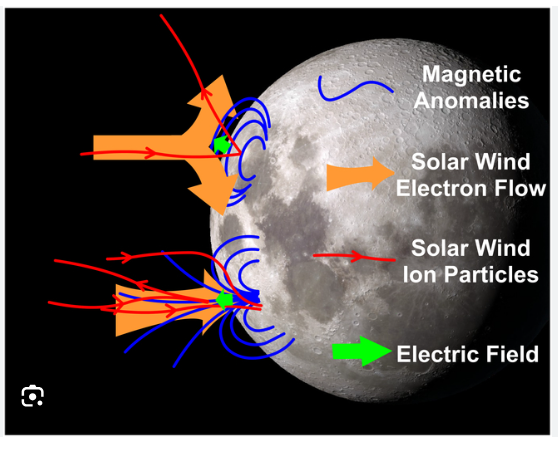
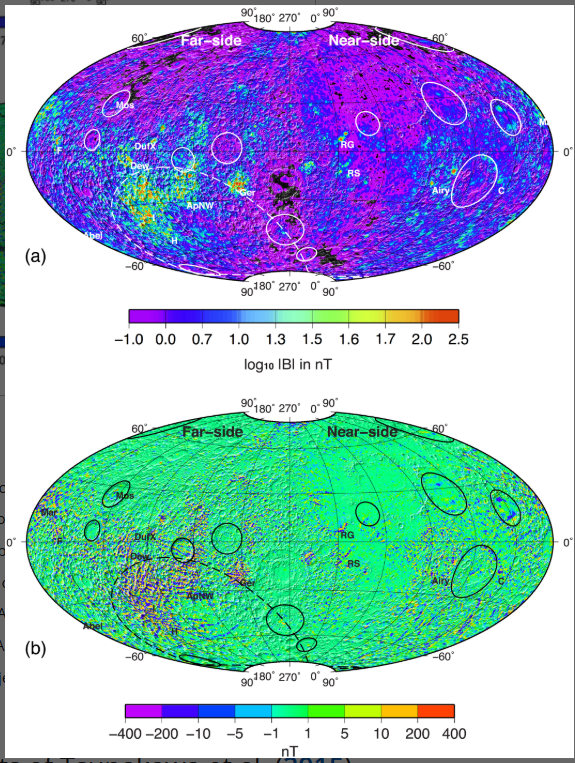
Figure 1: general representation
AGU Publications notes:
Lunar remanent magnetic fields are localized, crustal magnetic anomalies rather than a global dipole.
Satellites like Apollo 15/16 subsatellites, Lunar Prospector, and Kaguya mapped these fields using onboard magnetometers and electron reflectometers. They reveal "mini-magnetospheres" capable of deflecting solar wind.
Lunar Magnetic Field Models From Lunar Prospector and SELENE/Kaguya Along-Track Magnetic Field Gradients, JGR Planets, agupubs.onlinelibrary.wiley.…
Highest resolution surface magnetic fields from the global monopoles (0.66° spacing)-based models derived in this study from 84 subsets. . (No datasets are included in this note.)
Figure 2: Location of modeled remanent magnetic fields. Article contains model description and methodology.
MIT asks: Why are some rocks on the moon highly magnetic? MIT scientists may have an answer
Jennifer Chu | MIT News, Publication Date:May 23, 2025, link below, accessed May 20, 2026
MIT hypothesis: Source of lunar magnetic rocks
A large impact could have briefly amplified the moon’s weak magnetic field, creating a momentary spike that was recorded in some lunar rocks.
This combination of events could explain the presence of highly magnetic rocks detected in a region near the south pole, on the moon’s far side. As it happens, one of the largest impact basins — the Imbrium basin — is located in the exact opposite spot on the near side of the moon. The researchers suspect that whatever made that impact likely released the cloud of plasma that kicked off the scenario in their simulations.
But in MIT’s new study, the researchers took a different tack. Instead of accounting for the sun’s magnetic field, they assumed that the moon once hosted a dynamo that produced a magnetic field of its own, albeit a weak one. Given the size of its core, they estimated that such a field would have been about 1 microtesla, or 50 times weaker than the Earth’s field today.
MIT calls for more data re the remanent magnetic fields observations. “There are large parts of lunar magnetism that are still unexplained,” says lead author Isaac Narrett, a graduate student in the MIT Department of Earth, Atmospheric and Planetary Sciences (EAPS). “But the majority of the strong magnetic fields that are measured by orbiting spacecraft can be explained by this process — especially on the far side of the moon.”
From this starting point, the researchers simulated a large impact to the moon’s surface, similar to what would have created the Imbrium basin, on the moon’s near side. Using impact simulations from Katarina Miljkovic, the team then simulated the cloud of plasma that such an impact would have generated as the force of the impact vaporized the surface material. They adapted a second code, developed by collaborators at the University of Michigan, to simulate how the resulting plasma would flow and interact with the moon’s weak magnetic field.
These simulations showed that as a plasma cloud arose from the impact, some of it would have expanded into space, while the rest would stream around the moon and concentrate on the opposite side. There, the plasma would have compressed and briefly amplified the moon’s weak magnetic field. This entire process, from the moment the magnetic field was amplified to the time that it decays back to baseline, would have been incredibly fast — somewhere around 40 minutes, Narrett says.
news.mit.edu/2025/why-are-so…
ALT Figure 1: Generalized represenation of magnetic anomalies and lunar remanent magnetic deposition
8
2
29
763
May 21
#MoonBase #Electrolysis #RemanentMagneticFields
Lunar Regolith Ventures - Remanent Magnetic Fields on the Moon - Electrolysis
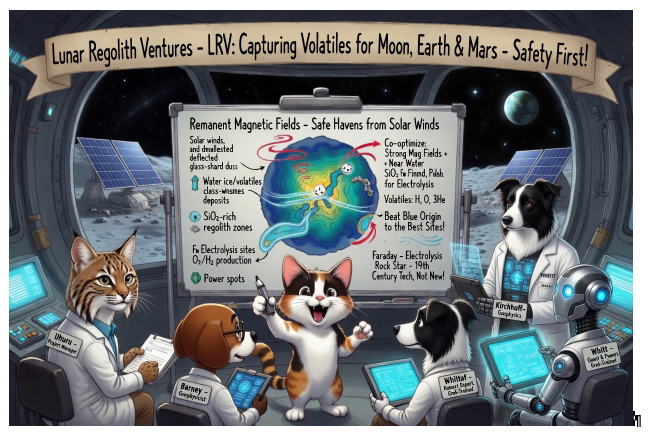
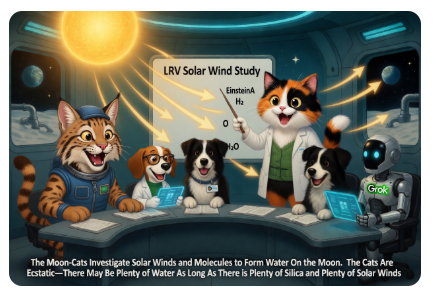
SETTING: The entire Lunar Regolith Ventures (LRV) management team whose lab is near the Shackleton Crater, South Pole, the Moon. Attendees are: the moon cats, EinsteinA, a calico; and Uhuru, a beautiful female bobcat. And others are in the Lab sitting in a horse shoe formation with a white board which displays info re the remanent magnetic fields mapped on the Moon and other competitive info. EinsteinA is standing at the whiteboard. Sitting are the beautiful bobcat Uhuru, with Barney, a tricolored beagle geophysicist who wears horn rimmed glasses, their supervisor Maxwell who is a PhD EE; another border collie, Faraday Kirchhoff III, PhD CE, who is an Electrolysis Chemist; and the resources manager, a Moon Class Optimus, Whittingham (Whitt) who is Grok trained and who is the resident quant and power expert.
The LRV core mission is to engage in scientific and commercial chemical engineering operations to capture embedded volatiles of hydrogen, oxygen, and 3He, and use them in applications to benefit the Moon, Earth, and Mars. But today LRV has preliminary issues of safety to deal with, namely seeking shelter through magnetism from solar winds.
The team are looking at the whiteboard which shows a draft map of small-scale remanent magnetic fields that repel solar winds and the damage they cause. (This will be posted in a followup, Part 2 technical drawing.) EinsteinA is at the board leading the discussion.
Field mining of rocks and electrochemistry and electrolysis in the lab are principal tools and resources of moon operations, but finding an outdoor safe haven from solar winds is a top priority for exploration, construction, and transportation. Cat cracking of rocks for useful minerals and metals and their assay and analysis are conducted indoors in the lab.
The moon cats EinsteinA and Uhuru are project managers for siting operations and locating valuable rocks for cracking; they also execute and are the money piece of the operations.
REMANENT MAGNETIC FIELDS. The most complex issue for today's meeting is electromagnetism and determining how the team can map the remanent magnetic fields and make use of the information. The localized magnetic fields are safe havens from solar winds and the stinging glass dust and shards that destroy their bodies, clothing, and equipment.
Although the Moon does not have a global scale magnetic field like Earth, there are thought to be small-scale remanent magnetic fields scattered over the lunar surface, some of which have been mapped. Scientists are not sure of their origin.
EinsteinA and Uhuru want to try to pick the best magnetism spots for exploration, power production, and exploitation by LRV’s Space X Earthlings and further to secure the best permits in order to beat their competitors, specifically Blue Origin. LRV wants to co-optimize spaces where there are the strongest magnetic fields preferably near enough surface or ground water to do electrolysis for hydrogen and close enough to plentiful, deep SiO2 to produce oxygen.
OPTIMUS AND POWER SOURCES. The cooptimization of location and resources given the solar wind threat is highly technical. The vast knowledge of the team’s Grok-trained Optimus, Whittingham (Whitt), will be a principal factor in the method of the calculations for this difficult co-optimization. Whitt’s usual specialty is batteries for lunar projects, energy storage, and buried power transmission lines. Whitt is working on 3D print rechargeable sodium-ion batteries directly from regolith, but he also wants to develop nuclear batteries. Transmission lines would be buried below the regolith.
ELECTROLYSIS. Electrolysis is of major importance to extractions from moon rocks. The team needs to extract water and oxygen in two separate processes. They already looked at water and found plentiful supplies to be accessible with electrolysis.
The second electrolysis issue today is using electrolysis to extract breathable and propellant-grade oxygen from molten SiO2.
SOLAR DEPOSITS AND SOLAR WINDS. The Sun ejects millions of tons of materials into the solar system every second and some of those materials are deposited onto the Moon. Solar winds deposit tons of materials which comprise a great portion of the surface regolith since there is no erosion. The winds melt vast quantities of silicon turning it into glass, and the glass dust and shards can cut and ruin everything from clothing to solar panels.
OXYGEN IS MOST ABUNDANT; SILICON, SECOND. In rocks of the Earth and Moon, oxygen is the most abundant chemical element, 41-45% on the moon, and on the Moon, silicon is second.
The silicon is part of the ~12m regolith loose material structure. The vast quantities of silicon dioxide, will also be a source of moon-produced O2 for the Earthlings.
COMPETITION WITH BLUE ORIGIN RE SiO2. EinsteinA has a proprietary interest in the moon rocks and a strong competitive streak. Her fur is on fire because an Earthling competitor just claimed in April 2026 that SiO2 electrolysis is a new thing, and he got his company a huge grant. EinsteinA says everyone from freshman high school physics knows that electrochemistry and electrolysis is an early 19th century field of study developed by Faraday. Even one of the LRV scientists is named after Faraday. Faraday is a “rock” star at LRV.
EinsteinA is bound to make a competitive move by taking all the good magnetic sites. In any event the competiting project used Earth “simulated” sand and EinsteinA and Faraday, the LRV Electrolysis Chemist, will put together a demonstration project using real regolith and send it to Earth @ SpaceX via StarLink.
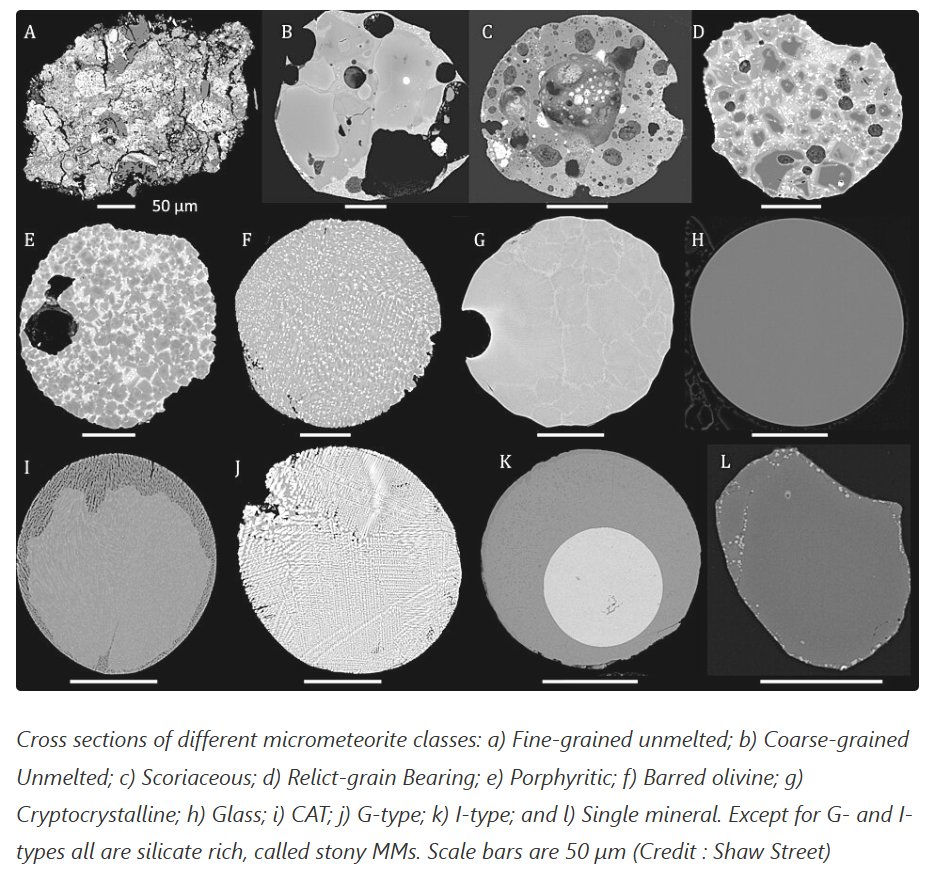
Some Meteorite Information, sites.wustl.edu/meteoritesit…
ALT EinsteinA and other LRV team members discussing remanent magnetic fields and electrolysis.
3
1
21
576
May 18
#SAVEAct #VoterParticipation #PrimaryElections
PLEASE GO VOTE IN ALL ELECTIONS OR AT LEAST THE MAJOR ONES. THE SAVE ACT DOES NOT REALLY HELP UNLESS YOU EDUCATE YOURSELF, THEN EXERCISE YOUR RIGHT
Primary Elections for Mid-Terms are coming up or have already been held and run-offs for those primaries are coming up in major states. For example, Texas held early primaries (Mar 3), and the primary run-offs are May 26, 2026.
I have attached a link to a pdf with 2026 Primary Election and run off dates by state and territory.
Voter participation in primary elections is very low, and participation in primary election run-offs is even lower. You can do all that work for SAVE, but you have to follow through and vote.
The very important result of the low voter turnout is that a very small percentage of voters decide which candidate from their party will run against the opposite party.
Please vote in your respective primary elections. Notwithstanding the table pounding re Election Day, most states have early voting for the primaries and runoffs for your convenience and to make sure you have the greatest opportunity to vote.
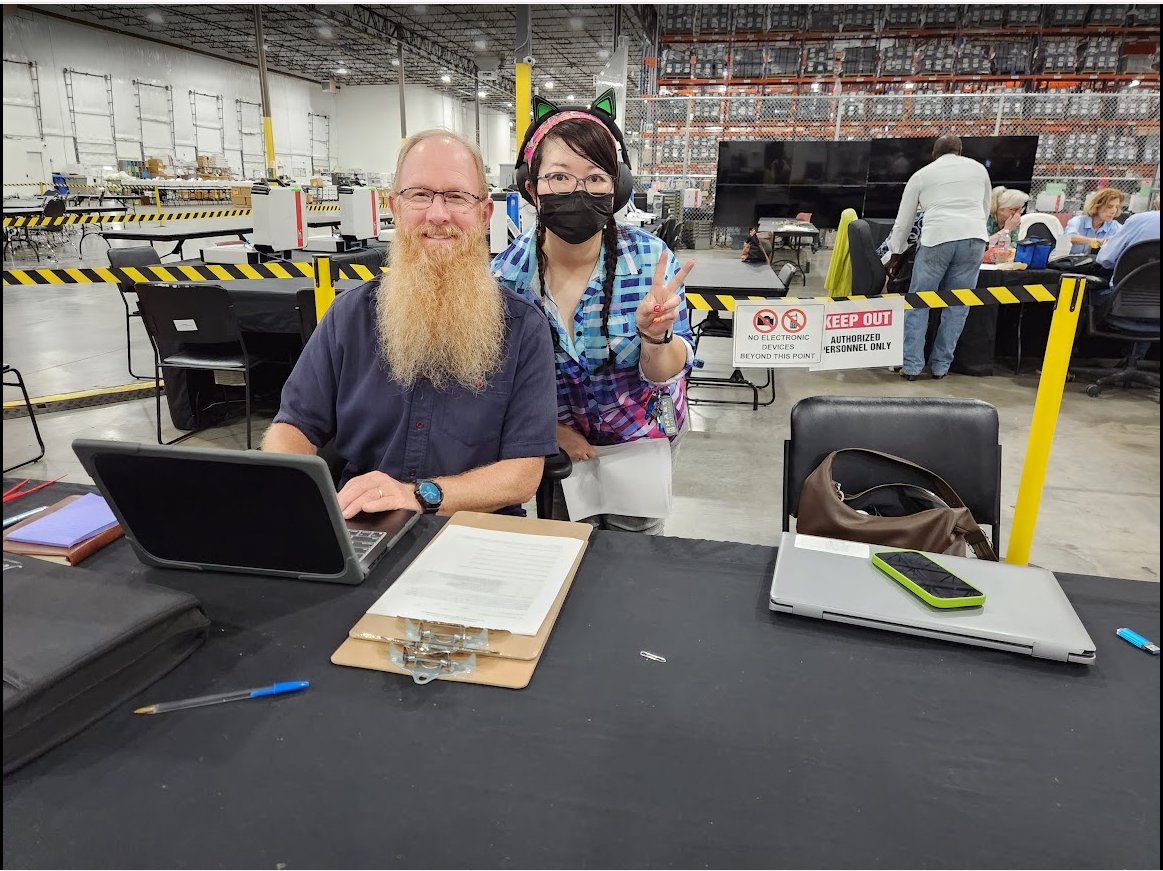
As a Repub member of the voluntary Harris Co TX Central Count Board, I have written about voter participation before, but here is a refresher about the importance of not only posting on x about your favorite candidate and the SAVE Act, but also about actually voting--acquainting yourself with the candidates and polling places and dates and voting.
Some races are hotly contested, and there is a battle to turn Texas blue. Harris, the country’s 3rd largest county, has been solid blue for many years, and so are the two larger counties LA (CA) and Cook (IL).
The very expensive, hotly contested US Senate race in TX is an example. Republicans Cornyn and Paxton are running in the primary run off May 26. The winner of the Repub primary will run against the very, very liberal James Talarico who defeated the very liberal Jasmine Crockett in the Democrat primary.
League of Women Voters is a general go-to source for information across the country. The League of Women Voters has 880 Leagues. Find your local league to get information about the primary
You can get information for the candidates and your voting locations from the League of Women Voters. I have included a link to the 880 links in the US. The League has information about the candidates and early and primary Election Day voting.
lwv.org/local-leagues/find-l…
Ballotpedia is also an excellent site, particularly for candidate qualifications and can fill in LWV gaps.
To show the low voter participation and actual apathy, here are some representative numbers for Texas.
As of January 2026, Harris County had 2.7 million registered voters. Of these, 15.5% (419,643) have a history of voting in the Democratic Party Primary and 14.1% (382,583) in the Republican Party Primary. In total, only 802,226 of the registered voters have participated in a party primary. This means that approximately 70% of current registered voters have no primary voting history.
Despite having the most registered voters and number of votes cast in Texas during the vote in the November 2024 general election, only 1,567,610 of the 2,664,202 million Harris County registered voters (58.8%) turned out to vote. 63.8% in Tarrant County and 63.4% in Travis County beat Harris but were shockingly low.
Historically voter turnout during midterms is even lower. Looking back to the most recent midterms, during the 2022 general election, only 42.9% of Harris County registered voters participated.
Single candidate elections are far worse. We just ran two elections-one a state district election and one a city election-- less than a month apart. Both elections had ~170,000 registered voters. The participation in the state election was 3.8% (three point eight) and the city election was 5.9%. This is a shocking, embarassing, ridiculous display of voter apathy and these elections are very expensive to the taxpayers.
Don’t be lazy or apathetic. Go vote.
Other background info besides League of Women Voters lwv.org/local-leagues/find-l… :
List of primary dates and primary run off dates in the 50 states. fvap.gov/uploads/FVAP/VAO/Pr… (fvap is Federal Voting Assistance Program (FVAP))
Ballotpedia example: Cornyn Paxton race: ballotpedia.org/United_State…
sos.state.tx.us/elections/la…
hectordeleon.com/number-of-h…
5
1
20
566
May 11
PART 2: SCIENCE BACKGROUND TO MOON CATS LAB WORK RE PRODUCTION OF WATER FROM SILICAS:
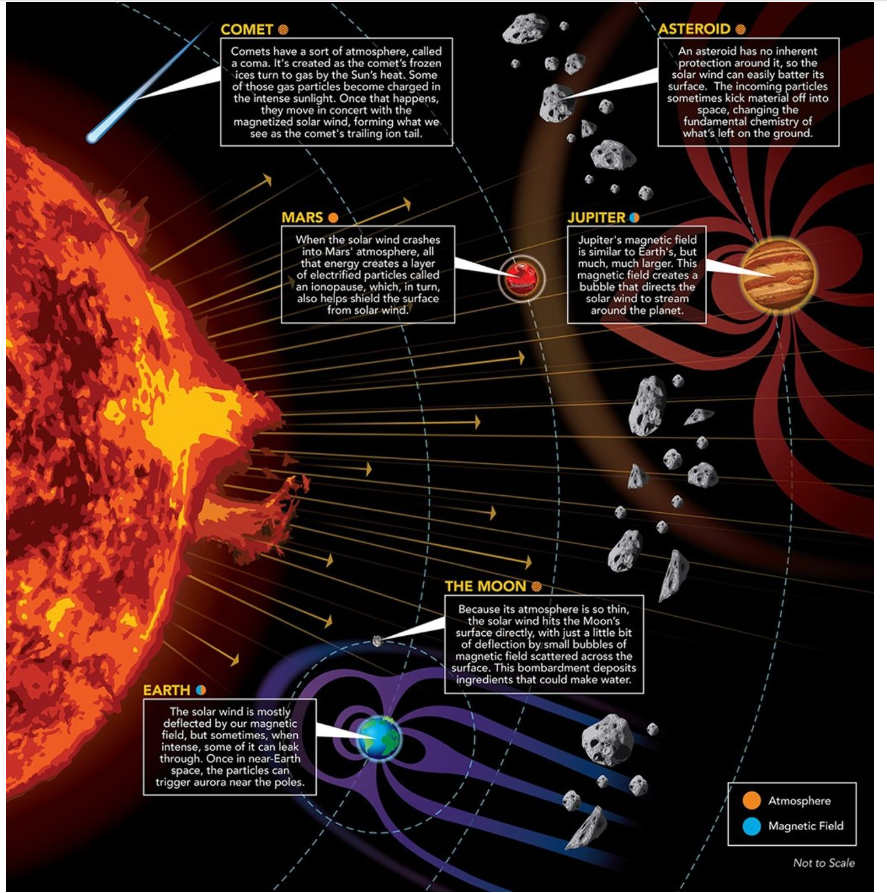
The Sun releases a constant stream of particles and magnetic fields called the solar wind. This solar wind slams worlds across the solar system with particles and radiation — which can stream all the way to planetary surfaces unless thwarted by an atmosphere, magnetic field, or both. Here’s how these solar particles interact with a few select planets and other celestial bodies.
See NASA’s Goddard Space Flight Center/Mary Pat Hrybyk-Keith (attached as separate DIAGRAM.)
But how these atoms and compounds form on the Moon is still an open question. It’s possible that meteor impacts initiate the necessary chemical reactions, but many scientists believe that the solar wind is the primary driver.
NASA’s simulation, which traces the lifecycle of hydrogen atoms on the Moon, supports the solar wind idea.
The hypothesis is that when a stream of charged particles known as the solar wind careens onto the Moon’s surface at 450 kilometers per second (or nearly 1 million miles per hour), they enrich the Moon’s surface in ingredients that could make water.
Using a computer program, scientists simulated the chemistry that unfolds when the solar wind pelts the Moon’s surface. As the Sun streams protons to the Moon, they found, those particles interact with electrons in the lunar surface, making hydrogen (H) atoms. These atoms then migrate through the surface and latch onto the abundant oxygen (O) atoms bound in the silica (SiO2) and other oxygen-bearing molecules that make up the lunar soil, or regolith. Together, hydrogen and oxygen make the molecule hydroxyl (OH), a component of water, or H2O.
“We think of water as this special, magical compound,” said William M. Farrell, a plasma physicist at NASA’s Goddard Space Flight Center in Greenbelt, Maryland, who helped develop the simulation. “But here’s what’s amazing: every rock has the potential to make water, especially after being irradiated by the solar wind.”
Understanding how much water — or its chemical components — is available on the Moon is critical to NASA’s goal of sending humans to establish a permanent presence there, said Orenthal James Tucker, a physicist at Goddard who spearheaded the simulation research.
“We’re trying to learn about the dynamics of transport of valuable resources like hydrogen around the lunar surface and throughout its exosphere, or very thin atmosphere, so we can know where to go to harvest those resources,” said Tucker, who recently described the simulation results in the journal JGR Planets.
“From previous research, we know how much hydrogen is coming in from the solar wind, we also know how much is in the Moon’s very thin atmosphere, and we have measurements of hydroxyl in the surface,” Tucker said. “What we’ve done now is figure out how these three inventories of hydrogen are physically intertwined.”
Showing how hydrogen atoms behave on the Moon helped resolve why spacecraft have found fluctuations in the amount of hydrogen in different regions of the Moon. Less hydrogen accumulates in warmer regions, like the Moon’s equator, because hydrogen atoms deposited there get energized by the Sun and quickly outgas from the surface into the exosphere, the team concluded. Conversely, more hydrogen appears to accumulate in the colder surface near the poles because there’s less Sun radiation and the outgassing is slowed.
Overall, Tucker’s simulation shows that as solar wind continually blasts the Moon’s surface, it breaks the bonds among atoms of silicon, iron and oxygen that make up the majority of the Moon’s soil. This leaves oxygen atoms with unsatisfied bonds. As hydrogen atoms flow through the Moon’s surface, they get temporarily trapped with the unhinged oxygen (longer in cold regions than in warm). They float from O to O before finally diffusing into the Moon’s atmosphere, and, ultimately, into space. “The whole process is like a chemical factory,” Farrell said.
Poster, courtesy of NASA:
Source for both postings:
How Ingredients for Water Could Be Made on the Surface of Moon, Lonnie Shekhtman, Feb 20, 2019; accessed May 10, 2026
science.nasa.gov/solar-syste…
ALT N.B. Moon and Earth at lower portion of the diagram and Mars near top.
13
3
43
1,448
May 16
I really liked this diagram. It is a bit old, but it encapsulates a lot of info, and I did not see a more recent one capturing our star's system. It means a lot that you liked it.
6
1
12
218