
Founder of @codemixdotcom - codemix is deep product understanding, shared across your team and your agents, always up to date, always authoritative.
Joined August 2010
- Tweets 2,152
- Following 755
- Followers 777
- Likes 2,296
55 Photos and videos






Jun 5
Excellent, now please support this for the rest of CF too. I think it's the main concern holding back bootstrappers from using CF at this point

AI Gateway now supports spend limits. Stop runaway costs by setting budgets based on actual dollar usage per model or user.
developers.cloudflare.com/ch…
1
1
136
Jun 5
It's nice how despite the companies fighting each other, no one can stop the engineers at Vercel and Cloudflare from being best friends.
1
11
1,672
Jun 2
having both of these next to each other is really silly. Why do I need to choose between recording and transcription, and what's the effective difference? Unclear.
89
Charles Pick retweeted

May 30
Cynic news (a from-scratch strict-only ECMAScript engine):
- Temporal landed — all 3885 test262 fixtures pass
- New regex engine Perlex landed: 2–3× faster than libregexp; will fully replace it soon
1
1
5
738
May 17
They are going to IPO soon. To justify their valuation they need investors to believe they have a shot at capturing X% of all knowledge work. That's all this is.
May 17

Anthropic CEO Dario Amodei : "Software is going to become cheap, maybe essentially free.
The premise that you need to amortize a piece of software you build across millions of users, that may start to be false.
But at the same time, there are whole jobs, whole careers that we've built for decades that may not be present.
And, you know, I think we can deal with it. I think we can adjust to it. But I don't, I don't think there's an awareness at all of what, of what is coming here and the magnitude of it."
---
From "The Wall Street Journal" YT channel (link in comment)
3
207
May 15
amazing, that's almost half an engineer's salary at Anthropic
May 14

went through this Claude Sub cancellation thread from Theo
500 replies, ~70% actual cancellations = 350 people gone (can actually be higher than this)
rough math (assumptions):
- 210 Pro @ $20 = $4,200/mo
- 84 Max $100 = $8,400/mo
- 56 Max $200 = $11,200/mo
$23,800/month. $285K/year. From one tweet.
and this is just the people who replied 💀
1
4
481
May 12
As the industry figures out these new tools we're going to see the emergence of a key new skillset:
Architecting your codebase for agents.
There's an enormous gap between what coding agents are capable of in theory and what they can achieve in practice.
Most of this gap is down to the environment that the agent is operating in. How quickly they can get feedback on their work. How they know whether they're on the right track. Which guardrails are in place. Whether they can run code in isolation.
Unless you've intentionally designed your codebase around these constraints then you're leaving some of the biggest productivity gains on the table. Spoiler alert: Almost no one has.
In an agent-first codebase the guardrails keep it on track. If it makes mistakes your tooling gives it feedback so that it can correct course. You can spin up many agents working in parallel and view their work in an isolated environment before merging it. Your agents write thorough tests because the agent that writes the code and the agent that writes the test are kept separate. When agents fail on a task you put measures in place to prevent them from making the same mistake twice.
Do all that and you end up with a system that lets teams ship much higher quality software, faster and cheaper than ever before.
In a legacy codebase it's a different story. Either you have to carefully review every line of code, or your codebase is going to deteriorate incredibly quickly. If you don't catch the agents' mistakes in time, that code becomes part of their context - they will reliably copy the same mistakes again and again until you've created a monster. An unreviewable mess that no human can recover, and the agents can't help you either. You're stuck.
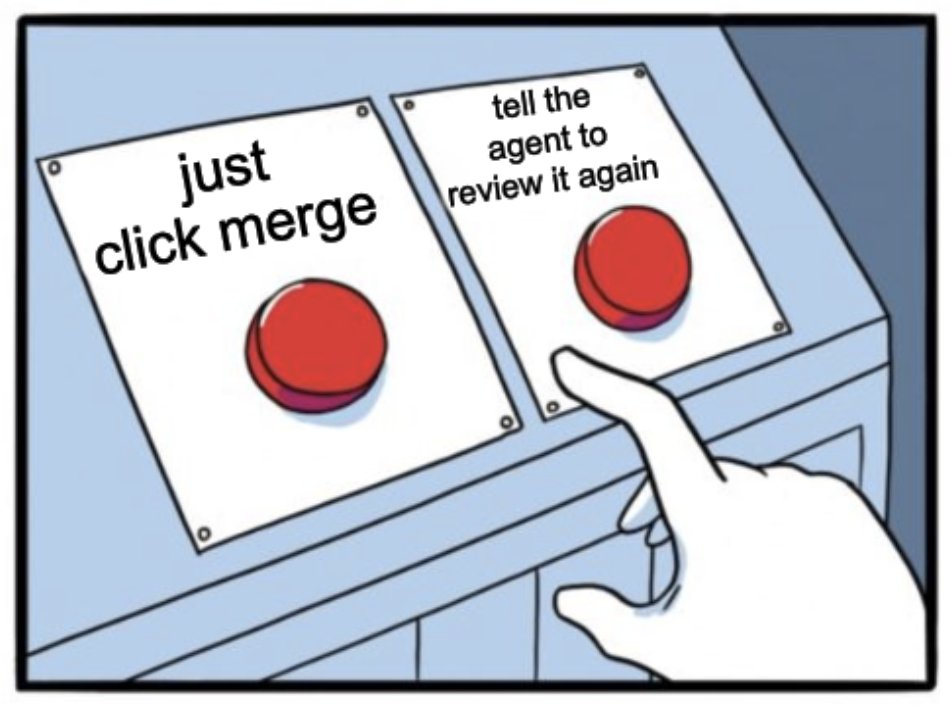
"I'll just review the code" you say, and sure, but agents produce more code than a 10x engineer, faster than a human can realistically understand it. If humans have to review every line then they become the bottleneck. You become a slave to the agent.
You're reading code, telling the agents where they messed up, and waiting for them to fix it. That is a miserable existence. It's slow, frustrating, and it's hard to feel like the agents are actually empowering you.
And in this case "legacy" doesn't just mean old software. Most new codebases fall under this category too. If you did not intentionally design for AI-powered development then it is simply impossible to unlock the potential. Your project will go fast at first and then, quality and velocity will fall off a cliff - sometimes gradually, sometimes immediately.
"Better models drop every few months, doesn't that change the equation?" - No. This problem is fundamental to LLMs and software engineering in general. Either your codebase is set up for fast iteration and feedback or it isn't. Better models will not save you.
It is really difficult to take an existing codebase and make it agent ready. It's not impossible, but it requires a lot of work and coordination. It needs a systematic approach.
At codemix we've figured out what works. If you'd like to learn more my DMs are open.
99
May 6
Some takeaways:
1. Anthropic was obviously compute-starved, many of their recent actions make a lot of sense when viewed through this lens.
2. xAI was massively over-provisioned and has struggled to get real adoption. IMO not because of the model quality but because of trust. Cursor and Anthropic deals make a lot of sense in this context, but doesn't bode well for the future of their own models

We’ve agreed to a partnership with @SpaceX that will substantially increase our compute capacity.
This, along with our other recent compute deals, means that we’ve been able to increase our usage limits for Claude Code and the Claude API.
1
217
Apr 30
I'm bored of defending the multi-hundred-billion-dollar company, but anyway, let's spell it out:
1. They have demand that far exceeds their capacity.
2. They are in the centre of the biggest land grab and gold rush in at least the last 25 years, with trillions of dollars on the line.
3. One of the few levers they have to mitigate excessive consumption is to own the harness.
4. People continually find ways to use third party harnesses in breach of the ToS.
5. This significantly reduces Anthropic's ability to mitigate excessive usage.
6. If they do not enforce restrictions they are guaranteed to run out of compute, degrading performance for everyone who plays by the rules.
7. Their subscription pricing model is designed for Claude Code and other harnesses destroy the economics.
8. They cannot just up their subscription prices to reduce demand without gifting their primary competitor a massive advantage - and this would allow OAI to increase prices too.
9. They cannot instantly build more data centres to increase capacity - it takes a long time.
10. They offer an alternative solution for people who want to use other harnesses - the API, but folks don't want to pay.
11. These mitigations are clunky and intrusive, but they are cheap and fast, and everything is on fire.
12. An awful lot of the people kicking up a fuss about this are people who write their own harnesses. These are not dispassionate observers, there is an enormous amount of money on the line for them personally.
13. The other vocal segment are, mostly, entitled people who don't want to pay anything close to the true cost of their usage and are mad that Anthropic don't want to sell them $1 for $0.10. That mindset is not sustainable anyway.
What are Anthropic's actual, concrete alternatives here?
Apr 30

This is not a company working on "safety", it's one that is blatantly anti-customer, anti-competiton - especially coming from the model with the leading market share in coding (Claude)
Until regulation bans this kind of unacceptable behavior, they will keep doing it, though.
2
6
3,874
Apr 30
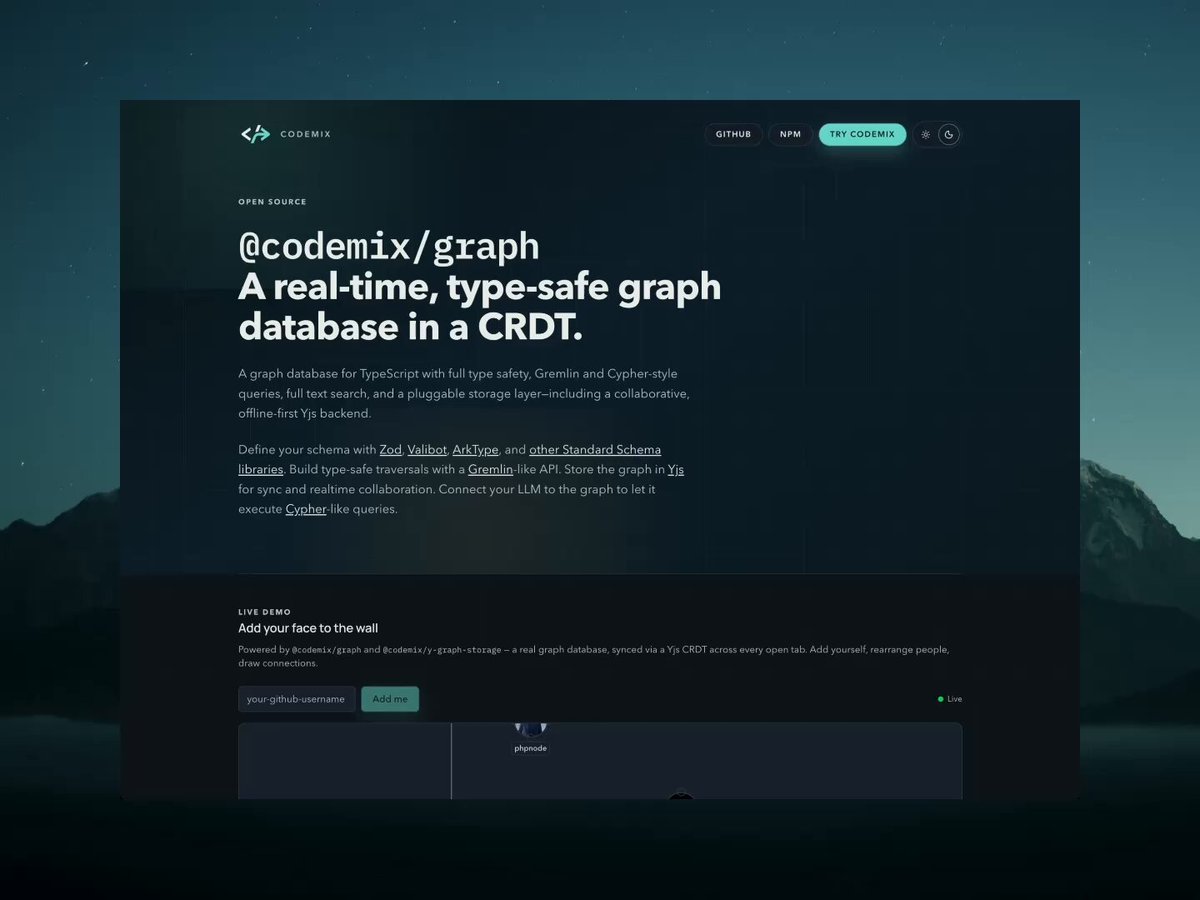
as someone who recently released an open source library based on Gremlin (tinkerpop.apache.org/gremlin…) I am concerned
Apr 30

Never talk about goblins. Our latest blog is live.
openai.com/index/where-the-g…
197
Apr 28
Tools that promise to make all of your messages, all of your notion docs, all of your content available to AI are going to give you absolutely terrible results. What you need is to capture signal, not noise. The actual decisions, not the half baked idea Bob dreamt up after lunch
97
Apr 28
Feeling pretty good about being a generalist these days. All those people who used to say that full stack devs didn't really exist have gone very quiet recently
3
97
Apr 23
This is also why it's really difficult to change behaviour without changing your environment. The two go hand in hand. If you want a new habit to stick, either do it somewhere new, or even just rearrange your room/office.
Apr 23

The room also acted to focus attention. In a meeting room, you met. In a photocopier room, you photocopied. In a tea room, you chatted. Rooms impose a healthy division of labour in a way tech does not.
129
Apr 21
If you were wondering how many concurrent websocket connections a single Durable Object can handle without getting overloaded the answer seems to be around 50
2
4
2,760
Apr 16
imagine the sheer chutzpah necessary to release a product called Personal Computer.
101
Apr 16
ok Cloudflare good stuff, next up is the bit that happens before commit - real time collab with agents as a first class feature. This will likely be based on Yjs and PartyKit.
Apr 16

called it! x.com/c_pick/status/20398492…
1
1
162
Apr 16
this will involve a similar approach to electric-sql.com/blog/2026/0… so you get presence, the agents have their own cursor, you see the edits streaming in in real time etc. @threepointone you can do this within the next few weeks I reckon. no pressure.
1
1
72
Apr 15
this is honestly a sensible move and i'd expect many, many other formerly open source companies to make similar switches. AI has fundamentally changed the equation, it's not even just about security, it's the fact that entire products can be laundered and resold for zero cost
Apr 15

Open source is dead.
That’s not a statement we ever thought we’d make.
@calcom was built on open source. It shaped our product, our community, and our growth. But the world has changed faster than our principles could keep up.
AI has fundamentally altered the security landscape. What once required time, expertise, and intent can now be automated at scale. Code is no longer just read. It is scanned, mapped, and exploited. Near zero cost.
In that world, transparency becomes exposure. Especially at scale.
After a lot of deliberation, we’ve made the decision to close the core @calcom codebase.
This is not a rejection of what open source gave us. It’s a response to what risks AI is making possible.
We’re still supporting builders, releasing the core code under a new MIT-licensed open source project called cal. diy for hobbyists and tinkerers, but our priority now is simple:
Protecting our customers and community at all costs.
This may not be the most popular call.
But we believe many companies will come to the same conclusion.
My full explanation below ↓
109