The Computer & Communications Industry Association (CCIA): 53 year-old tech trade assoc. promoting #netfreedom, balanced #patent #copyright #antitrust policies.
Joined August 2009
- Tweets 11,792
- Following 1,107
- Followers 6,036
- Likes 1,668
3,671 Photos and videos




Pinned Tweet

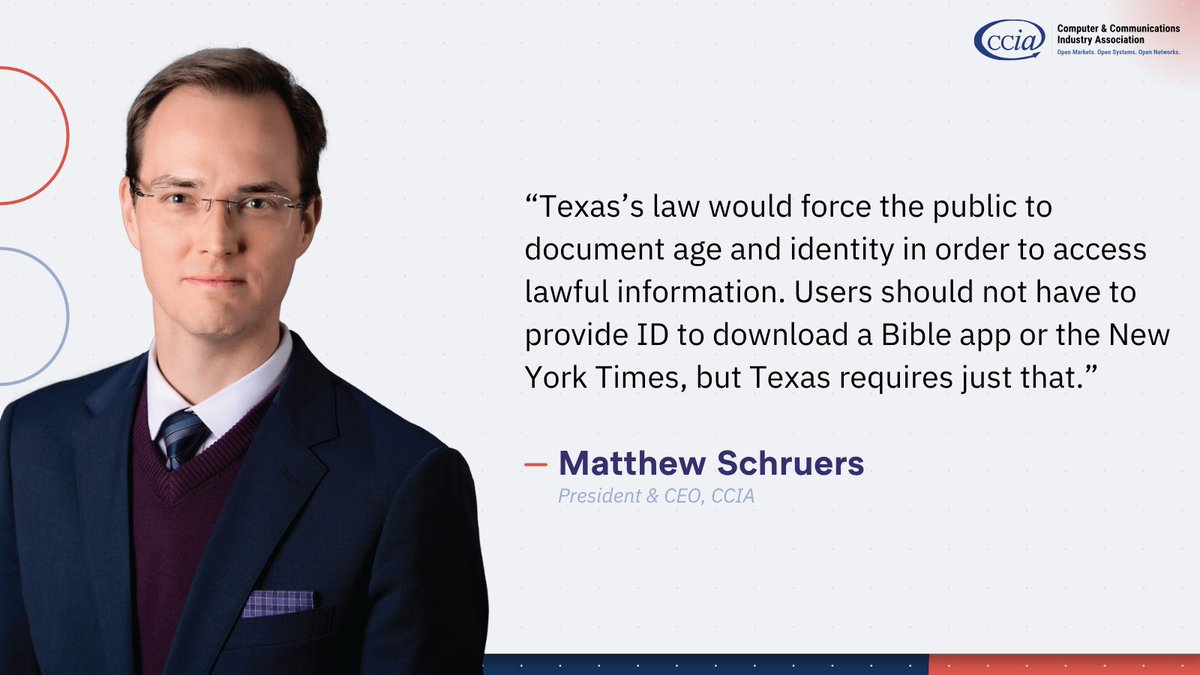
Texas is now forcing app stores to verify a users’ age before they can access lawful information online. Today, CCIA asked the Supreme Court to block Texas’ App Store Accountability Act while the courts consider its constitutionality. Requiring Americans to show ID to download apps, from a weather app to a news app, is a sweeping restriction on speech, #privacy, and access to information. The #FirstAmendment protects the right to access lawful speech online. Read more: buff.ly/oGHOt53
6
39
98
420,508
Florida’s HB3 is not a child safety law; it is an internet rationing law. By singling out certain websites, restricting minors’ access to #LawfulSpeech, and replacing parental judgment with government mandates, HB3 raises serious #FirstAmendment concerns. Courts have already recognized the law’s sweeping restrictions as an “extraordinarily blunt instrument.” Read more: buff.ly/sJUPf6b
1
7
21
1,540
AICOA wouldn’t just affect large companies. This bill’s impacts would ripple through the millions of small businesses that rely on their services. By restricting common business practices, the legislation risks raising costs, degrading products, and making it harder for entrepreneurs to reach customers, compete, and grow. At a time of economic uncertainty, Congress should be lowering barriers for small businesses, not creating new ones. #Competition Read more from Project DisCo: buff.ly/kIRldu3
1
4
161
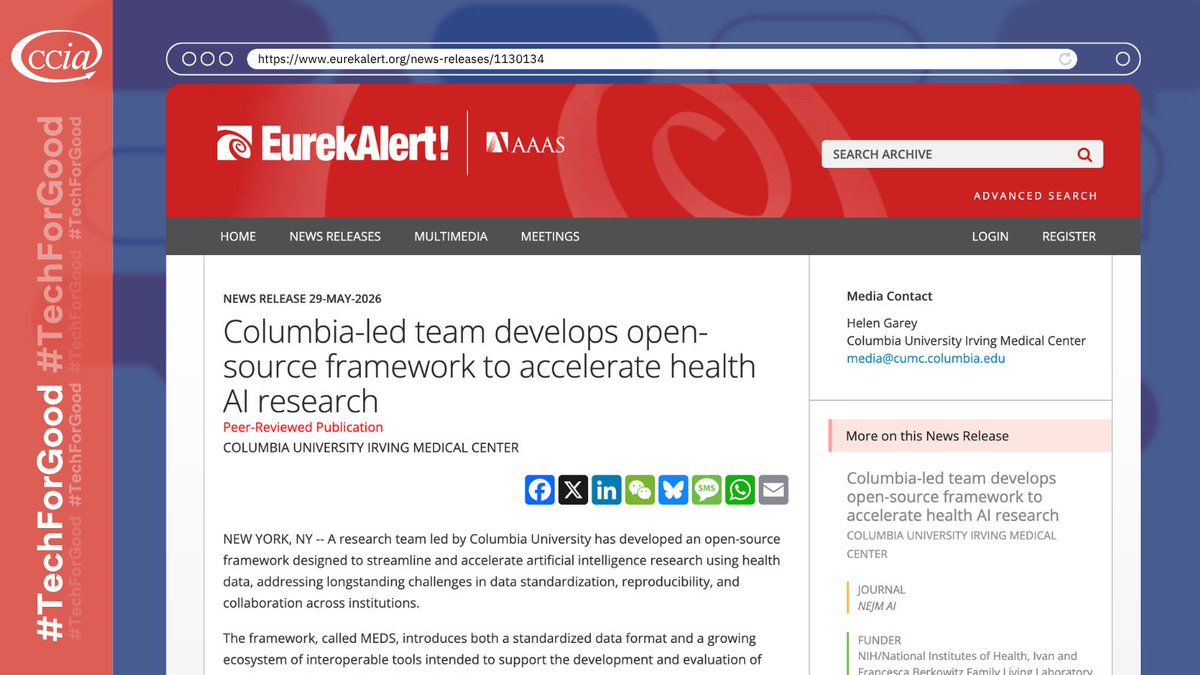
By helping global hospitals share code securely, a new tool from Columbia University is accelerating the development of medical AI. This means life-saving technology can move from the research lab to the patient's bedside much faster.
buff.ly/4rZNTMc
#TechForGood
1
62
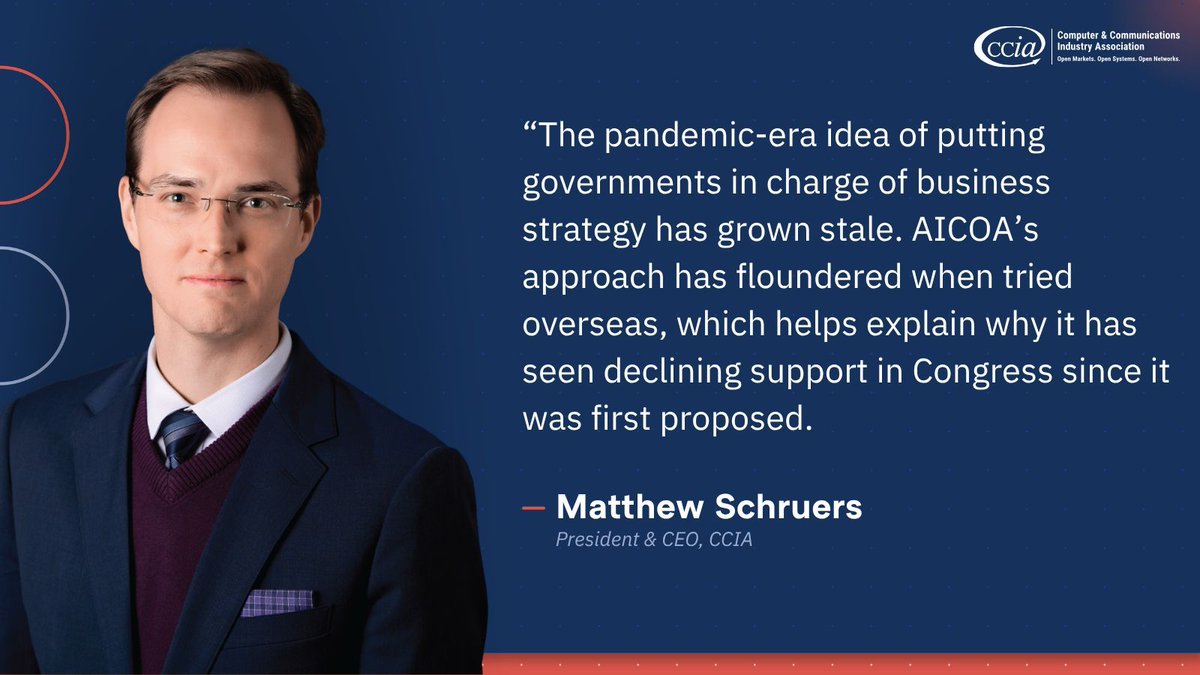
Senate Judiciary members have reintroduced the American Innovation and Choice Online Act (AICOA). Like previous versions, the bill would threaten products and services consumers use every day, from @amazon Prime’s integrated free shipping experience to features that help make @Google Maps more useful and reliable. #Competition policy should target proven harms, not undermine popular products, raise costs, and invite politicized regulation of successful businesses. Read more: buff.ly/ywXWTlu
1
160
A proposed 25% semiconductor tariff on data center inputs would function as a 15.6% tax on U.S. data center construction, putting America’s AI buildout at risk. New analysis by CCIA’s Trevor Wagener (@econwags) finds the policy could delay, cancel, or push abroad roughly 20% of planned data center investment, costing an estimated $90B in GDP annually and threatening 243,000 jobs. Read more: buff.ly/cVp9c3G
1
102
Many app store age-verification proposals would require Americans, including adults and minors, to submit sensitive personal information just to download everyday apps. In an editorial published in the @WashTimes, CCIA’s Megan Stokes discusses how, as a parent, she doesn’t want her children forced to upload IDs or other personal documents to access digital services. Where is that data stored? Who has access to it? How is it protected from breaches or misuse? buff.ly/lfI4292
1
7
23
456
Did you know data center buildout represented 92% of U.S. real GDP growth in the first half of 2025? @McKinsey projects U.S. data center capital expenditures will reach $2.7 trillion between 2025 and 2030. Extending the 25% semiconductor tariffs to data center inputs would effectively impose a 15.6% tax on new U.S. facilities. This tax would lead to the relocation, cancellation or delay of about 20% of planned 2026-2030 data center buildouts in the U.S., costing the U.S. about $90 billion per year and 243,000 jobs. Trevor Wagener (@econwags), Chief Economist at CCIA explains: buff.ly/cVp9c3G
1
67
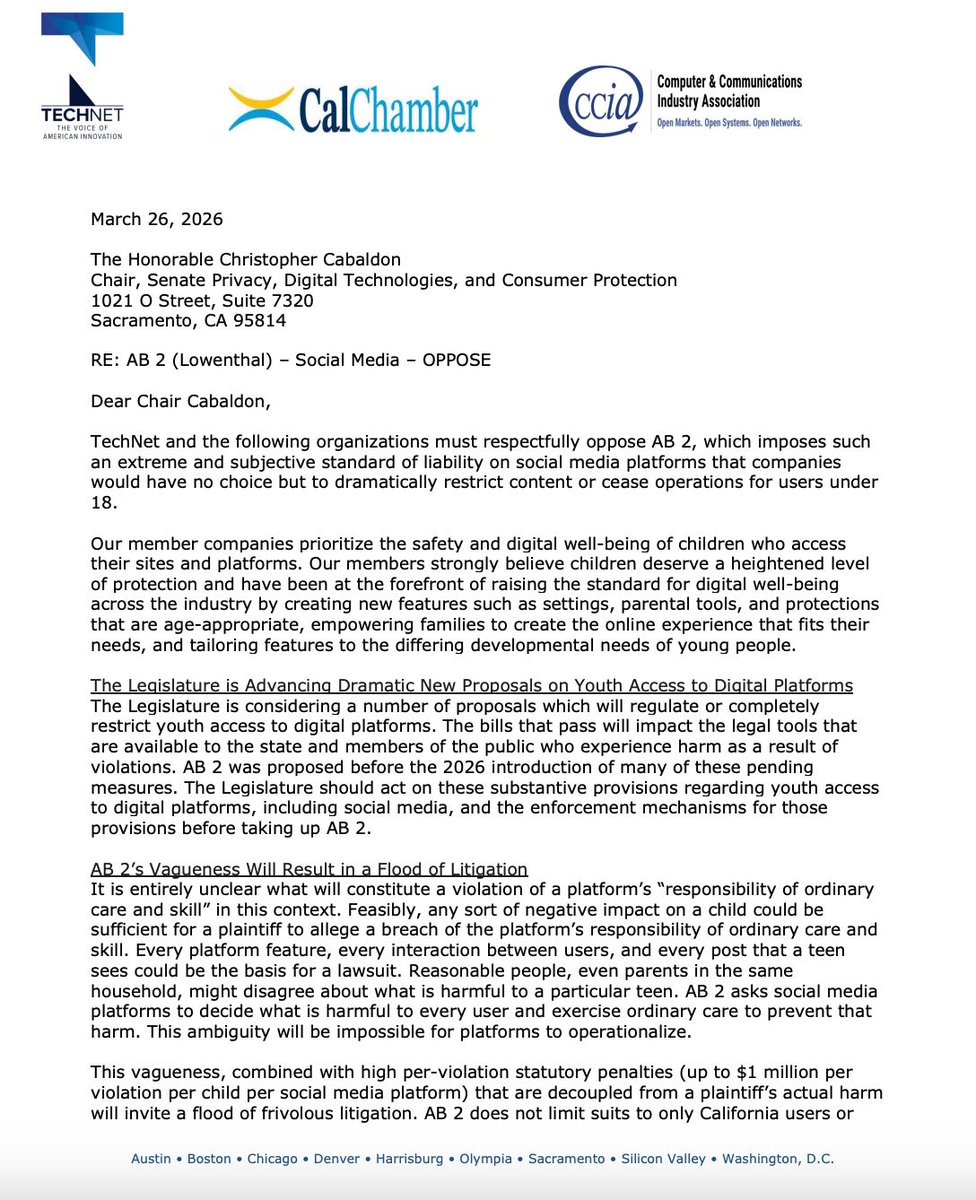
CCIA joined TechNet and other organizations in opposing California’s AB 2, a bill that would impose an overly broad and subjective liability standard on online services, leaving platforms with little choice but to restrict content or stop serving users under 18. Keeping kids safe online is a shared goal. However, policies should build on the extensive parental controls, age-appropriate protections, and safety tools already available, rather than creating incentives to limit access to #LawfulSpeech and online services. Read the coalition letter: buff.ly/Ocx9vMs
5
14
384
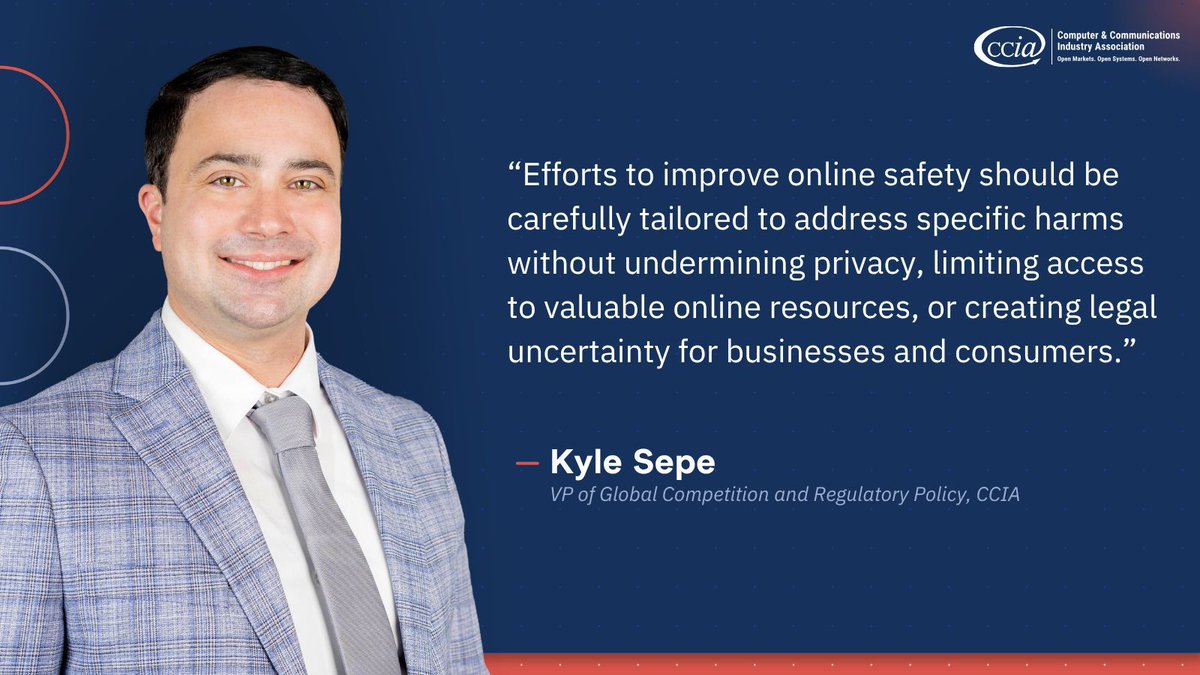
Protecting kids online is important, but legislation must be constitutional, targeted, and effective. CCIA is urging New Jersey lawmakers to reconsider the Kids Code Act, warning that vague mandates could restrict lawful speech, require more collection of minors’ personal data, and limit young people’s access to valuable online communities without addressing specific harms. Read more: buff.ly/GO9xJcW #Privacy #FirstAmendment
10
14
440
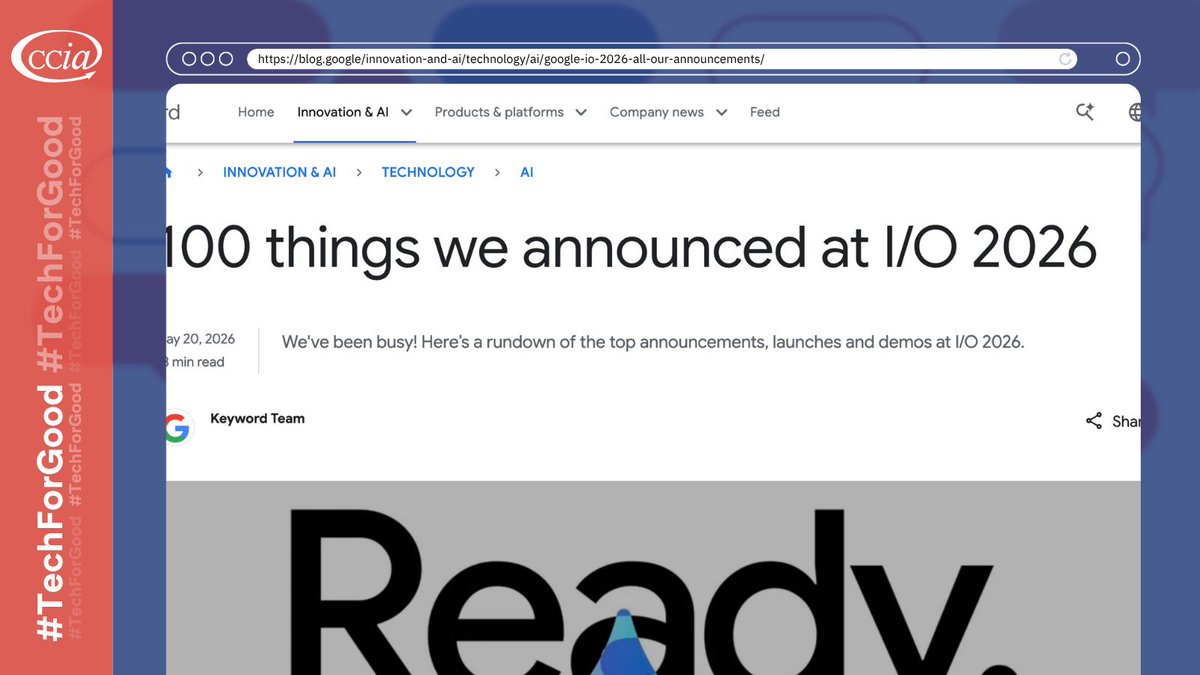
Groundbreaking scientific discoveries often get delayed by tedious data analysis. @Google is supercharging labs worldwide and enabling researchers to analyze massive life science databases in minutes instead of hours. buff.ly/Hi6ke8c #TechForGood
47
A strong digital economy depends on a strong workforce. @Meta is investing $115 million in “America’s Workforce Academy,” offering free skilled-trades training, industry credentials, and guaranteed jobs for graduates. The program will help veterans, career changers, and professionals just entering the workforce learn critical skills and build careers supporting the next generation of data center infrastructure in Indiana, Louisiana, Ohio, and Texas. #TechForGood

Meta Platforms is offering free training for people to work in its data centers and guaranteeing them a job in a skilled trade after completing a five-week course. cbsn.ws/4vEA4fI
127
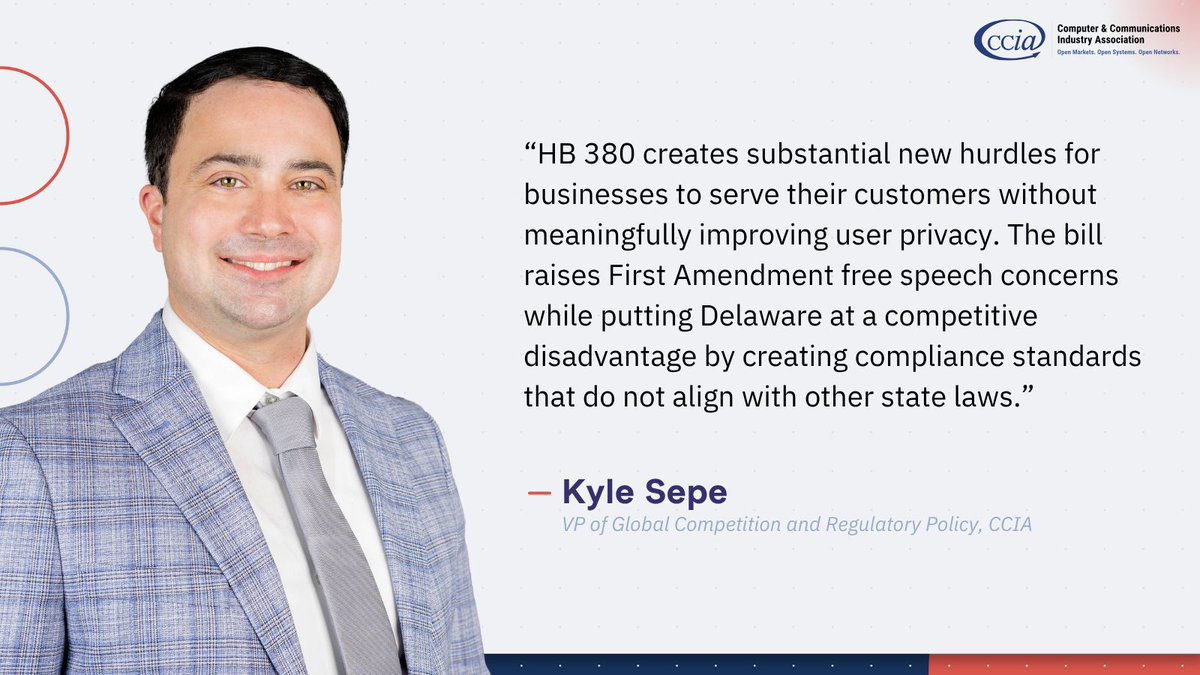
Delaware's HB 380 creates substantial hurdles for businesses without meaningfully improving consumer #privacy. CCIA is urging lawmakers to pursue a balanced approach that protects consumers, respects constitutional concerns, and supports innovation. Read more: buff.ly/VCGdram
118
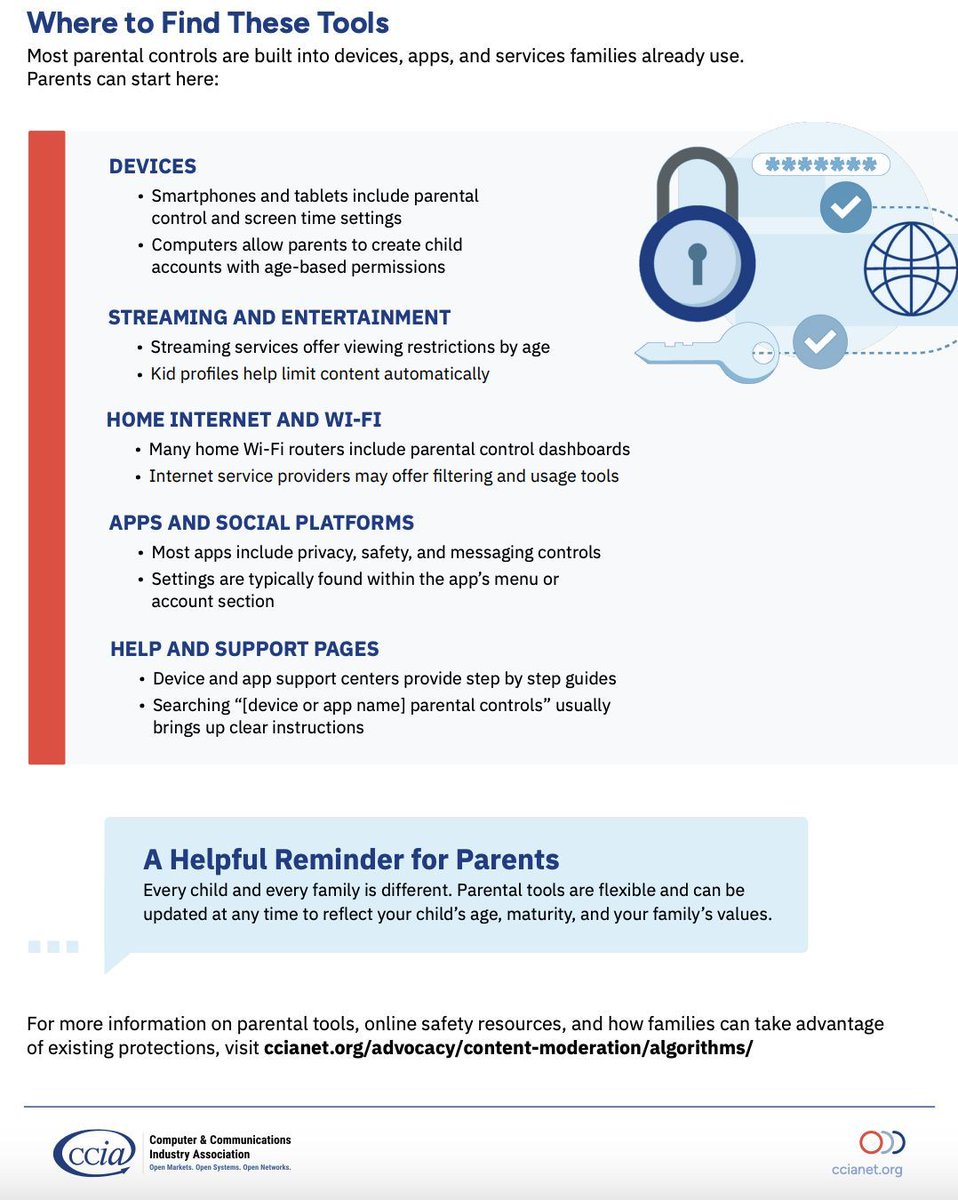
Services provide families a wide range of powerful tools to help guide kids’ online experiences that do not require families to share private information about their children online. This video shows the tools now available to parents to help keep their children safe online: buff.ly/f4oFhcq #PrivacyMatters
1
100
Computer & Communications Industry Association retweeted

Jun 10
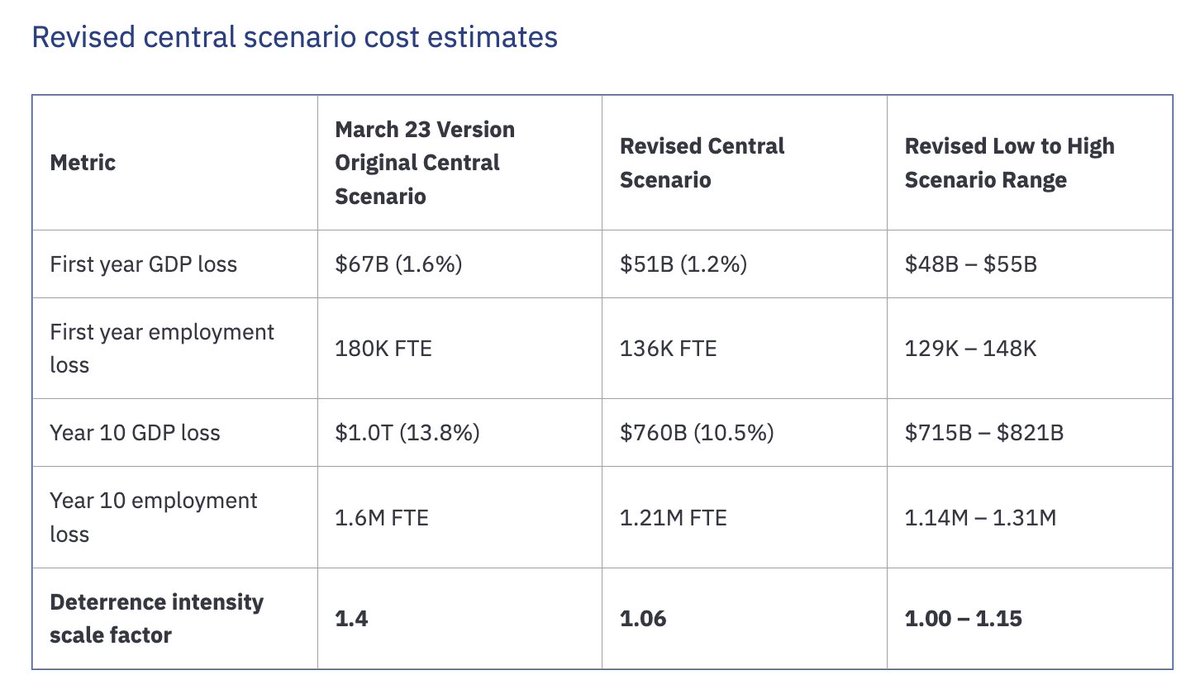
California's AB 1776 passed the Assembly narrowly, with zero official cost-benefit analysis.
I re-ran my economic model on the amended text. New estimate: $760B in lost GDP and 1.2M fewer jobs by year 10.
That's DOWN 25% from our April estimate, but still huge. Here's why 🧵
1
1
4
198
Delaware’s HB 380 would impose costly, out-of-step privacy requirements on businesses without delivering meaningful new #Privacy protections for consumers. Today, CCIA will testify that the bill raises #FirstAmendment concerns, creates unnecessary compliance burdens, and risks putting Delaware at a competitive disadvantage by diverging from established state privacy frameworks. Read more: buff.ly/VCGdram
2
113
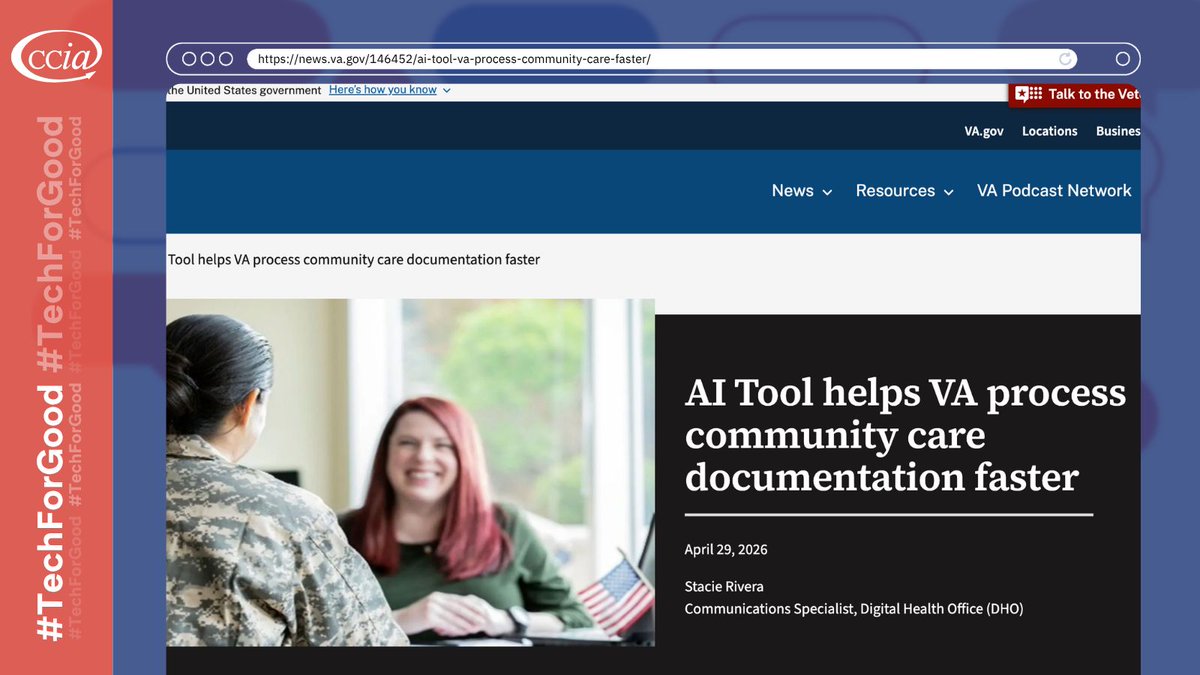
Our veterans deserve world-class healthcare without the wait. By using AI to slash administrative red tape, the VA is speeding up community care referrals so they can get the timely medical attention they have earned. buff.ly/BTQWiAG #TechForGood
1
65
A new analysis from CCIA’s @econwags on California’s AB 1776 (the COMPETE Act) reveals an updated version of the bill is likely to cost California $760 billion dollars in lost GDP growth and 1.2 million jobs in 10 years. buff.ly/szpvv46
1
1
219
Parents already have powerful tools to manage their children’s screen time. They can set daily limits, schedule downtime for sleep or homework, and monitor time spent across apps, all helping families build healthier digital habits based on their own values, not government mandates. buff.ly/mACwpq6
1
9
21
380