
Liquidity should be a scoreboard, not a blackbox.
Joined April 2018
- Tweets 51
- Following 15
- Followers 20,351
- Likes 4,895
9 Photos and videos



Jun 16
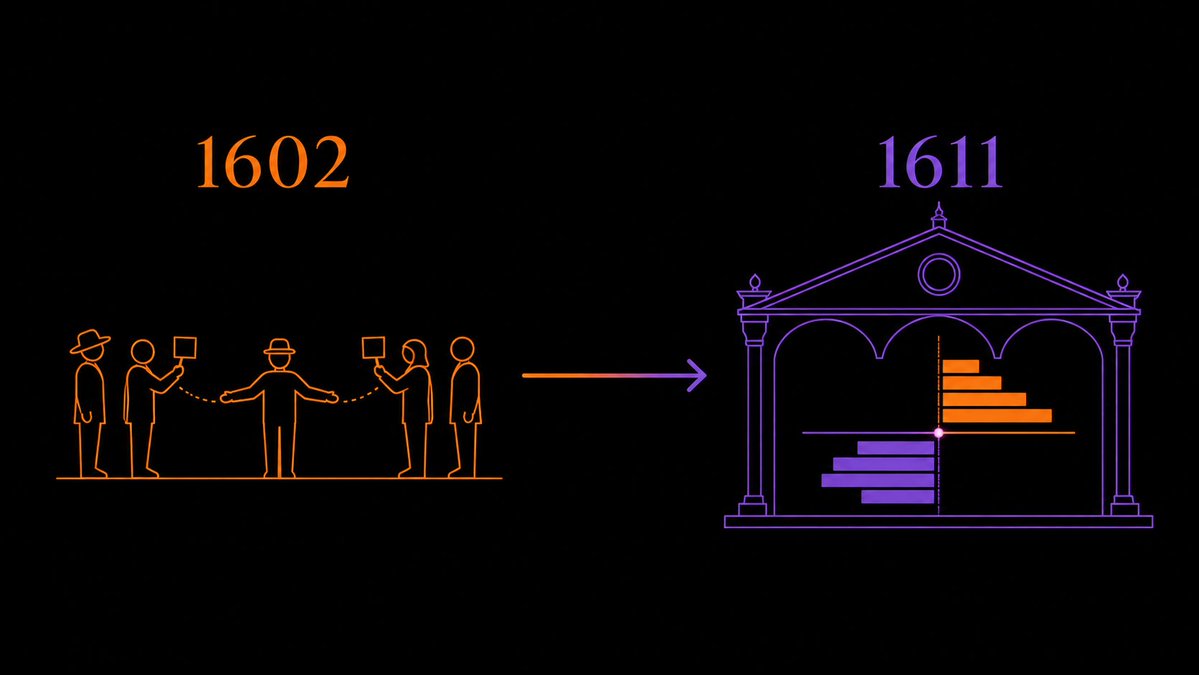
Did you know finance has been using the same trading logic for more than 400 years?
In 1602, investors began trading shares in the Dutch East India Company.
At first, trading happened through conversations, orders, and market participation.
Traders gathered where they had the best chance of finding a buyer or seller.
That changed the market.
The more buyers and sellers stood in the same place, the easier it became to see where trading interest was.
Buyers bid the price they were ready to pay.
Sellers asked the price they were ready to accept.
Brokers matched both sides.
Today, exchanges have turned that same logic into a live order book.
The real question is :
How strong is the liquidity around the current price?
That is what we break down in the full article.
3
62
Chainswatch retweeted
Jun 5
Did you know someone might be stealing money when you hit confirm on Uniswap?
Every swap starts with a quote, which shows what you are expected to receive if the trade goes through as planned.
A 2025 paper by Daniele Maria Di Nosse, Federico Gatta, Fabrizio Lillo, and Sebastian Jaimungal analyzed the 24 most active Uniswap version 3 pools across 2023 and 2024.
They studied what happens between the moment a swap becomes visible and the moment it lands on-chain.
That short window matters because specialized bots scan pending transactions, detect large trades, and move before the transaction is confirmed.
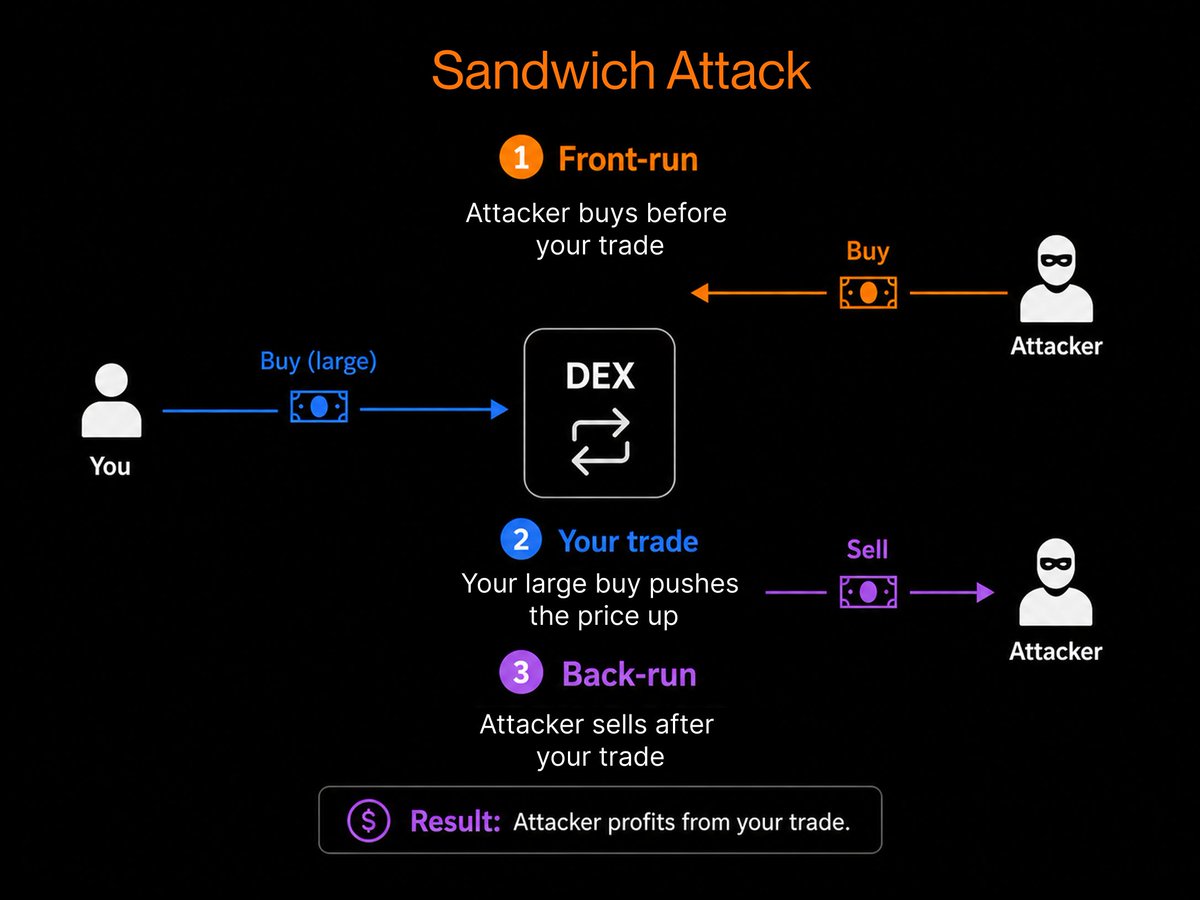
One strategy is sandwiching. An attacker sees a large swap, buys before it, lets the user’s trade push the price even higher, then sells right after.
For you, this can mean a worse fill.
Another strategy is Just-in-Time liquidity. A searcher sees a large swap, adds liquidity in the exact price range where the trade should happen, earns the fee from that swap, then removes the liquidity right after.
The goal is to appear for one trade, earn the fee, and leave.
The paper finds that Just-in-Time liquidity accounts for more than 20% of mint operations and more than 50% of the liquidity added in the dataset.
Low-fee pools make sandwiching cheaper. Higher-fee pools make Just-in-Time liquidity more attractive because the fee earned on a large swap can be bigger.
How to prevent being attacked?
Before swapping, read your own trade the way a searcher would. Look at the pool, the size, the slippage, and the fee tier.
If the trade looks easy to exploit, adjust it before it lands on-chain. Reduce the order size, use deeper liquidity, tighten slippage, compare fee tiers, or use protected routing.
The goal is to avoid paying for the opportunity your own swap created.
2
4
202
Chainswatch retweeted
May 26
Someone just revealed who makes Polymarket prices accurate.
Every Polymarket contract ends at $1 or $0. The price before resolution is supposed to reflect the market’s live estimate of the outcome.
A 2026 study on prediction market accuracy by Roberto Gómez-Cram, Yunhan Guo, Theis Ingerslev Jensen, and Howard Kung analyzed all of Polymarket's transaction data.
They tested whether Polymarket prices are shaped by crowd wisdom, meaning many traders each add a small piece of information, or by a small group of traders who move prices closer to the truth before everyone else reacts.
To separate skill from luck, they used a sign randomization test.
They kept each trader’s real markets, timing, size, and prices, then randomized the direction of the trades.
The finding: only around 3% of traders are skilled.
Using the paper’s method, you can identify skilled traders, track their activity, and turn it into a signal.
Polymarket’s public API exposes user trades, prices, sizes, timestamps, and current positions, so this can be followed directly.
What if the real alpha was copying informed traders?
2
3
9
328
May 26
Someone just revealed who makes Polymarket prices accurate.
Every Polymarket contract ends at $1 or $0. The price before resolution is supposed to reflect the market’s live estimate of the outcome.
A 2026 study on prediction market accuracy by Roberto Gómez-Cram, Yunhan Guo, Theis Ingerslev Jensen, and Howard Kung analyzed all of Polymarket's transaction data.
They tested whether Polymarket prices are shaped by crowd wisdom, meaning many traders each add a small piece of information, or by a small group of traders who move prices closer to the truth before everyone else reacts.
To separate skill from luck, they used a sign randomization test.
They kept each trader’s real markets, timing, size, and prices, then randomized the direction of the trades.
The finding: only around 3% of traders are skilled.
Using the paper’s method, you can identify skilled traders, track their activity, and turn it into a signal.
Polymarket’s public API exposes user trades, prices, sizes, timestamps, and current positions, so this can be followed directly.
What if the real alpha was copying informed traders?
2
3
9
328
Chainswatch retweeted
Apr 15
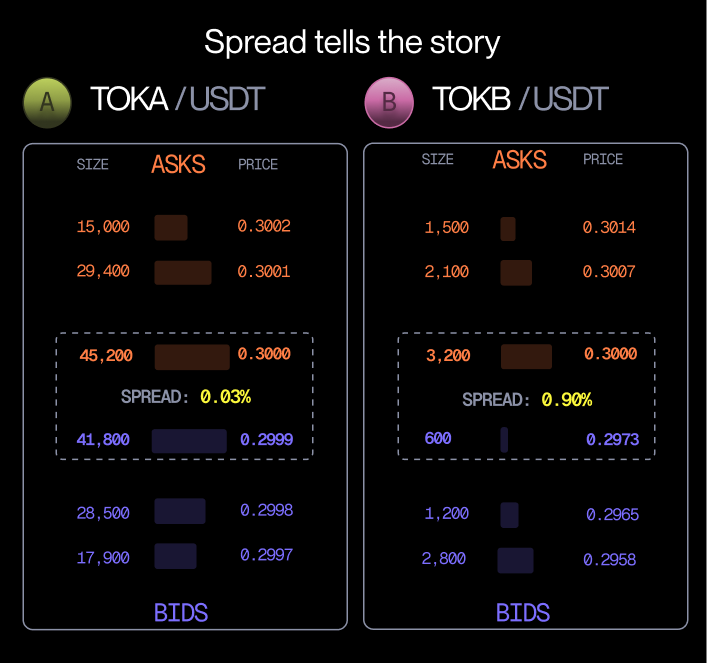
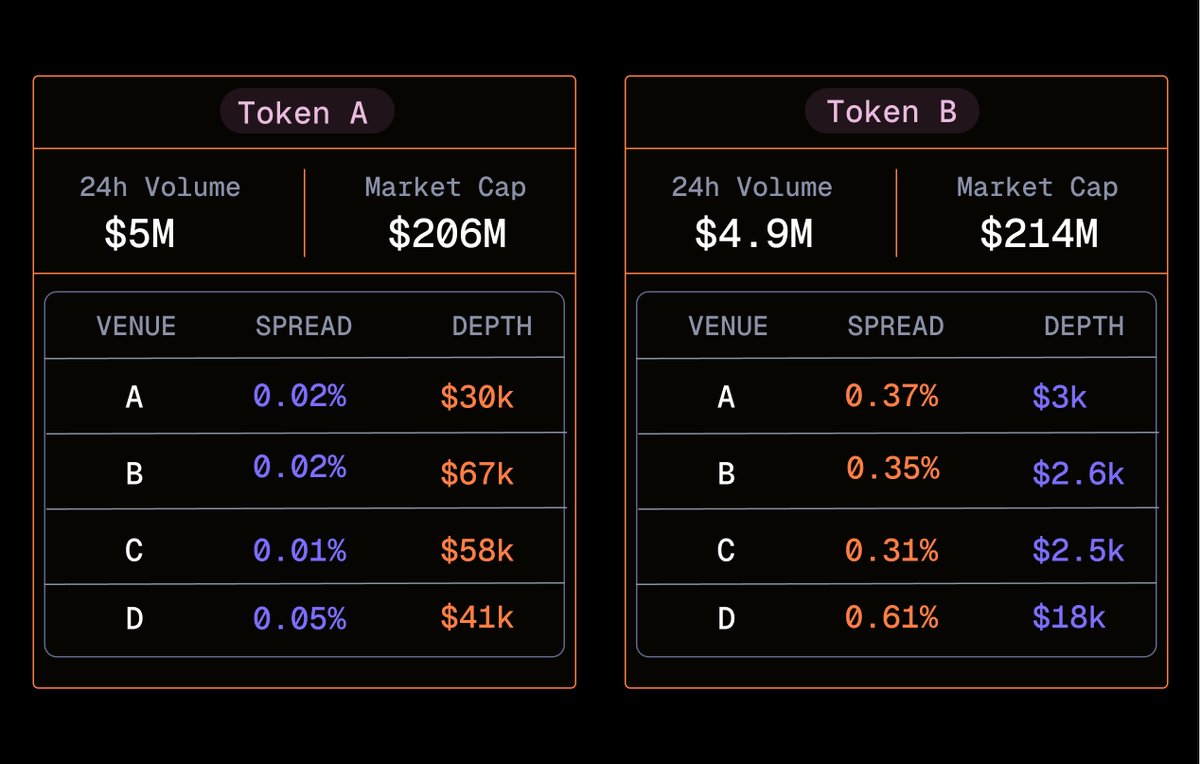
Take two tokens. Same Mcap and volume.
One trades like a top 10 asset. One bleeds on every order.
The gap is rarely demand. It's almost always structure.
And guess what, it's fixable.
1
1
7
325
Chainswatch retweeted
Apr 29
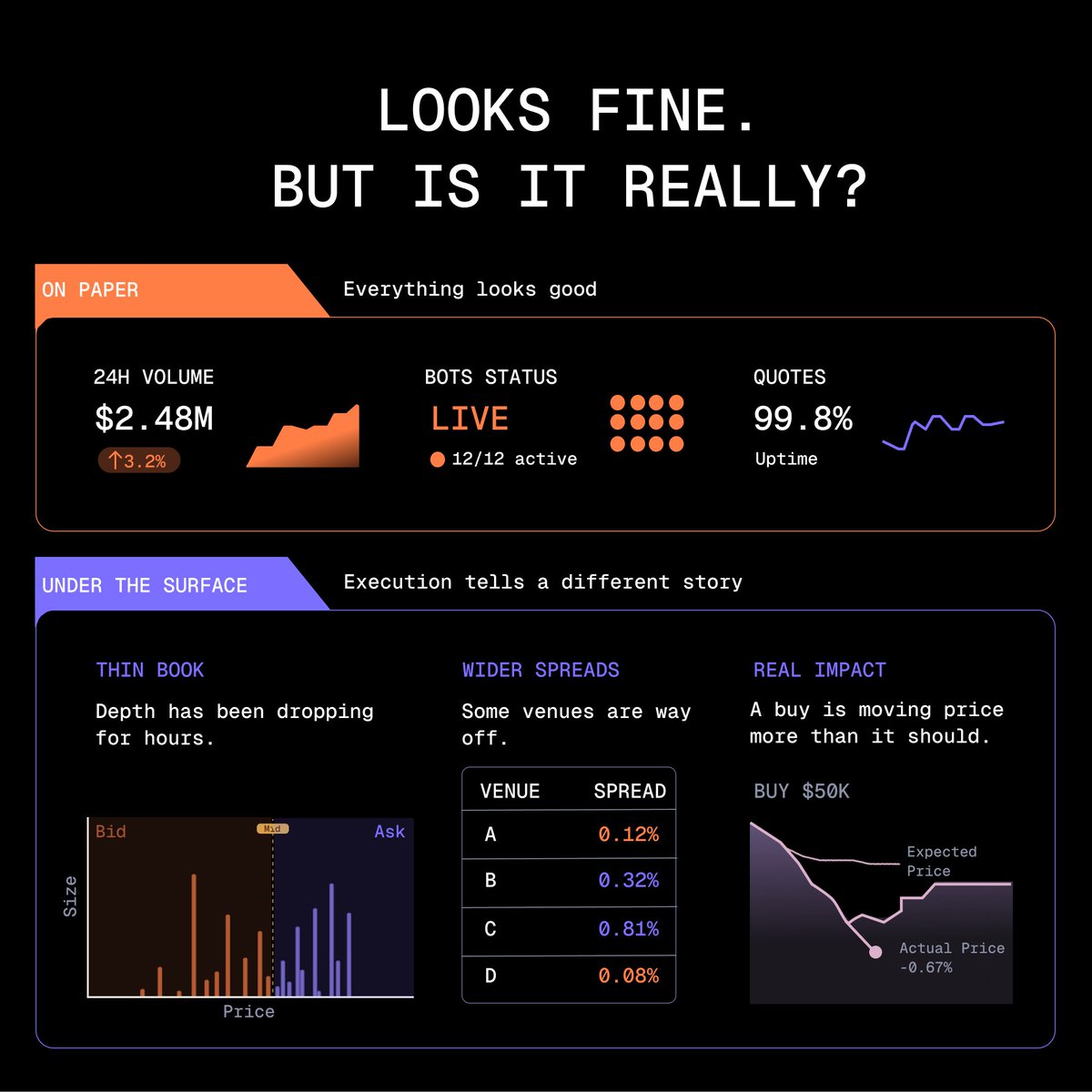
1/ Your token's volume is growing…
But traders are leaving.
Here's why 👇
1
1
3
213
Chainswatch retweeted
May 12
Slippage gets thrown around in crypto posts all the time.
The part people often miss is that the venue changes the terminology.
Keep it clear:
AMM = slippage (timing MEV)
CLOB = market impact (size liquidity)
On AMMs, the price can shift before your transaction confirms.
That price gap is slippage, and slippage tolerance is the maximum gap you allow before the swap fails.
On order books, the mechanics are different.
You are hitting real bids and asks already sitting in the book.
If your fill gets worse as your order executes, it usually means your size walked through thin depth.
That is market impact.
Tag someone who always mixes these up👇
2
2
6
207
Chainswatch retweeted
Apr 27
Wanna know the rarest thing in crypto?
The unfiltered audit about where your token actually stands.
An honest audit on the metrics that matter.
Most teams could reach the top 10% faster than they think.
Two questions only:
- What should this token become?
- Who are we trying to attract?
Stop burning cash on marketing. Fix the structure.
That’s how you build a solid and sustainable market.
Let’s run the audit!
DM open
2
5
255
Chainswatch retweeted
May 5
Fred built a $250k portfolio over the years.
Every morning, he opens his risk dashboard and asks one question:
“How much could I lose on a bad day?”
Value at Risk and Expected Shortfall
The dashboard gives him one number: Value at Risk
It says, “ At 95% confidence, Fred should not lose more than $10k in one day.”
Sounds reassuring.
But it means something specific:
On the worst 5% of days, losses can go beyond that.
So VaR tells Fred where the danger zone starts.
But he cares about what happens after that line is crossed.
Does he lose $11k? $30k?
That is what Expected Shortfall tries to answer:
“Once Fred is already in the worst 5% outcomes, what is the average loss?”
His Expected Shortfall might say:
When losses go beyond $10k, the average loss is $16k
Broken framework?
Here is the issue.
Expected Shortfall is harder to estimate than VaR.
Many models estimate VaR first, then attach Expected Shortfall on top of it.
And that can create incoherent results, such as quantile crossing.
That means your model says something like:
“The 97.5% loss estimate is smaller than the 95% loss estimate.”
That makes no sense.
A more extreme risk level should not produce a smaller loss estimate.
Fred does not need to be a quant to see the problem
Conditional Autoregressive Expected Shortfall
Researchers from Scuola Normale Superiore, University of Bologna, and University of Siena introduced CAESar — Conditional Autoregressive Expected Shortfall.
VaR and Expected Shortfall should not be treated as two separate numbers stitched together after the fact.
They describe the same dynamic tail of Fred’s portfolio losses.
So they should move together, stay logically ordered.
And remain coherent under stress.
CAESar builds directly on Engle and Manganelli’s CAViaR framework for dynamic quantiles, then models Expected Shortfall autoregressively in one coherent structure.
A built-in monotonicity constraint eliminates quantile crossing.
Just a disciplined autoregressive model that keeps tail estimates internally consistent even under stress.
Tested on 30 years of daily data across 10 major global indices, CAESar outperformed standard regression-based Expected Shortfall benchmarks.
Because it keeps the risk estimates internally consistent when the tail matters most.
And for Fred, having accurate numbers matters.
What’s your take: If your risk model fails to accurately predict risk, was it ever useful?
1
2
3
262
Chainswatch retweeted
Apr 23
Your risk model might be quietly costing you more money than you think.
Not because you made bad calls.
Because the scenarios your risk model runs to protect your portfolio are partly fiction.
There is only 1 dataset of the S&P 500. 6,064 trading days. That's it.
Fake correlations
When generative AI produces thousands of future scenarios from that single history, it fills the gaps.
With invented correlations and volatility spikes that look plausible but are mathematically wrong.
The model has no idea what it doesn't know, so it makes it up...confidently.
That's where the money goes.
Maximum Entropy
Maximum Entropy was written down in 1957 by a physicist named Jaynes. Around one idea: don't invent what you don't know.
Commit only to what the data tells you. Stay uncertain about everything else.
The catch: it was so slow and unusable at real scale. Days of compute per run. So the industry moved on and accepted hallucination as the cost of speed.
Maximum Guided Diffusion
In February 2026, researchers at ENS Paris, NYU Courant, and Capital Fund Management cracked it.
They built Moment Guided Diffusion “MGD”.
MGD runs at modern AI speed. But at every single step of generation, it enforces one hard rule: match the real data's statistical fingerprint. Nothing invented beyond that.
No fake correlations. No invented structure.
They tested MGD on 24 years of S&P 500 returns, turbulence simulations, and dark matter maps. The fat tails, the volatility bursts, the long-range dependencies all reproduced. Nothing added.
MGD is what honest scenario generation looks like.
This matters for traders who think their risk tools are “good enough” in violent markets.
4
6
267
May 5
Fred built a $250k portfolio over the years.
Every morning, he opens his risk dashboard and asks one question:
“How much could I lose on a bad day?”
Value at Risk and Expected Shortfall
The dashboard gives him one number: Value at Risk
It says, “ At 95% confidence, Fred should not lose more than $10k in one day.”
Sounds reassuring.
But it means something specific:
On the worst 5% of days, losses can go beyond that.
So VaR tells Fred where the danger zone starts.
But he cares about what happens after that line is crossed.
Does he lose $11k? $30k?
That is what Expected Shortfall tries to answer:
“Once Fred is already in the worst 5% outcomes, what is the average loss?”
His Expected Shortfall might say:
When losses go beyond $10k, the average loss is $16k
Broken framework?
Here is the issue.
Expected Shortfall is harder to estimate than VaR.
Many models estimate VaR first, then attach Expected Shortfall on top of it.
And that can create incoherent results, such as quantile crossing.
That means your model says something like:
“The 97.5% loss estimate is smaller than the 95% loss estimate.”
That makes no sense.
A more extreme risk level should not produce a smaller loss estimate.
Fred does not need to be a quant to see the problem
Conditional Autoregressive Expected Shortfall
Researchers from Scuola Normale Superiore, University of Bologna, and University of Siena introduced CAESar — Conditional Autoregressive Expected Shortfall.
VaR and Expected Shortfall should not be treated as two separate numbers stitched together after the fact.
They describe the same dynamic tail of Fred’s portfolio losses.
So they should move together, stay logically ordered.
And remain coherent under stress.
CAESar builds directly on Engle and Manganelli’s CAViaR framework for dynamic quantiles, then models Expected Shortfall autoregressively in one coherent structure.
A built-in monotonicity constraint eliminates quantile crossing.
Just a disciplined autoregressive model that keeps tail estimates internally consistent even under stress.
Tested on 30 years of daily data across 10 major global indices, CAESar outperformed standard regression-based Expected Shortfall benchmarks.
Because it keeps the risk estimates internally consistent when the tail matters most.
And for Fred, having accurate numbers matters.
What’s your take: If your risk model fails to accurately predict risk, was it ever useful?
1
2
3
262
Apr 29
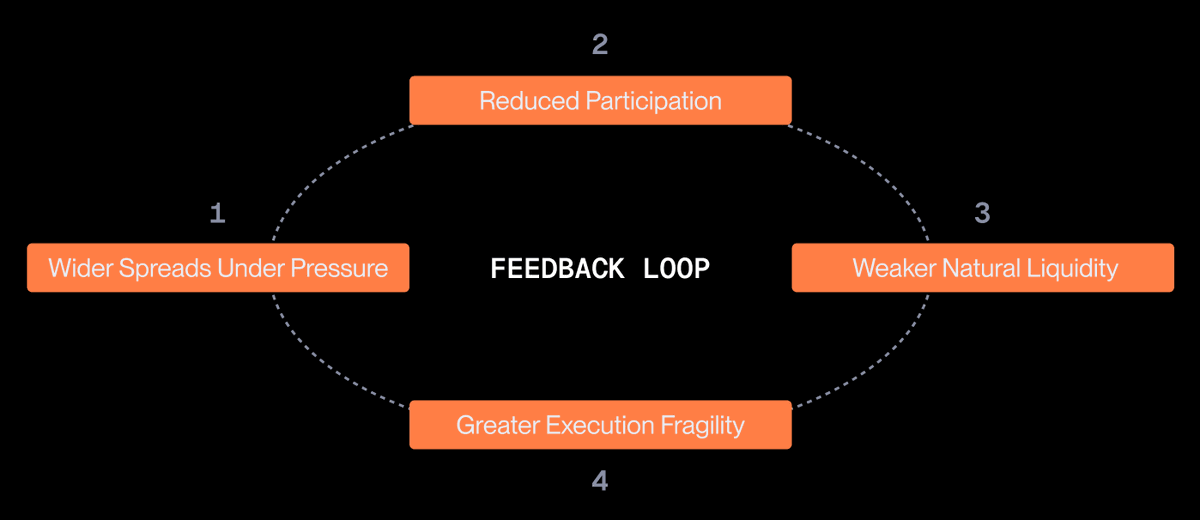
1/ Your token's volume is growing…
But traders are leaving.
Here's why 👇
1
1
3
213
Apr 29
5/ The fix isn’t hard, but rarely done right.
Teams' priority should be to track these metrics consistently.
Because it’s the first thing any counterparty checks before deciding whether your market is worth trading at all.
If your volume is growing but the real money is leaving…
Now you know why.
1
2
51
Apr 29
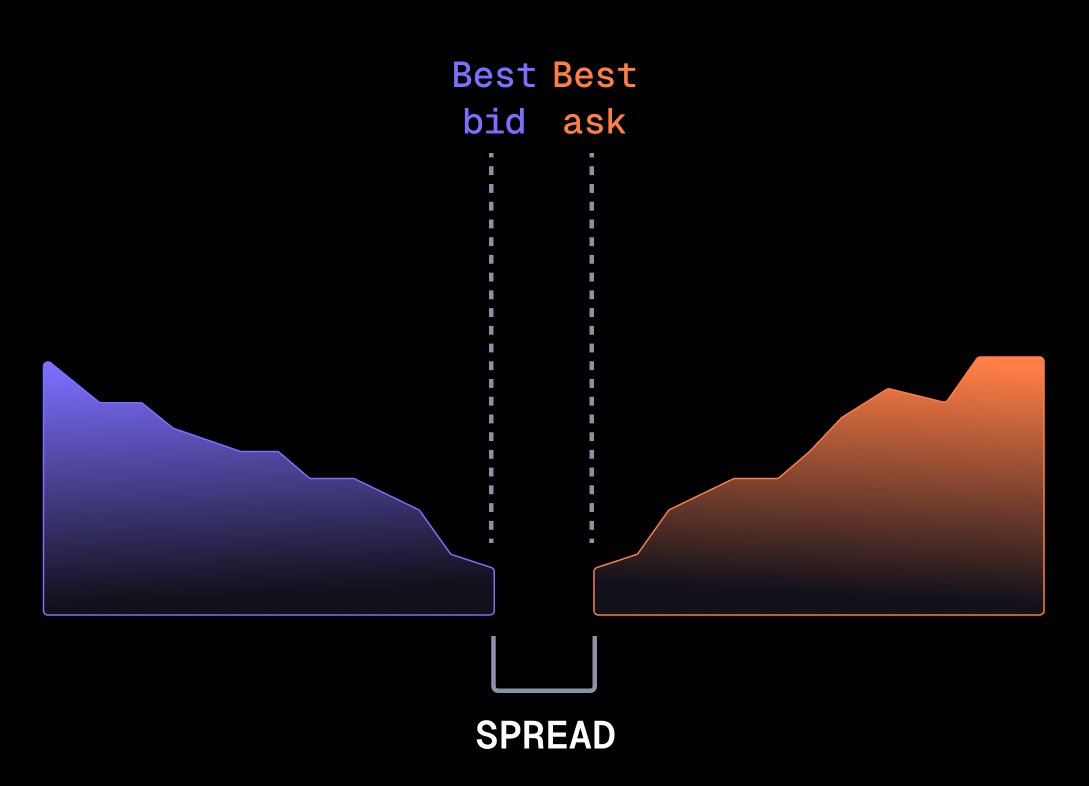
6/ Our latest post breaks down how spread kills token growth.
For the full framework, read the complete article:
👉x.com/chainswatch/status/204…

2
66