Starting Strength Affiliate, Chicago. Barbell training. No fluff. Coached by @hobodave. chicagosc.com
Joined October 2014
- Tweets 588
- Following 408
- Followers 191
- Likes 120
67 Photos and videos
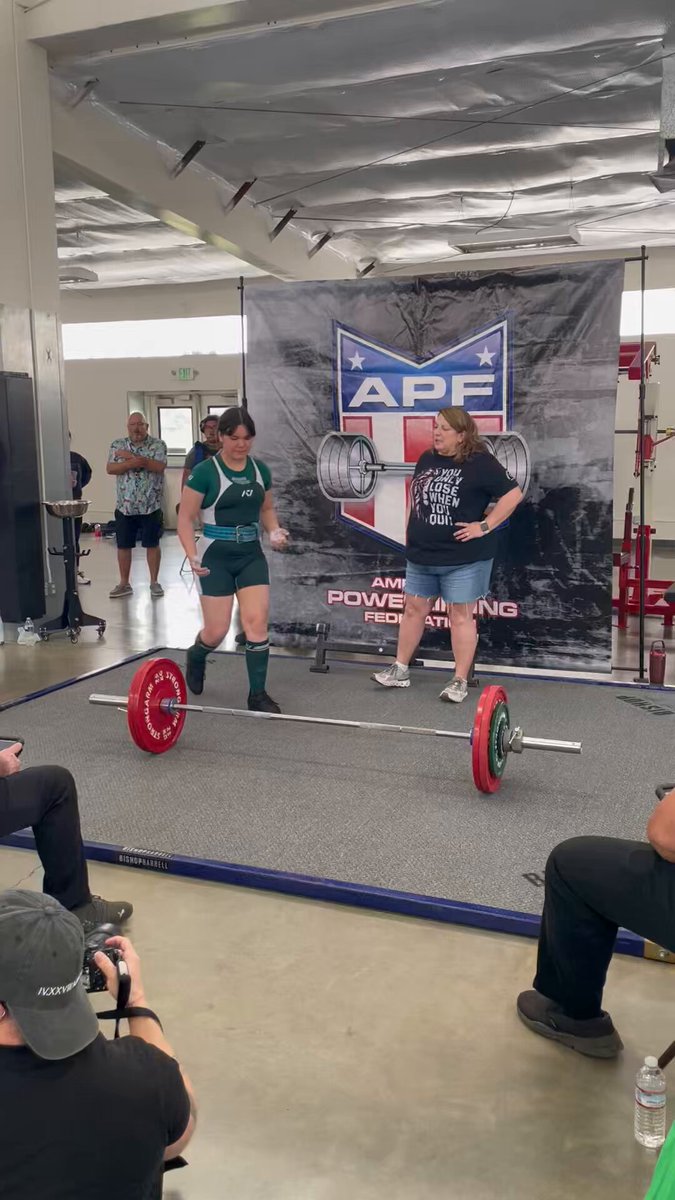
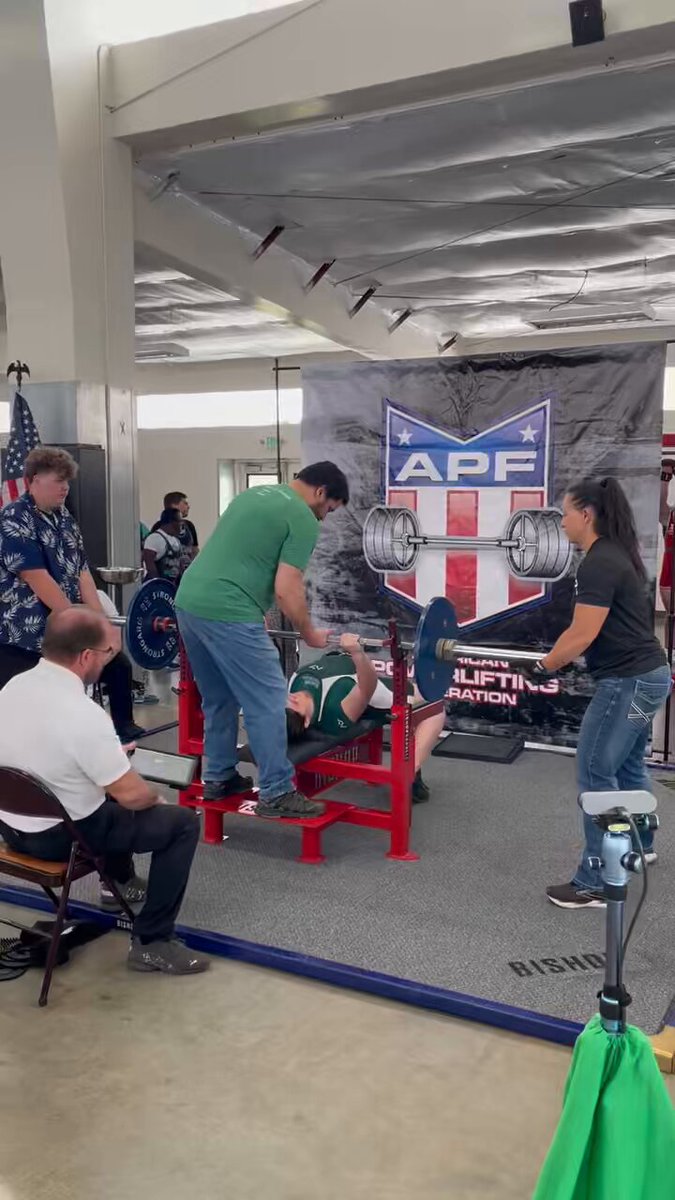
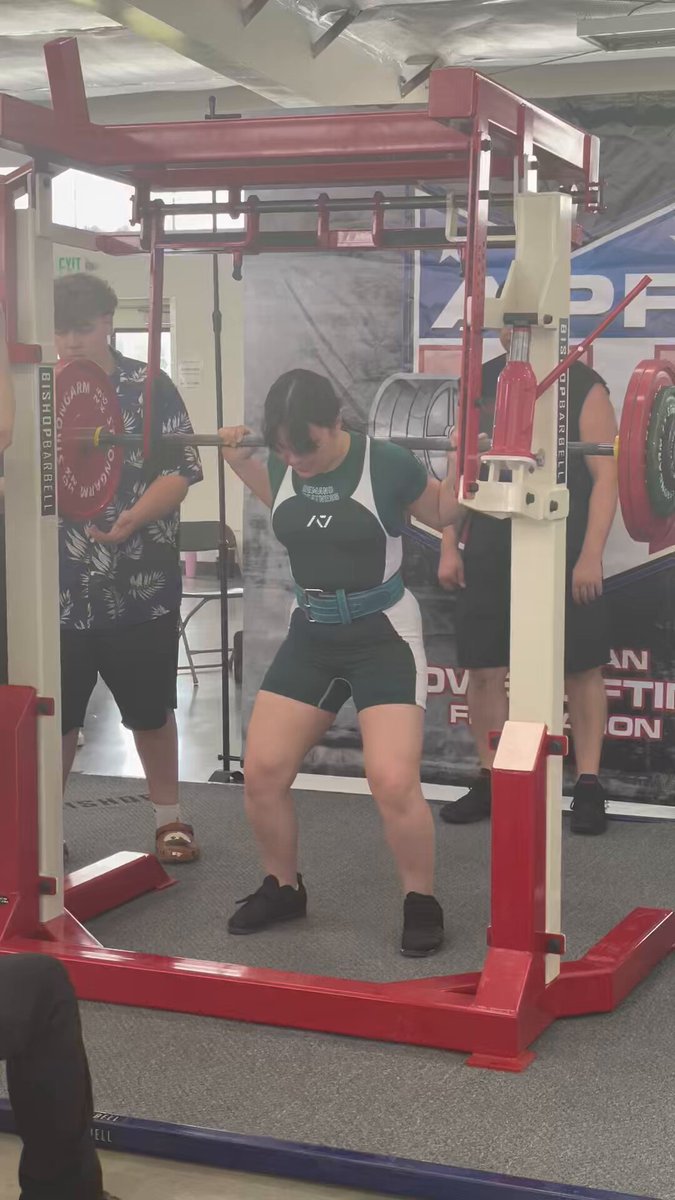

May 7
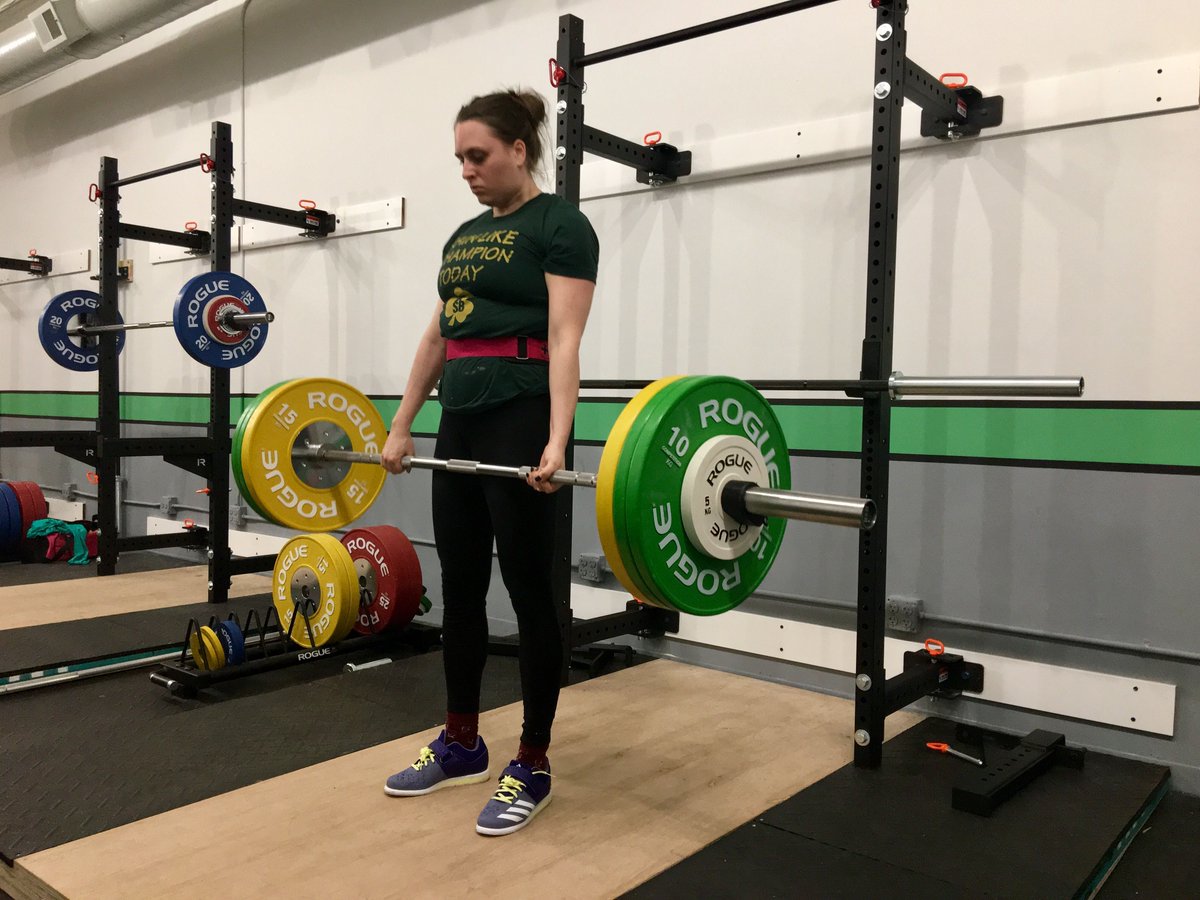
Audrey Abdemoulaie at APF/AAPF Nationals, T13-15 82.5 kg:
Squat 150 (WPC WR)
Bench 65 (WPC WR)
Deadlift 135, 140, 145, 147.5 (all WPC WR, 145 and 147.5 also AWPC WR)
Total 360 (WPC WR)
Eight world records. 6 for 9 in the meet plus a successful 4th attempt.
1
2
14
2,355
May 7
Audrey Abdemoulaie: second WPC World Record of the day. 65 kg bench, T13-15 82.5 kg. Missed 70 on the second attempt. Deadlift up next.
1
6
1,554
May 7
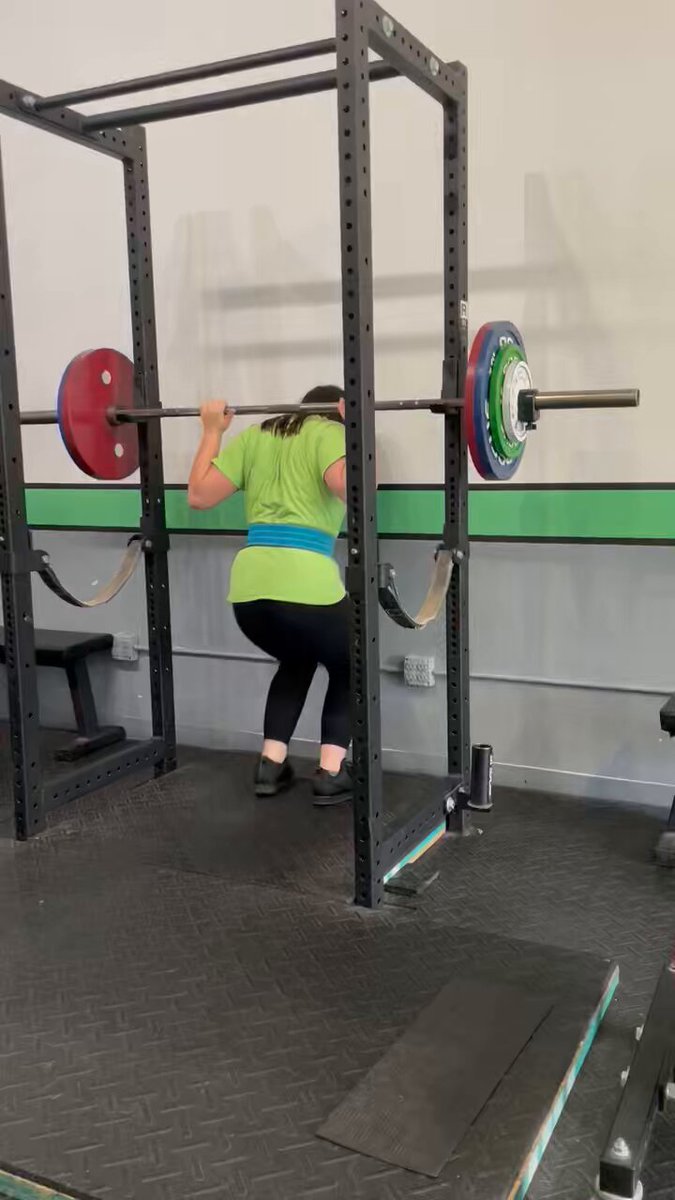
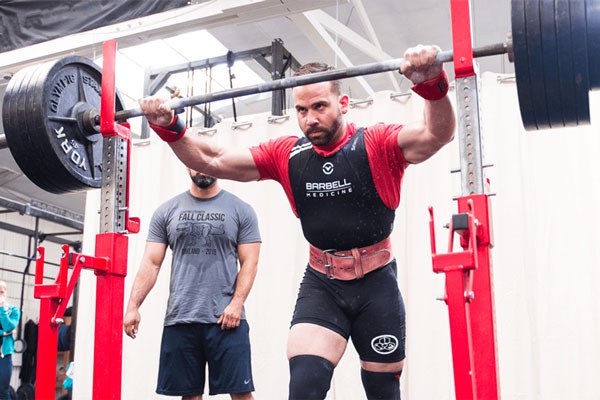
Audrey Abdemoulaie at APF/AAPF Nationals with a 150 kg squat. WPC World Record, T13-15 82.5 kg. Trained twice a week under the @SS_strength method. Bench up next.
2
33
3,063
Apr 23
Five things we apply to every novice we coach:
1. A young athlete's enjoyment is a programming variable
2. The NLP works even when run sub-optimally
3. Each lift progresses on its own timeline
4. Disruptions get managed, not feared
5. A successful first meet beats a big first meet
Coaching matters. DMs open.
2
20
Apr 22
13 years old. Two days a week of training. Two years of patience.
8 national records. Teen Nationals on May 7.
Apr 22

Two Years, Two Days a Week: Coaching a Female Novice to National Records | @chicagosc
startingstrength.com/article…
1
1
14
2,685
Apr 22
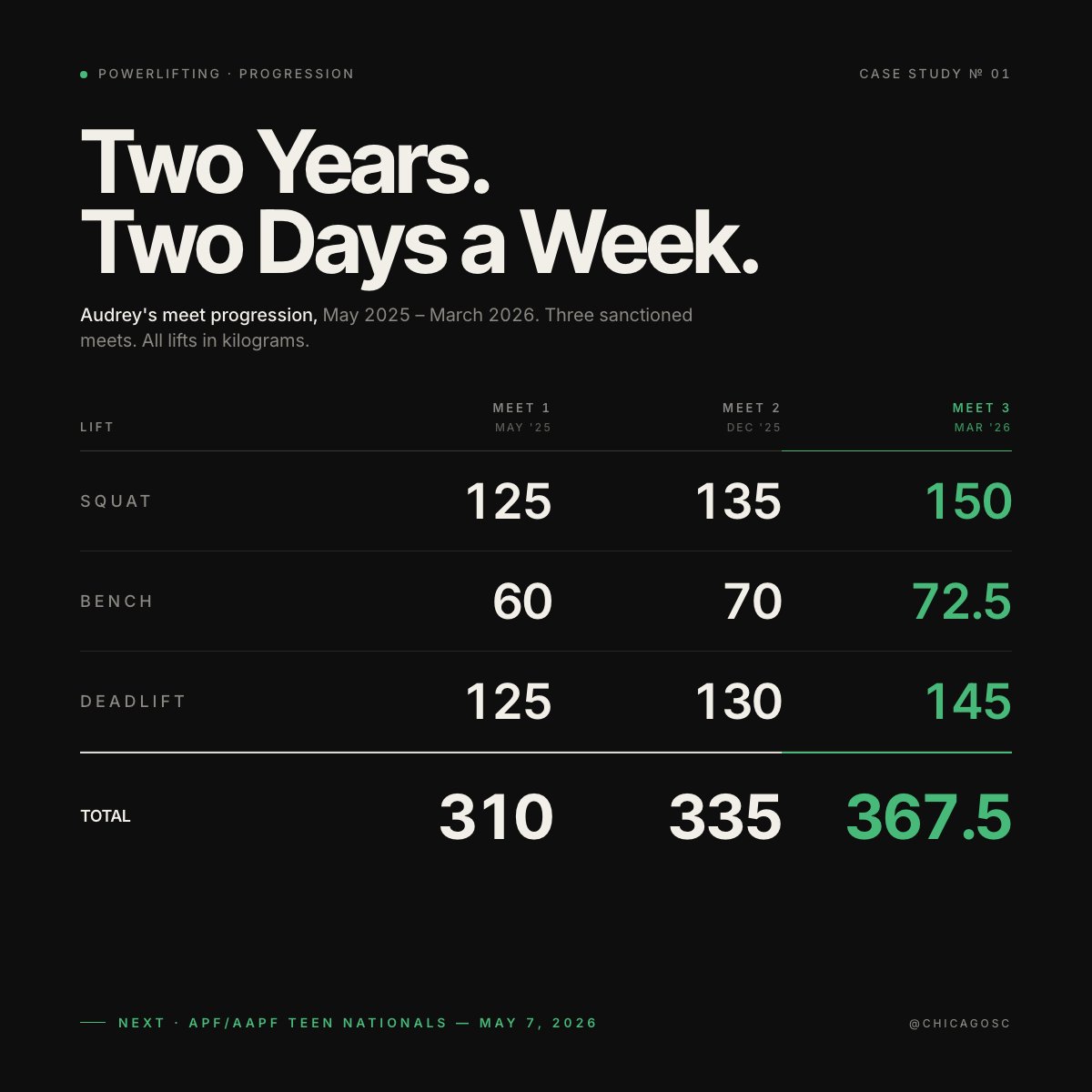
Three meets, eleven months. Same program, applied patiently.
Full writeup: startingstrength.com/article…
2
60
Apr 10
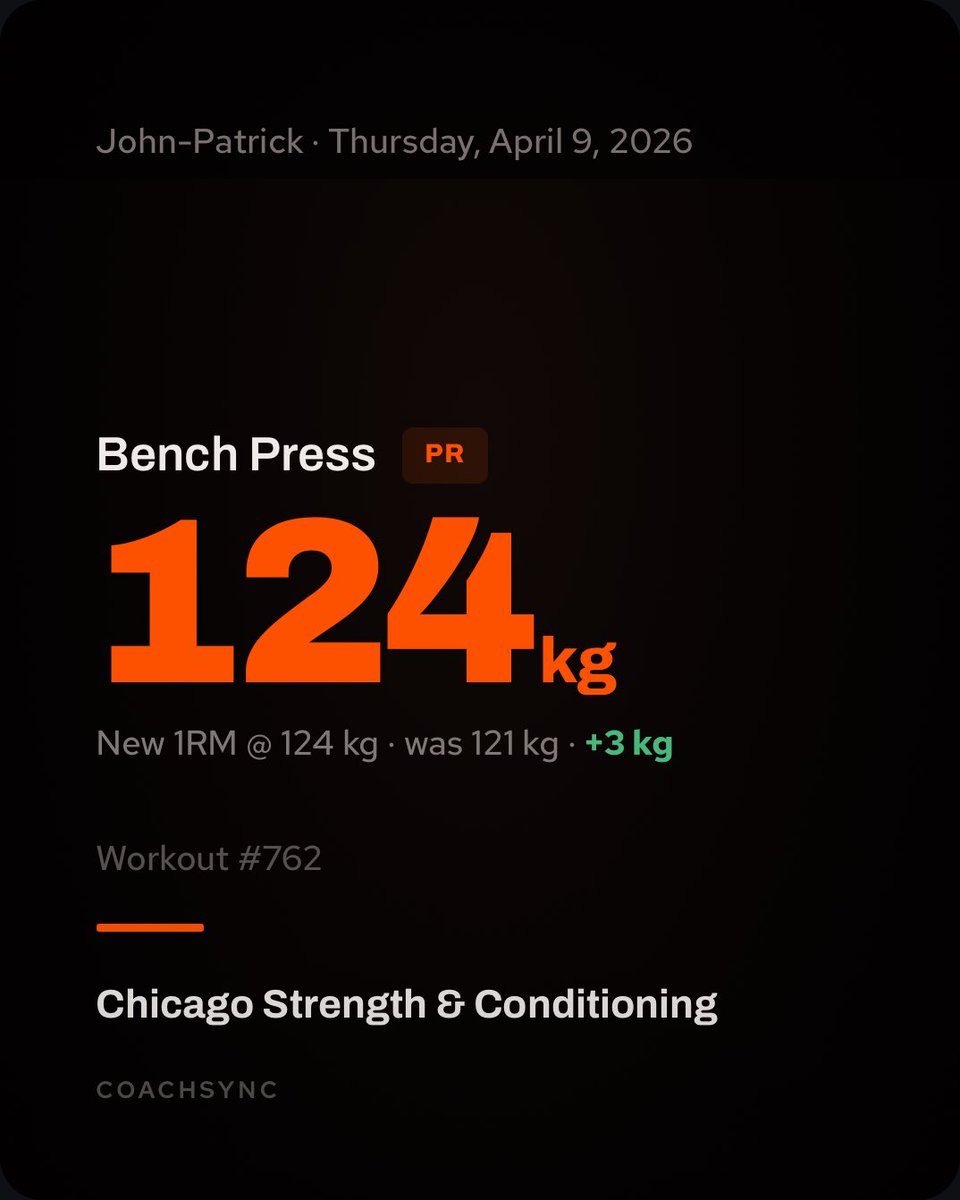
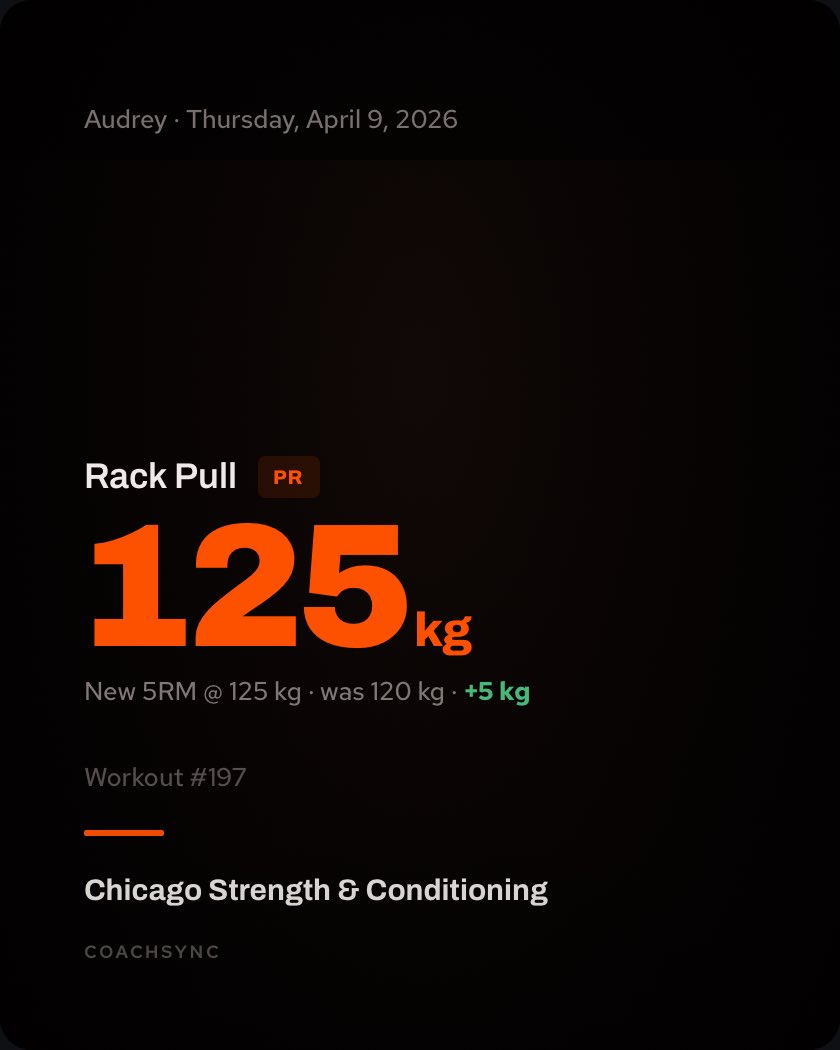
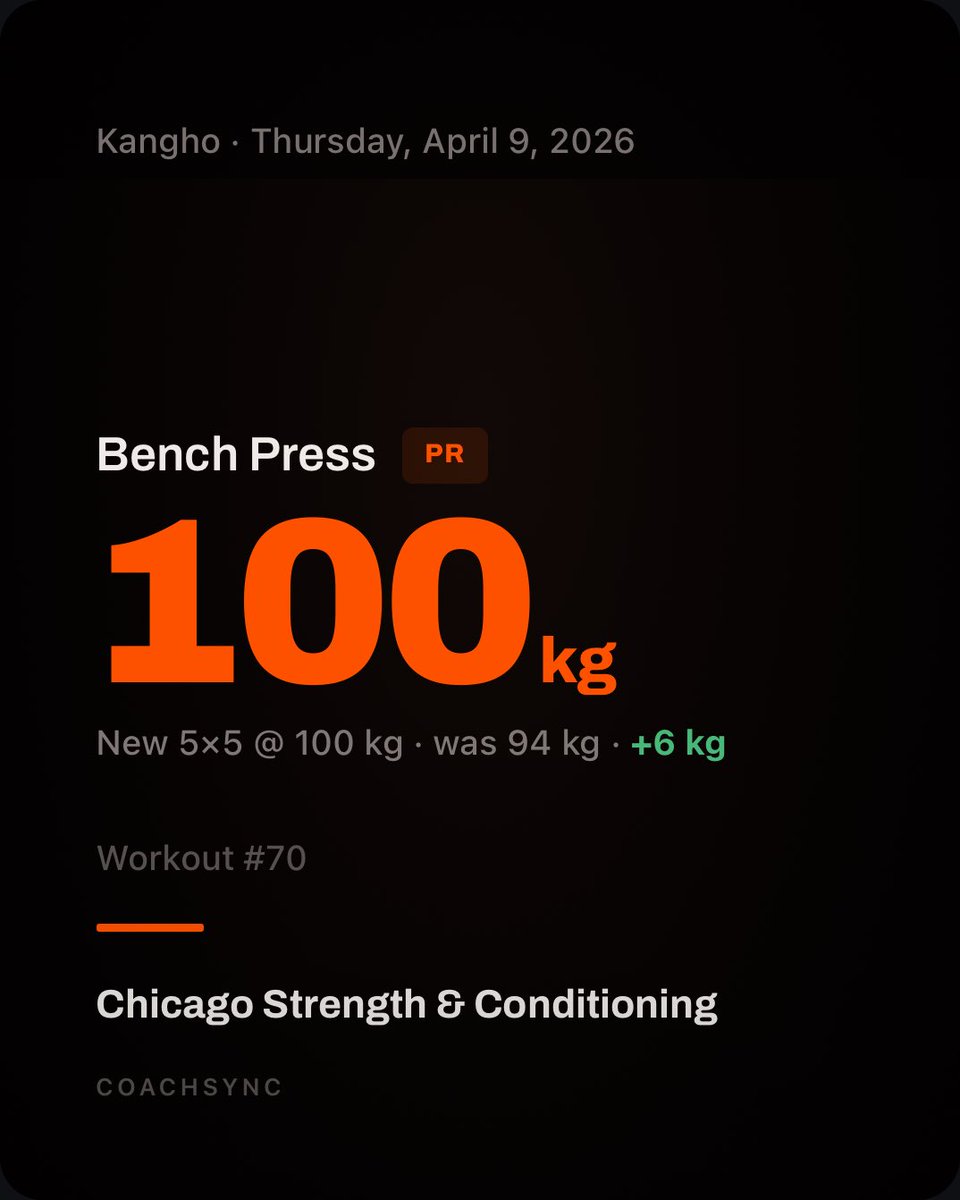
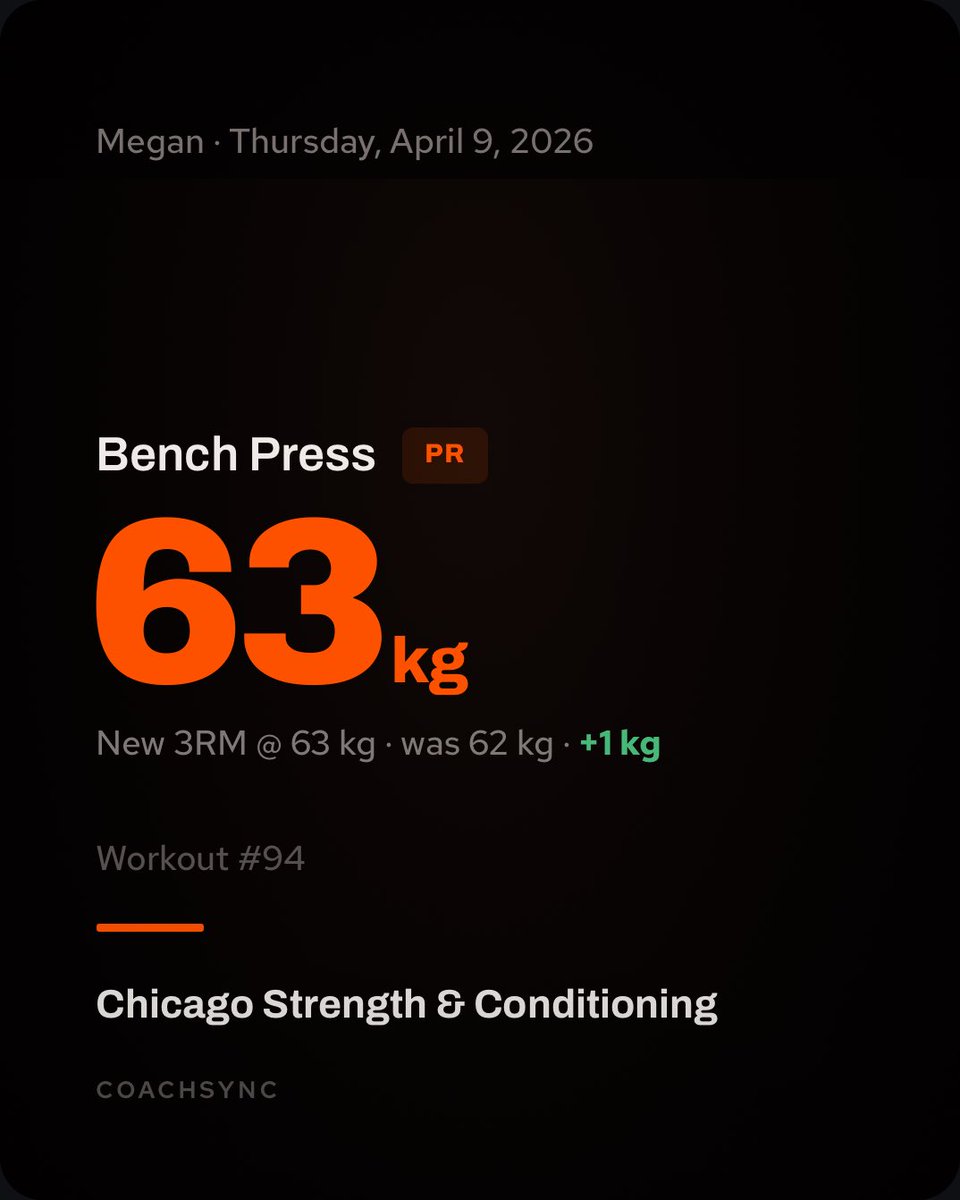
Thursday night. Four PRs across the board. That’s what a good session looks like.
29
Chicago S&C retweeted

Mar 28
"Nearly every community has its myths that tend to go unquestioned, and the fitness world is no stranger to them. Whether it's myths surrounding when to eat for maximum protein synthesis, the endless health fads that claim to solve all your problems, or the various supplements that are supposed to give you that extra edge, the fitness world is littered with misinformation."
Mar 28
Weekend Archives: Why You Should Stop Stretching at the Gym
startingstrength.com/article…
2
1
12
2,886
Chicago S&C retweeted

Mar 21
8/9. 150/72.5/145. 367.5 kg total. Every lift a national record. She’s 13. I coached her. 🫳🎤
1
7
158
Chicago S&C retweeted
Mar 21
150 kg squat. National record. She’s 13. I’m her coach, father, and no. 1 fan. 160 was right there. We’ll get it next time. @chicagosc
2
3
44
2,279
Mar 15
Incredible that this needs a study. As a Starting Strength Coach, I've watched this happen in real time, thousands of times, with actual people. But sure, publish away. @SS_strength

3/
The big headline: resistance training works. Compared with doing nothing, it improves strength, hypertrophy, power, muscular endurance, contraction velocity, gait speed, balance, chair stand performance, and timed up-and-go.
3
1
5
14,666
Mar 14
We just updated the Chicago Strength & Conditioning site. If you’re looking for barbell coaching in Chicago, you can now get a clearer look at how we work, who we help, and how to get started: chicagosc.com?new
1
90
Chicago S&C retweeted

Mark Rippetoe and Starting Strength Coaches for 20 years: Any movement of the bar in a deadlift in any direction other than UP, is an inefficient waste of effort and energy. Therefore start with the bar over the middle of the foot, don't move or roll it horizontally, and you'll be deadlifting as efficiently as possible.
Powerlifters and Strongmen for 20 years: REEEEE you're so stupid and wrong, besides what champions have you coached?!?!
Australian Strength Coach: Using the bar over midfoot idea, and other ideas straight out of SS/Rip (narrower grip and stance), helps coach Thor to a new all time deadlift record.
Powerlifters and Strongmen: Oh wow, what a great coach masterfully communicating these concepts so people can deadlift better!
Often being right too early is worse than being wrong.
7
10
182
16,150
Chicago S&C retweeted
Yet Another Squat Grip Article | Pete Troupos
startingstrength.com/trainin…
2
17
4,644
Chicago S&C retweeted
For all the whining from the haters and losers about how you can't make one-size-fits-all strength standards, The Standards 1.0 remain undefeated because they are as close to universal as you can reasonably get. If you are a man under the age of 45 or so, you have to be all the way at the far left side of the bell curve to not even have a shot at hitting 135/225/315/405 so as to represent an almost invisible portion of the spectrum. Hell, even up to 50 or 55 the majority can still do it, and we have some who do it in their 60s too.
I've actually coached a few people on the far left side of that curve. Out of several thousand who I've coached, I've had a few of those. They do exist. But they also tend to be realistic about their own situations, having been picked last in gym class since kindergarten. No shade on them, they're some of my favorite to coach because of how profoundly even getting to a 225x5 squat changes their life. But it's a teeny tiny minuscule % of the population.
If you can say anything generalizable about lifting expectations at all, you can say that almost every healthy able bodied man under about 45 can hit 135/225/315/405 if he puts his mind to it and trains properly.
Just because most people won't do that, for any variety of reasons, doesn't make it not true. It's not our fault that you refuse to read the blue book and learn how to squat correctly. It's not our fault you insist on remaining 138 lbs to brag about your 'double bodyweight deadlift' - which at 275 isn't even especially good for a recreational female lifter.
Like every general statement about human beings, you can find exceptions if you look with a microscope. But the people who do that are using the microscope to make excuses for mediocrity, not to discover deeper truths that only the microscope can reveal.
Mar 3

"Get stronger" is not a goal. Too general. What does that mean?
You need a target
It's why I love Standards 1.0 and 2.0
Attainable benchmarks that require a solid training PROCESS to achieve
3
3
57
6,574
24 Aug 2019
Dan pulls an unplanned PR #deadlift of 187 kg (412 lbs). Way to go dcgartner #happyhealthystrong #startingstrength @ Chicago Strength & Conditioning instagram.com/p/B1ju3ONgsK_/…
1
10 Aug 2019
Man down! Louis rests after his second set of 8x170 kg. #happyhealthystrong #startingstrength #squat #butdidyoudie #chicagofitness #edgebrook @ Chicago Strength & Conditioning instagram.com/p/B0_YTQOA2wh/…
8 Aug 2019
Everyone’s favorite: the bench press. How much ya bench? #happyhealthystrong #startingstrength #chicagofitness #edgebrook #benchpress #womenwholift @ Chicago Strength & Conditioning instagram.com/p/B06oyNwAAbU/…
8 Aug 2019
Geoffrey takes 190 kg for a spin. #happyhealthystrong #startingstrength #chicagofitness #edgebrook #squat #welookdown @ Chicago Strength & Conditioning instagram.com/p/B04lVMYASkR/…