
Freelance writer in San Francisco.
Joined April 2009
- Tweets 3,133
- Following 190
- Followers 826
- Likes 237
32 Photos and videos



Christoph Drösser retweeted

20 Nov 2024
Die bisherigen Nominierungen von #Tump deuten Eingriffe in die #Forschungsfreiheit an. Mit seiner radikalen Agenda will er vor allem eigennützige Amtsträger und #Unternehmen in Schutz nehmen. @chrdr über eine düstere Perspektive für die #Wissenschaft. #usa riffreporter.de/de/internati…
3
6
513
Christoph Drösser retweeted

14 Jul 2024
"(Was) interessiert uns die Welt?" verpasst? Unsere Vorsitzende @ruehl_b war gestern zu Gast beim Deutschlandfunk.
deutschlandfunkkultur.de/was…
4
5
395
Christoph Drösser retweeted
13 Jul 2024
Wir feiern heute Geburtstag! #20JahreWeltreporter
2
6
20
2,189
Christoph Drösser retweeted
16 May 2024
Sie haben Post! Diesmal aus San Francisco: Unser Kollege @chrdr war auf der wohl teuersten Toilette der Stadt. Wieviel sie gekostet hat? Tief Luft holen!
riffreporter.de/de/internati…
2
1
194
Christoph Drösser retweeted

9 Dec 2023
🇩🇪media/correspondents in the Bay Area/Silicon Valley explain to and help 🇩🇪audiences understand what goes on in this “global” region. Great gathering at @StFYC - to look back on 2023 & forward to all that might come. @chrdr @BarbaraMunker @StephanScheuer Ana Radic

1
1
3
176
Christoph Drösser retweeted

1 Nov 2023
Ein paar weitere Auswertungen #sorechnetdeutschlabd @unipotsdam @zeitonline @chrdr zeit.de/wissen/2023-11/mathe…
2
5
600
Christoph Drösser retweeted

15 Oct 2023
Können Frauen beeinflussen, ob sie #Zwillinge bekommen? Christoph Drösser @chrdr erklärt den Stand der Forschung im @zeitwissen-Podcast. trib.al/R9XHjua
1
2
7
13,876
Christoph Drösser retweeted
16 Oct 2023
Popularität und wirtschaftlicher Erfolg klaffen bei #Disney extrem auseinander: Seit 2021 hat sich der Aktienkurs des Unternehmens halbiert, schon mehrfach stand der Konzern kurz vor der Pleite. Trotzdem feiert er in diesen Tagen 100-Jähriges. (€) @chrdr riffreporter.de/de/internati…
1
1
3
547
Christoph Drösser retweeted
7 Oct 2023
Wie divers ist Disney? Zum 100. Geburtstag des Konzerns ist #Weltreporter @chrdr losgezogen, um das zu überprüfen. Denn Disney ist aufgrund seiner Marktmacht auch ein politischer Faktor in den USA. Sein Feature läuft am Montag auf @swr2wissen #FürSieVorOrt
buff.ly/3ZOIzGm
1
1
598
Christoph Drösser retweeted
27 Sep 2023
Elite-Unis: Nur für die Besten? Oder doch nur für die weißen Best-Verdiener? @EvanMandery sagt: Harvard, Stanford, Yale und Co zementieren die soziale Spaltung. Weltreporter @chrdr hat mit ihm gesprochen. #FürSieVorOrt #ZuhauseAuf5Kontinenten
buff.ly/46nIMCk

1
3
278
Christoph Drösser retweeted

17 Sep 2023
Wer bezüglich der Fairnessfrage mal ein bisschen mit Zahlen herumspielen will, für den hat @chrdr bei @spektrum einen großartigen, interaktiven Artikel geschrieben und programmieren lassen. Viel Spaß:
spektrum.de/pix/interactive/…
2
11
31
2,869
Christoph Drösser retweeted

30 Aug 2023
Linguistics is not only about understanding human language.
How can generative AI & linguistics help us understand animals?
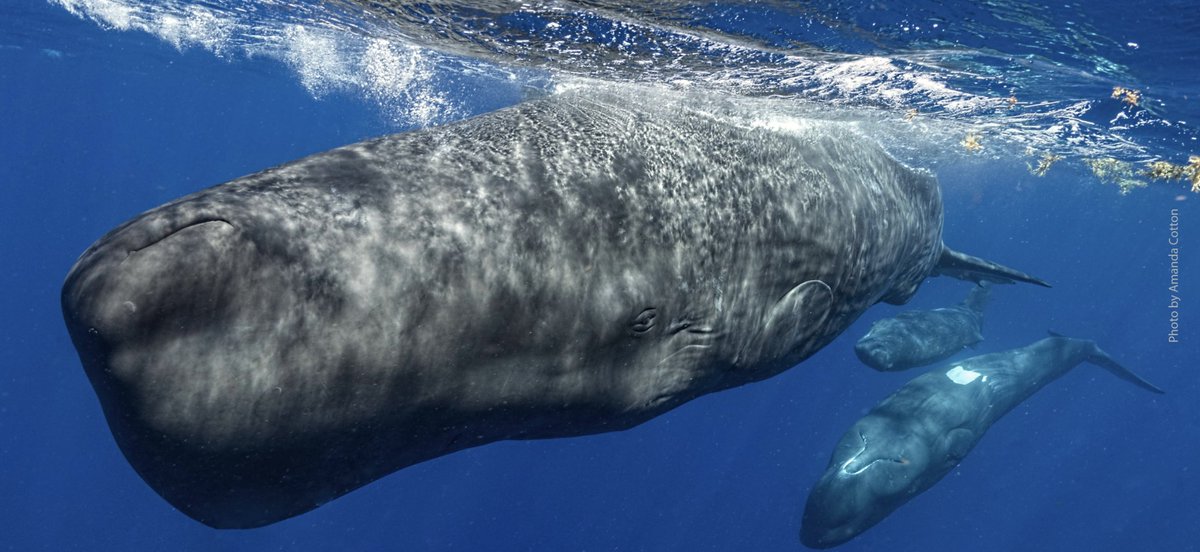
Here's a great summary of the @ProjectCETI workshop on *Decoding Communication in Nonhuman Species II* @SimonsInstitute. 🐳🐘🐬
"Prior to the work of Project CETI, the common assumption in the field was that whale codas form discrete basic “building blocks” of their communication system. Some speakers cautioned that this assumption would be analogous to turning a human vocal utterance into written text. This might correctly identify some linguistic elements, but you might also lose important information in the process.
Gašper Beguš from UC Berkeley, CETI’s linguistics lead, pointed this out in his talk. “Spoken language is the primary thing; written text is just a representation of spoken language. If we see a [sperm whale] click, then we immediately think: oh, that is a one/zero kind of thing.” But that’s our human (or computer scientist) bias.
When we model a language from text, we can learn a lot about it, but we also lose a lot of non-textual communication. “If you're approaching something as unknown as whale communication, you don't want to be throwing away anything.”
He is using a flavor of Generative AI called a General Adversarial Network (GAN). GANs have the advantage that they can work with the original audio recordings to create translations or representations. They consist of two AI players, the generator and the discriminator. The discriminator has been trained on a set of data, e.g. audio recordings. The generator, which never sees the original training set, looks at new data and tries to describe them, starting with random strings of symbols. The two parts of the algorithm play a kind of game: the generator tries to get better and better at describing the data, while the discriminator tries to get better at telling correct descriptions from false ones. As each party tries to outperform the other, the whole system gets better at interpreting the data.
“GANs are also very nice because they replicate stages in the acquisition of language,” Beguš said. So scientists could use them to study how whale calves start acquiring their language in small steps, just as human children don't start talking in complex sentences.
Beguš doesn’t see GANs as a competitive alternative to using LLMs, however. Rather, these different AI methods complement each other in understanding different aspects of the whales’ world. “GANs are appropriate for understanding what is meaningful at the most basic level, or how their vocalizations are learned,” he said. “Using LLMs helps us with longer conversations and more discretized representations of their vocalizations. Graph neural networks that operate with mathematical graphs can be used to model their complex social structure and behavior.”"
Full article by @chrdr:
simons.berkeley.edu/news/wor…
Video:
youtube.com/watch?v=jFo59fDl…
15
56
4,688
Christoph Drösser retweeted

8 Aug 2023
Zwei Ex-Fellows, ein Thema. @chrdr lüftet heute im @DLF das Geheimnis des Groove und kommt dabei nicht an GrooveLab vorbei, die DIY Groove App, die @ruediger_braun am MIP.labor entwickelt hat.
Sendung (um 22:05 Uhr): deutschlandfunk.de/wenn-der-…
GrooveLab: groove-lab.com/
2
4
320
Christoph Drösser retweeted
5 Jul 2023
Viele aktuelle Fellows nutzen das Remote-Angebot und arbeiten ortsunabhängig, mit digitaler Standleitung ins MIP.labor. Alternativ bieten wir auch einen festen Arbeitsort in ruhiger Umgebung an der @FU_Berlin nahe Botanischer Garten.
➡️ Bis 17.7. bewerben miplabor.de/#section-fellows…

3
7
899
Christoph Drösser retweeted

26 Jun 2023
Hörenswerter Podcast zum Thema #Hitze & #Gesundheit von @JaSimmank, @queLindaFi & @chrdr.
Was können Städte tun? Warum sind Risiken sozial ungleich verteilt? Und: Wie kann man vulnerable Gruppen besser schützen? Welche Unterstützung brauchen sie?
zeit.de/wissen/2023-06/hitze…
1
1
2
187
Christoph Drösser retweeted
25 Jun 2023
Die Regenbogenfahne ist das #LGBT-Emblem und ist diesen Monat besonders viel zu sehen – denn Juni ist #PrideMonth. Heute vor 45 Jahren wehte sie zum ersten Mal in San Francisco. Die Geschichte hinter dem #Regenbogen erfahrt ihr von RiffReporter @chrdr riffreporter.de/de/internati…
4
7
1,036
Christoph Drösser retweeted
25 Jun 2023
Happy Birthday, Regenbogenflagge! Heute vor 45 Jahren wurde zum ersten Mal die Fahne der #LGBTQ-Bewegung gehisst. Wisst Ihr, warum die Farben Türkis und Rosa fehlen? Die Antwort hat @chrdr auf @riffreporter. #ZuhauseAuf5Kontintenten #FürSieVorOrt buff.ly/46eiUcK

1
5
410

Wie wird eigentlich ein Hühnerei gelegt? Kommt es mit der stumpfen oder der spitzen Seite zuerst aus dem Huhn? Unser Kolumnist @chrdr ist der Frage nachgegangen, die schon viele Forschende und sogar #Aristoteles beschäftige. trib.al/OL5Byiw
1
2
4,129
Christoph Drösser retweeted
28 May 2023
Wie wird eigentlich ein Hühnerei gelegt? Kommt es mit der stumpfen oder der spitzen Seite zuerst aus dem #Huhn? Unser Kolumnist @chrdr ist der Frage nachgegangen, die schon viele Forschende und sogar #Aristoteles beschäftige. zeit.de/2023/22/eierprodukti…
5
4
2
12,332
Christoph Drösser retweeted

14 May 2023
Der längste Aufenthalt im Weltraum dauerte 803 Tage und bald schickt die Nasa wieder Menschen zum Mond. Im @zeitwissen-Podcast erklärt @chrdr, wie Knochen, Muskeln und Herz in der Schwerelosigkeit leiden. Macht das All vielleicht sogar dumm? zeit.de/wissen/2023-05/leben…
2
2
938