Post quantum at Cloudflare. Opinions are my own. Also on Bluesky (bsky.app/profile/cjpatton.bs…)
Joined July 2009
- Tweets 2,897
- Following 477
- Followers 874
- Likes 10,610
80 Photos and videos





Christopher Patton retweeted

Jun 12
nice post! Also, btw if you haven't seen it: blog.zksecurity.xyz/posts/la… has some intuitions as well
1
1
8
494

Jun 11
Privacy is still really hard, but it's easier than it was even just a few years ago.
53

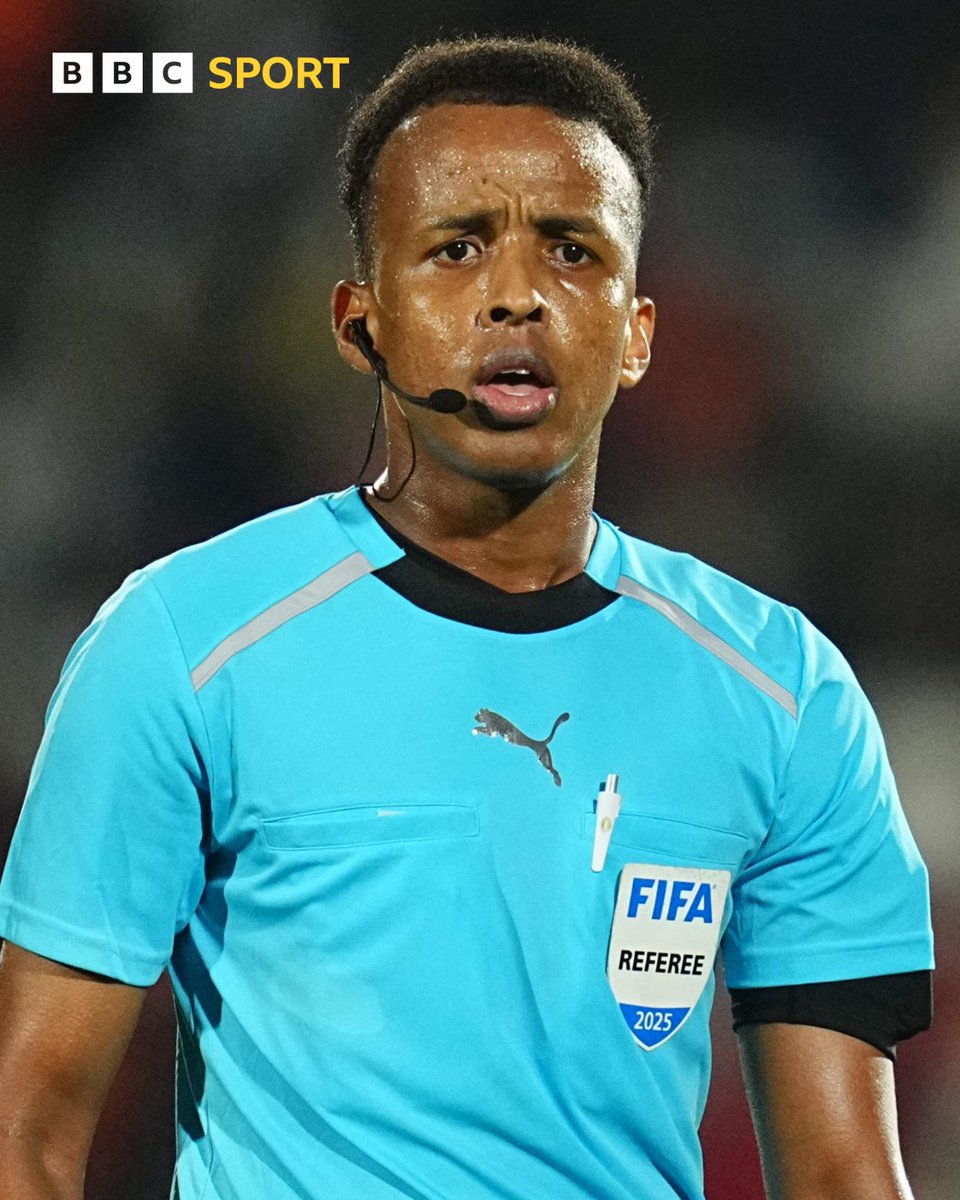
Denying entry to a Somali soccer official selected as one of the World Cup referees is quite shameful. The whole point of the World Cup is as a spirited athletic competition that brings us together, and allowing him to officiate is obviously the right thing to do.

Somali referee Omar Artan, who was set to be the first from his country to officiate at the World Cup finals, has been denied entry to the United States.
94
83
1,042
86,934
Christopher Patton retweeted

Jun 9
How do you audit a frontier model without ever seeing its weights?
We partnered with Pour Demain, an AI policy org, to show this was practical. They ran gray-box evals on GLM 5.1, a ~744B model, using @AISecurityInst's open-source interpretability tooling (vllm-lens), entirely inside a verifiable clean room built on Tinfoil Containers.
2
4
18
1,627
Christopher Patton retweeted
Jun 8
It's happening! zkao is now one of the best tool in our toolbox at zkSecurity. It's deep research but for finding bugs.
We run it by default on any codebase we audit internally, and it's already the source of TONS of amazing bugs that we reported during audits.
Every time we find bugs that zkao miss, we teach zkao how to find them. The tool learns from a multitude of codebases and from a diverse range of bugs our expertise.
It gets better and better over time, as we release these updates and as models get better. Every scan is a chance to find new bugs.
And we throw EVERYTHING we have at bugs. We pretend that the sky's the limit in terms of budget. We want teams that have high expectations to throw as many tokens as they want to find all the bugs. And then we optimize so that cheaper scans can still one-shot and provide value to smaller projects. If the smaller scans (using smaller models) improve, our theory is that much more clever models will improve even more.
A zkao max scan (our most powerful scan) takes around 9h to finish, and runs many different techniques and tools on your codebase.
If you want to give it a shot, the smallest plans cost a FRACTION of an audit, and give you around 2-3 zkao max scans per months.
We already have some seriously amazing users from the closed beta, and I'm excited to onboard more users and help them find all the bugs :)
Jun 8

Today, we're releasing version 1 of zkao. If you don't know what zkao is: it's deep research for finding bugs in codebases implementing cryptography. We're opening the tool to the public, but still gating it with a KYB to prevent people from scanning code they don't own. Link 👇🏼
4
6
41
5,414
Let's encrypt some qubits letsencrypt.org/2026/06/03/p…
1
8
482
Christopher Patton retweeted

Jun 2
Today a crazy quantum story just got wilder.
On March 31, the Google Quantum AI team published a landmark result on Shor's algorithm for elliptic curve cryptography. Technically, the paper was a bombshell: a dramatic 10x improvement over the state-of-the-art. As a stunt and wakeup call to the blockchain space, those optimisations were illustrated on secp256k1, the elliptic curve underlying Bitcoin and Ethereum signatures.
But perhaps the most striking part of the paper was sociological, not technical. Instead of following standard academic process, the optimisations were kept secret, hidden behind a zero-knowledge (ZK) proof. Google's accompanying blog post mentions they "engaged with the U.S. government". The ZK proof demonstrates the existence of algorithmic improvements without leaking details. Academic censorship with ZK, a historic first!
As a co-author of the Google paper I witnessed some of the context surrounding this censorship. To be honest, multiple aspects of that context don't sit well with me. As much as I believe the general public ought to know more, I am limited in my ability to whistleblow. Though let me be clear about one thing: the Google team's professionalism has been absolutely exemplary, and they deserve nothing but praise.
Censorship has a way of backfiring. The Streisand effect, where an attempt to bury something only draws more attention to it, is exactly what's unfolding today. First, Google's key optimisation has been rediscovered by the French. And in a thrilling turn of events, a collaborative Shor-at-home challenge just launched. The initiative, available at ecdsa[.]fail, breached a new Shor world record in a matter of hours.
Let's start with the rediscovery. Just two months after Google's paper, French quantum expert André Schrottenloher cracks the main secret optimisation. His paper, titled "Optimized Point Addition Circuits for Elliptic Curve Discrete Logarithms", landed on the arXiv today. Big congrats to André, who beat several other nerdsnipped experts to it. In a blog post also published today, Craig Gidney, the world expert on Shor optimisations, revealed that he'd been sitting on this very optimisation for a whole year under censorship pressure.
Interestingly, André missed a handful of minor optimisations, both from Google's original publication and from improvements found since. It's plausible there's still plenty of juice left to squeeze out of Shor, and this is exactly what the ecdsa[.]fail challenge is about. The verifier program developed for the ZK proof does double duty, automatically filtering for valid submissions. Dozens of compounding small and micro improvements are rolling in. As of the time of writing there's an 8.4% improvement to Google's circuit, as measured by the product of logical qubit count and Toffoli gate count. Nice!
The nerdsnipping ran deeper than anyone expected. Over the last few weeks it became clear it extended well beyond André and other quantum experts. Behind the scenes, a small army of amateurs quietly got to work. Inspired by Karpathy-style autoresearch, they turned AI on Shor. Ironically, the verifier program for the ZK proof makes an ideal reward function for AIs. The barrier to entry for this modern style of research is refreshingly low, with several non-experts, even a teenager, finding nice optimisations. Get in touch if you'd like to join a Telegram group with fellow autoresearchers :)
Part 2: neutral atoms and qday
The story doesn't end with Google. On the same day Google went public, a stealthy startup called Oratomic published its own Shor paper in a coordinated release. It made a splash, ultimately becoming the most upvoted paper on scirate[.]com, a website ranking arXiv papers.
Oratomic's claim was wild. By building on Google's logical optimisations and applying custom physical optimisations for neutral atoms, they claimed just 10K physical qubits were sufficient to run Shor's algorithm on secp256k1. That number is mind-bogglingly low.
Knowing essentially nothing about neutral atoms when Oratomic's paper landed, I was intrigued and decided to learn more about the tech. I fell straight down the rabbit hole and spent a couple hundred hours on the topic. I got a little obsessed and watched every YouTube video I could find and spoke to a bunch of experts.
My conclusion? The tech is real, very real. Even Google recently decided to start a neutral atom lab, a notable pivot from their sole focus on superconducting qubits. If you care about qday, i.e. the day a quantum computer will break the first piece of cryptography in production, neutral atoms demand your attention. I shared some of my learnings on Shor and neutral atoms in a 30min talk at the ZKProof cryptography conference. You can find it on YouTube by searching "zkproof neutral atom".
Here's an interesting observation about this duo of breakthrough papers: neither Google nor Oratomic say a word about what their results mean for qday. No timelines. Zero. Nada. That is especially baffling given that the whole point of whitehat quantum cryptanalysis is to inform qday estimations and help the general public make good decisions.
So let me attempt to partially fill the silence, similarly to what Scott Aaronson did in his April 29 post. Given everything I know, including scary non-public information, I now put the odds of qday by 2032 at 50%. 10% by 2030.
Anecdotally, the US government has its own date: 2035. Originating at the NSA and later adopted by NIST, it's when branches of the US government will be disallowed from using quantum-vulnerable cryptography. In plain language: with hindsight, that date is a joke and should be discounted entirely. I don't see how NIST avoids being forced to pull it forward by years.
Part 3: post-quantum cryptography
There are good reasons to sound the alarm today, but please do not panic. Rushing carelessly towards immature post-quantum cryptography is a recipe for disaster. IMO a good target date for migration is 2029, roughly 3.5 years out. 2029 happens to be the date selected by Google, Cloudflare, and the Ethereum Foundation.
These days most of my time goes to safely migrating Ethereum towards post-quantum cryptography as part of the broader lean Ethereum effort. There's a lot to do. We need to rip out and replace BLS signatures at the consensus layer, KZG commitments at the data layer, and ECDSA signatures at the execution layer.
The plan to get there is compelling, and is based on hash-based cryptography. Within the Ethereum Foundation we've developed a Swiss army knife called leanVM (github[.]com/leanEthereum/leanVM) powered by the magic of hash-based SNARKs. Thanks to truly exceptional work by Emile, Thomas, and others, its performance is derisked. Regarding security, leanVM is a jewel, a minimal zkVM crafted for end-to-end formal verification and maximum security.
Want to help? There are two $1M initiatives. First, the Proximity Prize (proximityprize[.]org). Solve a long-standing mathematical conjecture in coding theory, improve hash-based SNARKs, and go home a millionaire. Second, the Poseidon Initiative (poseidon-initiative[.]info), offers $1M for breaking Poseidon, the SNARK-friendly hash function.
408
1,128
6,246
3,706,017

This looks like a super-fun tutorial on lattice-based ZKPs, specifically on Lantern [LNP22], which can prove knowledge of MLWE secrets & more: lattice-zk.isec.tugraz.at/
1
4
35
1,631

Full Quantum Collision Attack on AES-256 in DM Hash Mode eprint.iacr.org/2026/1050.pd…
1
7
20
2,709
Christopher Patton retweeted

May 27
Internet Architecture Board (IAB) Statement with regards to Canada C-22 (“An Act Respecting Lawful Access”)
TL;DR: don’t do it, it weakens the Internet.
iab.org/announcements/iab-st…
2
4
10
704
Christopher Patton retweeted

May 26
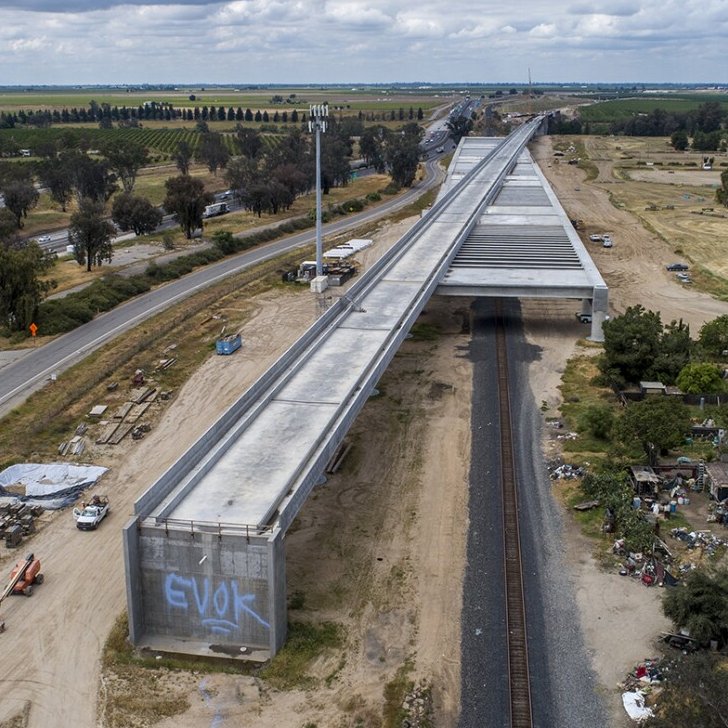
IT TOOK EIGHTEEN YEARS TO ENVIRONMENTALLY CLEAR THE PROJECT!
FIX THAT PROCESS FIRST!!!!
May 25

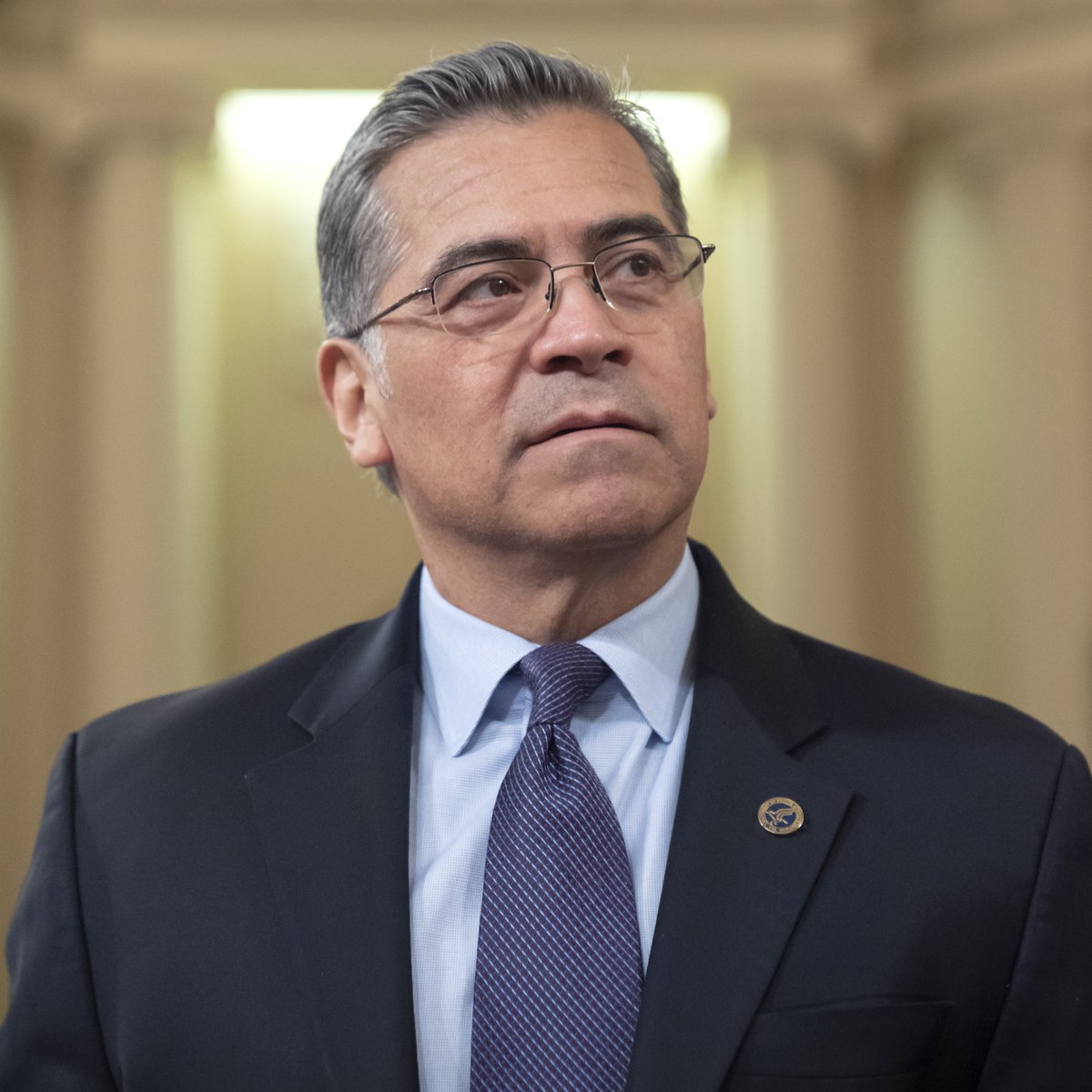
Xavier Becerra, Leading Candidate for California Governor, Vows to Scrap State’s Troubled High-Speed Rail Project and Build a New Version ‘On Budget and On Time’
65
563
10,272
308,302

The Trump administration permanently banned the IRS from auditing the president's tax returns, and those of his sons, his company or any affiliated trust. to.pbs.org/4wMh4gI
163
130
231
452,981


May 19
Cryptographers everywhere are asking: "what can *I* do in the head?"
1
22
1,456
Christopher Patton retweeted

May 18
Mythos and other frontier models, pointed at live code across critical Cloudflare infrastructure. An honest read on what's working and what comes next.
blog.cloudflare.com/cyber-fr…
7
18
260
121,508
Christopher Patton retweeted

If Donald Trump tries to confirm a Supreme Court justice in his final two years, Senate Democrats must follow The McConnell Rule™
1,874
2,148
22,273
762,333
Christopher Patton retweeted

IT’S HERE! The first new Amtrak Cascades train set arrived in Seattle today!
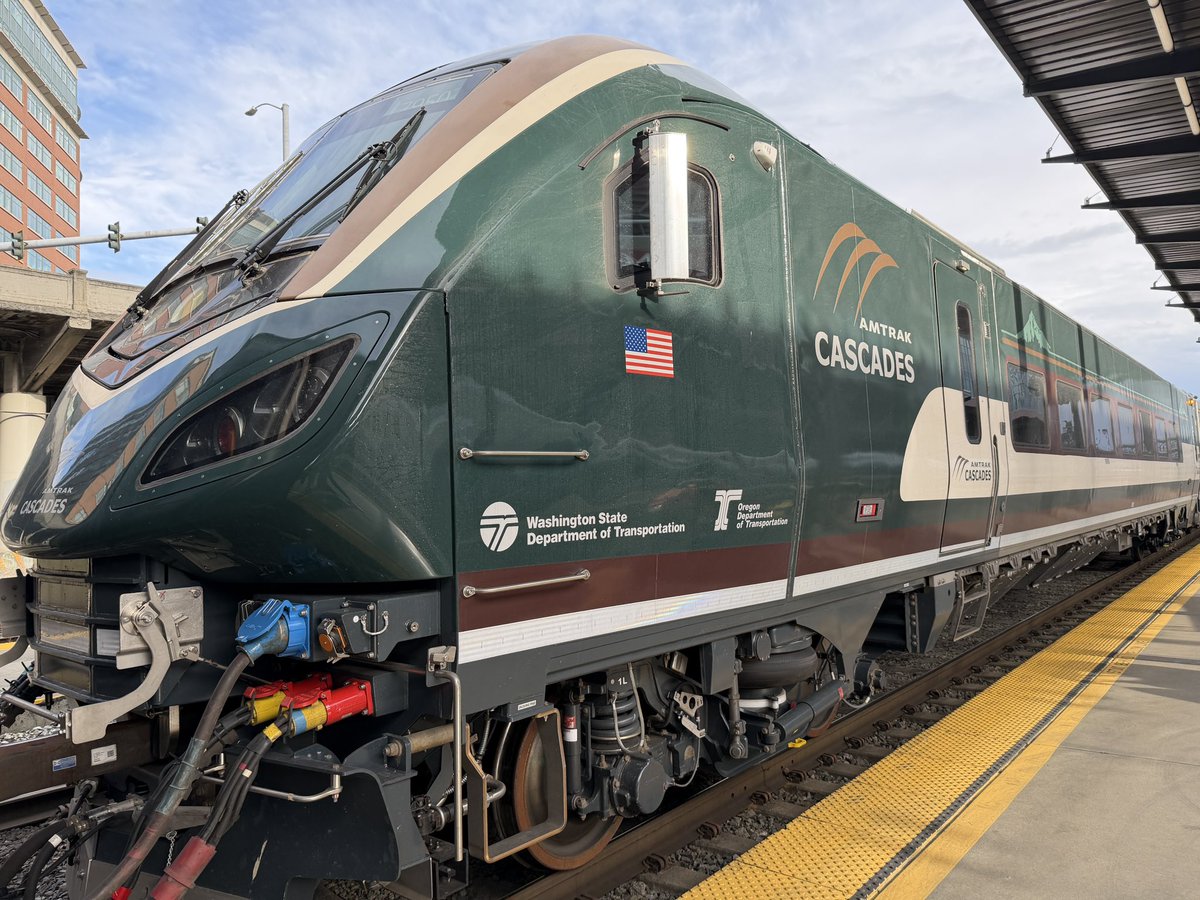
ALT A green passenger train labeled Amtrak cascades sits at a station
26
113
1,584
82,478
Christopher Patton retweeted

May 16
This is what image generation is for

1
2
2
220