
Computational biologist | Postdoc @aitken_lab @MRC_TU working in genomics & pathomics in cancer and human disease
Joined December 2017
- Tweets 302
- Following 639
- Followers 448
- Likes 1,524
17 Photos and videos

Pinned Tweet

22 Dec 2023
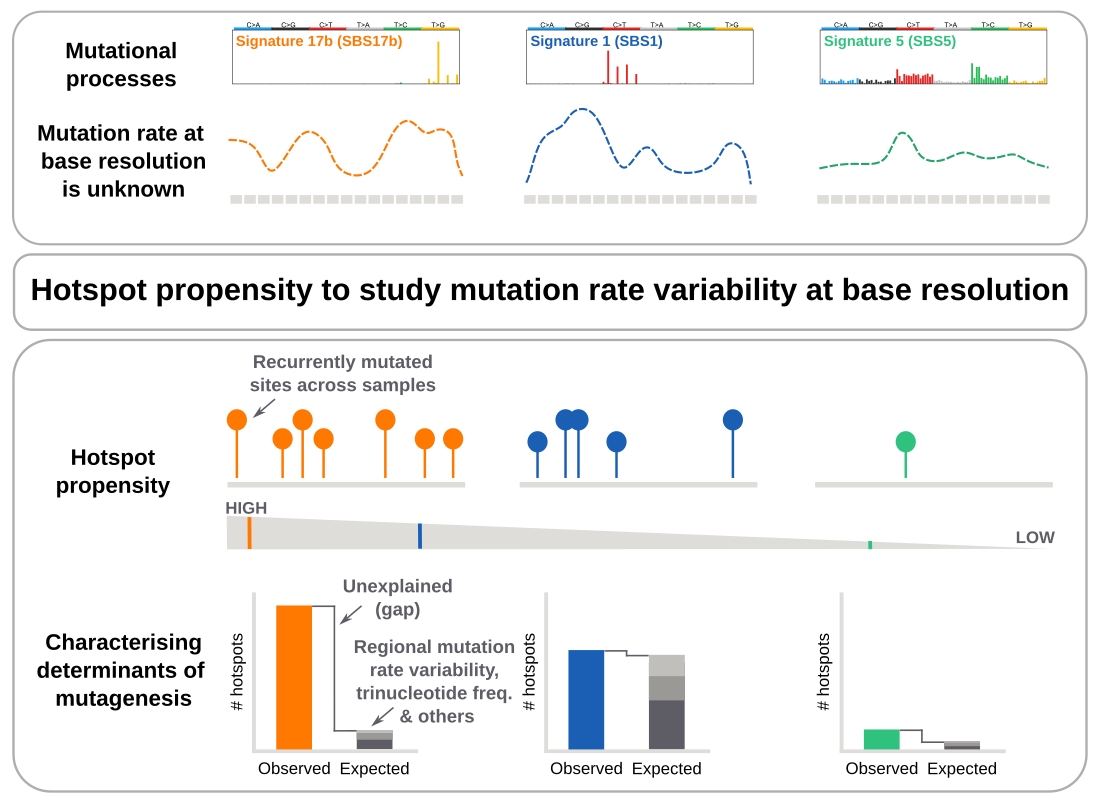
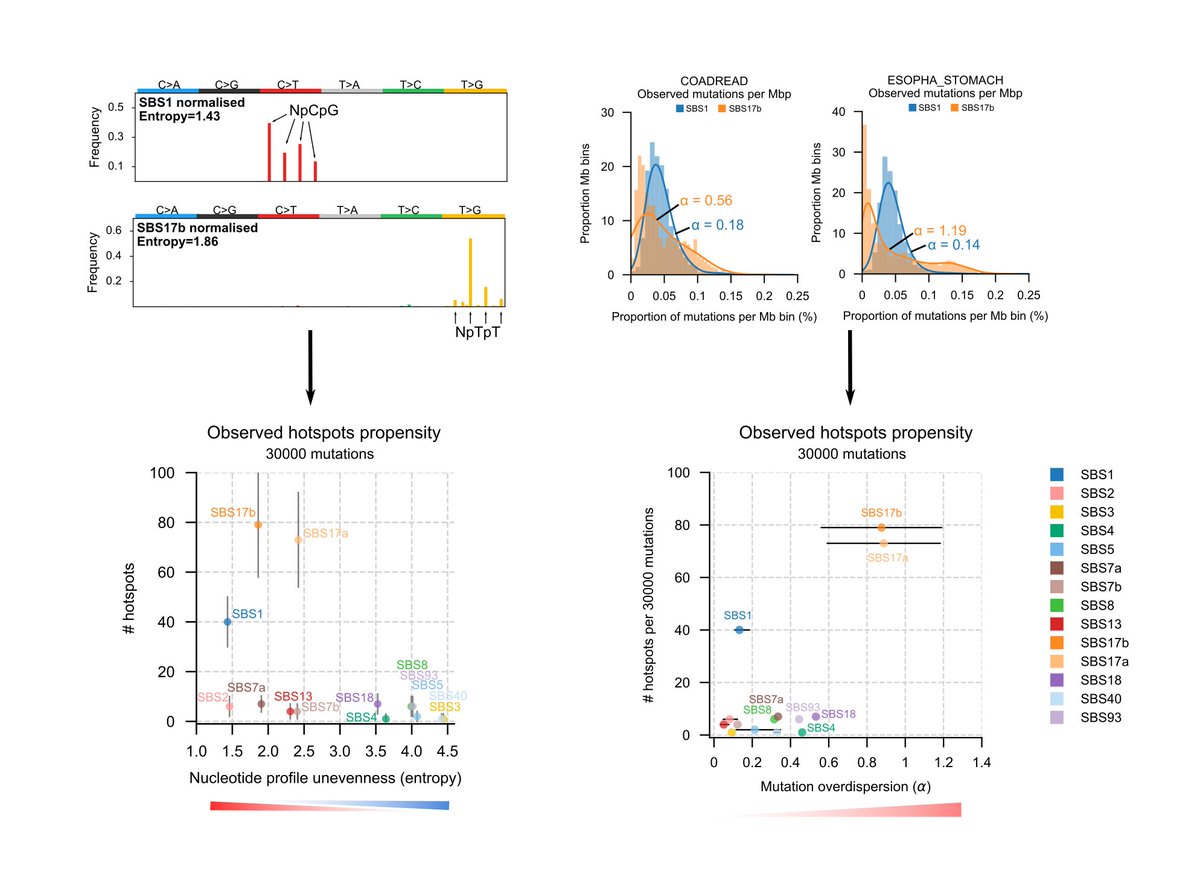
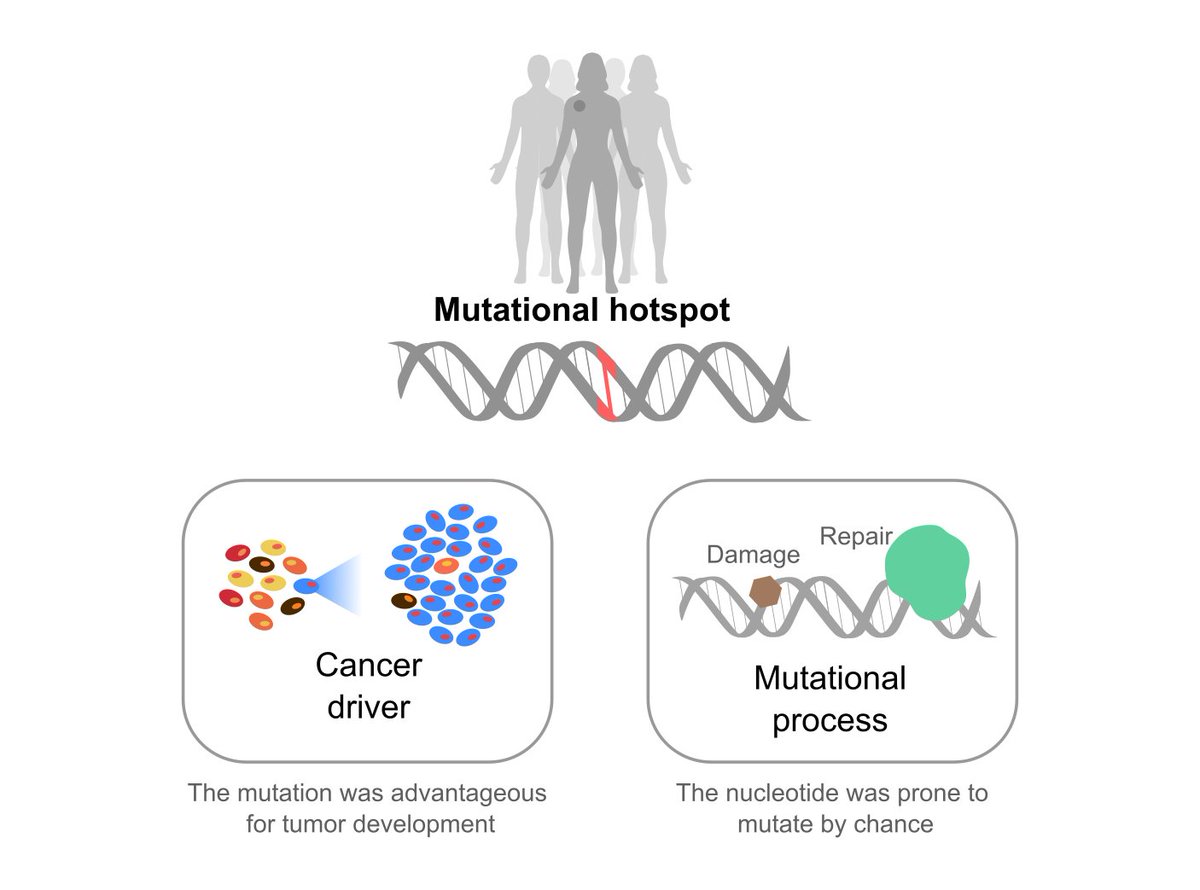
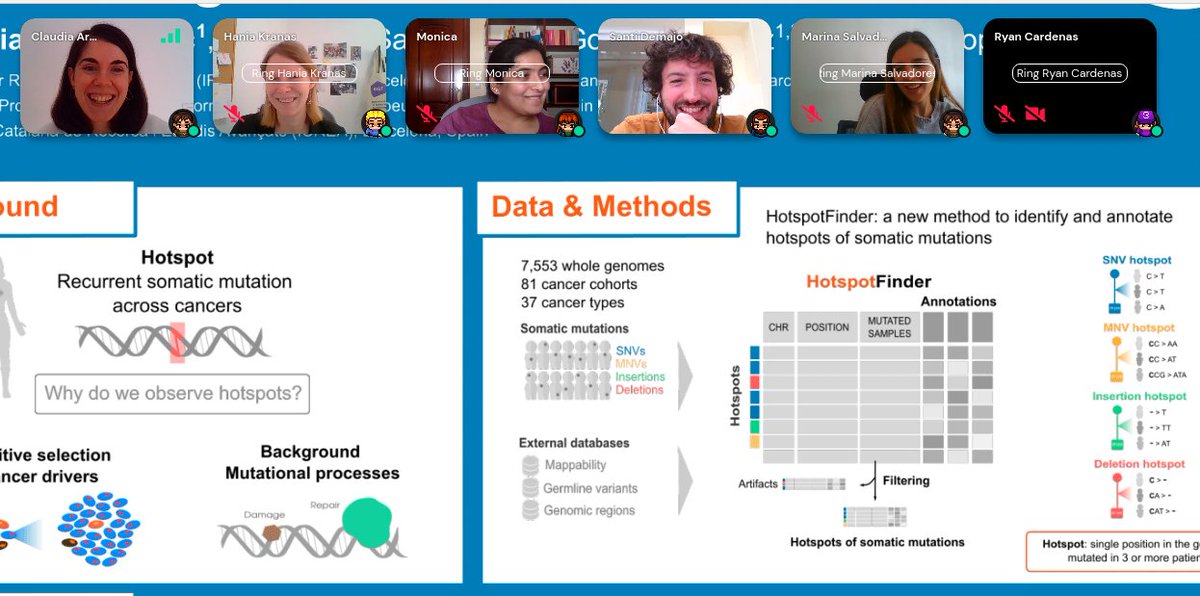
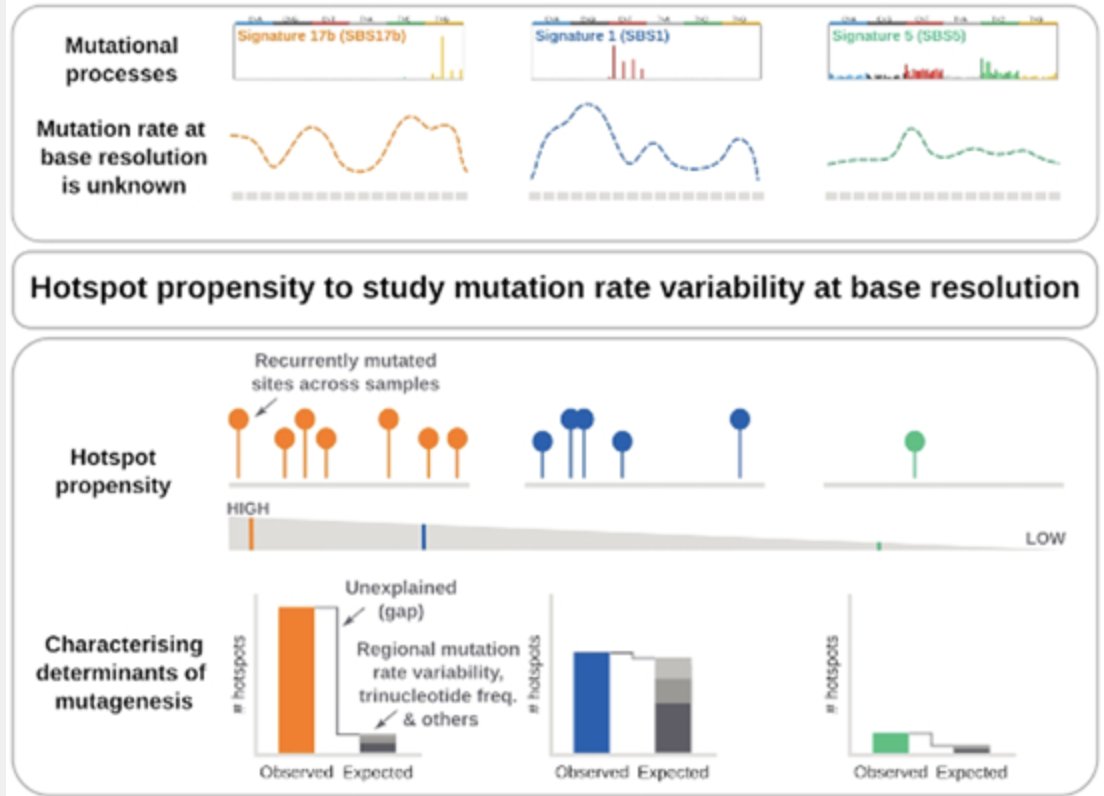
We’re very happy to see this finally out! “Hotspot propensity across mutational processes” with @fmuinos @abel_gonzalezp @nlbigas @bbglab @IRBBarcelona Can mutational hotspots help to study the mutation rate variability at single-nucleotide resolution? --> doi.org/10.1038/s44320-023-0…
6
16
61
18,458
8 Aug 2024
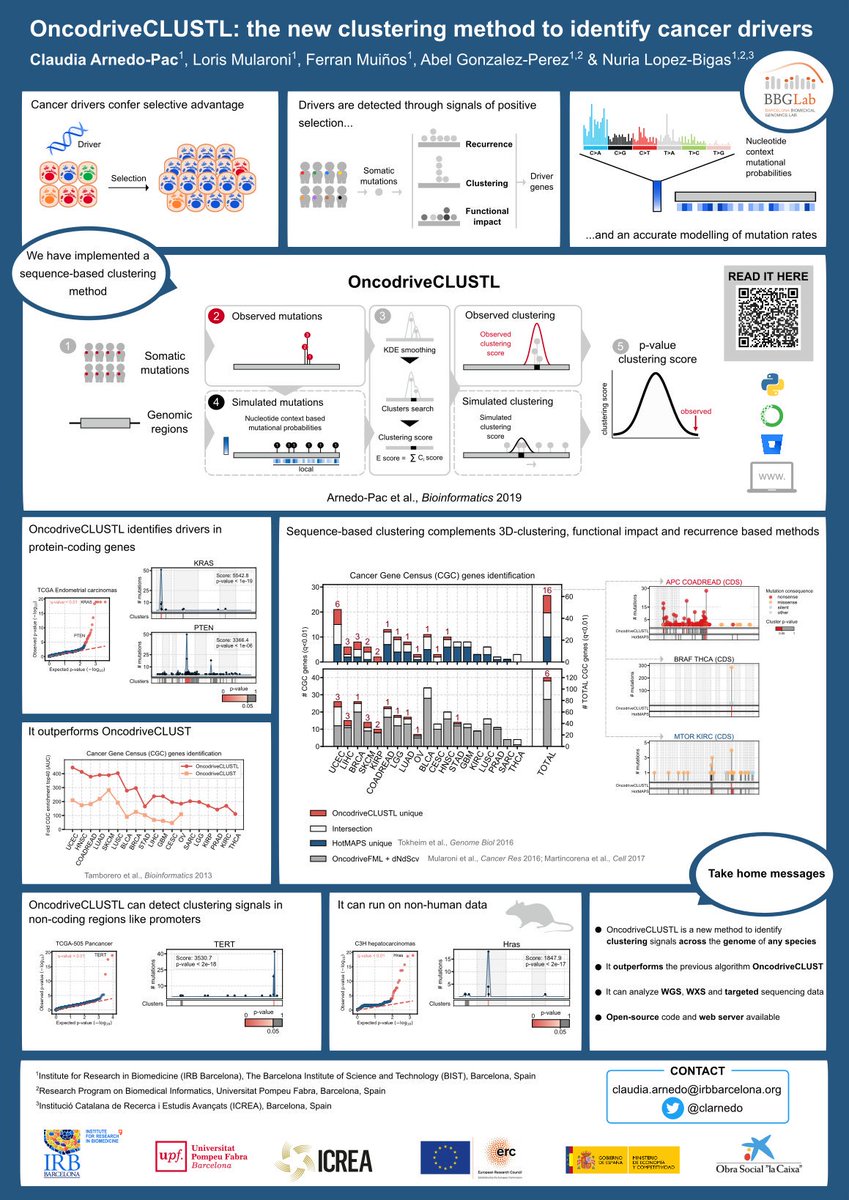
The genomic landscape of 2,023 colorectal cancers is out! I’m very grateful to have collaborated with such a great team on this massive project! Check all the findings here --> nature.com/articles/s41586-0…
7 Aug 2024

Another day, another publication 😎
We are extremely pleased to share our analysis of #colorectal #cancer whole #genomes in @GenomicsEngland now published in @Nature
nature.com/articles/s41586-0…
1
8
28
2,401
25 Apr 2024
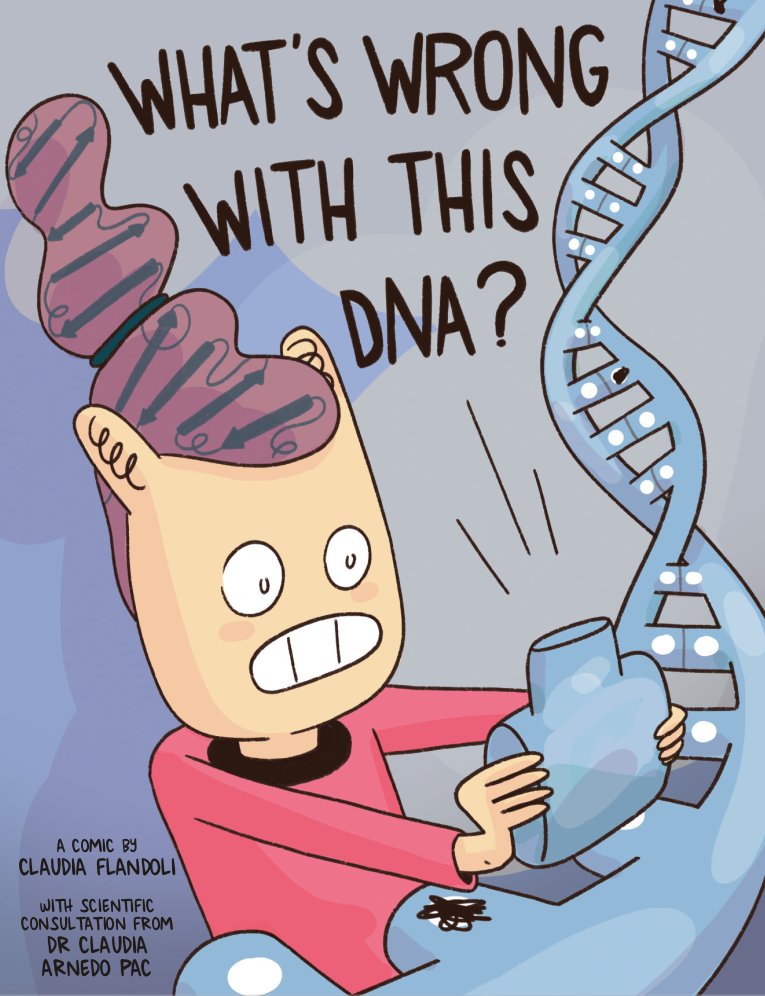
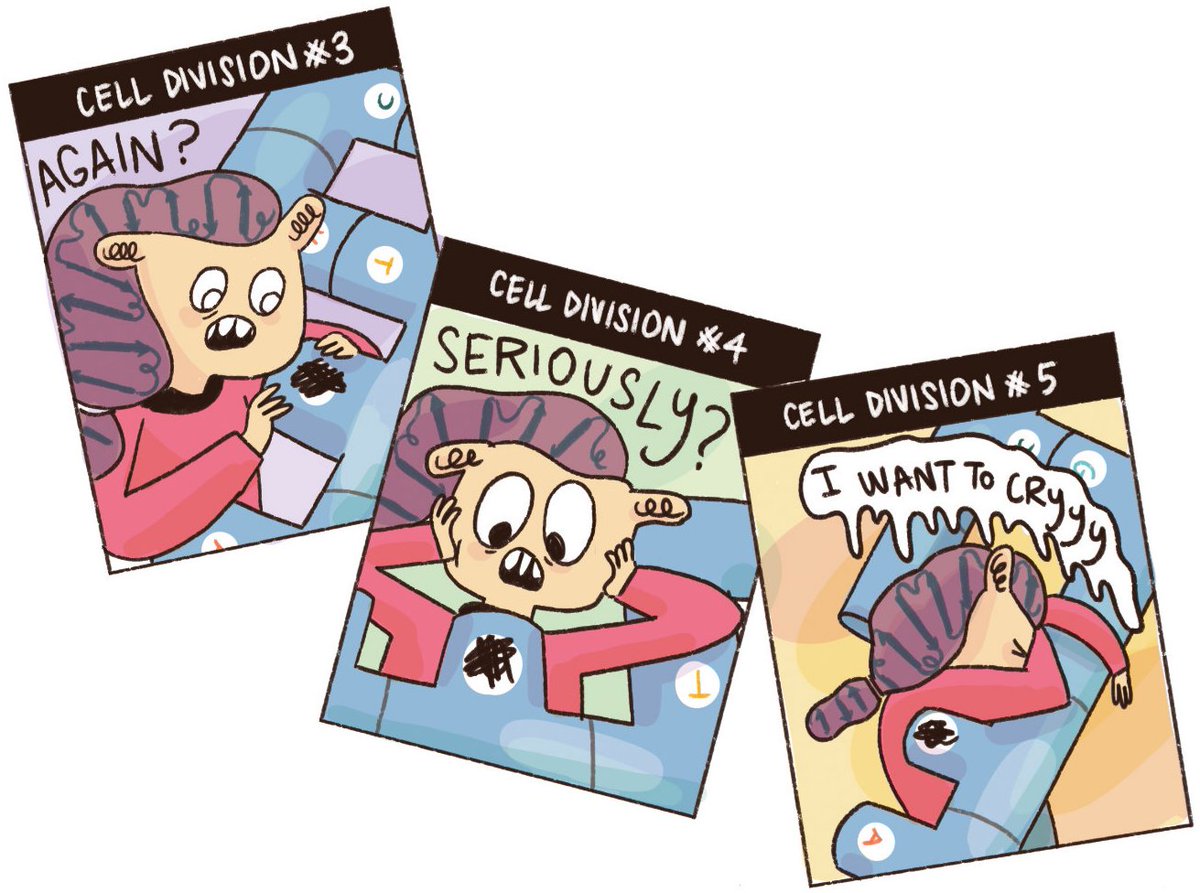
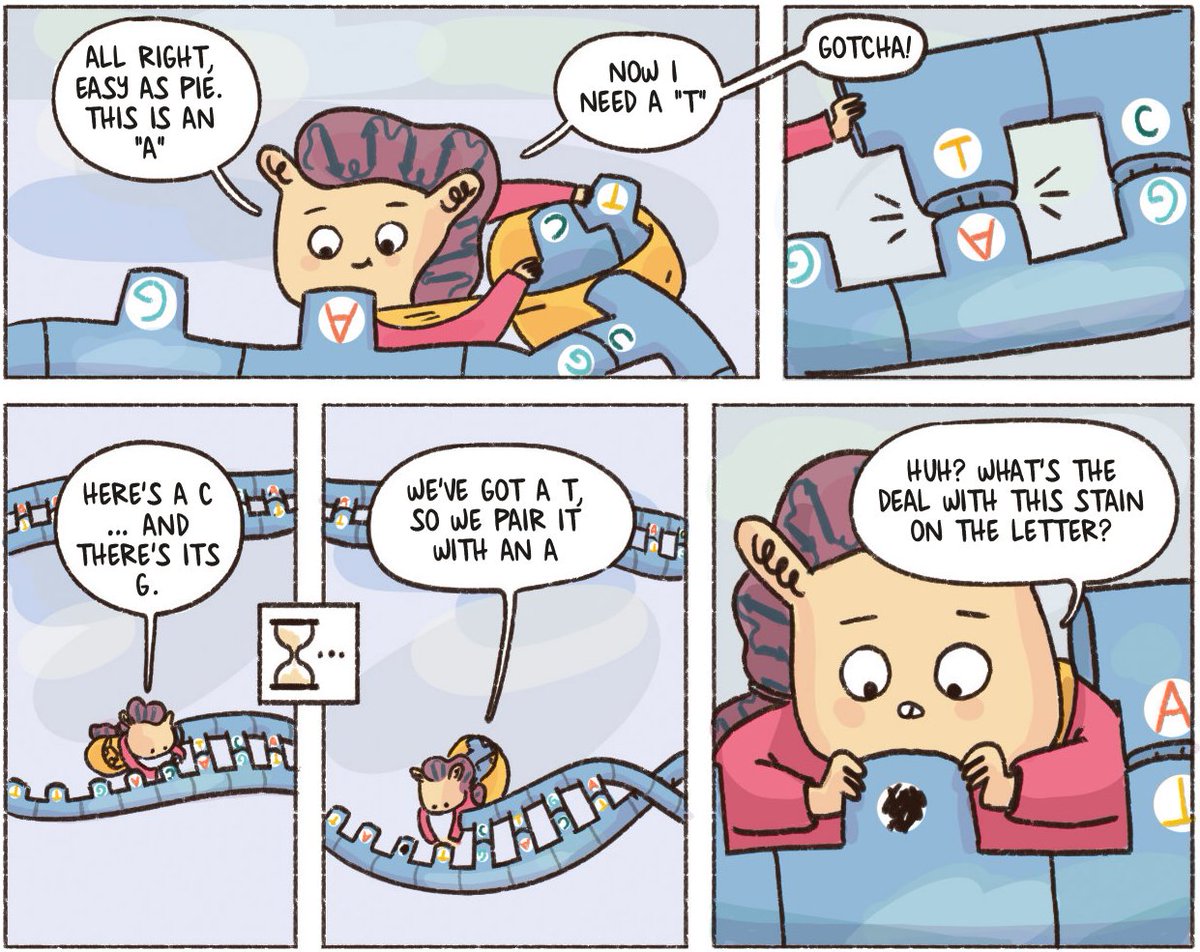
Just on time for #DNADay let me introduce you to Pol the polymerase. Pol was happily replicating a strand of DNA when something unexpected happened... 1/6
2
16
43
9,209
25 Apr 2024
This comic is the result of a wonderful collaboration with science illustrator @ClaudiaFlandoli and @S_J_Aitken @aitken_lab @sophtalkssci at @MRC_TU @Cambridge_Uni I’m super happy and thankful to have worked on this! 5/6
1
4
443
25 Apr 2024
Hope you enjoy this as much as we did and stay tuned for new versions of the comic in more languages! 🌍6/6
1
3
394
Claudia Arnedo Pac retweeted

19 Jan 2024
Looking for a postdoc in my group
@NCMMnews @NordicEMBL @UniOslo_MED @unioslo_mn @unioslo_bioinfo to enhance computational resources for regulatory genomics (JASPAR & UniBind) with deep learning.
Project in collaboration with @anshulkundaje & @WyWyWa
jobbnorge.no/en/available-jo…
2
25
23
15,029
Claudia Arnedo Pac retweeted

10 Jan 2024
🧬Hotspot propensity across mutational processes.
📰@MolSystBiol-@EMBOPress
✍️@clarnedo @fmuinos @abel_gonzalezp @nlbigas (@bbglab).
➡️bit.ly/3SdCVeL
📌doi.org/10.1038/s44320-023-0…
#IRBScience
3
7
1,095

Can mutational hotspots help to study the mutation rate variability at single-nucleotide resolution?
Follow Claudia's thread on her lalest paper to know more.
Congrats @clarnedo , @fmuinos , @abel_gonzalezp and @nlbigas for the great work.
22 Dec 2023

We’re very happy to see this finally out! “Hotspot propensity across mutational processes” with @fmuinos @abel_gonzalezp @nlbigas @bbglab @IRBBarcelona Can mutational hotspots help to study the mutation rate variability at single-nucleotide resolution? --> doi.org/10.1038/s44320-023-0…
1
11
754
Claudia Arnedo Pac retweeted

20 Dec 2023
The propensity of #mutationalsignatures to leave mutational hotspots serves as an estimate of the variability in their mutational probability at single-nucleotide resolution ➡️ embopress.org/doi/full/10.10… @nlbigas @IRBBarcelona #cancergenomics
5
15
2,428
22 Dec 2023
Thanks to everyone who supported our work, specially patients, families and researchers who shared and made available all the data used in our study #PCAWG @HartwigMedical @cbioportal @StJude #TARGET and others
1
2
231
22 Dec 2023
As well as funders including @ERC_Research @CienciaGob @FundlaCaixa @BecariosFLC @ContraCancerEs @IRBBarcelona @iCERCA
1
2
195
22 Dec 2023
We have shown how hotspot propensity can help to quantify mutation rate variability at nucleotide resolution and the determinants underlying it. We hope this new approach helps those studying and modelling mutagenesis or evolution, both in cancer and beyond!
1
1
186
22 Dec 2023
If you want to learn more, check the full version here: doi.org/10.1038/s44320-023-0…
1
1
178
22 Dec 2023
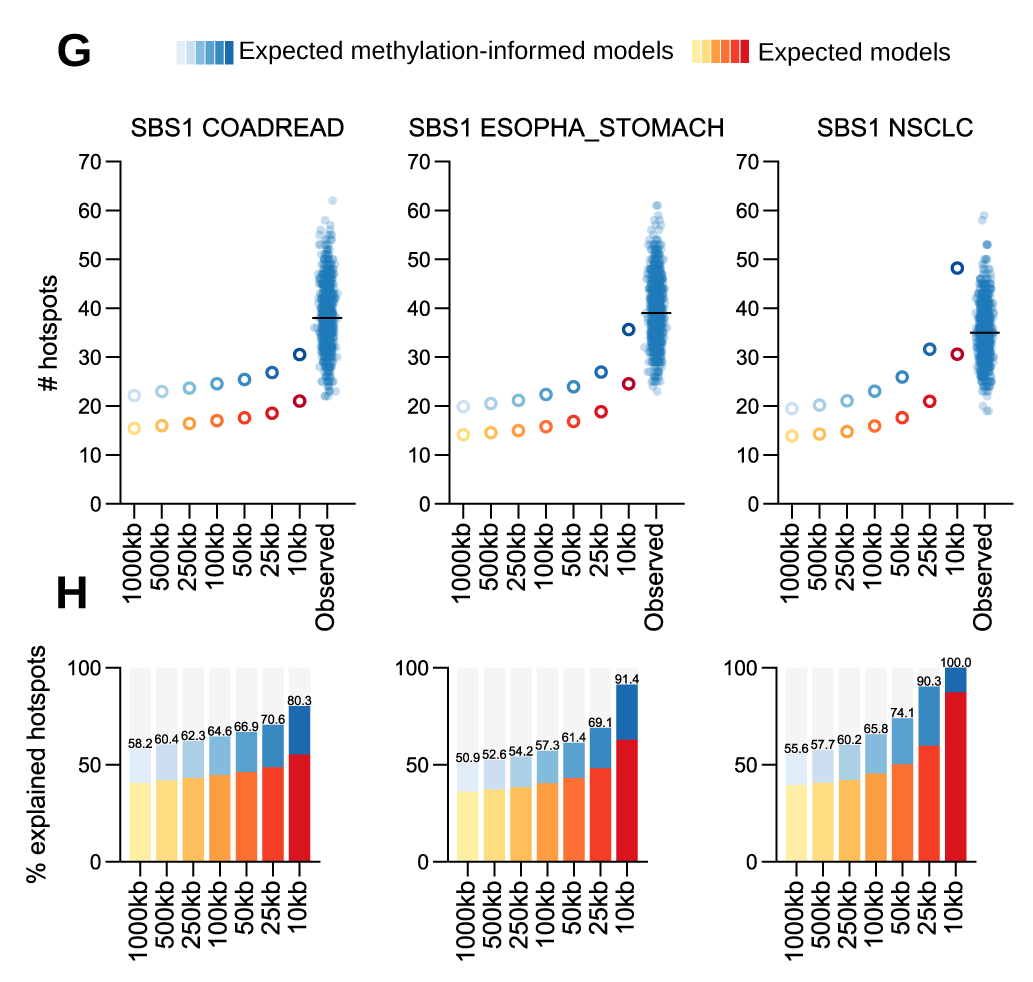
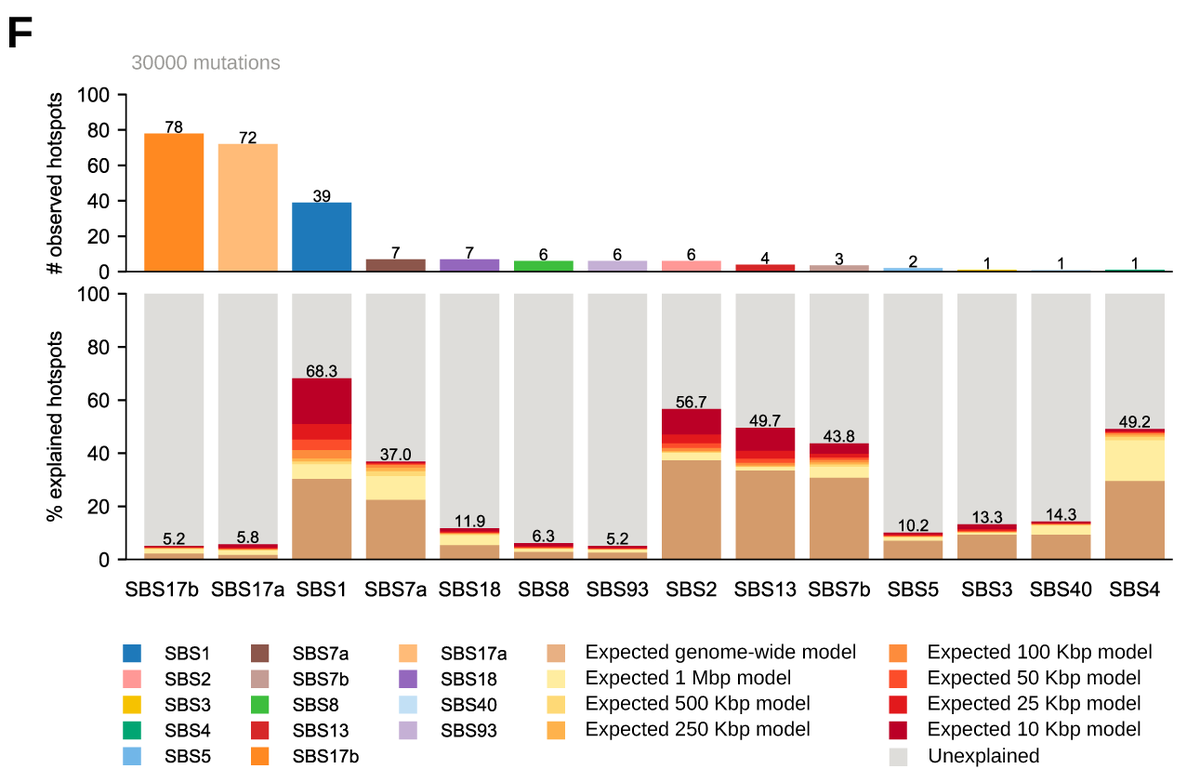
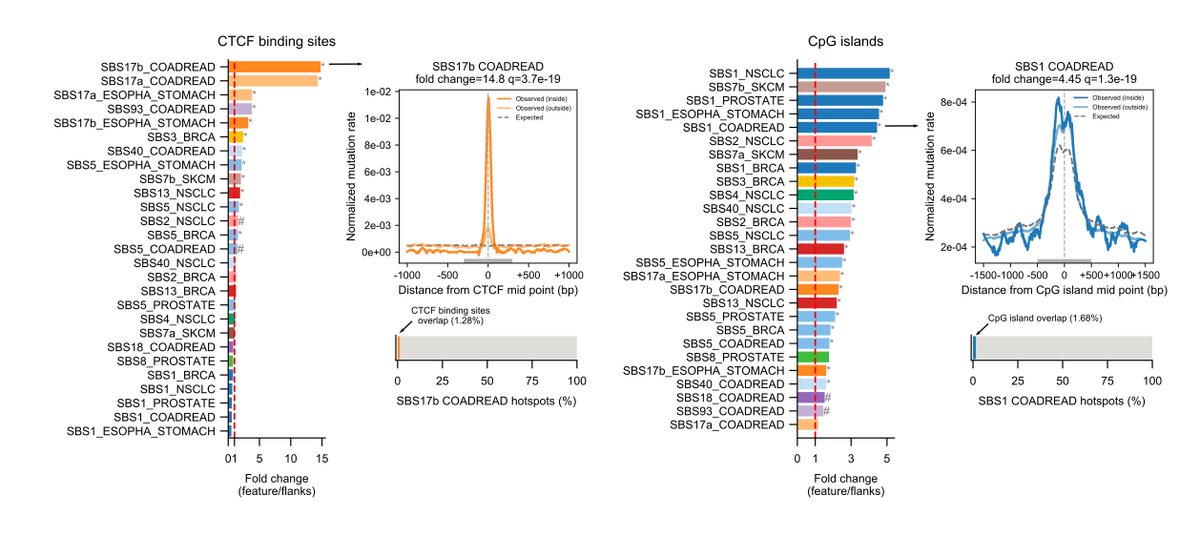
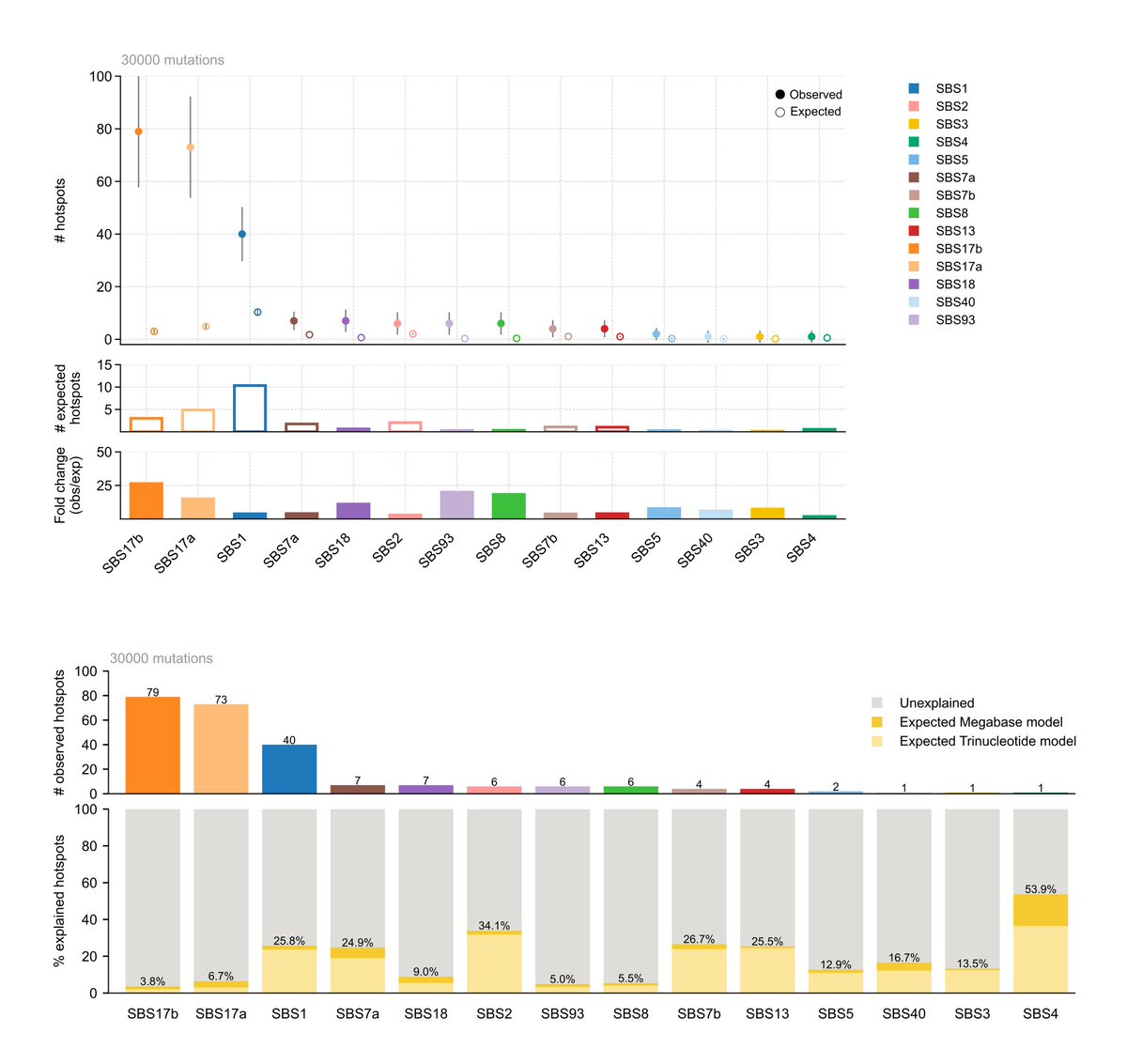
Yet, introducing tissue matched CpG methylation into signature 1 models could explain virtually all (80-100%) of its hotspot propensity. This means we can currently understand and predict signature 1 mutation rate variability at base resolution.
1
1
192
22 Dec 2023
We’re very happy to see this finally out! “Hotspot propensity across mutational processes” with @fmuinos @abel_gonzalezp @nlbigas @bbglab @IRBBarcelona Can mutational hotspots help to study the mutation rate variability at single-nucleotide resolution? --> doi.org/10.1038/s44320-023-0…
6
16
61
18,458
22 Dec 2023
The vast majority (94–95%) of signature 17 hotspot propensity remains unexplained, which suggests that local genomic features, most of them still undiscovered, play an important role here. CTCF binding only explains a small fraction of signature 17 hotspots.
1
1
174
22 Dec 2023
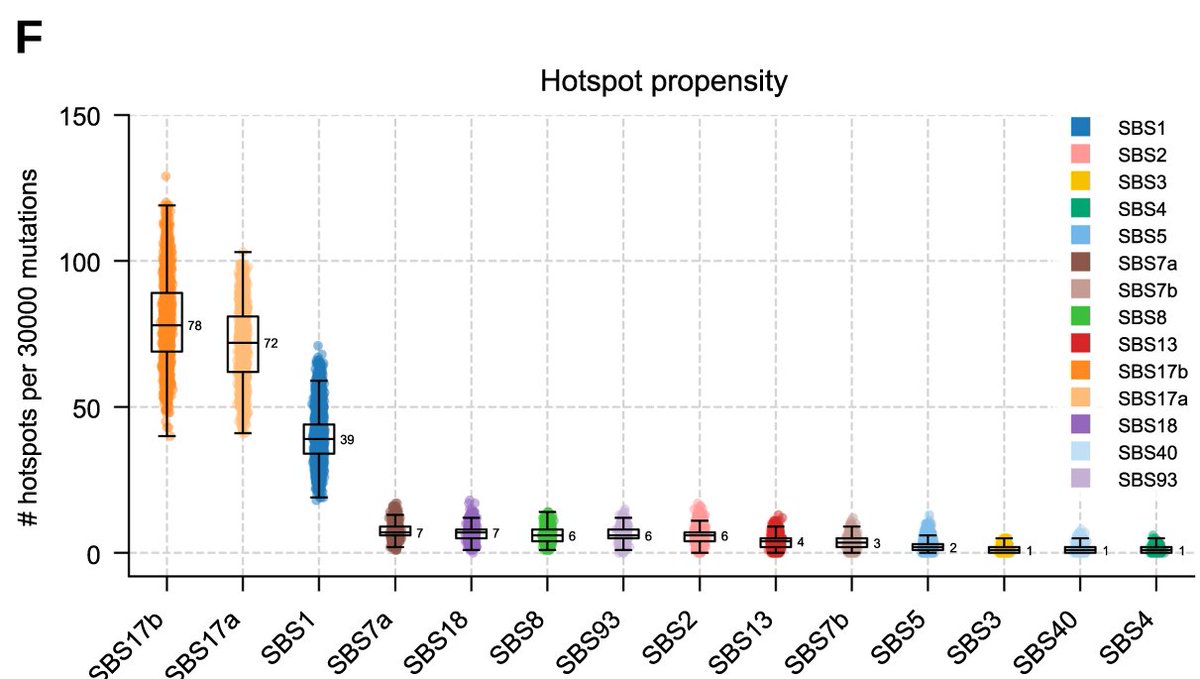
What did we find? Known variables affecting mutation rates only explain a fraction of hotspot propensity across mutational signatures, and this fraction is particularly different for signatures 17 and 1.
1
1
189
22 Dec 2023
We calculated how much of the observed hotspot propensity could be explained by known factors affecting mutation rates (large-scale mutation rate variability down to 10 Kbp, genome composition, and trinucleotide mutational probabilities of each signature).
1
1
181
22 Dec 2023
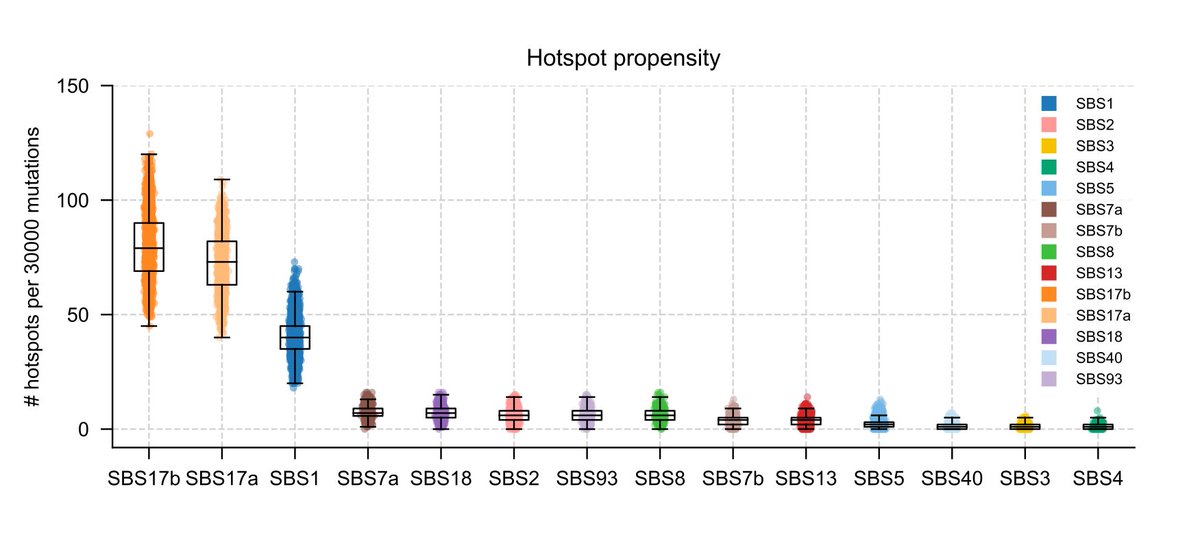
To our surprise, we found that signatures 1 and 17 showed 5-78 times larger hotspot propensity than other common mutational signatures. Can we explain why?
1
1
199