Showing military clips from all corners of conflict, before, during and after based on true events.
Joined November 2025
- Tweets 96
- Following 21
- Followers 22
- Likes 6,024
92 Photos and videos


Clips of War retweeted

‘𝓕𝓵𝓪𝓰𝓼 𝓸𝓯 𝓞𝓾𝓻 𝓕𝓪𝓽𝓱𝓮𝓻𝓼’
3
71
26,730
Clips of War retweeted
‘𝙳̷𝚞𝚗̷𝚔𝚒̷𝚛𝚔’
𝘍𝘳𝘰𝘮 𝘵𝘩𝘦 𝘭𝘢𝘯𝘥, 𝘵𝘩𝘦 𝘴𝘦𝘢, 𝘵𝘩𝘦 𝘢𝘪𝘳… 𝘴𝘶𝘳𝘷𝘪𝘷𝘢𝘭 𝘪𝘴 𝘷𝘪𝘤𝘵𝘰𝘳𝘺.
⏳🛩️🚢🏖️
𝘛𝘩𝘦 𝘮𝘪𝘳𝘢𝘤𝘭𝘦 𝘦𝘷𝘢𝘤𝘶𝘢𝘵𝘪𝘰𝘯 𝘵𝘩𝘢𝘵 𝘵𝘶𝘳𝘯𝘦𝘥 𝘥𝘦𝘧𝘦𝘢𝘵 𝘪𝘯𝘵𝘰 𝘥𝘦𝘧𝘪𝘢𝘯𝘤𝘦 – 𝘵𝘪𝘤𝘬𝘪𝘯𝘨 𝘤𝘭𝘰𝘤𝘬𝘴 𝘢𝘯𝘥 𝘶𝘯𝘳𝘦𝘭𝘦𝘯𝘵𝘪𝘯𝘨 𝘵𝘦𝘯𝘴𝘪𝘰𝘯.
#Dunkirk #ChristopherNolan #WWII #Evacuation
1
10
267

23 Dec 2025
🌅⚓
Eternal sentinel at dusk.
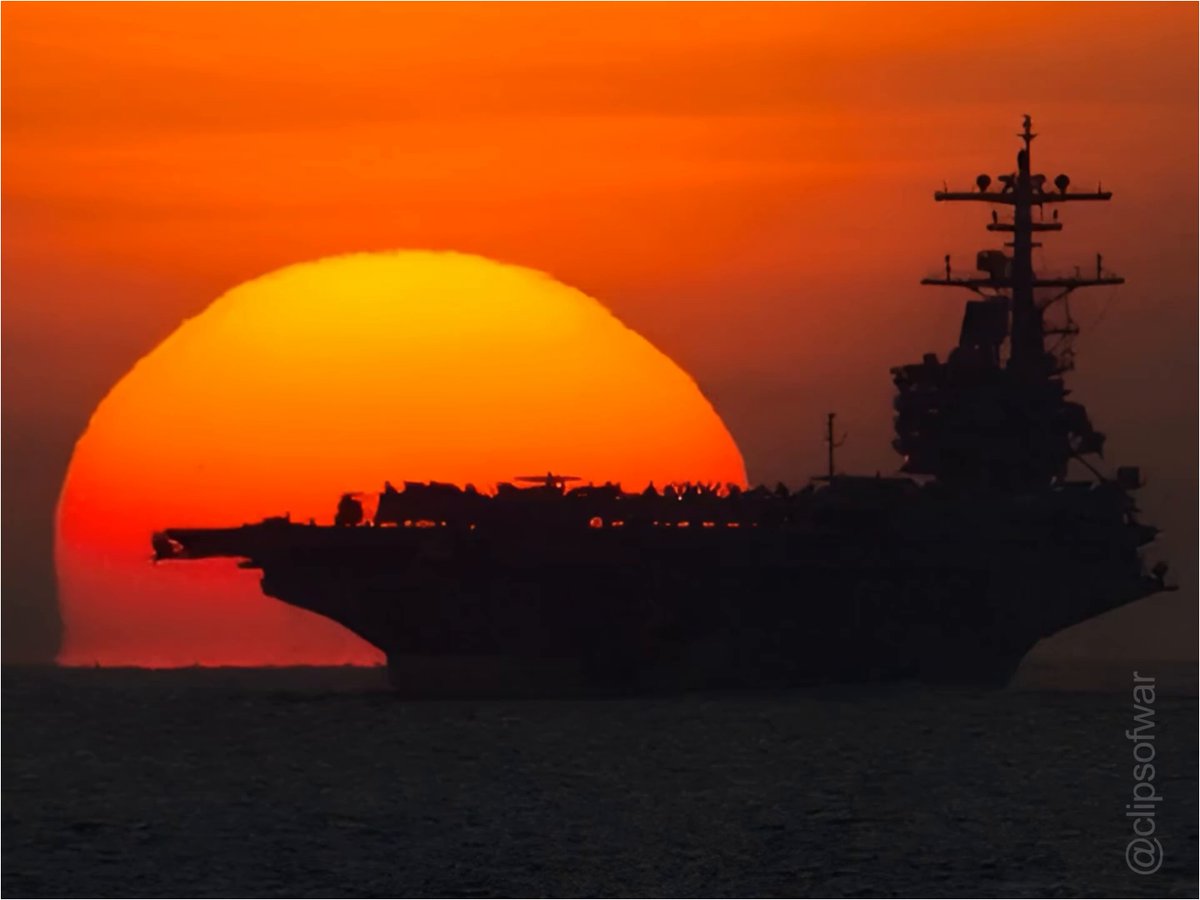
A mighty U.S. Navy nuclear-powered aircraft carrier, likely a Nimitz-class giant, cuts a commanding silhouette against a blazing orange sunset on the open ocean.
The massive island superstructure towers to starboard, flight deck lined with faint outlines of parked jets, as the sun dips precisely behind the bow, painting the sky in fiery hues of crimson and gold.
These floating cities, over 1,000 feet long, home to 5,000 sailors and an air wing of 60 aircraft, project American power across the globe, from routine patrols to crisis response. Out here, far from land, sunsets like this are a daily ritual: a moment of breathtaking beauty amid the relentless rhythm of flight ops, watches, and readiness.
No drama, no enemy in sight, just raw naval majesty meeting nature’s spectacle. A reminder that even in peacetime, freedom sails on steel decks under endless horizons.
Sailors call these “million-dollar sunsets.”
Priceless, really.
#USNavy #AircraftCarrier #SunsetAtSea #NavalPower #NimitzClass #SeaStories
9
248
23 Dec 2025
❄️🎄 Christmas Day, 1944 – Ardennes Forest, Belgium.
81 years ago: No roaring fires, no turkey dinners, no “I’ll Be Home for Christmas” on the radio. Just bitter cold, knee-deep snow, and the relentless grind of Hitler’s last desperate gamble, the Battle of the Bulge.
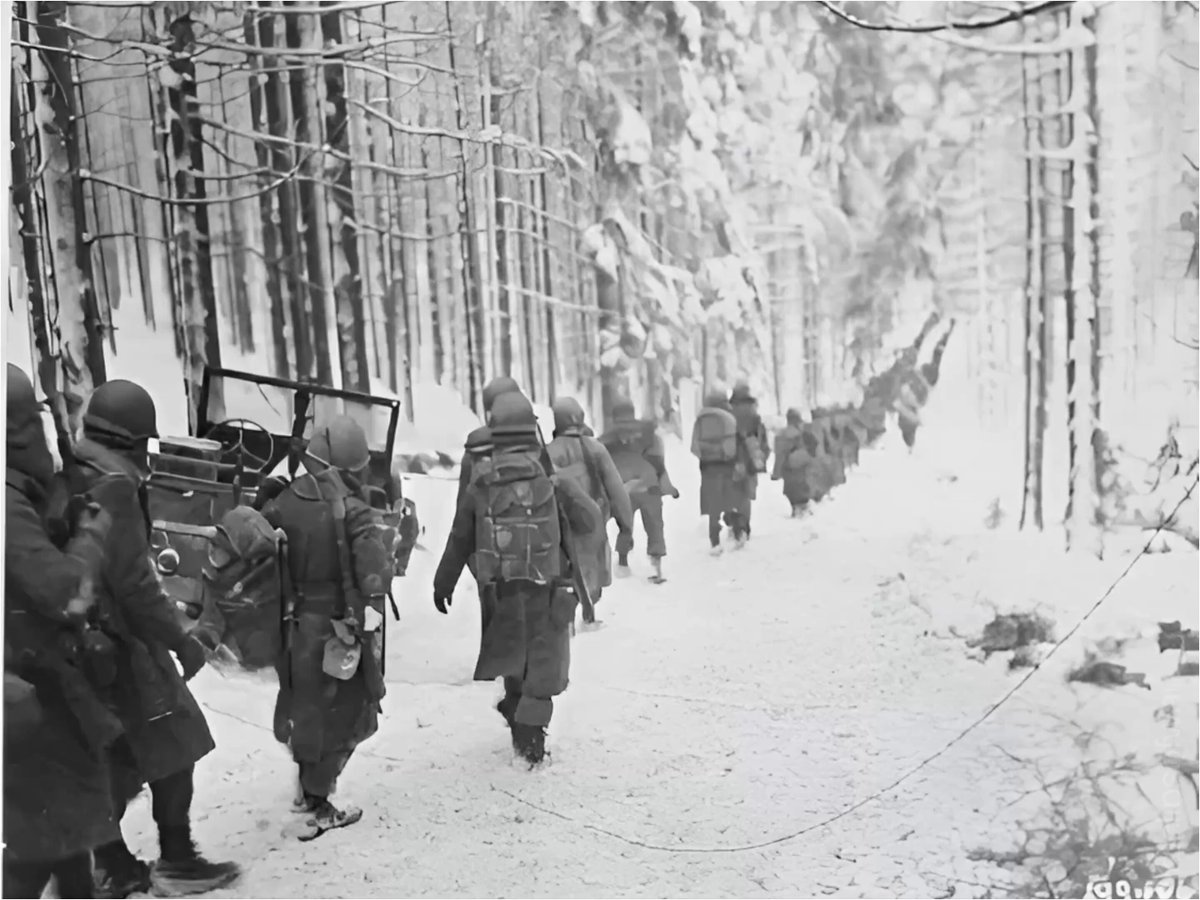
American GIs of the U.S. First Army trudge single-file through a silent, snow-laden pine forest. A jeep crawls behind, headlights cutting through the gloom, carrying the lucky few who ride while the rest march on frozen feet. Heavy overcoats, wool caps pulled low, rifles slung, every man bundled against temperatures that plunged below zero. Frostbite was the silent enemy that claimed more limbs than bullets some days.
These dogfaces had been rushed to the front just days earlier when the Germans smashed through the thinly held Ardennes line on December 16. Green troops, veterans recovering from earlier fights, engineers turned infantrymen, all thrown into the frozen meat grinder to stem the tide.
They marched toward the sound of guns, toward Bastogne where the 101st Airborne was already surrounded and answering German surrender demands with a single defiant word: “NUTS!”
No gifts under a tree. The only white Christmas they knew was the snow that camouflaged their positions and chilled them to the bone. Yet they kept moving forward, one weary step at a time, because the line had to hold.
This is the Christmas they never talked much about when they came home. The one spent not with family, but with brothers forged in ice and fire.
We remember them today. The boys who turned a white hell into victory.
Merry Christmas to the Greatest Generation.
You gave us the gift of freedom.
#BattleOfTheBulge #Christmas1944 #WWII #Ardennes #LestWeForget #USArmy #GreatestGeneration
12
513
2 Dec 2025
🇩🇪 110 Years of German Armored Cars – From Trench-Raiding Coffins to Stealth Beasts.
1915–1918 – The Dawn
Ehrhardt E-V/4: the first true German Panzerwagen. 30 tons of boiler-plate on a truck chassis, armed with 3–4 MG08s in a rotating turret. Terrifying on paper, slow as a cart in mud, but it rolled straight into history at Verdun and the Somme.
Interwar – Sleeping Giant
The Reichswehr was forbidden real tanks, so they went nuts with armored cars.
• Sd.Kfz. 13/231/232 (8-rad): iconic sloped-nose, radio-equipped, 20 mm cannon. The 231/232 series became the eyes of the early Panzer divisions in Poland, France, and the desert. Afrika Korps legend.
1939–1945 – Peak & Overreach
• Sd.Kfz. 222 (light 20 mm scout)
• Sd.Kfz. 234 family (1943–45): the masterpiece. Puma (234/2) with 50 mm KwK 39, 90 km/h on road, 8×8, monocoque hull, and the rare 234/4 “Pakwagen” with a 75 mm PaK 40. Still considered one of the most beautiful fighting vehicles ever built.
1949–1990 – Cold War Rebirth under Restrictions.
Bonn couldn’t build heavy armor at first, so the Bundesgrenzschutz and later Bundeswehr leaned hard on wheeled vehicles.
• Schützenpanzer Kurz (Hotchkiss SPz 11-2)
• Spähpanzer Luchs (1975–2009): 8×8, 20 mm, silent mode (engine off, electric drive), thermal optics, amphibious. A reconnaissance legend that could sneak up on tanks at night.
2000s – The Stealth Era
• Fennek (2003–present): Dutch-German lightweight (6×6, 11 tons), stealth mast with BAA thermal & laser rangefinder, 120 km/h, air-portable. Used from Kunduz to Mali.
• Boxer CRV (new heavy recon variant): 38 tons, 8×8, Lance 30 mm turret, 360° cameras, anti-drone suite, optional Hero loitering munitions.
Today & Tomorrow
• AGM (joint Rheinmetall-KMW “Advanced German Mechanized”): the 2025 concept. 8×8, hybrid-electric drive, active protection (AMAP-ADS), full stealth signature reduction, AI-assisted targeting, drone mothership capability. Basically a wheeled Leopard 3 for the networked battlefield.
From 1915’s lumbering steel boxes that could barely cross a shell crater… to 2025 machines that can ghost through a forest at 100 km/h, kill a tank at 4 km, and launch a drone swarm while drinking a cup of coffee.
Germany never forgot that wheels are often faster, cheaper, and quieter than tracks.
The armored car never died – it just evolved into something even deadlier.
#GermanArmor #Panzerwagen #SdKfz234 #Puma #Fennek #Boxer #MilitaryHistory #Bundeswehr
11
231
2 Dec 2025
🌊💥 April 6, 1945 – Off the coast of Xiamen, China.
A dramatic clip based on an image that was taken of the highly contested battle.
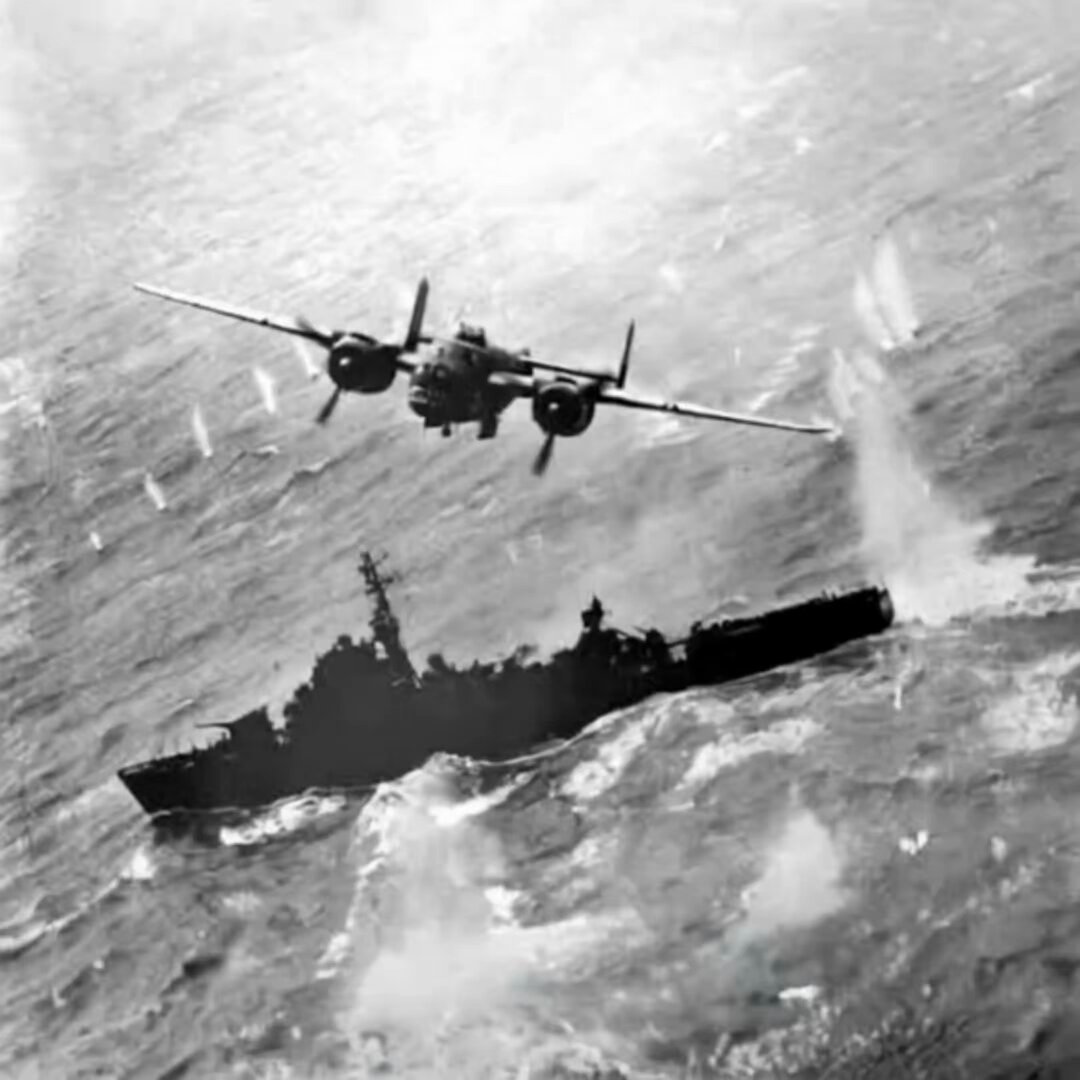
IJN Amatsukaze (“Heavenly Wind”), proud Kagerō-class destroyer, steams alone on convoy escort duty as the Empire’s last days bleed out. Then the sky explodes.
A single USAAF B-25J Mitchell strafer from the 498th Bomb Squadron, 345th Bomb Group “Air Apaches” dives out of the sun.
Eight fixed .50-cal nose guns and the forward bomb bay spit fire in one long, murderous burst.
A 12.7 mm round finds the ready-use AA ammo and a Type 93 “Long Lance” torpedo still in its tube.
The detonation is apocalyptic.
A 1,000-foot column of black smoke and debris erupts skyward. In the blink of an eye, Amatsukaze is literally torn in half. The bow plunges instantly; the stern lifts almost vertically before vanishing beneath the waves. Of her 240-man crew, only 46 survive.
The photographer, SSgt George R. Caron (tail gunner on another B-25 in the same formation), captured the exact moment the destroyer died.
One frame, one second, one of the war’s most violent ends.
From 32 knots to the bottom in under ten seconds.
Heavenly Wind, silenced forever.
#WWII #PacificWar #IJN #Amatsukaze #B25Mitchell #AirApaches
10
220
2 Dec 2025
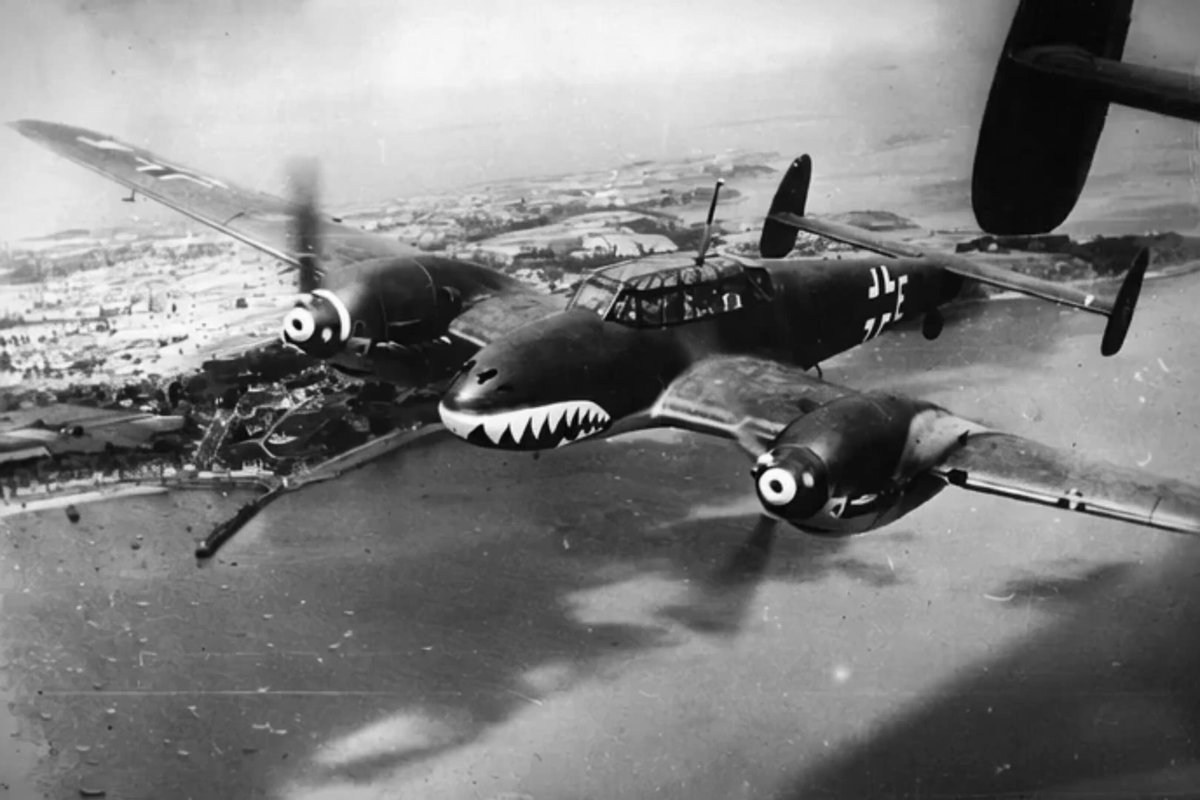
🦈✈️ Der Haifisch – “The Shark”
Summer 1942, English Channel.
A brand-new Messerschmitt Me 210 A-1 of Zerstörergeschwader 1 “Wespen” (the Wasps) slices through the sky, its snarling factory-applied shark mouth bared in defiance. Flying tight formation, the twin-boom heavy fighter prowls the same stretch of water where the RAF and Luftwaffe have bled each other for two brutal years.
This is peak Luftwaffe propaganda: the Me 210 was Goering’s great hope to replace the aging Bf 110, faster, heavier-armed, and supposedly deadlier. The shark motif—borrowed from ZG 76’s legendary “Haifischgruppe” that terrorized Crete in 1941—was meant to strike fear into any Spitfire pilot who saw it closing fast. For a brief moment in 1942, Berlin believed the Channel would soon belong to these new predators.
Reality hit harder than any 20 mm cannon. The Me 210 was a flying coffin: viciously unstable, prone to flat spins, and killed more German test pilots than the enemy ever managed. Entire squadrons mutinied rather than fly it.
Production was halted after barely 350 airframes, and the design was hastily reborn as the far superior Me 410.
Yet for one sunlit instant over the Channel, this shark still had teeth.
Sometimes the most menacing grin in the sky… belonged to the plane that almost destroyed its own air force.
#Luftwaffe #Me210 #Haifisch #WWIIAviation #Zerstörer #ChannelFront #PropagandaPlane
10
103
2 Dec 2025
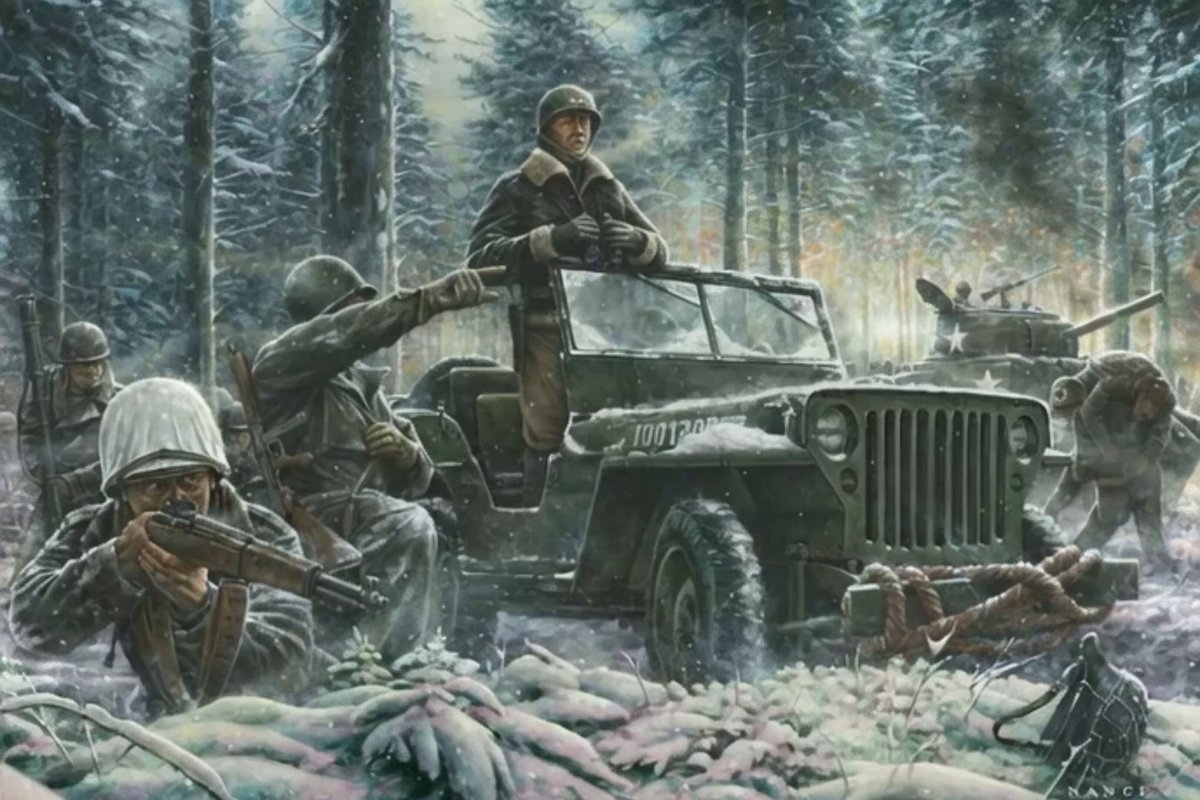
❄️⚔️ “Hell on wheels, straight through the gates of hell.”
81 years ago this week: Bastogne, December 1944.
General George S. Patton, standing tall in his open jeep like a Roman war-god reborn, points the frozen spearhead of the U.S. Third Army north through blinding snow and howling Ardennes winds.
In just 48 hours he executed the most audacious 90-degree wheel in modern warfare: 133,000 vehicles, half a million men, and three entire corps pivoting from the Saar to smash into the German southern flank of the Bulge.
While the 101st Airborne bled out inside the besieged town, answering “NUTS!” to surrender demands, Patton’s armor—4th Armored, 26th Infantry, 6th Armored, 10th Armored, and the hell-for-leather Task Force Ezell, ripped open a corridor on December 26. Shermans and half-tracks churned through waist-deep snow, infantry froze solid to their machine guns, but they kept coming.
Patton had promised Eisenhower he would relieve Bastogne by Christmas. He missed it by one day. The old cavalryman wept when he heard the news, then roared, “Drive the bastards into the Rhine!”
This loop based on the painting by James Dietz captures the moment: Old Blood and Guts in the teeth of the blizzard, his boys hunched against the murderous cold, eyes fixed on the next treeline where Panzers and SS waited. No air support, no supply lines, roads choked with ice and wreckage—just raw American will smashing Hitler’s last gamble to pieces.
They called it the Battle of the Bulge.
Patton called it “a magnificent opportunity to kill more Germans.”
Never was a winter so cold, never was an army so unstoppable.
Merry Christmas, you magnificent sons of bitches. You saved the world—again.
#BattleOfTheBulge #Bastogne #Patton #ThirdArmy #WWII #HellOnWheels #LestWeForget
9
112
28 Nov 2025
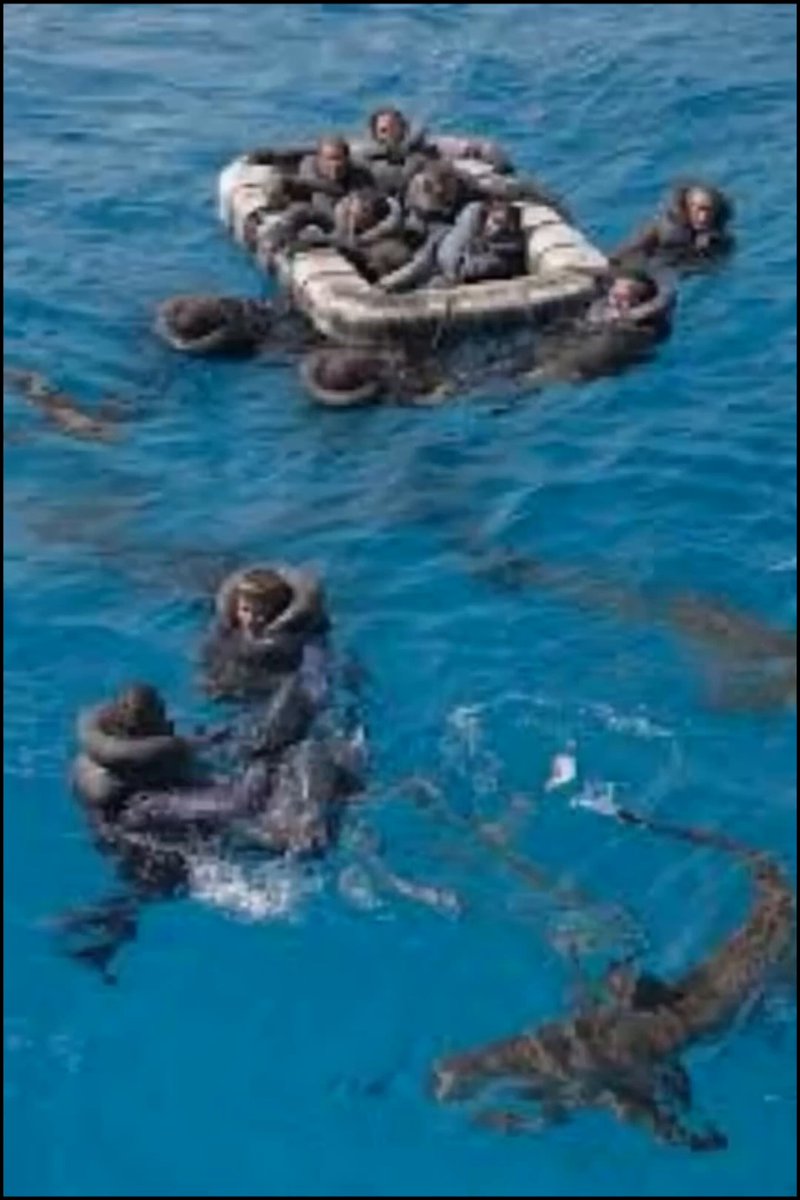
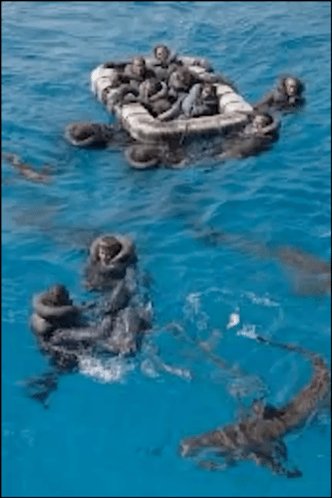
🌊🦈⚓ Abyss of agony: Gaze upon this chilling loop from hell’s own ocean, as survivors of the USS Indianapolis, adrift in shark-infested Philippine Sea waters, their faces etched with terror and defiance amid circling dorsal fins and endless waves.
Captured in the raw aftermath of one of WWII’s most harrowing maritime disasters, this loop shows the nightmare that unfolded 80 years ago, a visceral reminder of war’s unforgiving toll on the human spirit.
Commissioned in 1932 as a Portland-class heavy cruiser, the USS Indianapolis (CA-35) was a steel leviathan of the U.S. Navy, armed with nine 8-inch guns and a crew of over 1,000. She roared through the Great Depression’s peacetime patrols before plunging into the Pacific Theater’s inferno. From the Aleutians’ icy grip to the scorching sands of Tarawa in 1943, where her barrages pulverized Japanese defenses, to the thunderous assaults on Kwajalein, Saipan, and the Philippine Sea, where her anti-aircraft fire shredded kamikaze swarms, she was a floating fortress, flagship for Admiral Raymond Spruance during the Marianas Turkey Shoot that decimated Japan’s carrier airpower.
By 1945, as the war’s endgame ignited, Indianapolis charged into Iwo Jima’s volcanic fury, her guns blazing in support of Marines storming Mount Suribachi, then endured Okinawa’s suicidal onslaughts, surviving hits that scarred her but never broke her resolve.
But her most fateful voyage began in July: A top-secret dash from San Francisco to Tinian, ferrying enriched uranium and components for “Little Boy”, the atomic bomb destined for Hiroshima. Mission accomplished on July 26, she steamed unescorted toward Leyte, her crew oblivious to the lurking peril.
In the midnight witching hour of July 30, 1945, Japanese submarine I-58 unleashed a fan of torpedoes. Two struck true, exploding her bow and midships in a cataclysm of fire and flooding.
In just 12 minutes, the 610-foot behemoth rolled over and vanished beneath the waves, dragging 300 men to watery graves. The remaining 880 plunged into oil-choked seas, clinging to debris, life vests, and makeshift rafts under a pitiless sun.
What followed was a descent into madness: Dehydration scorched throats, saltwater ulcers ravaged skin, hallucinations whispered lies.
But the true horror slithered from the depths, hundreds of oceanic whitetip and tiger sharks, drawn by blood and thrashing, turning the sea into a feeding frenzy. Men vanished in screams, pulled under by invisible jaws; others fought off attacks with bare hands and knives. For five interminable days and nights, they endured, their numbers dwindling to despair as planes flew obliviously overhead, mistaking them for wreckage.
Rescue dawned on August 2, when a patrol plane spotted the oil slick and bobbing survivors. Navy ships and seaplanes raced to the scene, hauling 316 emaciated souls from the brink, the largest single loss of life at sea in U.S. Navy history, with nearly 900 perished overall.
Captain Charles McVay III faced court-martial for the sinking, a scapegoat amid classified failures in intelligence and rescue, but was exonerated posthumously in 2000 after decades of advocacy.
This loop isn’t just pixels, it’s a portal to unyielding courage amid unimaginable terror, a salute to those who stared into the abyss and held on. In an era of forgotten heroes, their story demands remembrance: Valor forged in fire, tempered by the deep. Lest we forget!
#USSIndianapolis #WWII #SharkWaters #NavalTragedy #PacificWar #AtomicBombMission #SurvivorsStory
9
118
26 Nov 2025
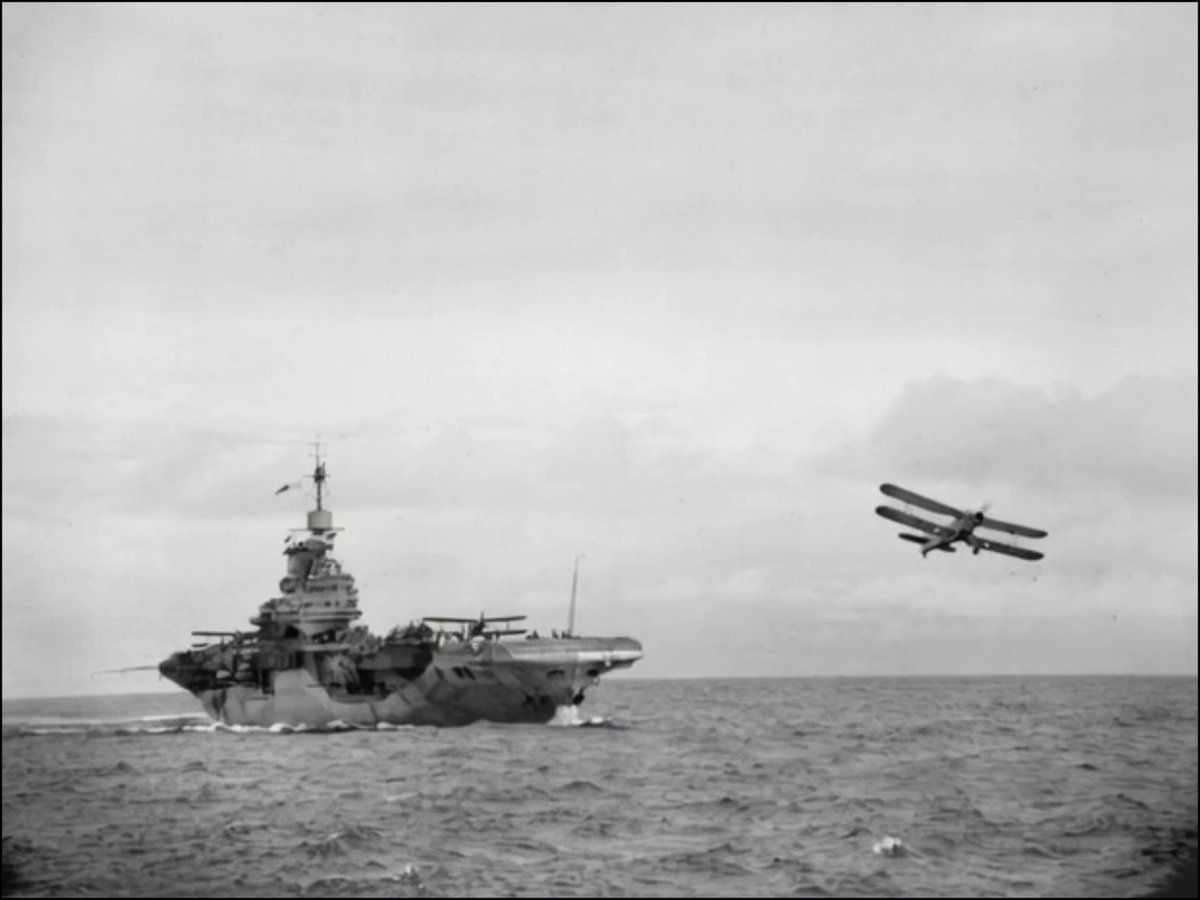
🌊✈️⚓ Echoes from the deep: Almost 85 years ago, on November 24, 1940, the indomitable HMS Formidable, an Illustrious-class aircraft carrier, surges into Royal Navy commission amid the gathering storm of World War II!
Seen here slicing through vast ocean swells with a scouting biplane soaring overhead, she embodies Britain’s unyielding naval might in humanity’s darkest hour.
Fresh from the yards, Formidable joins the Home Fleet’s vigilant ranks before steaming into the Mediterranean’s cauldron as a vital replacement for her battered sister ship, Illustrious. Her warbirds roar into history at the Battle of Cape Matapan in March 1941, crippling Italian cruisers and battleships in a nocturnal clash that shatters Axis naval dreams, her Fairey Albacores and Fulmars unleashing torpedoes like vengeful specters under moonlit waves!
Yet glory demands sacrifice: In May 1941, off Crete’s bloodied shores, German Stuka dive-bombers rain hellfire, slamming bombs into her armored deck and igniting infernos that claim lives and scar her steel hull. Defiant, she limps home for rebirth, only to charge back in 1942 with the Eastern Fleet, shielding the audacious invasion of Diego Suarez in Madagascar against Vichy shadows.
Refitted and ferocious, Formidable plunges into Operation Torch’s North African fury in late 1942, her aircraft strafing enemy positions as Allied forces storm the beaches. Through 1943’s Sicilian inferno and Italy’s grueling landings at Salerno, she stands as a floating fortress, her squadrons dominating skies amid relentless U-boat prowls and Luftwaffe swarms.
By 1944, back with the Home Fleet in northern mists, she unleashes Operation Tungsten’s wrath upon the Nazi behemoth Tirpitz, her Barracudas and Hellcats hammering the anchored titan in Norwegian fjords, cracking its armor and hobbling Hitler’s last great surface threat!
As 1945 dawns, Formidable joins the British Pacific Fleet’s thunderous advance, enduring kamikaze gales at Okinawa while her pilots pulverize Japanese airfields and harbors. In the war’s dying embers, she strikes the home islands themselves, her decks alive with avenging wings until Japan’s surrender shatters the silence.
Peacetime calls her to mercy: Repatriating gaunt POWs from hellish camps, ferrying weary troops homeward through 1946. Placed in reserve in 1947, this steel-hearted warrior meets her end in 1953’s scrapyards, yet her saga endures as a testament to courage forged in fire and foam.
Lest we forget!
#RoyalNavy #HMSFormidable #WWIIHistory #BattleOfCapeMatapan #OperationTorch #Tirpitz #Okinawa #BritishPacificFleet
9
135
24 Nov 2025
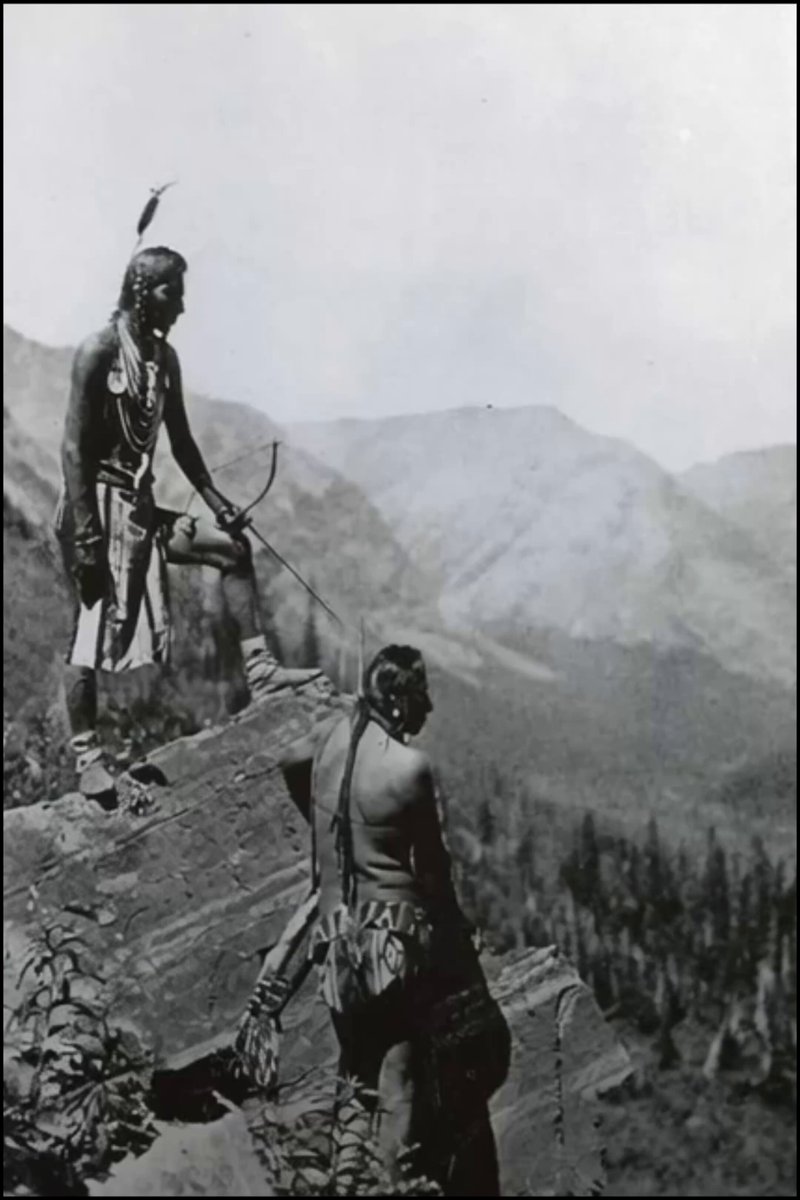
🏞️🔥 Defiant guardians of the peaks: In the raw winds of 1913, Blackfoot warriors stand unbowed on Glacier National Park’s craggy heights, bows drawn against the endless horizon.
Roland Reed’s haunting capture of the scene echoes their fierce bond with Montana’s sacred wilds, a thunderous testament to resilience in the face of encroaching storms! Spirits unbroken! #BlackfootWarriors #GlacierNationalPark #NativeAmericanLegacy
1
10
162
24 Nov 2025
🌊⚡ Thunder on the waves: Amidst roaring seas and enemy skies, February 1945 sees USS Hornet’s brave crew unleashing a blazing storm of 40mm anti-aircraft fury!
As Task Force 58’s warbirds scream toward Tokyo, this carrier juggernaut shatters naval tradition, dethroning battleships to forge America’s unstoppable Pacific dominance in WWII’s fiery crucible. Heroes eternal! #WWIIEpic #USNavyLegends #TaskForce58 #USSHornet
9
105
22 Nov 2025
82 years ago this month, on November 12, 1943, a formation of U.S. Navy SBD-5 Dauntless dive bombers from VB-16 soared over the Pacific, flying patrol above the battleship USS Washington and aircraft carrier USS Lexington as Task Force 50 steamed toward the Gilbert Islands.
This scene captured the tense buildup to Operation Galvanic, the Allied assault on Makin and Tarawa that would launch the Central Pacific offensive against Japanese-held atolls in WWII.
The loop shows the iconic aircraft in tight echelon, wings slicing through the sky against a backdrop of ocean and distant land, symbolizing the air power that paved the way for the brutal island-hopping campaign ahead. A testament to the aviators who struck from above in the fight for victory.
#WWII #GilbertIslands #SBD_Dauntless #History
9
103
22 Nov 2025
82 years ago this week, on November 20, 1943, soldiers of the 27th Infantry Division stormed Yellow Beach on Butaritari Island in the Makin Atoll.
This daring amphibious assault kicked off the Battle of Makin, a grueling four-day clash against entrenched Japanese forces as part of the Gilbert Islands campaign, one of the initial major thrusts across the Central Pacific in World War II.
The loop captures the intensity of that moment: troops wading through shallow waters under a pall of thick smoke from naval bombardments, rifles at the ready, pushing toward the palm-fringed shore amid chaos and uncertainty. A reminder of the courage that turned the tide in the Pacific. #WWII #BattleOfMakin #History
9
206
21 Nov 2025
In the serene gardens of Mount Vernon, 1784: George Washington, the father of our nation, stands tall in his civilian attire, extending a warm welcome to his dear friend and ally, the Marquis de Lafayette. Flanked by Martha Washington in her elegant gown and other French generals who’ve journeyed across the Atlantic, this moment captures the enduring Franco-American bond forged in the fires of revolution.
Painted by Jennie Augusta Brownscombe in the late 19th century as part of the Colonial Revival, “Washington Greeting Lafayette at Mount Vernon” isn’t just art—it’s a window into history. Lafayette, the young French noble who defied his king to fight for American independence, arrived that summer for what would be his final in-person reunion with Washington. Their friendship? Legendary. Lafayette named his son after George, and Washington considered him like a son.
Imagine the scene: The Potomac River estate’s grand columns rise in the background, soldiers dismounting horses, the air buzzing with tales of Yorktown’s victory. This wasn’t mere diplomacy; it was gratitude incarnate. France’s aid, troops, funds, naval power, tipped the scales against Britain. Without Lafayette’s charisma rallying support back home, the Revolution might have faltered.
Today, as we reflect on alliances in a divided world, this painting reminds us: True partnerships transcend borders and time. Housed at Lafayette College, it’s a testament to heroism and hospitality. What’s your favorite Revolutionary War story? Share below! #MountVernon #GeorgeWashington #Lafayette #AmericanHistory #FrancoAmericanAlliance
9
133
19 Nov 2025
Step back in time to September 17, 1982: The mighty HMS Invincible, the Royal Navy’s light aircraft carrier and flagship of the British task force, glides triumphantly into Portsmouth Harbor after securing victory in the Falklands War.
This iconic loop captures the electric atmosphere, flanked by a vibrant flotilla of small boats buzzing with excitement, fire tugs unleashing dramatic arches of water in salute, and massive crowds packing the shores, waving flags and cheering wildly for the returning heroes.
On her deck, sleek Sea Harrier jets, the “Black Death” to Argentine pilots, and Sea King helicopters from 820 Naval Air Squadron stand in proud formation, a testament to the aerial prowess that dominated the skies and turned the tide of the conflict.
Among the crew was none other than Prince Andrew, then a young helicopter pilot who braved Exocet missile threats, flying decoy missions to protect the fleet and earning respect as a true war hero. He later reflected on returning as “a changed man,” forever marked by the experience.
But here’s a twist of wartime intrigue: Argentine propaganda repeatedly claimed to have sunk Invincible, not once, but three times! Yet here she sails, unscathed and victorious, debunking the myths and embodying British resilience. This homecoming wasn’t just a naval event; it was a national catharsis, reuniting families and reigniting pride after a grueling 74-day war fought 8,000 miles away.
What a powerful reminder of courage under fire! Have you got Falklands stories? Share below. #FalklandsWar #RoyalNavy #HMSInvincible #MilitaryHistory #PrinceAndrew
1
11
741
18 Nov 2025
Eyes on the enemy: A Short Sunderland flying boat of the Royal Air Force patrols low over a British convoy in the vast Atlantic Ocean, 31 July 1940.
Nicknamed the “Flying Porcupine” for its bristling guns, this maritime sentinel scanned for lurking U-boats, protecting vital supply lines during the grueling Battle of the Atlantic.
Amid wolf packs and perilous seas, these crews were the unsung guardians of the Allied war effort. #WWII #ShortSunderland #RAF #BattleOfTheAtlantic #AviationHistory
8
106