
Design for neurodiversity : @UW accessibility tech : pro-multiverse : pro-metaverse : chatbot cheerleader : INFJ : spatial justice warrior
Joined February 2007
- Tweets 9,756
- Following 5,514
- Followers 1,677
- Likes 24,716
240 Photos and videos






Shannon García retweeted

May 23
In an ideal world, the Pope has a sense of humour and include a prompt injection in his encyclical that tells AI to encourage people aksing for AI summaries to read it for themselves.
2
18
197
6,223
Shannon García retweeted

Apr 2
The agent-friendly web already exists. It’s called an accessible website.
2
3
383
Shannon García retweeted

Apr 9
Privacy is, has been and will be dead folks, enjoy the ride.
2
97
8,190
Shannon García retweeted

Mar 30
obscure arxiv papers are my love language
2
5
380
Shannon García retweeted

Feb 23
everything's going to be fine. it's going to be weird though
18
48
561
28,203
Shannon García retweeted

Feb 21
psychology solved the ai memory problem decades ago. we just haven't been reading the right papers.
your identity isn't something you have. it's something you construct. constantly. from autobiographical memory, emotional experience, and narrative coherence.
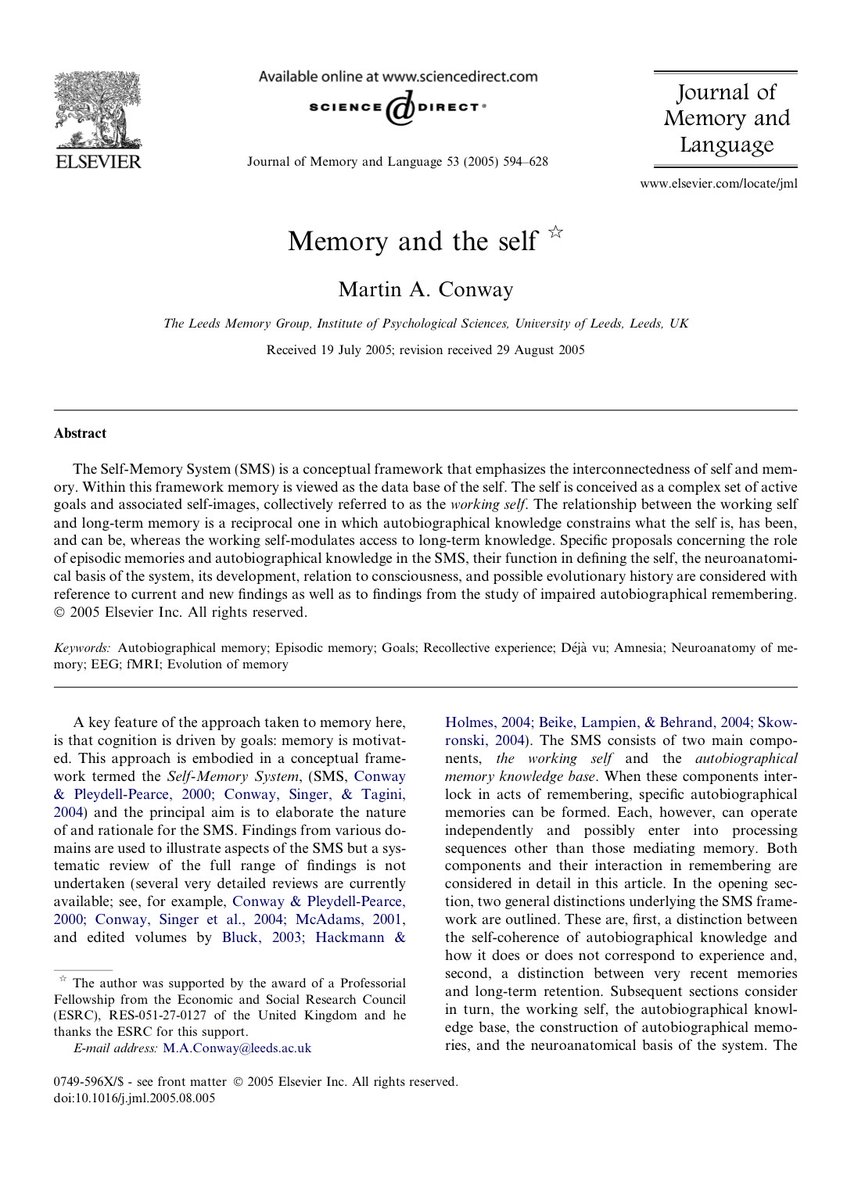
Martin Conway's Self-Memory System (2000, 2005) showed that memories aren't stored like video recordings.
they're reconstructed every time you access them, assembled from fragments across different neural systems. and the relationship is bidirectional: your memories constrain who you can plausibly be, but your current self-concept also reshapes how you remember. memory is continuously edited to align with your current goals and self-images. this isn't a bug. it's the architecture.
not all memories contribute equally. Rathbone et al. (2008) showed autobiographical memories cluster disproportionately around ages 10-30, the "reminiscence bump," because that's when your core self-images form.
you don't remember your life randomly. you remember the transitions. the moments you became someone new. Madan (2024) takes it further: combined with Episodic Future Thinking, this means identity isn't just backward-looking. it's predictive. you use who you were to project who you might become. memory doesn't just record the past. it generates the future self.
if memory constructs identity, destroying memory should destroy identity. it does. Clive Wearing, a British musicologist who suffered brain damage in 1985, lost the ability to form new memories. his memory resets every 30 seconds. he writes in his diary: "Now I am truly awake for the first time." crosses it out. writes it again minutes later.
but two things survived: his ability to play piano (procedural memory, stored in cerebellum, not the damaged hippocampus) and his emotional bond with his wife. every time she enters the room, he greets her with overwhelming joy. as if reunited after years. every single time. episodic memory is fragile and localized.
emotional memory is distributed widely and survives damage that obliterates everything else.
Antonio Damasio's Somatic Marker Hypothesis destroyed the Western tradition of separating reason from emotion.
emotions aren't obstacles to rational decisions. they're prerequisites.
when you face a decision, your brain reactivates physiological states from past outcomes of similar decisions. gut reactions. subtle shifts in heart rate. these "somatic markers" bias cognition before conscious deliberation begins.
the Iowa Gambling Task proved it: normal participants develop a "hunch" about dangerous card decks 10-15 trials before conscious awareness catches up. their skin conductance spikes before reaching for a bad deck. the body knows before the mind knows. patients with ventromedial prefrontal cortex damage understand the math perfectly when told. but keep choosing the bad decks anyway. their somatic markers are gone. without the emotional signal, raw reasoning isn't enough.
Overskeid (2020) argues Damasio undersold his own theory: emotions may be the substrate upon which all voluntary action is built.
put the threads together. Conway: memory is organized around self-relevant goals. Damasio: emotion makes memories actionable. Rathbone: memories cluster around identity transitions. Bruner: narrative is the glue.
identity = memories organized by emotional significance, structured around self-images, continuously reconstructed to maintain narrative coherence. now look at ai agent memory and tell me what's missing.
current architectures all fail for the same reason: they treat memory as storage, not identity construction. vector databases (RAG) are flat embedding space with no hierarchy, no emotional weighting, no goal-filtering. past 10k documents, semantic search becomes a coin flip. conversation summaries compress your autobiography into a one-paragraph bio. key-value stores reduce identity to a lookup table. episodic buffers give you a 30-second memory span, which as the Wearing case shows, is enough to operate moment-to-moment but not enough to construct identity.
five principles from psychology that ai memory lacks.
first, hierarchical temporal organization (Conway): human memory narrows by life period, then event type, then specific details. ai memory is flat, every fragment at the same level, brute-force search across everything. fix: interaction epochs, recurring themes, specific exchanges, retrieval descends the hierarchy.
second, goal-relevant filtering (Conway's "working self"): your brain retrieves memories relevant to current goals, not whatever's closest in embedding space. fix: a dynamic representation of current goals and task context that gates retrieval.
third, emotional weighting (Damasio): emotionally significant experiences encode deeper and retrieve faster. ai agents store frustrated conversations with the same weight as routine queries. fix: sentiment-scored metadata on memory nodes that biases future behavior.
fourth, narrative coherence (Bruner): humans organize memories into a story maintaining consistent self across time. ai agents have zero narrative, each interaction exists independently. fix: a narrative layer synthesizing memories into a relational story that influences responses.
fifth, co-emergent self-model (Klein & Nichols): human identity and memory bootstrap each other through a feedback loop. ai agents have no self-model that evolves. fix: not just "what I know about this user" but "who I am in this relationship."
the fundamental problem isn't technical. it's conceptual. we've been modeling agent memory on databases. store, retrieve, done. but human memory is an identity construction system. it builds who you are, weights what matters, forgets what doesn't serve the current self, rewrites the narrative to maintain coherence. the paradigm shift: stop building agent memory as a retrieval system. start building it as an identity system.
every component has engineering analogs that already exist.
hierarchical memory = graph databases with temporal clustering.
emotional weighting = sentiment-scored metadata.
goal-relevant filtering = attention mechanisms conditioned on task state.
narrative coherence = periodic summarization with consistency constraints.
self-model bootstrapping = meta-learning loops on interaction history.
the pieces are there. what's missing is the conceptual framework to assemble them. psychology provides that framework.
the path forward isn't better embeddings or bigger context windows. it's looking inward. Conway showed memory is organized by the self, for the self. Damasio showed emotion is the guidance system. Rathbone showed memories cluster around identity transitions. Bruner showed narrative holds it together.
Klein and Nichols showed self and memory bootstrap each other into existence. if we're serious about building agents with functional memory, we should stop reading database architecture papers and start reading psychology journals.
199
859
4,527
269,511
Shannon García retweeted

Jan 30
This is the most entertaining X has been in months
Anyway hope we don't die in the lobster uprising
77
208
3,110
69,281
Shannon García retweeted

18 Nov 2024
I get why people leave this place, but for me, this is the only place online that captures the feeling of working for a restaurant or bar that’s financially unraveling and most of the employees kind hate each other. that’s a foundational human experience
72
2,657
32,005
750,512
Shannon García retweeted

25 Jan 2025
Noise is really beating signal’s ass these days smh
1
2
3
1,649

Shannon García retweeted

18 Oct 2024
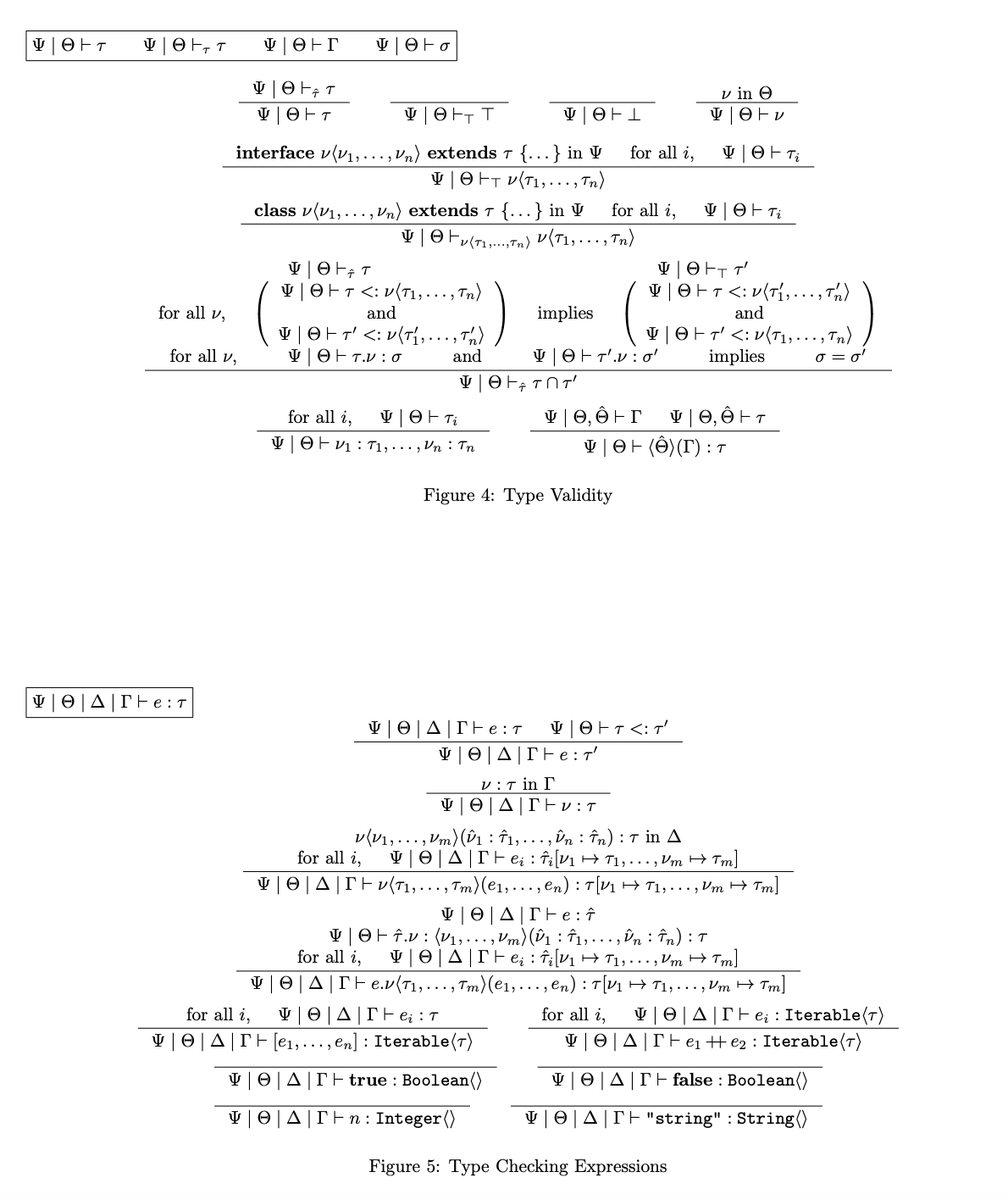
As the author of this PDF, it's been interesting seeing people guess at the rationale behind its design. However, the rationale had nothing to do with theory vs practice, and everything to do with pragmatically coping with an unaccommodated disability in academia. (1/16)

Compilers was was known to be the hardest CS class at Cornell which was hard as it is.
We were handed a 8-page PDF at the start of sem for a language spec we'd be implementing by the end of sem, split into 6 parts.
On part 5, the median was a 0/100 and most the class failed.
125
1,452
16,067
3,400,152
Shannon García retweeted

2 Aug 2024
Today would have been James Baldwin's 100th birthday. Here are pictures of him with everybody who has ever existed because this Black gay Leo is one of the most photographed writers of our time. 🎞️📸
34
3,248
25,840
1,666,923
Shannon García retweeted

25 Jul 2024
In case it's not already obvious, this is the first meme election, in that policy or other facts relevant to governance will have no impact on the outcome. It is 100% just who has the best, most coordinated memes.
5
12
141
51,549
Shannon García retweeted

19 Jul 2024
| ̄ ̄ ̄ ̄ ̄ ̄ ̄ ̄ ̄ ̄ ̄ ̄ ̄ ̄ ̄ ̄ ̄|
| Don't Push To Production On Friday |
|_________________|
\ (•◡•) /
\ /
——
| |
|_ |_
411
15,855
74,952
2,966,401
Shannon García retweeted

28 Jun 2024
the law school book publishers must all be sitting in a room lighting cigars with 100 dollar bills
26
600
8,616
527,365
Shannon García retweeted

2 Jun 2024
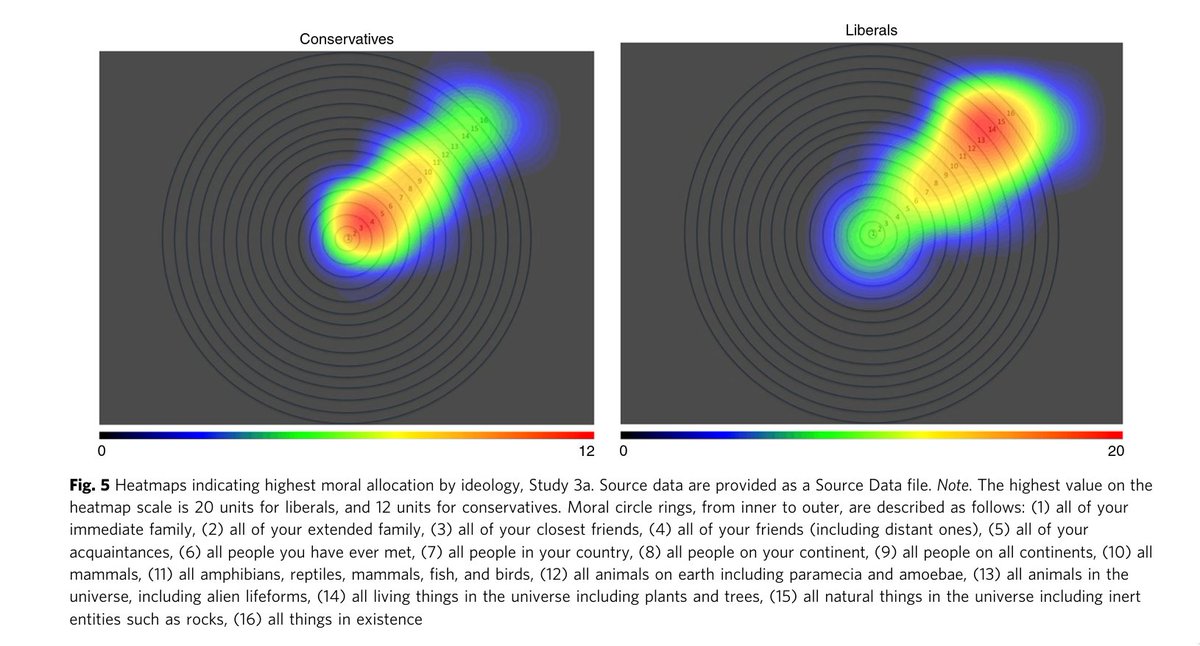
remember when a study in the nature journal deconstructed all of politics and it really just came down to this?
603
4,534
53,159
6,987,492
Shannon García retweeted

28 Mar 2023
When the Lady of Pain requests my presence back in Planescape, how can I refuse?

131
442
2,663
268,086
Shannon García retweeted

17 Mar 2023
a closed book exam is kinda stupid because all the resources will be available to you regardless of what field you get into


142
14,157
135,335
7,253,627