
Chasing Kubernetes wisdom • DevOps Engineer • laC addict • Building platforms
Joined March 2011
- Tweets 3,850
- Following 1,441
- Followers 2,876
- Likes 9,136
241 Photos and videos
Pinned Tweet

Apr 22
I asked my AI agent to audit my Kubernetes namespace security using this prompt:
Analyze the security posture of my namespace. Identify risks, explain them, and suggest fixes.
It found:
- No NetworkPolicies
- Public API server open to 0.0.0.0/0
- Pods using nginx:latest
- Default service account
- No IAM roles (IRSA)
And gave me the exact fixes.
Watch the video 👇👇👇👇
7
4
35
6,821
clovis retweeted

Jun 12
DevOps Job Switch Reality In 2026:
Clearing all the technical rounds for a DevOps role with 3 years of experience is incredibly hard. Honestly, there’s a 90% chance you won’t make it because if you mess up even one question, you're often out of the process.
I’ve reached the final rounds multiple times and have even been rejected in CEO rounds. The entire process is exhausting. The funny part? The actual job is often much easier than the interview itself.
If I prepare Kubernetes thoroughly, they ask me to write Terraform code to provision an EKS cluster with a custom VPC.
If I prepare Kubernetes and Terraform, they start digging deep into AWS networking.
If I prepare all of that, they move on to Linux troubleshooting, Docker internals, monitoring, or CI/CD questions.
At this point, you’re expected to be an expert in:
- AWS
- Terraform
- Kubernetes
- Docker
- Linux
- ELK
- Monitoring & Observability
- Jenkins
- GitHub Actions
- ArgoCD
- Production Troubleshooting
Dear hiring teams, for a ₹10 LPA DevOps role with 3 years of experience, you are not hiring a DevOps Engineer you are trying to hire an entire IT team in one person.
One interview process was especially frustrating. I cleared the assessment round, a technical round, and then an in-person practical round.
The task?
In just 1.5 hours, I had to:
- Set up an EKS cluster with a custom VPC
- Create public and private subnets
- Configure an Ingress Controller
- Build a GitHub Actions CI/CD pipeline
- Build and push a Docker image
- Deploy and expose the application
All of this had to be done using my own AWS account and my own laptop while sharing my screen the entire time. After that, they would decide whether I was good enough for the role.
I’m not sure who designed these interview processes, but they often feel far more difficult than the actual job itself.
26
27
226
21,103
Jun 12
Answer: B. kubelet
The kubelet watches the Pods running on the node and checks their container status.
If a container crashes, the kubelet detects it and restarts it based on the Pod restartPolicy.
Jun 10

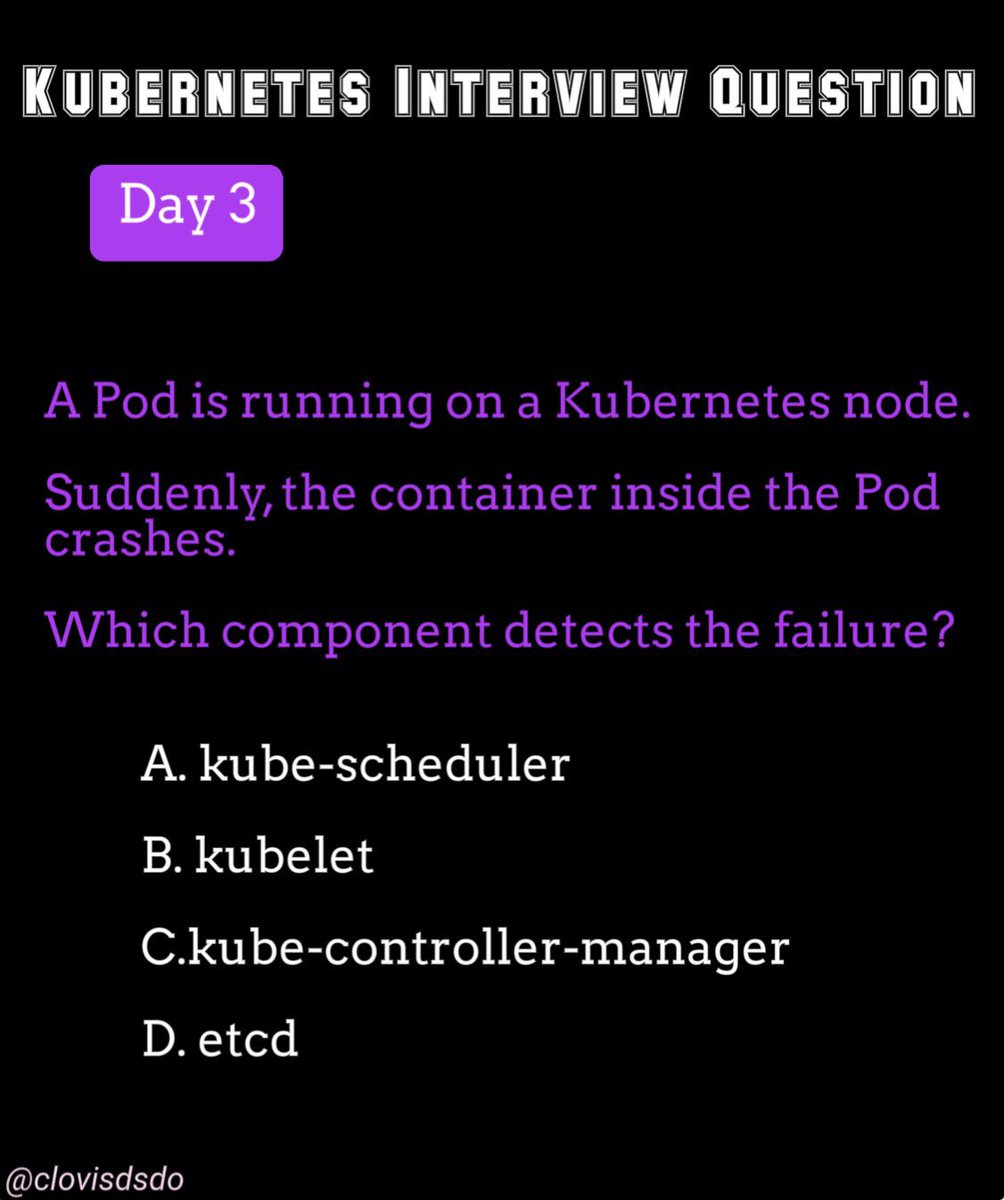
A Pod is running on a Kubernetes node.
Suddenly, the container inside the Pod crashes.
Which component detects the failure?
8
522
Jun 11
If you work with Azure networking, read this carefully.👇👇
Jun 11

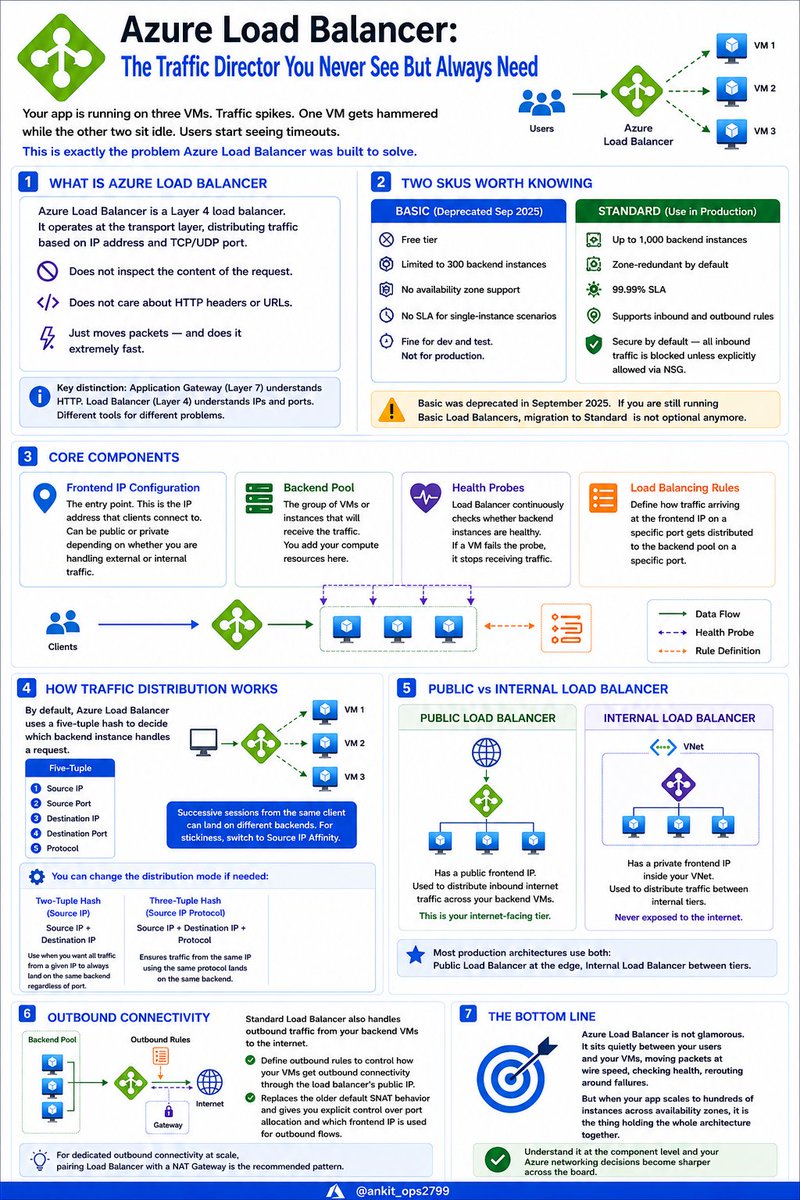
Azure Load Balancer: The Layer 4 Mechanics Everyone Misunderstands
Your app is running on three VMs behind an Azure Load Balancer. Traffic spikes. One VM hits 95% CPU while the other two sit idle at 10%. Users start seeing timeouts.
If ALB distributes traffic, why is your cluster uneven? Because ALB uses a five-tuple hash to route packets, not round-robin. When connection patterns are skewed, so is your load.
Here is exactly how it works under the hood.
Layer 4 vs Layer 7:
The most common mistake is treating ALB like an Application Gateway.
Application Gateway operates at Layer 7. It understands HTTP, cookies, URLs, and SSL termination.
Azure Load Balancer operates at Layer 4. It only understands TCP and UDP packets, IPs, and ports. It does not care about your application data. It just shifts packets at wire speed.
Different tools. Different problems. Picking the wrong one is an architecture mistake, not just a performance tradeoff.
The Five-Tuple Hash Trap:
By default, ALB uses a five-tuple hash to decide which backend instance handles a request.
Source IP. Source Port. Destination IP. Destination Port. Protocol.
Here is where engineers get burned. Modern browsers open multiple TCP connections concurrently. The client source port changes constantly. When the source port changes, the hash changes. Successive requests from the exact same client session can land on different backend VMs.
If your app relies on local in-memory sessions without a distributed cache like Redis, your users will experience broken sessions. This is not a bug. It is the default behavior working exactly as designed.
Solving Stickiness at Layer 4:
If you need traffic from a client to consistently hit the same backend VM, you must explicitly change the distribution mode.
Two-Tuple uses only Source IP and Destination IP. All traffic from a specific client IP lands on the same backend regardless of port changes.
Three-Tuple adds Protocol to the hash. Stickiness is scoped to the same protocol type.
Neither of these is on by default. You have to configure it intentionally.
Basic SKU is Dead:
Microsoft has announced the retirement of Basic Load Balancer SKUs, and organizations should migrate to Standard Load Balancer according to the published retirement timeline.
Standard Load Balancer is the recommended choice for production workloads due to its enhanced security, scalability, availability features, and Microsoft's migration guidance away from Basic SKUs. Secure by default with all inbound traffic blocked unless explicitly allowed via NSG. Scales to 1,000 backend instances. Zone-redundant with a 99.99% SLA.
The traffic flow and full component breakdown are in the blueprint below. Bookmark it before your next Azure architecture review.👇
ALT Azure LB
1
5
285
Jun 10
Answer: C
Kubernetes can run many types of applications.
But the application must be packaged as a container image first.
Kubernetes deploys only containers.
Jun 8
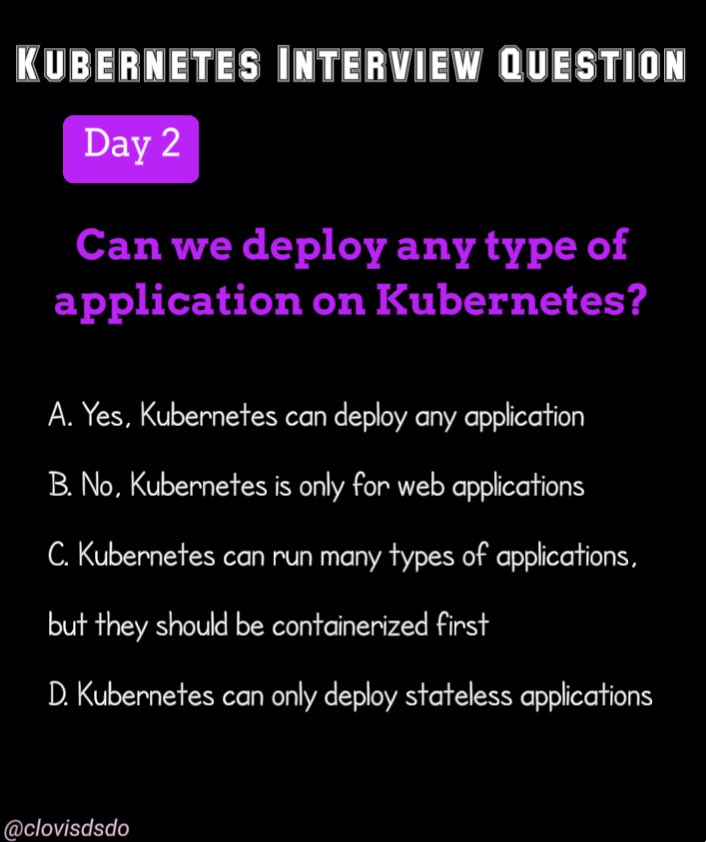
Day 2/30 Kubernetes Interview Question
Can we deploy any type of application on Kubernetes?
1
10
588
Jun 10
A Pod is running on a Kubernetes node.
Suddenly, the container inside the Pod crashes.
Which component detects the failure?
6
2
12
1,775
Jun 9
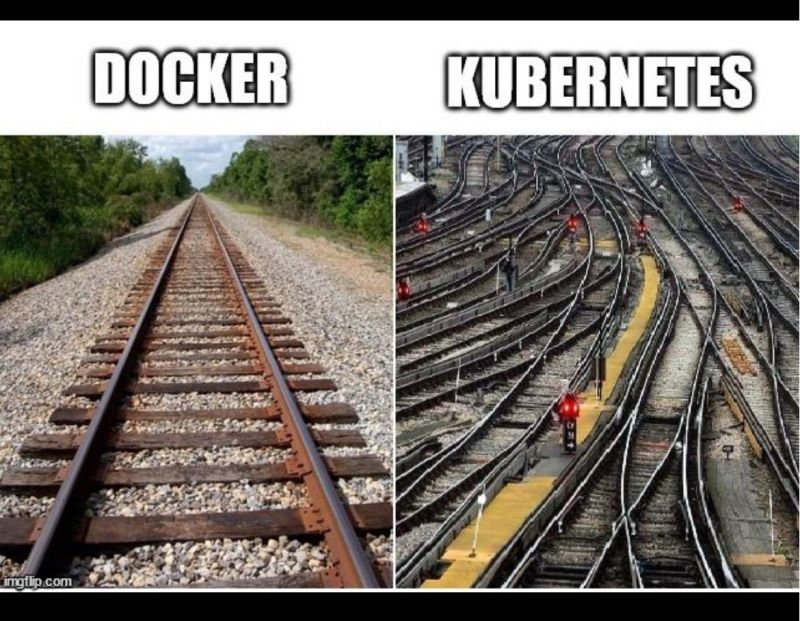
If you cannot manage one container properly, Kubernetes will make the confusion bigger.👇
Jun 9

Everyone wants to learn Kubernetes.
But first learn how to run one container properly.
Docker is not optional. It’s the foundation.
1
5
479
Jun 9
Answer: B
Kubernetes does not replace Docker.
Docker is used to build and run containers.
Kubernetes is used to manage containers at scale.
10
891
Jun 8
Day 2/30 Kubernetes Interview Question
Can we deploy any type of application on Kubernetes?
10
3
24
2,590
Jun 8
Don’t miss this serie👇👇
Observability from Zero to Hero
Jun 8

This week I'm launching a new series:
"Observability from Zero to Hero"
Over the next 7 posts, we'll cover:
• Monitoring vs Observability
• Metrics, Logs & Traces
• Incident Investigation
• Observability Maturity Models
• Golden Signals, RED & USE
• AI Observability
• Designing a Modern Observability Platform
2
322
Jun 8
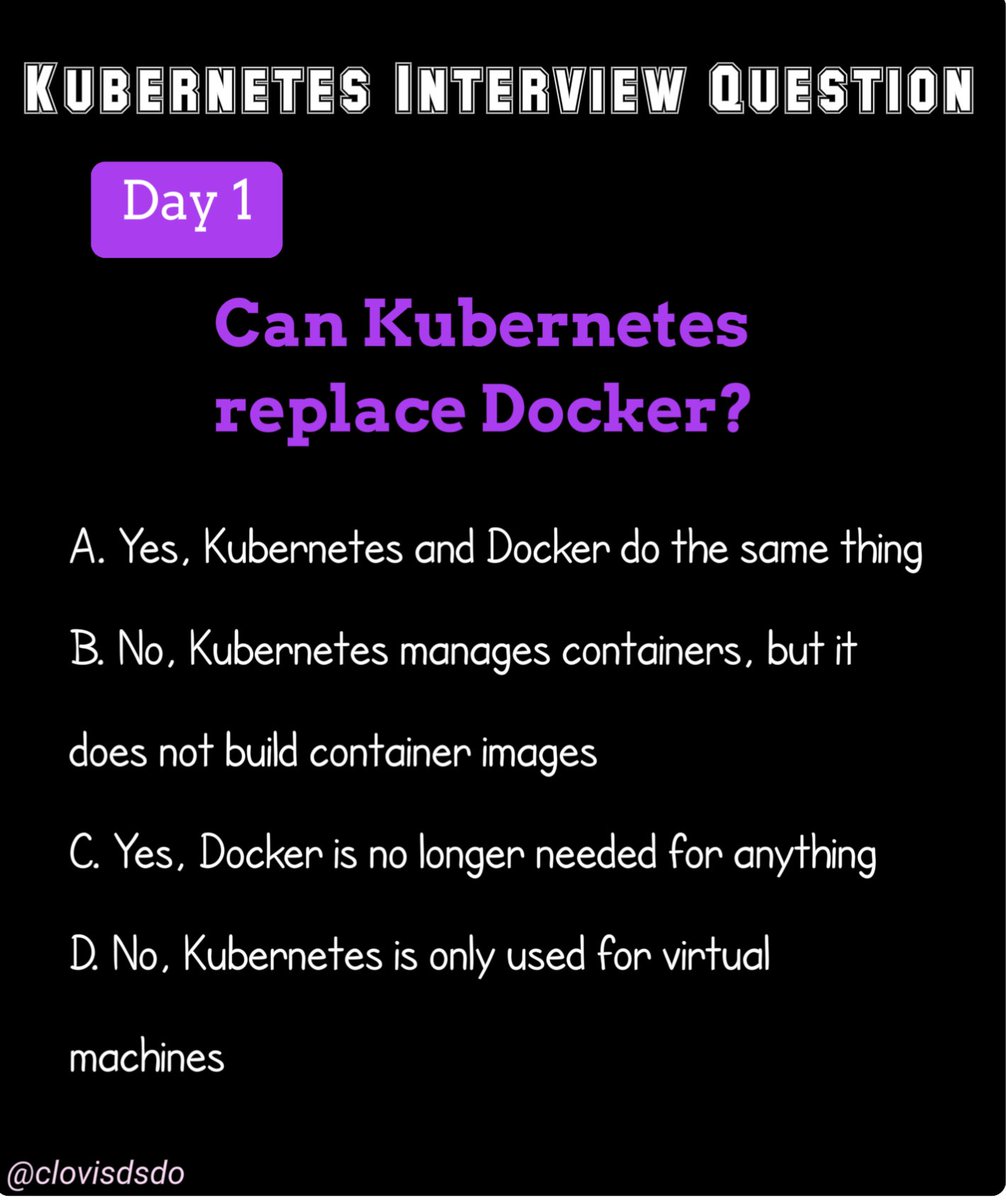
Day 1/30 Kubernetes Interview Question
Can Kubernetes replace Docker?
15
2
29
3,472
Jun 8
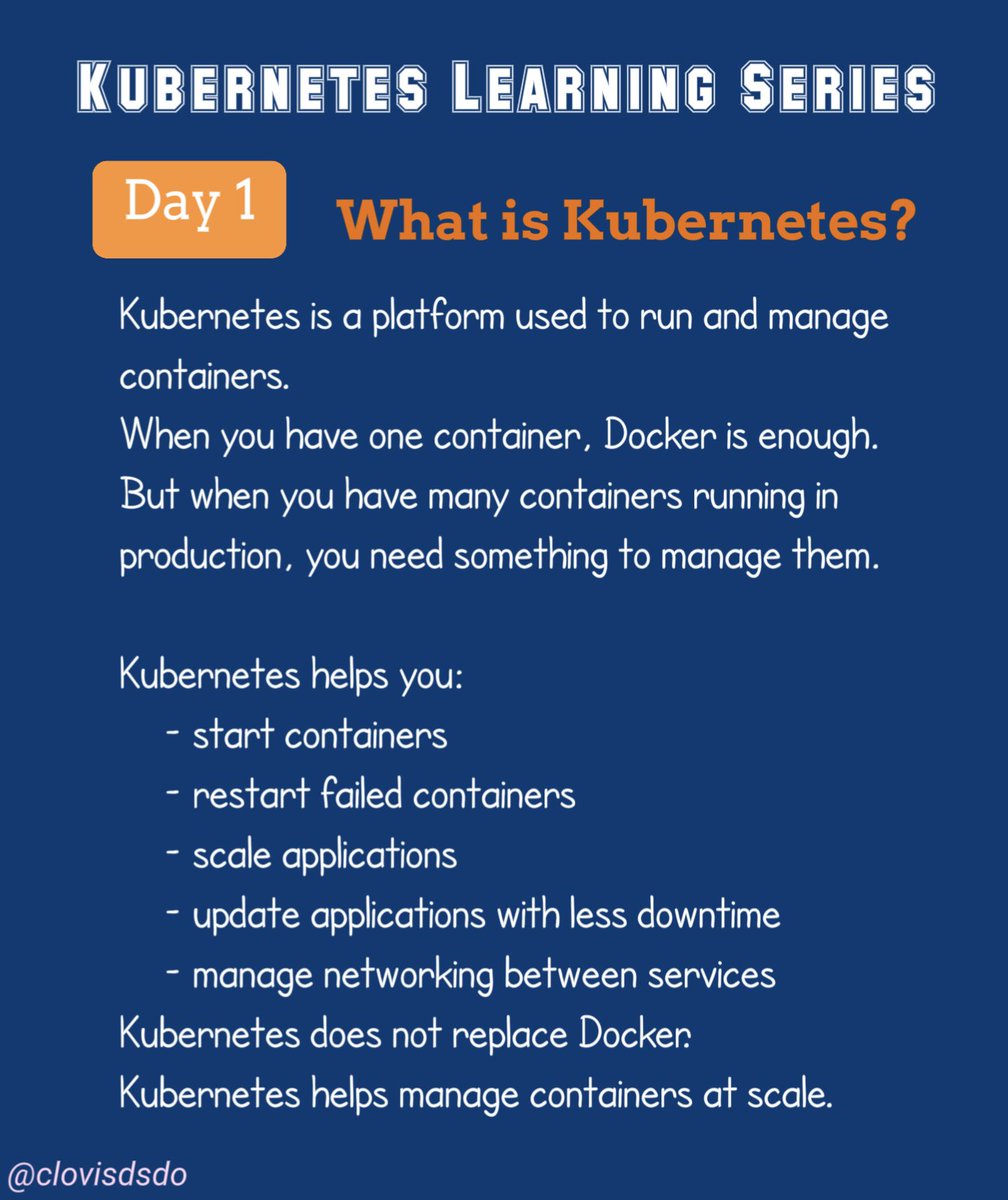
Day 1/30 Kubernetes Learning Series
What is Kubernetes?
Kubernetes is a platform used to run and manage containers.
When you have one container, Docker is enough.
But when you have many containers running in production, you need something to manage them.
Kubernetes helps you:
- start containers
- restart failed containers
- scale applications
- update applications with less downtime
- manage networking between services
6
9
47
1,413
Jun 7
Hey guys, I was off for one week but I am back
I am starting two Kubernetes series for beginners.
1⃣Series 1
30 Days of Kubernetes Learning
Every day, I will explain one Kubernetes concept in simple English.
2⃣Series 2
30 Days of Kubernetes Interview Questions
Every day, I will post one simple interview question.
The answer will come 24 hours later with a short explanation.
Day 1 starts tomorrow.
Stay tuned
6
7
56
1,646
clovis retweeted
Jun 1
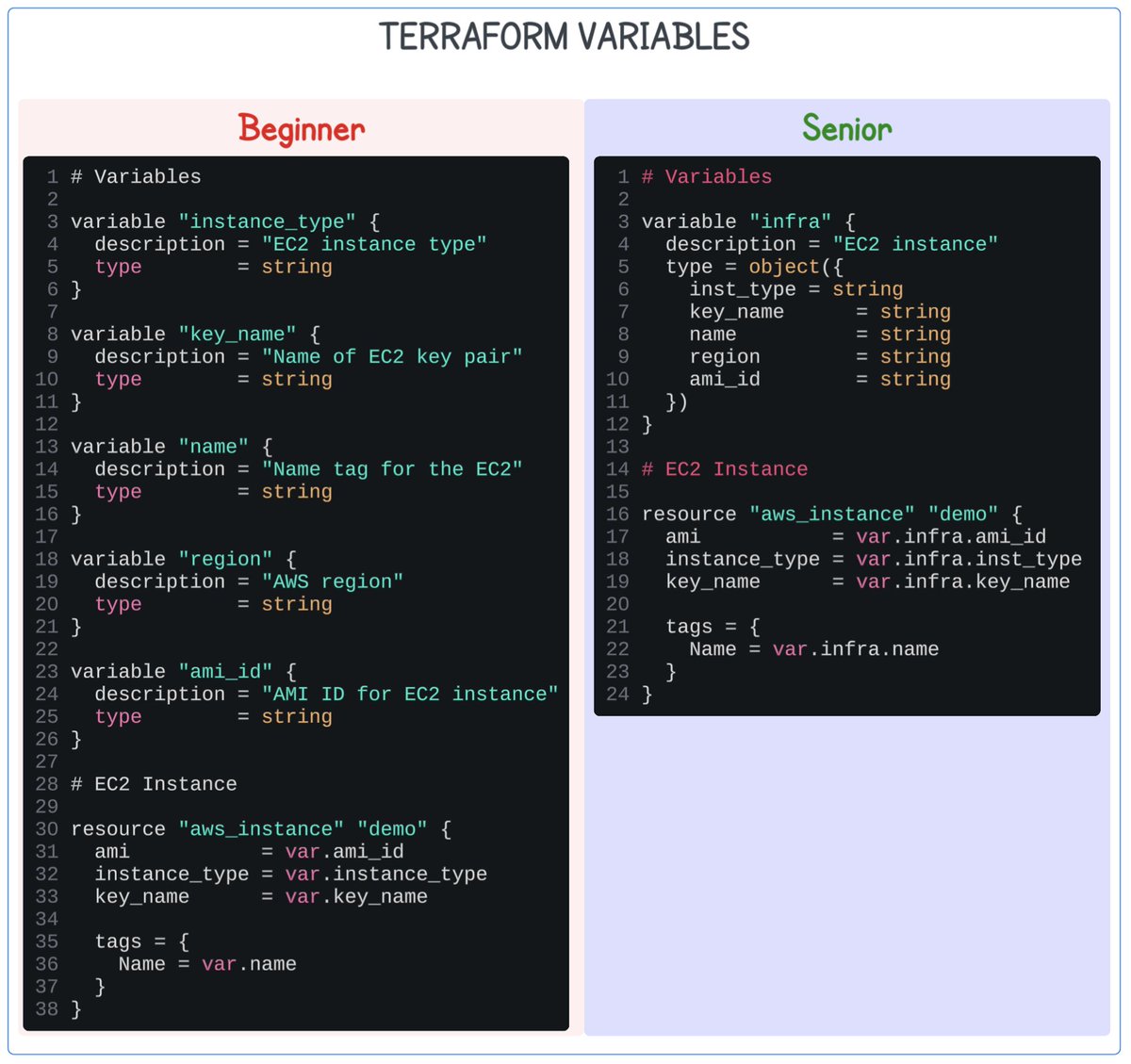
How do you declare your Terraform variables?
There is the traditional way we see in every tutorial:
- One variable for instance_type
- One variable for ami_id
- One variable for key_name
- etc.
It works fine.
But once you join real-world projects, you start seeing another approach:
- Group related variables into one object.
It is cleaner and more professional.
- It keeps related values together.
- It makes the module easier to read.
- It scales better when your infrastructure grows.
3
6
62
2,391
Jun 1
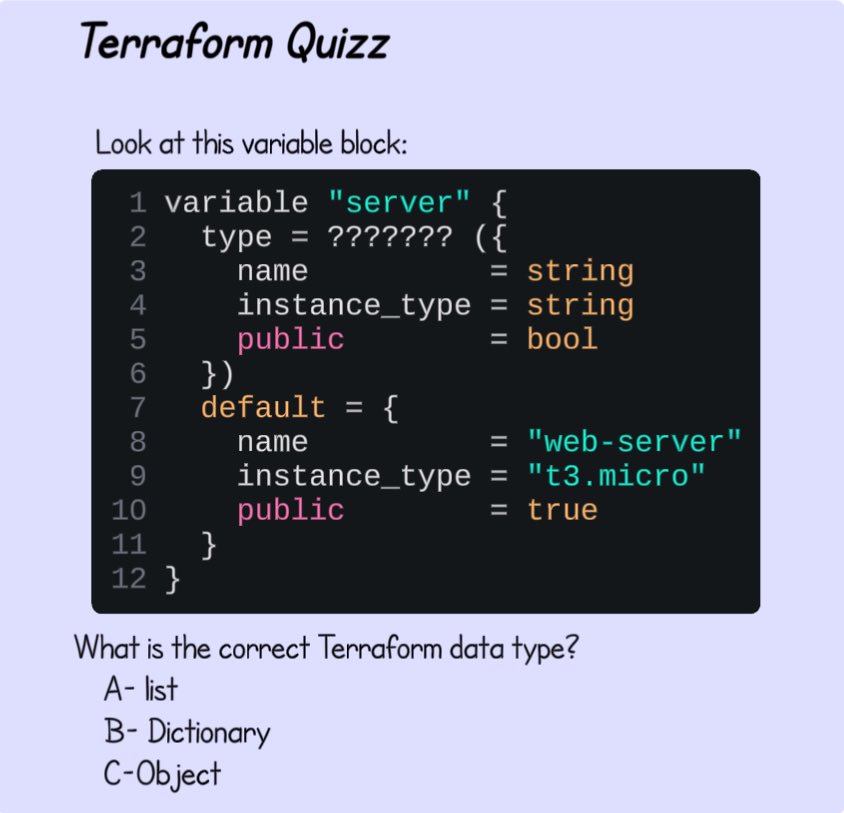
Terraform users:
Learn the object data type.
Here is why:
- It keeps related values together
- It makes your variables file cleaner
- It avoids too many separate variables
- It makes your modules easier to reuse
- It scales better when your infrastructure grows
179
clovis retweeted
May 30
Most engineers miss jobs because they don’t prepare enough for interviews. They spend months building, fixing, and solving real problems. But during the interview, they struggle to explain what they did.
It’s sad when you realize you failed an interview because you could not explain what you did.
1
1
4
542
clovis retweeted

Jun 1
Why the upcoming IPOs of OpenAI & Anthropic will be the final nail in the coffin for the global markets.
Everyone wants a piece of the next OpenAI, SpaceX, or Anthropic.
The internet is full of people claiming that if you can somehow get access to these private companies before an IPO, you'll become a millionaire. Maybe they're right. But before putting money into any opportunity, it's worth understanding something most people aren't discussing: AI companies don't necessarily have the same economics as the software companies that dominated the last two decades.
Traditional software is an incredible business. Once you build the product, the cost of serving the next customer is almost zero. Whether you have 1,000 users or 1,000,000 users, the infrastructure costs don't grow at the same pace as revenue. That's why software companies often command premium valuations and generate extraordinary profit margins.
AI changes that equation.
Every new user consumes compute. Every prompt requires GPUs. Every improvement in model capability requires more training, more infrastructure, more power, and more cooling. Unlike traditional SaaS products, the cost of serving customers doesn't disappear. In many cases, success itself creates additional infrastructure requirements.
This is why I think many retail investors are looking at AI companies through the wrong lens. They see software and assume software economics. In reality, frontier AI companies increasingly resemble a combination of software business, cloud provider, infrastructure company, and energy consumer.
That distinction matters because valuation ultimately comes down to cash flows and profitability. A company can grow revenue at an incredible pace and still struggle to justify an extreme valuation if the cost of sustaining that growth continues to rise alongside it.
History gives us plenty of examples. The internet changed the world, but thousands of internet companies disappeared. Cloud computing transformed enterprise software, but not every cloud company became Amazon. Revolutionary technology and successful investments are related, but they are not the same thing.
The biggest risk today isn't that AI fails. AI is already proving useful across industries. The bigger risk is that investors convince themselves that every company associated with AI deserves a trillion-dollar valuation. When expectations become disconnected from business fundamentals, markets eventually correct that mismatch.
As engineers, we're trained to think about constraints. We ask where systems break, what resources are limited, and what assumptions may not hold at scale. I think investors should approach AI with the same mindset.
Before investing, ask a few simple questions:
• How much revenue does the company generate today?
• How much does it cost to serve that revenue?
• Does each new customer improve profitability or increase operating costs?
• How much additional capital is required to sustain growth?
The answers to those questions matter far more than headlines, hype, or promises about the future.
I've learned one lesson from both technology and money: great technology doesn't automatically create great investments. Sometimes the technology wins and the investors lose. Knowing the difference is where the real opportunity lies.
8
3
32
3,378