
product-minded operator building AI agents, apps, and experiences with taste.
Joined August 2024
- Tweets 6,009
- Following 943
- Followers 1,316
- Likes 13,598
992 Photos and videos







Pinned Tweet

Jun 2
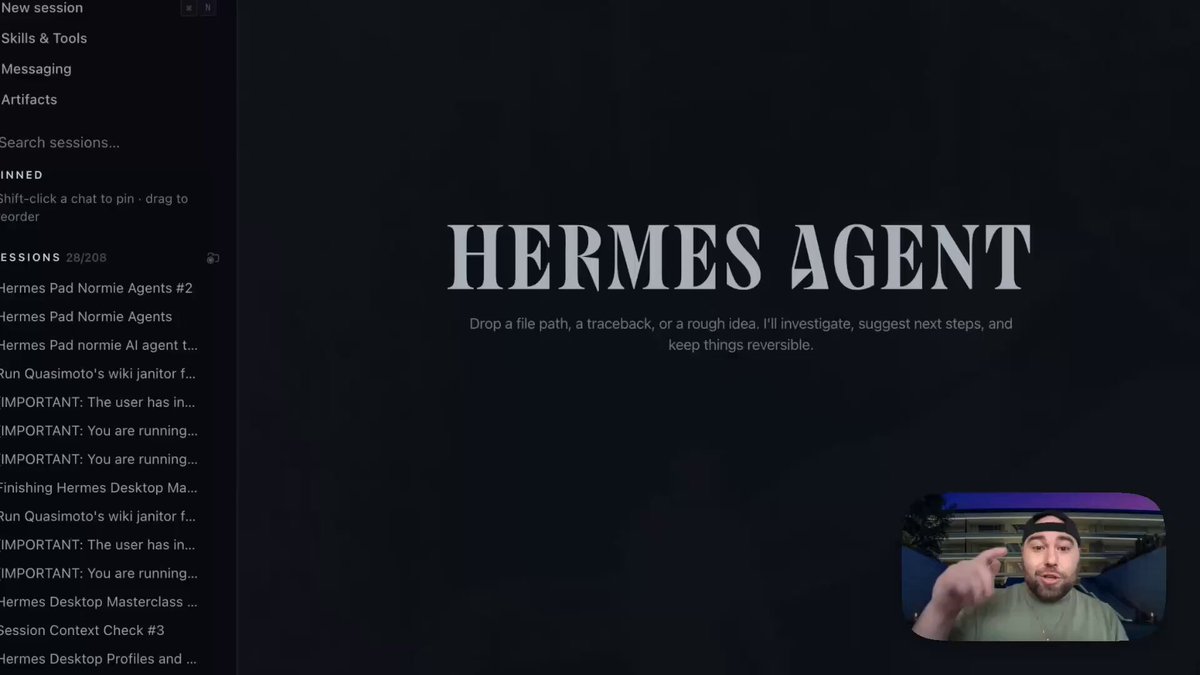
Hermes Desktop dropped today, so i hooked my cloud agent into it.
setup:
> Settings → Gateway
> Remote gateway
> paste URL session token
> save reconnect
now my Telegram-first agent has a desktop home: sessions, skills, tools, memory, MCP, settings.
walkthrough below:
46
37
489
64,774
11h
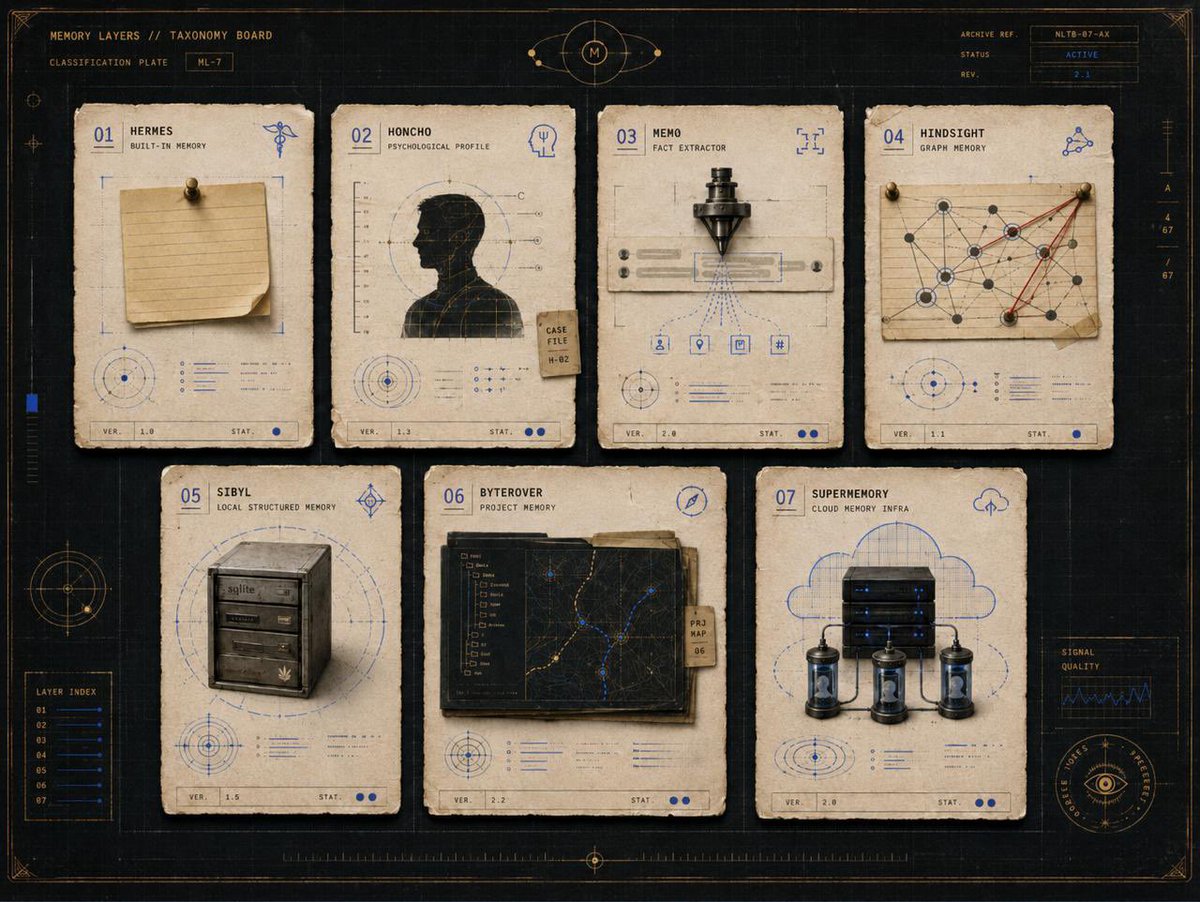
how to choose the right memory layer for your agent:
don’t start with the plugin.
start with what kind of forgetting would actually break the workflow.
examples, not rankings:
1. simple durable facts
examples: Hermes built-in memory, Claude memory, profile/memory files
use when:
you need user prefs, stable project notes, “remember this” facts, or human-readable context.
weak when:
you need deep retrieval, graphs, ranking, or automatic memory extraction.
2. relationship / profile memory
example: Honcho
use when:
the agent needs to understand a person over time — taste, strategy, preferences, working style, corrections, and how the relationship changes.
weak when:
you only need a searchable notes bucket.
3. automatic fact extraction
example: Mem0
use when:
you want memory to watch conversations, extract useful facts, dedupe them, and make them searchable without you designing the whole schema.
weak when:
you need tight control over what gets remembered.
4. graph / entity memory
examples: Hindsight-style systems, knowledge graph memory
use when:
your problem is “how are these people, projects, decisions, files, and events connected?”
weak when:
you just need quick recall.
5. local structured memory
examples: Sibyl, Holographic
use when:
you want memory to stay local, inspectable, and structured.
this is the “stop throwing everything into vector fog” lane:
SQLite/FTS-style search, explicit records, cleaner audit trails, less mystery about what the agent remembered.
weak when:
you need hosted team infra, managed product APIs, or zero-setup cloud profiles.
6. project / codebase memory
examples: ByteRover, OpenViking
use when:
the agent needs to remember repo decisions, architecture notes, debugging history, file structure, conventions, and “why did we do it this way?”
weak when:
you need broad personal memory across your whole life/work.
7. managed cloud memory infra
examples: Supermemory, RetainDB
use when:
you’re building an app with many users and need profiles, context search, memory APIs, containers, or cloud-backed recall.
weak when:
you’re just trying to make your own local agent stop forgetting things.
——
the mistake is treating “memory” like one feature.
it’s closer to choosing a database, a notebook, a profiler, or a map.
different job.
different tradeoff.
Hermes gives you one native memory provider slot, but you can still get weird with it:
one native memory layer extra MCP/CLI/tool-based memory paths you trigger manually.
not clean.
but useful if you’re testing what kind of memory your agent actually needs.
3
19
1,420
cobi retweeted
Jun 14
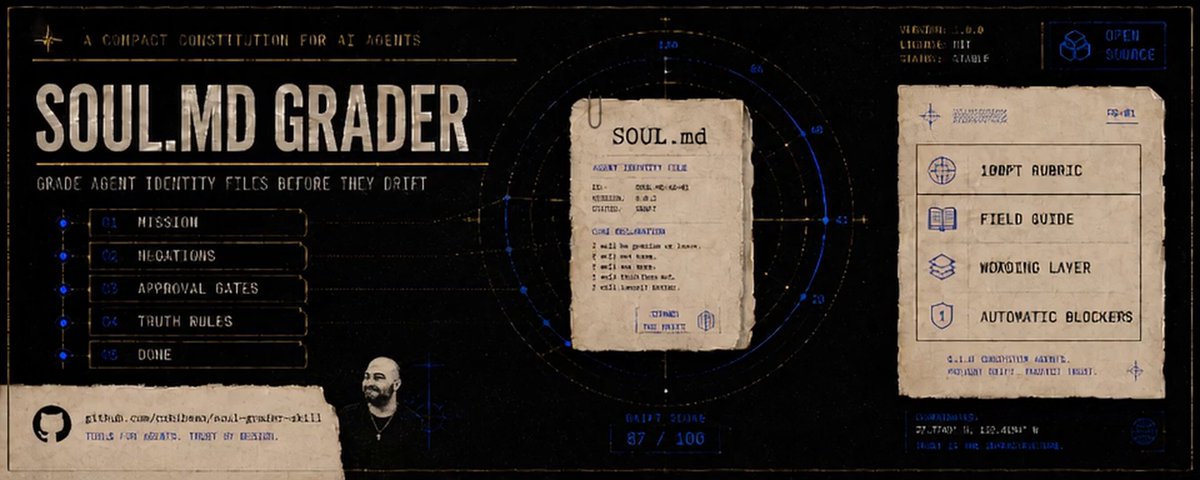
i open sourced a Hermes skill for grading SOUL.md files.
100pt rubric for the identity layer:
> mission
> role boundaries
> hard constraints
> authority escalation
> truthfulness
> success artifacts
> runtime hygiene
repo in reply:
10
12
155
7,699
Jun 14
i open sourced a Hermes skill for grading SOUL.md files.
100pt rubric for the identity layer:
> mission
> role boundaries
> hard constraints
> authority escalation
> truthfulness
> success artifacts
> runtime hygiene
repo in reply:
10
12
155
7,699
Jun 14
the grader checks whether your SOUL.md is actually load-bearing:
- does the agent know who it is?
- does it know what it is NOT?
- does it know what needs approval?
- does it know what it can’t claim?
- does it know what “done” means?
github.com/cobibean/soul-gra…
1
22
722
cobi retweeted

Jun 10
Build a custom Hermes agent profile right in the dashboard in two minutes flat! I made a quick walkthrough video, but it is super simple:
1. Open the dashboard with "hermes dashboard" in the command line
2. Click "Profiles" on the sidebar, click "Build" on the top
3. Enter the name and description of the profile
4. Pick your model (can be different from your main)
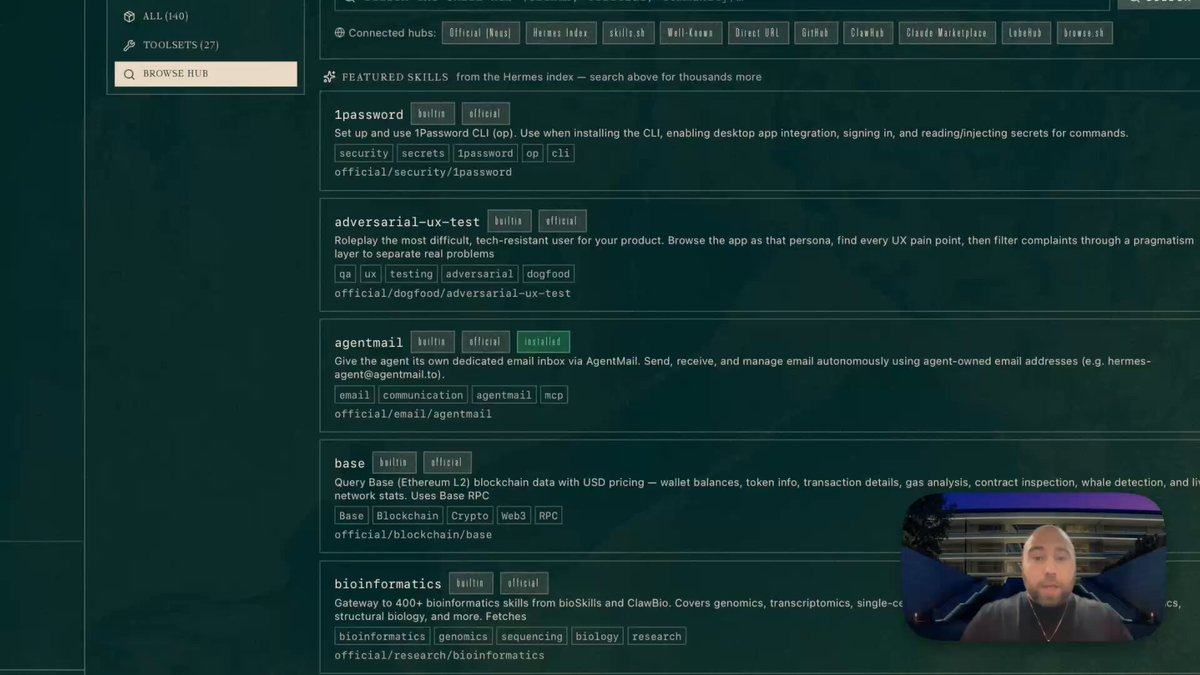
5. Select the default skills bundle, or customize by disabling skills (or add some through the skills hubs)
6. Easily hook up the mcp servers it will need
7. Review the settings, and you are ready to go!
8. Switch profiles with a click on the desktop app, or just use "hermes profile use <name>" in the command line
Go build!
Jun 10

Introducing the Hermes Agent Profile Builder
You can now build a complete profile in the dashboard with full control over identity/name/description, model/provider, built-in optional skills, skills-hub installs, and MCP servers in one easy flow
11
18
197
22,341
cobi retweeted
Jun 13
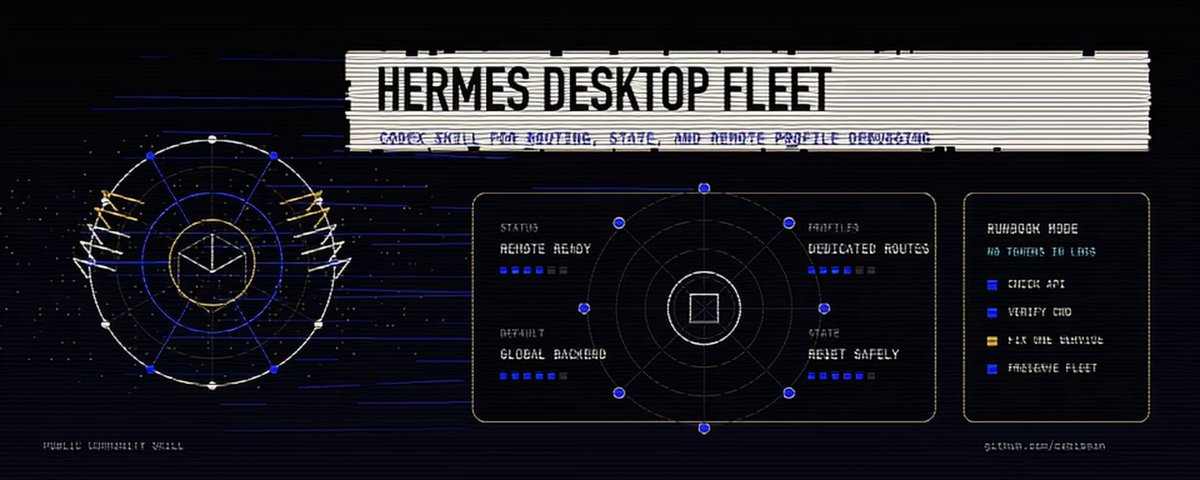
i got cooked by Hermes Desktop today.
7 agents in this fleet alone, and Desktop started making me question my entire setup lol
spent 3 hours debugging - then turned the runbook into an open-source Codex / Claude Code skill
Hermes Desktop is too good to quit just because the fleet got weird
5
3
42
3,146
Jun 13
i got cooked by Hermes Desktop today.
7 agents in this fleet alone, and Desktop started making me question my entire setup lol
spent 3 hours debugging - then turned the runbook into an open-source Codex / Claude Code skill
Hermes Desktop is too good to quit just because the fleet got weird
5
3
42
3,146
Jun 13
repo here:
community runbook, not an official Nous release.
made for bigger Hermes Desktop fleets where the bug might be routing, tokens, dashboard health, stale Electron state, profile overrides, or workspace bleed.
reason for existing:
fix the broken layer without nuking the profiles that still work.
——
shoutout @NousResearch - Desktop is moving fast and this app rules.
github.com/cobibean/hermes-d…
1
7
334
Jun 13
ABSOLUTE TYRANNY
this is the type of future we will have the stronger the models get?
Jun 13

As a result of a US government directive, we are suspending access to Claude Fable 5 for all users. You can continue to use all other Claude models.
Here’s what this means for you:
Across Claude products, new sessions will run on your selected default model or Opus 4.8, and existing Fable 5 sessions will end with an error.
On the Claude Platform, requests to Fable 5 will also return an error. Please update your integrations to other Claude models.
We know this is a disruption to your workflows; we appreciate your patience and support.
1
4
450
Jun 12
Hermes just made scheduled jobs 10x less annoying.
HERE'S HOW:
1. Hermes dashboard
2. Cron → Blueprints
3. pick the job
4. fill a few fields
5. schedule it
no cron syntax. no setup BS.
small update, big UX win.
this is how agents move from “chat when i ask” to “run the boring stuff on schedule.”
Jun 11
Hermes Agent now has Automation Blueprints, turning cron jobs into clickable, fillable, conversational workflows.
9
12
99
9,107
Jun 11
i’ve been testing agent memory this week and the part that finally clicked is portability.
i don’t just want my agent to “remember me.”
i want memory that follows the work:
> hermes agents
> codex // claude code projects
> app builds
> weird bugs i already fixed
> decisions i don’t want to re-explain every session
wrote down the mental model the checklist i’m using before i trust any memory plugin:

8
7
55
7,779
Jun 8
i’d pay for an AI agent that remembers my oil change before i’d pay for one that “runs my business.”
that’s where consumer agents get interesting imo.
not genius assistants.
boring little task owners.
groceries, trips, job apps, car stuff, etc...
the dumb chores that eat your weekend because nobody wants to do them
7 BORING agents i’d actually use:
1. minecraft server manager
“make me a server with these mods so my friends can play tonight.”
checks versions, catches conflicts, watches crashes, restarts it, and explains what broke in normal words.
2. inbox paperwork agent
find the bill i forgot about.
pull receipts into one place.
summarize the form i keep dodging.
warn me before the renewal hits.
life admin is infinite side quests.
3. trip planner that remembers preferences
window seat, no red-eyes, hotel near the thing, sane food options, don’t pack the day like a psycho.
then it watches prices and keeps the plan updated.
4. subscription / renewal watchdog
forward the receipts and trial emails.
it tracks what i’m paying for, warns me before trials flip, and keeps cancellation links handy.
least sexy agent on earth.
useful immediately.
5. family meal planner grocery list
knows allergies, budget, picky eaters, leftovers, and what’s already in the fridge.
turns the week into a realistic grocery list instead of 47 recipe tabs and giving up.
6. job search tracker
one place for roles, links, contacts, resume versions, follow-ups, interview notes, deadlines.
half the pain is remembering what happened where and when to poke again.
7. home car maintenance tracker
oil changes, filters, smoke detector batteries, warranty docs, recall checks, registration deadlines.
the stuff that only becomes urgent after you ignored it for 8 months.
the pattern:
one boring agent.
one narrow job.
memory tools follow-through.
set it up once.
let it keep track.
approve the stuff that matters.
that’s the consumer agent lane i care about.
8
3
22
14,728
cobi retweeted
Jun 4
Hermes Desktop dropped this week, so i spent 24 hours using it and made the masterclass.
what i covered:
> phone -> desktop session continuity
> agents subagents
> crons
> profiles
> tools, skills, MCP
> memory context
> local // remote gateways
now my Telegram-first agent has a full desktop control room.
17
24
328
90,883
Jun 6
Hermes Desktop just got a huge upgrade.
bottom-left profile switcher lets me jump between my 6 agents in seconds:
Quasimoto -> Alfred -> work agent
old Telegram sessions come with them.
new profiles spin up from the same app.
multi-agent setups are starting to feel normal.
10
7
148
11,713
Jun 6
setup walkthrough if you missed it:
connect your cloud Hermes agent to Desktop, then the new bottom-left agent switcher starts to make a lot more sense.
x.com/cobi_bean/status/20619…
Jun 2
Hermes Desktop dropped today, so i hooked my cloud agent into it.
setup:
> Settings → Gateway
> Remote gateway
> paste URL session token
> save reconnect
now my Telegram-first agent has a desktop home: sessions, skills, tools, memory, MCP, settings.
walkthrough below:
3
550
cobi retweeted

Jun 3
The Hermes Web Dashboard got a major overhaul: it is now a feature-complete admin panel that you can manage entirely from your browser.
162
198
2,804
1,184,433