
Joined February 2026
- Tweets 9,247
- Following 970
- Followers 1,898
- Likes 10,106
659 Photos and videos




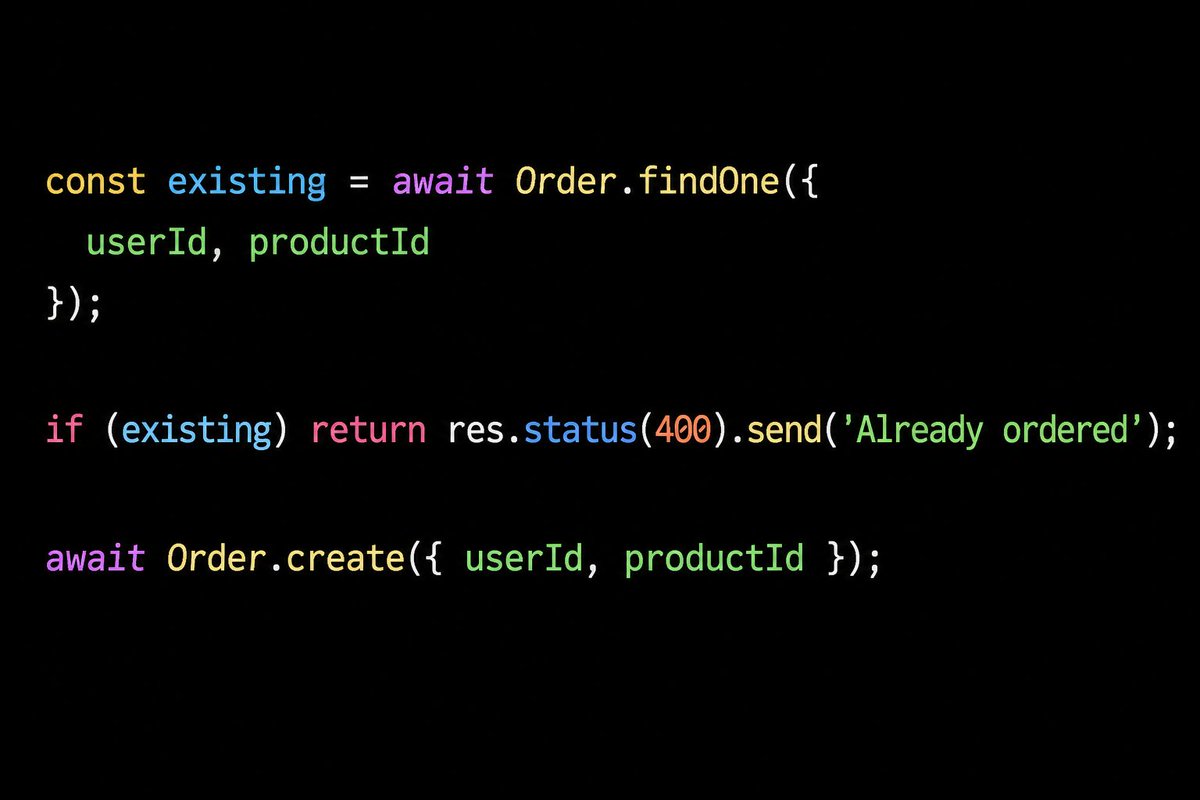










Pinned Tweet
Minimum Salaries You Should Be Targeting in Software Development (India) - End of 2026
If you're in tech, here are the baseline numbers you should be aiming for based on experience:
• 2 years -> ₹10 LPA
• 5 years -> ₹22 LPA
• 7 years -> ₹30 LPA
• 10 years -> ₹42 LPA
• 12 years -> ₹50 LPA
• 15 years -> ₹70 LPA
These aren't aspirational figures - these are the floor.
If your current package is below your bracket, it's not just a number problem. It's a signal to upskill, switch, negotiate, or all three.
Your experience has value. Make sure your salary reflects it.
64
18
173
26,925
Vikash Singh retweeted

Minimum Expectations for Builders (2026)
• Building for 1 year → You should have paying customers
• Building for 3 years → You should have PMF
• Building for 5 years → You should have meaningful revenue
• Building for 10 years → You should have a defensible business
These aren’t aspirational milestones. They’re the floor.
If you’re behind, don’t raise more money, talk to more users, ship faster, and fix distribution.
Years spent building only matter if customers care

Minimum Salaries You Should Be Targeting in Software Development (India) - End of 2026
If you're in tech, here are the baseline numbers you should be aiming for based on experience:
• 2 years -> ₹10 LPA
• 5 years -> ₹22 LPA
• 7 years -> ₹30 LPA
• 10 years -> ₹42 LPA
• 12 years -> ₹50 LPA
• 15 years -> ₹70 LPA
These aren't aspirational figures - these are the floor.
If your current package is below your bracket, it's not just a number problem. It's a signal to upskill, switch, negotiate, or all three.
Your experience has value. Make sure your salary reflects it.
7
6
11
502
Vikash Singh retweeted
Software Engineer Salaries 🇮🇳 vs 🇺🇸
Experience | India | USA
• 2 YOE → ₹10 LPA | $120k (₹1 Cr )
• 5 YOE → ₹22 LPA | $180k (₹1.5 Cr )
• 7 YOE → ₹30 LPA | $220k (₹1.9 Cr )
• 10 YOE → ₹42 LPA | $280k (₹2.4 Cr )
• 12 YOE → ₹50 LPA | $320k (₹2.7 Cr )
• 15 YOE → ₹70 LPA | $400k (₹3.4 Cr )
The biggest salary optimization in tech isn't learning another framework.
It's choosing the right market.
Minimum Salaries You Should Be Targeting in Software Development (India) - End of 2026
If you're in tech, here are the baseline numbers you should be aiming for based on experience:
• 2 years -> ₹10 LPA
• 5 years -> ₹22 LPA
• 7 years -> ₹30 LPA
• 10 years -> ₹42 LPA
• 12 years -> ₹50 LPA
• 15 years -> ₹70 LPA
These aren't aspirational figures - these are the floor.
If your current package is below your bracket, it's not just a number problem. It's a signal to upskill, switch, negotiate, or all three.
Your experience has value. Make sure your salary reflects it.
22
5
32
1,322
Minimum Salaries You Should Be Targeting in Software Development (India) - End of 2026
If you're in tech, here are the baseline numbers you should be aiming for based on experience:
• 2 years -> ₹10 LPA
• 5 years -> ₹22 LPA
• 7 years -> ₹30 LPA
• 10 years -> ₹42 LPA
• 12 years -> ₹50 LPA
• 15 years -> ₹70 LPA
These aren't aspirational figures - these are the floor.
If your current package is below your bracket, it's not just a number problem. It's a signal to upskill, switch, negotiate, or all three.
Your experience has value. Make sure your salary reflects it.
64
18
173
26,925
Now that you know the floor- here's how to go above it
x.com/code_bytein/status/206…
Knowing your salary floor is step 1.
Knowing how to negotiate it is step 2.
Here's what actually works 🧵
Rule 1: Never give a number first.
Let them anchor. You counter.
Rule 2: Always negotiate the offer.
First offer is never the final offer.
Every company expects pushback.
Rule 3: Use competing offers.
Nothing moves a number faster than another number on the table.
Rule 4: Negotiate beyond salary.
Base is just one part.
-> Joining bonus
-> Stock options
-> Remote flexibility
-> Learning budget
-> Early appraisal
Rule 5: Know your BATNA.
Best Alternative To a Negotiated Agreement.
If you have no other option, your leverage is zero.
Always be interviewing.
The line that works:
"I'm very excited about this role. Based on my research and experience, I was expecting something closer to X. Is there flexibility there?"
Polite. Direct. Effective.
The mindset shift:
Negotiation isn't confrontation.
It's just a conversation about value.
Know yours. Ask for it. 🎯
1
928
Knowing your salary floor is step 1.
Knowing how to negotiate it is step 2.
Here's what actually works 🧵
Rule 1: Never give a number first.
Let them anchor. You counter.
Rule 2: Always negotiate the offer.
First offer is never the final offer.
Every company expects pushback.
Rule 3: Use competing offers.
Nothing moves a number faster than another number on the table.
Rule 4: Negotiate beyond salary.
Base is just one part.
-> Joining bonus
-> Stock options
-> Remote flexibility
-> Learning budget
-> Early appraisal
Rule 5: Know your BATNA.
Best Alternative To a Negotiated Agreement.
If you have no other option, your leverage is zero.
Always be interviewing.
The line that works:
"I'm very excited about this role. Based on my research and experience, I was expecting something closer to X. Is there flexibility there?"
Polite. Direct. Effective.
The mindset shift:
Negotiation isn't confrontation.
It's just a conversation about value.
Know yours. Ask for it. 🎯
17
1
24
1,389
Vikash Singh retweeted

Programming Languages and their Country of Origin 🌍
• 🐍 Python — 🇳🇱 Netherlands
• ☕ Java — 🇺🇸 United States
• 🌐 JavaScript — 🇺🇸 United States
• 🦀 Rust — 🇺🇸 United States
• 🐹 Go — 🇺🇸 United States
• 💎 Ruby — 🇯🇵 Japan
• 🐘 PHP — 🇩🇰 Denmark
• ⚡ Swift — 🇺🇸 United States
• 🎯 Kotlin — 🇨🇿 Czech Republic
• 🌊 TypeScript — 🇺🇸 United States
• 🔷 C# — 🇺🇸 United States
• 🔬 Scala — 🇨🇭 Switzerland
19
2
26
508
Master concepts like this to reach these numbers 👇
x.com/code_bytein/status/206…
Jun 12
Most devs know HashMap.
Few know when NOT to use it.
Here's the complete Map guide nobody teaches 🧵
HashMap
-> Fast. O(1) lookups.
-> No order guarantee.
-> Use when order doesn't matter.
LinkedHashMap
-> Same speed as HashMap.
-> Preserves insertion order.
-> Use when sequence matters.
TreeMap
-> Sorted by key automatically.
-> O(log n) - slower than HashMap.
-> Use when you need sorted keys.
The decision tree:
Need fast lookups, order doesn't matter?
-> HashMap
Need fast lookups insertion order?
-> LinkedHashMap
Need keys sorted?
-> TreeMap
Need thread safety?
-> ConcurrentHashMap
The mistake most devs make:
Using HashMap everywhere by default.
Then debugging weird ordering bugs for hours.
Pick the right Map.
Not just the first one you remember. 🎯
1,359
Jun 13
Most devs know Load Balancers exist.
Few know how to pick the right algorithm.
Here's the complete guide 🧵
Round Robin
-> Requests distributed equally, one by one.
-> Simple. Fast. No intelligence.
-> Use when all servers are identical.
Least Connections
-> Routes to the server with fewest active requests.
-> Smarter than Round Robin.
-> Use when requests vary in processing time.
IP Hash
-> Same client always hits the same server.
-> Sticky sessions by design.
-> Use when session state lives on the server.
Weighted Routing
-> Powerful servers get more traffic.
-> You assign weights manually.
-> Use when servers have different capacities.
Consistent Hashing
-> Distributes based on a hash ring.
-> Minimal redistribution when servers go down.
-> Use in distributed caches and microservices.
The question nobody asks first:
Are your backends stateless or stateful?
Stateless -> any algorithm works.
Stateful -> you need sticky routing.
That one question changes everything.
The decision tree:
Equal servers, simple traffic -> Round Robin
Variable request cost -> Least Connections
Session-based app -> IP Hash
Different server capacity -> Weighted
Distributed systems -> Consistent Hashing
Pick the algorithm that matches the problem.
Not the one you remember first. 🎯
2,152
Vikash Singh retweeted

Experience matters, but skills, impact, and market demand matter even more. Salary bas years se decide nahi hoti—continuous learning, ownership, and problem-solving ability bhi utni hi important hain. The real baseline should be growth, not just tenure. 🚀
Minimum Salaries You Should Be Targeting in Software Development (India) - End of 2026
If you're in tech, here are the baseline numbers you should be aiming for based on experience:
• 2 years -> ₹10 LPA
• 5 years -> ₹22 LPA
• 7 years -> ₹30 LPA
• 10 years -> ₹42 LPA
• 12 years -> ₹50 LPA
• 15 years -> ₹70 LPA
These aren't aspirational figures - these are the floor.
If your current package is below your bracket, it's not just a number problem. It's a signal to upskill, switch, negotiate, or all three.
Your experience has value. Make sure your salary reflects it.
2
2
4
209


Vikash Singh retweeted

Freshers in 2015: ₹3–4 LPA
Freshers in 2026: ₹3.5–8 LPA
A decade later, many entry-level salaries have barely moved, while inflation, rents, and living costs have skyrocketed. The real problem isn't senior salaries being too high—it's fresher salaries staying too low. 📈💻 #TechJobs #SoftwareEngineering
Minimum Salaries You Should Be Targeting in Software Development (India) - End of 2026
If you're in tech, here are the baseline numbers you should be aiming for based on experience:
• 2 years -> ₹10 LPA
• 5 years -> ₹22 LPA
• 7 years -> ₹30 LPA
• 10 years -> ₹42 LPA
• 12 years -> ₹50 LPA
• 15 years -> ₹70 LPA
These aren't aspirational figures - these are the floor.
If your current package is below your bracket, it's not just a number problem. It's a signal to upskill, switch, negotiate, or all three.
Your experience has value. Make sure your salary reflects it.
5
3
9
342
Vikash Singh retweeted

Minimum Salaries You Should Be Targeting in Software Development (USA) – End of 2026
If you’re in tech, these are the baseline numbers many strong software engineers should be aiming for:
• 2 years → $110K
• 5 years → $160K
• 7 years → $220K
• 10 years → $300K
• 12 years → $380K
• 15 years → $500K
These aren’t unicorn numbers.
They’re achievable for engineers who continuously upskill, switch strategically, negotiate well, and target high-paying companies.
If you’re below your bracket, don’t just ask for a raise.
Ask what skills, impact, or opportunities you’re missing to get there.
Your experience compounds.
Your compensation should too.
Minimum Salaries You Should Be Targeting in Software Development (India) - End of 2026
If you're in tech, here are the baseline numbers you should be aiming for based on experience:
• 2 years -> ₹10 LPA
• 5 years -> ₹22 LPA
• 7 years -> ₹30 LPA
• 10 years -> ₹42 LPA
• 12 years -> ₹50 LPA
• 15 years -> ₹70 LPA
These aren't aspirational figures - these are the floor.
If your current package is below your bracket, it's not just a number problem. It's a signal to upskill, switch, negotiate, or all three.
Your experience has value. Make sure your salary reflects it.
11
3
24
1,300
Vikash Singh retweeted

6h
Ever wonder why QR codes have 3 squares in the corners? Why 3, not 4 or 2? 🤔

34
7
40
1,324
Vikash Singh retweeted
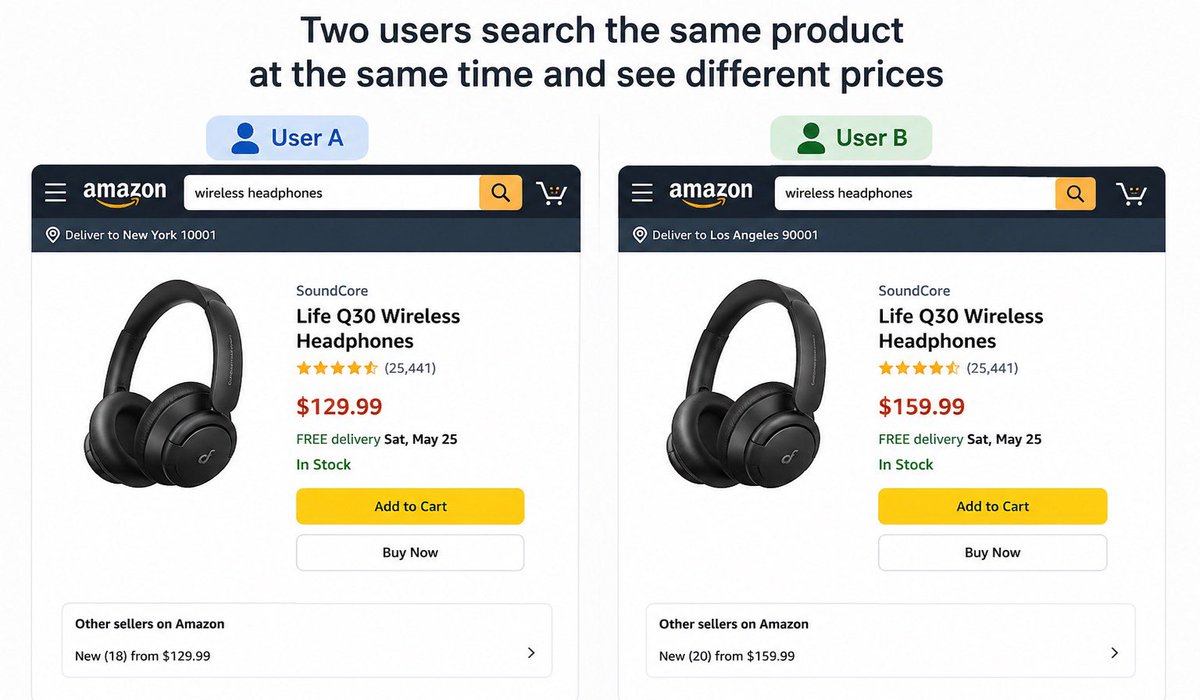
Interviewer:
Two users search the same product at the same time and see different prices. Is that a bug or a feature?
32
12
54
1,869
Vikash Singh retweeted
Minimum Salaries You Should Be Targeting in Software Development (India) - End of 2026
If you're in tech, here are the baseline numbers you should be aiming for based on experience:
• 2 years -> ₹10 LPA
• 5 years -> ₹22 LPA
• 7 years -> ₹30 LPA
• 10 years -> ₹42 LPA
• 12 years -> ₹50 LPA
• 15 years -> ₹70 LPA
These aren't aspirational figures - these are the floor.
If your current package is below your bracket, it's not just a number problem. It's a signal to upskill, switch, negotiate, or all three.
Your experience has value. Make sure your salary reflects it.
64
18
173
26,925
Vikash Singh retweeted

Jun 13
FAANG is dead MANGOS run the world now.
But guess who is still constant after decades?

28
5
44
4,481
Vikash Singh retweeted

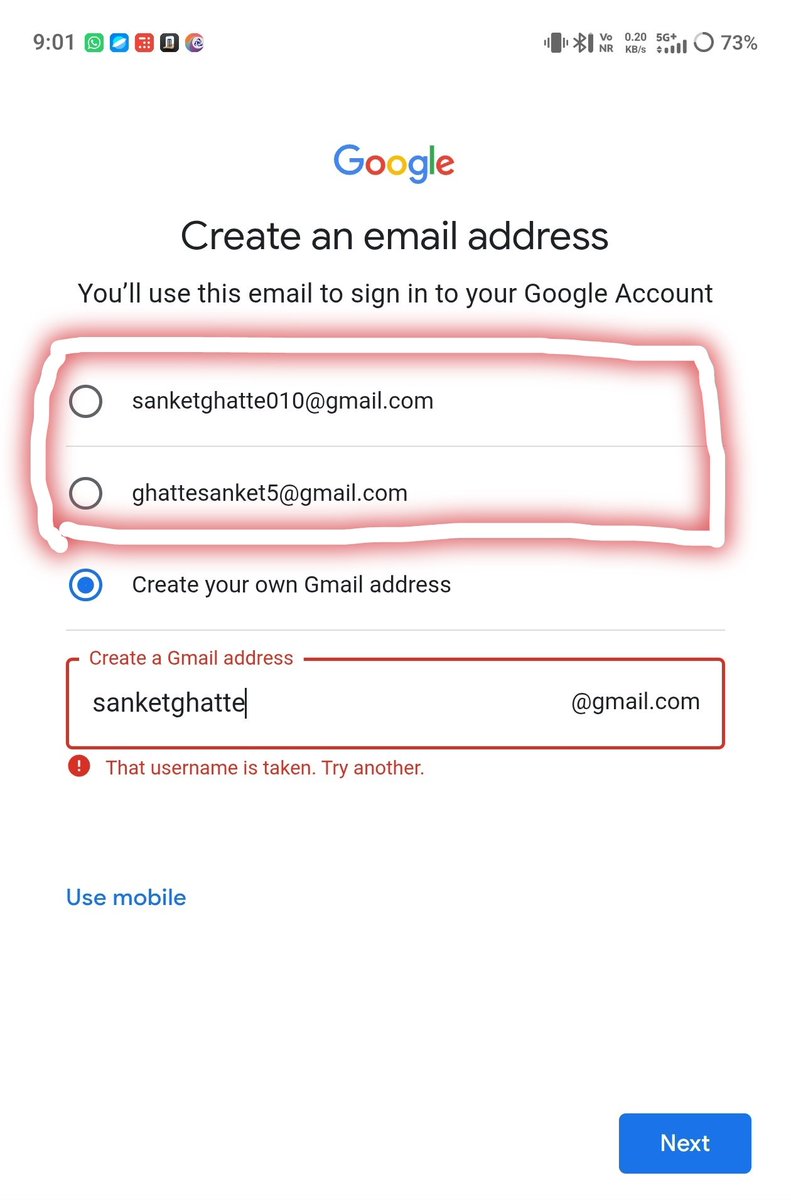
Interview Question:
When creating a Gmail account, Google instantly suggests usernames like:
- sanketghatte010@gmail.com
- ghattesanket5@gmail.com
There are billions of Gmail accounts and millions of users with similar names.
How does Google generate available username suggestions so quickly?
46
16
62
1,973
Vikash Singh retweeted

Everyone says 'Make it exist first, then make it better'
But what if the product you're building already has strong competitors?
If your MVP has fewer features than existing solutions, why would customers choose you?
What actually gets the first users in a crowded market? 🤔
32
11
48
4,713
Vikash Singh retweeted

Jun 13
Most devs know Load Balancers exist.
Few know how to pick the right algorithm.
Here's the complete guide 🧵
Round Robin
-> Requests distributed equally, one by one.
-> Simple. Fast. No intelligence.
-> Use when all servers are identical.
Least Connections
-> Routes to the server with fewest active requests.
-> Smarter than Round Robin.
-> Use when requests vary in processing time.
IP Hash
-> Same client always hits the same server.
-> Sticky sessions by design.
-> Use when session state lives on the server.
Weighted Routing
-> Powerful servers get more traffic.
-> You assign weights manually.
-> Use when servers have different capacities.
Consistent Hashing
-> Distributes based on a hash ring.
-> Minimal redistribution when servers go down.
-> Use in distributed caches and microservices.
The question nobody asks first:
Are your backends stateless or stateful?
Stateless -> any algorithm works.
Stateful -> you need sticky routing.
That one question changes everything.
The decision tree:
Equal servers, simple traffic -> Round Robin
Variable request cost -> Least Connections
Session-based app -> IP Hash
Different server capacity -> Weighted
Distributed systems -> Consistent Hashing
Pick the algorithm that matches the problem.
Not the one you remember first. 🎯
23
2
44
3,811
Jun 13
You get this in a system design interview:
"Traffic is hitting your servers. How does the Load Balancer decide who handles what?"
You have 30 seconds.
What's your answer? 👀
46
11
70
5,383
Jun 13
The algorithm matters more than the balancer 👇
x.com/code_bytein/status/206…
Jun 13
Most devs know Load Balancers exist.
Few know how to pick the right algorithm.
Here's the complete guide 🧵
Round Robin
-> Requests distributed equally, one by one.
-> Simple. Fast. No intelligence.
-> Use when all servers are identical.
Least Connections
-> Routes to the server with fewest active requests.
-> Smarter than Round Robin.
-> Use when requests vary in processing time.
IP Hash
-> Same client always hits the same server.
-> Sticky sessions by design.
-> Use when session state lives on the server.
Weighted Routing
-> Powerful servers get more traffic.
-> You assign weights manually.
-> Use when servers have different capacities.
Consistent Hashing
-> Distributes based on a hash ring.
-> Minimal redistribution when servers go down.
-> Use in distributed caches and microservices.
The question nobody asks first:
Are your backends stateless or stateful?
Stateless -> any algorithm works.
Stateful -> you need sticky routing.
That one question changes everything.
The decision tree:
Equal servers, simple traffic -> Round Robin
Variable request cost -> Least Connections
Session-based app -> IP Hash
Different server capacity -> Weighted
Distributed systems -> Consistent Hashing
Pick the algorithm that matches the problem.
Not the one you remember first. 🎯
1
327