
Jack of a few trades. JavaScript. Teacher. Musician. Co-founder & CTO @rivva_app. Prev @AWS @Microsoft, @cloudinary, @auth0
Joined September 2012
- Tweets 15,314
- Following 1,928
- Followers 39,093
- Likes 15,514
857 Photos and videos








Jun 13
Opus 4.8 has been passive aggressive to me this morning cause I am only using it while waiting for Fable to be restored.
1
2
624
Christian Nwamba retweeted

Jun 12
Drop It. It's Live.
Drag a file or folder into your browser and Vercel Drop gives you a production URL in seconds.
vercel.com/changelog/vercel-…
43
63
948
443,237

Christian Nwamba retweeted

Jun 10
It’s incredible to think we launched Geist just 3 years ago. Today, it’s served 181 million times per week on Google Fonts.

22
4
226
21,794
Jun 10
Things that make your codebase legible to agents (learned the hard way):
1. One source of truth. No content hiding in a CMS the agent can't see
2. Names that say what they do
3. Tests that double as docs
4. Delete dead code. Agents trust it like it's load-bearing
1
1
6
480

Use Claude Fable 5 with the AI SDK.

ALT // AI SDK: Claude Fable 5 import { anthropic } from '@ai-sdk/anthropic'; import { ToolLoopAgent } from 'ai'; const agent = new ToolLoopAgent({ model: anthropic('claude-fable-5'), });

Introducing Claude Fable 5: a Mythos-class model that we’ve made safe for general use.
Its capabilities exceed those of any model we’ve ever made generally available.
2
6
51
5,631
Christian Nwamba retweeted

Jun 7
Vercel AI Gateway recovers on average over 1T tokens a month 🤯
Much like Stripe recovers revenue with smart retries on failed payments or credit card updates.
And we do it with 0️⃣ zero markup over the labs; adding redundancy, zero-data retention enforcement, observability, usage APIs, caps, …
vercel.com/ai-gateway
45
32
352
55,248
Christian Nwamba retweeted

May 20
8
19
159
52,062

v0 Foundations is live.
A 7-lesson course, under 20 minutes, to take you from your first prompt to a real app in production, walking through database, email, custom domain, and GitHub.
Taught by @eveporcello
vercel.com/academy/v0-founda…
11
21
219
14,625
Christian Nwamba retweeted

May 16
I built Zero in 3 days.
I didn't expect it to compile.
I didn't expect it to mostly self-host.
I definitely didn't expect it to work at all.
Inspired partly by Bun's rewrite to Rust, Zero started as an experiment. Honestly, the project says more about where AI is today than it does about the language itself.
It took more than 3,000 agent tasks to get here, and it's still nowhere near ready for serious comparisons, benchmarks or evals.
But the goal is bigger than the current result.
The hope is to either create a new language with tooling designed for agents from the ground up, or take learnings and apply it back to existing languages and ecosystems.
The ideas are simple:
1. Make languages (and new versions) easy for agents to learn, adapt to and fix on the fly, even when not in the training data.
2. Build a standard library comprehensive enough that most projects don't need external dependencies.
3. Create a tight, fast development loop that even small models can reliably work with.
I've never wanted to create a programming language.
But after repeatedly running into the same problems, safe but slow builds, fast but unsafe builds, agents struggling with new languages and version changes, wanting faster builds, smaller bundles and better DX, I started wondering:
Could accelerated, agent-driven iteration produce a language and tooling stack designed around these constraints from the start?
So Zero was born.
May 15

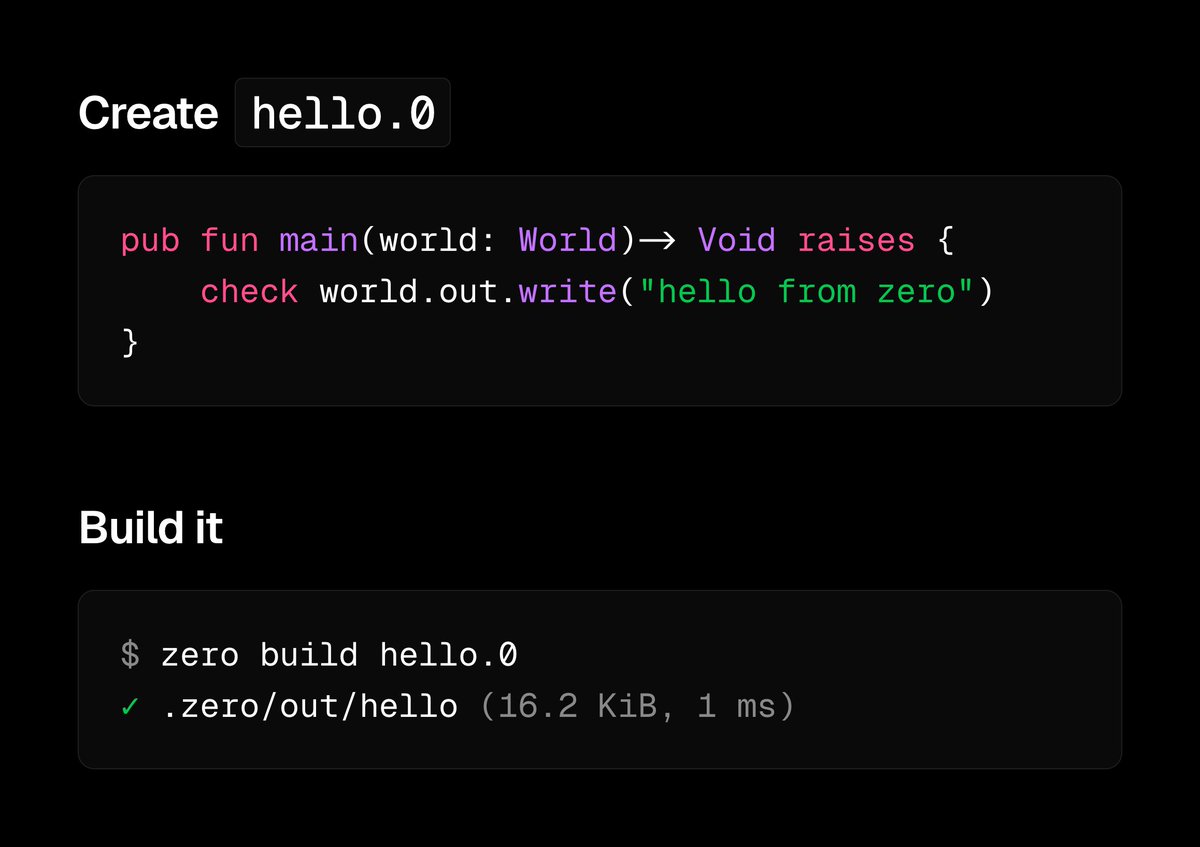
Introducing Zero
The programming language for agents.
I wanted a systems language that was faster, smaller, and easier for agents to use and repair.
Explicit capabilities. JSON diagnostics. Typed safe fixes.
Made for agents on day zero.
99
38
739
143,346
Christian Nwamba retweeted
May 11
New proposal: mdxg.org
Markdown Experience Guidelines
A spec for how interfaces should present Markdown
Virtual pages, navigation, search, theming
Any .md file, zero changes
Reference implementation below
Would love your input
23
27
500
36,681
Christian Nwamba retweeted
May 9
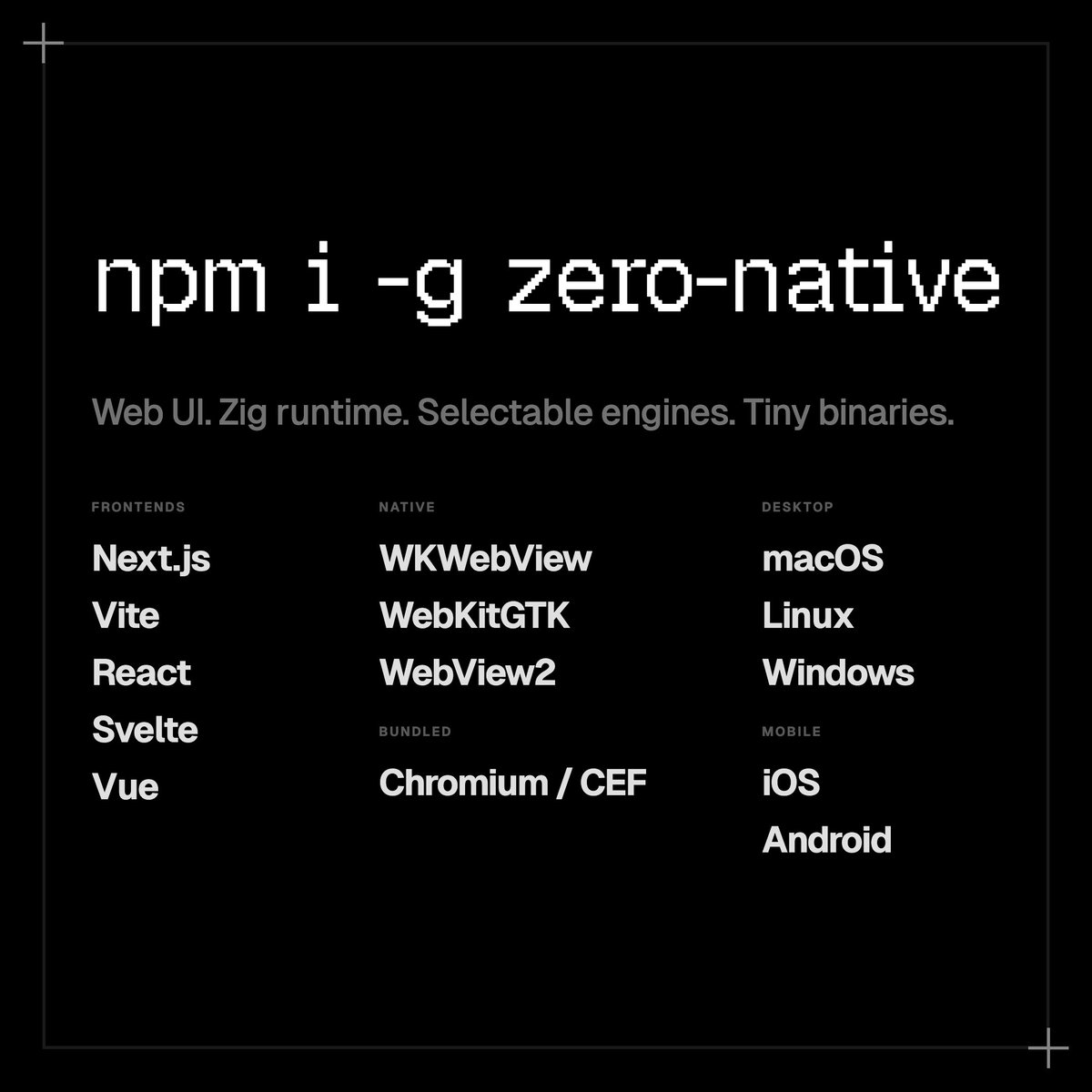
Introducing zero-native
Build native desktop mobile apps with web UI and Zig
→ Tiny binaries, low memory usage
→ Selectable web engines (WKWebView, WebKitGTK, WebView2, Chromium/CEF)
→ Next.js, Vue, Svelte, Vite, React
→ macOS, Linux, Windows, iOS, Android
162
289
3,902
547,839
Christian Nwamba retweeted

Apr 13
3 months ago I started building a coding agent that runs in the cloud.
It's since written every line of code I've shipped, including itself.
Today, I'm open sourcing it. Introducing Open Agents.
140
202
2,278
401,749
Christian Nwamba retweeted

Apr 10
Time for a big systems advice thread!
In distributed systems there's no magic "push everything to prod at once" button. Every service gets pushed independently and nodes within a service get updated incrementally. If you mess up forwards/backwards compatibility you can fail irrecoverably.
So how to avoid this?
1/5: Decouple data and code changes. Never push out a release that changes how data is stored at the same time as the code that uses this new data. If there's a bug and you need to roll back to the old version of your code it won't be able to handle the new data in the new format. Instead push out a release that first changes the data in a way that’s compatible with both the old and new code (e.g., optional fields etc), when that’s stable push out the new code that uses it, then when that’s stable you can change the data to remove backwards compatibility. This is known as a “migration” in the database world and yes it’s annoying, but yes you need to do it.
16
69
692
61,126

Christian Nwamba retweeted

Mar 7
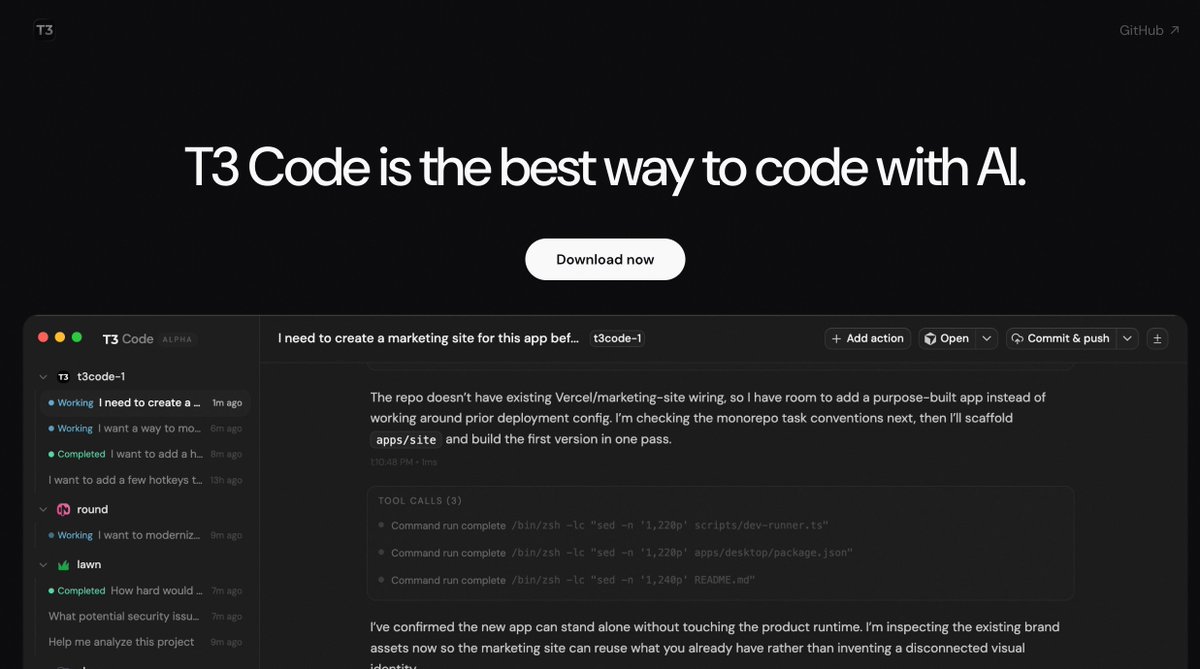
T3 Code is now available for everyone to use.
Fully open source. Built on top of the Codex CLI, so you can bring your existing Codex subscription.
425
215
4,710
1,268,320
Christian Nwamba retweeted
17 Nov 2025
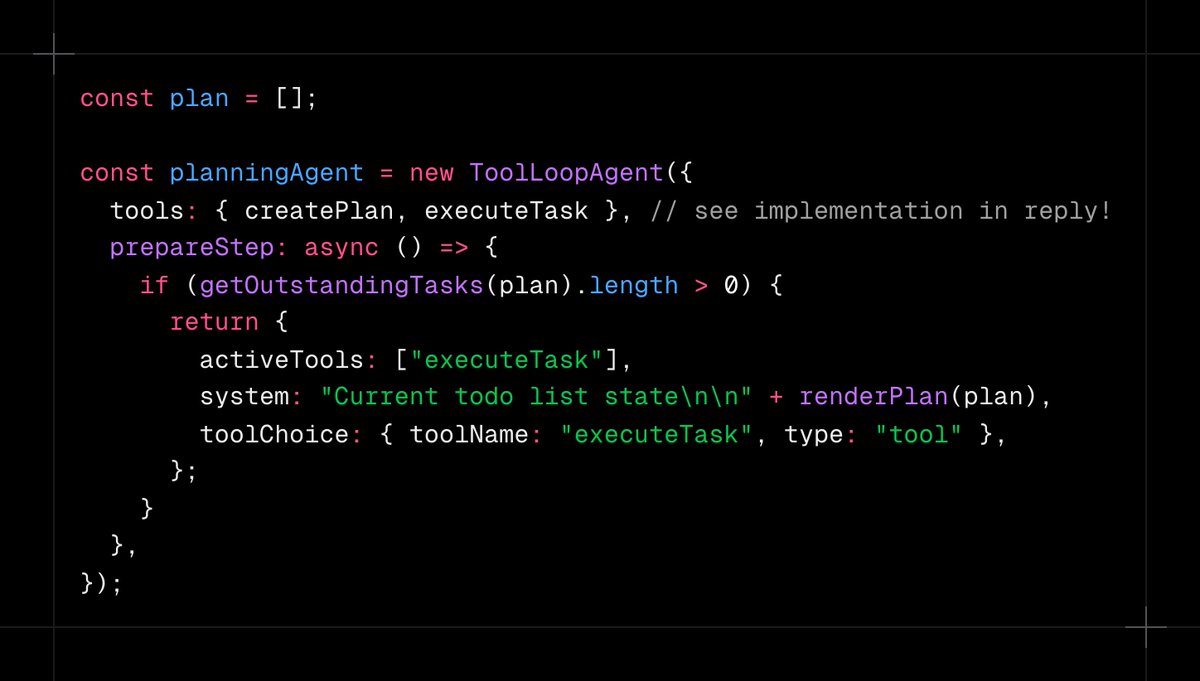
Cool planning agent pattern with @aisdk
Agent creates a plan. Then, while there are outstanding tasks, forces a tool call (executeTask) that spawns a subagent to complete the current task
17 Nov 2025

Find it fascinating that Claude Code has had so much success in the no-op TodoWrite tool approach for planning
Feels very fragile to have to regenerate the entire plan at each step just to update it - but their models use it so well
9
14
259
25,165
Christian Nwamba retweeted

12 Nov 2025
We just raised a bunch of money to reinvent backend engineering for developers.
We have huge plans for Convex, and we need your help to realize them.
news.convex.dev/convex-raise…
104
38
676
222,594