408 Photos and videos









Coded retweeted

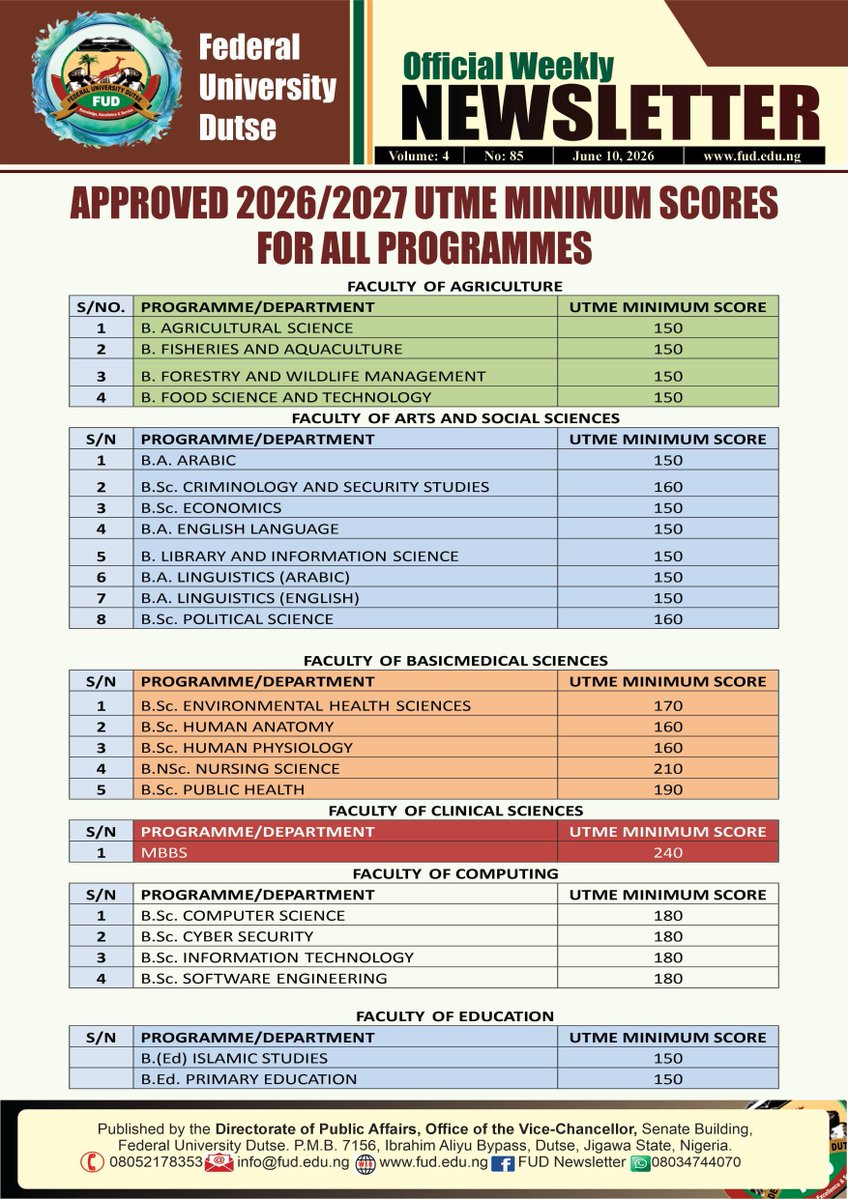
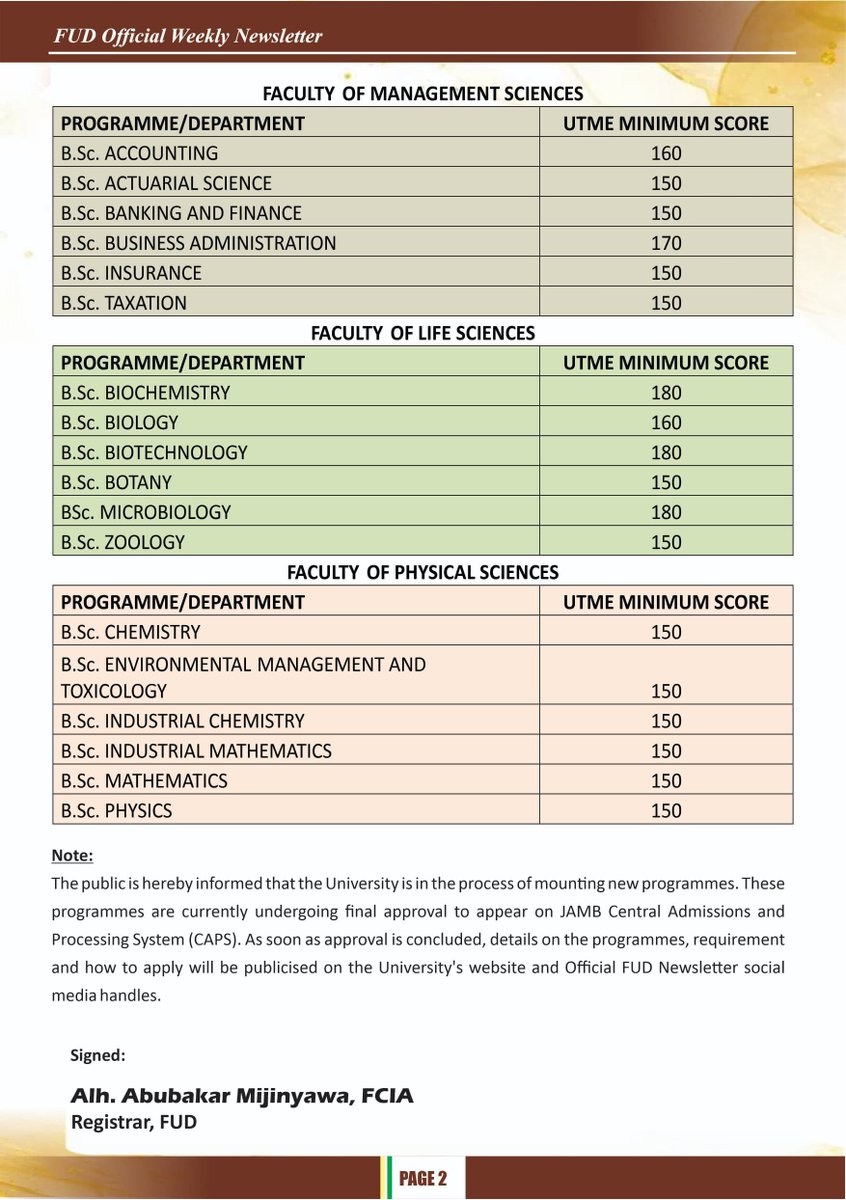
If you are applying for Actuarial Science, feel free to reach out to me.

To whom it my concern: 2026/2027 Admission: Cut-Off Marks for All Programmes at Federal University Dutse (FUD), Jigawa State.
11
14
598
Coded retweeted
📢If you are applying for BSc Insurance, please get in touch.
To whom it my concern: 2026/2027 Admission: Cut-Off Marks for All Programmes at Federal University Dutse (FUD), Jigawa State.
3
8
360
Coded retweeted
When governments, pension funds, or insurance companies make promises today, they need to know whether those promises can still be fulfilled years from now.
That is one of the questions actuarial science seeks to answer.
2
3
99
Coded retweeted
A country of over 200 million people needs experts who can measure risk, model future outcomes, and support long-term financial planning.
Nigeria needs more actuaries,not just for the profession, but for the economy.
2
6
20
484
Coded retweeted
Many financial problems do not arise because people fail to plan.
They arise because future risks were underestimated.
That is why actuarial science focuses on measuring uncertainty before it becomes a problem.
2
1
3
59
Coded retweeted
Imagine setting aside money today to pay expenses that may arise 20 or 30 years from now.
How much would be enough?
That simple question lies at the heart of actuarial science.
1
2
7
275
Coded retweeted

#AI is reshaping #retirementplanning from personalized longevity forecasts to smarter financial guidance. Read a new essay collection for more insights: bit.ly/3S4ytRE. #actuaries #actuaryresearch

1
3
303
Coded retweeted
Do you know that the @frcnigeria Financial Reporting Council (FRC) of Nigeria currently refunds the cost of professional actuarial examinations for candidates who pass?
According to the FRC, the initiative is aimed at encouraging more Nigerians to pursue the actuarial profession and address the country's shortage of qualified actuaries.
So, if the cost of actuarial exams is holding you back, remember that passing the exam may qualify you for a full reimbursement of the exam fee.
One more reason to take that first step.
1
1
3
256
Coded retweeted
Many people assume actuarial science is only for “very advanced mathematicians.”
In reality, the profession is built on gradual learning, consistency, and step-by-step mastery of concepts over time.
You don’t start as an expert, you grow into one.
1
1
71
How To Love The Wind
Wind extinguishes a candle and energizes fire.
Likewise with randomness, uncertainty, chaos: you want to use them, not hide from them. You want to be the fire and wish for the wind.
We just don't want to just survive uncertainty, to just about make it.
1
1
28
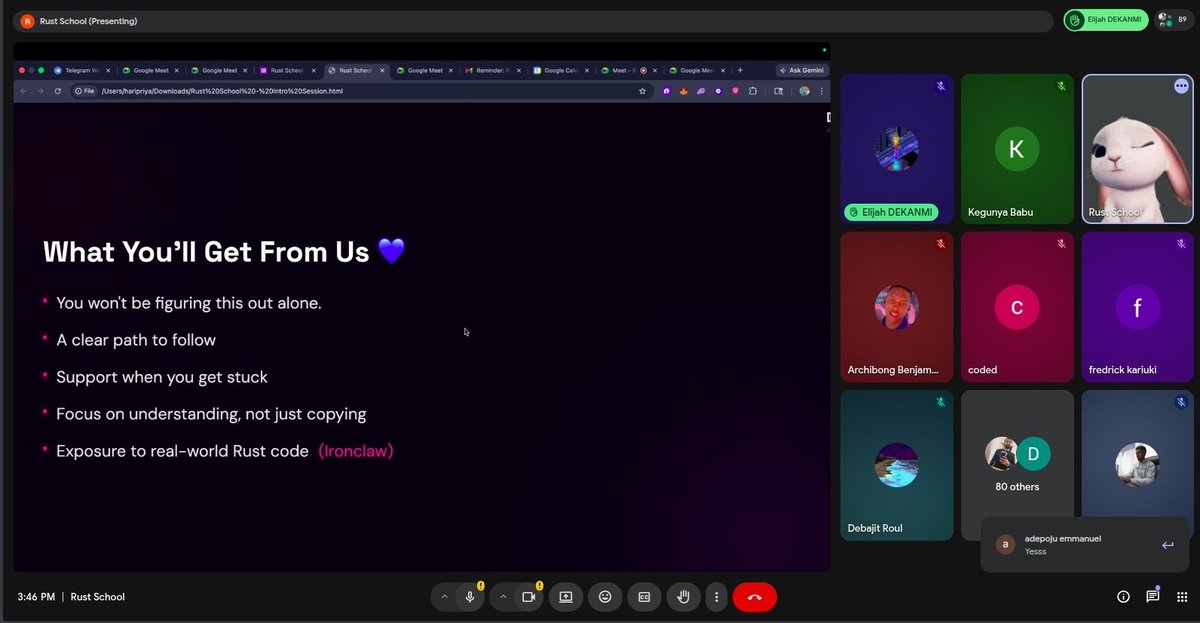
Glad to announce that I just got into Rust School 🦀 Cohort 01! 🎊
Thanks to @_HerDAO, @Onallee and @Hari_priyoo for making this possible. Let’s build!
5
9
265