
Software engineer 🚀 | Exploring AI 🤖 | Building in public 🛠️ | Challenging tech norms & biases with humor & real talk. Let’s connect and innovate! 💬
Joined November 2008
- Tweets 493
- Following 226
- Followers 106
- Likes 138
16 Photos and videos







Apr 11
This doesn’t sound right. The complexity of modern systems is very high. It’s easier than ever to build todo apps, but real tech products at scale requires high le els of experience in multiple levels of the stack
Apr 11

Alternative angle:
It’s never been easier to level up to a “top tier dev”. Everything has been reset. If you are willing to learn again, you can climb insanely fast right now.
187
Apr 10
Unpopular opinion: AI is most useful for non-coding tasks but you’re not ready for that discussion
27
Apr 10
I don’t see enough people talking about how to use AI for management work.
I have a nice automated setup to keep track of projects status, interactions and achievements from direct reports, all automated.
Keeping track has never been easier
22
Apr 8
People are confusing writing LoC with problem-solving skills and this has to stop.
Apr 8

Your GitHub shows your commits.
But if the thinking isn’t yours,
is it even your project?
1
24
Apr 8
Anybody can build unusable crap. You still need a lot of knowledge to operate a real app.
Same goes for design, marketing, sales, etc. AI is not a replacement for a human with extensive knowledge and experience

You’re not that special. Everybody can build software faster now.
35

Hello, Moon. It’s great to be back.
Here’s a taste of what the Artemis II astronauts photographed during their flight around the Moon. Check out more photos from the mission: nasa.gov/artemis-ii-multimed…

ALT A crescent Earth setting behind the Moon\u2019s horizon. Credit: NASA

ALT Earth setting behind the Moon as seen by the Artemis II crew. Over half the left side of the image is filled by the gray lunar surface, pocked with craters. Credit: NASA
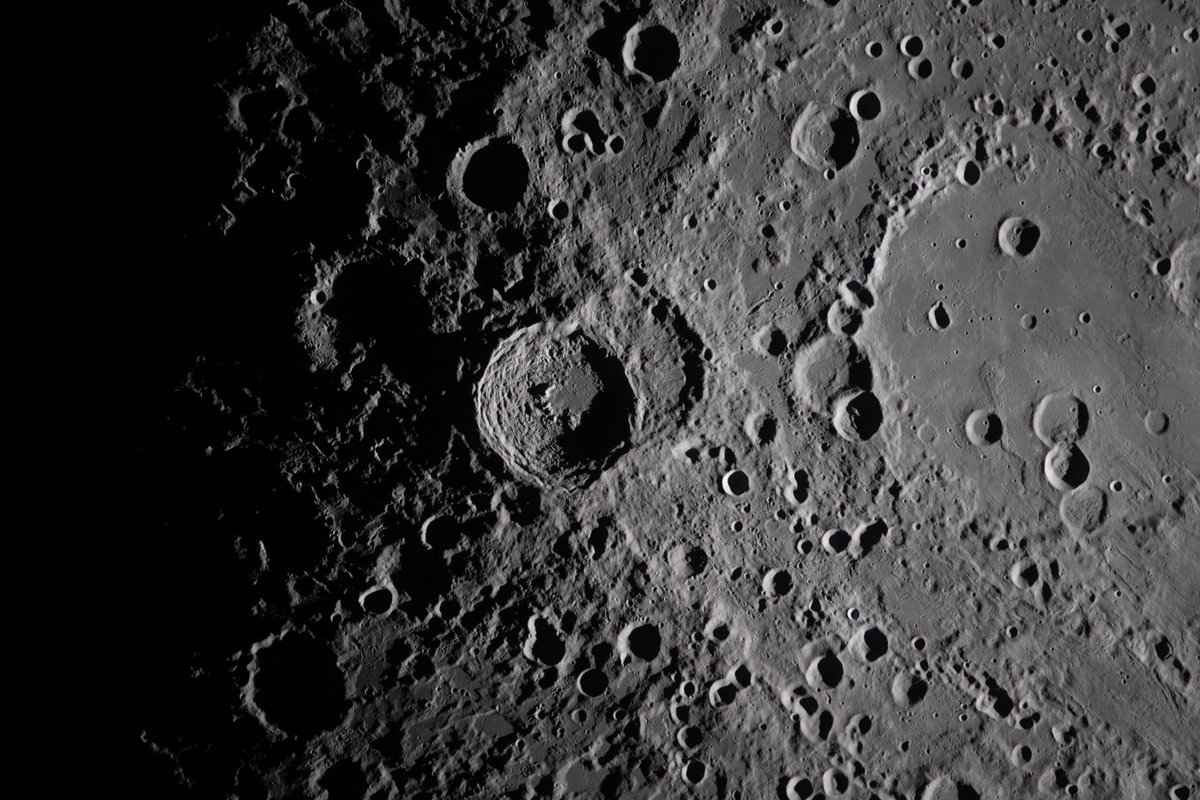
ALT A close view of the Moon. Jagged circles of craters dot the gray surface, fading to dark on the left side of the image. Credit: NASA

ALT A crescent Earth setting behind a hemisphere of the Moon. Credit: NASA
9,922
173,111
807,293
29,915,258
Apr 3
Esto esta muy bien pero desde enero que ha videos en YouTube haciendo esto con OpenClaw y Obsidian. No todo lo inventa la gente famosa
Apr 2

LLM Knowledge Bases
Something I'm finding very useful recently: using LLMs to build personal knowledge bases for various topics of research interest. In this way, a large fraction of my recent token throughput is going less into manipulating code, and more into manipulating knowledge (stored as markdown and images). The latest LLMs are quite good at it. So:
Data ingest:
I index source documents (articles, papers, repos, datasets, images, etc.) into a raw/ directory, then I use an LLM to incrementally "compile" a wiki, which is just a collection of .md files in a directory structure. The wiki includes summaries of all the data in raw/, backlinks, and then it categorizes data into concepts, writes articles for them, and links them all. To convert web articles into .md files I like to use the Obsidian Web Clipper extension, and then I also use a hotkey to download all the related images to local so that my LLM can easily reference them.
IDE:
I use Obsidian as the IDE "frontend" where I can view the raw data, the the compiled wiki, and the derived visualizations. Important to note that the LLM writes and maintains all of the data of the wiki, I rarely touch it directly. I've played with a few Obsidian plugins to render and view data in other ways (e.g. Marp for slides).
Q&A:
Where things get interesting is that once your wiki is big enough (e.g. mine on some recent research is ~100 articles and ~400K words), you can ask your LLM agent all kinds of complex questions against the wiki, and it will go off, research the answers, etc. I thought I had to reach for fancy RAG, but the LLM has been pretty good about auto-maintaining index files and brief summaries of all the documents and it reads all the important related data fairly easily at this ~small scale.
Output:
Instead of getting answers in text/terminal, I like to have it render markdown files for me, or slide shows (Marp format), or matplotlib images, all of which I then view again in Obsidian. You can imagine many other visual output formats depending on the query. Often, I end up "filing" the outputs back into the wiki to enhance it for further queries. So my own explorations and queries always "add up" in the knowledge base.
Linting:
I've run some LLM "health checks" over the wiki to e.g. find inconsistent data, impute missing data (with web searchers), find interesting connections for new article candidates, etc., to incrementally clean up the wiki and enhance its overall data integrity. The LLMs are quite good at suggesting further questions to ask and look into.
Extra tools:
I find myself developing additional tools to process the data, e.g. I vibe coded a small and naive search engine over the wiki, which I both use directly (in a web ui), but more often I want to hand it off to an LLM via CLI as a tool for larger queries.
Further explorations:
As the repo grows, the natural desire is to also think about synthetic data generation finetuning to have your LLM "know" the data in its weights instead of just context windows.
TLDR: raw data from a given number of sources is collected, then compiled by an LLM into a .md wiki, then operated on by various CLIs by the LLM to do Q&A and to incrementally enhance the wiki, and all of it viewable in Obsidian. You rarely ever write or edit the wiki manually, it's the domain of the LLM. I think there is room here for an incredible new product instead of a hacky collection of scripts.
42
Mar 31
Why is it so common to have supply chain attacks in node but not on other languages?
Is node inherently insecure?
8
Mar 31
OpenAI siempre esta un pas adelante que Anthropic. Ya ni es divertido
Mar 31

Parece que @OpenAI ha liberado Codex (la herramienta) como código abierto, bajo licencia Apache-2.0.
github.com/openai/codex
19
Mar 31
Uncle Bon says it. End of discussion
Mar 30

I think I was able to clean everything up with codex. At least at first blush. Codex was a bit more on top of things than Claude was.
12
Mar 30
La gente que no entiende el método científico siempre opina este tipo de pelotudeces.
Vayan a estudiar

¿Sois conscientes de que todas las verdades “científicas” actuales adoptadas por consenso y no por experimentación serán tratadas en el futuro como el terraplanismo, el sistema ptolemaico o el creacionismo?
2
15
Mar 30
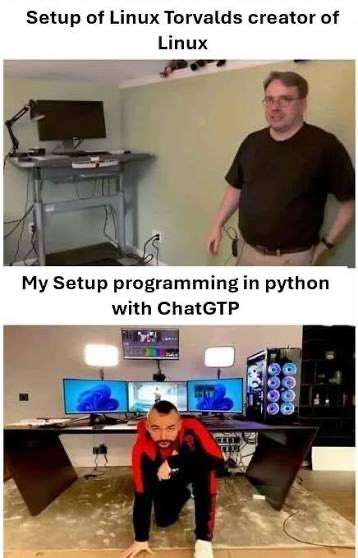
What I imagine every time someone says "You don't need to know coding and systems to code with AI".
11
Mar 30
Que una herramienta sea útil no quiere decir que no haya una burbuja alrededor.
Mira la burbuja dotcom. Claramente era util.
La burbuja no es porque no sirve, es porque hay expectativas excesivamente infladas

no entiendo cómo alguien podría usar Claude Code/Codex durante una mañana y pensar
nah, esto es una burbuja
es que... LOL
28
Mar 28
I love this lesson about how NASA spent millions creating a space pen and the Russian just solved it with a pencil.
The missing part: using a graphite pencil in space is extremely dangerous because of the floating graphite particles getting inside the controls.
There’s always two sides to a story
16
Mar 28
Obvio que tardás más en refactorear el codigo generadonpor AI que en hacerlo vos.
Si vas a usar AI para codear, tenés que ponerte en modo arquitecto y solo dar instrucciones de alto nivel.
Mejor escribile skills y tools para que haga las cosas como vos queres.
12
Mar 28
Wrong take. The correct one is:
Never do manual hotfixes. Always automate your deployments.
Mar 28

We patched a Kubernetes node manually to fix a production crash. It worked immediately.
Three months later, the next cluster upgrade wiped the change. Nobody remembered why it was there.
Always document your hotfixes. Even the ugly ones. Especially the ugly ones.
12
Mar 28
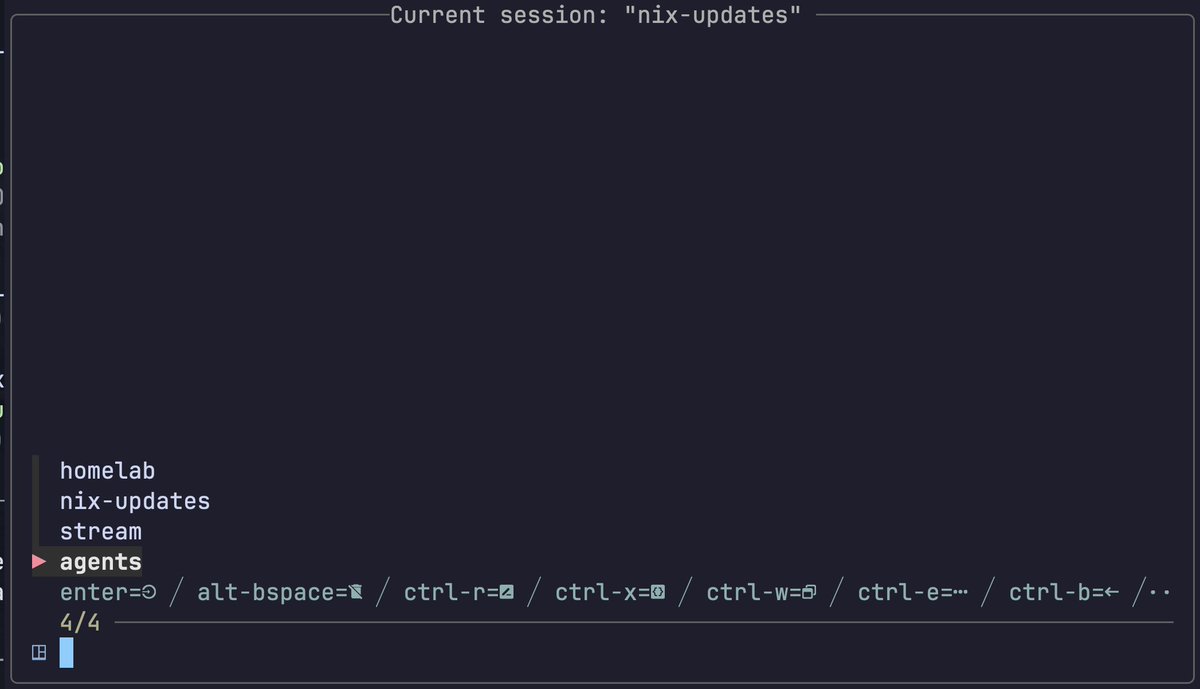
I have all my projects as tmux sessions on my macstudio, so I can use a crappy macbook air to SSH into it and get all the desktop power remotely.
gotta love tmux
28
Mar 28
Alguien esta usando rust en prod? No es chicana, es curiosidad
12
Mar 28
I am really happy that everyone is going back to CLIs and terminal
14