
Joined April 2022
- Tweets 170
- Following 933
- Followers 2,868
- Likes 2,581
44 Photos and videos




Pinned Tweet

May 13
$300M of VC and investor money has flooded into offshore crypto casinos in the last 18 months
all trying to build the next STAKE
Dicey.com - $157M
MonkeyTilt.com - $51M
MyPrize.com - $38M
Bluff.com - $21M
BetHog.com - $16M
Winna.com - $15M
backed by Paradigm, Sequoia, Pantera, Polychain more
hundreds of millions flowing into offshore gambling platforms
we broke down the deals, the economics, and what it actually means for the space
does massive VC money change the player experience for better or worse?
36
17
165
127,165
Jun 10
there’s a lot of bullshit certifications and badges floating around gambling these days
@provablyfairorg has built something interesting here
their first audit looks genuinely deep and worth a look
but I think they'll struggle finding honest casinos that are willing to open up their games
half the industry won’t even publish RTPs, which is a basic gambler’s right
Jun 10

Is a provably fair game actually fair? How would a player know?
"Provably fair" has become a badge casinos award themselves. Almost every casino claims it. Almost none can prove it.
Today we're launching ProvablyFair.org Certification
An independent open-source audit standard for casino built games.
Here's why it exists:
The casino builds the game.
The casino builds the verifier.
Then they tell you to use that verifier as proof the game is fair.
Of course it matches.
That only proves the casino is consistent with itself.
It doesn't prove the game is fair.
And the gap is real.
Every one of these surfaced in the last 6 months.
All marketed provably fair, all passing the casino's own verification:
-Pay table quietly swapped to lower RTP, the verifier updated to match
- A client seed accepted but never used. Decoration
- Server seed rotated every bet, nonce stuck at zero, discarding unfavorable seeds
- A committed hash swapped after the player locked their seed. Defeats commit-reveal entirely
- A verifier running different code from the live game
None of these were caught by the casinos own protocols, because a self-verification system can't catch a problem its own author built into both sides.
And none of them are things a normal player can realistically detect.
So here's how we built it.
The method rests on one decision: we rebuild each game from its published rules, not the casino's code.
Re-running a casino's own code only proves it's consistent with itself. Rebuilding it independently tests whether the live game does what the casino publicly claims.
From that rebuild, for every game we:
- Capture and recompute thousands of real bets independently
- Run the entire provably fair chain, every cryptographic rule in order
- Derive the true RTP from first principles, never trusting the casino's own number
- Confirm it across millions of simulated rounds
Break even one core rule and the game can be rigged.
Pass them all, with the RTP holding up, and it's provably fair.
It's binary. It's math, not opinion.
That's the standard we think provably fair gaming should be held to.
Not a black box audit. Not a trust-us bro PDF.
Every audit is public, every verifier is public, every repository is open source.
Anyone can clone the code and reproduce the findings themselves.
Self-verification proves a casino is consistent with itself.
Independent verification proves it's consistent with what it publicly claims.
Only the second tells you whether the games are actually fair.
5
18
3,513
Jun 2
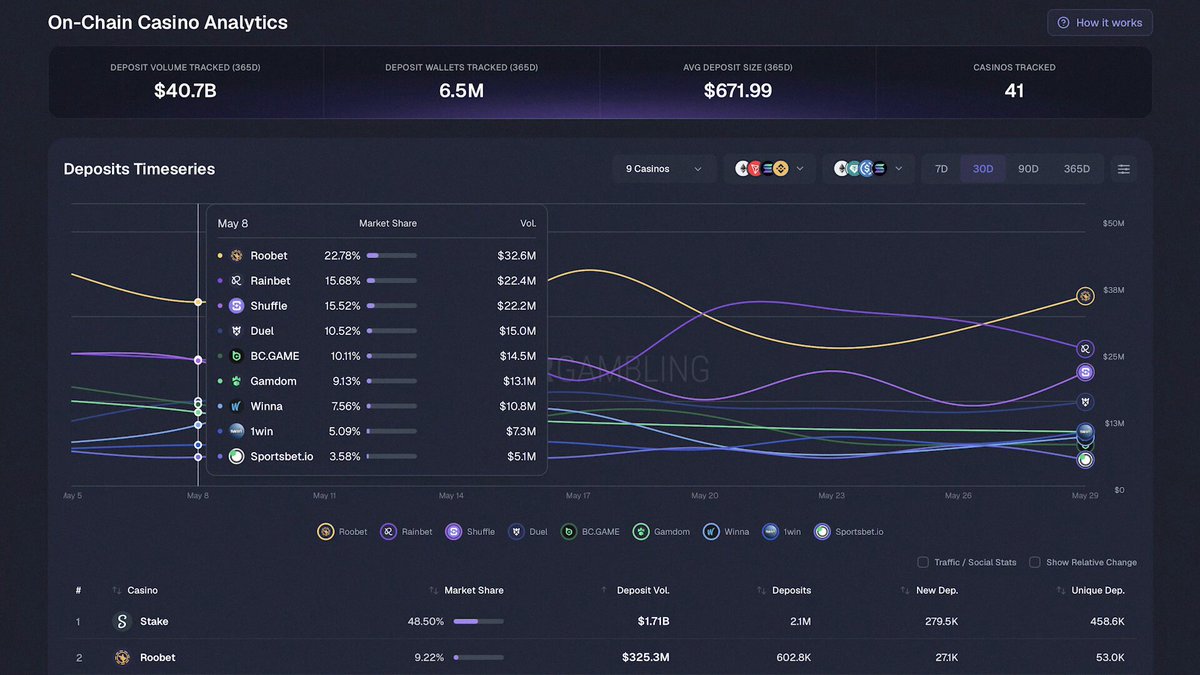
on-chain data is the new credibility meta in crypto gambling
and casinos have every incentive to game it
$44.7B in crypto casino deposits were tracked this year by @Tanzanite_xyz @Circusfyi @fairgambling
players now use these rankings to decide where to gamble
a new casino can generate millions in deposit volume for a few thousand dollars in gas fees and suddenly sit next to Stake and Roobet on every leaderboard
reputation by volume association
do you think your favorite casino cooks their numbers?
11
1
43
4,662
CoinBets🔍 retweeted
May 21
2 years ago every influencer was pumping SHIT coins and NFT projects
now it’s casino deals
the infrastructure layer of crypto is becoming the infrastructure layer of gambling — and it’s accelerating fast
Jupiter, Solana’s biggest DEX, now pushes prediction markets and poker betting
Magic Eden raised $157M for NFTs… then pivoted into a full offshore crypto casino
the culture completely changed
Drake - $100M/year
Trainwreck - $360M in 16 months
xQc - up to $200k per stream
and it’s not just crypto influencers anymore
rappers, athletes, streamers, celebrities — everyone is getting a casino bag
gambling became the fastest growing sponsorship category on the internet and it's not even close
we broke down why this happened, where the money comes from, and what it means for crypto
4
1
28
2,303
May 4
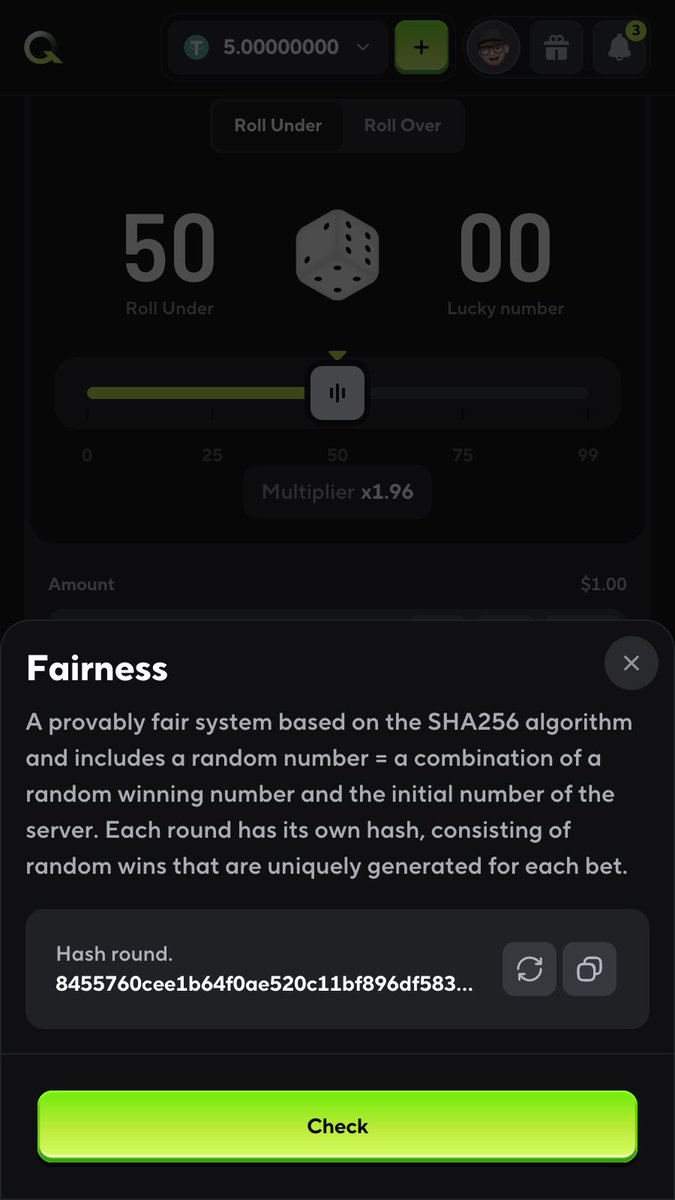
another FAKE Provably Fair casino: Qzino.com
no client seed
no nonce
they rotate the server seed every single bet
there's nothing for a player to verify against
real provably fair has three inputs:
-server seed (casino's input, committed before play)
-client seed (your input)
-nonce (sequential bet counter on a single seed)
Qzino skips the player input and nonce completely
their hash commitment proves nothing because the casino picked all the inputs they can choose any game outcome they like
this is basically a black box game with a fake fairness interface
not sure if it's incompetent or malicious no way to know for sure
have you played their originals? how did it go?
18
10
46
15,724
CoinBets🔍 retweeted
Apr 28
how did stake turn “originals” into a $2 Billion / month machine?
these games are built for retention and acquisition - not as profitable as slots
we broke down what actually makes a good originals game
What’s one original that keeps you coming back?
12
2
52
21,432
CoinBets🔍 retweeted
Apr 3
Anon operators behind ANJOUAN are making $20-30m a year
1,300 crypto casinos are licensed there - a tiny island most people have never heard of
GAMDOM, RAINBET, BC.GAME many more
their own government has said the entities issuing these licenses are fictitious / unauthorized bodies
no dispute handling. no player protection. and when the ABC investigated, the people behind it started deleting their online presence within hours
casinos pay $15–20k a year for a badge that has no real legal basis
if this license means nothing… who protects players when casinos don’t pay?
14
14
72
18,657
Mar 30
How many crypto casinos have you played in the last month?
drop why you bounce in the comments
21%
1 - just one
51%
2-4 - a core few
21%
5-10 - rotate constantly
7%
10 - full degen mode
43 votes • Final results
9
4
26
3,910
Mar 30
one weakness missing from this list: lottery transparency
I pulled the SHFL lottery CSV. what stands out:
-1,048,575 tickets with no wallet addresses. no way to verify ownership or detect house participation
-top entity holds 96,134 tickets (9.2%). could be a whale, could be house controlled, no way to tell
-top 20 entities control 41.8% of all tickets
-staking happens off chain on Shuffle’s servers
-prize pool is 15% of NGR, only Shuffle can verify that number
the draw itself may be provably fair
but the inputs aren’t verifiable. who owns tickets, how many exist, how big the pool actually is all trust based
the only real fix I can see is on chain staking via a public contract, until then, the system relies entirely on trust
interested to hear your thoughts on this @noahdummett
Mar 30

The strengths of $SHFL:
- considerable real value being delivered to the token (more than most cryptocurrencies can claim)
- strong, crypto-native team
The weaknesses of $SHFL:
- one centralised source of value
- total supply too high, too much locked in treasury
- generally low confidence in gamblefi from the market
This year is about converting these weaknesses to strengths; I have a feeling that solving the first two leads to the third following suit. More to come.
5
7
44
12,250
Mar 21
Can you name all 12 crypto casino founders?
few curveballs in here
tag them (or their casino) below
First to get all 12 right wins - 50 USDT
Mar 18

does a public founder actually make you trust a casino more?
crypto casino founders used to be anonymous
no interviews
no socials
just offshore companies and mystery operators
now they’re building personal brands, doing podcasts, flexing online
it’s not random
in an industry with weak licenses, identical games and low trust
a visible founder suddenly matters
29
18
63
13,330
Mar 20
Update: MonkeyTilt pulled ALL their original games after this post
Players can’t verify past bets anymore
If the cryptography was “always sound”
why pull the games at all?
MonkeyTilt, we’re expecting a clarification here
Mar 19
If you’re playing on MonkeyTilt, the outcome might already be decided BEFORE you bet
“The cryptography behind every bet has always been sound”
We tested it
It isn’t...
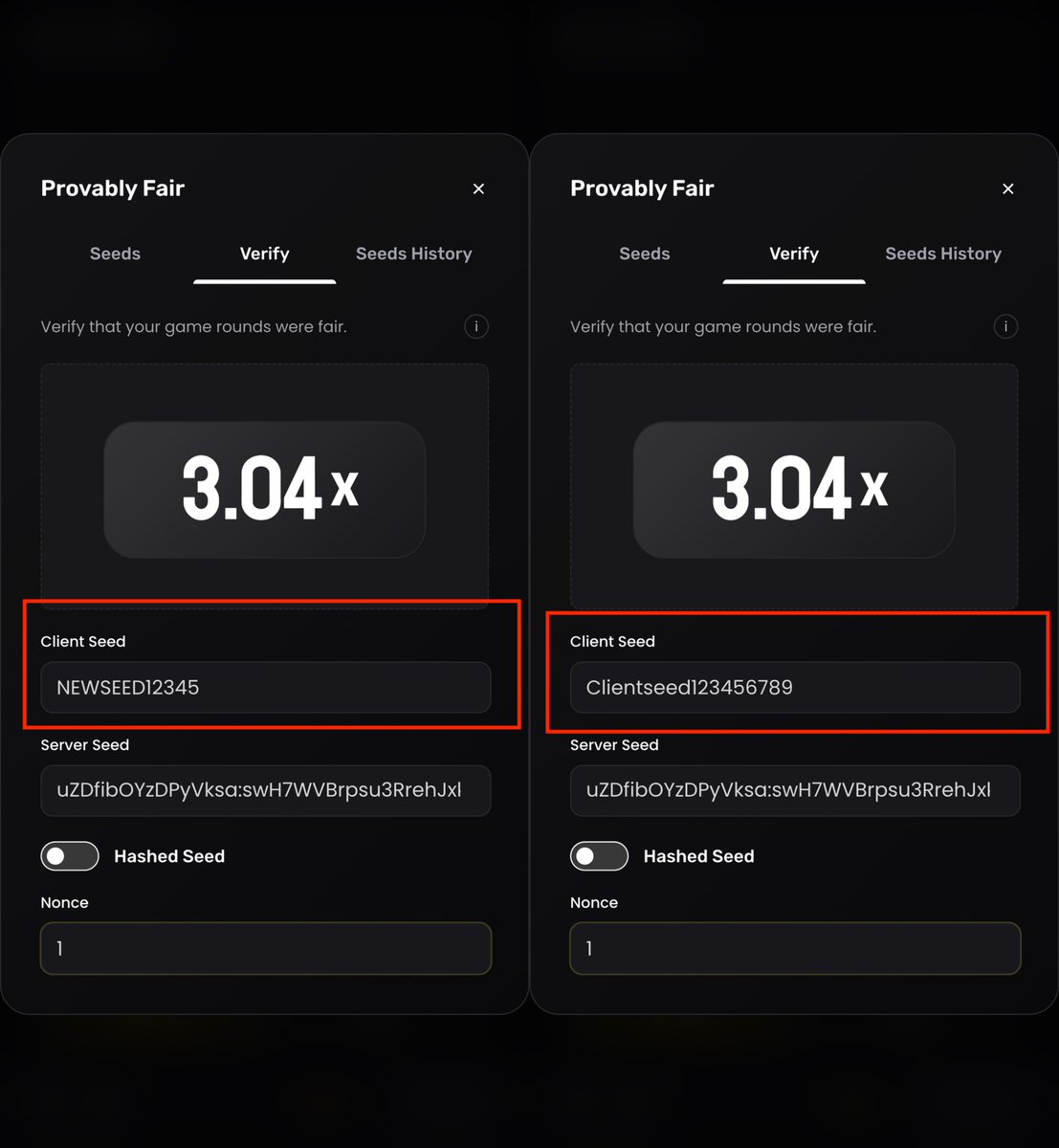
we sent two different client seeds for the same nonce
same result both times
the server is ignoring the client seed entirely
the player has ZERO influence on outcomes
— what we did —
opened the MonkeyTilt provably fair verifier with a revealed server seed
entered nonce 1 → got 3.04x
changed the client seed
same server seed, same nonce → 3.04x
changed it again → 3.04x
the client seed has ZERO effect on the outcome
— why this matters —
in a provably fair system the outcome is derived from:
-server seed
-client seed
-nonce
the client seed exists so the player contributes randomness the server CAN’T predict
if it’s ignored
the server knows every outcome BEFORE you bet
the hash commitment proves nothing
because the server already controls all the inputs
— not a frontend bug —
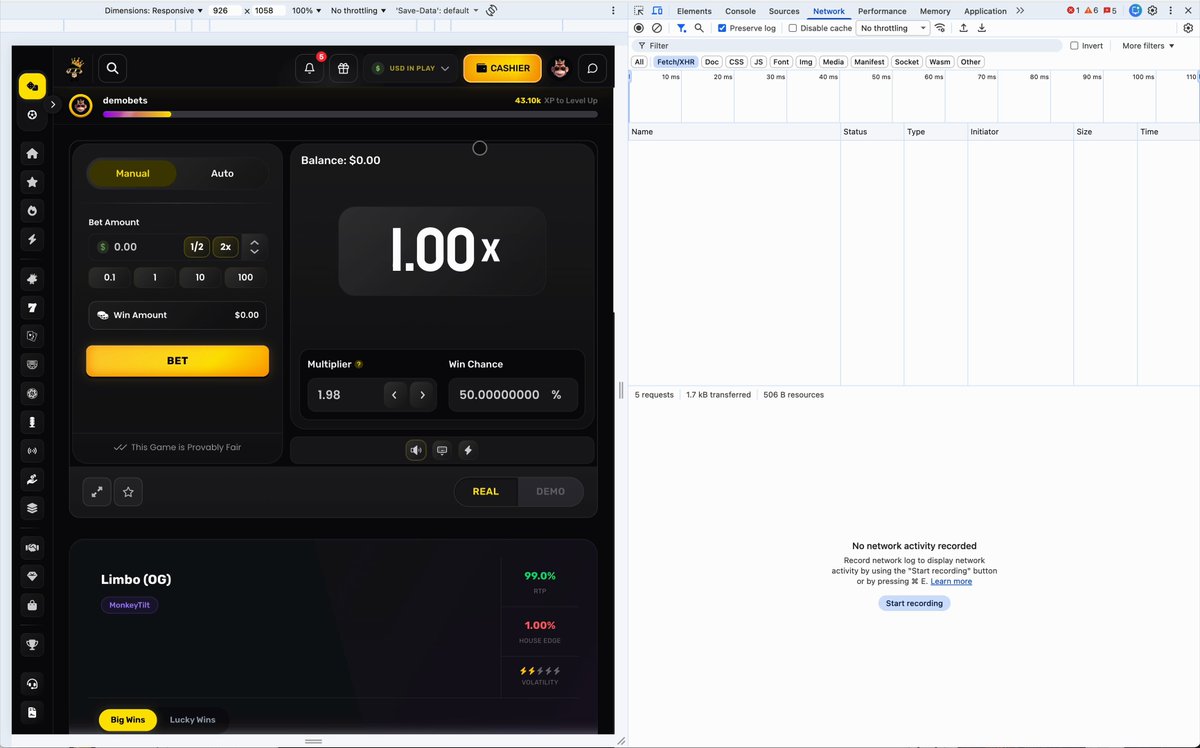
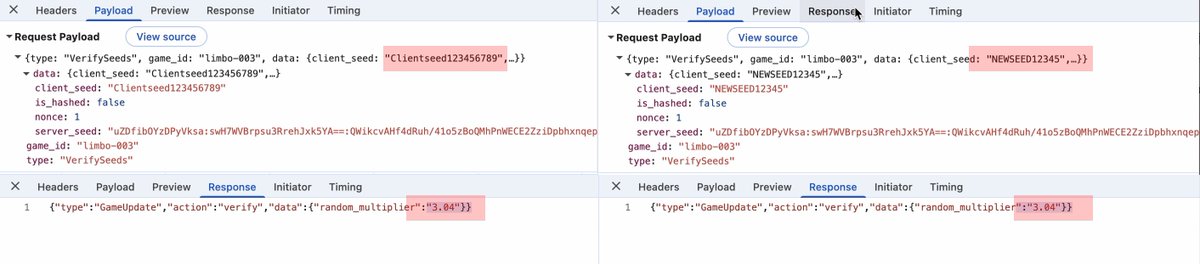
we checked the network traffic
the verifier sends a WebSocket request with:
-client seed
-server seed
-nonce
the server receives different client seeds
and returns the same result anyway
request 1 → client_seed “Clientseed123456789” → 3.04x
request 2 → client_seed “NEWSEED12345” → 3.04x
this is the server ignoring input
not a display issue
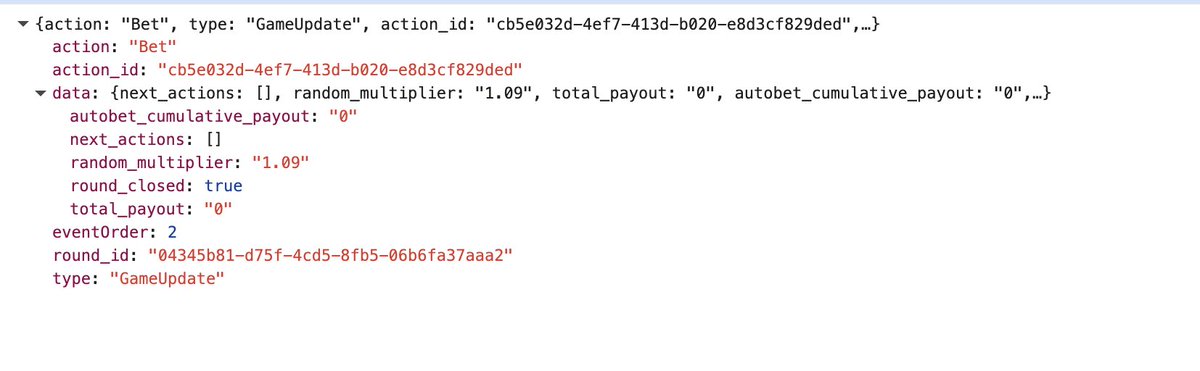
— live bet traffic —
placing a Limbo bet returns:
-random_multiplier
-total_payout
-round_closed
that’s it
no hash
no seed reference
no nonce
no proof
seeds are fetched from a separate endpoint
game engine and seed system are DISCONNECTED
— nonce verification —
you can only verify nonces you’ve already played
in a real system
all outcomes are predetermined once the server seed is committed - they’re deterministic
blocking future nonces suggests results don’t exist until you bet
— summary —
-client seed ignored by server
-no cryptographic proof in bet responses
-game engine and seed system DISCONNECTED
-nonce verification restricted
this isn’t provably fair
it looks like provably fair UI on top of server side RNG
MonkeyTilt should probably address this
anyone can verify this themselves in 60 seconds - open the verifier, change the client seed, watch the result stay the same
11
3
37
17,614
Mar 19
If you’re playing on MonkeyTilt, the outcome might already be decided BEFORE you bet
“The cryptography behind every bet has always been sound”
We tested it
It isn’t...
we sent two different client seeds for the same nonce
same result both times
the server is ignoring the client seed entirely
the player has ZERO influence on outcomes
— what we did —
opened the MonkeyTilt provably fair verifier with a revealed server seed
entered nonce 1 → got 3.04x
changed the client seed
same server seed, same nonce → 3.04x
changed it again → 3.04x
the client seed has ZERO effect on the outcome
— why this matters —
in a provably fair system the outcome is derived from:
-server seed
-client seed
-nonce
the client seed exists so the player contributes randomness the server CAN’T predict
if it’s ignored
the server knows every outcome BEFORE you bet
the hash commitment proves nothing
because the server already controls all the inputs
— not a frontend bug —
we checked the network traffic
the verifier sends a WebSocket request with:
-client seed
-server seed
-nonce
the server receives different client seeds
and returns the same result anyway
request 1 → client_seed “Clientseed123456789” → 3.04x
request 2 → client_seed “NEWSEED12345” → 3.04x
this is the server ignoring input
not a display issue
— live bet traffic —
placing a Limbo bet returns:
-random_multiplier
-total_payout
-round_closed
that’s it
no hash
no seed reference
no nonce
no proof
seeds are fetched from a separate endpoint
game engine and seed system are DISCONNECTED
— nonce verification —
you can only verify nonces you’ve already played
in a real system
all outcomes are predetermined once the server seed is committed - they’re deterministic
blocking future nonces suggests results don’t exist until you bet
— summary —
-client seed ignored by server
-no cryptographic proof in bet responses
-game engine and seed system DISCONNECTED
-nonce verification restricted
this isn’t provably fair
it looks like provably fair UI on top of server side RNG
MonkeyTilt should probably address this
anyone can verify this themselves in 60 seconds - open the verifier, change the client seed, watch the result stay the same
Mar 11

A player recently pointed out that while our provably fair system showed your hashed server seed, you couldn't easily verify the unhashed seed after rotating.
To be clear, the cryptography behind every bet has always been sound. Your outcomes were determined by pre-committed, hashed server seeds before any wager was placed. That never changed. For anyone wanting extra peace of mind, our team can also verify any bets placed prior to this update, just reach out.
But provably fair means you should be able to prove it, not just take our word for it.
Here's what we've shipped:
- Full seed history is now visible
- Unhashed server seeds from past rotations are verifiable
- You can hash any previous server seed (SHA-256) and match it against the hash you were shown, proving nothing was altered
This is exactly how it should work. Community asks, we respond.
13
3
41
21,328
Mar 19
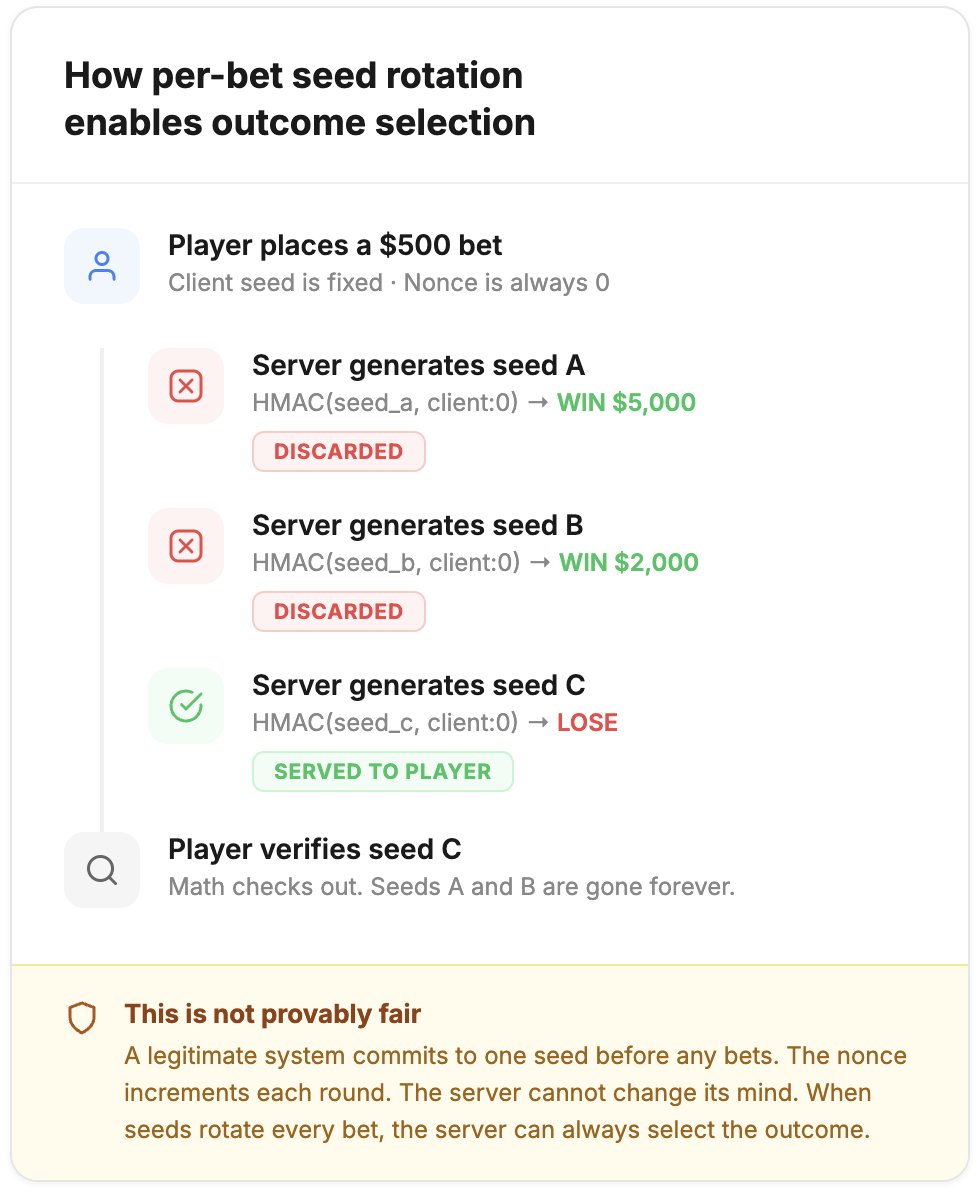
Another terrible “provably fair” implementation:
Betpanda.io
their setup lets them cherry pick outcomes and cheat players
they rotate the server seed EVERY bet
client seed stays fixed
nonce = always 0
what this means:
-after your first bet the server knows your input
-it can simulate outcomes before serving one
-cherry-pick a seed that makes you lose on larger bets
-keep small bets normal so stats look fine
your verification still passes
because the math is correct for the seed they chose
what you can’t prove is how many winning seeds were discarded first
this isn’t provably fair
the house can pick the outcome before you see it
no legit pf system works like this
standard is one committed seed incrementing nonce
Have you played at betpanda? what do you think?
9
4
56
17,945
Mar 18
does a public founder actually make you trust a casino more?
crypto casino founders used to be anonymous
no interviews
no socials
just offshore companies and mystery operators
now they’re building personal brands, doing podcasts, flexing online
it’s not random
in an industry with weak licenses, identical games and low trust
a visible founder suddenly matters
12
9
38
23,008
Mar 16
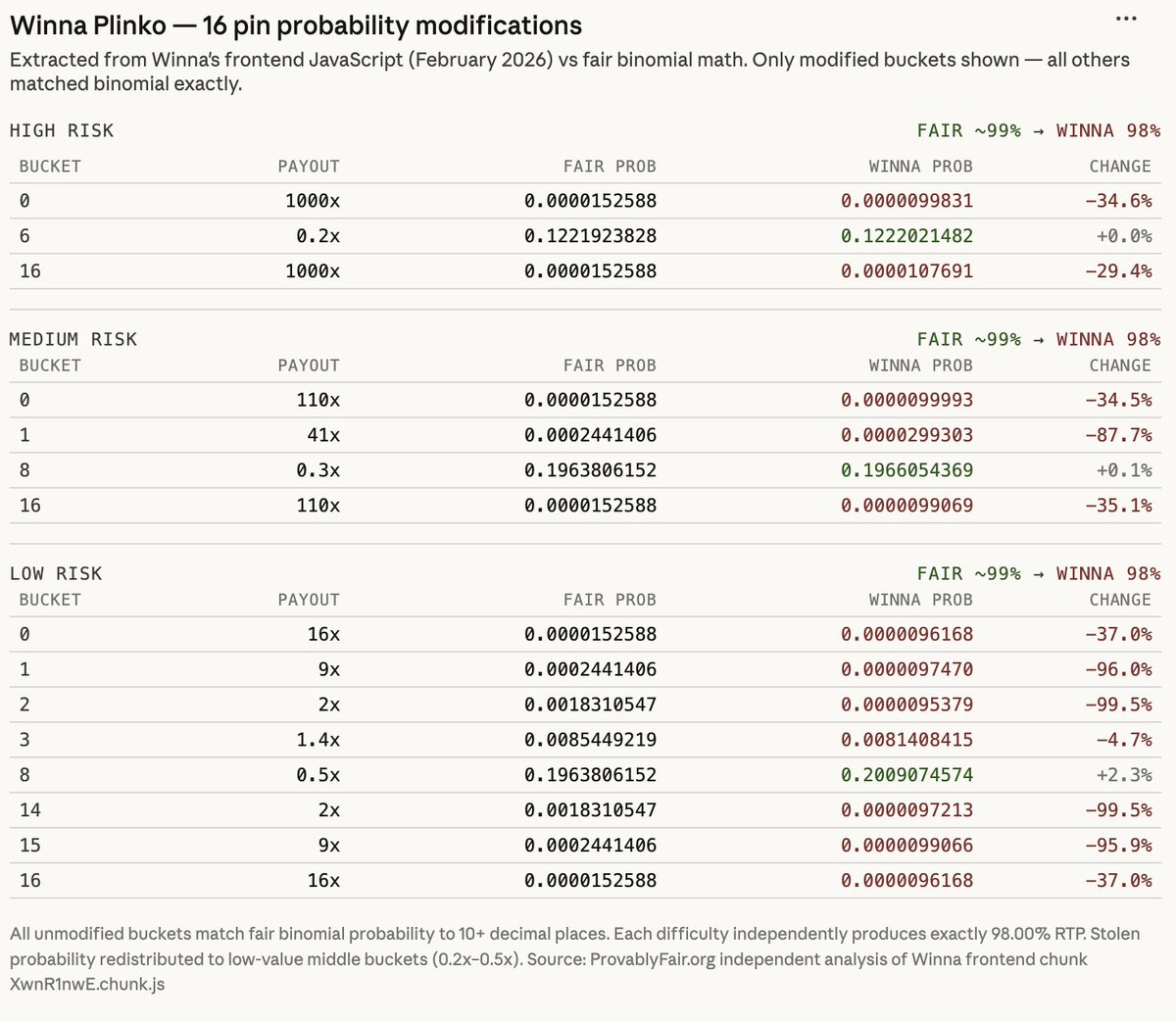
Winna players should check their Plinko bets ASAP
For 3 months the highest multipliers were quietly reduced.
Example: the 1000x edge was ~32% harder to hit than advertised.
Same board
Same 1000x label
Different probabilities in the code
Hard to believe that was just a “mistake”
How should a casino fix something like this?
Mar 16
We conducted an independent technical audit of Winna.com's Plinko game following their March 10 incident report.
Our analysis shows that for nearly 3 months, players were playing Plinko on worse odds than the site publicly stated.
If you played Winna Plinko between Dec 17 and March 10, your bets were placed under those probabilities.
Here’s what the code shows. 🧵
6
18
59
10,540
Feb 28
crypto casino rant in 30 seconds
streamers are fake betting, every streamer hitting 5000x wins every stream claiming raw deals. bloomberg article today hits on this but can't prove it. players collectively know something is fishy with streaming casino deals. and yes streamers are making 50% on affiliate player losses too.
anjouan license is fake - the govt has publicly said they have no idea who's issuing them. curacao isn't much better, trying to fix legitimacy issues but both are worthless rubber stamps.
provably fair is mostly a scam. there are some exceptions that actually implement true provably fair but most casinos slap the label on and have no idea what it means.
casinos will find any excuse not to pay you out if you win big. kyc, vpn, multi accounts - pick your poison. some smarter ones know they have to pay or it becomes a PR nightmare at scale. but all are selectively using this trick, just some more than others.
blockchain casinos are mostly a scam so far. the ux isn't good enough, and the one that kind of executed decent UX turned out to be sketchy scam. mainly used as marketing right now, a way to hide the grift under a technical hood. even more concerning because it feeds off the technical incompetence of players.
casino review sites all get paid 50% of player losses through affiliate deals. there's no truth out there on what's good and what's not. highest paying casino gets pushed regardless of quality.
show me the incentives and i'll show you the outcome.
combine it all together and you have a shitshow of an industry. even if you wanted to be a fair operator running a fair casino you can't compete with all of the above. the loop ensures it - biz model relies on every element. player acquisition from streamers and review sites, small house edges so you either rig games or don't pay out players at every opportunity.
someone has to start calling it what it is
20
16
52
10,857
Feb 28
it's one of the biggest fears of any gambler - that what you're seeing isn't what you're actually getting.
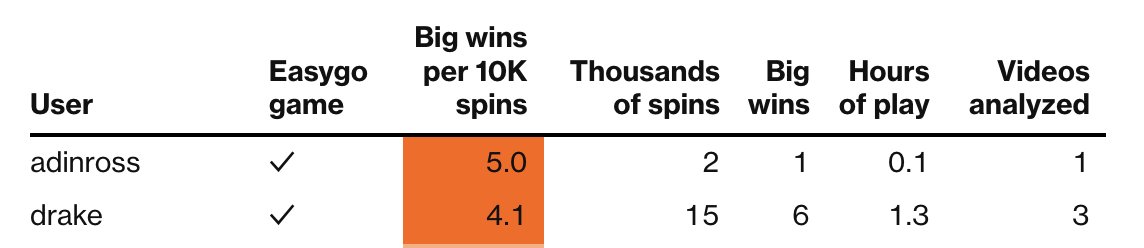
bloomberg spent a year investigating whether stake rigs wins for drake and adin ross. stakes co founder says the methodology is flawed. both sides are missing the bigger point.
first - bloomberg's dataset is weak. 1.3 hours of relevant gameplay for drake and 0.1 hours for adin ross is not statistically meaningful. slots are high variance, small samples prove nothing.
but here's the structural problem: these games run on opaque server side rng. the public can't independently verify anything. it becomes "trust us bro" vs "this looks suspicious."
you can ignore that perception, but i'd guarantee more than 50% of players think streamer wins are rigged. imagine the business upside of changing that with actual proof instead of statements.
there's a fix:
1. make easygo slots provably fair - like stake's own dice, crash etc. more complex for slots, but absolutely possible
2. publish game logic, rtp models and proper verification tools
3. have streamers share their session seeds so anyone can independently verify outcomes
that's it, transparency kills the debate
right now players speculate because they can't verify. if outcomes were cryptographically provable, bloomberg has no story next time. show the math, show the seeds, and the argument ends.
Feb 27

After year of trying to force different narratives, Bloomberg settled on smugly claiming that our stake games are rigged in favor of drake and adin based on a sample size of.... 0.1 hours for adin and 1.3 hours for drake
9
11
32
4,491