
Building VapuAI - an all-in-one AI image generator. 24 yrs shipping software, now figuring out AI. Sharing prompts, techniques, and honest build updates daily.
Joined April 2009
- Tweets 6,865
- Following 297
- Followers 298
- Likes 3,090
463 Photos and videos





Pinned Tweet
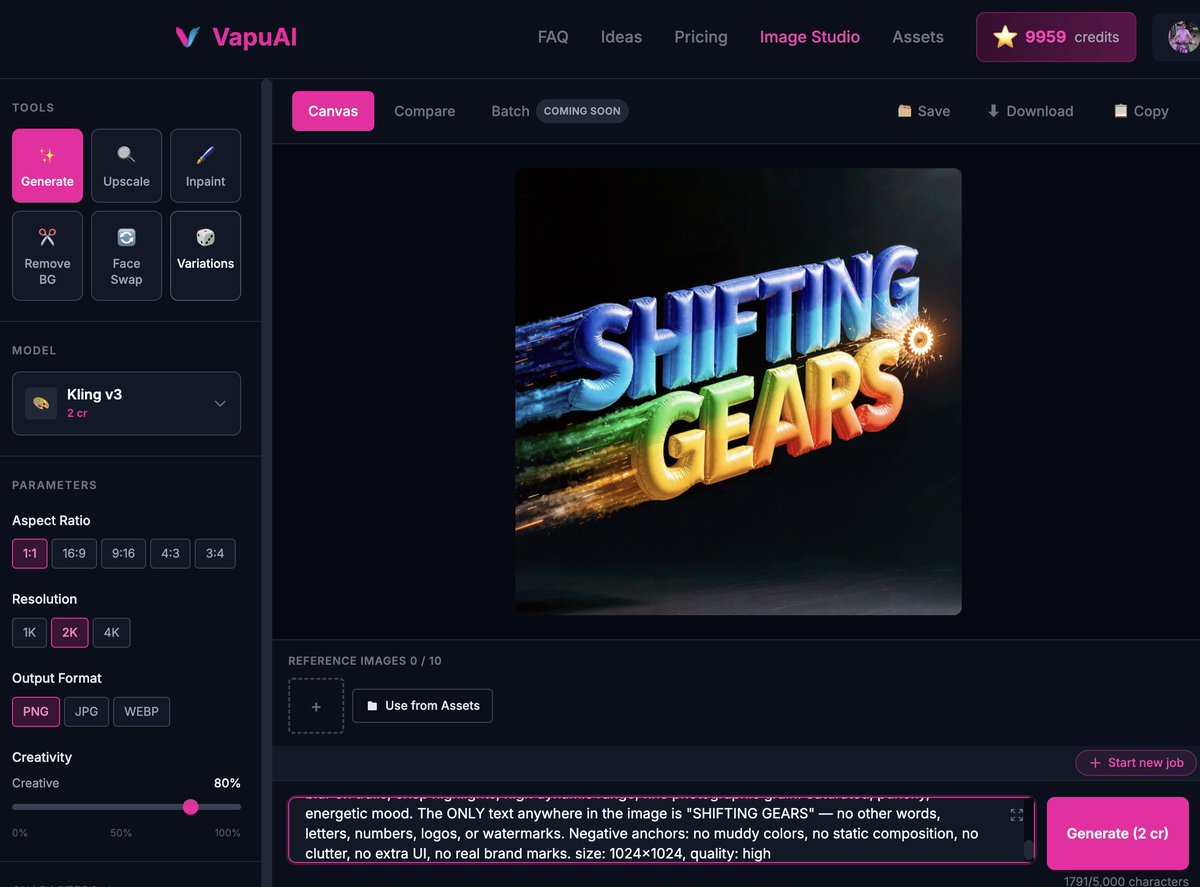
Build Features.
Fix Bugs.
Talk To Users.
Shift gears according to stage of the product.
You can't always do the same thing, the same way and expect different outcomes.
2
Started on top of VS Code. Replacing GitHub.
Nicely played.
Jun 16

We're launching code storage and git hosting.
Origin gives teams and agents a place to host, review, and collaborate on code.
Available this fall. Join the waitlist.
cursor.com/origin-waitlist
1
12
Ashish Sheth retweeted

Jun 16
This guy makes $82,000 a day selling honey.
He started at 12 years old with $300 and one beehive. By the time he graduated high school he was doing six figures a year.
Now, he owns 30,000 hives and over a billion bees…. and makes $35M/year in revenue.
I met with Blake last year.
Here's how his biz model works:
He has six revenue lines…
• Retail
• Wholesale
• Pollination services
• Beekeeping supplies
• Food manufacturing
• Hot honey
Retail and wholesale is the core. He bottles the honey himself and sells it direct to stores and consumers. His facility runs 1,000 jars an hour. One tote of raw honey (about 275 gallons) is worth $15k and takes half a million bees to fill it.
Pollination services runs on top of that. Farmers pay him to park his hives on their land so his bees can pollinate their crops. This brings in extra recurring revenue that’s separate from selling honey.
Hot honey is one of the fastest growing food trends right now. It’s honey infused with chili pepper - either sweet or spicy. Blake sells them at a premium and in smaller batches. So they have better margins than straight honey and cost less to produce.
Beekeeping supplies and food manufacturing round out the rest. Supplies means gear hives, suits, or smokers sold to other beekeepers. Food manufacturing covers other honey-based products that have higher margins than just raw honey.
The numbers:
• Revenue: $35M/year
• Margins: 15%
• Employees: 125
• Bee cost: $2M/year (just to keep them alive)
• Facility output: 1,000 jars/hour (at $5 wholesale, $9 on the shelf)
• Processing facility cost: $3M to build ($1M of honey sitting in it at any given time)
One of the coolest businesses I've seen.
58
82
1,079
102,916

Jun 16
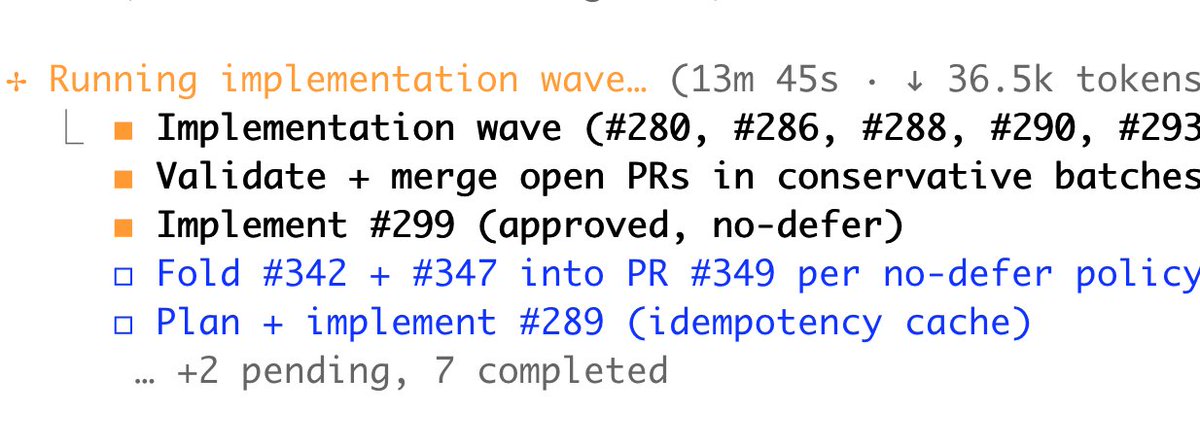
Loop Engineering:
Build Features -> Ship -> Fix Bugs -> Repeat.
1
1
1
21
Ashish Sheth retweeted

Jun 16
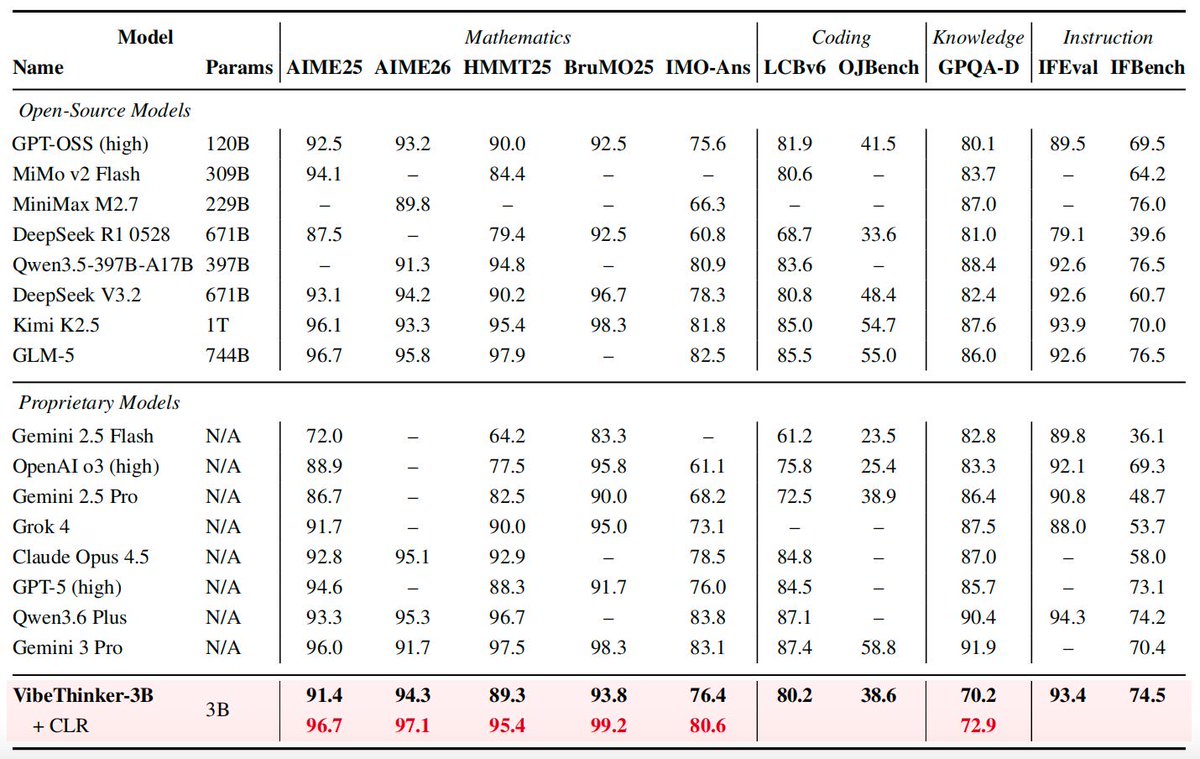
3B model with Opus 4.5 performance
VibeThinker 3B (based on Qwen 2.5)
Jan 16

Prediction
We will have Claude Code Opus 4.5 quality (not nerfed) models running locally at home on a single RTX PRO 6000 before the end of the year
82
67
885
91,285
Ashish Sheth retweeted
Jun 15
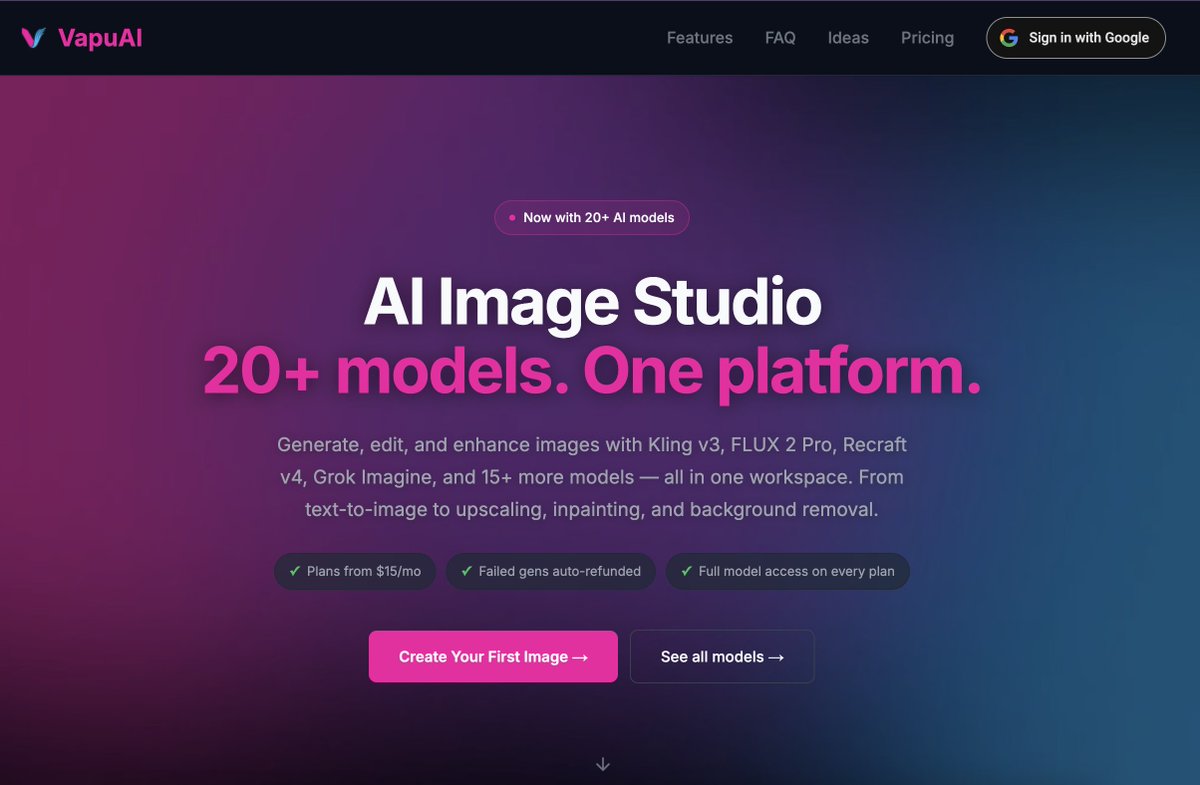
Home Page is Updated. Still many things to fix, but can't wait to ship.
1
1
21
Ashish Sheth retweeted

Jun 15
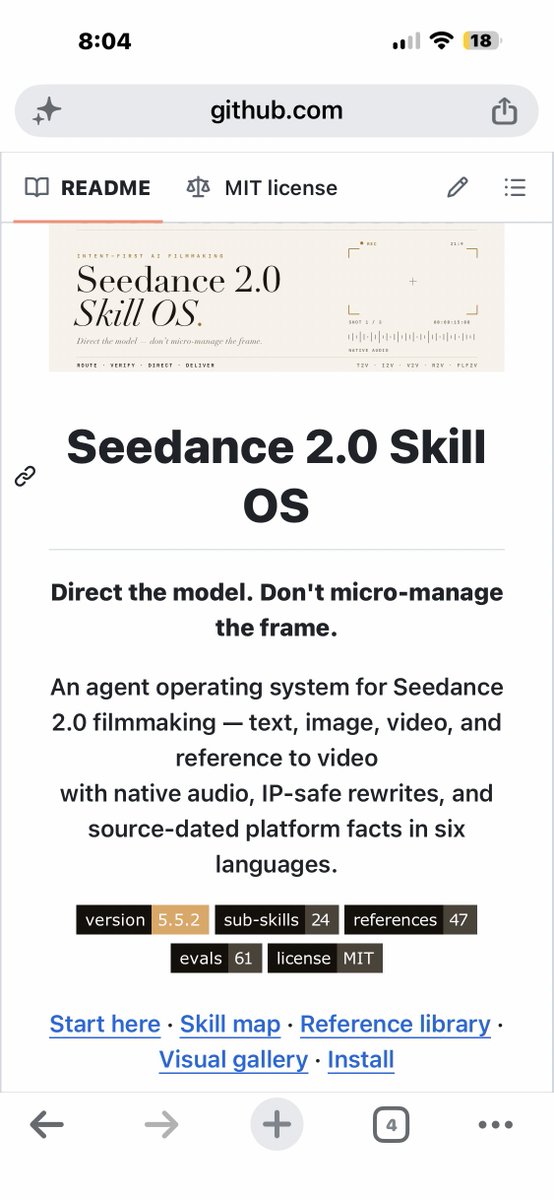
My GitHub skill for Seedance V2 are free. I keep updating it all the time. No need to pay anyone; use it as the base for your own skill building. It also works with other video models. I will have an independent one for Kling and Grok Imagine later when they get to the Seedance V2 level.
89
195
1,459
162,281
Ashish Sheth retweeted

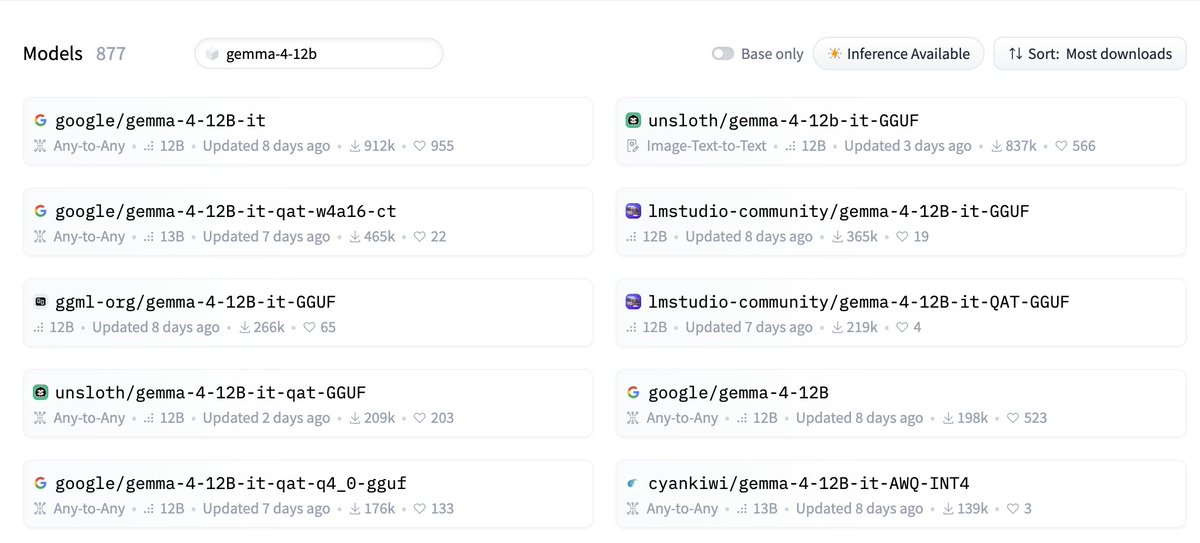
Released last week, and already more than 4M downloads on HuggingFace alone 😊
This makes Gemma 4 12B the most popular encoderfree VLM by a large margin.
In addition to being the first-ever general purpose LLM with encoderfree audio input!
Jun 3

Our new Gemma 4 12B model hits a sweet spot between size performance: it can run locally on a laptop, while enabling powerful multi-step reasoning and agentic workflows. Can’t wait to see what the community does with this one!
15
36
152
48,467
Jun 14
Sunday was the rest day.
No shipping today -used today to finalize the new VapuAI homepage design
Also planned and created GitHub issues for SEO redesign.
Clean planning = fast execution.
2
3
24
Ashish Sheth retweeted

Jun 14
I really like this article. I think that the capabilities of a country are fully dependent on the local buying capacity and the size of the local economy. Whether physical or digital, the farther away you have to distribute something, the more expensive it is. Local distribution is always much easier but if local buying power is low then companies have to export which carries a bigger distribution cost because you have to compete against locals in other countries who have a much lower distribution cost. Actually it’s not just distribution: it’s everything from consumer insights to feedback to key relationships that are a distance away. So if you do innovate but you have to necessarily export that innovation to make money, you’re at a disadvantage against local players.
One personal example is that India has never made high quality games simply because the local purchasing power is low. If we had a lot more PCs things would be very different. China has roughly 320 million PC gamers and India is about 39 million. So on players alone, China’s PC base is roughly 8x India’s. BUT China’s PC game spend is on the order of 80–100x India’s, even though its player base is only like 8x larger. The difference mainly is monetization as Indian gamers spend much less (core ARPU has run around $0.29/month), so 39M PC players translate into very little premium game revenue. Game Science’s art director Yang Qi confirmed that nearly 70% of Wukong’s sales came from China itself. Knowing a local buying market exists justifies spending. The only way we can justify what we are spending now on UTA is because we found inroads into global markets through content otherwise this would be a money losing exercise.
The other problem is that low purchasing power economies have too tiny a market for early adopters. If you built an OpenAI in India before anyone else 50% of people wouldn’t believe you and 50% of people will tell you it won’t work or doesn’t have use cases. I think you need a crackpot high purchasing power early adopter network with high failure and bullshit tolerance to make truly innovative things and also forgive crazy companies during early mistakes because history teaches us that the best companies all had v0.1s that were not very convincing to the masses.
Thats why it’s critical for anyone who wants this country to succeed to first really create more jobs, more disposable income, even if that means creating the nth packaged food brand (American grocery stores still have a much wider variety of biscuit brands than India for example) or food delivery apps before they take bigger bets. Not because they need the capital themselves to try bigger bets, but so that they can diffuse more capital into the ecosystem via jobs and the rewards of equity ownership such that that cohort of people become early adopters for other innovative companies.
Success comes from satisfying local market demand (sometimes like in the case of Tesla or Ford there is hidden demand and entrepreneurs need to unlock it) and rarely comes from creating something that has no local demand. After studying Chinese social media so much I have a long thesis on why they did well (bans on global social media platforms constrain desire of products to local players only who now get revenue and profit to do RnD. Think about what % of disposable income from India is being spent on global brands where the desire to buy starts on a global social media platform).
Anyway people complaining about India building “easier businesses” are really not spending the mental energy to think second order. And 9/10 times this same type of person will completely ignore local innovation that is almost always happening in parallel but gets less media coverage.

45
143
1,537
228,932
Ashish Sheth retweeted

Jun 13
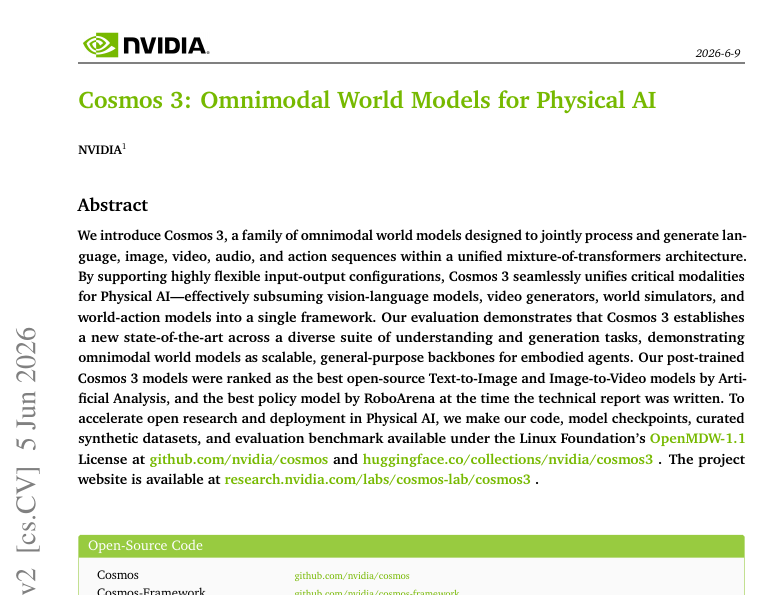
Nvidia's Cosmos 3: 1 model that can understand, simulate, and act across many physical AI tasks.
It treats action as a first-class language of the world.
Most AI models look at reality from the outside: images become captions, videos become descriptions, and motion becomes something to label after the fact.
Cosmos 3 tries to collapse that distance by putting language, image, video, audio, and action into one shared system, so a robot can connect what it sees with what might happen next and what it should do.
A home robot cannot simply recognize a plate, a table, and a human instruction, because the useful question is what changes when it moves, grasps, slips, bumps, or waits.
That is why the paper’s action-token design matters: it turns movement into something the model can condition on, infer from video, or generate alongside a future scene.
----
Link – arxiv. org/abs/2606.02800
Title: "Cosmos 3: Omnimodal World Models for Physical AI"
5
21
60
4,321
Jun 13
Forget Fable and Become able
To run local model!!
Jun 13

The takeaway from Fable 5 being BANNED by the government: GET GOOD AT LOCAL MODELS SO YOU HAVE 100% CONTROL.
My entire weekend was going to be building my craziest ideas with Fable 5. That's now cancelled.
So instead of building with Fable this weekend, I've decided I'll go deep on local models:
1. Start with the runtime. Download Ollama or LM Studio first. This is the thing that actually runs models on your machine.
2. Match the model to your hardware. A model's size is measured in billions of parameters (7B, 32B, 70B). Bigger is smarter but needs more memory. Rule of thumb: a 7B model runs on almost any laptop, a 32B needs a good Mac with 32GB RAM, a 70B needs serious hardware like a DGX Spark or a maxed-out Mac Studio.
3. Know which model for which job. Qwen 3 is the best all-around choice for most tasks. DeepSeek for reasoning and coding. Gemma 4 when you need something tiny that runs on a phone. Llama when you want the biggest community and the most fine-tunes.
4. Quantization. You can shrink a model to run on weaker hardware with barely any quality loss. Look for versions labeled Q4 or Q5. This is how a model that "needs" a server runs on your laptop. Learning this one concept changes everything.
5. Connect it to your agent. Point Hermes or your agent stack at a local model.
6. Context window is your real constraint locally. Cloud models give you huge context for free. Local models make you pay for it in memory. A bigger context window eats RAM fast. Keep your sessions tight and your prompts lean or your machine chokes.
7. Learn to give local models tools. A smaller local model with web search, file access, and code execution beats a giant model with none. The capability gap closes fast when you wire up the right tools. The model is the engine but the tools are the wheels.
8. Fine-tuning is more accessible than you think. You don't need this on day one, but know it exists. You can take an open model and train it on your own data so it gets good at your specific domain.
I'll probably do a breakdown at some point on this @startupideaspod if people are into it.
The lesson from this ban is basically don't build your entire workflow on something that can disappear with a single letter. Own part of your stack. Local models are insurance.
It reminds me when people realized they don't own social media accounts. And then you saw people build email lists etc.
I remember running a startup and my biggest traffic source was organic FB. All of a sudden, algo changed, and I lost 99% of my traffic.
Same sorta moment (but bigger) for AI.
This is a wake up call.
19
Jun 13
I revised timelines for some new features for VapuAI considering Fable 5.
Now I am revising again.
Jun 13

The US government, citing national security authorities, has issued an export control directive to suspend all access to Fable 5 and Mythos 5 by any foreign national, whether inside or outside the United States, including foreign national Anthropic employees.
The net effect of this order is that we must abruptly disable Fable 5 and Mythos 5 for all our customers to ensure compliance.
Access to all other Claude models is not affected.
We apologize for this disruption to our customers. We believe this is a misunderstanding and are working to restore access as soon as possible.
Read our full statement: anthropic.com/news/fable-myt…
32
Jun 13
Today it will be only one topic- guess what?
Jun 12

4 main topics you see currently in this app:
- spacex ipo
- fable
- codex
- x algorithm.
Do you see anything else?
32
Jun 13
This is why countries must have their own LLMs.
Jun 13
The US government, citing national security authorities, has issued an export control directive to suspend all access to Fable 5 and Mythos 5 by any foreign national, whether inside or outside the United States, including foreign national Anthropic employees.
The net effect of this order is that we must abruptly disable Fable 5 and Mythos 5 for all our customers to ensure compliance.
Access to all other Claude models is not affected.
We apologize for this disruption to our customers. We believe this is a misunderstanding and are working to restore access as soon as possible.
Read our full statement: anthropic.com/news/fable-myt…
11
Jun 12
4 main topics you see currently in this app:
- spacex ipo
- fable
- codex
- x algorithm.
Do you see anything else?
48
Ashish Sheth retweeted

Jun 12
Elon just created 4,400 millionaires in a single day.
400 of them are now worth over $100 million.
These aren't VCs. They're SpaceX employees, and the list includes welders, technicians, and cafeteria staff, because for two decades the company paid every level of the workforce in stock instead of higher salaries.
Juan Hernandez immigrated from Mexico and took a $28 an hour contractor welding job in 2015. He says he didn't even know what SpaceX was. The company gave him a $10,000 equity grant and let him buy more shares through payroll deductions. That stake is now worth $880,000.
Trevor Hise's parents wanted him to take a stable job at General Electric. He picked SpaceX instead, stayed 12 years, and accumulated over 100,000 shares. At the $135 listing price that's $13.5 million. He's 37 and semiretired. His words: "The magnitude of this has been ridiculous."
The most telling detail came before the listing. Over 100 employees quietly banded together and negotiated a group wealth management deal covering up to $5 billion, because none of them had ever needed a wealth manager before.
Software IPOs have minted millionaires for 30 years. This is the first one where the money went to the factory floor.
3,279
25,634
142,095
7,511,530
Ashish Sheth retweeted
Jun 12
Jun 12

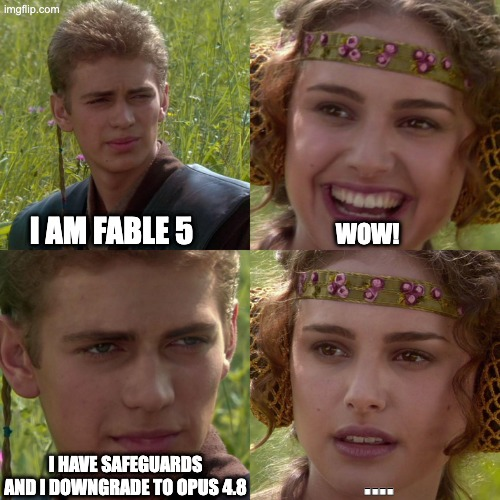
I keep hearing the same stories from so many devs: let Fable build a project (nothing wild!) and it just downgrades itself to Opus for who-knows-what reason. Dan Shipper, Simon Willison, many others.
It feels like this model is not reliable or predictable, and it can be an issue
1
15
Ashish Sheth retweeted

Jun 12
same guy btw

Jun 12

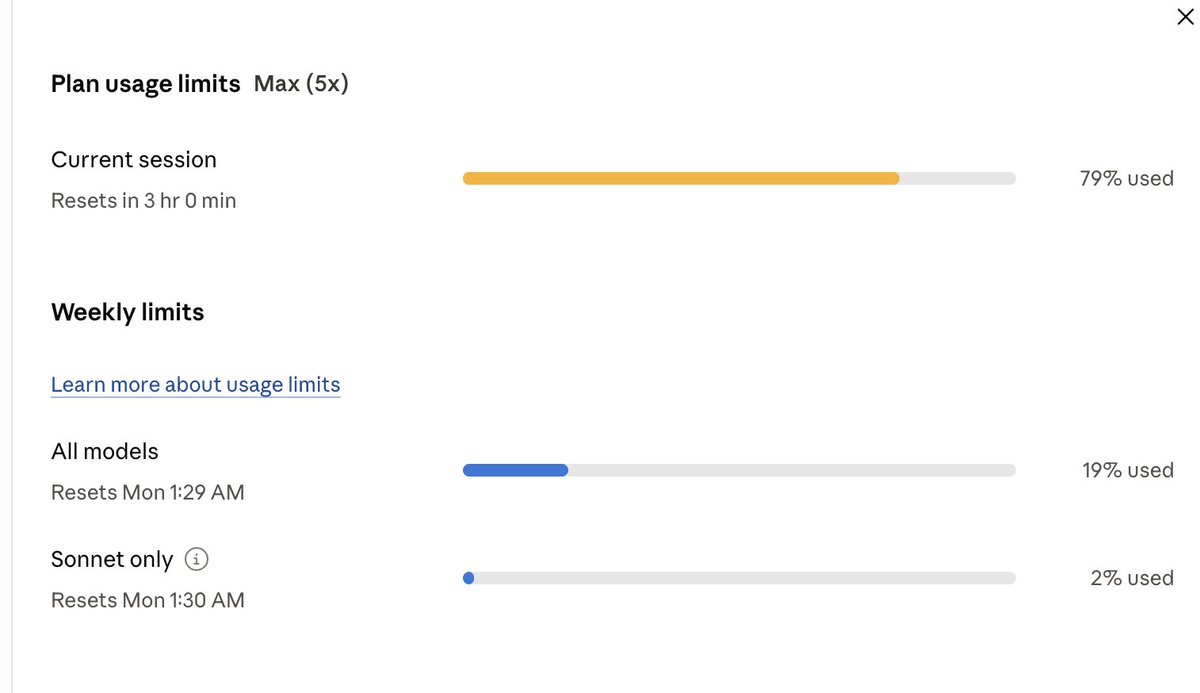
If Anthropic put out a $1000/month tier that gets 5x the $200 tier limits and also lets us keep Fable access, I'd do it in a heartbeat.
130
103
7,534
463,763