Teaching the life skills of quality chest compressions & early AED use to everyone.
Joined January 2017
- Tweets 150
- Following 26
- Followers 64
- Likes 4
75 Photos and videos





11 May 2024
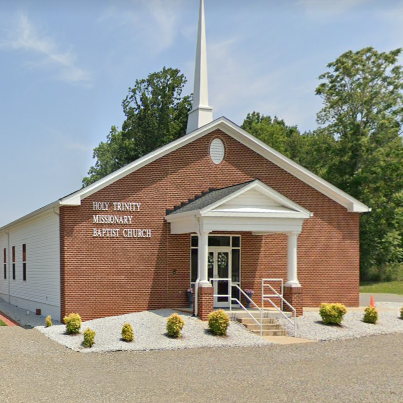
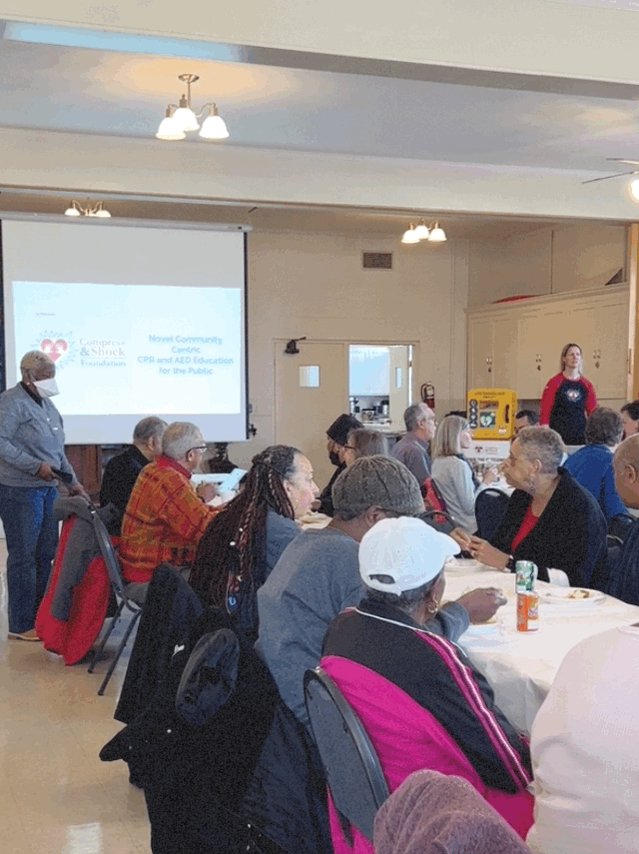
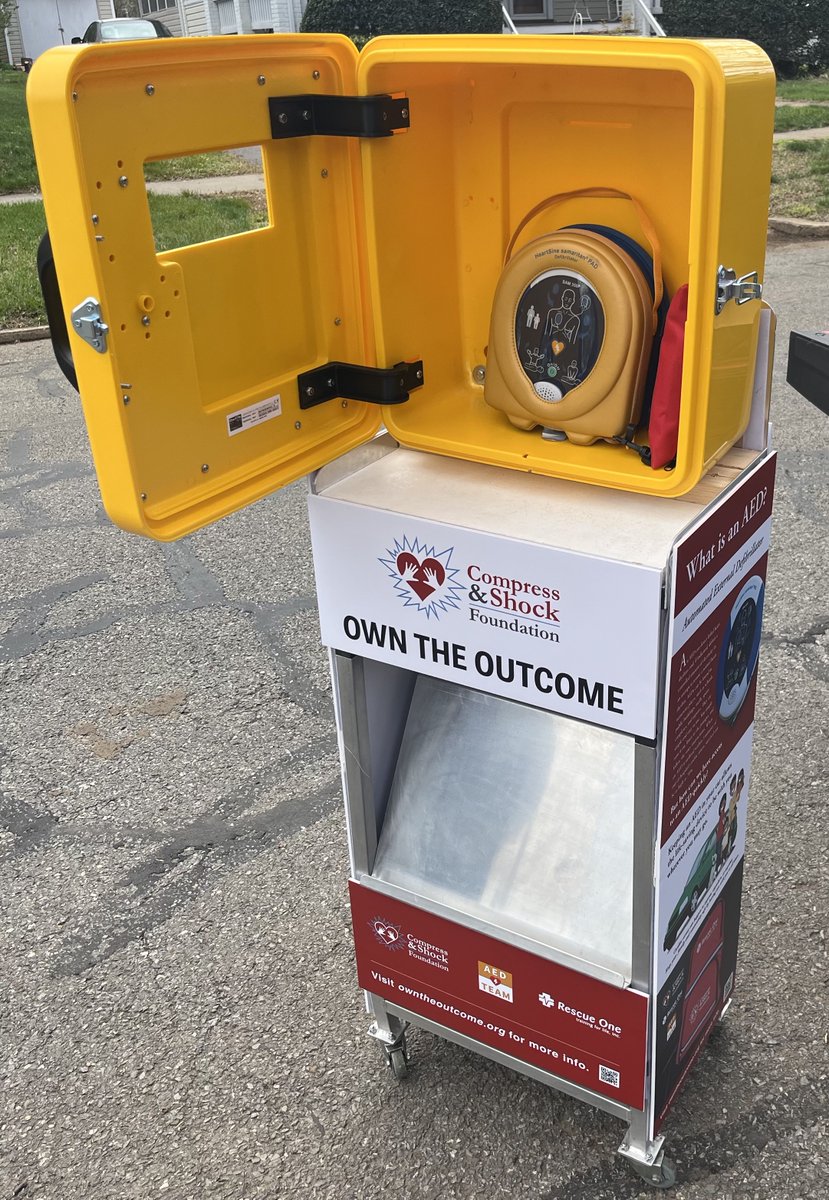
We are offering training at Attic Productions in Fincastle on June 1! The training will be attended by cardiac arrest survivor Twila Rankin and the AED sponsored by survivor Tom Jones and his wife Kim! Sign up here:compressandshock.org/event-d…
44
8 May 2024
1
35
24 Apr 2024
What are the barriers to 911 engagement, bystander CPR and use of an AED?
For general learner communities: fear of "doing something wrong, fear of lawsuits, fear of communicable disease, not understanding AEDs, or exposing a female victim's chest
1
22
24 Apr 2024
For learner communities of color: language barrier, distrust of police/government, lack of knowledge of 911 system, financial concerns, inadequate healthcare knowledge, or fear of racial mistreatment
1
11
24 Apr 2024
We tailor our education to each community that we engage such that we account for primary language spoken as well as cultural and racial specific considerations. Empowering everyone to save a life!
11
24 Apr 2024
The only mistake anyone can make in a cardiac arrest is to do nothing. Acting in good faith to save a life is protected by the Good Samaritan Law. We will teach you how to save a life!
1
35
22 Apr 2024
Is it a heart attack or cardiac arrest?
Heart attacks - occur when there's a blockage of blood supply to the heart. The person is conscious, with a pulse, and may complain of chest pain that goes to their shoulder or jaw as well as shortness of breath.
1
18
22 Apr 2024
Cardiac arrest - person will be unconscious with NO pulse and abnormal breathing or no breathing at all. CPR is required immediately and an AED should be used when available.
1
14
22 Apr 2024
Join us June 1st for FREE CPR and AED Education designed for the public and created to break down barriers to saving a life!
compressandshock.org
11
22 Apr 2024
Do you know the difference between a heart attack and cardiac arrest?
0%
Yes
0%
No
0 votes • Final results
1
9
22 Apr 2024
Stay tuned for our next post to learn the difference!
10
21 Apr 2024
AHA Statement on Reducing Disparities for Out of Hospital Cardiac Arrest:
1)Increase CPR training, specifically in lower-socioeconomic, under-resourced areas
2)Decrease time to EMS activation
3)Universal implementation of Telephone-Assisted CPR
4)Improve access to bystander AEDs
1
19
21 Apr 2024
We are the only non-profit in the United States with an AED Access Model paired with free CPR and AED training dedicated to lower-socioeconomic, under-resourced areas.
12
20 Apr 2024
(Garcia et al, New England Journal of Medicine 2022.)
“First, there is a critical need to offer low-cost or no-cost CPR training in Black and Hispanic communities, particularly in convenient settings such as Black churches and Hispanic community centers.”
1
1
31
20 Apr 2024
“Second, the use of linguistically appropriate and culturally sensitive CPR training is necessary to effectively reach diverse communities.”
1
1
29
20 Apr 2024
Our educational model is designed to meet and EXCEED these recommendations.
(From Iglesia La Roca Church - Roanoke, VA March, 2023)
youtube.com/watch?v=mCv5NlfT…
1
25
19 Apr 2024
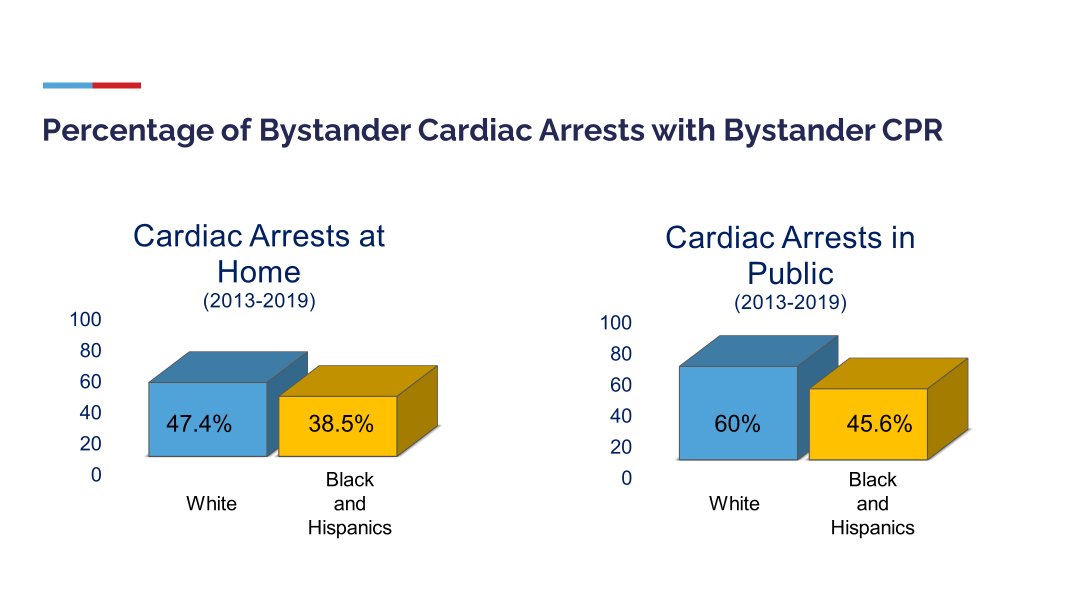
Access to CPR and AED education is not equitable in all communities as demonstrated by this data. The Compress and Shock Foundation exists to provide every victim of cardiac arrest an equal chance of returning to their family. (nejm.org/doi/full/10.1056/NE…)
1
1
253
19 Apr 2024
Citation: Garcia RA, Spertus JA, Girotra S, et al. Racial and Ethnic Differences in Bystander CPR for Witnessed Cardiac Arrest. N Engl J Med. 2022;387(17):1569-1578. doi:10.1056/NEJMoa2200798.
17
18 Apr 2024
Our mission is to bring free and equitable access to CPR and AED education to all communities with a specific dedication to those communities most adversely affected by cardiac arrest due to race, ethnicity, primary language, or access to healthcare education.
1
1
1
277
18 Apr 2024
Please visit our website (compressandshock.org) for more information about our AED Access Program in which we donate FREE AEDs along with CPR and AED education to learner communities that align with our mission statement.
9