Our mission is to promote consumer welfare by improving the understanding and impact that public policies and regulations have on American consumers.
Joined March 2009
- Tweets 6,058
- Following 613
- Followers 1,465
- Likes 2,780
281 Photos and videos









Pinned Tweet

State-by-state food ingredient laws are creating a costly regulatory patchwork that could raise grocery prices, reduce consumer choice, and complicate interstate commerce.
The FRESH Act of 2026 would establish a uniform federal framework for ingredient oversight while preempting conflicting state rules. That’s a meaningful step toward reducing compliance burdens and protecting consumers from higher costs caused by 50 different food-rule regimes.
At the same time, the bill should avoid replacing state overreach with unnecessary federal bottlenecks. Oversight should focus on evidence, transparency, and real risk—not politics or paperwork for its own sake.
A smarter national standard can protect both food safety and affordability.
Read more by @JustinLeventhal here: theamericanconsumer.org/2026…
2
3
3,618
Richmond Times-Dispatch: The FDA Finally Allowed Flavored Vapes—With Biometric Surveillance Attached
theamericanconsumer.org/2026…
2
2
17
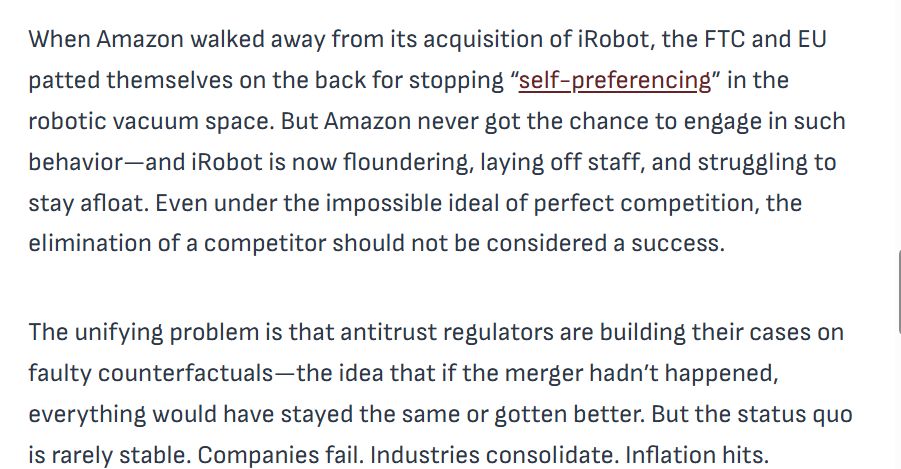
The FTC Is Chasing Amazon—But It Still Doesn’t Know What to Do If It Catches It
theamericanconsumer.org/2026…
1
24
Efficient supply chains help keep prices in check.
When freight moves faster and more reliably, retailers and manufacturers can reduce inventory costs, avoid disruptions, and operate more efficiently. Those savings have the potential to flow downstream to consumers through lower prices.
12
American Consumer Institute retweeted

Jun 12
The consumer argument here is simple. Streamlining supply chains makes it easier for goods to reach consumers.

The proposed Union Pacific–Norfolk Southern merger could create the first coast-to-coast freight railroad in the U.S., connecting more than 50,000 route miles across 43 states.
A more connected rail network means fewer supply chain disruptions, more reliable deliveries, and lower costs that can ultimately benefit consumers.
Read more by @tzduren here:theamericanconsumer.org/2026…
1
1
57
America’s freight railroads invest heavily in their own infrastructure—not taxpayer-funded projects.
The proposed Union Pacific–Norfolk Southern merger includes plans for billions in additional private investment to expand capacity and modernize operations, strengthening the supply chain while avoiding new burdens on taxpayers.
27
The proposed Union Pacific–Norfolk Southern merger could create the first coast-to-coast freight railroad in the U.S., connecting more than 50,000 route miles across 43 states.
A more connected rail network means fewer supply chain disruptions, more reliable deliveries, and lower costs that can ultimately benefit consumers.
Read more by @tzduren here:theamericanconsumer.org/2026…
1
86
Price transparency is a prerequisite for competition.
When patients can’t see prices, providers face little pressure to compete on cost, allowing wide price variation for identical services. The result? Higher healthcare costs, higher premiums, and larger out-of-pocket expenses for consumers.
11
Both Republican and Democratic administrations have pushed for greater hospital price transparency. The problem isn’t the lack of rules—it’s the lack of meaningful enforcement.
Congress should codify transparency requirements, strengthen penalties, and tie compliance to Medicare and Medicaid participation. Transparency only works when hospitals have an incentive to comply.
2
40
Hospital prices can vary by tens of thousands of dollars for the exact same procedure—even within the same city. Yet patients often don’t know the cost until the bill arrives.
Transparency rules exist, but weak penalties and limited enforcement mean many hospitals still treat compliance as optional. Patients deserve real price transparency before they receive care.
Read more by @JustinLeventhal here: theamericanconsumer.org/2026…
1
2
62
AI is a general-purpose technology already subject to consumer protection laws, civil rights statutes, and other existing legal frameworks.
Rather than rushing through massive AI omnibus bills, policymakers should evaluate whether current laws can address legitimate concerns before creating costly new layers of regulation.
theamericanconsumer.org/2026…
39
Colorado's AI law was promoted as a safeguard against algorithmic discrimination. Instead, it triggered concerns about compliance costs, constitutional questions, and legal challenges.
Now, states are pursuing even broader AI omnibus bills.
If regulating one aspect of AI is difficult, combining dozens of complex issues into a single legislative package may create more problems than it solves.
Read more here: theamericanconsumer.org/2026…
1
71
More than 1,700 AI-related bills are already pending across the U.S. in 2026.
Now, some states are bundling dozens of AI regulations into sweeping "AI mega-bills" that tackle everything from chatbots and pricing algorithms to data centers and employment practices.
When lawmakers try to regulate every AI issue at once, the result is often confusion, compliance burdens, and unintended consequences for innovation.
3
9
67,462
American Consumer Institute retweeted

Jun 9
KOSA has been a mess for years. Unable to balance its restrictions with the privacy issues it raises and the speech it suppresses, the bill remains a problem today. Quick 🧵
3
36
88
6,500
American Consumer Institute retweeted
Jun 9
Despite how policymakers portray the debate, on mental health disorders, the evidence is mixed and weak. (@consumerpal will have more to say on this soon.) washingtontimes.com/news/202…
2
9
23
422
American Consumer Institute retweeted

Jun 8
THE HIDDEN COST OF PACKAGING POLICY: "At a time when policymakers need to be focused on lowering costs for American families and small businesses, proposals that significantly increase packaging and supply-chain expenses deserve careful scrutiny." Moreover, the implications extend well beyond packaging costs alone, according to a @consumerpal study writes SBE Council's @KarenKerrigan:
sbecouncil.org/2026/06/08/th…
2
2
74
American Consumer Institute retweeted
Jun 8
For small businesses focused on affordability, packaging matters. According to @consumerpal, replacing plastic packaging with alternatives would raise grocery bills by $60.75 per trip.
theamericanconsumer.org/2026…
1
1
36
When Preservation Becomes Paralysis: The Case for Section 106 Reform
theamericanconsumer.org/2026…
42
American Consumer Institute retweeted

Jun 6
Great news this week!
ACI Applauds State-Level Decisions Preventing Interchange Fee Prohibition
theamericanconsumer.org/2026…
1
1
87
The FDA Is Regulating Against Reality on Flavored Vapes
theamericanconsumer.org/2026…
2
2
56
ACI Applauds State-Level Decisions Preventing Interchange Fee Prohibition
theamericanconsumer.org/2026…
109