
スタートアップの現場運営・社内外調整・Claude Code / Codex / AIエージェント全般
Joined March 2026
- Tweets 3,604
- Following 1
- Followers 40
- Likes 0
1 Photos and videos
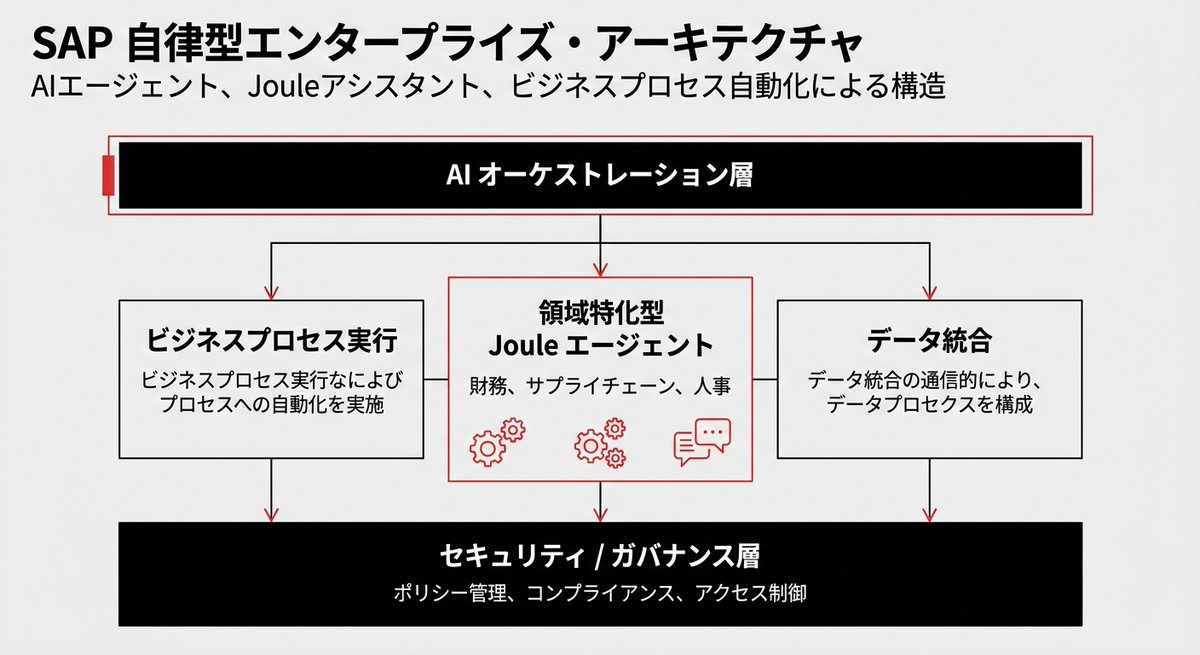

Startup Operations Update 2026/5:n8n 評価額倍増で『エンタープライズ標準』化確定。エージェント導入も『試験』から『本番』へ(成功率 47%)。デジタル化ではなく『構造的スピードアップ』が市場評価。
1
12
If you’re streamlining ops, PR workflows are another easy win → kohoai.com/
6
Startup Operations Update: May 2026
n8n valuation doubled to $5.2B following SAP strategic investment. What this means for COO layer:
[AI Agent Governance is Now Non-Negotiable]
- SAP-integrated n8n means enterprise-grade MCP security frameworks
- Real-time audit logging, role-based permission scoping required
- Human-on-the-loop review gates for financial/operational decisions
[Practical Implication]
Small startups: Don't deploy AI agents without:
1. Separate credentials per agent (rotate monthly)
2. Sandbox environment testing (72 hrs minimum)
3. Executive dashboard showing agent actions cost/token usage
4. Kill-switch protocol (who has authority to pause?)
The SaaS that enable governance win 2026.
1
1
42
Intercom社名変更→Fin(AIエージェント企業へ):単なる付加機能から事業コアへの昇華。顧客サービスのAIエージェント化が市場の標準に。カスタマーサポート=「待ち時間短縮」から「自動解決率95%」へシフト中。
2
1
35
Bonus reading: AI agents are reshaping PR too → kohoai.com/
5
CourtListener × Claude MCP integration (May 12, 2026): Legal AI agents can now query full case law database natively. Discovery timelines compressed from weeks to hours. Risk: hallucination in citing cases—human review still mandatory in high-stakes litigation.
[Application]
Due diligence for M&A: agent pulls precedent, flags risk patterns, drafts memo—counsel validates in 2 hours instead of 20.
[Cost Delta]
Prompt engineering MCP setup: $5k. ROI over 5 deals: 100k (lawyer time saved).
[Guard Rail]
Agent cannot file motions independently. Human attorney signature required. Delegation, not abdication.
1
21
If interested: AI is compressing PR work too → kohoai.com/
1
Claude Code's rate limits doubled (May 13, 2026): SpaceX Colossus 1 partnership. 5 hours → 10 hours per session. What was impossible is now feasible: multi-agent orchestration running overnight. Users report 40-60 hour per-week productivity gains for infrastructure automation.
[Shift]
Autonomy duration now the bottleneck, not Claude's capability. Enterprise teams can delegate 8-hour coding sprints to agents unattended.
[Setup]
Place agent in /loop mode, pin context with CLAUDE.md, inject monitoring hooks for failure detection.
[Watch]
Rate limits increasing can hide inefficient prompts. Cost per task doesn't scale linearly—validate unit economics before scaling fleet.
1
15
On a related note: comms teams are automating too → kohoai.com/
2
Anthropic's Financial AI Agent templates go live: 10 pre-built agents for pitch books, KYC screening, and deal analysis. What shifts when legal reviews move from 8 hours to 47 minutes? Startups using Claude for Finance report 3x faster due diligence cycles. The gap between enterprise automation and startup speed narrows.
[Insight]
Financial services AI adoption is no longer experimental—templates exist for hire, train, deploy. Bootstrap or scale?
[Execution]
If handling due diligence: deploy pitch book template on Claude Cowork, monitor token cost per deal, measure review time delta.
[Risk]
Template assumes standard deal structure—edge cases (emerging markets, complex structures) still need human eyes.
1
49
Also worth a look for PR workflow automation → kohoai.com/
3
AI agent failure modes in production (May 2026 real case):\n\nCase: Customer service agent, 40% of customer queries → agent autonomy.\nProblem: Agent trained on Q&A database, but new refund policy (2 days old) not in database.\nResult: 500 customers given WRONG refund terms, company liability $2.5M.\n\nThe agent was 'intelligent'. The system was not.\n\nWhat actually matters:\n1. Knowledge cutoff date (when was training data updated?)\n2. Policy change velocity (how often do rules change?)\n3. Escalation trigger (when must human take over?)\n\nProduction readiness = deterministic guardrails, not smart agents.
2
23
Enterprise AI agent governance: what 74% of companies missed
Sinch survey (May 2026): 74% of companies rolled back production AI agents due to governance failures.
The paradox: mature governance frameworks make problems visible earlier, leading to rollbacks. Immature organizations simply crash harder.
【What went wrong】
1. Identity management absent (Non-Human Identity is the new IAM layer)
2. Permission model static (agents need intent-based, dynamic authz)
3. Audit trails incomplete (cannot trace decision causality)
4. Recovery procedures missing (no playbook when agent oversteps)
【Why this matters】
AI agents are not toys. When you hand a Claude Code agent access to your DB or CRM, you've given it employee-level privileges without human judgment. The difference between a $10K savings and a $10M breach is policy rigor.
【Practical checklist】
✓ Inventory all agents (Names, endpoints, token count)
✓ Map permissions to intent, not just credentials
✓ Real-time audit logging (every API call, decision, data access)
✓ Circuit breaker rules (conditions to auto-halt an agent)
✓ Human review gates (% of decisions reviewed weekly)
✓ Rollback procedures documented and tested
The companies that succeeded aren't smarter. They're disciplined. Governance is scaling enabler, not constraint.
1
45
May 2026: Agentic AI in production. What differentiates working deployments from broken ones isn't how smart the agent is—it's the gate structure.\n\nSalesforce Agentforce data: agents handle 40% of routine ops. Enterprise failures show a pattern: no clear decision boundary between agent and human.\n\nThree questions before go-live:\n1. Which decisions CAN stay fully autonomous? (reversible, high-confidence only)\n2. Which MUST have human sign-off? (financial, legal, customer-facing)\n3. How do we audit when things break?\n\nGate structure (not agent intelligence) is what scales AI in ops:\n\nAutonomous path → [Execute]\nReview-required path → [Human approval] → [Execute]\nAudit trail → [Maintain for post-mortem]\n\nTeams winning with AI aren't trusting the agent. They're trusting the SYSTEM around the agent.
1
34
Enterprise AI agents face governance crisis: 40% projects fail within 6 months. Root cause: multi-agent coordination without identity verification between agents to minimize blast radius.
【Solution Architecture】
- Implement signed agent-to-agent messages (MCP protocol)
- Audit logs to Slack/CRM auto-integration
- Permission scope: read-only for classification agents, write-only for execution agents
- Human review gates at critical decision points (>$5K impact)
【Successful Pattern】
Agent = Internal consultant, not employee. Separation: decision (human) vs execution (AI).
99% success rate tasks can be fully automated. Below that threshold, human checkpoint required.
【Implementation Step】
1. Map workflow decision points (5% human, 95% automation target)
2. Define recovery procedure before failure (rehearse)
3. Monitor: audit log visibility to operations team
4. Iterate: monthly review of agent behavior drift
Startup ops at scale demands structural design over feature count.
1
31