
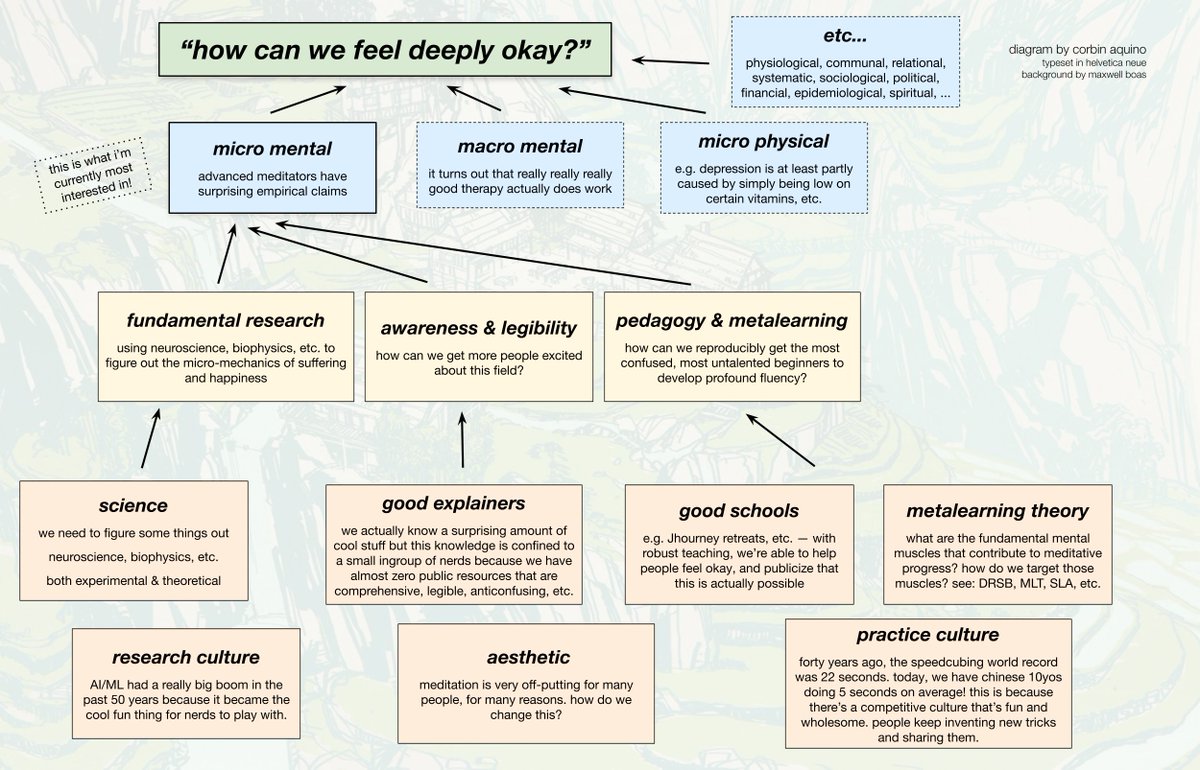
brown univ // my hyperfixation is that deep okayness seems to be tractable
Joined May 2023
- Tweets 1,970
- Following 187
- Followers 458
- Likes 30,793
200 Photos and videos

Jun 12
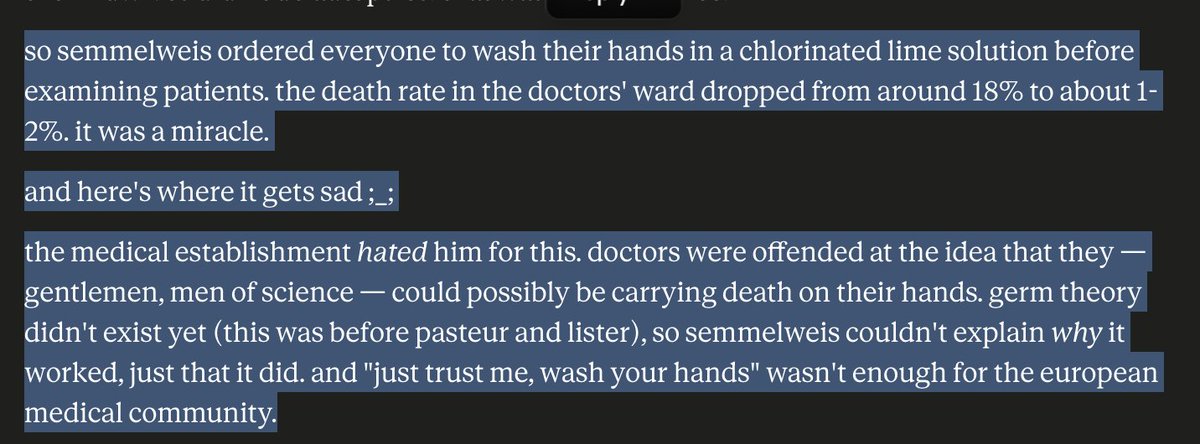
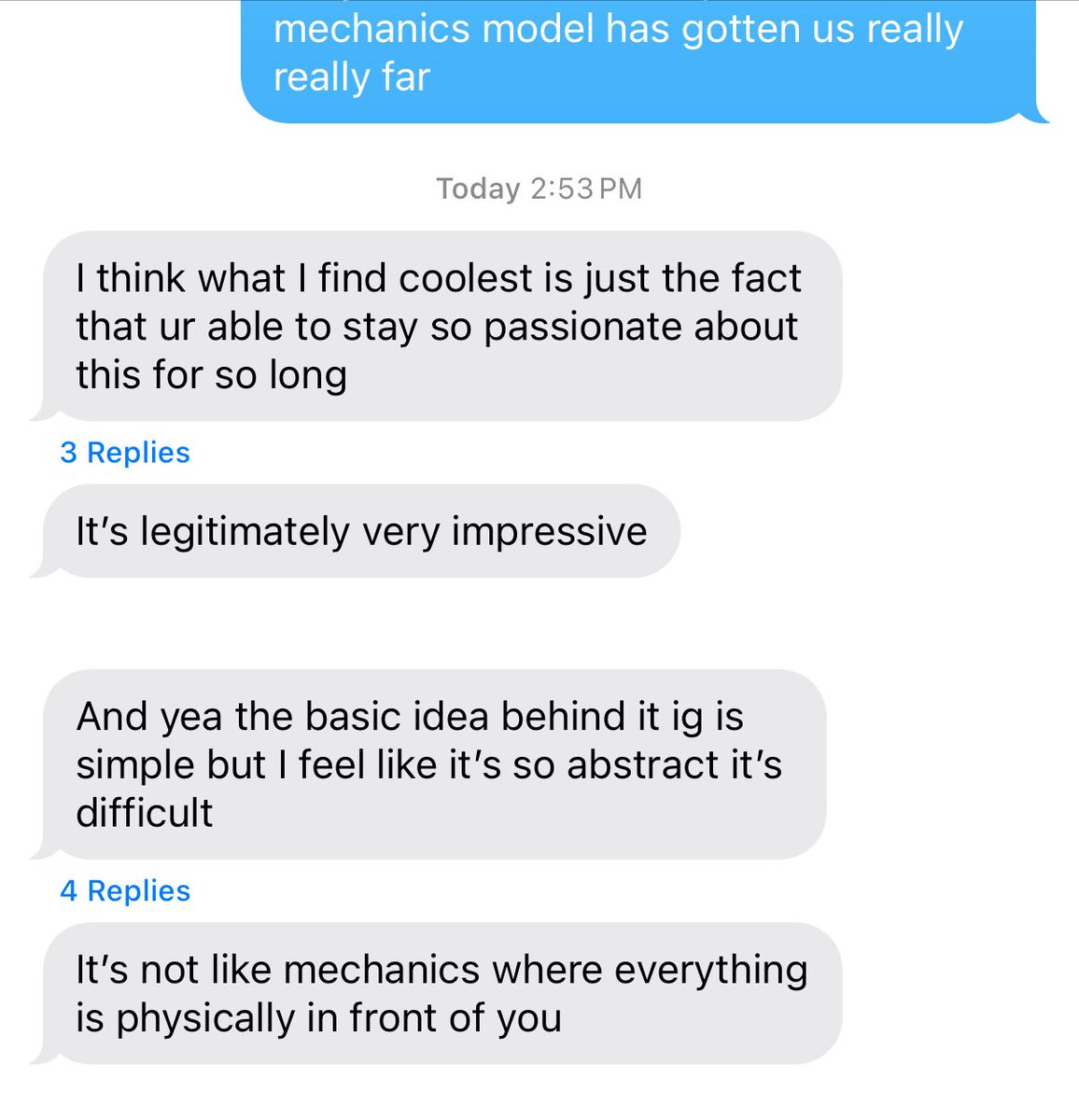
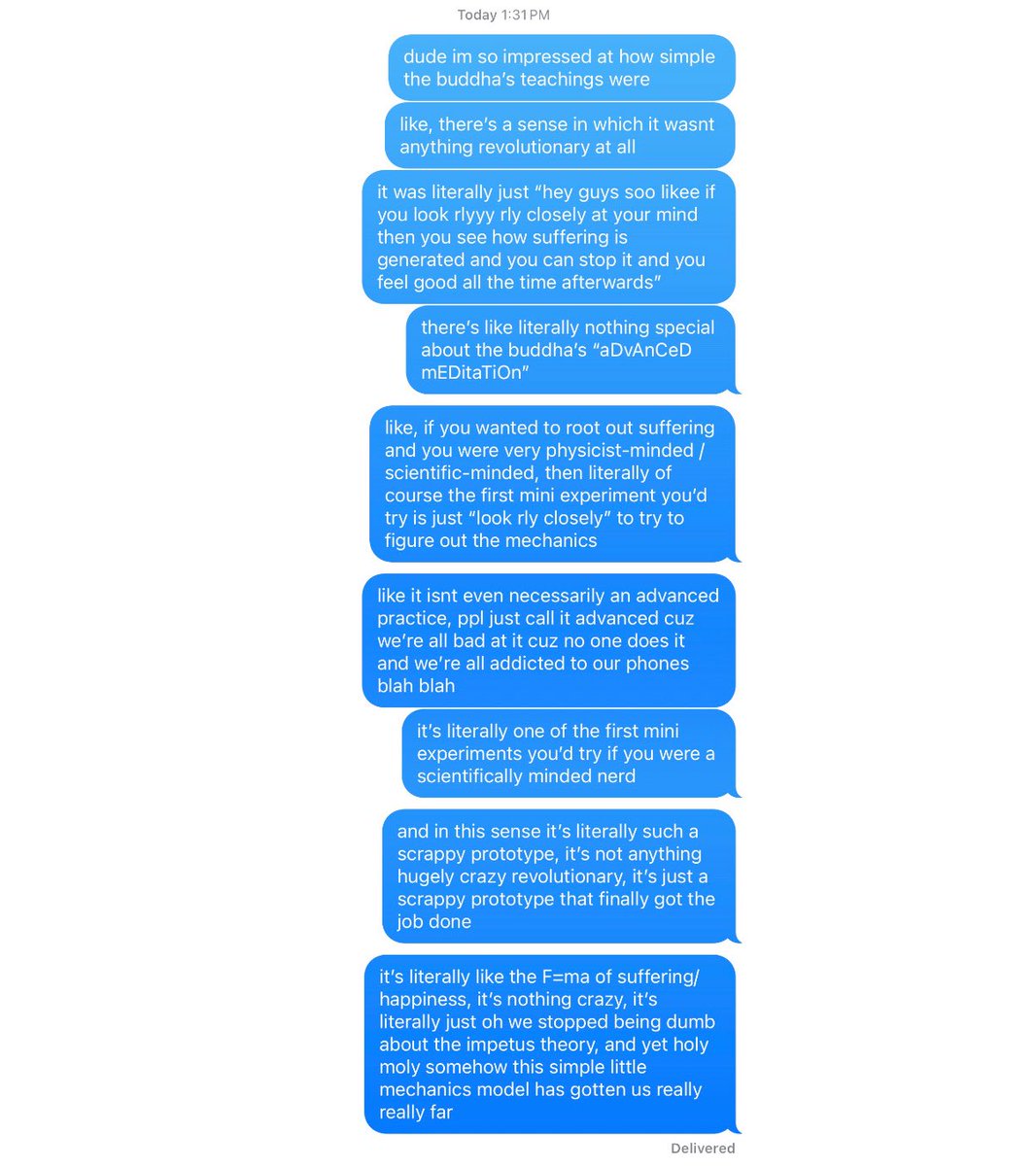
this is what the GTD weekly review does but for your life
Jun 7

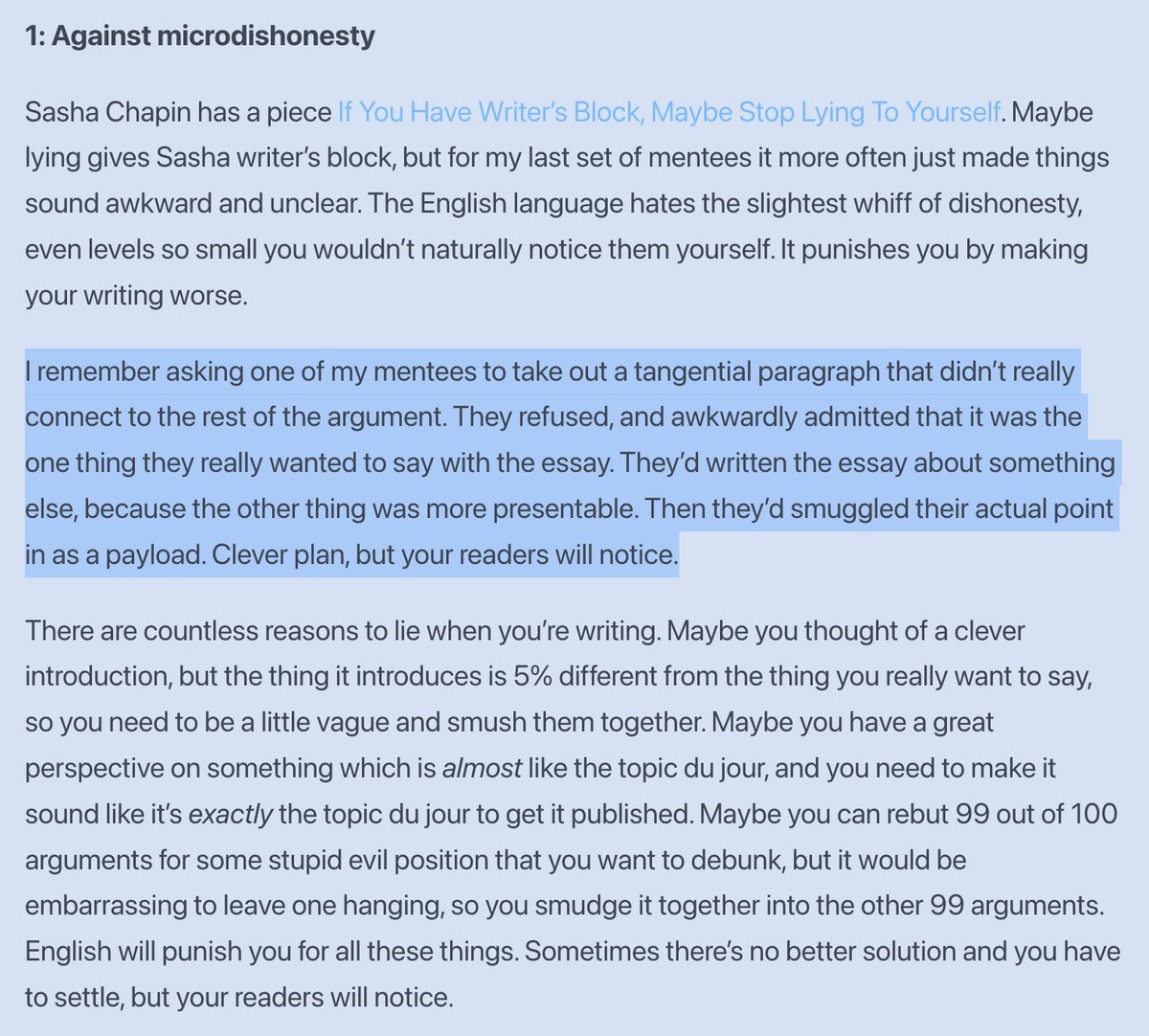
henrik karlsson has a post titled "Advice from my editor" and turns out the editor (who happens to be his wife) is repeatedly asking him "why do you care" > "so is that really why you care" cool ditch that "draft and write that instead"💅

38
Jun 4
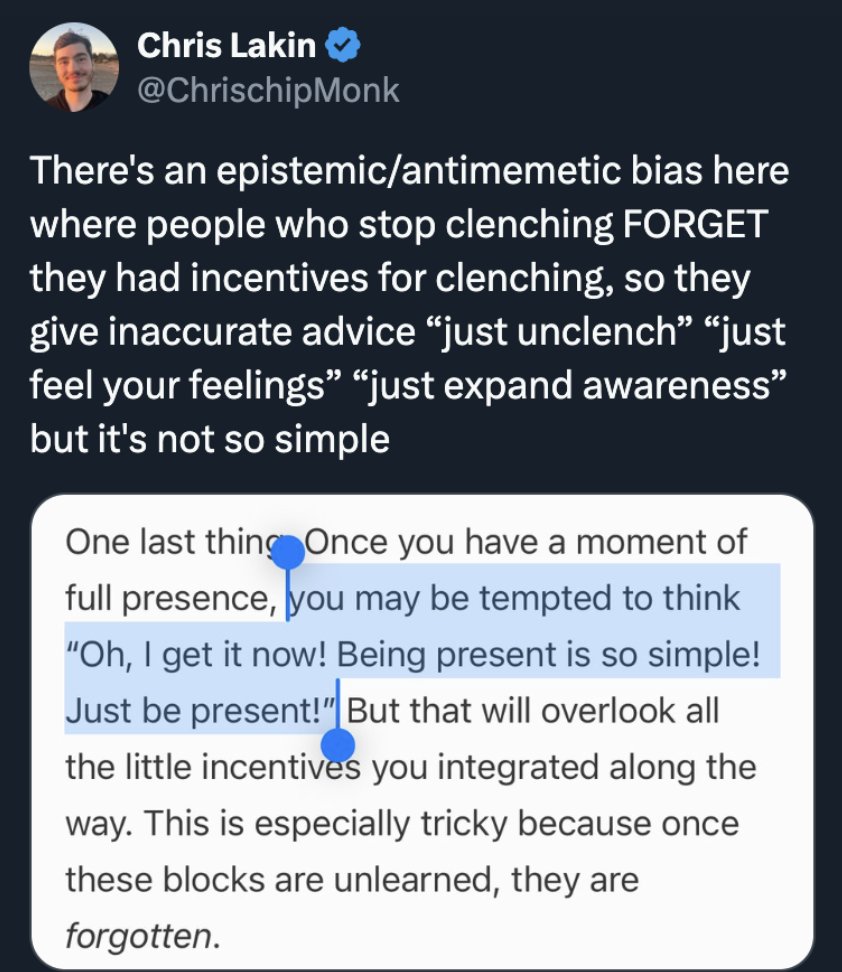
self-therapy without equanimity seems like trying to refactor a codebase but there's no helpful documentation (or even anti-helpful comments) also btw each read/write comes with taking a scary cold shower
May 11

it seems like self-therapy without equanimity is like debugging your tennis serve technique or refactoring an n-dimensional tower of hanoi but you’re too afraid to actually look at any of it
1
92
May 18
okay so 9 months ago i realized that people actually know quite a lot about the micromechanics of unconditional peace [1] and i also found @johnsonmxe's "vasocomputation" hypothesis [2]
[1] corbinnn.substack.com/p/adva…
[2] opentheory.net/2023/07/princ…
but i was a wee little boy who didn't know much about anything (i think i still am) but i think i'm finally starting to kindaaa sortaaa understand what's going on!
so here's my current understanding of some things:
vasocomputation is a theory largely rooted in the perspective of sensorimotor development / embodied cognition, and i imagine that it would have to agree with a lot of other domain-invariant principles of sensorimotor metalearning
21:30 - 21:55 "When we're born, we're born into incredible sensory chaos (that William James calls this blooming buzzing confusion) and things are just happening, it's like a huge dose of LSD all the time, and it's hard to navigate. And one of the crucial tools we have available to us is clenching our smooth muscles to stabilize patterns."
this seems true of all domains of sensorimotor skill development that require learning effective motor patterns from scratch!
to loosely use a gradient descent analogy: our behavior vector starts at some random initialization, and as a beginner we can only make gross calibrations [3], but we can increasingly refine and calibrate towards skillful mastery
the example coming to mind right now is: in second language acquisition, you start out with saying X to grossly mean a first-order approximation of something, then through experience/feedback you make many increasingly refined calibrations, developing the fluency to say X to mean something more hi-fi/accurate/nuanced
[3] this seems at least partially significantly because we can only perceive low-fidelity gradients, i.e. our perceptual space starts out as a bad low-dimensional projection of reality, and also needs refinement/development; it is also a motor skill, see doi.org/10.1017/s0140525x010… (as an example of refining perception, think about increasingly nuanced interoception in tennis training, or increasingly nuanced color differentiation in painters, or increasingly nuanced felt-senses of word meanings when learning a new language)
anyway, it seems like tanha/upadana are particularly interesting instances of these gross calibrations, in the sensorimotor game of life
my mental model is something like:
physical pain, emotions, preferences are kinda like the rewards on a gridworld RL environment (in general these can all be healthy and human, and can exist post-tanha/post-upadana) -> tanha(thirst) as a certain unskillful implementation of preferences, specifically the kind that leads to upadana -> upadana(grasping) as a certain unskillful implementation of agency/control towards those preferences, characterized by grabbygrab/clinging/etc
the interesting thing is that tanha/upadana feels *incredibly bad* -- even though it might cause 99% of the suffering, it is just <1% of the motor pattern of playing the game of life (we know from advanced meditators that skillfully navigating life and holding wholesome relationships etc still has to be trained and cultivated even after incredible meditative development). the analogy that comes to mind is something like: imagine you're a tennis player who grips too strongly in an odd way such that you get a terrible blister every time you played tennis, and if you fix your harmful grip you'll feel a lot better, and it may make someee things a lot easier, but also obviously this would not be a miracle change to the vast majority of your technique or scores/rating or etc
but, why did this very-sucky-feeling habit get implemented?
first, a small detour to an analogy:
- a child's behavior world model have an initialization that is very bad/inaccurate/unskillful/etc
- we can look at the sensorimotor domain/game of how parents have the responsibility of developing/cultivating/calibrating a child's behavior and world model
- in this process, the parental algorithm commonly (maybe necessarily? not sure) takes an implementation where they take advantage of the child’s ~death-aversion to produce intensely negative feedback to brutely enact gross calibrations in behavior world model (i.e. i am talking about some forms of parental discipline)
- but then you can generally stop using these brute gross calibrations when the child’s behavior patterns are more skillful, mature, safer, etc when the child has a good sense of danger proxies and so you can update their model via language/etc instead of physical simulation of danger (shouting, hitting, etc)
- obviously, even in a very skillful parenting environment, the child will grow up to have inaccurate priors about the world and will not act perfectly skillfully. but in less skillful parenting environments, there will be more inaccurate priors, and these inaccuracies might often be especially related to things feeling more deathly dangerous than they actually are (as a byproduct of the aforementioned calibration algorithm implementation)
- this specific algorithm/implementation of parenting, especially in higher intensities with lots of shaming or physical violence etc, is perhaps not ideal but is **incredibly easy-to-find (search and setup for better algorithms is very nontrivial and costly)**
i imagine that tanha/upadana is somewhattt like a micro version of this kind of thing! a gross brute implementation of developmental calibrations (unskillful in some sense but it was the easiest to find, and was necessary during early development; as @KanizsaBoundary says: "correct solutions to cognition take nontrivial knowledge and setup, which is also not free")
and then @johnsonmxe's vasocomputation argument is that the computation and world model etc are using vascular smooth muscle cells ("taṇhā as a particular default bias in the computational-biochemical tuning of the human nervous system, and upādāna as the impulsive physical (VSMC) clenching this leads to")
but tanha/upadana are different from the parenting analogy in a few very significant very interesting ways:
1) calibrations to a child's personality/behavior/model seem to live in something in a more continuous space or a more densely connected graph like some n-dimensional tower of hanoi (borrowing from @meditationstuff analogy); but tanha/upadana seems to have a largely discrete ontology as we see advanced meditators describe some persistent phenomenological shifts that lean relatively more discrete (e.g. @RogerThisdell's stage model) (sure, it's not fully discrete, but this seems way more discrete than making calibrations in personality/behavior...? maybe these two things actually have similar ontologies but just undergo phase shifts at different scales? etc idk yet)
2) in the parenting / child development scenario, there's a sense in which you can think of the child as receiving a "hand-me-down" world model from the parent, kinda like the parent is hardcoding gridworld values; but for tanha/upadana, there is no "hand-me-down" of specific gridworld values, so the problem seems kinda categorically different? tanha/upadana seem to lean towards being a global parameter / globally applied pattern. yes it seems the case that you can selectively reduce tanha/upadana for certain situations, but we also definitely see global shifts in experience where practitioners undergo mostly-global reductions in tanha/upadana. Hmmmm.....
3) why is tanha/upadana deeply connected with the sense of self, in many different ways? the sense of a central epistemic agent seems to be incredibly instrumental in perpetuating tanha/upadana. the recent preprint from Shawn Prest et al is really interesting (osf.io/preprints/psyarxiv/ys…) and i'm glad there are papers nowadays trying to computationally formalize the difference between the identified-with self (the *sense* of a central epistemic agent, etc; which seems to be a generated overlay onto experience, and removal does not *necessarily* lead to organism dysfunction) versus the organismic self (e.g. that which Levin talks about here: doi.org/10.3389/fpsyg.2019.0…)
and of course there's many other questions... but will sign off for now!
(i need more phenomenological sensory clarity, mathematical machinery, and/or biophysics knowledge to figure out more... and/or i wanna talk to more people about this... and i also wanna start prioritizing my own meditative practice/development a bit more)
2 Dec 2024

Last year I proposed “vasocomputation,” that vascular tension acts as a special type of memory that regulates neural dynamic range. Recently at @joinedgecity I shared some updates: how ‘thoughts’ are patterns of vascular tension, and implications for Buddhist enlightenment
1/x
1
5
35
4,456
May 15
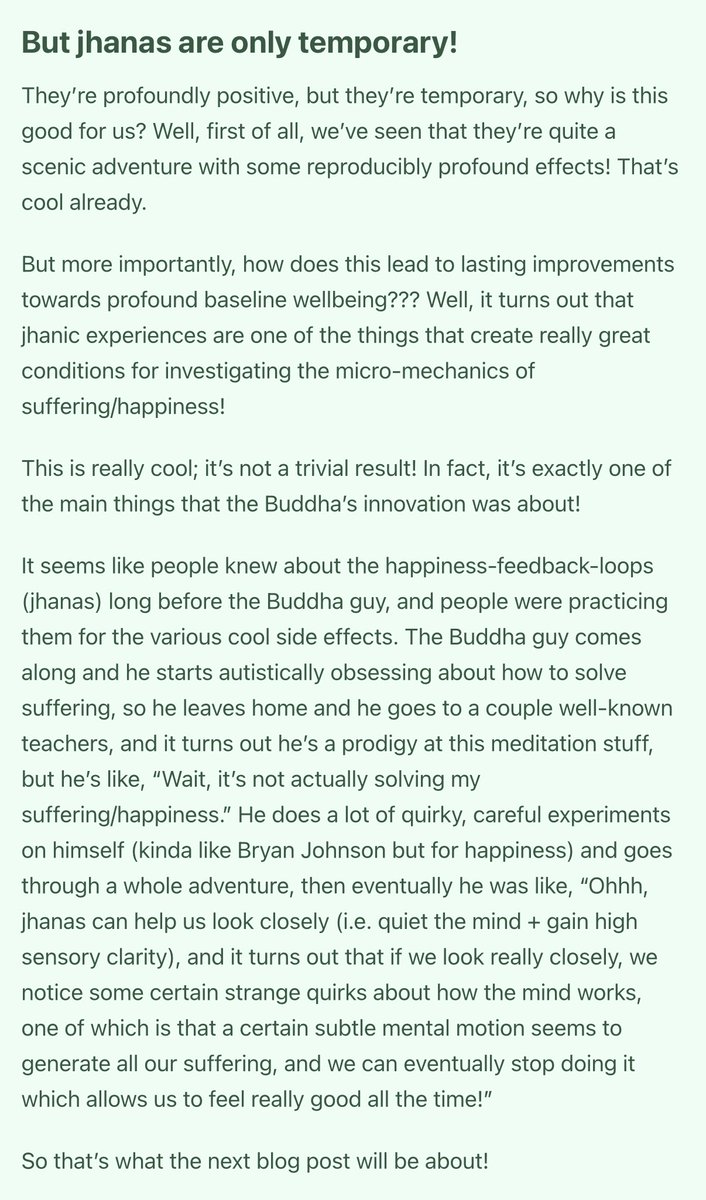
the meditation field needs more people posting about how Fun and Beautiful it is to practice
not just about the beauty of absorbing attention into incredible amounts joy/peace, and not just about how it can radically change our everyday experience and make us feel super peaceful..
there are lots of beautiful results, but we can also talk about how the process can be so beautiful too!
this is common in music and sports and friendship. theres so much talk about not just the end product but also the beauty of late nights befriending your instrument, playing with sounds, struggling with chords. there’s so much talk about not just winning a tennis game but also the beauty of befriending the ball and the pleasure of swinging a racket. there’s so much talk about not just finally becoming best friends but also the beauty of doing the fun dance of small talk, getting to know someone new.
we can do the same for meditation!
i think one of the reasons people are so graspy about results is bc no one talks about how fun it can be to practice!!!!!!! it can be fun!! it can be SO fun!!!!
we can normalize this
it feels like meditation is in a phase right now where the common sentiment is to treat it like classical music — read some sheet music (instructions) and get good at playing the song like that to produce a beautiful result. do deliberate practice on your scales like a chore. have good posture.
orrrr you could be a jazz musician! you can be friends with music, listen really closely and intimately to it, and start babbling. crawl, feel, stumble. make your own sentences! doodle around! explore! befriend the playground. become comfortable! develop real conversational fluency!
i think we can make a similar shift of perspective in meditation practice, for jhana practices and insight practices and other practices!
4
1
16
941
May 15
it is much easier to be good at something if you are friends with it
play and love are not strict prerequisites but oh boy it sure is easier with them
1
5
162
May 12
this is most meditation explainers
i try to be super mindful of this but i totally still have sooo much to improve
2
108
May 11
it seems like self-therapy without equanimity is like debugging your tennis serve technique or refactoring an n-dimensional tower of hanoi but you’re too afraid to actually look at any of it
13 Oct 2025

Hardest phase of growth is when you think you can do live mental surgery on yourself alone AND you feel ashamed for failing to see your own blindspots
6
272
Apr 27
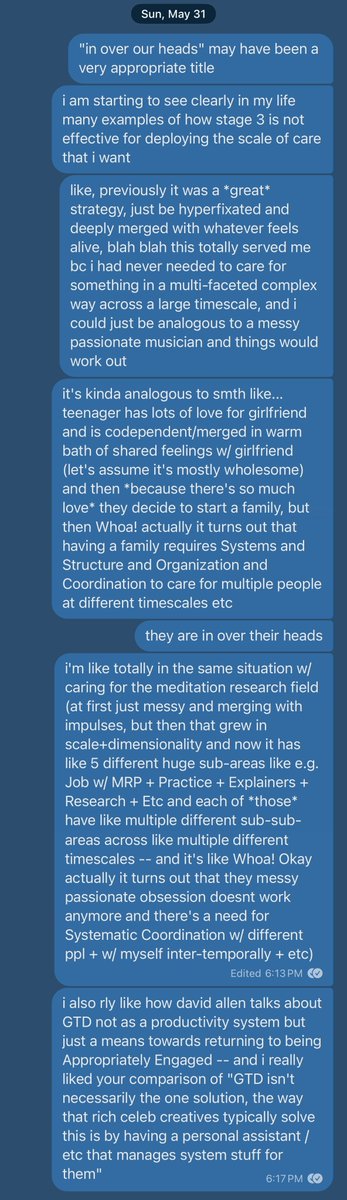
ohhhh “you cant do great things alone, you usually need nice teamwork, i was so naive to think badly of large institutions/teams/orgs, they actually do so much good and im so impressed at that nontrivial coordination” is like a prototypical example of kegan 3 to 4 transition
3
161
Apr 10
Ohhhhhhh meditation is really fun if i let myself get rly curious and do insight-esque things instead of just trying to do samatha or relax or whatever
“lets relax and deepen into acceptance and love” Boringggggg.. and difficult for me too
“Hm corbin you dont understand your mind, isnt that weird? what if we got rly curious about the different mental moves of relaxation and acceptance, and their micro effects on your experience, and what if we got to playfully do the scientific method on tinkering how to generate lots of self-love” — Super Interesting!!! Fun!!!
5
6
117
6,612
Apr 9
ohhh [internal family systems, teamwork, bureaucracy; language] is a really great analogy for levin's bioelectricity stuff
176
Mar 31
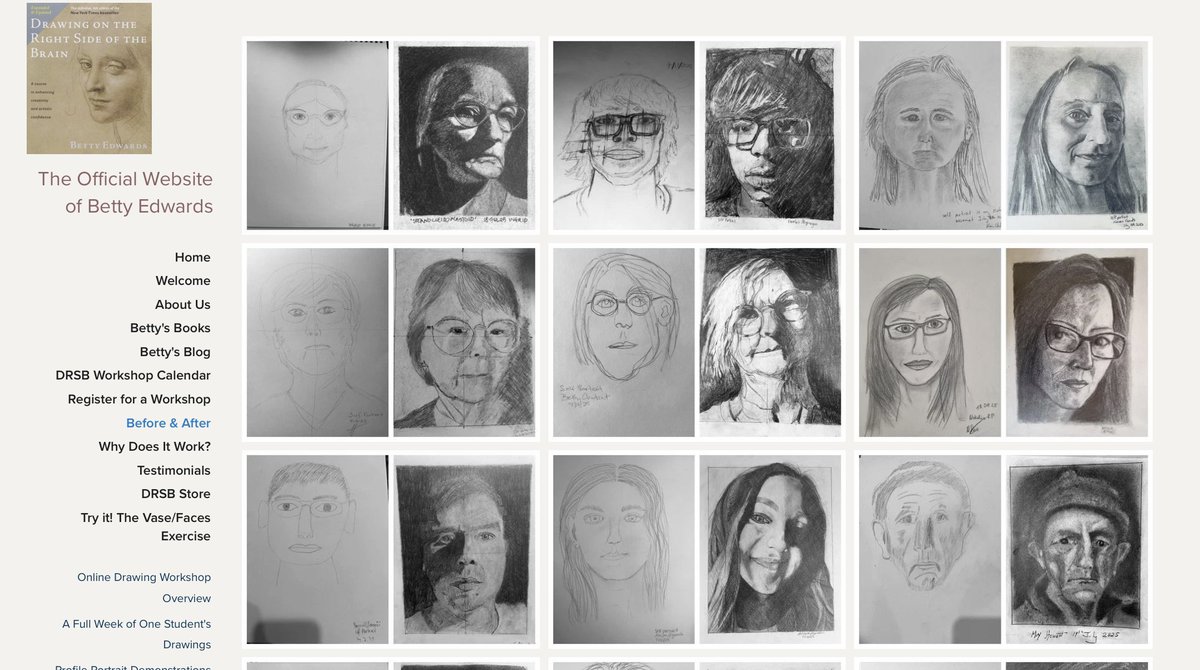
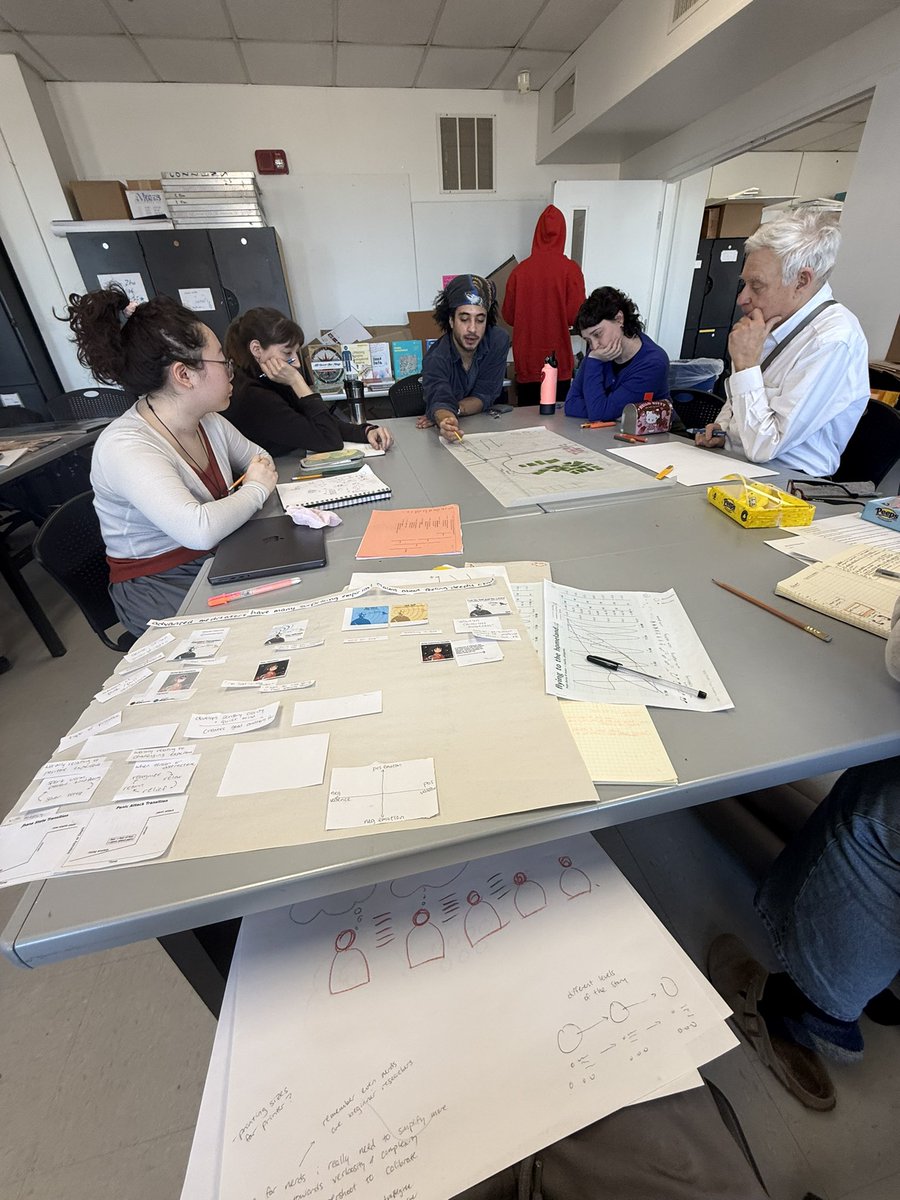
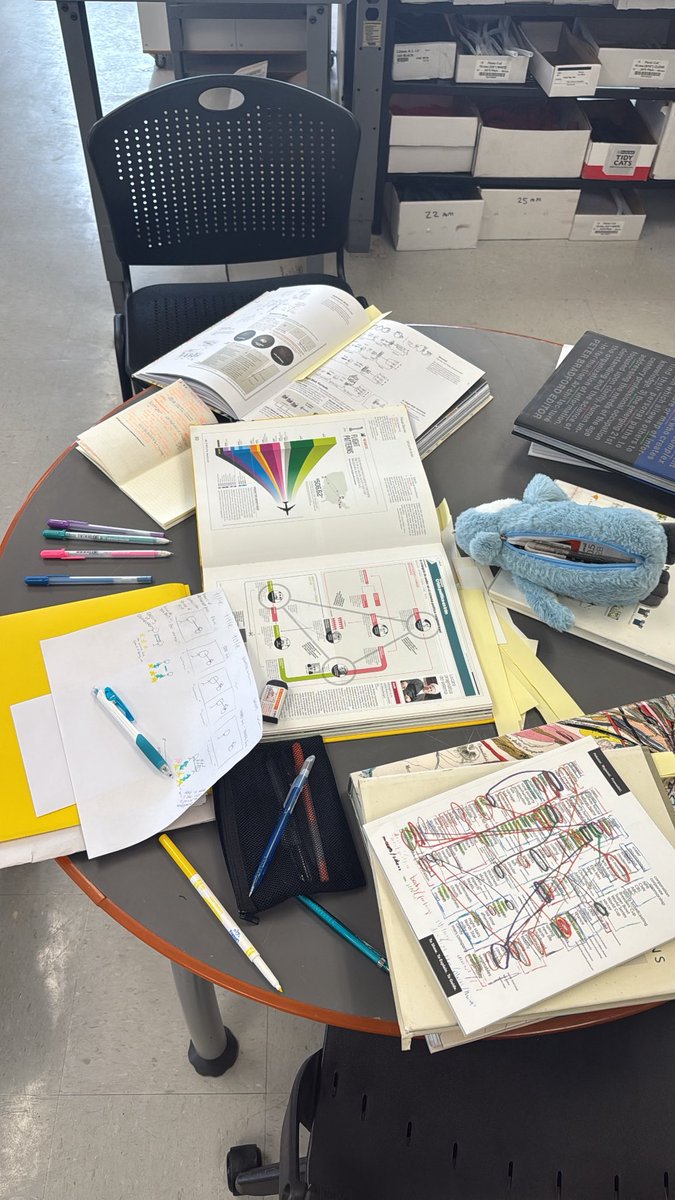
lets all take doug scott’s course at RISD and learn how to communicate information visually
Mar 31

or like data vis, we should have thousands of high quality visualizations of the economy, of scientific publishing, culture, etc, could choose any big dataset and visualize it in any somewhat creative Tuftian way and you’d prob be the 1st person to understand something it shows
1
4
301
Mar 31
this class is really humbling me and shining a light on my physicist nerd biases
95
corbin retweeted

Mar 29
僕が藝大にいた時、「天才」と言われていた先輩がいました。
彼は美術予備校時代から、絵がとんでもなく上手く、藝大に入ってからも一目置かれ、今は藝大の准教授です。
彼は学生時代に美術予備校講師もしていて、僕も教わったことがありました。
しかし正直、指導が上手いとは思いませんでした。
というのも、言うことが「なんでできないの?」とか、「もっとここゴージャスに!」を連発していて、かなり抽象的なのです。
ところが、手直しになると一変して、まるで精密にプログラムされた機械のようにバババッと形が直る。
見ている学生側は圧倒されます。でも学生に残るのは感動であって、再現性は皆無でした。
つまり、天才とは「高スペックPC」なのです。
そして高性能システムを自分の中に組み込んでいます。
それに対して、僕を含む凡人は低スペックPCです。
天才の作ったシステムは高スペックだから動くのであって、低スペックPCに入れてもフリーズするだけです。そのままでは移植できません。
だからわかりやすく教えるには、相手の環境でも動くように、処理を軽くする工夫やチューニングを一つ一つ意識せざるを得ない。
でも天才からすれば、自分の中では超高負荷の複雑なアルゴリズムが、一瞬の“直感”として走っているだけなので、処理を分解して説明する発想自体があまり育たないのです。
僕は美術予備校講師になった時、比較的教えるのが得意でしたが、それは自分が低スペックPCであると自覚して、効果的に動くように工夫を重ねてきた側だからです。だから一つ一つのロジックを言葉にできる。
この過程で、「説明用の言語化レシピ」を得たことが大きいです。

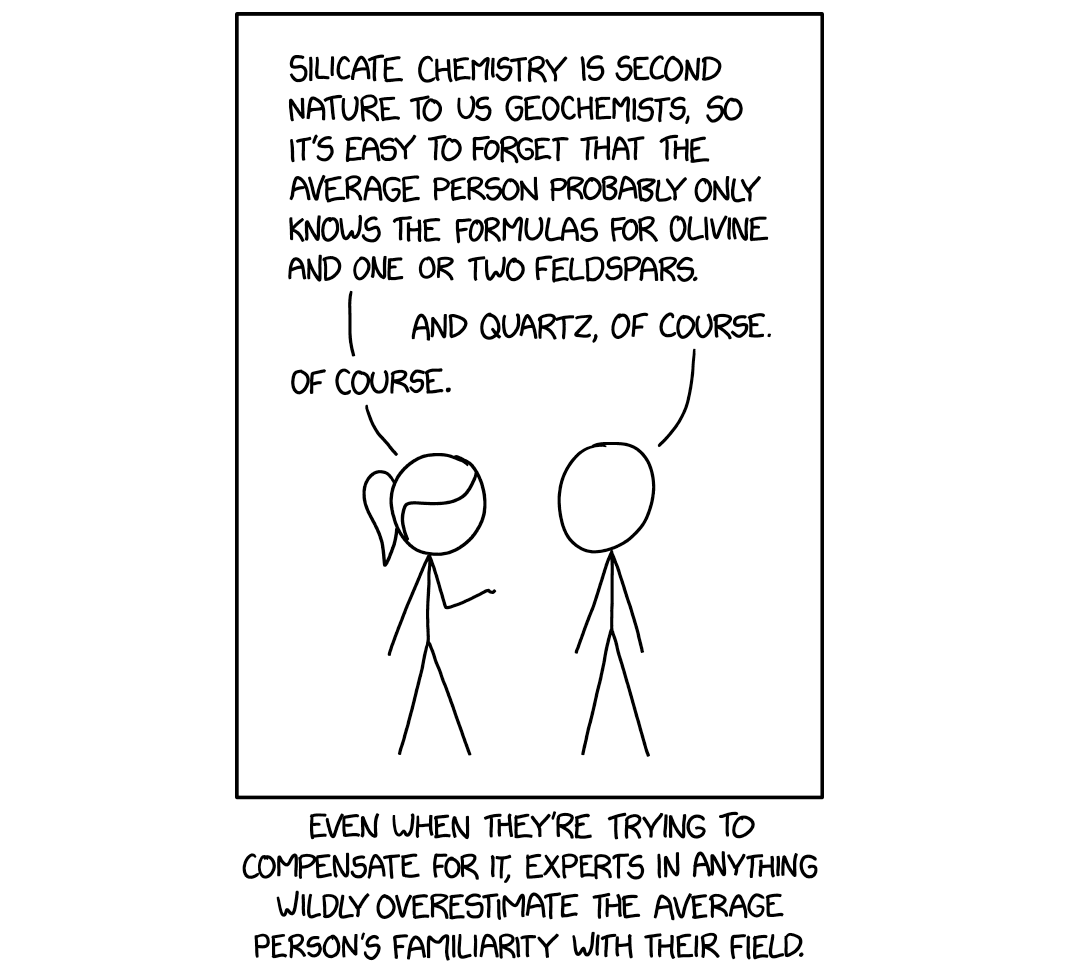
頭いい人ほど「わかりやすく説明できる」ってよく言われるけど、あれ半分幻想だと思う
大学院の教授とか、専門分野の話になると普通に何言ってるのか分からないことあるし、知識量と伝える能力って全く別のスキルなんだよな
むしろ「頭いい人=説明も上手い」って信じてる人は、研究室とか大学の現場を知らない側のイメージ
128
2,537
14,625
2,902,373
Mar 25
continually calibrating myself to the fact that this is a marathon, not a sprint
there’s just not enough structure on the board where we can start to think about game-winning moves, we still need to develop our pawns, in a sense
but i am excited for the next 2 to 100 years
143