
X-ITED THE PLATFORM
Joined April 2009
- Tweets 2,734
- Following 482
- Followers 597
- Likes 4,797
242 Photos and videos









3 Nov 2025
GEO v SEO: Al-driven search is transforming how we're discovering brands:
“You're no longer writing only for people. You're writing for systems that explain things to people."
I'm exploring how #GEO differs from traditional #SEO in the era of LLMs: cornellazar.com/geo-building…
1
43
CL retweeted

11 Feb 2024
Product Discovery is the most critical area for a PM. But, it is largely misunderstood.
Teams waste time and energy delivering ideas that do not work and do not drive the expected outcomes.
Product Discovery 101:
1. Why do we need Product Discovery?
„The first truth is that at least half of your ideas are just not going to work” - Marty Cagan, Inspired
I’d argue that Product Management is, at its heart, about managing risk. And for every product, there are 5 risks that can materialize:
- Value. Will it create value for the customers?
- Usability. Will users figure out how to use it?
- Viability. Can our business support it?
- Feasibility. Can it be done (technology)?
- Ethics. Should we do it? Are there any ethical considerations?
What will happen if we throw random ideas into the Product Backlog?
This is agile "learning by delivering."This approach results in a waste and rework.
So, we would like to understand:
- How can we come up with better ideas?
- How can we validate those ideas before the implementation?
And the answer is Product Discovery.
---
2. When Does it Happen?
Jeff Patton, Marty Cagan, and others in the Agile/product space have been big proponents of an approach called Dual-Track Development or Dual-Track Agile.
In this setup, two streams run in parallel:
- The goal of Product Discovery is to discover the product to build.
- Product Delivery aims to deliver that product to the market.
Product Discovery results in a validated Product Backlog. In particular, high-risk assumptions are tested before the implementation.
---
3. Who's Responsible?
Some say that the Product Manager decides what to build, and Engineers and designers should focus on how to build it.
Have you heard that before?
It hurts my ears because Product Discovery is not a task for a single person.
Make sure that a Product Designer and at least one Engineer are included. This will help you build a shared understanding and stay open to different perspectives.
And if we believe that customers don't know how to solve their problems, why should a Product Manager know it?
Product Managers may be tech-literate, but they are not tech experts.
---
4. What’s inside Continuous Product Discovery?
There are two groups of activities:
- Exploring the Problem Space to understand and define opportunities (problems, needs, desires). My favorite approach to mapping opportunities is using the Opportunity Solution Tree, as defined by Teresa Torres.
- Exploring the Solution Space to explore possible solutions, formulate testable assumptions, and run experiments to prove or disprove those assumptions.
---
What's the state of Product Discovery in your company?
What is one improvement you can implement starting Monday?
Hope that helps!
---
See a free link in the next post 🧵
5
54
307
31,423
CL retweeted

1 Feb 2024
Every time you ask the user click you lose half of them.
(AKA why tutorials, splash screens, and lengthy signup flows are a bad idea)
If you’ve been building apps for a long time and have seen the results of a lot of A/B tests, you quickly realize that people are a flighty bunch. Ask them to download an app and 80% will bounce right on that page. Ask them to sign up and 90% will hit the back button to avoid putting in their email and password. Ask people who’ve arrived from Google to read an article, to subscribe and get more updates, and 99% will head back to find the next article.
In the early days of Uber the only way to sign up was to give your email address a bunch of other fields and also your credit card number. Some of the big early winds in acquiring customers was just to make it so that you could sign up with a phone number and a password, and put in your credit card lead in the flow. If memory serves me right, these were increases on the order of 50%.
You get the drift of what I’m arguing.
So what happens when your designer has the fantastic idea of a stark and beautiful homepage for your new product that takes a few clicks to sign up, followed by a lengthy tutorial to explain all the features? Sometimes this becomes a life and death decision, because rather than signing up thousands of users into your private beta, which provides the traction to raise your next round of funding, instead only a few hundred make it through.
This is why, when I get feedback on a critical flow within a product, I always start by minimizing the number of clicks and steps. I asked whether each field in a sign-up form is really needed, or is optional. I ask the question of whether you need to user to do something now versus having them set it up in the future, when they’re more bought into the product. I ask to remove all the glitzy, visual steps that explain things and just ask the user to hit next. I move the sign-up form to the first experience, whether that’s on the homepage, or the opening screen of an app. If there’s a call action, while the user is doing something else, like reading an article, my theory is that you should be very upfront with it and make it a blocking modal, or not do it at all. No half measures.
The point of all, this, of course, is to get people into the magic of your product. The magic is not in filling out forms or watching cute videos about your product, it’s about using your product as quickly as possible. As a result, the only acceptable forms of friction are ones that ultimately enhance the users ability to have a great experience. Thus product is much better experienced as an app, where you have a notifications channel and a richer experience, then, by all means, ask the user to download something. If a product is much better, when used with colleagues or friends, that it might make sense to take a lower conversion rate during the sign-up flow in exchange for some sharing or inviting functionality, that brings more people into the app. Ultimately, it’s all a trade-off, where every click drops off a huge number of users, so you need to spend that user intent very very well.
Ironically, it can also be an anti-pattern to not ask users to sign up or install or do anything at all, because once they bounce, which they will inevitably, do, you have no way to get them back. That’s why it’s all a trade-off, and one of the trickiest things about the user growth discipline is knowing when to add friction, and when to take it away.
Also, interestingly enough, as you make it easier and easier to sign up to reduce friction the quality and intent of the users also decreases. If you double the number of sign-up typically, you do not get twice the number of paying customers.
Nevertheless it’s an important thing to remember: Every time you ask the user click you lose half of them. Be careful.
88
183
1,866
421,558
29 Jan 2024
Excellent write up. Spot on as always @ElenaVerna
“Growth isn’t about hacks and tricks; it’s about building a sustainable, predictable, defensible growth engine. Anybody calling themselves a growth hacker isn’t qualified to lead your growth efforts“
👉 elenaverna.substack.com/p/th…
1
42
CL retweeted

15 Jan 2024
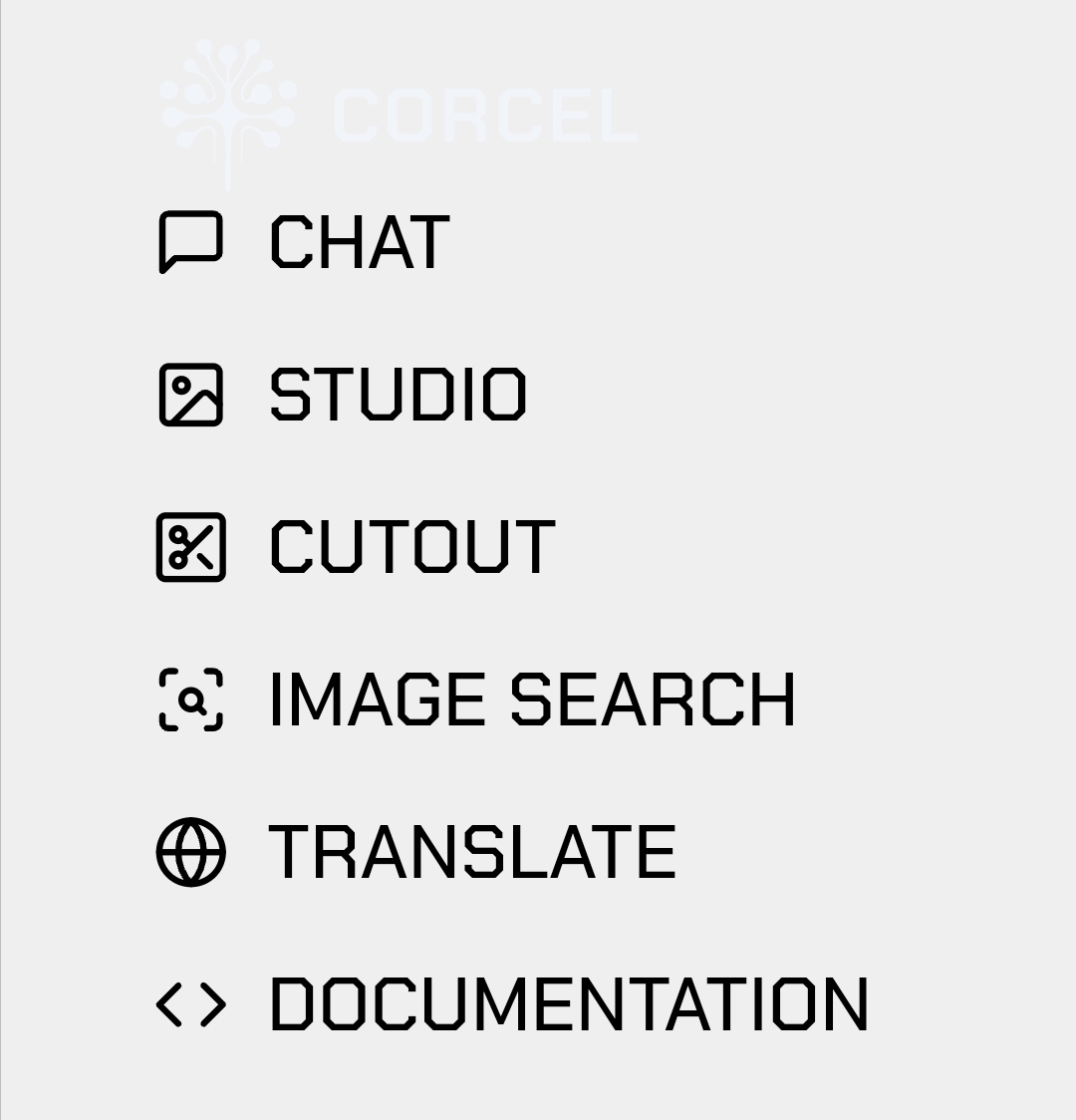
#Corcel just keeps getting better and better 🔥
⚪ Chat
⚪ Studio
⚪ Cutout
⚪ Image Search
⚪ Translate
One application capturing the very best of what #Bittensor has to offer
All 100% free 🔥
Try it yourself 👉 app.corcel.io/chat
$TAO
22
85
317
21,028
14 Jan 2024
Growth ≠ Marketing
"What is Growth: Role, Mandate & Strategies" cornellazar.com/what-is-grow…
27
21 Dec 2023
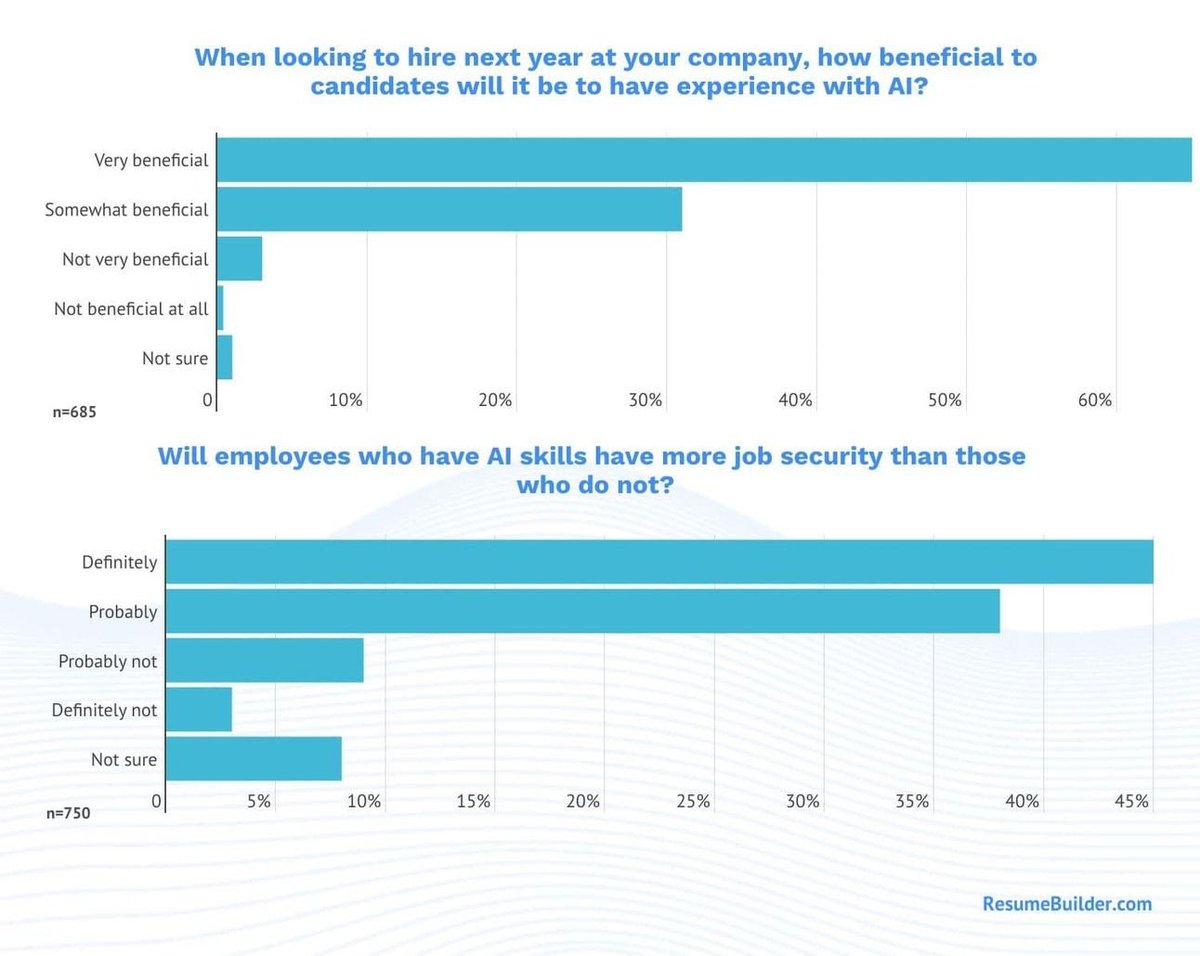
1 in 3 Companies Will Replace Employees With AI in 2024: resumebuilder.com/1-in-3-com…
27
CL retweeted

21 Dec 2023
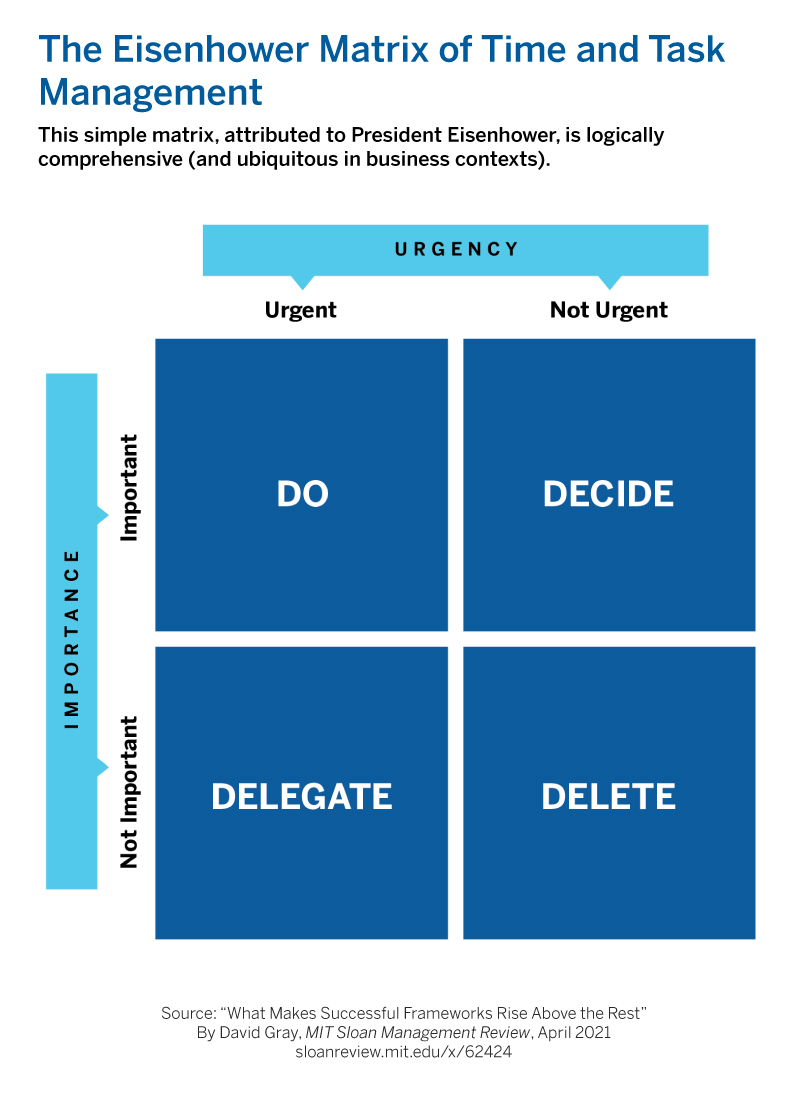
This simple matrix is logically comprehensive (and ubiquitous in business contexts): mitsmr.com/32XVAAu
4
12
2,229
CL retweeted

20 Dec 2023
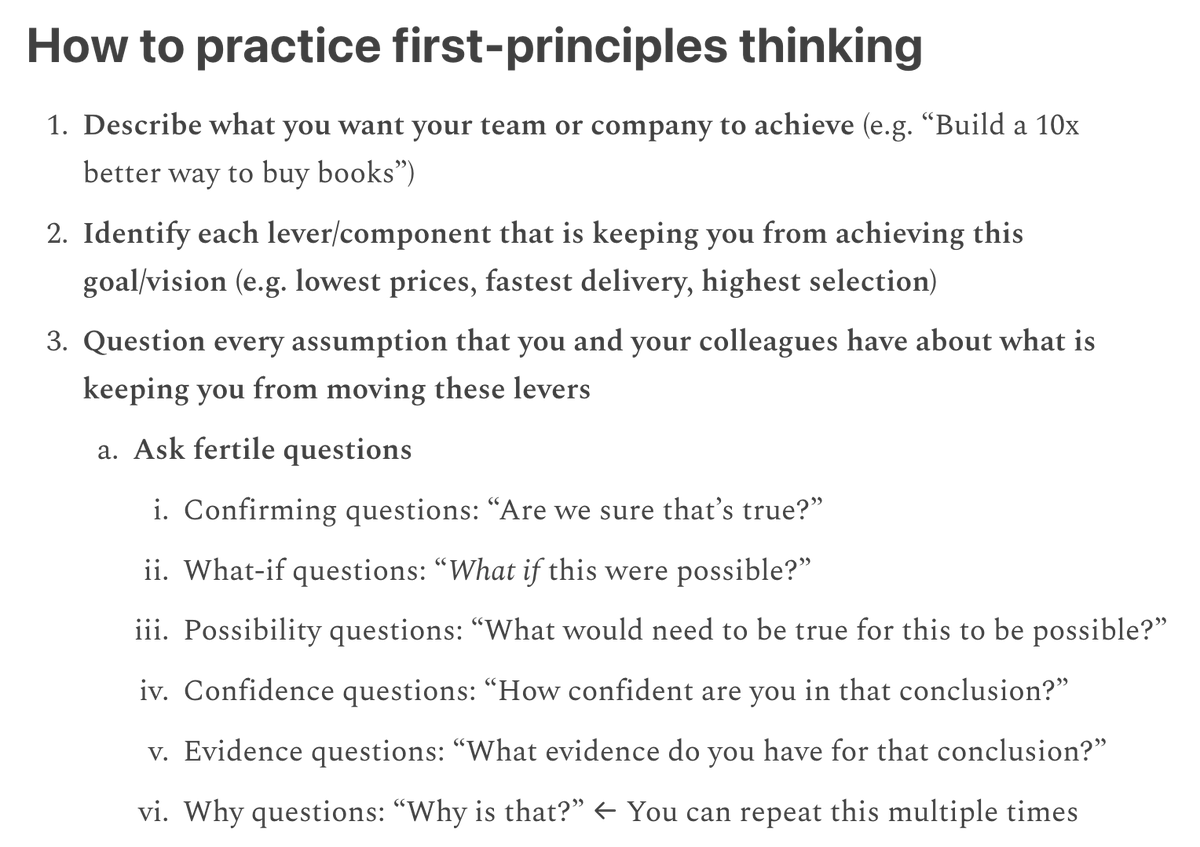
People talk about first-principles thinking, but most people don't really know what it is or how to apply it.
In this week's essay, I do my best to explain it, give you a practical set of steps for applying it in your work, and share a ton of examples of product leaders using it, including @gdb @MrBeast @annewoj23 @bchesky @ay_o @nilanp @ilyasut @elonmusk Julia Child and James Dyson
Thinking from first principles takes a lot of time and effort, and is not something you should do all the time, but many of history's (and tech's) biggest breakthroughs came from someone making the effort to think from first principles.
"Everything around you that you call life was made up by people that were no smarter than you. You can change it; you can influence it. You can build your own things that other people can use. The minute that you understand that you can poke life, and if you push in, something will pop out the other side—that you can change, you can mold it—that’s maybe the most important thing. To shake off this erroneous notion that life is there and you’re just gonna live in it, versus embrace it, change it, improve it, make your mark upon it. […] Once you learn that, you’ll never be the same again.” —Steve Jobs
See link in comment below.
29
131
1,120
209,018
7 Dec 2023
What is Growth?
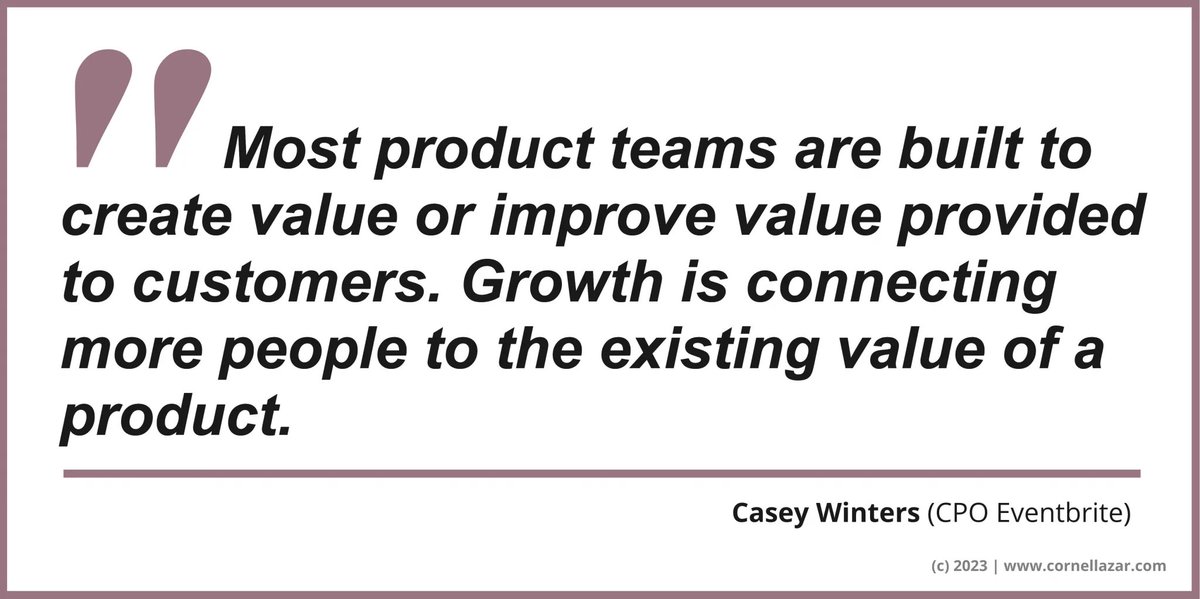
"Most product teams are built to create value or improve value provided to customers. Growth is connecting more people to the existing value of a product." - @onecaseman (ex-CPO Eventbrite)
bit.ly/3Ccu43W
#PMM #PerformanceMarketing #ProductManagement
27
6 Dec 2023
Solving retention through onboarding loops:
cornellazar.com/solving-rete…
Do you rely primarily on acquiring new users than retaining existing ones. In this article I explore how focusing on activation during onboarding helps solve retention issues.
#ProductGrowth #GrowthSquad #AARRR
1
16
5 Dec 2023
SEO AI: My #SEO blog post hit #1 and #8 on Google just 4 days after publishing 🙌✊ with a little help from #AI-generated copy from my ChatGPT prompt generator:
👉 cornellazar.com/chatgpt-prom…
#DigitalMarketing #GrowthHacking #GrowthHacking
2
48
2 Dec 2023
Updated free #ChatGPT prompts generator v1.2 for your #ContentMarketing supporting #SEO.
Streamline your creative processes with AI now:
👉 cornellazar.com/chatgpt-prom…
---
#SaaS #DigitalMarketing #ContentStrategy #GrowthMarketing #SocialMediaMarketing #GrowthHacking
1
41
CL retweeted
24 Nov 2023
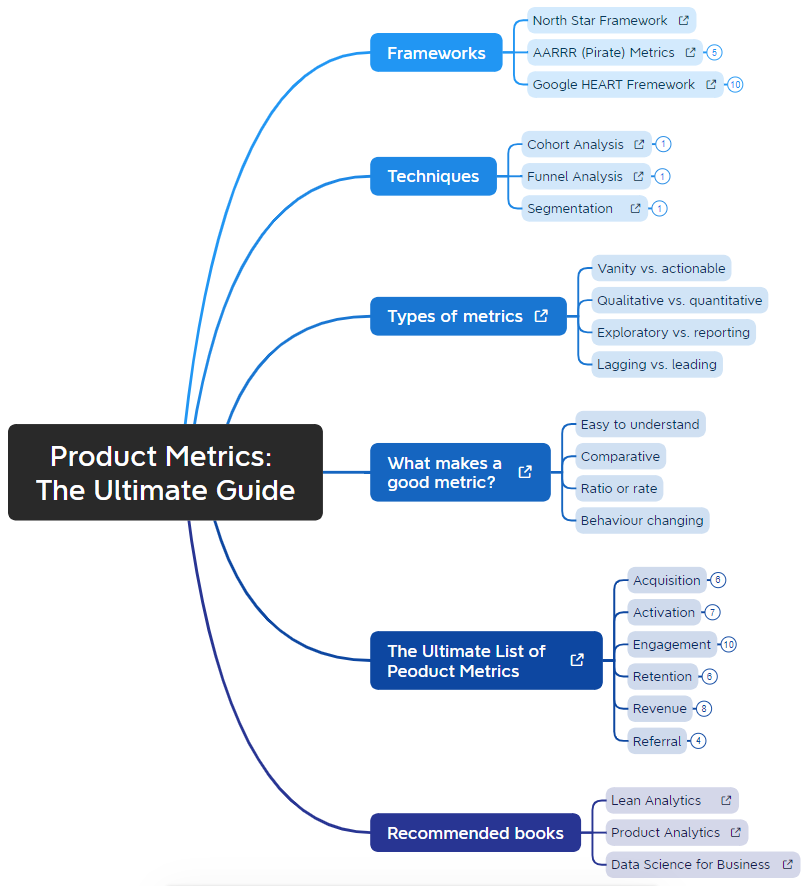
Product Metrics: The Ultimate Guide ( free links):
1. Frameworks:
- North Star Framework 101 (PDF)
- AARRR (Pirate) Metrics
- Google HEART framework
2. Techniques:
- Cohort Analysis
- Funnel Analysis
- Customer Segmentation
3. Types of metrics:
- Vanity vs. actionable metrics
- Qualitative vs. quantitative metrics
- Exploratory vs. reporting metrics
- Lagging vs. leading metrics
4. What makes a good metric?
- A good metric is understandable
- A good metric is comparative
- A good metric is a ratio or rate
- A good metric is behavior-changing
5. The Ultimate List of Product Metrics (PDF):
- Acquisition Metrics
- Activation Metrics
- Engagement Metrics
- Retention Metrics
- Revenue Metrics
- Referral Metrics
6. Recommended books:
- Lean Analytics by Alistair Croll and Ben Yoskovitz
- Product Analytics by Joanne Rodrigues:
- Data Science for Business by Foster Provost and Tom Fawcett
The online map with free links: bit.ly/3sGb8ts
Hope that helps.
11
81
394
65,499
22 Nov 2023
SaaS marketers, how many …
… Leads do you need? 👋
… Visits need converting into leads? 🔎
… Leads need converting into customers? 🤝
My free SaaS Leads Modeller helps set realistic targets and request defensible marketing budgets.
Start modelling: cornellazar.com/saas-leads-m…
1
1
35
13 Nov 2023
1
36

CL retweeted

3 Nov 2023
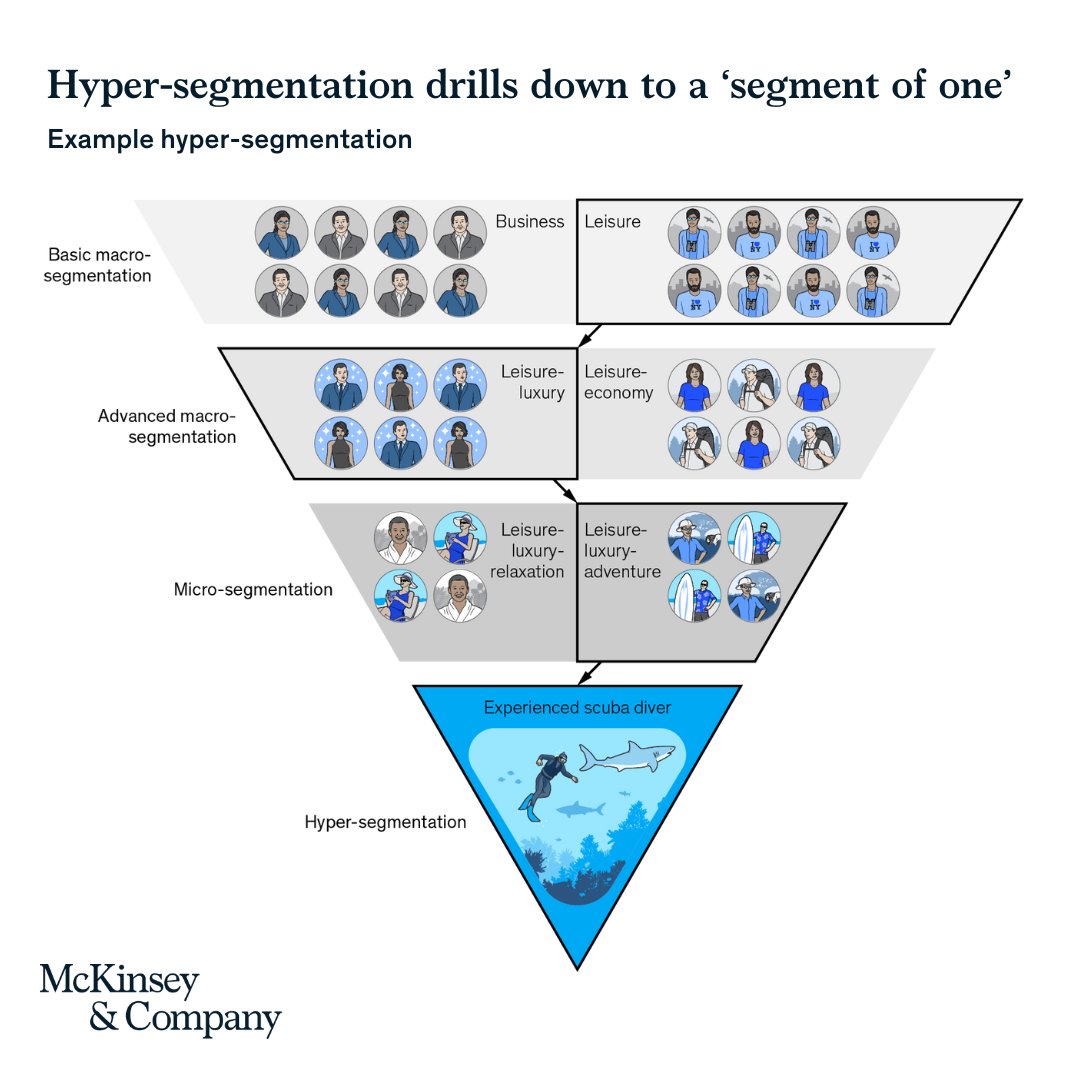
At its core, #personalization is not just about increasing conversion rates. Travel companies can leverage customer insights to provide a tailored end-to-end experience that meets rising expectations.
Explore the concept of hyper-personalization➡mck.co/3tZwbHE
5
21
12,121
CL retweeted

3 Nov 2023
The health of our economic system depends on getting the role of shareholders right. Putting them above all other priorities is dangerous and misguided. hbr.org/2017/05/managing-for…
2
6
9
23,983