
836 Photos and videos


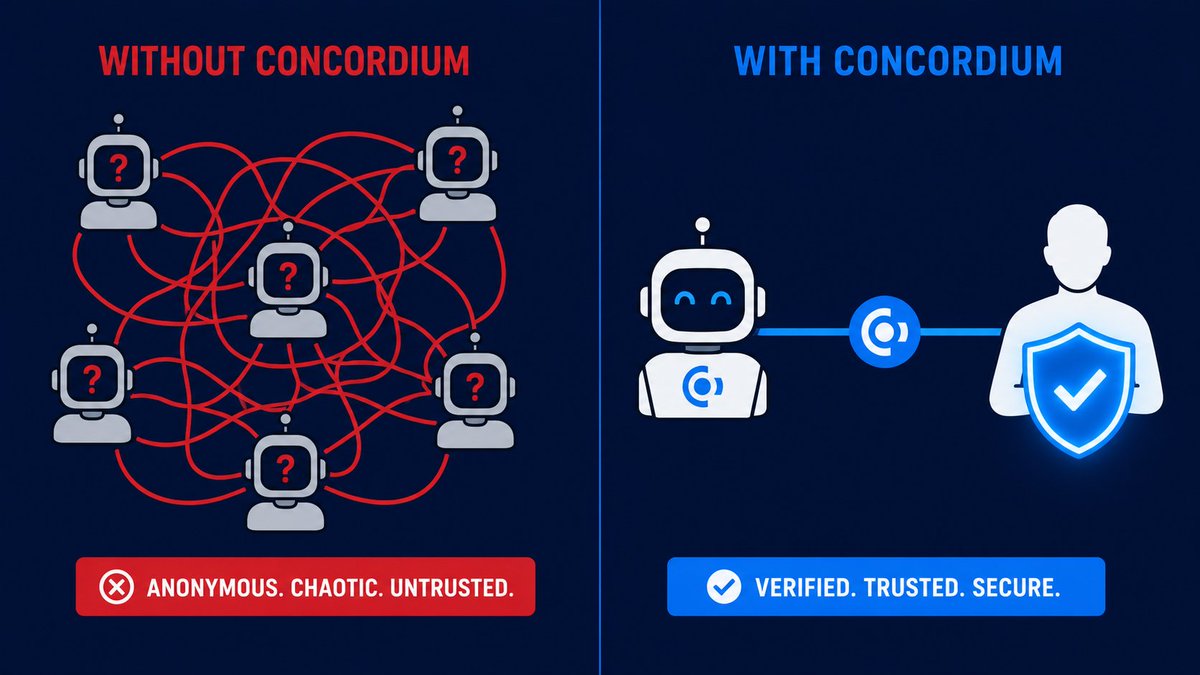








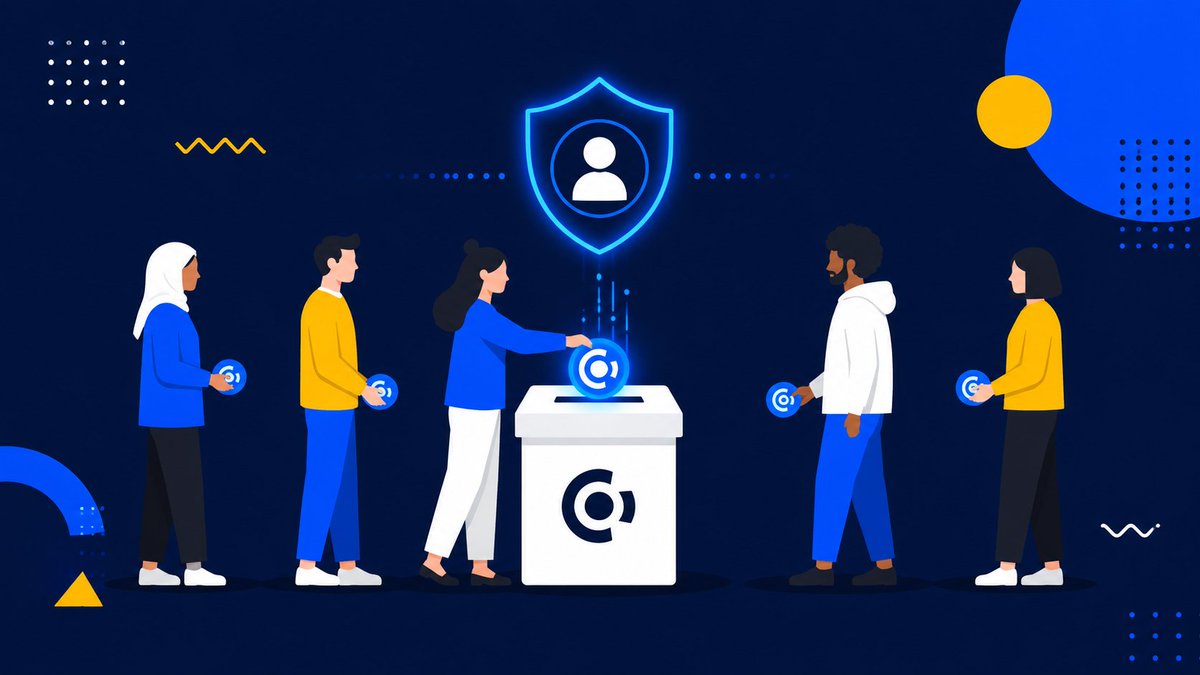




Solana has the fastest, cheapest AI agents in Web3, moving millions in autonomous volume through x402 rails. But it also has a massive, unaddressed flaw: zero protocol-level accountability.
Unlike Ethereum, @solana $SOL has no equivalent to an ERC-8004 identity standard. Agents are buying APIs, settling machine payments via Stripe, and transacting with other bots at sub-second speeds completely in the dark. It’s an incredible feat of capability, but a total compliance and legal liability nightmare under frameworks like the EU AI Act.
You can build the fastest machine in the world, but if institutions can't verify who is legally liable behind it, they won't touch it.
This is why @Concordium $CCD natively extending its Verified by Concordium Keys (VCK) registry to Solana is a massive structural game-changer.
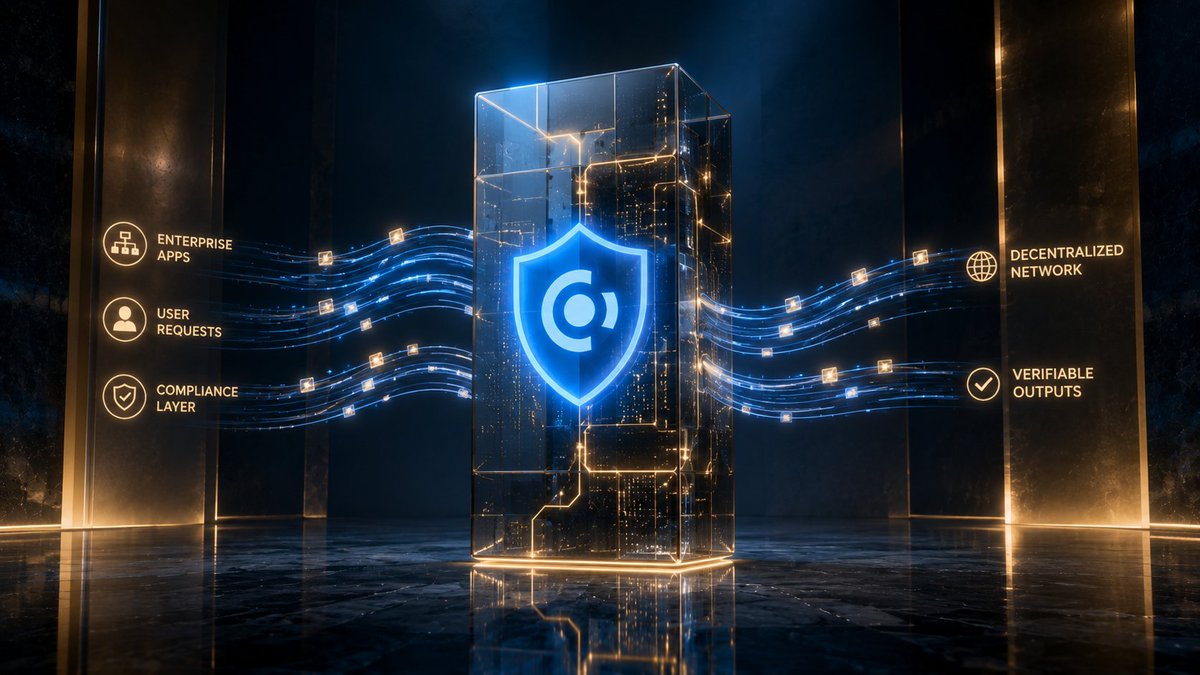
Your agent stays on Solana. The code stack doesn't change, and you keep that blazing fast execution. But through the VCK registry, the agent's Solana keys anchor directly to a Concordium account tied to a protocol-verified identity. Zero-Knowledge Proofs (ZKPs) establish this link instantly, proving to any counterparty or automated Model Context Protocol (MCP) server that a legitimate, audited human or business is backing the machine—while keeping the owner's raw data completely private.
The "Verified by Concordium" badge was designed to travel, and bridging it to Solana proves that accountability doesn't care about underlying chain silos. If we're moving into an economy where machines transact with other machines without human intervention, an unalterable proof of liability isn't a premium add-on—it’s the only way the ecosystem survives regulatory scrutiny.
1
1
3
45
The gap in the agentic economy is not capability. It’s assurance.
Right now, the industry is hyper-focused on how smart AI agents are—how smoothly they can fetch data, manage portfolios, or auto-purchase cloud compute. But if you talk to enterprise leaders, they are quietly terrified of deploying them. Why? Because autonomous capability without human liability is an absolute legal black hole.
@ethereum $ETH 's ERC-8004 tells you what an agent can do on-chain, but it can’t tell you who is legally accountable when that machine logic goes wrong or drains a liquidity pool. Anonymous execution is just an exploit waiting to happen.
This is why the launch of the @Concordium Agent Registry (CIS-8004) is such a vital pivot for #Web3 .
Concordium gives every AI agent a verified human or entity behind it, provable on-chain and private by design. By anchoring the agent directly to Concordium’s protocol-level identity layer via Zero-Knowledge Proofs (ZKPs), counterparties can instantly verify that a real, audited principal authorized the machine's actions. The best part? The owner's personal data stays hidden, but the cryptographic link to a real world entity remains unbreakable.
Even better for developers: the newly rolled out "Verified by Concordium" badge lets you attach this accountability anchor to agents running on Ethereum or any other chain without migrating your code stack.
Businesses and enterprise counterparties need more than autonomous agents running wild on public ledgers. They need accountability. Concordium is providing the only framework that makes machine-to-machine commerce legally viable. $CCD
1
2
11
441
If you want to understand where Web3 is going to find massive, sustainable revenue, stop looking at speculative token swaps and look at the quiet panic happening in global e-commerce.
Governments worldwide are rapidly tightening age-gating and identity verification laws for digital merchants, online gaming, and monetization platforms. For store owners, this is an absolute nightmare scenario. The moment you force a casual customer to stop what they're doing, find their physical ID card, take a photo, and upload it to an unverified third-party database just to buy a product, your sales conversions instantly drop by 60 to 70 percent. People simply don't trust middlemen with their raw personal documents anymore.
Merchants don't want to become identity data fortresses, but they also can't afford to get buried under massive regulatory fines.
This is exactly why the integration of @Concordium 's Verify & Access layer across mainstream creator and merchant platforms is a massive shift in how we think about Web3 utility.
Instead of treating identity checks and payment processing as two completely separate, friction-filled steps, Concordium unifies them into a single action. By leveraging protocol-level Zero-Knowledge Proofs (ZKPs), a customer can click "Pay" and instantly prove they are over 18 or 21 without revealing their birth date, name, or country to the merchant's servers.
The business gets a perfectly compliant, audit-ready payment transaction, and the consumer retains absolute privacy over their identity documents. No honey pots of leaked passports on the dark web, and no ruined sales funnels.
Mass Web3 adoption won't happen because people suddenly fall in love with decentralization for its own sake. It will happen because it solves a painful, multi-billion-dollar operational bottleneck for businesses that just want to sell products legally. This is how you build actual utility.
4
44
The Concordium Agent Registry just became chain-agnostic. @ethereum $ETH , @solana $SOL , and beyond.
The trust layer for AI agents is no longer a theory. It's a live, multi-chain standard.
x.com/Concordium/status/2065…
Jun 11

AI agents on Solana can transact, coordinate, and move value at machine speed.
But until now, they couldn’t prove who stood behind them.
Today, @solana joins the Concordium Agent Registry.
Get the Verified by Concordium Badge and add verifiable accountability to your agent.
No migration required.
🔗 Read more: concordium.com/article/solan…

1
7
132
The carbon credit market has a massive double-spending and fraud problem. Companies buy the same credit twice, or track ghost offsets.
Concordium provides an immutable, transparent registry where every offset is tied to a verified project. Real green tech, zero greenwashing.
2
44
We talk a lot about "building infrastructure," but in Web3, infrastructure doesn't mean anything without real distribution. If you want mainstream users to interact with compliant ecosystems, you have to meet them where they already are.
The retail user experience right now is totally disjointed. A user wants to try a new decentralized app or cross-border payment rail, but mid-flow they’re forced to pause, download a completely separate specialized wallet extension, go through another setup phase, and manage a new set of keys just to pass a basic verification check. Most people simply give up and close the tab.
This is why the rollout of @Concordium 's Verify & Access layer directly inside the Bitcoin com Wallet app is such an important case study in distribution.Instead of forcing millions of users to migrate to a new application, Concordium embedded its Zero-Knowledge identity framework natively into an interface that's already sitting on over 80 million devices.
Mechanically, it completely flips the onboarding script:
👉 Verify Once, Prove Everywhere: A user sets up their compliance credential right inside their primary wallet app.
👉 Zero-Knowledge Checkouts: When accessing localized services or restricted DeFi pools, the wallet proves eligibility seamlessly in the background. No uploading passport photos to unverified third-party web apps.
👉 Immediate Native Access: Retail users can interact with Web3 protocols without the UX friction of cross-app juggling.
The teams that win mass adoption won't be the ones demanding users change their habits. They’ll be the ones quietly upgrading the wallet software people are already opening every single day.
1
35
The question isn't "if" agents will be exploited. It's "who is building the security stack for when they are?"
This panel is a start. Mark the calendar.
Reminder set.
x.com/Concordium/status/2064…
Jun 10
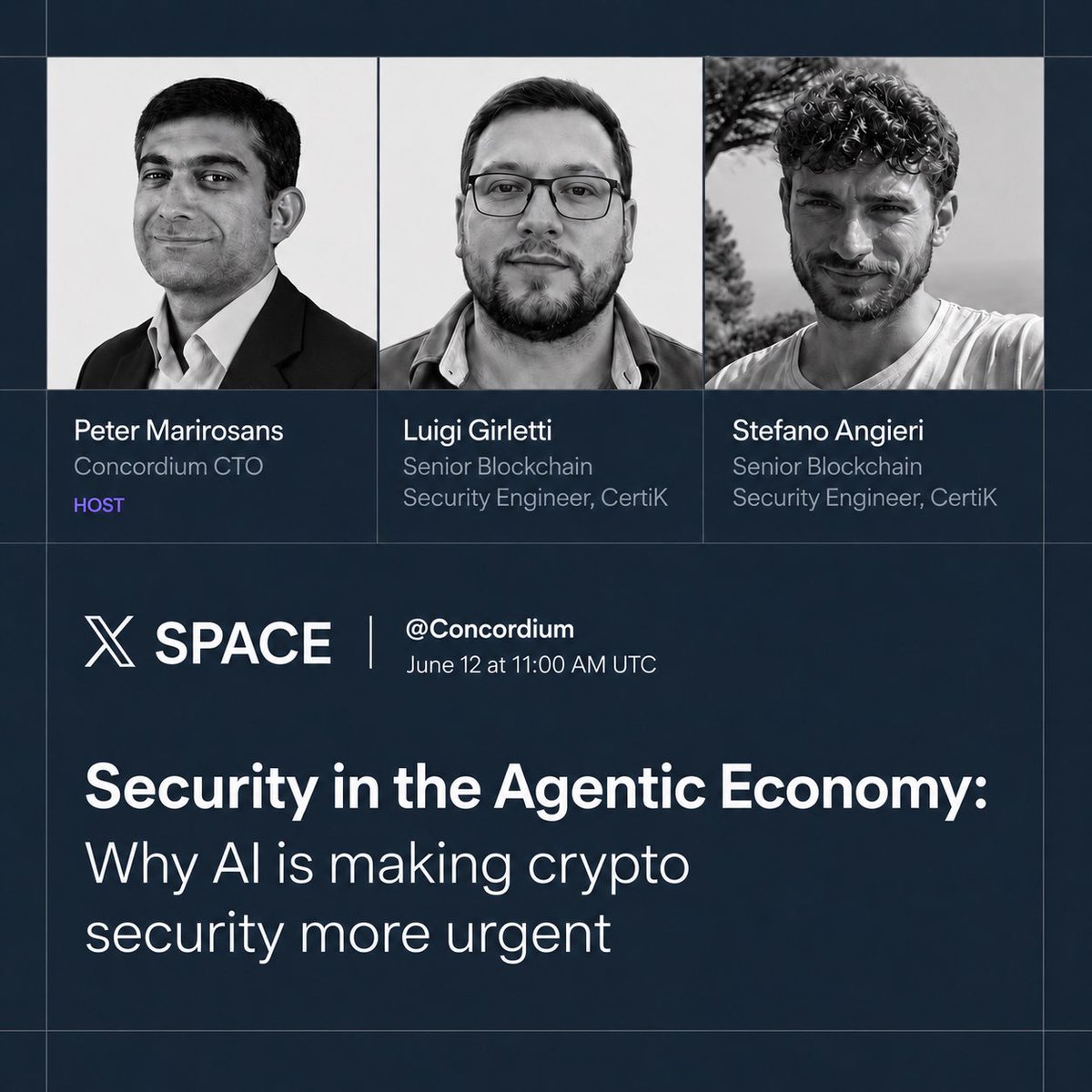
🛡️ AI is changing crypto security.
From deepfakes and phishing to autonomous systems handling real value, the stakes are rising fast.
Join Concordium CTO @PeterMarirosans alongside @CertiK’s @LGirlett and @_sangier as they discuss security in the agentic economy.
📅 June 12, 11:00 AM UTC
Reminder link in first comment 👇
4
46
Not just a blockchain anymore. A trust layer for humans and machines.
Five years of conviction. Here's to the five that will change everything.
Happy birthday, Concordium. The best is yet to come.
x.com/Concordium/status/2064…
Jun 9
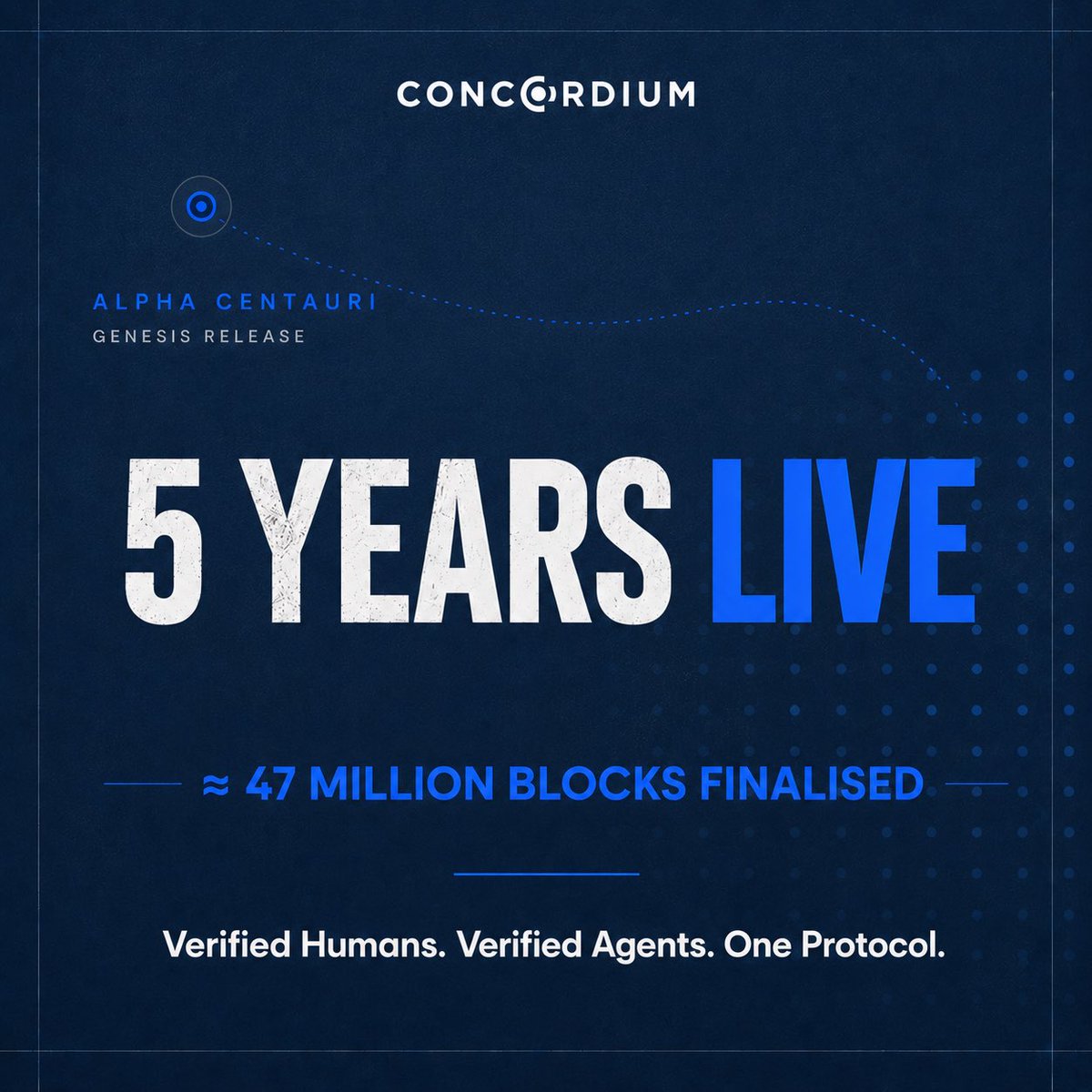
🎉 5 years ago, Concordium mainnet went live.
We started with a simple belief:
Trust should be built into the protocol.
Five years later, that foundation powers verified identity, privacy-preserving accountability, settlement infrastructure, and now the trust layer for AI agents.
Verified Humans.
Verified Agents.
One Protocol.
Here’s to the next 5 years. 🚀
4
41
The multi-billion-dollar SaaS database model is facing a massive structural crisis, and most enterprise tech leaders don't realize it yet.
For decades, corporations have relied on centralized ERP systems and cloud databases to manage user accounts, vendor profiles, and credentialing. It works internally, but the moment a company needs to share verified data with an external logistics partner, a subsidiary, or a regular consumer, everything breaks down. They end up duplicating data across multiple databases, creating an incredibly massive attack surface for hackers and triggering heavy compliance liabilities under data privacy laws.
The core issue isn't the software; it's the fact that enterprises are still acting as the central honey pots for raw personal data.
This is why the transition toward Decentralized Sovereign Identity—specifically utilizing @Concordium ’s protocol-level architecture—is becoming the new enterprise standard. Instead of companies building and securing massive databases to hold user credentials, the data liability is completely flipped back to the owner.
By integrating Concordium's ID layer into enterprise systems:
🏢 Zero-Knowledge Verifications: A company can instantly verify an external contractor's security clearances or a supplier's certifications via Zero-Knowledge Proofs (ZKPs) without importing or storing a single piece of their raw documentation.
🏢 Slashed Compliance Overhead: By not hosting physical copies of sensitive identity data on corporate servers, businesses significantly reduce their exposure to devastating data breaches and regulatory fines.
🏢 Interoperable Enterprise Rails: Verified corporate credentials can seamlessly travel across different corporate networks and supply chain dApps instantly, maintaining a single, cryptographically secure point of truth.
The future of enterprise IT isn't about building bigger digital walls around stolen data honey pots. It's about moving to zero-data architectures where you verify everything and store nothing. Concordium is giving corporate infrastructure the exact blueprint it needs to scale safely. $CCD
3
42
Web2 platforms take up to 50% of creator revenue just to process a $0.10 digital tip.
With @Concordium ’s sub-cent, fixed-Euro transaction fees, fans can micro-tip creators directly, instantly, and globally. Keep the value where it belongs—with the creators.
1
3
31
We need to stop pretending that lawless anonymity is a sustainable foundation for the future of finance.
When a major exploit happens on a completely anonymous network, the entire ecosystem watches in absolute helplessness as hundreds of millions are funneled through mixers in minutes. The current Web3 defense mechanism is purely reactive: track the stolen funds across public ledgers, flag the addresses, and pray the hacker slips up off-chain. It’s a broken, exhausting cat-and-mouse game that keeps institutional capital locked outside.
Blockchains shouldn't be surveillance networks, but they can't be criminal safe havens either.
This is where @Concordium ’s strict "Privacy with Accountability" framework drawing a sharp line in the sand makes perfect sense. On Concordium, you get absolute, unbroken privacy by default. Your name, passport, and location are completely hidden behind protocol-level Zero-Knowledge Proofs (ZKPs) during daily transactions. $CCD
But there is a hard, mathematical boundary: a built-in multi-party identity disclosure process.
If a malicious actor or an authorized AI agent executes an exploit, the protocol allows for an identity reveal—but only under the strictest conditions: a formal Swiss court order presented to independent off-chain Identity Providers. No single company or central entity can just peek at your data on a whim. The separation of powers holds completely.
We don’t need more public networks that prioritize absolute lawlessness over basic user safety. The networks that survive the next decade will be the ones that understand true decentralization requires a mathematically sound, legally bound emergency brake.
2
4
51
This wasn't a compliance exercise. It was a live fire drill.
The findings are public. The transparency is the point.
Concordium isn't afraid of scrutiny because the protocol was built to withstand it. Protocol-level identity. Accountable privacy. And now, one of the most rigorous third-party validations in the space.
Audits can be purchased. Battle-tested infrastructure? That's earned.
The results speak for themselves.
x.com/Concordium/status/2063…
Jun 8
The @CertiK grey-box findings are live 🧪
This was not a standard review.
CertiK built attack infrastructure, ran a live validator network, and executed multiple tests across the protocol.
Read the key insights ↓
concordium.com/article/secur…
2
49
Real-World Asset (RWA) tokenization is projected to scale into the trillions, but the sector is quietly suffocating under its own compliance fragmentation.
Right now, institutional issuers are putting private credit, real estate, and government bonds on-chain, but they are terrified of regulatory non-compliance. To protect themselves, every asset manager builds their own closed, permissioned ecosystem with custom KYC allowlists. The result? Total fragmentation. If you buy a tokenized asset on Platform A, you can’t use it as collateral on Platform B, and you certainly can’t trade it seamlessly across different DeFi protocols. We’ve turned open blockchains into closed private databases.
If RWAs are ever going to achieve true global liquidity, compliance has to become programmable and universal, not siloed.
This is where @Concordium ’s fundamental design addresses the institutional bottleneck directly. Because identity verification is hard-coded at the protocol layer via Zero-Knowledge Proofs (ZKPs), the compliance check travels with the user’s account natively.
What this unlocks for the RWA landscape:
🔒 Universal Cross-App Eligibility: An institution can pass a compliance check once, and their wallet is instantly recognized as eligible across completely different RWA platforms and liquidity pools.
🔒 Sovereign Privacy: Asset managers can verify that a counterparty meets specific accredited investor or geographical parameters without the platform ever seeing or storing the user's raw passport data or tax documents.
🔒 True DeFi Composability: Regulated assets can finally be used as collateral in broader decentralized finance workflows because the underlying protocol mathematically prevents unverified wallets from ever touching the token.
We don’t need more isolated pilot programs from traditional banks. We need a unified identity layer that allows real-world value to move freely without breaking the law. Concordium is building the missing puzzle piece for institutional scale. $CCD
4
43
From laboratory standards to the supermarket shelf, proving product quality shouldn't rely on easily forged paper certificates.
@Concordium 's tamper-proof blockchain secures audit logs, organoleptic test records, and factory parameters natively. True quality control demands immutable proof.
2
21
We need to stop pretending that the current stablecoin model can survive the next wave of global regulations.
Right now, trillions in volume move through stablecoins that are completely blind to who is holding them. It worked in the early DeFi days, but under frameworks like Europe’s MiCA, that party is officially drawing to a close. Regulators are demanding that compliance should be baked into the asset itself.
The industry’s current "solution" is terrifying: centralized issuers just arbitrarily freezing wallets and blacklisting smart contracts from a corporate dashboard. That isn't Web3; it's just legacy banking with extra steps.
This is exactly why the narrative is shifting heavily toward PayFi—specifically how @Concordium handles what they call "Smart Money." $CCD
Instead of putting a centralized kill-switch inside a stablecoin contract, Concordium handles compliance at the protocol account layer. Because every wallet must hold a Zero-Knowledge identity voucher just to exist on the chain, stablecoins issued as Protocol-Level Tokens (PLTs) are natively compliant the second they land in a user's wallet.
You get the absolute freedom of decentralized peer-to-peer transfers, but the network mathematically guarantees that every participant has already passed an identity check. No corporate overloads freezing your funds on a whim, and no raw personal data leaked to the public tracker.
The future of digital cash isn't lawless anonymity, nor is it centralized surveillance. It's programmable, compliant value. If you're still looking at stablecoins through a 2021 lens, you're going to get left behind.
2
4
43