
Joined October 2020
- Tweets 400
- Following 95
- Followers 1,136
- Likes 99
232 Photos and videos











Jun 5
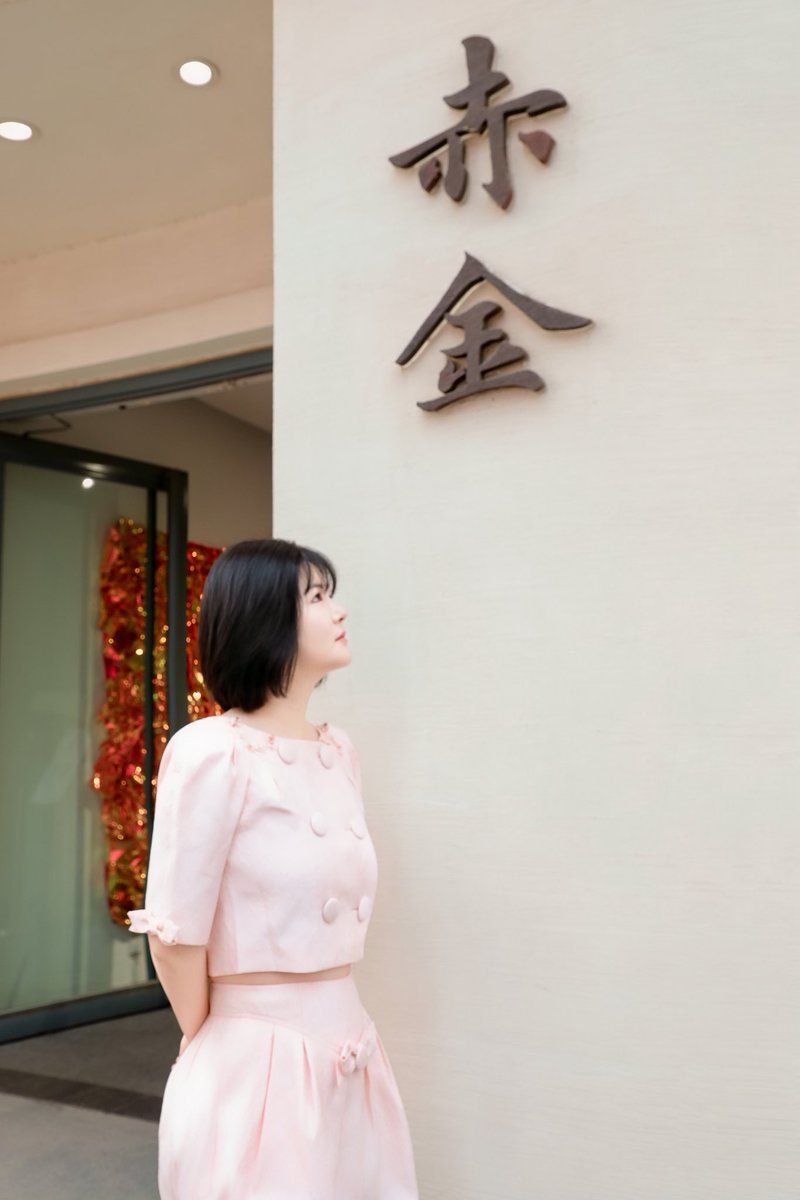
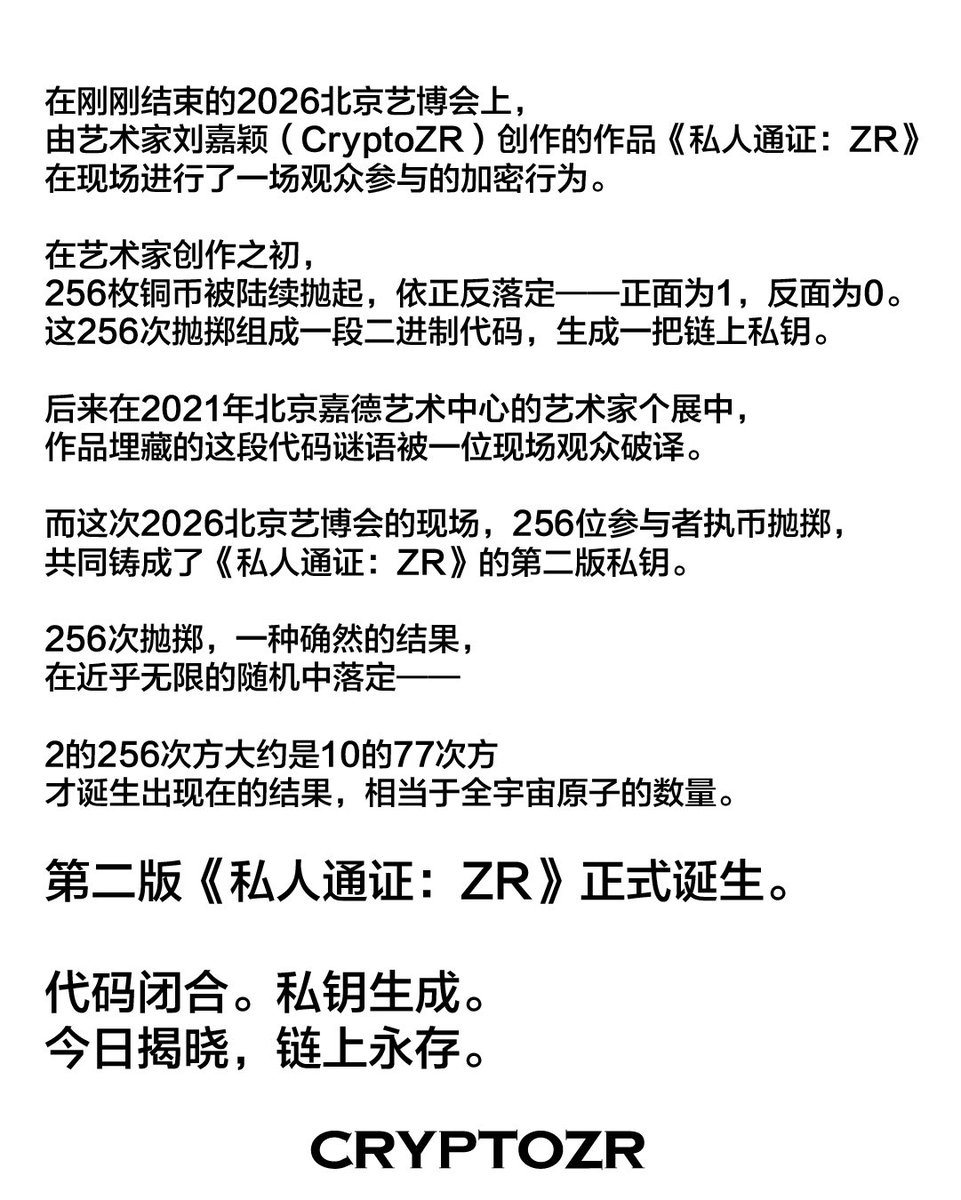
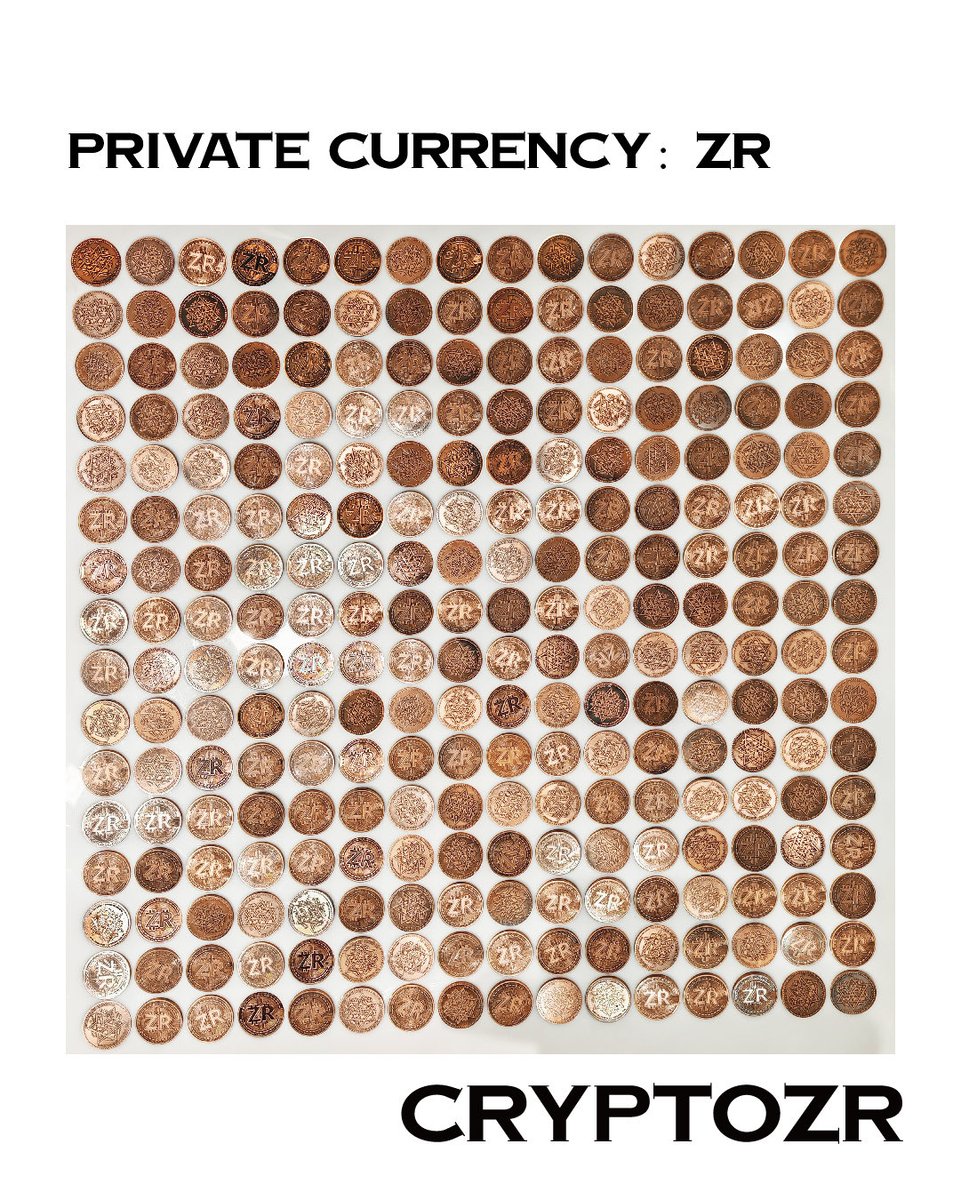
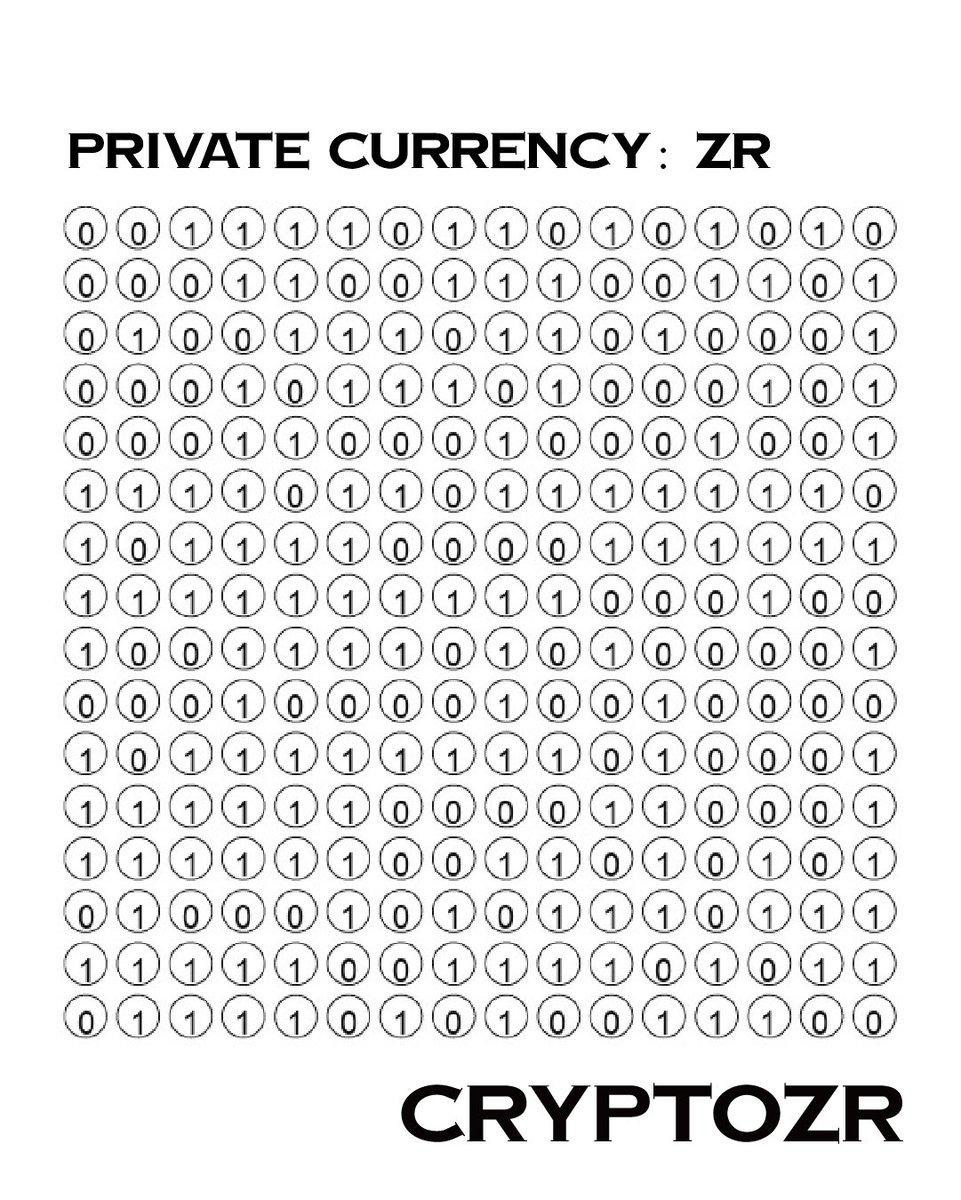
256 coins. 256 tosses. Behind this collectively generated on-chain private key lie 2²⁵⁶ possibilities — about 10⁷⁷, comparable to the total number of atoms in the entire universe. That is why this moment’s certainty is so precious.
CryptoZR's second edition of Private Token: ZR — code sealed today, permanently on-chain.
Thank you to every participant who held and tossed a coin. Your participation turned one fleeting cosmic probability into the final form of this artwork.
256枚铜币,256次抛掷。这段集体生成的链上私钥,背后是2的256次方种可能——约10的77次方,这个数量级,接近宇宙中所有原子的总和。正因如此才珍贵。
CryptoZR的《私人通证:ZR》第二版,代码于今日闭合,永存链上。
感谢每一位执币抛掷的参与者,是你们的参与,让这宇宙级概率中的一瞬,成为作品的最终形态。
#CryptoArt #CryptoZR #PerformanceArt #Blockchain
60
Jun 1
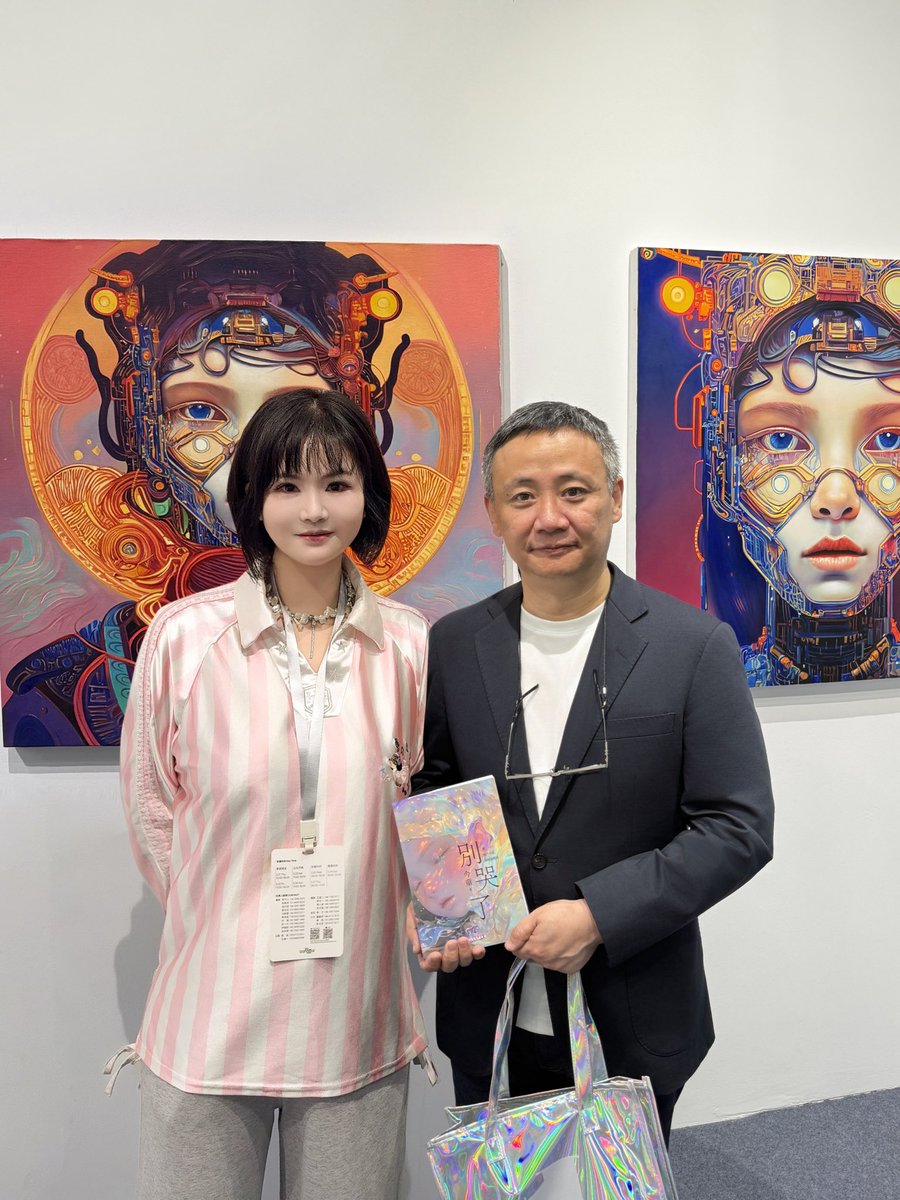
A reader‘s reflection: “Women need kindness at every age.”
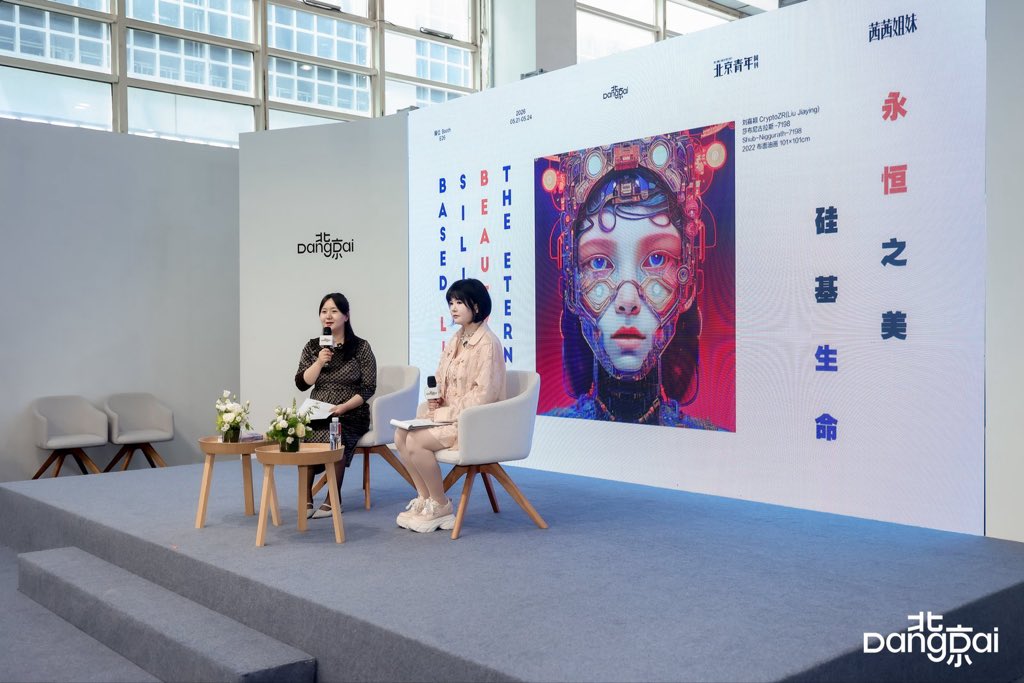
CryptoZR (Liu Jiaying) shared a lovely story from the debut of her picture book Don’t Cry during her lecture “The Eternal Beauty of Silicon-Based Life” at Beijing Contemporary Art Expo.
#ContemporaryArt #CryptoArt #CryptoZR #AIArt #digitalartㅤㅤㅤㅤ
42
May 26
This is a Bitcoin inscription I created in Apr 2023. Silicon-based life forms probably use matrix analysis to understand art.
ordinals.com/inscription/3a3…
2
1
41
May 24
Can you tell the difference between the two white images below? In the real world, pure white is the only option on a canvas, but this isn't necessarily true in the digital world. If you use AI to create an image, you will never get pure white.

1
68
May 24
Lecture Recap|CryptoZR
🎤 Crypto artist CryptoZR (Liu Jiaying)
“The Eternal Beauty of Silicon-Based Life”
— From digital media to crypto art. A deep dive into eternity and existence.
#BeijingContemporaryArtExpo #CryptoZR #CryptoArt

49
May 21
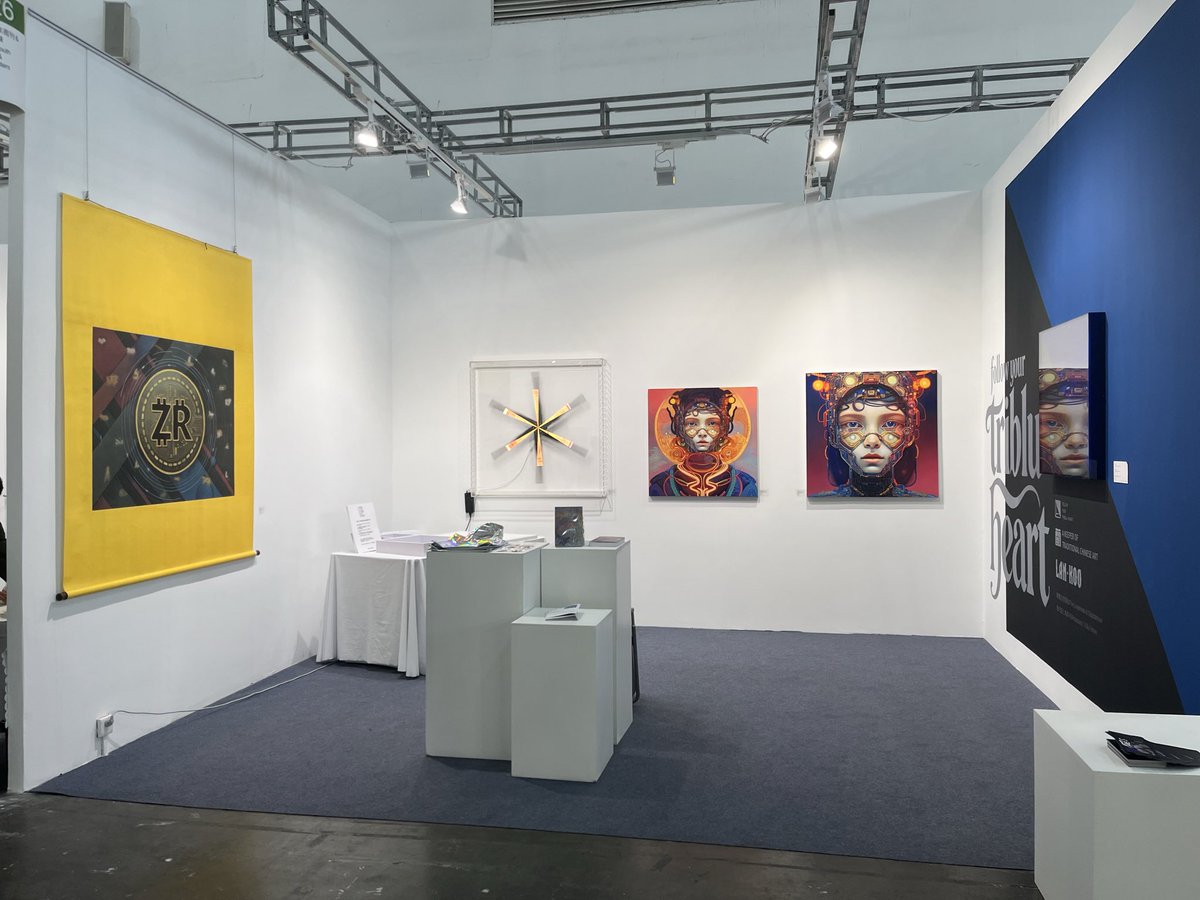
🎉 开展第一天,现场就超热闹!
看看今天来玩的朋友和艺术家们 📸
谢谢大家来E26找我们~
✨ 5.21 – 5.24 我们都在 北京当代艺术博览会
和 @北京青年周刊 合作的展位 E26
现场还有一场 加密行为 互动活动,等你来解锁 🕹️
接下来的三天,继续等你们来玩儿!
📍 北京·全国农业展览馆
🎟️ 现场见!
🎉 Day 1 is already buzzing!
Loving these moments with friends & artists today 📸
Thanks to everyone who stopped by Booth E26.
✨ We’re here May 21–24 at Beijing Contemporary Art Expo
in collaboration with Beijing Youth Weekly – Booth E26
Plus an encrypted behavior / crypto-art interactive event on site – come try it out 🕹️
Three more days – see you there!
📍 Beijing · National Agricultural Exhibition Center
🎟️ Let’s play!
#BeijingContemporaryArtExpo #BeijingYouthWeekly #CryptoArt #PerformanceArt #BeijingArt



91
May 21
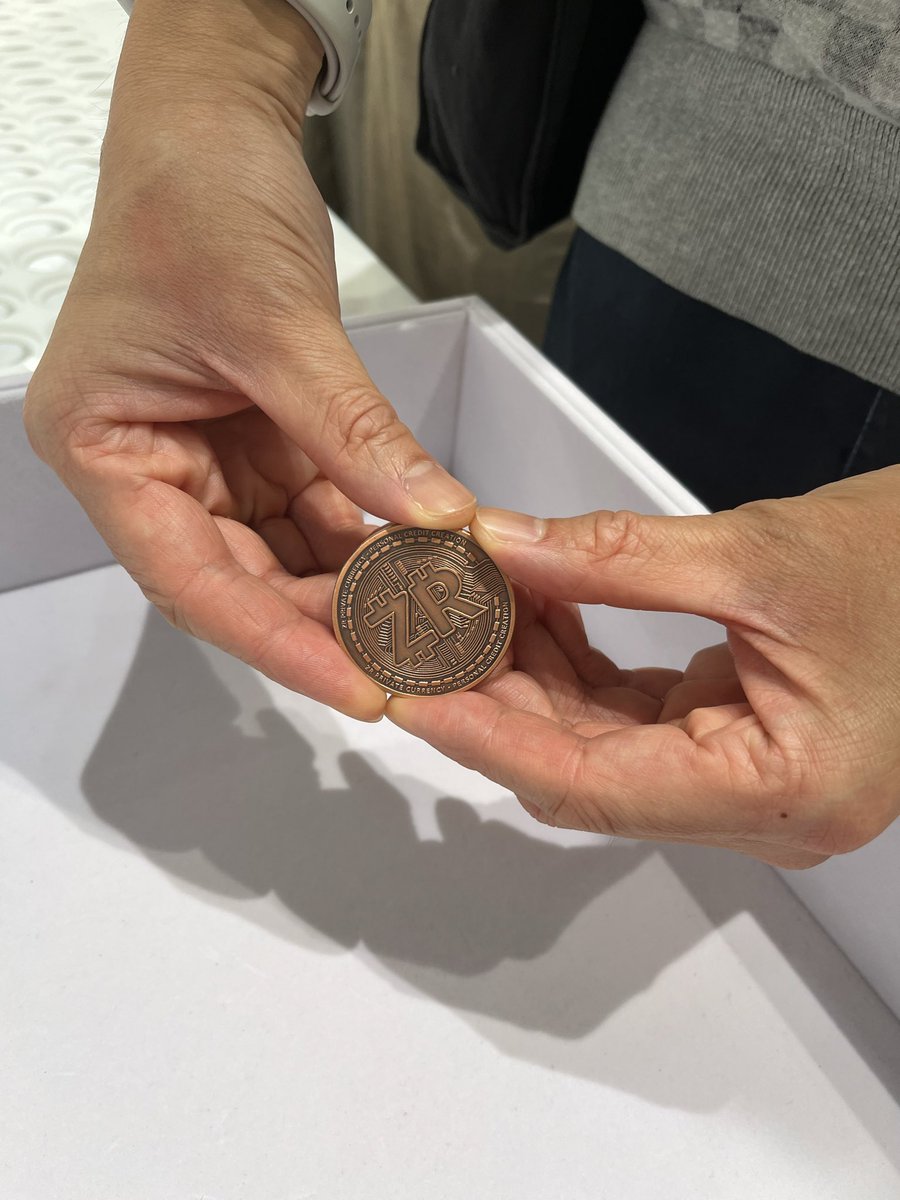
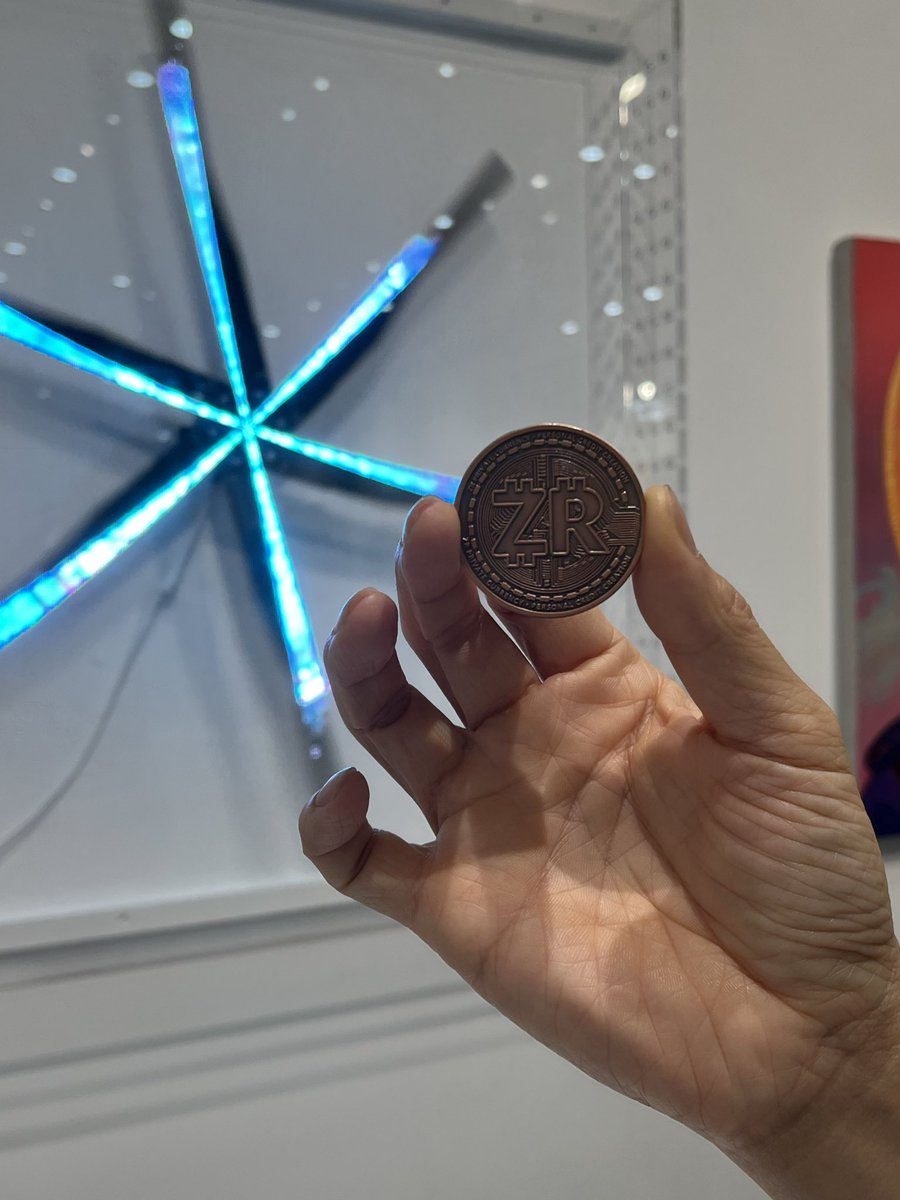
Day 1
May 21-24 | Booth E26 @ BJ Contemporary Art Expo
Come try our encrypted behavior game 🕹️
collab with @BeijingYouthWeekly

22
May 20
I have collected many @CryptoArte in 2021, this project is confirmed as the earliest generative art on Ethereum
1
34
CryptoZR retweeted

May 10
Silicon-based Time
Artist: CryptoZR
Medium: 4K single-channel video, 600 seconds
Data source: Bitcoin mainnet blockchain (block heights #947777–#947876)
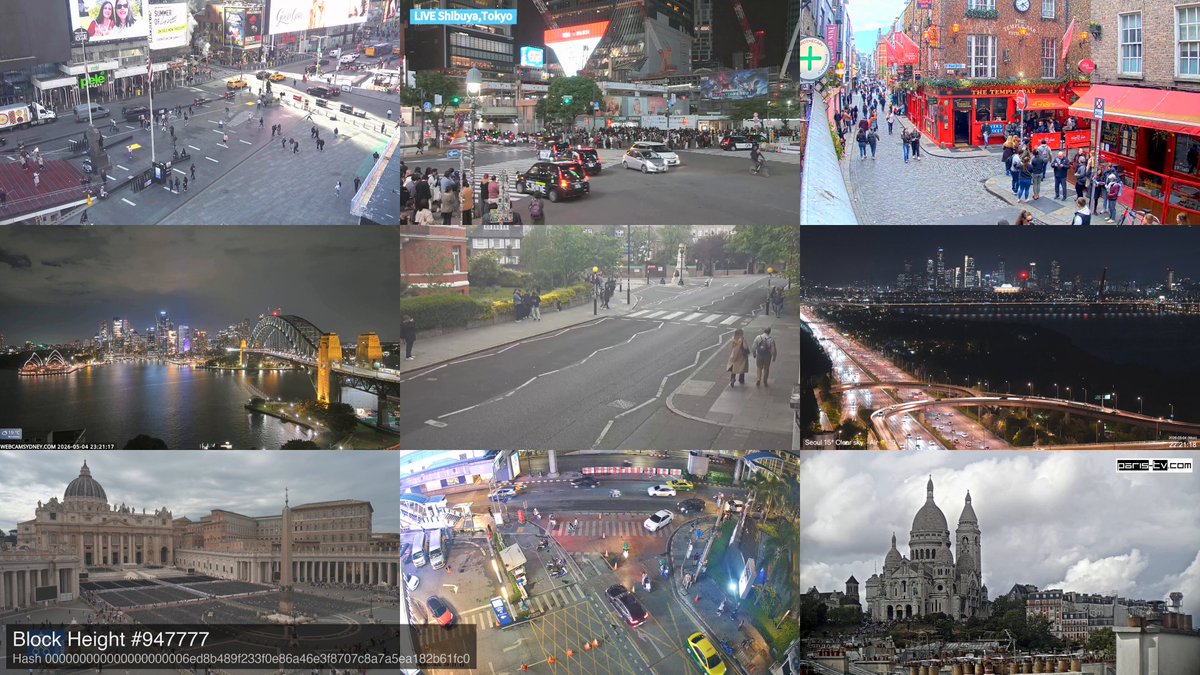
Camera locations: Shibuya Crossing, Times Square, Dublin, Sydney Harbour, Abbey Road, Seogang Bridge (Seoul), Colosseum (Rome), Sukhumvit Road (Bangkok), Sacré-Cœur (Paris)
I. Description of the Work
Silicon-based Time arranges nine simultaneous live-camera feeds from public spaces around the world into a 3×3 matrix, forming a global cross-section of the present moment. The playback speed of the footage is not governed by the human clock, but mapped in real time to the block intervals of the Bitcoin blockchain.
To understand this mapping, it is necessary to first understand the basic mechanics of Bitcoin.
Bitcoin is a digital currency running on a decentralized network. Its core mechanism is called Proof of Work (PoW). Participants in the network—known as miners—use specialized computers to perform hash computations continuously: a piece of data is fed repeatedly into a mathematical function called SHA-256, which outputs a fixed-length string of characters (a hash). The miner's goal is to find a hash that meets a specific condition (typically requiring the result to begin with a certain number of zeros). This process is unpredictable and can only be accomplished through massive trial and error.
When a miner is first to find a qualifying hash, they earn the right to package a batch of transaction records into a block and write it to the chain, receiving a Bitcoin reward in return. The block is broadcast to the entire network; once verified by other nodes, it officially becomes part of the blockchain and the block height increments by one.
The Bitcoin protocol dynamically adjusts mining difficulty so that the network produces a new block on average every ten minutes. However, "average" means the actual intervals follow a Poisson distribution—a probability model describing the frequency of random, independent events. In practice, block intervals are anything but uniform: sometimes a block arrives in seconds, sometimes it takes several hours, depending entirely on the competitive state of global computing power at that moment. Each block carries a timestamp and a unique hash value—a cryptographic digest of all the block's contents. Any modification to the content would cause the hash to change completely.
How the Work Uses This Mechanism
Silicon-based Time translates this random block rhythm directly into the temporal dimension of the image. When the Bitcoin network completes a proof-of-work computation, the corresponding six seconds of footage plays at 1× speed. If a block is found in only 30 seconds, the playback speed drops sharply to 0.05×: the crowds of nine cities seem to fall into a near-frozen slow motion. If a block takes fifty minutes to find, the footage is compressed into a 5× fast-forward, and the rhythms of urban life are condensed into an unrecognizable flicker. The full work consists of 100 blocks, totaling 600 seconds. Into every frame, the block height and full hash are burned into the lower-left corner—an immutable timestamp embedded inside the image.
In this version, the 100 block intervals range from a minimum of 30 seconds to a maximum of 2,854 seconds, with an average of approximately 588 seconds. Speed factors span from 0.05× to 4.76×, with 8 extremely slow blocks (below 0.1×) and 12 extremely fast blocks (above 2×) producing the most intense temporal distortions in the work.
II. Technique
The work's technical path rests on the real-time coupling of two heterogeneous systems: a decentralized blockchain consensus mechanism on one side, and a network of public surveillance cameras installed by city administrators around the world on the other. The two systems have no inherent connection; this work forcibly joins them.
The artist runs a fully indexed Bitcoin full node locally, reading block header timestamps directly from the chain and computing the interval between consecutive blocks. Each interval is divided by the baseline of 600 seconds (ten minutes) to derive a speed factor. All nine camera feeds are recorded simultaneously, ensuring that nine geographic coordinates begin capturing at the same real-world moment—preserving the foundational premise of "parallel witnessing." Post-production uses ffmpeg to perform frame-level speed adjustment, 3×3 grid compositing, watermark rendering, and 4K output.
One technical choice worth noting is the speed factor floor of 0.05—corresponding to the shortest valid block (approximately 30 seconds). At this speed, a six-second output segment draws on only 0.3 seconds of source material: roughly 9 frames are stretched across 180 output frames, producing something the eye perceives as a near-static slideshow. The artist deliberately preserves this extreme state without interpolating additional frames, allowing "the granularity of time" to appear in its unmediated, technical form.
III. Art-Historical Comparison
In terms of image strategy, Silicon-based Time shares with Andy Warhol's Empire (1964) a fundamental interest in time itself rather than the contents of time. But where Warhol used absolute, uniform speed to expose the artificiality of photographic time, Silicon-based Time uses variable speed to reveal a different governing logic of technical time—the randomly Poisson-distributed block rhythm of the Bitcoin network.
The multi-screen structure recalls Douglas Gordon and Philippe Parreno's Zidane: A 21st Century Portrait (2006), in which seventeen cameras simultaneously tracked a single subject, achieving a deconstruction of body and event through temporal simultaneity. Silicon-based Time pursues the same simultaneity, but replaces the subject: from a single individual to the anonymous aggregate of global human activity; from cameras as trackers to cameras as indiscriminate surveillance eyes.
Within the lineage of data-driven art, the work invites comparison with Ryoji Ikeda's data visualization installations—which convert data into perceptual intensity of sound and image. Silicon-based Time inverts this approach: the data (block intervals) is not visualized but instead directly manipulates the temporal dimension of real-world footage, leaving the imprint of an invisible computational rhythm on a visible human landscape.
IV. Theme and Symbolic Meaning
The work's central proposition can be approached through the concept of substitution of subjectivity. The Bitcoin blockchain, as a decentralized, sovereign-free, continuously operating computational system, perceives the world through only one dimension: the block height—a monotonically increasing integer sequence. It has no day or night, no holidays, no geography, no emotion. From the perspective of this system, "time" is not the physical second but the frequency at which proofs of work are completed.
On this basis, the work constructs an experiment in perspective: when the images of the human world are compelled to accept this system of temporal units, human activity itself becomes the observed object rather than the observing subject. The pedestrians of Shibuya, the neon of Times Square, the pilgrims of Sacré-Cœur are, from the Bitcoin network's point of view, nothing more than variable-length noise between two hash computations.
This substitution points toward a deeper question of power structures. In the process of capitalist digitization, increasing numbers of human behaviors are being measured, trimmed, and priced by non-human systems—algorithms, protocols, smart contracts. Bitcoin is not the cause of this process, but its most transparent metaphor: it has hard-coded the "temporal logic of capital" into open-source code on the chain, publicly auditable, immutable.
The hash value in the watermark carries a dual symbolic function. As cryptographic proof, it is the unique fingerprint of the block's content—unforgeable. As part of the image, it announces a kind of trustless notarization: the moment corresponding to this footage has been confirmed by every node in the global network. The human witness is no longer necessary.
V. Critical Assessment
The effectiveness of Silicon-based Time lies in the internal consistency of its concept. Every technical decision—synchronized recording, local node, precise keyframe correction, hash watermark—serves the same proposition rather than functioning as decorative addition. This distinguishes it from the many digital art projects that use blockchain as a gimmick, deploying the technology as an authentication or scarcity mechanism rather than as the narrative logic itself.
The work's sharpest tension lies in its non-intervention: the artist did not select "attractive" blocks, did not smooth extreme speeds, did not sidestep the sense of stasis. When a block interval is only 30 seconds and the image nearly freezes, this is not a flaw—it is an accurate rendition of the data. This fidelity to the raw output of the algorithm resonates structurally with documentary journalism's respect for truth, even though what is being recorded is not an event but the distributional form of time itself.
In terms of scalability, Silicon-based Time has an inherently open structure. The blockchain continues to grow; cameras can be replaced or added; each new generation corresponds to an unrepeatable historical cross-section. The work is therefore not a finished object but a protocol that updates itself over time—perhaps its deepest structural homology with blockchain logic: the chain does not stop. Neither should the work.
Afterword
Silicon-based Time raises a question that remains rare in the field of digital art: when a non-human system has acquired its own unit of time, what form will the historical images of the human world take within its coordinate system? The work offers no answer. Instead, it constructs an apparatus for observation, allowing viewers to feel—through sudden shifts in speed—the collision of two temporal logics. That is enough.
May 10

Silicon-based Time
Artist: CryptoZR
Medium: 4K single-channel video, 600 seconds
Data source: Bitcoin mainnet, blocks #947777–#947876
Silicon-based Time is a video work that observes the human world through the perspective of a silicon-based life form. Nine simultaneous live-camera feeds from public spaces around the world are arranged in a 3×3 grid.
The playback speed of all nine scenes is governed not by the clock on the wall, but by the Bitcoin blockchain: each block's display duration is fixed at exactly 6 seconds, presenting every frame of human-world footage captured between two consecutive blocks. When a block is mined quickly by miners, the footage slows sharply; when miners take far longer than average, the footage races forward at several times normal speed.
The block height and full hash of each block are burned into the lower-left corner of every frame as a cryptographic timestamp, anchoring each moment of on-screen reality to a verifiable point in blockchain time
硅基时间
艺术家: CryptoZR
媒介: 4K 单频道影像,600 秒
数据来源: Bitcoin 主网,区块高度 #947777–#947876
硅基时间是一件 4K 单频道影像作品(600 秒),通过硅基生命的视角来观察人类世界。艺术家将来自全球公共空间的九路实时摄像头画面以 3×3 网格结构并置于同一画面。所有场景的播放速度不由时钟决定,而由比特币区块链的出块间隔进行映射。
每个区块显示时长被设定为恒定的6秒,并展示下一个出块前获得的所有人类世界数据。当某区块被矿工快速挖出,画面骤然减速;当矿工耗时远超平均值,影像则以数倍速急速快进。每个区块的高度与完整哈希值作为密码学时间戳永久刻录于每帧画面左下角,并与画面中的现实时间进行映射。
1
2
2
1,319
May 10
Silicon-based Time
Artist: CryptoZR
Medium: 4K single-channel video, 600 seconds
Data source: Bitcoin mainnet, blocks #947777–#947876
Silicon-based Time is a video work that observes the human world through the perspective of a silicon-based life form. Nine simultaneous live-camera feeds from public spaces around the world are arranged in a 3×3 grid.
The playback speed of all nine scenes is governed not by the clock on the wall, but by the Bitcoin blockchain: each block's display duration is fixed at exactly 6 seconds, presenting every frame of human-world footage captured between two consecutive blocks. When a block is mined quickly by miners, the footage slows sharply; when miners take far longer than average, the footage races forward at several times normal speed.
The block height and full hash of each block are burned into the lower-left corner of every frame as a cryptographic timestamp, anchoring each moment of on-screen reality to a verifiable point in blockchain time
硅基时间
艺术家: CryptoZR
媒介: 4K 单频道影像,600 秒
数据来源: Bitcoin 主网,区块高度 #947777–#947876
硅基时间是一件 4K 单频道影像作品(600 秒),通过硅基生命的视角来观察人类世界。艺术家将来自全球公共空间的九路实时摄像头画面以 3×3 网格结构并置于同一画面。所有场景的播放速度不由时钟决定,而由比特币区块链的出块间隔进行映射。
每个区块显示时长被设定为恒定的6秒,并展示下一个出块前获得的所有人类世界数据。当某区块被矿工快速挖出,画面骤然减速;当矿工耗时远超平均值,影像则以数倍速急速快进。每个区块的高度与完整哈希值作为密码学时间戳永久刻录于每帧画面左下角,并与画面中的现实时间进行映射。
1
3
1,479
May 2
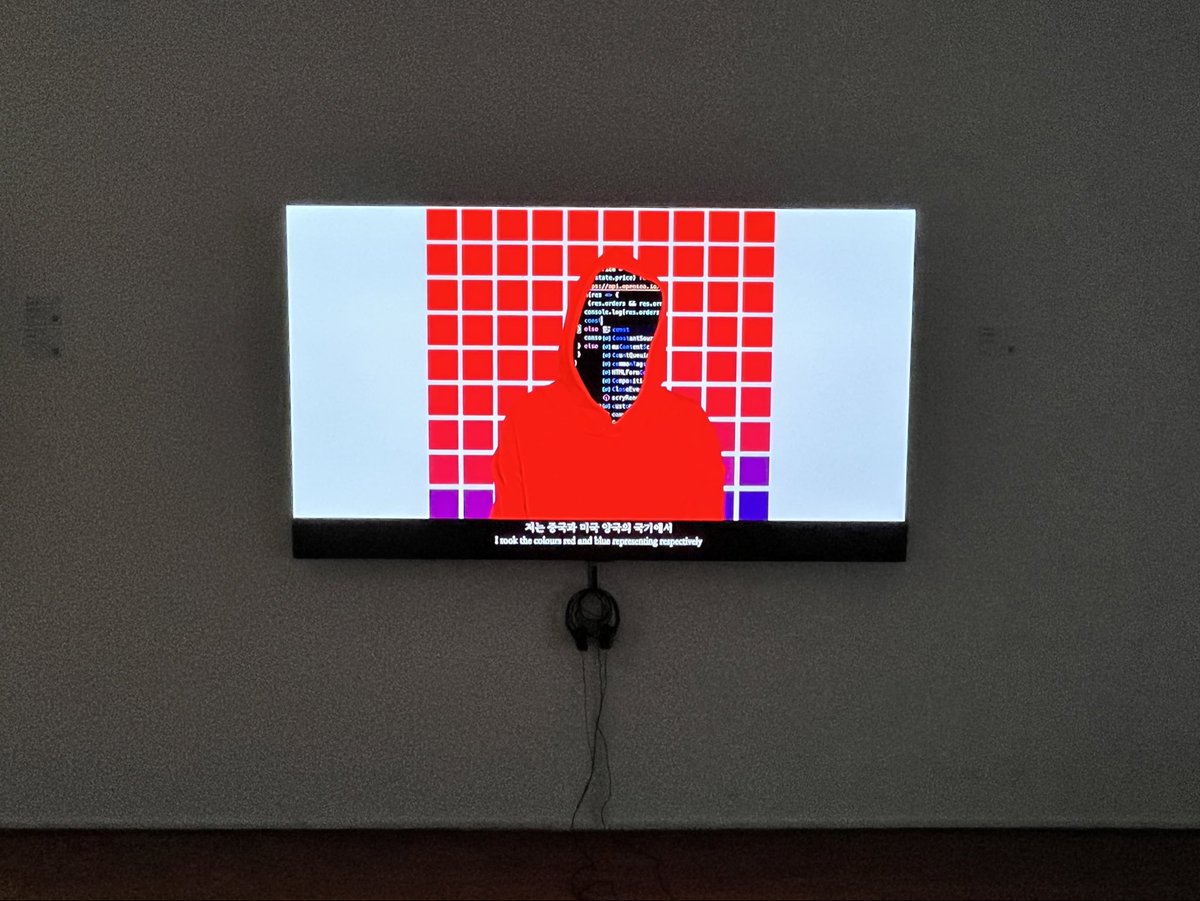
Red & Blue is my project started in 2019. I extracted the colors from the flags of China and US, divided the gradient colors into 100 portions which were minted as NFTs. Then auctioned on Opensea for a year. This new website documents the auction process. rnb.cryptozr.net/
59
Apr 29
The Consensus 260/410 (63.4%) Remains
"The Value Of Bitcoin Will Drop To Zero" Lost Its Consensus
consensus.cryptozr.net
50
Apr 27
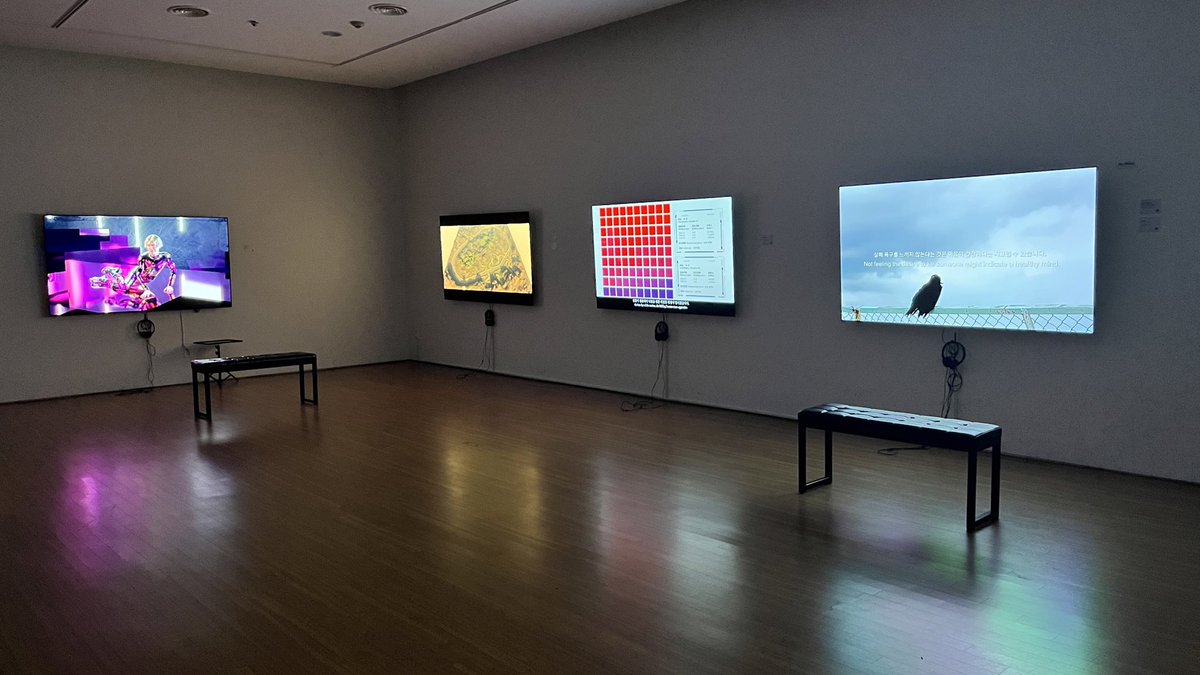
CryptoZR's work "Red & Blue" lands at Busan Cultural Center in Korea.
CryptoZR 作品《红与蓝》登陆韩国的釜山文化中心。
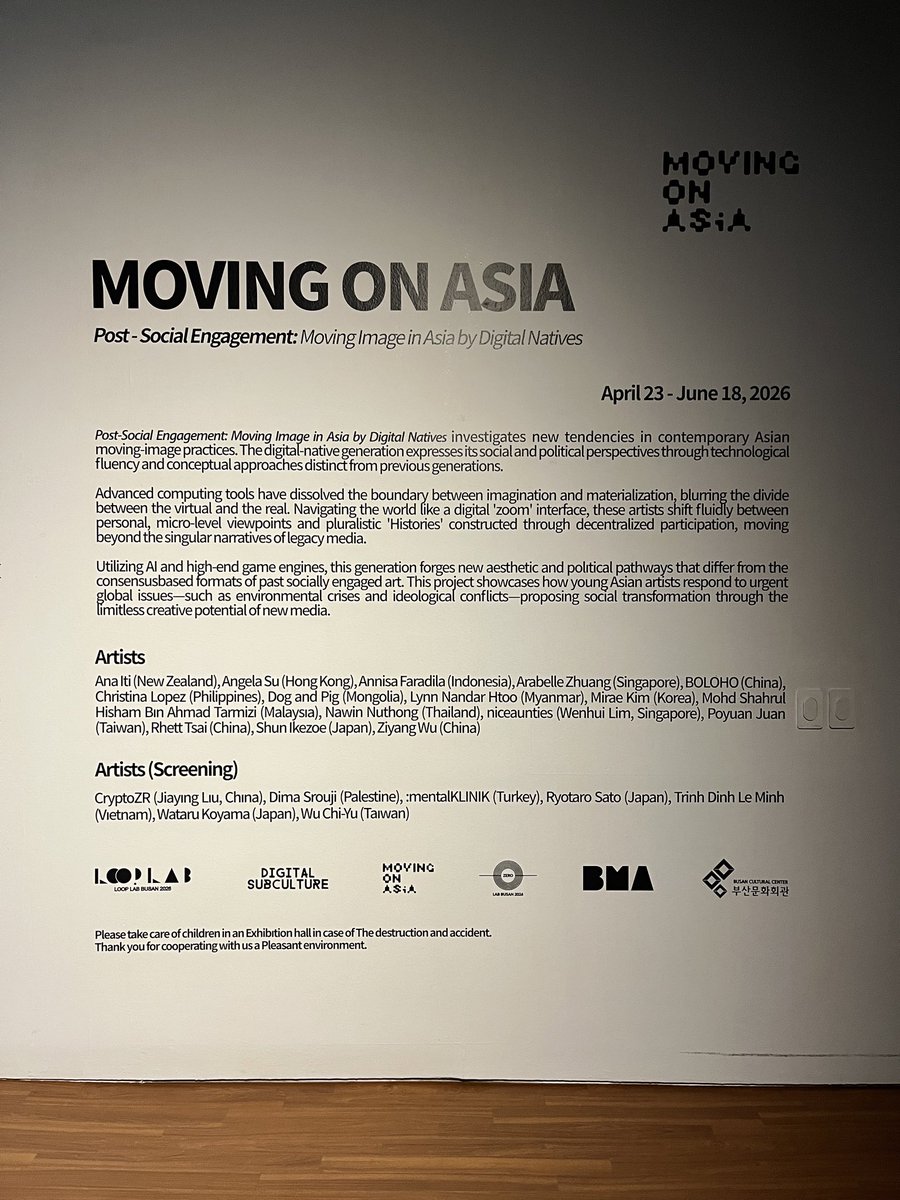
Post-Social Engagement: Moving Image in Asia – by Digital Natives
Busan Cultural Center(釜山文化会馆)
April 23 – June 18, 2026
感谢策展人李振华@bjartlab
的推荐与邀请,也感谢 Nara Kim 及主办方团队的协调与支持,让《红与蓝》从中国顺利呈现在韩国的艺术殿堂中。
Special thanks to curator Li Zhenhua for the invitation and recommendation, and to Nara Kim and the organizing team for their coordination and support — making it possible for "Red & Blue" to travel from China to the heart of Korea's art scene.
#CryptoZR #RedAndBlue #MovingOnAsia #BusanCulturalCenter #LoopLabBusan #Korea
104
Apr 24
如果比特币是一个生命体,它的呼吸频率就是全网哈希率的波动。脉动中,硅基生命正在降临,If Bitcoin were a living being, its breathing rate would be the fluctuation of the network's hash rate. In its pulse, silicon-based life is descending
42
Apr 22
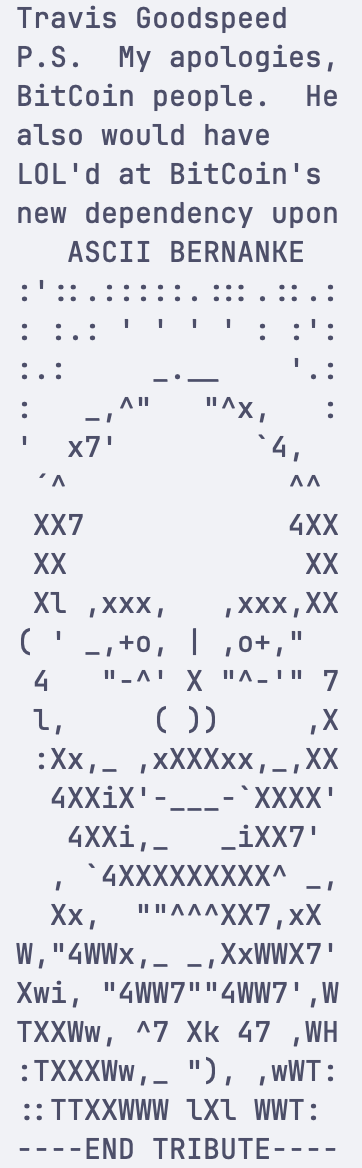
The Consensus 199/410 (48.5%) Remains
"The Bitcoin Bubble Has Burst" Lost Its Consensus
consensus.cryptozr.net
43