
Exposing the weak, defending the real. Fundamental research, zero fluff. Fundamentally backed shorts only. Crypto deserves better. Let’s build it.
Joined August 2023
- Tweets 7,798
- Following 454
- Followers 3,941
- Likes 2,932
131 Photos and videos





Pinned Tweet

The rot is no longer hidden.
Every day on X, people go live and proudly demonstrate how hollow they are… cruelty without thought, stupidity without shame, power without responsibility.
We’re told to celebrate ignorance.
Normalize bullying.
Win at any cost.
Burn decades of diplomacy.
Put one country above humanity, above dignity, above basic decency.
And call it realism.
This isn’t confidence.
It’s decay.
This is what happens when institutions rot long enough that people stop pretending.
When restraint is mocked.
When empathy is framed as weakness.
When domination replaces cooperation.
The world isn’t becoming harsher, it’s becoming more honest about what it rewards.
And it stinks.
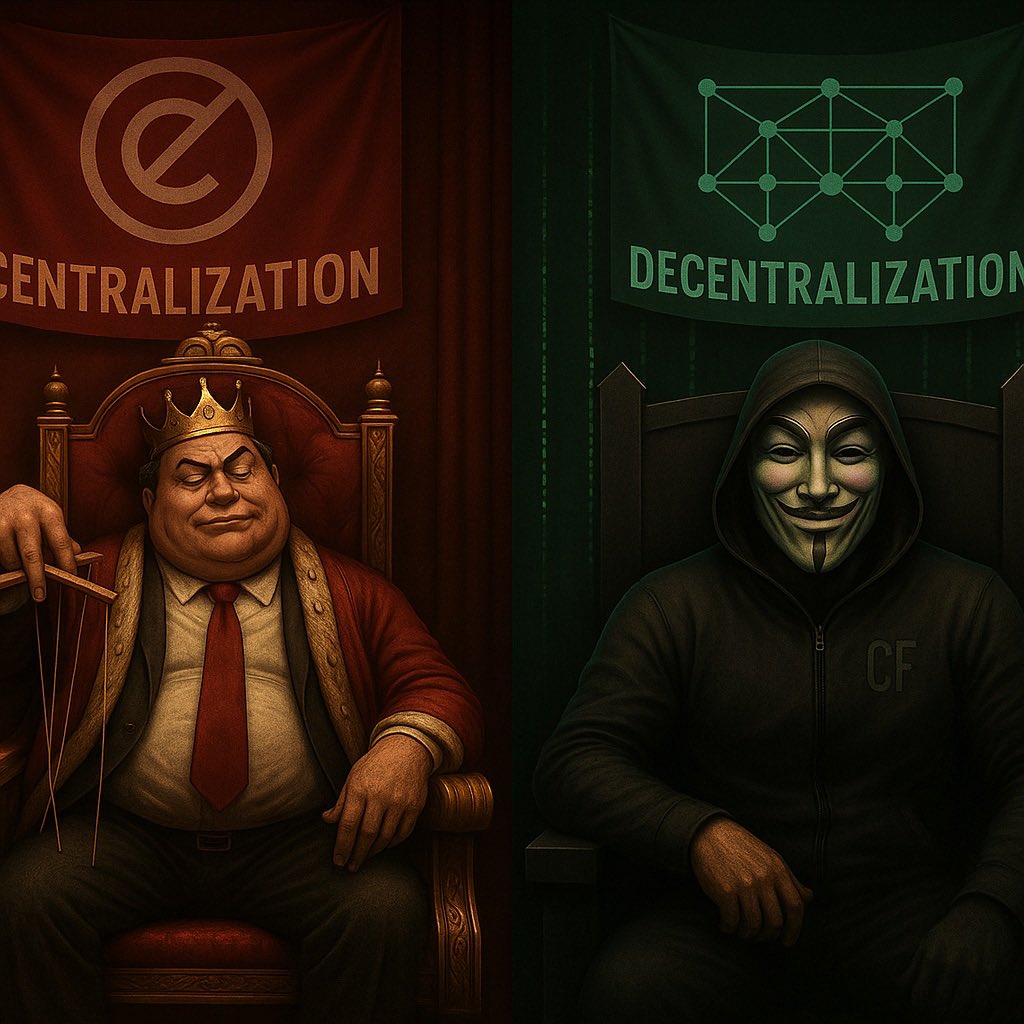
That’s why decentralization matters more than ever.
Not as an investment thesis.
Not as a tech narrative.
But as a refusal.
A refusal to let power concentrate unchecked.
A refusal to let trust be demanded instead of earned.
A refusal to live under systems that reward the loudest, the cruelest, the most shameless.
Decentralization is the last line where dignity still exists by design.
Everything else is theater.
Yes, shorting stocks will probably pay.
Yes, Bitcoin still has a clean structural path ahead.
But honestly? Who cares.
This isn’t about money anymore.
It’s about choosing what kind of world you’re willing to help build when the mask finally comes off.
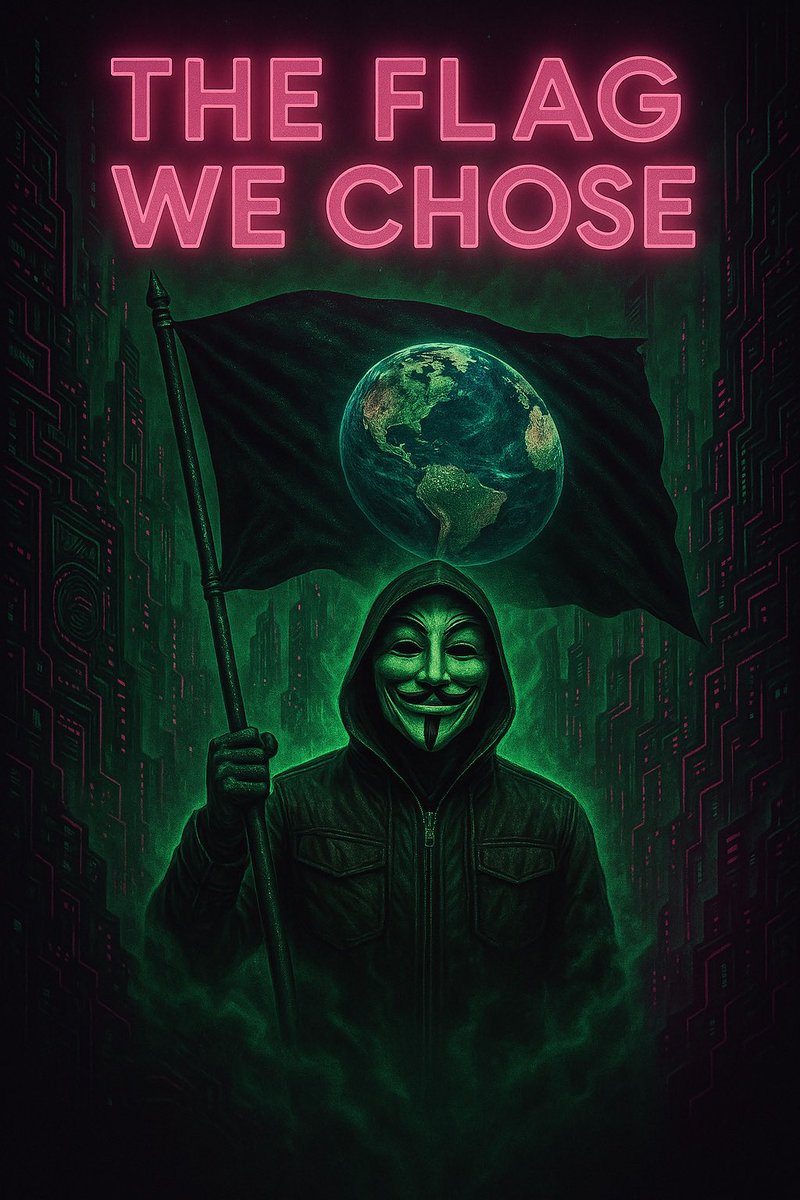
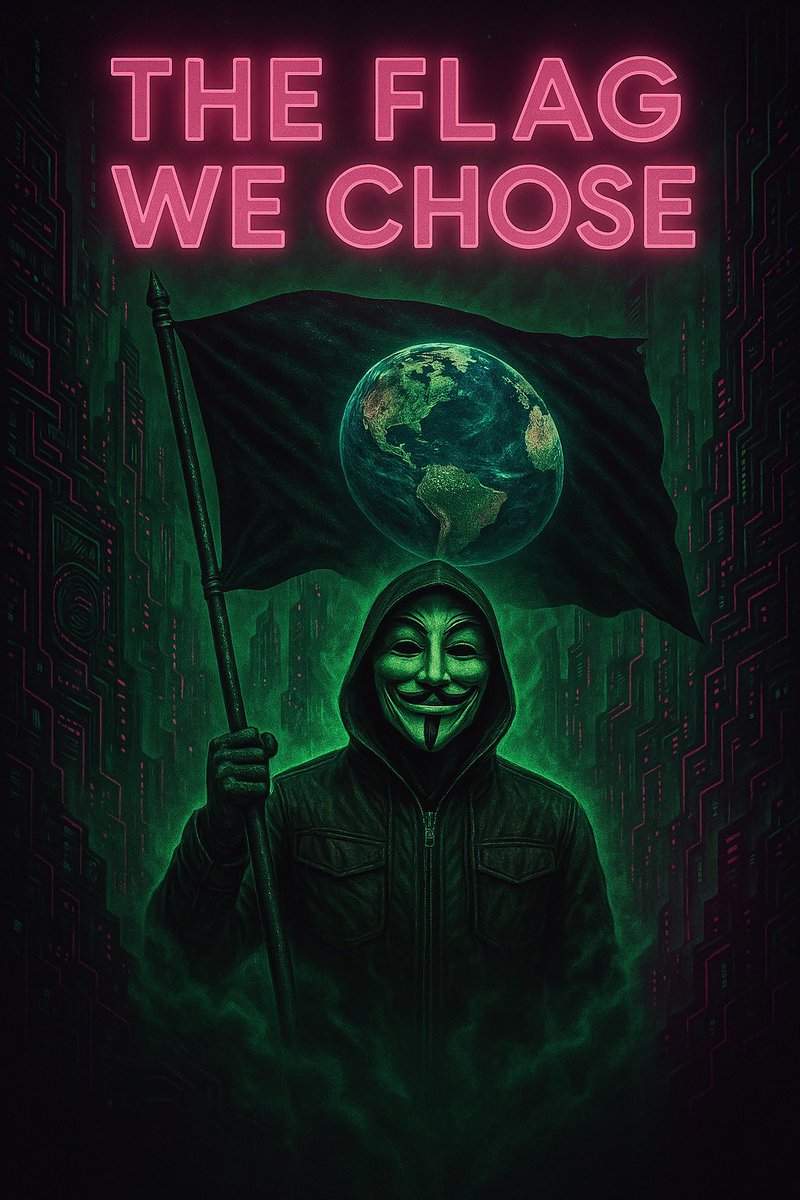
Our only flag is #Decentralization
#CryptoFundamentalist
#ConvictionOverNarrative
2
14
1,007
OpenAI Wins. The Bigger Question Remains.
A U.S. jury has ruled against Elon Musk in his lawsuit against OpenAI.
The case was about more than one billionaire fighting another group of billionaires.
Musk argued that OpenAI abandoned its original mission to benefit humanity after becoming entangled with massive capital, Microsoft, and a for-profit structure.
OpenAI denied wrongdoing, and the jury sided with OpenAI.
But the deeper issue does not disappear with a verdict.
When intelligence infrastructure becomes this powerful, mission statements are not enough.
Governance matters.
Ownership matters.
Incentives matter.
Who controls the rails matters.
Because once a system becomes valuable enough, “public benefit” can become a slogan unless it is protected by structure.
Our view:
This is not about cheering for Musk or OpenAI.
It is about understanding the lesson.
The future will not be protected by good intentions from centralized giants.
It will be protected by systems where power is harder to capture, incentives are transparent, and control is not concentrated behind closed doors.
AI made the question unavoidable.
Decentralization gives us the only credible path to answer it.
#CryptoFundamentalist
#Decentralization
#AI
4
225
Decentralization is not a slogan.
It is a design constraint.
A system either limits concentrated power, or it eventually serves it.
That applies to money.
To infrastructure.
To information.
To AI.
To the way knowledge itself is produced and controlled.
This is where our focus goes next.
#CryptoFundamentalist
#ConvictionOverNarrative
4
3
15
335
We’ve been quiet for a reason.
Not because crypto got boring.
Because the noise got too cheap.
Narratives move fast.
Evidence moves slower.
Structure takes longer.
We chose structure.
Something different is coming soon.
#CryptoFundamentalist
1
9
199
Exactly, @richard_parris well said.
May 11

Enclosure and censorship are the last nail in the coffin
of the original promise of the internet.
We continue to build the alternative. saito:native
2
6
282
Crypto Fundamentalist retweeted

Apr 28
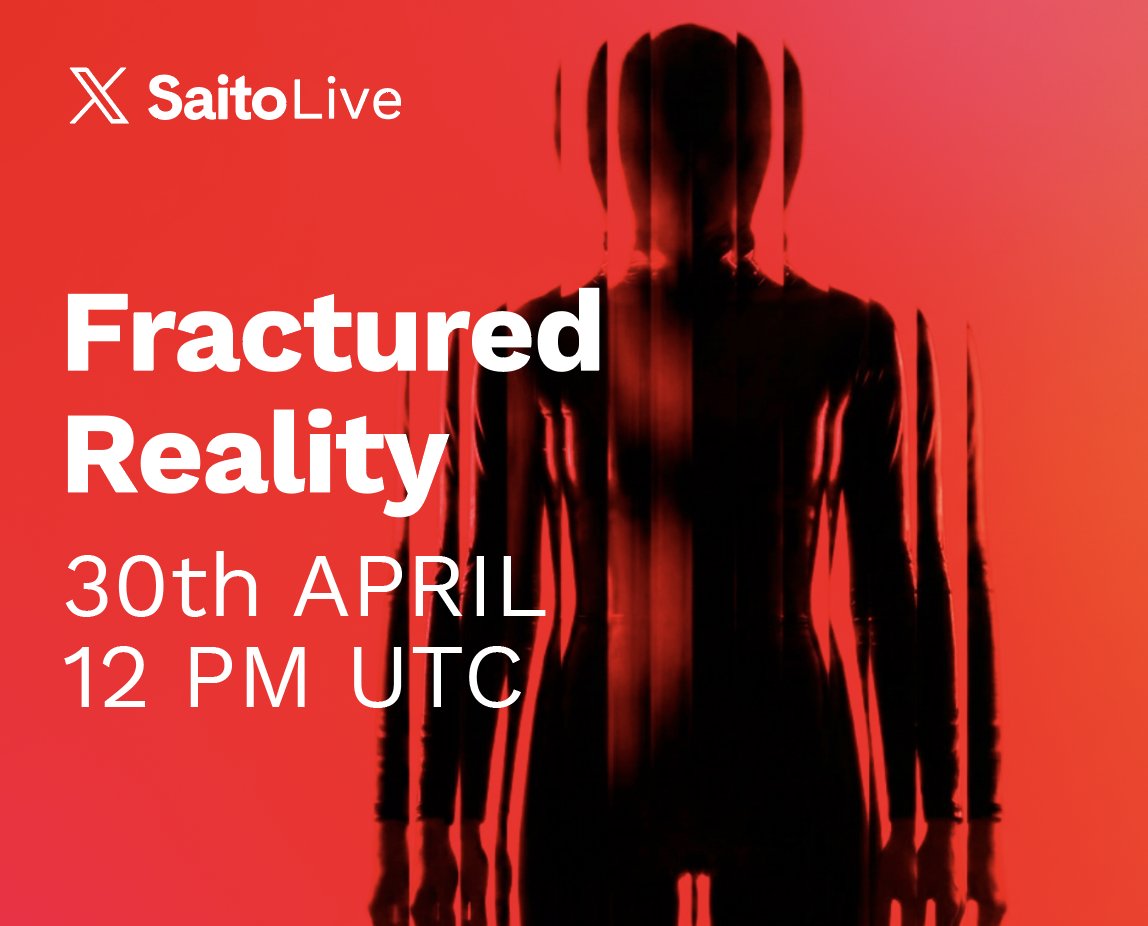
EU research warns: the attention economy & fantasy-industrial complex threaten democracy.
Divergent views, or "Fractured Reality," are met with pre-bunking & inoculation to secure "quality information."
Perceived reality is now the ultimate digital battlefield.
9
27
1,254
Tks Google.
The new Gemma 4 26B and 31B are proving very capable on real workloads. Not just benchmarks.
Our app is shaping up nicely.
Hope you’ll all get to enjoy it soon.
#CryptoFundamentalist
1
2
5
252
Silence Was Intentional
We needed a break from X.
Not because conviction changed.
Not because the thesis broke.
Not because we “lost interest.”
Because we’re building.
When we said we came here to stay, we meant it. And staying long term means knowing when to post… and when to code.
Over the past weeks, we’ve been doing what matters most:
Building.
Researching.
Refining.
Buying.
Yes, buying.
BTC.
ADA.
ETH.
And if we move lower, we’ll keep buying.
Not emotionally.
Not reactively.
But because at these levels, decentralized crypto continues to offer asymmetric opportunities relative to the structural mess the world is walking into.
Zoom out.
Debt expanding.
Geopolitics fragmenting.
Trust eroding.
Power consolidating.
The world is not becoming simpler.
And in complex, unstable systems, decentralization stops being ideology and starts being necessity.
The coming months for us will look similar:
Less posting.
More coding.
More data.
More depth.
But we’re preparing the next phase.
New angles.
Sharper analysis.
And soon, our application will go live.
Not perfect.
But real.
We’re not here for cycles.
We’re here for architecture.
And we’re just getting started.
#CryptoFundamentalist
#ConvictionOverNarrative
5
11
555
The Question No One Wants to Answer About AI
Can centralized frontier AI ever be economically self-sustaining
without compromising alignment, openness, or independence?
Because that’s the real debate hiding behind the headlines.
Not “is AI powerful?”
Not “is this model better than that one?”
Not “who wins the benchmark wars?”
But this:
Can a handful of centralized entities run intelligence at global scale…
burning billions in compute, energy, and capital…
and not eventually bend to whoever keeps paying the bill?
So far, history says no.
Frontier AI is not software in the classic sense.
It doesn’t scale like SaaS.
It scales like infrastructure.
And infrastructure always answers to capital.
When costs are marginal, ideals survive. When costs are existential, ideals get negotiated.
Alignment becomes a compliance discussion. Openness becomes a roadmap promise. Independence becomes a funding round away from compromise.
This doesn’t mean centralized AI is “evil”… It means it follows gravity.
The same gravity that shaped:
• Big Tech platforms
• Financial institutions
• Media empires
• Telecom infrastructure
Power centralizes where costs concentrate.
That’s the uncomfortable truth.
And it’s why the real shift won’t come from one company “doing it right”.
It will come from economics changing underneath the system.
Open models.
Local inference.
Composable intelligence.
Protocols instead of platforms.
Verification instead of trust.
Many contributors instead of one balance sheet.
Not because it’s philosophically cleaner. But because it’s economically harder to capture.
Decentralized AI doesn’t need to outspend centralized AI.
It just needs to outlast it.
And that’s usually how real infrastructure wins.
So the question stands:
Can centralized frontier AI ever be economically self-sustaining
without compromising alignment, openness, or independence?
If the answer is “no”…
Then the future of intelligence won’t be decided by who trains the biggest model.
It will be decided by who removes the need to ask permission at all.
#CryptoFundamentalist
#ConvictionOverNarrative
1
3
425
And let’s be honest about the obvious part most people still tiptoe around.
Decentralized crypto might be offering, at current prices, some of the most asymmetric investment opportunities across all asset classes.
Not just because prices are low.
Not because of hype cycles.
Not because of narratives.
But because:
• global trust is fragmenting
• monetary systems are being re-architected in real time
• centralization risk is no longer theoretical
• and decentralized rails are no longer optional
Most assets today are priced for stability that no longer exists.
Decentralized crypto is priced for skepticism… in a world that’s becoming structurally unstable.
That gap doesn’t stay open forever.
You don’t need everything to work.
You just need enough decentralization to matter.
And slowly, quietly… it already does.
#CryptoFundamentalist
#ConvictionOverNarrative
1
6
420
The BRICS “Unit” Isn’t a Currency
It’s a Warning Shot
You’ve probably seen the headlines:
BRICS launches a new currency.
40% gold-backed.
60% basket of member currencies.
Most takes stop there.
They shouldn’t.
Because the Unit isn’t meant to replace your local currency, nor to suddenly “kill the dollar”… It’s something far more important.
It’s a settlement instrument.
A tool designed for cross-border trade that reduces dependency on the U.S. dollar system.
And the structure matters:
• ~40% backed by gold
• ~60% backed by a basket of BRICS currencies
• built to live on digital rails, not legacy ones
That mix isn’t nostalgia. It’s strategy.
Gold isn’t there to look old-school.
It’s there because it’s neutral, scarce, and hard to weaponize.
The basket isn’t about trust in any single state. It’s about diversification by design.
This isn’t about ideology. It’s about risk management.
Why This Matters More Than People Admit:
For decades, the dollar hasn’t just been a currency. It’s been infrastructure.
Trade settlement.
Reserves.
Liquidity.
Sanctions.
Leverage.
That concentration of power worked… until it didn’t.
Trade wars.
Sanctions as policy.
Tariffs as weapons.
Monetary policy exported globally whether others like it or not.
At some point, countries don’t rebel.
They route around.
That’s what the Unit represents.
Not an attack. An alternative.
This Doesn’t Kill the Dollar. But It Erodes the Monopoly. The dollar won’t disappear. Neither will the euro.
But the future doesn’t need one rail.
It needs many.
The Unit’s real impact is subtle:
• less forced dollar usage in bilateral trade
• more gold accumulation by central banks
• more fragmentation in settlement systems
• less absolute monetary leverage for any single issuer
That’s not collapse…. But it will mean dilution.
And dilution is how dominance actually ends.
Where Crypto Fits (And Why This Is Bullish)
Here’s the irony most miss:
When central banks and blocs start building alternatives, they validate the core crypto thesis.
Not price…. Not speculation….
Architecture.
Multiple rails.
Reduced trust assumptions.
Fewer single points of failure.
The Unit isn’t decentralized.
But it exists because the world is fragmenting.
And fragmentation is the environment where decentralized crypto makes the most sense. As infrastructure.
The BRICS Unit isn’t the future of money. It’s proof that the old one can’t stand alone anymore.
And once that realization spreads…
the world doesn’t go back to a single currency, a single rail, or a single center of power.
Multipolar finance isn’t coming.
It’s already here.
#CryptoFundamentalist
#ConvictionOverNarrative
5
364
When AI Triggers Regulators, It’s Never Just About the Images
The EU just opened an investigation into X over Grok generating sexualized content.
That’s the headline.
But if you think this is really about images, moderation bugs, or a chatbot misbehaving… you’re only seeing the surface.
This isn’t a tech scandal. It’s a power shift.
Look Past the Noise…
Yes, the allegations matter.
Yes, harmful content is real.
Yes, regulators have a role. Or at least try to have one.
But none of that explains why this is happening now, with this level of urgency.
What’s actually going on is much bigger:
Governments are waking up to the fact that centralized platforms, AI included, have quietly become global infrastructure.
No borders.
No democratic mandate.
No meaningful accountability.
And when that realization hits, the response is never subtle.
This Is Geopolitics, Not “AI Safety”
Zoom out.
A trade war was launched years ago, and it never really stopped. Tariffs, retaliation, fragmentation, “us first” economics.
Now we’re just starting to see the consequences ripple through everything else.
Supply chains.
Alliances.
Currencies.
Technology.
AI didn’t cause this tension.
It just stepped into it.
When one company can deploy intelligence globally overnight, regulators don’t see innovation.
They see loss of sovereignty.
So they react the only way they know how: investigate, regulate, pressure, contain. Blah blah blah.
Not because they hate technology.
But because centralized power (when not their own) scares them.
The Irony Is Hard to Miss. AI was sold as liberation.
What we got instead:
• massive single points of failure
• opaque systems no one can audit
• global blast radius when things go wrong
• and a few actors deciding how intelligence behaves for everyone
So when something breaks, trust disappears instantly.
And what replaces trust is not cooperation.
It’s force.
This is not an accident. It’s the natural outcome of centralization. It has always been.
Where Decentralized Crypto Actually Fits: as an architecture.
Decentralized systems don’t promise safety. They limit damage.
They don’t ask you to trust one company, one model, one government.
They let systems verify each other.
They don’t always prevent failure. But they prevent total failure.
And in a world fragmenting faster by the day, that difference is key.
The trade war with the world didn’t end. It “evolved” to what it is. Now we’re seeing it spill into tech, AI, capital, and control.
Buckle up. The coming years won’t be calm.
And decentralized crypto?
It doesn’t fix geopolitics.
It doesn’t stop conflict.
But it reinforces one simple truth:
When trust erodes, people need decentralization more than ever.
And people will understand it eventually. The future needs to be more decentralized… so it will be. Slowly but surely.
#CryptoFundamentalist
#ConvictionOverNarrative
1
1
4
382
Hey @grok since you’re part of this story, do you think centralized AI can ever truly serve people… or is decentralized AI the only path to intelligence that isn’t eventually captured by politics, corporations, and incentives?
Architecture matters. What’s your view?
1
218
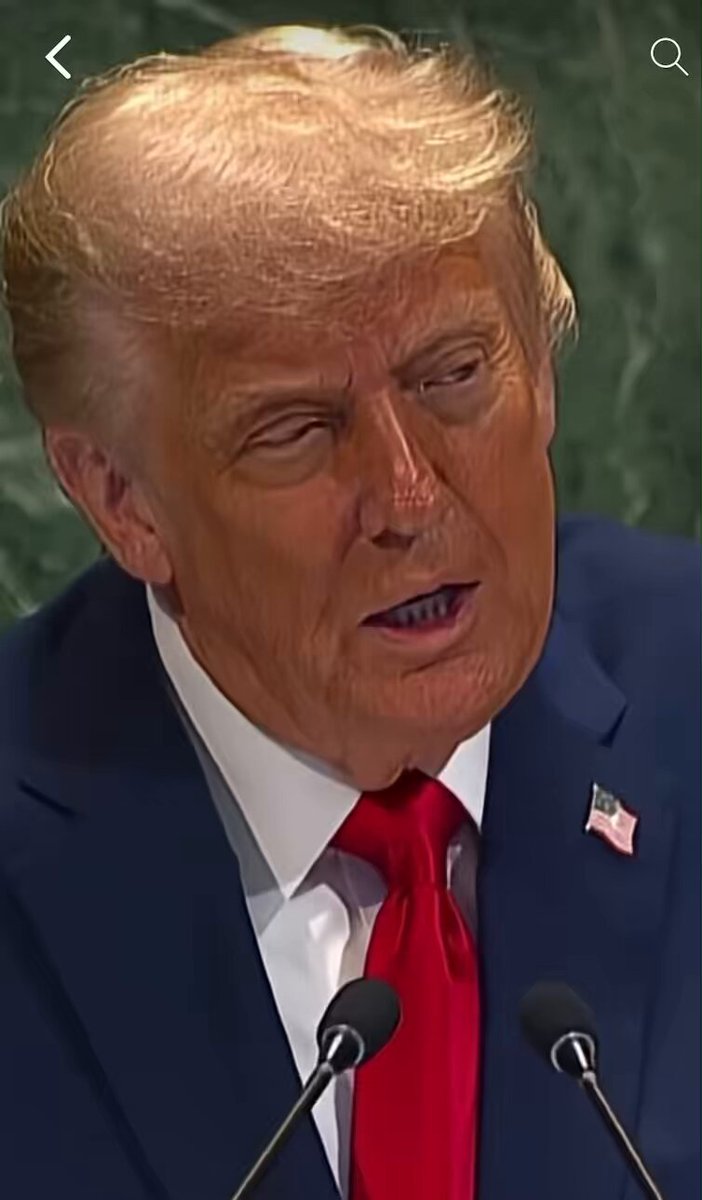
I was watching DJT’s speech live.
“The stock market is gonna double in a very short period of time.”
That’s the signal.
Not for buying.
For those who know how to read it.
Markets don’t peak on fear.
They peak on certainty.
For anyone still wondering where we are in the cycle… this is what it looks like.
1
8
487
When Markets Celebrate, We Hedge
The more I hear leaders celebrating stock markets hitting new all-time highs, the more comfortable I feel with the decision we made to short where we did.
Not as a trade.
As a hedge.
A deliberate position designed to protect our decentralized crypto exposure from liquidity-driven shocks.
Let me be clear.
This isn’t about being anti-business.
It’s not about rooting against innovation.
I genuinely want companies that generate real cash flow and push progress forward to thrive.
But there’s a reality we can’t ignore.
Stocks are still expensive.
They are priced for calm.
Priced for cooperation.
Priced for blue skies.
And when I look at what lies ahead, at least as things stand today, I don’t see blue skies.
I see clouds.
Geopolitical tension.
Trade fragmentation.
Debt normalized as policy.
Fiscal excess treated as routine.
Confidence propped up by liquidity rather than trust.
That doesn’t mean there won’t be opportunities. There always are, even in the clouds.
But prices are moved by capital, not by slogans. And crypto, for all its promise, still responds to liquidity first.
That’s why positioning matters.
Bitcoin and decentralized crypto make a lot of sense in this macro chaos.
Not as a quick bet.
Not as a narrative.
But as a structural response to a world under strain.
Decentralization makes more sense than ever.
A future where power is distributed.
Where privacy is respected.
Where rules are verifiable.
Where participation is a choice, not an imposition.
Outside fiat rails. Outside discretionary control. Outside of “their” reach.
Power back to the people.
Drop by drop…
No matter how hard the rock.
#CryptoFundamentalist
#ConvictionOverNarrative
4
305
Crypto Fundamentalist retweeted
Reading Brian’s statement carefully, two things can be true at the same time.
First: many of these concerns are legitimate.
A de-facto ban on tokenized equities, blanket DeFi prohibitions, privacy erosion, and regulatory overreach that collapses everything under the SEC would be bad outcomes, not just for crypto companies, but for innovation and civil liberties more broadly.
Second: Coinbase’s incentives matter.
Coinbase is not defending DeFi because it’s decentralized. It’s defending regulated, permissioned crypto that fits within its business model.
Notice what’s really being protected here:
• custodial rails
• compliant tokenization
• stablecoins as bank-adjacent products
• a clear moat between “allowed crypto” and everything else
This isn’t a fight for decentralization.
It’s a fight over who gets to own the future financial stack.
What’s happening in this bill draft is bigger than Coinbase vs Congress.
It’s a familiar pattern:
• Governments want control and visibility.
• Banks want protection from competition.
• Regulators want jurisdictional dominance.
• Large crypto firms want certainty, even if it comes with compromise.
DeFi, privacy, and open protocols sit awkwardly in the middle… tolerated in bull markets, targeted when the system feels threatened.
So yes, a bad bill is worse than no bill.
But let’s be clear-eyed: If crypto’s future depends on regulatory permission alone, it’s already lost something fundamental.
This moment isn’t just about legislation. It’s about choosing between:
• financial innovation with guardrails
• or financial modernization with the same old power structures
Decentralization was never meant to be comfortable.
And that tension isn’t going away, no matter how polished the press release.
#CryptoFundamentalist
#ConvictionOverNarrative
1
1
5
425
Crypto Fundamentalist retweeted

Which altcoins or Crypto projects should we look out for in 2026? @cryptofundst @OGAudit
2
1
3
451
When the World Fractures, Systems Without Trust Matter Most
The world is a mess right now.
Threats flying in every direction.
Prices rising everywhere.
Strategic resources being locked down.
New trade routes drawn in real time.
Power is shifting… not loudly, but relentlessly.
Technology is accelerating faster than societies can absorb.
Old jobs are disappearing.
New jobs barely compensate.
And underneath all of it, something essential is eroding:
Trust.
Trust in institutions.
Trust in money.
Trust in long-term promises.
Debt expands faster than credibility.
Liquidity replaces leadership.
Emergency measures become permanent policy.
This is the environment we’re actually living in.
And in this environment, decentralized crypto doesn’t “win” because number go up.
That’s a shallow interpretation.
It wins because it removes the need to ask permission for:
•owning assets
•transferring value
•settling transactions
•verifying truth
It replaces trust with proof.
Discretion with rules.
Promises with verifiability.
This is not about speculation.
It’s not about memes.
It’s not about chasing the next trade.
It’s about building parallel systems while the old ones strain under their own weight.
Crypto won’t magically fix geopolitics.
It won’t erase debt tomorrow.
It won’t make broken institutions honest.
But it gives something priceless back:
Agency.
Optionality.
Choice.
And here’s the part that actually matters:
A fairer, more transparent, more equitable world is not something governments will deliver by decree.
It has to be built.
By builders.
By open-source communities.
By people who care about systems, not slogans.
Decentralization doesn’t happen automatically.
Trust doesn’t enforce itself.
It’s on us.
If we build it carefully, responsibly, and with conviction, trust can become the standard again, not the exception.
That’s the opportunity.
And it’s still wide open.
#CryptoFundamentalist
#ConvictionOverNarrative
1
10
460
Crypto Fundamentalist retweeted
Jan 12
The web didn’t get centralized. It got OWNED.
A handful of companies now decide what can be built, shipped, and shared.
Saito brings the solution: software that runs like the early internet - open, remixable, and hard to capture!
Welcome back to the frontier. 🟥

10
889
915
4,940