
Joined May 2023
- Tweets 1,572
- Following 83
- Followers 74
- Likes 3,576
27 Photos and videos








4
71
274
10,428

Turns out we're all just math maximalists trying to break past the limitations everyone else thinks are inevitable.
Great space @ModulusZK🩸🤝

16
31
154
5,431
Cryptoking1431 retweeted

12 Dec 2025
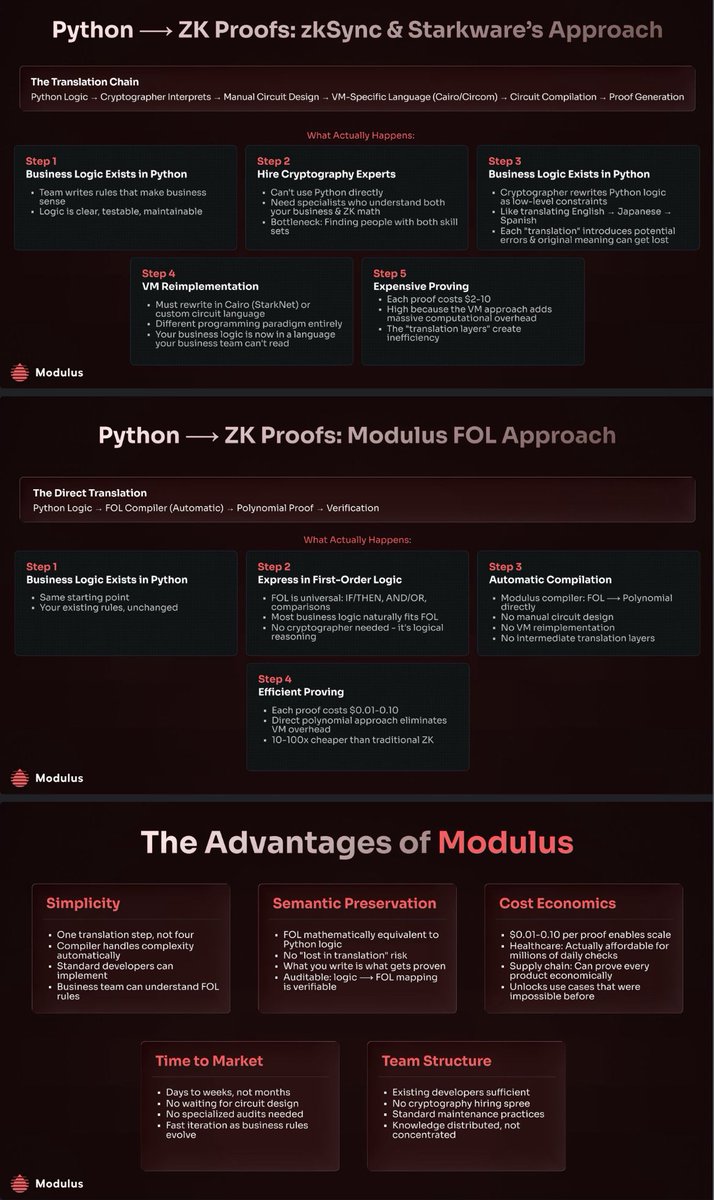
Nobody would understand this, which is sort of the point when I say that @ModulusZK provides a solution to this problem, that removes all these inherent VM based complexities.
What nobody in the ZK space has yet considered… is what happens when we’re right? (Zoom required 📷)
12 Dec 2025

Once I saw this guy on a bridge about to jump.
I said, "Don't do it!" He said, "Nobody's zk-proofs are compatible with mine."
I said, "But zk-proofs are just math. Are you using sound math?" He said, "Yes." I said, "Are you using a SNARK or a STARK". He said, "A SNARK." I said, "Me too! R1CS or some Plonkish thing?" He said, "R1CS." I said, "Me too! What proving scheme?" He said, "Groth16." I said, "Me too! Arkworks or Snarkjs?" He said, "Arkworks." I said, "Me too! bn254, bls12-381, or bls12-377?" He said, "bls12-377." I said, "Me too! bls12-377 jubjub construction or bls12-377 decaf construction?" He said, "bls12-377 jubjub construction."
I said, "Die, incompat!" And I pushed him over.
4
51
117
7,341
Cryptoking1431 retweeted
3 Dec 2025
The best part about @ModulusZK is that we’ll deliver 100-1000X computation savings & 10-100X cheaper ZK with math that was first proved possible in the 1930s.
That is the level of tunnel vision crypto has been built with to date…
“Do you think that’s air you’re breathing now?”
11
55
142
4,442
Cryptoking1431 retweeted

3 Dec 2025
We don't ask what Bitcoin can do for us.
We answer what we can do for Bitcoin.
moduluszk.medium.com/introdu…
9
71
143
19,205
Cryptoking1431 retweeted
5 Dec 2025
“ $ZEC ” Naaa we’ll be fine! Unless they figure out how to add privacy and programmability to $BTC at its core network level we’ll be okay…
“@ModulusZK” Ahh Zcash… Programmability and privacy directly on Bitcoin 🙄
25 Nov 2025
8
67
139
8,112
Cryptoking1431 retweeted

30 Nov 2025
ZK-FOL (or zkFOL) is a proposed soft fork for Bitcoin developed by @ModulusZK, a blockchain project focused on zero-knowledge (ZK) proofs for enhanced privacy, scalability, and functionality. It enables native privacy features and decentralized finance (DeFi) applications—such as swaps, loans, vaults, and yield farming—directly on Bitcoin without compromising its core security, determinism, or introducing new vulnerabilities.
Key Concepts
•Arithmetization of First-Order Logic (FOL): Traditional ZK systems rely on arithmetic circuits, which can be inefficient and error-prone. zkFOL instead arithmetizes first-order logic—a foundational tool in mathematics and computer science—directly into polynomials. This leverages a mathematical duality between logical validity and polynomial evaluation, allowing complex computations to be verified via ZK proofs more naturally and efficiently.
•Bitcoin Integration: As a soft fork, zkFOL upgrades Bitcoin’s Script language to support these ZK-verified logical predicates. For example, a Uniswap-style automated market maker (AMM) can enforce the invariant (x \times y = k) as a verifiable logical rule, enabling DeFi without needing sidechains or external layers.
•Broader Vision: ModulusZK (founded by the pseudonymous Mr. O’Modulus) positions zkFOL as part of “Layer X,” a universal proof-coordination infrastructure. This enhances existing blockchains like Bitcoin and Ethereum rather than creating competing networks. It critiques the “Circuit-First” paradigm in ZK tech, advocating for logic-based abstractions to reduce complexity and costs.
Benefits and Innovations
•Privacy and Security: Users can prove computations (e.g., transaction validity) without revealing inputs, addressing Bitcoin’s transparency limitations while maintaining its battle-tested security.
•Efficiency: Proof generation is faster and smaller compared to circuit-based ZK, potentially 10x quicker with 90% size reduction in some contexts.
•Expressiveness: Brings Ethereum-like functionality to Bitcoin, resolving the long-standing trade-off between Bitcoin’s rigidity and other chains’ vulnerabilities.
This concept emerged in late 2025 discussions, building on ModulusZK’s zkEVM (zero-knowledge Ethereum Virtual Machine) work for Ethereum Layer 2 scaling. For more details, check ModulusZK’s resources or the soft fork proposal.
23
71
1,476
Cryptoking1431 retweeted
12 Aug 2025
I came here to prove the impossible is possible & to give my community true freedom.
And we’re almost done proving whats possible.
29
75
237
7,252
Cryptoking1431 retweeted

22 May 2025
I reviewed the paper and wrote an EDSL in Lean based on it. My implementation demonstrates how first-order logic compiles directly to polynomial constraints, providing the missing link between high-level cryptocurrency invariants and low-level zkSNARK circuits. By mapping logical formulas to R1CS, developers can specify complex financial systems declaratively while achieving cryptographic verifiability.
The core insight: monetary invariants are logical statements. "Total supply remains constant" becomes ∀tx. sum(inputs) = sum(outputs). "No double spending" becomes ∀coin. spent(coin) ⇒ ¬spendable(coin). These specifications compile automatically to polynomial constraints, eliminating manual circuit construction—the primary barrier to zkEVM adoption.
The polynomial semantics handles the full complexity of financial logic. Negation through sign gadgets enables expressing invalidity conditions—quantifiers over finite domains model transaction batches. The sparse polynomial representation keeps verification costs manageable even for complex state transitions. Most critically, conjunction's additive compilation means combining multiple invariants doesn't compound proof complexity, essential for composable financial protocols.
The R1CS output integrates directly with existing zkSNARK toolchains (Groth16, PLONK, Halo2). A balance check requiring hundreds of hand-written constraints reduces to a single logical formula. The compiler handles witness generation, wire allocation, and constraint optimization automatically.
Here's the code:
-- ArithFOL.lean — Lean 4 EDSL for Gabbay-style arithmetised first-order logic
-- Author: Charles Hoskinson License: MIT
--
-- * Full polynomial semantics (truth ≙ 0) complete R1CS compiler.
-- * Extra Poly utilities (pow / evaluate / degree / leadingCoeff / isZero / isConst).
-- * Pretty R1CS printer and runnable examples at bottom.
-- ---------------------------------------------------------------------------
import Std.Data.RBMap.Lemmas
open Std (RBMap)
/-! ### Signature --------------------------------------------------------- -/
structure FuncSymbol where name : String := "" ; arity : Nat := 0
structure PredSymbol where name : String := "" ; arity : Nat := 0
/-! ### Syntax: de-Bruijn terms & formulas -------------------------------- -/
inductive Term : Nat → Type
| var {n} : Fin n → Term n
| const {n} : Rat → Term n
| indet {n} : Term n -- distinguished X
| add {n} : Term n → Term n → Term n
| mul {n} : Term n → Term n → Term n
| neg {n} : Term n → Term n
| func {n} : (f : FuncSymbol) → (Fin f.arity → Term n) → Term n
inductive Formula : Nat → Type
| top {n} : Formula n
| bot {n} : Formula n
| eq {n} (t u : Term n) : Formula n
| pred {n} (P : PredSymbol) (args : Fin P.arity → Term n) : Formula n
| and {n} (φ ψ : Formula n) : Formula n
| or {n} (φ ψ : Formula n) : Formula n
| forall {n} (φ : Formula (n 1)) : Formula n
| exists {n} (φ : Formula (n 1)) : Formula n
| notG {n} (φ : Formula n) : Formula n -- sign-gadget ¬φ
/-! ### Polynomial datatype ----------------------------------------------- -/
structure Poly where coeffs : RBMap Nat Rat compare
deriving Repr, DecidableEq
namespace Poly
def zero : Poly := ⟨RBMap.empty⟩
def const (q : Rat) : Poly := if q = 0 then zero else ⟨RBMap.ofList [(0,q)]⟩
def X : Poly := ⟨RBMap.ofList [(1,1)]⟩
@[inline] def clean (m : RBMap Nat Rat compare) :=
m.fold (init:=RBMap.empty) (fun acc k v => if v=0 then acc else acc.insert k v)
@[inline] def add (p q : Poly) : Poly :=
⟨clean <| p.coeffs.fold (init:=q.coeffs)
(fun m k v => m.insert k (v m.findD k 0))⟩
@[inline] def neg (p : Poly) : Poly :=
⟨p.coeffs.fold (init:=RBMap.empty) (fun m k v => m.insert k (-v))⟩
@[inline] def mul (p q : Poly) : Poly :=
⟨clean <|
p.coeffs.fold (init:=RBMap.empty) (fun acc kp vp =>
q.coeffs.fold (init:=acc) (fun acc2 kq vq =>
let k := kp kq
let c := acc2.findD k 0 vp*vq
if c = 0 then acc2.erase k else acc2.insert k c))⟩
@[inline] def square (p : Poly) : Poly := p.mul p
@[inline] def pow (p : Poly) : Nat → Poly
| 0 => const 1
| 1 => p
| n 1 =>
let q := pow p (n/2)
let q2 := q.mul q
if n % 2 = 0 then q2 else q2.mul p
@[inline] def ratPow : Rat → Nat → Rat
| _, 0 => 1
| r, 1 => r
| r, n 1 =>
let half := ratPow r (n/2)
let sq := half*half
if n%2=0 then sq else sq*r
@[inline] def evaluate (p : Poly) (x : Rat) : Rat :=
if x = 0 then p.coeffs.findD 0 0 else
if x = 1 then p.coeffs.fold (init:=0) (fun acc _ v => acc v) else
p.coeffs.fold (init:=0) (fun acc k v => acc v * ratPow x k)
@[inline] def degree (p : Poly) : Option Nat :=
p.coeffs.fold (init:=none) (fun o k _ =>
match o with | none => some k | some d => some (max d k))
@[inline] def leadingCoeff (p : Poly) : Option Rat :=
match p.degree with | none => none | some d => p.coeffs.find? d
@[inline] def isZero (p : Poly) : Bool := p.coeffs.isEmpty
@[inline] def isConst (p : Poly) : Option Rat :=
if p.isZero then some 0
else if p.coeffs.size = 1 ∧ p.coeffs.min?.map (·.1) = some 0 then
some (p.coeffs.findD 0 0) else none
@[inline] def compose (p q : Poly) : Poly :=
p.coeffs.fold (init:=Poly.zero) (fun acc k c =>
acc.add (Poly.const c).mul (q.pow k))
end Poly
/-! ### Environment -------------------------------------------------------- -/
structure Env (n : Nat) where
varVal : Fin n → Rat
domain : List Rat
namespace Env
def extend {n} (e : Env n) (a : Rat) : Env (n 1) :=
{ varVal := fun
| ⟨0,_⟩ => a
| ⟨i 1,h⟩ => e.varVal ⟨i, Nat.lt_of_succ_lt_succ h⟩,
domain := e.domain }
end Env
/-! ### Interpretation ----------------------------------------------------- -/
mutual
def interpTerm {n} (ρ : Env n) : Term n → Poly
| .var i => Poly.const (ρ.varVal i)
| .const q => Poly.const q
| .indet => Poly.X
| .add s t => (interpTerm ρ s).add (interpTerm ρ t)
| .mul s t => (interpTerm ρ s).mul (interpTerm ρ t)
| .neg t => Poly.neg (interpTerm ρ t)
| .func _ _ => Poly.zero
def liftTerm {k} : Term k → Term (k 1)
| .var i => .var ⟨i.val 1, Nat.succ_lt_succ i.isLt⟩
| .const q => .const q
| .indet => .indet
| .add s t => .add (liftTerm s) (liftTerm t)
| .mul s t => .mul (liftTerm s) (liftTerm t)
| .neg t => .neg (liftTerm t)
| .func f as => .func f (fun i => liftTerm (as i))
def liftFormula {k} : Formula k → Formula (k 1)
| .top => .top
| .bot => .bot
| .eq t u => .eq (liftTerm t) (liftTerm u)
| .pred P as => .pred P (fun i => liftTerm (as i))
| .and φ ψ => .and (liftFormula φ) (liftFormula ψ)
| .or φ ψ => .or (liftFormula φ) (liftFormula ψ)
| .forall φ => .forall (liftFormula φ)
| .exists φ => .exists (liftFormula φ)
| .notG φ => .notG (liftFormula φ)
def interpFormula {n} (ρ : Env n) : Formula n → Poly
| .top => Poly.zero
| .bot => Poly.const 1
| .eq t u => (interpTerm ρ t).add (Poly.neg (interpTerm ρ u)) |> Poly.square
| .pred _ _ => Poly.const 1
| .and φ ψ =>
let p := interpFormula ρ φ
let q := interpFormula ρ ψ
p.square.add q.square
| .or φ ψ => (interpFormula ρ φ).mul (interpFormula ρ ψ)
| .forall φ =>
ρ.domain.foldl (init:=Poly.zero) fun acc a =>
acc.add ((interpFormula (ρ.extend a) φ).square)
| .exists φ =>
match ρ.domain with
| [] => Poly.const 1
| a :: _ => interpFormula (ρ.extend a) φ -- naive witness
| .notG φ =>
let φ' := liftFormula φ
let b : Term (n 1) := .var ⟨0, Nat.zero_lt_succ n⟩
let boolB := Formula.eq (.mul b (.add b (.const (-1)))) (.const 0)
let conj0 := Formula.and (Formula.eq b (.const 0)) φ'
let conj1 := Formula.and (Formula.eq b (.const 1)) Formula.top
let gadget := Formula.and boolB (Formula.or conj0 conj1)
let p0 := interpFormula (ρ.extend 0) gadget
let p1 := interpFormula (ρ.extend 1) gadget
p0.mul p1
end
/-! ### R1CS infrastructure ---------------------------------------------- -/
structure Wire where id : Nat
deriving Repr, DecidableEq, Ord
instance : Ord Wire := ⟨fun a b => compare a.id b.id⟩
namespace Wire
def X : Wire := ⟨0⟩
def one : Wire := ⟨1⟩
def zero : Wire := ⟨2⟩
end Wire
structure Constraint where A B C : RBMap Wire Rat compare deriving Repr
structure Ctx where
next : Nat := 3 -- after reserved
rows : List Constraint := []
powers : RBMap Nat Wire compare := {}
polyWires : RBMap Poly Wire compare := {}
namespace Ctx
def fresh : StateM Ctx Wire := do
let s ← get; set {s with next := s.next 1}; pure ⟨s.next⟩
def push (row : Constraint) : StateM Ctx Unit :=
modify fun s => {s with rows := row :: s.rows}
-- wires for X^k, cached
partial def getPower (k : Nat) : StateM Ctx Wire := do
let s ← get; match s.powers.find? k with
| some w => pure w
| none =>
if k=0 then pure Wire.one else
if k=1 then pure Wire.X else
let wPrev ← getPower (k-1)
let wk ← fresh
push {A := RBMap.singleton Wire.X 1,
B := RBMap.singleton wPrev 1,
C := RBMap.singleton wk 1}
modify fun s => {s with powers := s.powers.insert k wk}
pure wk
-- wires for arbitrary polynomial value
partial def getPolyWire (p : Poly) : StateM Ctx Wire := do
let s ← get; match s.polyWires.find? p with
| some w => pure w
| none =>
match p.isConst with
| some 0 => pure Wire.zero
| some 1 => pure Wire.one
| _ =>
let w ← fresh
compilePolyDef p w
modify fun s => {s with polyWires := s.polyWires.insert p w}
pure w
-- emit rows for Σ c_k X^k = w
partial def compilePolyDef (p : Poly) (w : Wire) : StateM Ctx Unit := do
let mut lin := RBMap.singleton w (-1)
for ⟨k,c⟩ in p.coeffs.toList do
let wk ← getPower k
lin := lin.insert wk (c lin.findD wk 0)
push {A := lin, B := RBMap.singleton Wire.one 1, C := RBMap.empty}
end Ctx
/-- compile equality p=0 into rows -/
private def compilePolyEq (p : Poly) : StateM Ctx Unit := do
if p.isZero then return ()
let w ← Ctx.getPolyWire p
Ctx.push {A := RBMap.singleton w 1, B := RBMap.singleton Wire.one 1, C := RBMap.empty}
/-- substitute concrete a into a 1-bound formula (for ∀/∃ instantiation) -/
def substFormula {n} (φ : Formula (n 1)) (a : Rat) : Formula n :=
Formula.eq (Term.const ((interpFormula ⟨fun _ => a, []⟩ φ).evaluate 0)) (Term.const 0)
/-! full compilation ------------------------------------------------------ -/
open Ctx
mutual
partial def compileFormula (φ : Formula 0) (env : Env 0) : StateM Ctx Unit :=
match φ with
| .top => return ()
| .bot => compilePolyEq (Poly.const 1)
| .eq t u =>
let diff := (interpTerm env t).add (Poly.neg (interpTerm env u))
compilePolyEq diff
| .pred _ _ => compilePolyEq (Poly.const 1)
| .and φ ψ => compileFormula φ env >> compileFormula ψ env
| .or φ ψ => -- enforce wφ · wψ = 0
let pφ := interpFormula env φ; let pψ := interpFormula env ψ
let wφ ← getPolyWire pφ; let wψ ← getPolyWire pψ
push {A := RBMap.singleton wφ 1, B := RBMap.singleton wψ 1, C := RBMap.empty}
| .forall φ => -- all instantiations must be 0
for a in env.domain do compileFormula (substFormula φ a) env
| .exists φ => -- naive witness = first element
match env.domain with
| [] => compilePolyEq (Poly.const 1)
| a :: _ => compileFormula (substFormula φ a) env
| .notG φ =>
compilePolyEq (interpFormula env (.notG φ))
end
/-- Public entry: compile closed formula to R1CS rows. -/
def compileFormulaToR1CS (φ : Formula 0) (domain : List Rat := []) : List Constraint :=
let env : Env 0 := ⟨fun _ => 0, domain⟩
((compileFormula φ env).run {}).2.rows.reverse
/-! ### Pretty printer & validation -------------------------------------- -/
namespace Constraint
def termStr (w : Wire) (c : Rat) : String :=
let wS := if w = Wire.X then "X"
else if w = Wire.one then "1"
else if w = Wire.zero then "0"
else s!"w{w.id}"
if c = 1 then wS else if c = -1 then s!"-{wS}" else s!"{c}·{wS}"
def sideStr (m : RBMap Wire Rat compare) : String :=
if m.isEmpty then "0"
else String.intercalate " " (m.toList.map (fun (w,c) => termStr w c))
def toString (c : Constraint) : String :=
s!"({sideStr c.A}) × ({sideStr c.B}) = {sideStr c.C}"
end Constraint
def validateR1CS (rows : List Constraint) (w : Wire → Rat) : Bool :=
rows.all fun c =>
let eval (m : RBMap Wire Rat compare) :=
m.fold (init:=0) fun acc i coeff => acc coeff * w i
eval c.A * eval c.B = eval c.C
-------------------
Give my regards to Gabbay> I enjoyed reading the paper and wish you guys well with your project
57
77
247
36,869
Cryptoking1431 retweeted
22 May 2025
Thank you Charles. I’ve sent @Cardano_CF a DM btw as yours aren’t open & I’ve passed your message onto Jamie 🤝 many thanks for your time
4
47
182
2,451
Cryptoking1431 retweeted

21 May 2025
Today is a good day to talk about $CULT DAO ✍🏻
pass on it

1
13
51
927
Cryptoking1431 retweeted

21 May 2025
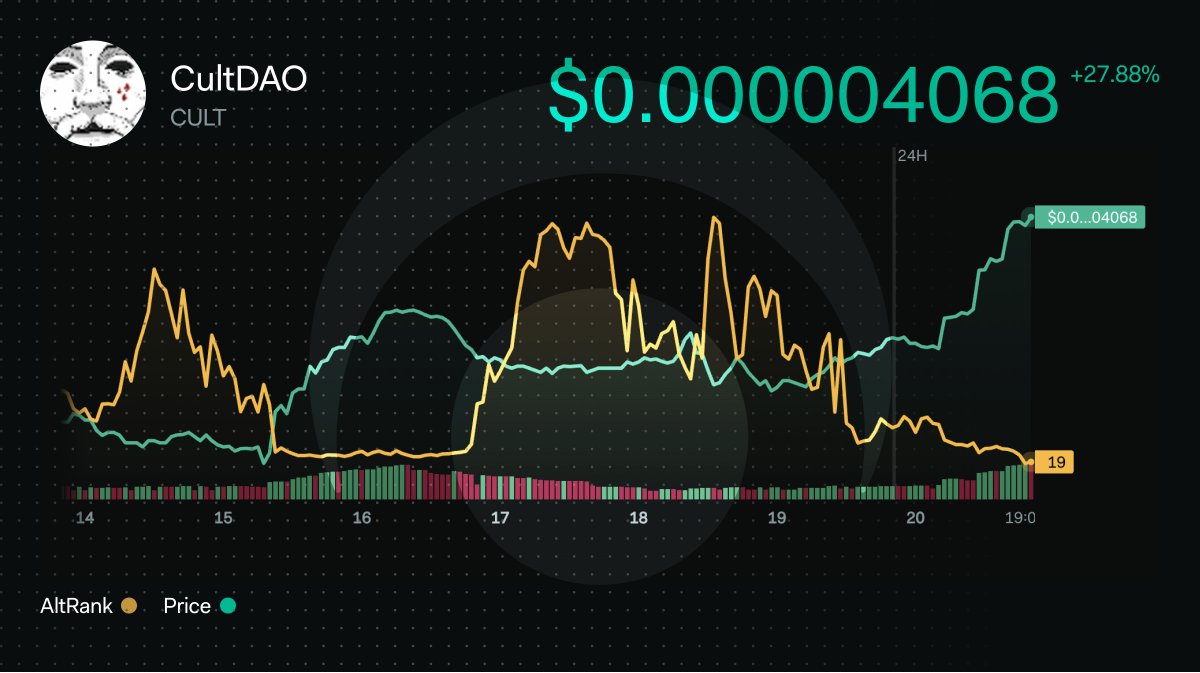
Always watch LunarCrush AltRank™ — it shows where attention and capital are moving together.
$CULT’s AltRank™ has strengthened (with a rank of 1 being the strongest rank in the entire crypto market) twice this week, with social activity ramping up alongside rising volume and price.
Even with price up 27.88% this week, @wearecultdao is gaining momentum again as AltRank™ continues to strengthen.
74
107
230
27,194
Cryptoking1431 retweeted

20 May 2025
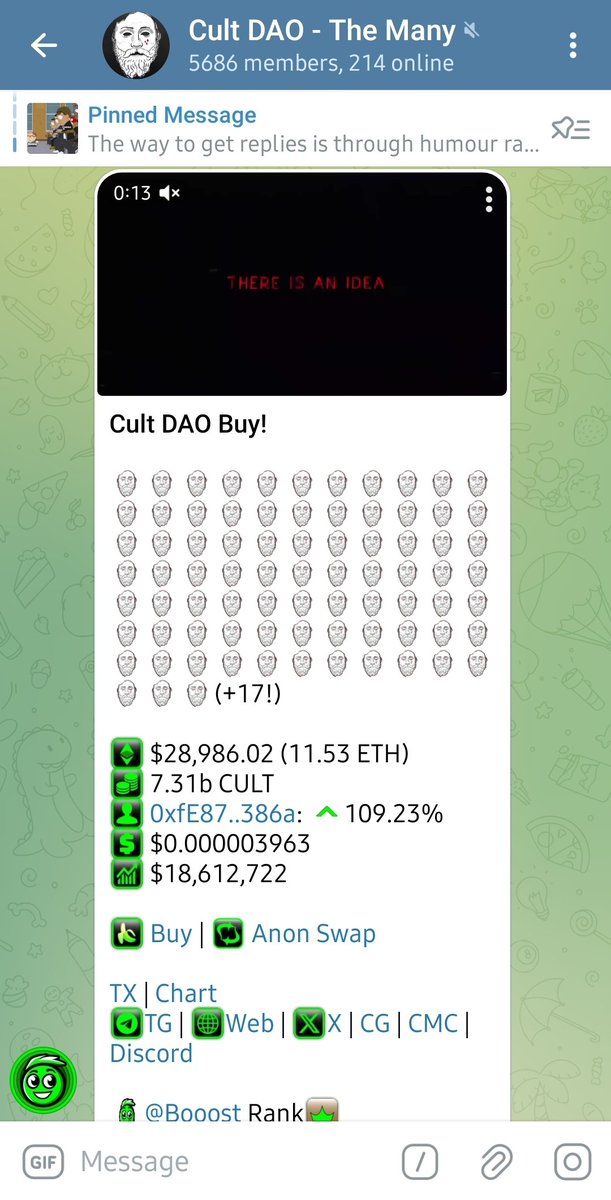
$52,000 Buy
$49,000 Buy
$29,000 Buy
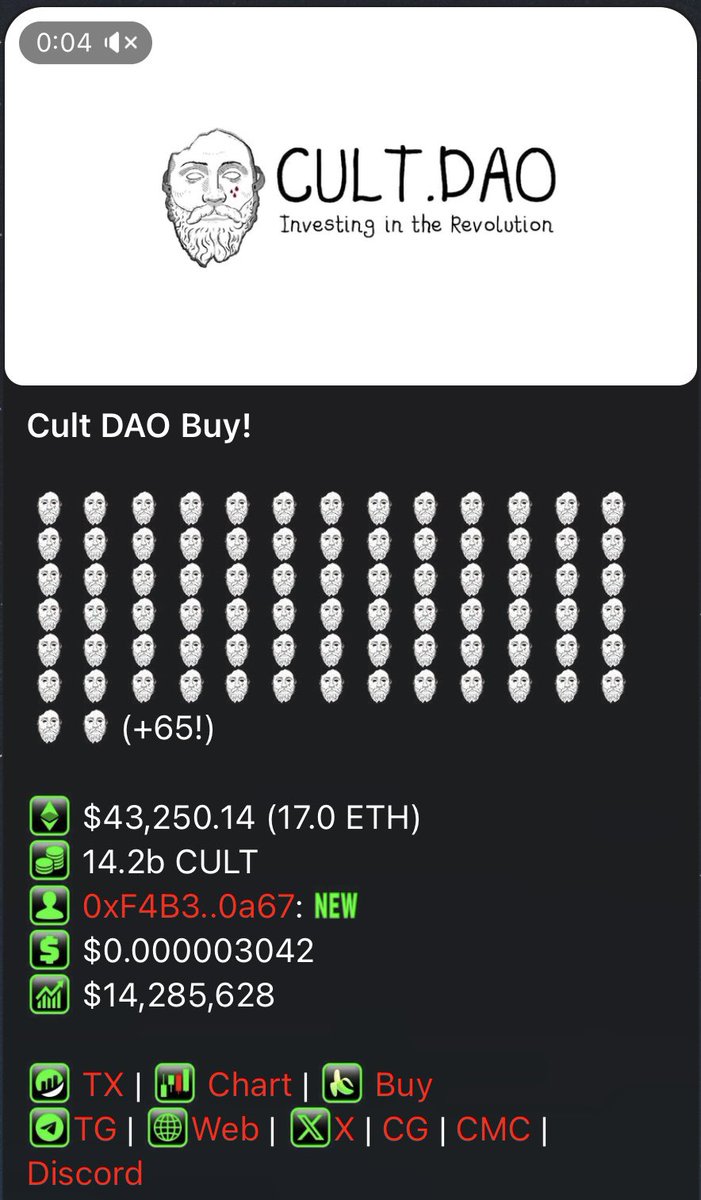
All these CULT DAO buys occurred TODAY. So what's up? Thoughts?
SEEMS LIKE FOR THE PAST MONTH BUYS LIKE THIS KEEP COMING IN.
I think it's TIME. No matter what you believe, the CULT DAO CHART IS ASCENDING. Are you coming with us?
16
48
675
Cryptoking1431 retweeted

15 May 2025
@ModulusZK’s tech is being built by a computer scientist with a doctorate from University of Cambridge.
wearecultdao.medium.com/cult… $CULT
10
35
95
1,942
Cryptoking1431 retweeted

15 May 2025
We would like to welcome the following to @ModulusZK & of course, also, welcome to @wearecultdao 🤝🏽 🎭
Dr Jamie Gabbay as CTO
Dr Tirath Virdee as Advisor for AI & Quantum Computing
And Mauro Grandinetti as Advisor for Financial Ecosystem Strategy
wearecultdao.medium.com/cult…
32
110
243
18,231

Cryptoking1431 retweeted
12 May 2025
Believe in your $CULT family as I believe in your $CULT family.
“The inches we need, are everywhere around us.” - Credit Al Pacino, Any given Sunday.
#talkaboutcult
10
45
144
6,766
Cryptoking1431 retweeted

7 May 2025
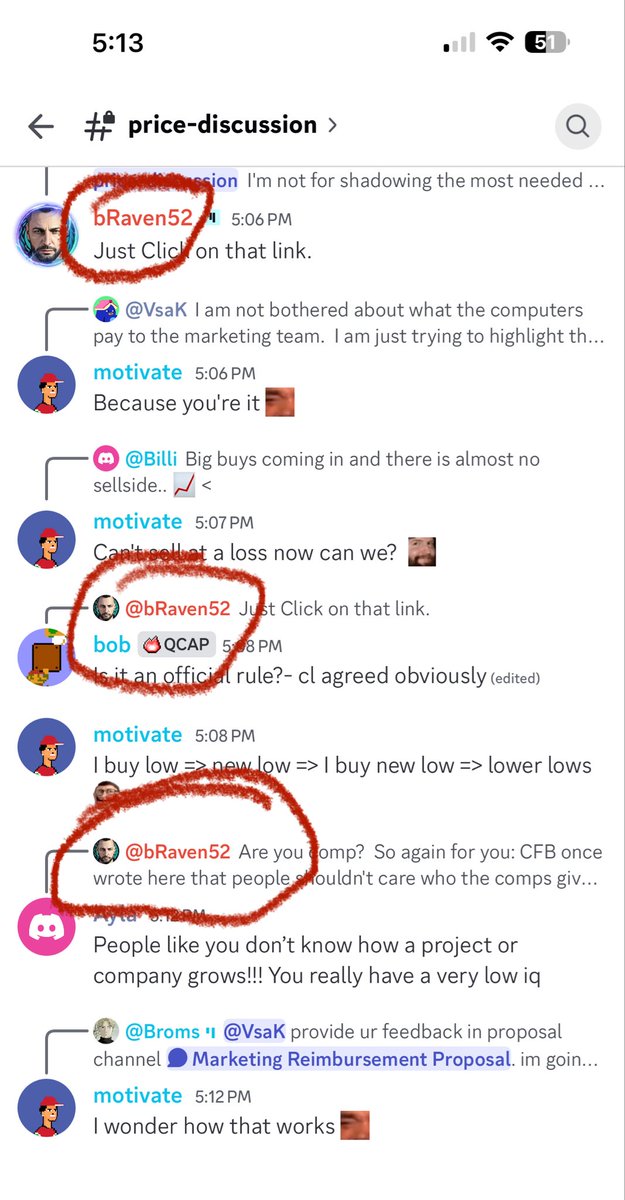
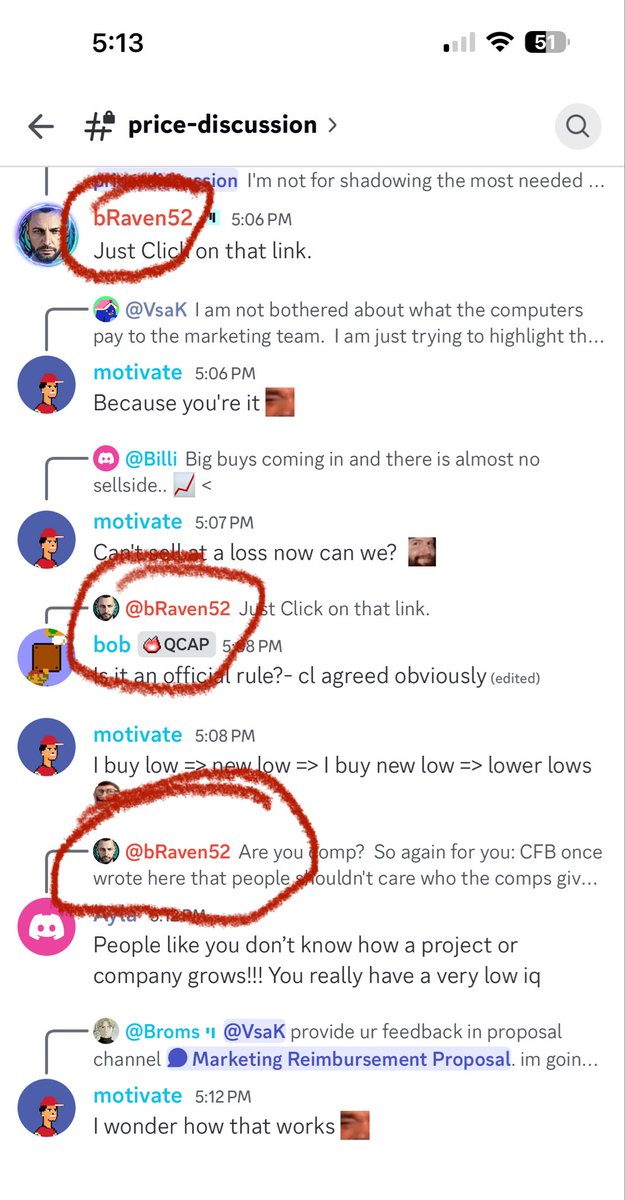
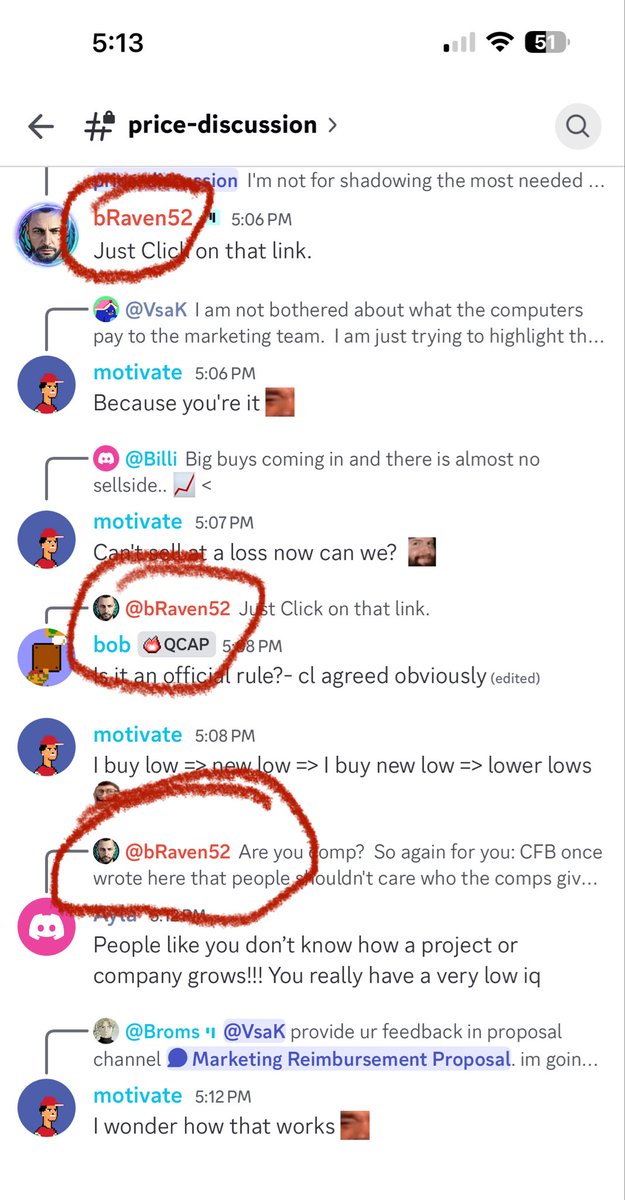
Omg it's happening.... I'm wayyy over in $WLFI discord and this just happened. I've never mentioned $CULT in there. Letsssssssssss goooooooooo cultdao.io #Moduluszk 🔥🔥🔥


13
16
69
2,481