
Feeding your curious thoughts. Sharing insights on hidden signals behind systems. || हरे कृष्ण ༗ ||
Joined May 2021
- Tweets 1,049
- Following 544
- Followers 298
- Likes 10,017
19 Photos and videos














Kushagra Trivedi retweeted

Jun 5
I strive to make my writing unsummarizable, in the sense that it has so little fluff left in it that if you take any words out, as summaries by definition do, you lose a lot of interesting ideas.
349
221
5,574
1,918,577
Ever notice how your mind starts singing a random song the moment you’re truly at peace? No algorithm. No playlist.
Just your inner world saying - we vibe today.
11
Bharat decisively shifting toward it’s deeper civilizational identity, with the rise to core Sanatan values and consciousness.
37
Doing one thing leads to doing everything, doing everything leads to doing nothing.
46


Kushagra Trivedi retweeted

Feb 28
Coding is now the most fun video game I’ve ever played.
149
172
2,199
66,372

14 Dec 2025
Dwarka in Delhi is a very underrated area.
It is well planned and spacious, with plenty of greenery, parks, and excellent positioning and connectivity within the NCR.
125
10 Dec 2025
There comes a point where even the things you do to escape boredom start to feel boring… and that’s when life gently pushes you back into the divine play.
94
10 Dec 2025
Treadmill makes you strongly realise that time is relative.
88
Kushagra Trivedi retweeted

17 Nov 2025
Groww’s Valuation conundrum!
Can Albert Einstein help?
There is a famous line often attributed to him, “Make it as simple as possible, but not simpler.”
The original idea, expressed in a 1933 lecture, was far more precise:
“It can scarcely be denied that the supreme goal of all theory is to make the irreducible basic elements as simple and as few as possible without having to surrender the adequate representation of a single datum of experience.”
Two parts matter here: “irreducible basic elements” and “without having to surrender the adequate representation.” Einstein was reminding us that simplification is useful only until it starts destroying the essence of the thing we are studying.
Now think about valuing a business. In theory, the true value of any asset equals the cash it can generate over its lifetime, discounted at a reasonable rate. In practice, none of us really knows those numbers. Not you, not me, not even the owner. So we fall back on the next best approach, relative valuation.
Imagine you walk into a fruit market. There are imported apples, Kashmir apples, and apples from the North-East. You do not know the true value of any one variety. But by looking at the price of two, you get a sense of what a reasonable price for the third might be.
That is exactly what happens when a company like Groww gets listed. We cannot precisely forecast its lifetime cash flows or the ideal discount rate. So we look around for comparable apples. The closest ones are Zerodha and Angel One. But Zerodha is not listed, so even that benchmark is incomplete. And until we study the quality of the “fruit,” business model, growth levers, ROE, TAM, we cannot confidently place it in the right bucket. So, there’s no shame in saying, “ I don’t know if it's overvalued or not, or even if it is overvalued, I don’t know by what margin.”
What worries me is the way some analysts and investors are handling this. They are adding the market caps of every kind of stock market-linked business, old brokers, merchant bankers, and unrelated financial services companies, and comparing that combined figure with Groww’s market cap. That is not how relative valuation works.
When apple prices rise, you do not add the prices of oranges, bananas, and mangoes to judge whether the apple is expensive.
So the lesson stays the same. Make things as simple as possible, but not simpler.
Thanks for reading.
SEBI RIA Disclosure: No holding, No recommendation

1
8
50
7,363
Kushagra Trivedi retweeted

3 Nov 2025
The moon controls tides and wombs without touching them which means influence doesn't require contact, power doesn't require action, just proximity and patience and showing up in the same place at the same time forever until reality bends around you. Presence is prophecy, consistency is destiny, and the thing that's always there eventually becomes the thing that controls everything
12
133
903
25,311
Kushagra Trivedi retweeted

14 Sep 2025
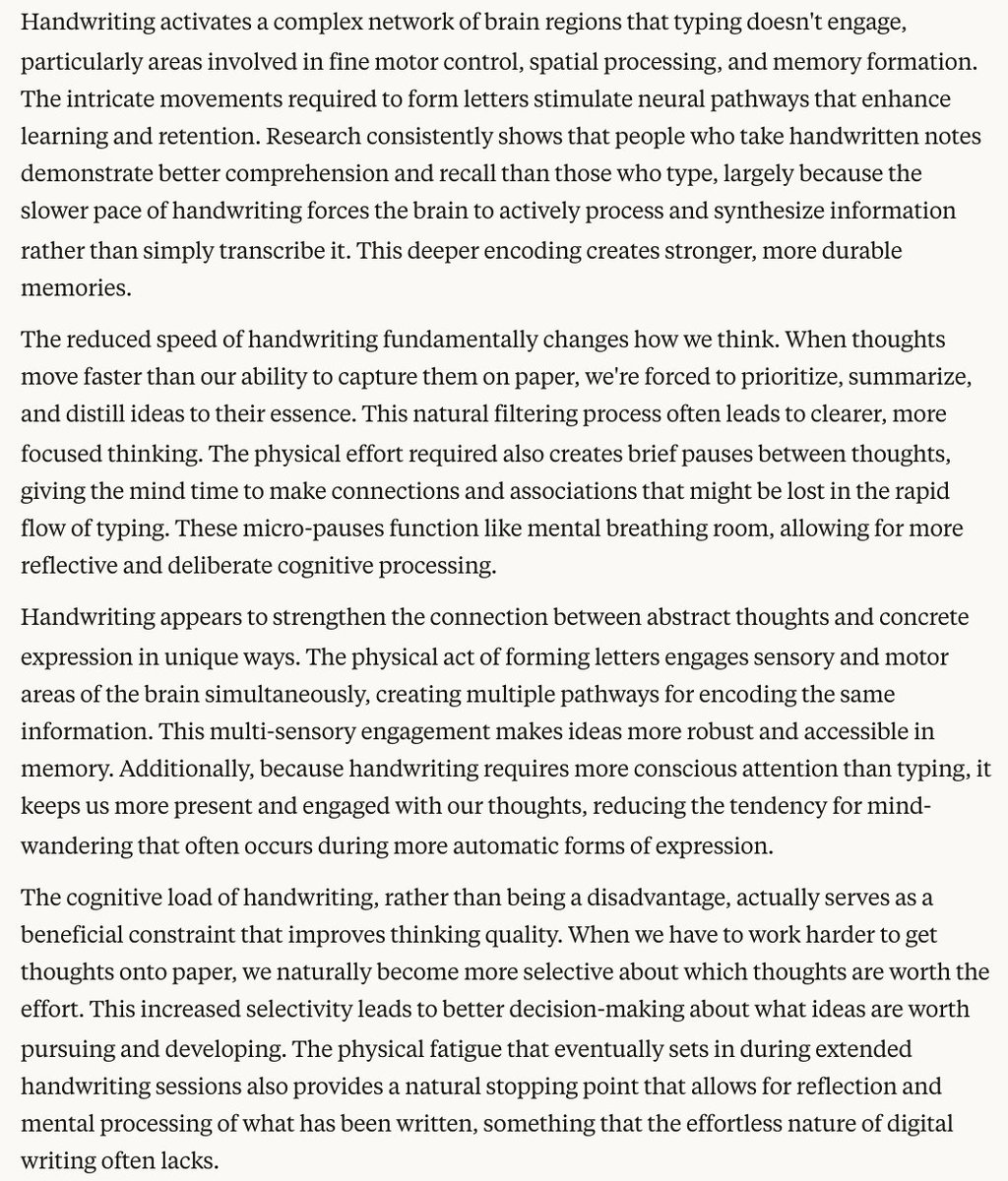
You need to be writing things down more.
15
261
2,650
119,725
3 Sep 2025
The universal principle is that everything is fundamentally simple but cloaked in complexity. Simple truths are obscured by the intricate veil of material energy. To be aware is to recognize this illusion, see through it, and undergo transformation (metamorphosis).
1
108
3 Sep 2025
The solutions to these complexities are inherently simple, but the world often dresses them up in elaborate ways to make them appear more impressive.
1
94
3 Sep 2025
but the true impact lies in simplicity cutting through the clutter to reveal clear, elegant truths.
91