
Curotec partners with growth companies and mid-market enterprises to modernize systems, build technology that matters, and put AI to work driving real business
Joined September 2010
- Tweets 206
- Following 43
- Followers 269
- Likes 42
3 Photos and videos




Laravel Octane can deliver dramatic speed gains, but only in the right situations, and that’s exactly where many teams get tripped up.
⚡ In our latest article, we break down when Octane actually improves performance and when it may not be worth the added complexity.
At a high level, Octane boosts Laravel by keeping the application in memory instead of bootstrapping it on every request. That means less repeated work and faster response times, especially for applications handling lots of requests or expensive startup logic.
🚀 We highlight how Octane runs on high performance servers like Swoole or RoadRunner, allowing Laravel apps to serve requests more efficiently than traditional PHP-FPM setups. For the right workload, this can lead to significantly lower latency and better throughput.
🧠 But we also explain the tradeoffs. Because Octane keeps state in memory, developers need to be more careful about things like stale data, singleton behavior, and memory leaks. It is not just a flip the switch optimization. Teams need to understand how their app behaves under a long lived process model.
🔍 Our main takeaway is simple: Octane shines for high traffic applications, APIs, real-time platforms, and systems where request lifecycle overhead is a real bottleneck. But for smaller apps or projects without performance pressure, the operational and development considerations may outweigh the benefit.
📈 We also touch on the importance of benchmarking before making the move. Performance improvements depend on your architecture, traffic patterns, and bottlenecks, not just the framework itself.
If you are evaluating Laravel performance options, this is a practical look at where Octane fits, what to watch out for, and how we think about the decision with our clients.
Worth a read if you want a more grounded view of Laravel scaling.
curotec.com/insights/when-la…
15
If you’re building a SaaS product with Laravel, getting multi-tenancy right early can save you from major scalability, security, and maintenance headaches later.
At Curotec, we recently shared our perspective on what it takes to build multi-tenant SaaS applications with Laravel, and why the framework is such a strong fit for this architecture.
🚀 The big idea is simple: multi-tenancy lets a single application serve multiple customers while keeping each tenant’s data isolated. That creates real advantages for SaaS teams, including lower infrastructure costs, easier updates, and more efficient long-term maintenance.
🛠️ In our article, we break down key architectural decisions, including the difference between database-per-tenant, shared database with tenant scoping, and hybrid approaches. Each model comes with tradeoffs around complexity, performance, customization, and security, so choosing the right one depends heavily on your product goals.
🔒 We also highlight a critical reality: tenant isolation is not just a database concern. It affects authentication, authorization, file storage, background jobs, caching, and even how you structure your testing strategy. In other words, multi-tenancy has to be designed intentionally across the full application stack.
⚙️ Laravel helps a lot here. Its ecosystem, clean structure, and support for middleware, service containers, queues, and packages make it well suited for tenant-aware application design. We also touch on how the right implementation patterns can make onboarding, scaling, and feature delivery much smoother as your SaaS product grows.
📈 Our main takeaway: multi-tenant SaaS development is not only about sharing resources, but about creating a secure, scalable foundation that supports growth without creating unnecessary operational burden.
If you’re planning a SaaS platform or rethinking your Laravel architecture, this is a useful read for understanding the decisions that matter most and where teams often get them wrong.
curotec.com/insights/buildin…
1
29
If your legacy PHP app still runs the business, here’s the good news: we can modernize it without the cost, risk, and disruption of a full rewrite.
At Curotec, we see this all the time—older PHP platforms are still doing critical work, but they become harder to maintain, secure, and scale over time.
In this article, we break down a more practical path: modernization through phased improvements instead of starting over.
⚙️ The core idea is simple: keep what still delivers value, and upgrade the parts creating friction.
That means evaluating technical debt, identifying business-critical functionality, and prioritizing changes that reduce risk while improving performance and maintainability.
🧩 We also highlight why full rewrites often fail to deliver as expected. They’re expensive, time-consuming, and can introduce new bugs while recreating functionality your current system already handles.
Instead, our approach focuses on incremental progress—refactoring legacy code, improving architecture, replacing outdated dependencies, strengthening security, and creating a clearer path for future development.
🚀 A major theme in the piece is alignment between technology decisions and business goals. Modernization isn’t just about cleaner code; it’s about supporting growth, reducing operational headaches, and extending the life of systems that still matter.
We also touch on the importance of audits, roadmap planning, and choosing the right moments to rebuild specific components when it actually makes sense.
💡 For teams weighing whether to rewrite or modernize, this is a useful reminder: you don’t always need to throw everything away to move forward.
If your PHP application feels outdated but still powers important workflows, this article lays out a smarter, lower-risk strategy for evolving it—and why that approach often wins in the real world.
curotec.com/insights/moderni…
24
AI agents are getting a lot more useful, and one of the biggest reasons is this: with Model Context Protocol, we can connect them directly to Laravel apps in a structured, secure, and scalable way.
🤖 In our latest article, we break down how Model Context Protocol (MCP) helps bridge AI agents with real application data and functionality inside Laravel.
Instead of building one-off integrations for every tool or model, MCP creates a standardized way for AI systems to discover available capabilities, access context, and take action through defined interfaces. For teams working in Laravel, that means a cleaner path to making AI actually operational inside existing platforms.
⚙️ We walk through what MCP is, why it matters, and how it fits into a Laravel-based architecture. The article also explains how AI agents can use MCP to interact with business logic, data sources, and app services without hardcoding fragile connections.
📌 A few key takeaways:
MCP gives AI agents a consistent protocol for accessing tools and context
Laravel is a strong fit because of its clean structure, service container, routing, and API support
This approach can reduce custom integration overhead and make agent-based systems easier to maintain
It also helps create a more controlled layer between AI models and sensitive application workflows
🔍 We also explore the practical side of implementation, including how developers can expose app capabilities in ways that are both useful to AI agents and manageable for engineering teams.
For organizations exploring AI beyond chatbots, this is where things start to get real. It’s not just about generating text, it’s about enabling agents to work with live systems in a reliable way.
If you’re thinking about how AI can plug into your Laravel ecosystem, this is a useful read for where things are headed.
curotec.com/insights/connect…
64
AI features in Laravel apps are getting dramatically easier to build, and our latest look at the Laravel AI SDK explains why that matters for teams shipping real products.
At Curotec, we’re watching a meaningful shift in how intelligent applications are developed with Laravel.
The new Laravel AI SDK gives developers a more structured way to integrate AI capabilities into modern applications without stitching together every provider and workflow from scratch. That means less boilerplate, cleaner architecture, and a faster path from prototype to production.
🤖 One of the biggest takeaways is that the SDK helps standardize how teams work with LLMs inside Laravel, making it easier to manage prompts, responses, and provider integrations in a way that feels native to the framework.
⚙️ We also highlight how this can improve developer productivity. Instead of spending time on repetitive integration work, teams can focus more on business logic, user experience, and building features that actually create value.
📈 From our perspective, this is part of a bigger trend: AI is moving from being an experimental add-on to becoming a core layer in application development. For Laravel teams, that opens the door to smarter automation, more personalized user experiences, and faster iteration.
🧩 The article also touches on the practical side of adoption. Tools like this matter because they can reduce complexity while still giving developers flexibility to choose models and build AI-driven workflows that fit their needs.
At Curotec, we see this as an important step toward more intelligent, maintainable software built on frameworks teams already trust.
If you’re thinking about how AI fits into your Laravel roadmap, this is a useful read on where things are headed and what it could mean for your development process.
curotec.com/insights/laravel…
2
44
AI-assisted “vibe coding” can speed up development, but it can also quietly introduce serious security risks that most teams won’t catch until it’s too late.
At Curotec, we’re seeing more teams embrace AI-generated code to move faster 🚀
But in our latest article, we break down the hidden tradeoff: when developers rely too heavily on AI suggestions without proper review, insecure patterns can make their way into production.
⚠️ The core issue isn’t that AI coding tools are inherently bad. It’s that they generate code based on patterns, not judgment. That means they can produce logic that looks correct, works on the surface, and still contains vulnerabilities.
We highlight how this shows up in real-world scenarios:
🔍 Weak authentication and authorization logic
🔍 Poor input validation
🔍 Insecure API integrations
🔍 Outdated or vulnerable coding patterns carried forward from training data
One of the biggest concerns is false confidence. AI can make code generation feel polished and efficient, which may lead teams to skip the deeper scrutiny that secure software actually requires.
At Curotec, our view is straightforward: AI can absolutely improve productivity, but it should support developers, not replace secure engineering discipline.
✅ Human code review still matters
✅ Security testing still matters
✅ Architecture decisions still need experienced oversight
The bigger takeaway is that speed without governance creates risk. As AI becomes more embedded in software delivery, organizations need stronger review processes, clearer standards, and a better understanding of where AI helps versus where it can hurt.
If your team is experimenting with AI-assisted development, this is worth a read. We unpack the security implications, where the real risks tend to appear, and what teams should do next to use these tools more responsibly.
curotec.com/insights/the-hid…
1
1
1
83
As partners of the Laravel framework for the last 5 years, we're excited for what's ahead with Laravel Cloud and the overall expansion of the ecosystem!
4 Apr 2025

Today marks significant updates to the Laravel Partners Program!
First, we've raised the bar on the requirements to become a Laravel Partner. Our partners keep getting better to match the rising expectations of the Community and our customers.
Second, our refreshed partner site makes it easy to connect with agencies who can help you ship. Our partners can help with application development, modernization, Laravel Cloud migration, or even augment your team.
Find (or become) a partner today:
partners.laravel.com/?s=1
2
272
There is a massive shift for US software engineering organizations to hire talent in Latin America.
But doing it successfully, especially if you're new to hiring in LATAM, requires a great partner.
That's where Curotec comes in 👋
CTOs expanding to LATAM partner with Curotec to:
- Augment with highly skilled contractors
- Direct-hire recruiting services
- End-to-end project outsourcing
4
433
Curotec retweeted

10 Nov 2023
Learn how @curotec, one of our featured development partners, helped a Series B SaaS scale their product team and increase velocity. 🚀
On a Laravel Vapor stack. 😎
Reach out to @curotec if you need trusted, expert help with your Laravel projects.
curotec.com/success-stories/…
3
9
7,207
Curotec retweeted

9 Nov 2023
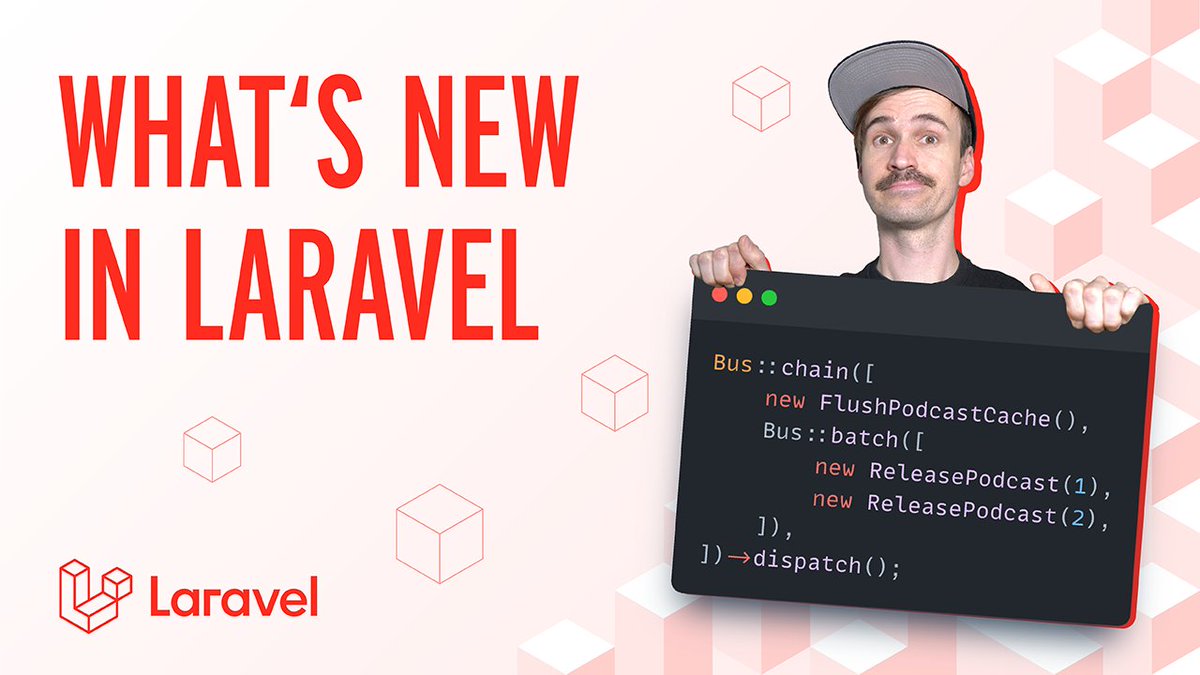
Glad to have @christophrumpel on board to share weekly updates (and a bit more) with you all!
Come learn about job batches within chains, post commit event dispatching and more. 💪
youtube.com/watch?v=mXmPTzoX…
9 Nov 2023

🤐 Remember the secret project I told you about?
I joined @laravelphp to keep doing what I love just now, more officially 🤩
➡️ Here's what's new in Laravel:
youtu.be/mXmPTzoXTF8
7
22
259
40,244
Comparing the Features of TALL and VILT Stacks curotec.com/insights/compari…
199
Why Choose the Laravel Framework for Your Development Project? curotec.com/insights/why-lar…
3
The Different Types of Developers curotec.com/insights/differe…
1
2
We are super proud to be a sponsor and a part of the first-ever FREE TO ALL Laracon event!
20 Jan 2022
🥳 Laracon Online. 💯 free. Live on YouTube. 🥳
1
1
7
Can WordPress Be HIPAA Compliant? curotec.com/insights/wordpre…
1
1
Curotec Named to Philadelphia Civic 50 and Inc. 5000 2021 List curotec.com/curotec-news/inc…
1
7 Stages of the Website Development Process curotec.com/insights/agency-…
1
Get Found: SEO Best Practices for Your eCommerce Website curotec.com/insights/ecommer…
2
How Much Does it Cost to Build a Website? curotec.com/insights/cost-to…