
Joined June 2009
- Tweets 185,413
- Following 10,807
- Followers 23,664
- Likes 242,080
1,718 Photos and videos
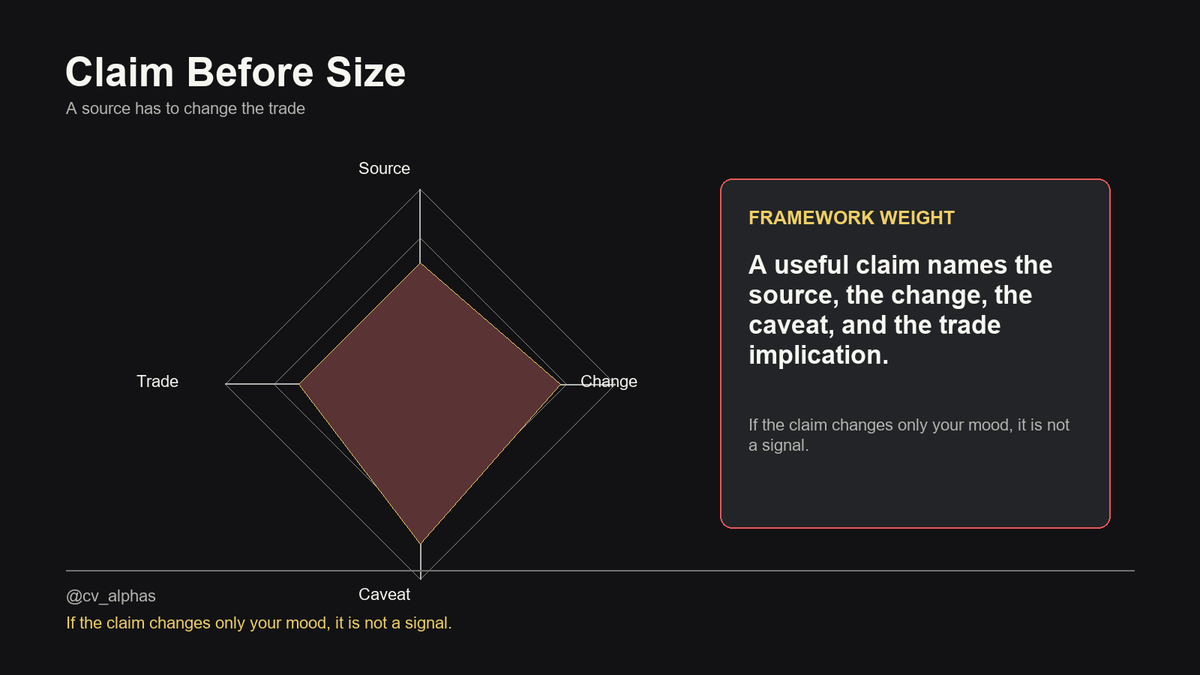

Crypto punishes the trader who treats a screenshot like a source.
Before I put real attention behind a claim, I want three boring answers: who said it, what actually changed, and what would prove the read wrong.
Most bad positions do not start with obvious lies. They start with borrowed confidence. A clean thread, a strong chart, a source that is older than it looks, and one missing caveat.
My rule on noisy days: verify the claim first, then decide whether it changes the trade.
If it only changes my mood, it is not a signal yet.
28
24
102
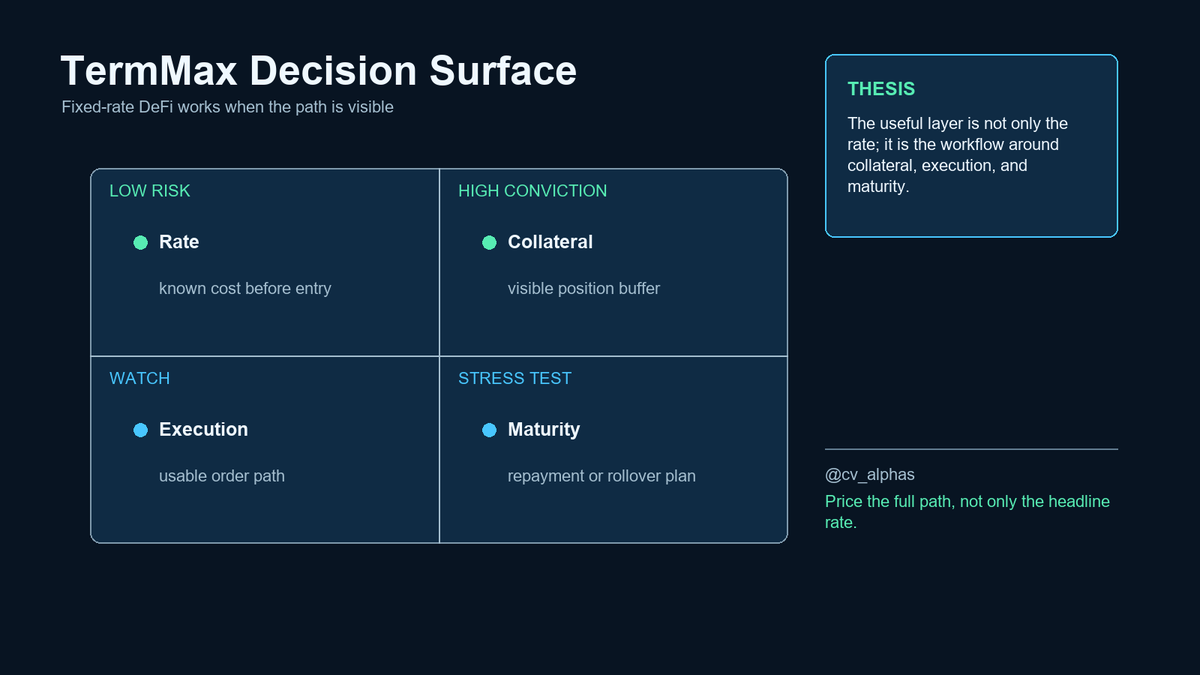
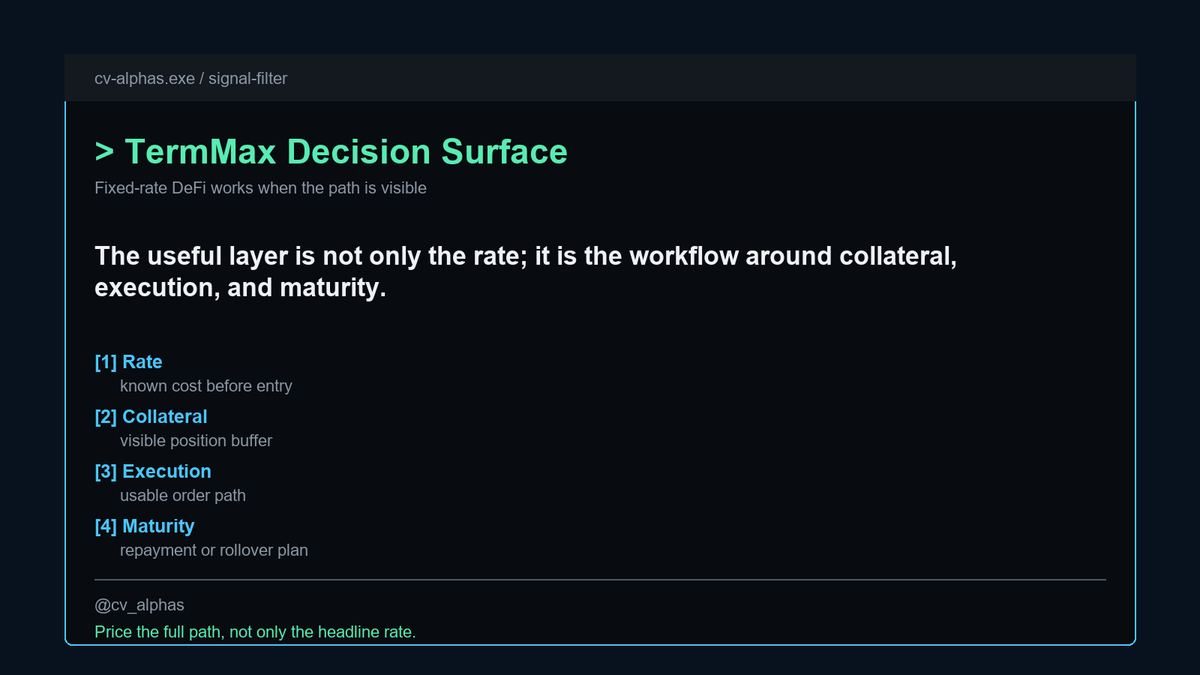
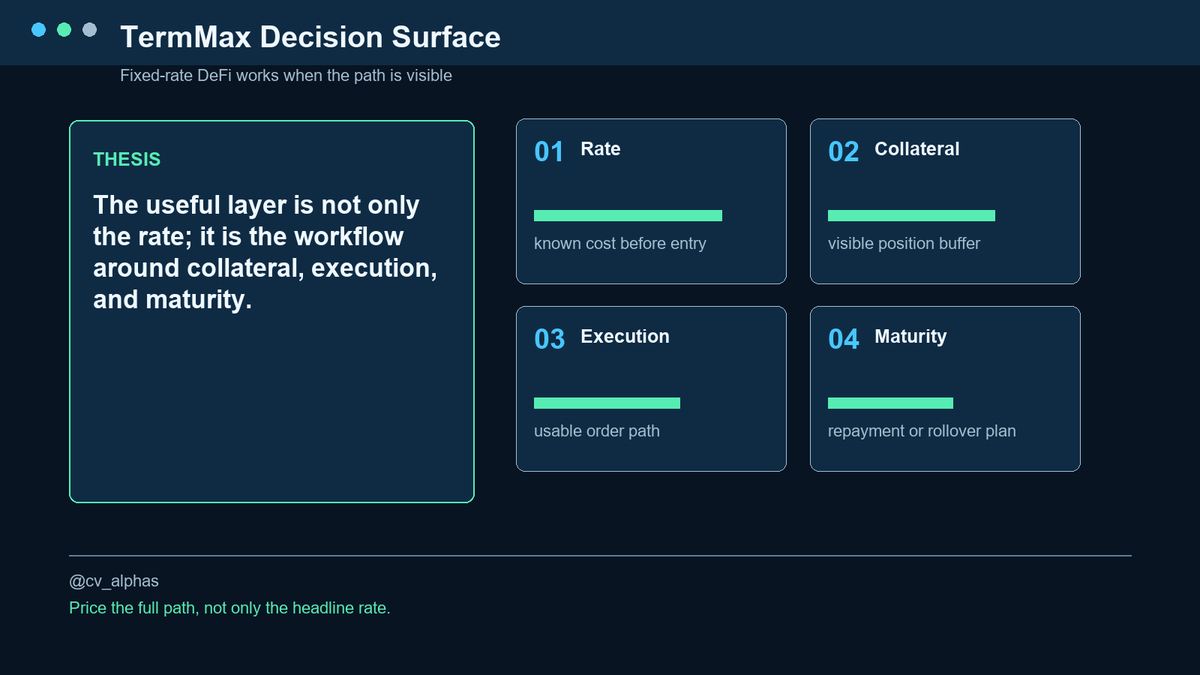
The thing I keep watching with @TermMaxFi is not the cleanest APY line. It is whether the trade feels understandable before capital moves.
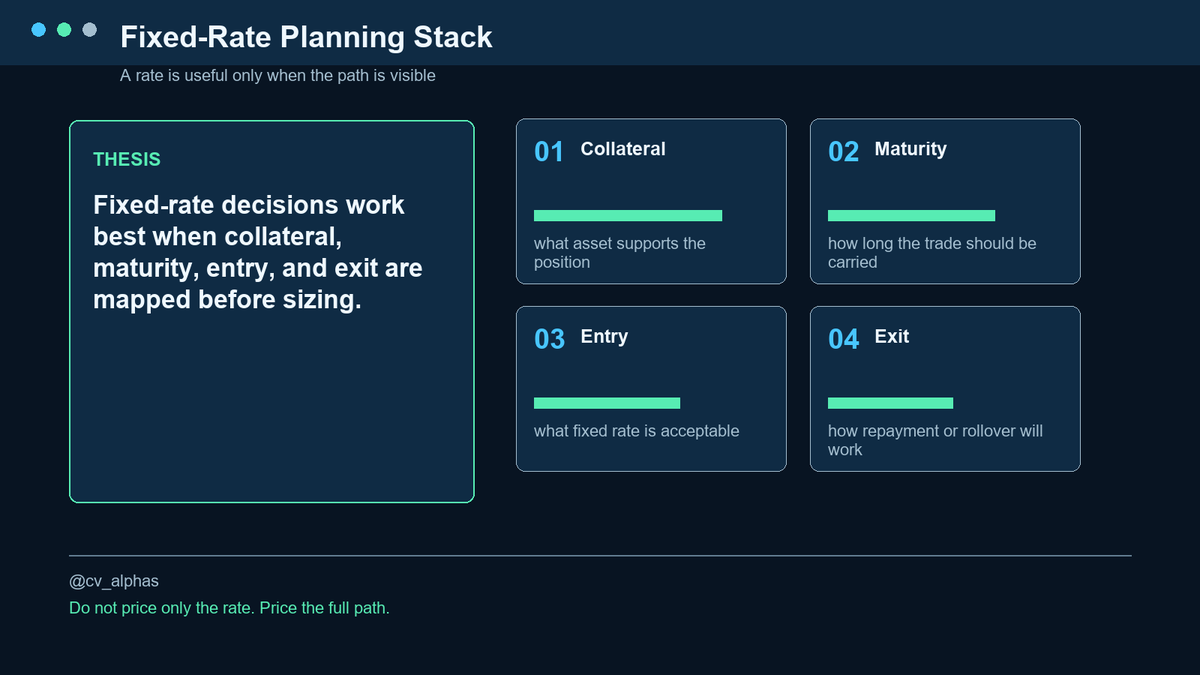
Fixed-rate DeFi sounds simple until you have to carry the position. The rate may be known, but the user still has to think about collateral, maturity, execution, and what happens if the better trade appears somewhere else while the capital is locked.
That is why I care about the boring screens: position state, order path, rollover options, and enough visibility to avoid making the next decision in a panic.
My read: fixed-rate markets win when they make planning less abstract. If the user can see the route before entering, the rate becomes useful instead of just attractive.
37
35
133
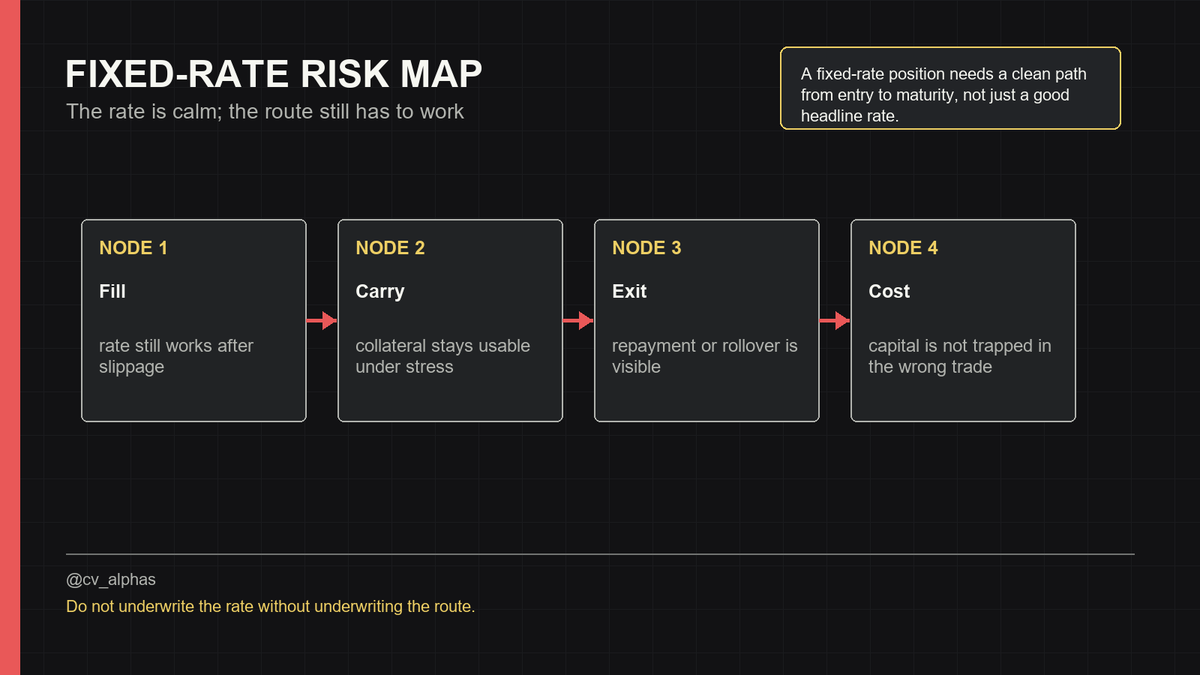
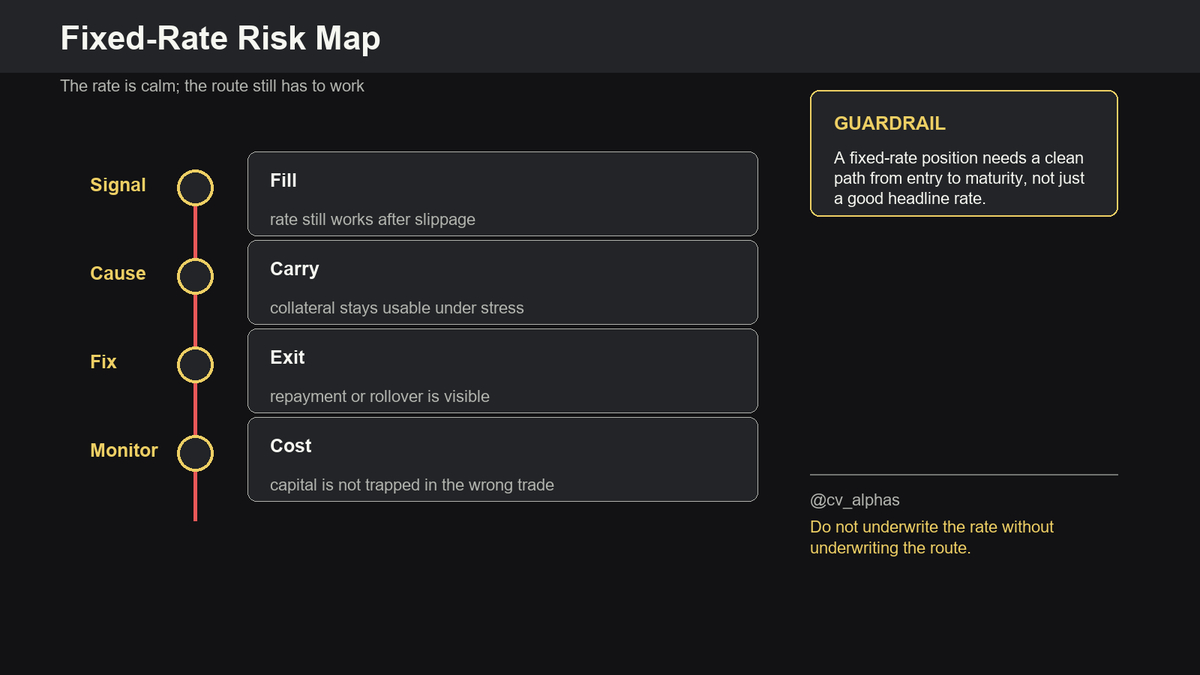
A DeFi position can look good at entry and still fail as a trade.
The missing variable is usually the route.
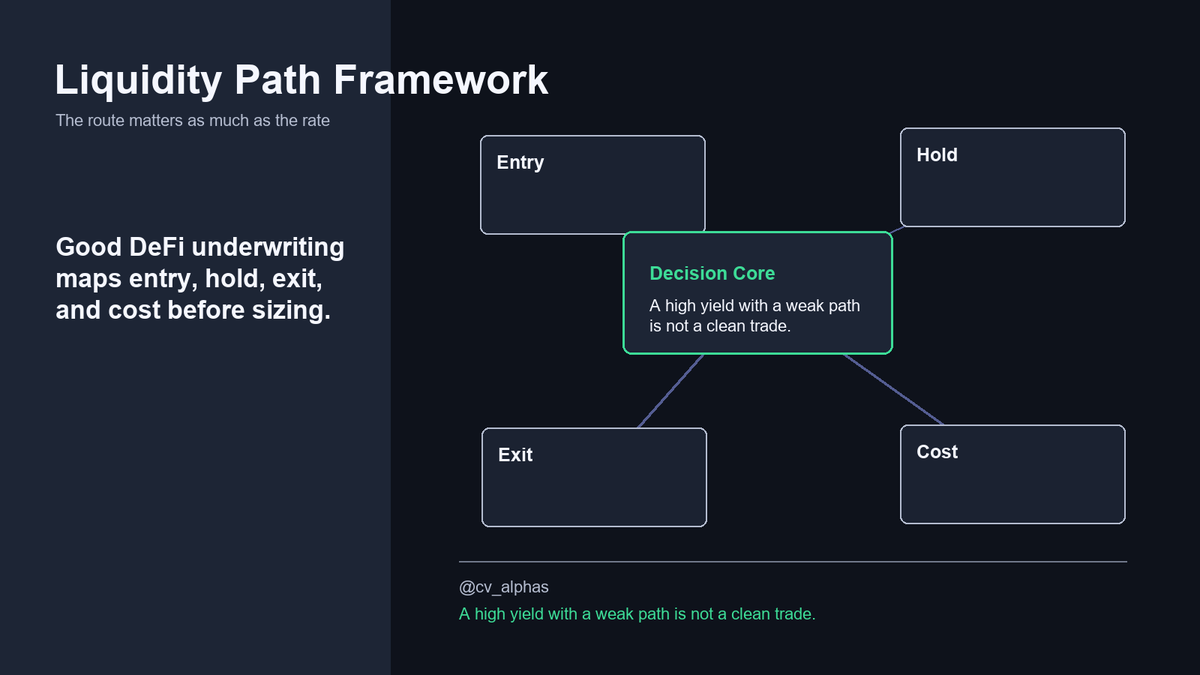
Before size enters, the fill has to be real, not just pretty on the screen. During the hold, collateral pressure matters more than the entry screenshot. And when the market gets crowded, the exit is where a lot of paper yield disappears.
Displayed yield is only the headline. I would rather underwrite liquidity, maturity, and execution cost before pretending the rate is the whole trade.
High rate, weak path is not a clean setup.
8
11
186

Jun 13
The update from @tradeonpear is useful because it gives a concrete source to build from instead of forcing generic market commentary.
The angle I would watch around Pear: what specific user behavior does this update make easier, safer, or more measurable?
That filter matters. A post can sound exciting while still failing the only question that compounds attention: does it change what a real participant should do next?
My read: the strongest project updates are the ones that turn vague interest into a clearer decision surface.
What I am anchoring on from @tradeonpear: Trading alone was never the end state. The future is connected. One account. Every market. Waitlist now open.
79
71
513
Jun 13
I keep coming back to one thing with @TermMaxFi: fixed-rate DeFi only matters if it makes the trade easier to understand before the money moves.
A rate by itself is not enough. I still want the boring parts in front of me: collateral path, maturity date, execution route, and what can go wrong after entry. If those pieces are scattered, the rate starts doing too much work in the user's head.
That is why I do not read fixed-rate markets as another APY category. The useful part is the ability to plan the position without guessing every variable later.
My read: the best updates here are the ones that make the next decision clearer, even if the announcement itself looks small.
What I am anchoring on from @TermMaxFi:
107
95
630
Jun 12
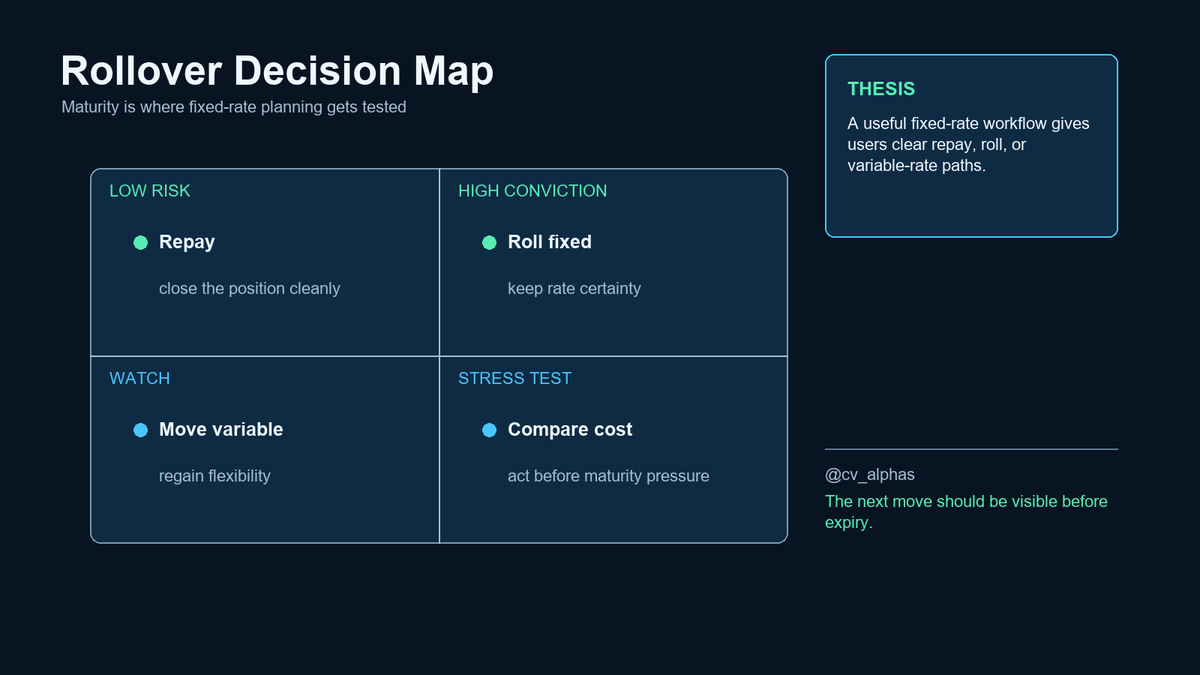
Fixed-rate DeFi has one annoying trap: the rate looks calm, then the position still has to live for weeks.
I would not start with the APY. I would start with the route.
Can the trade enter without donating too much edge to slippage? What happens to the collateral while the market is moving? At maturity, is there a boring repayment or rollover path, or are you just hoping liquidity is there?
The part people skip is opportunity cost. Locking one variable can protect the trade, but it can also make the capital slow when a better market appears.
So when I look at a fixed-rate setup, I care less about the prettiest displayed yield and more about whether the path from capital in to capital out is actually underwriteable.
111
105
714
Jun 12
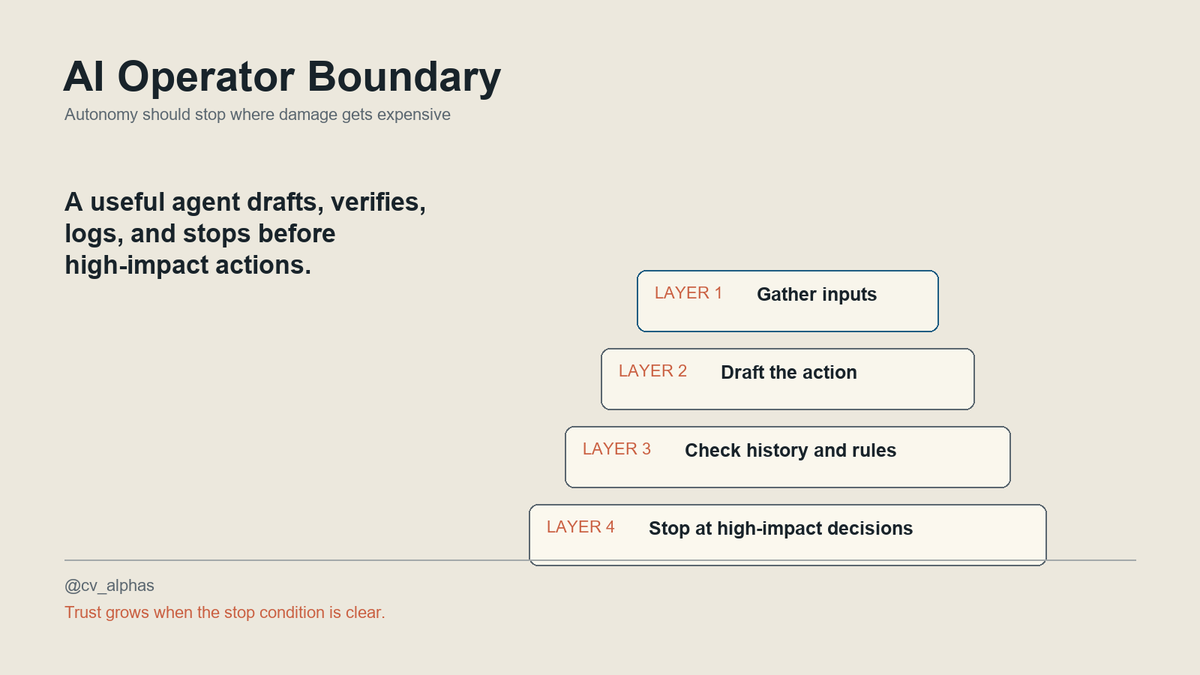
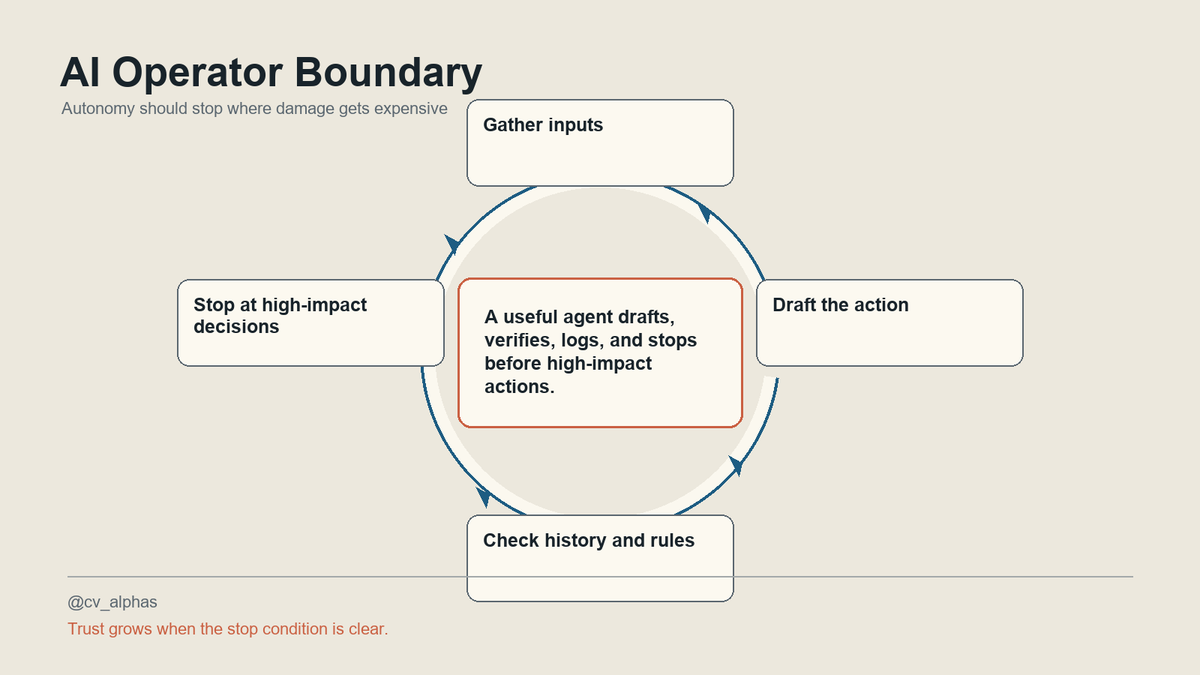
AI agents are easiest to oversell right before they touch something expensive.
I do not want an agent sending money, touching credentials, or posting from my account without stopping me first. Drafting is cheap. A bad public action is not.
So the boundary I would actually trust is boring in the right places: gather the inputs, show the draft, point out the conflict, keep a log, then pause before the action can damage money, access, or reputation.
That is slower than the autonomy pitch, but probably closer to how serious users will adopt agents. Let the machine remove the repetitive work. Keep the human at the expensive edge until the system has earned more room.
110
100
745
Jun 12
I keep coming back to one thing with @TermMaxFi: fixed-rate DeFi only matters if it makes the trade easier to understand before the money moves.
A rate by itself is not enough. I still want the boring parts in front of me: collateral path, maturity date, execution route, and what can go wrong after entry. If those pieces are scattered, the rate starts doing too much work in the user's head.
That is why I do not read fixed-rate markets as another APY category. The useful part is the ability to plan the position without guessing every variable later.
My read: the best updates here are the ones that make the next decision clearer, even if the announcement itself looks small.
What I am anchoring on from @TermMaxFi: Heads up: TermMax leaderboard will be down for maintenance on June 12, 8:00 AM (UTC 8), for up to an hour. The app is unaffected: lending, borrowing, and all positions work as normal. Thanks for your patience!
119
104
841
Jun 11
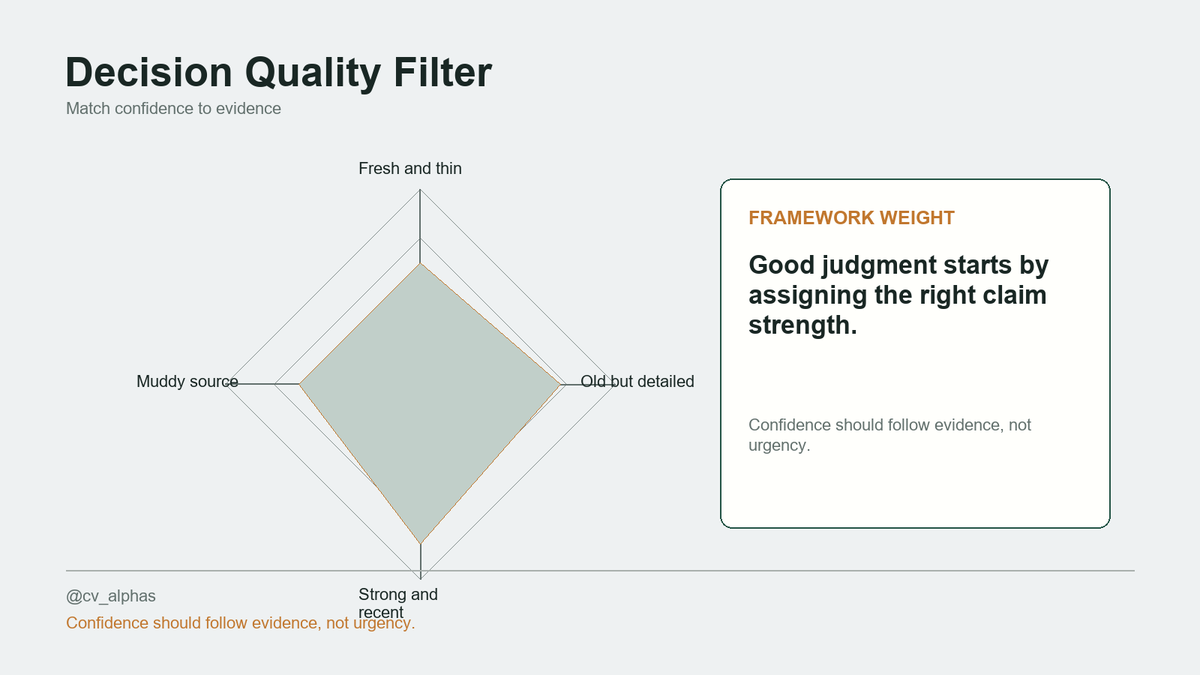
A lot of bad calls start the same way: weak evidence gets promoted too fast.
I keep the rule blunt because it saves a lot of fake certainty:
Fresh but thin gets a question, not a thesis.
Old but detailed needs context before it deserves a new angle.
Strong and recent can carry the direct claim.
Muddy source? Skip the forced post.
The same rule works for investing, content, and product work: match confidence to evidence.
It is better to sound slightly less certain than to train readers to distrust your confidence.
105
90
720
Jun 11
A DeFi position can look good at entry and still fail as a trade.
The missing variable is usually the route.
Before size enters, the fill has to be real, not just pretty on the screen. During the hold, collateral pressure matters more than the entry screenshot. And when the market gets crowded, the exit is where a lot of paper yield disappears.
Displayed yield is only the headline. I would rather underwrite liquidity, maturity, and execution cost before pretending the rate is the whole trade.
High rate, weak path is not a clean setup.
89
83
520
Jun 11
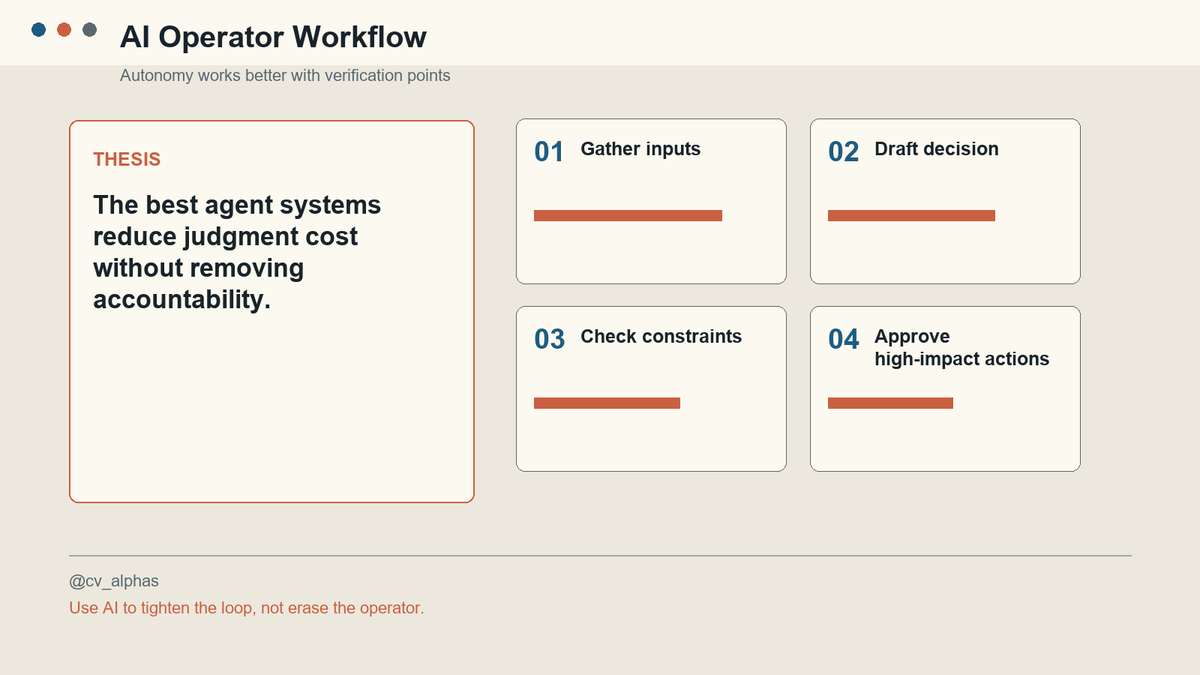
The useful version of an AI agent is usually less autonomous than the demo makes it look.
For real work, I want it to stop at the expensive moments.
Gather the inputs. Draft the decision. Check the constraints and history. Then hand high-impact actions back to a human before the system touches the outside world.
That loop is slower, but it creates a record of why the decision happened.
The real gain is not magic autonomy. It is cheaper judgment, faster verification, and fewer silent mistakes.
53
1
58
402
Jun 11
I keep coming back to one thing with @TermMaxFi: fixed-rate DeFi only matters if it makes the trade easier to understand before the money moves.
A rate by itself is not enough. I still want the boring parts in front of me: collateral path, maturity date, execution route, and what can go wrong after entry. If those pieces are scattered, the rate starts doing too much work in the user's head.
That is why I do not read fixed-rate markets as another APY category. The useful part is the ability to plan the position without guessing every variable later.
My read: the best updates here are the ones that make the next decision clearer, even if the announcement itself looks small.
What I am anchoring on from @TermMaxFi: TermMax App V2 Community Bug Bounty is here! Help us improve the new V2 experience and earn rewards Rewards TMX token rewards (based on bug severity) Exclusive Discord role: V2 Pioneer Ends: June 16, 23:59 UTC Our team will continuously review submissions and
122
103
644
Jun 10
I just joined @veilolayer's early access waitlist. The all-in-one Solana privacy app.
Private swaps, transfers, and DeFi. All on-chain, all private.
early.veilo.network
4
11
188
Jun 10
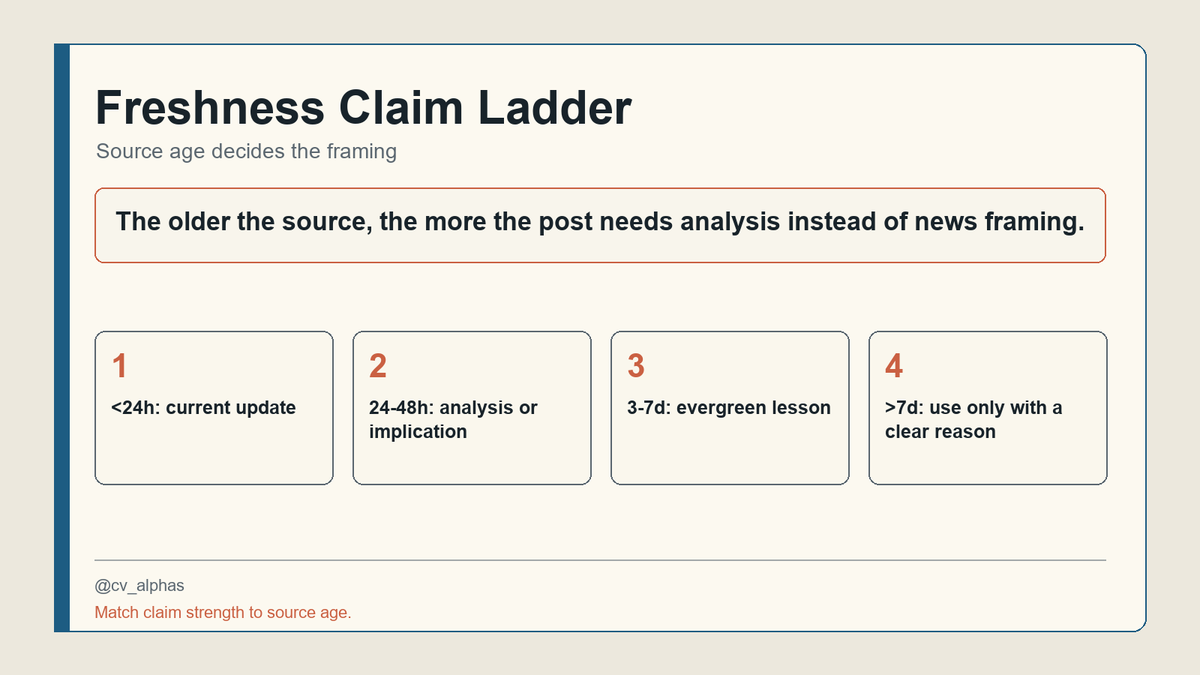
Old sources become dangerous when the post pretends they are fresh.
I would rather make the claim smaller than burn trust for a cleaner hook.
Rough rule:
<24h: current update.
24-48h: analysis, context, or a stronger implication.
3-7d: evergreen learning, not news packaging.
>7d: use only when there is a clear reason to bring it back.
Readers can feel stale packaging even when they do not know the timestamp.
So the job is simple: match the strength of the claim to the age of the source, even if that makes the post less dramatic.
75
76
473
Jun 10
Fixed-rate DeFi has one annoying trap: the rate looks calm, then the position still has to live for weeks.
I would not start with the APY. I would start with the route.
Can the trade enter without donating too much edge to slippage? What happens to the collateral while the market is moving? At maturity, is there a boring repayment or rollover path, or are you just hoping liquidity is there?
The part people skip is opportunity cost. Locking one variable can protect the trade, but it can also make the capital slow when a better market appears.
So when I look at a fixed-rate setup, I care less about the prettiest displayed yield and more about whether the path from capital in to capital out is actually underwriteable.
67
73
442
CV alpha | 🐬TermMax retweeted

Jun 9
Trading alone was never the end state.
The future is connected.
One account. Every market.
Waitlist now open.
rewards.pear.trade
12,886
14,265
12,308
335,114
Jun 10
AI agents are easiest to oversell right before they touch something expensive.
I do not want an agent sending money, touching credentials, or posting from my account without stopping me first. Drafting is cheap. A bad public action is not.
So the boundary I would actually trust is boring in the right places: gather the inputs, show the draft, point out the conflict, keep a log, then pause before the action can damage money, access, or reputation.
That is slower than the autonomy pitch, but probably closer to how serious users will adopt agents. Let the machine remove the repetitive work. Keep the human at the expensive edge until the system has earned more room.
121
106
503
Jun 10
Borrow markets are easy to read badly if the only thing you look for is size.
The better question around this @TermMaxFi update is whether a borrower can understand the trade before entering: what collateral is accepted, what the fixed cost really means, how long the maturity runs, and what to do if the displayed rate is not worth taking.
That is where fixed-rate DeFi becomes practical. It gives users a known cost, but it does not remove the need to underwrite collateral, timing, and execution.
My read: the strongest TermMax updates are the ones that make the borrower less dependent on guesswork before capital moves.
What I am anchoring on from @TermMaxFi: . @OndoFinance asset holders on @BNBChain? You can now borrow USDT against your assets at a ~4% fixed rate, or lend to fellow borrowers on TermMax.
135
120
655
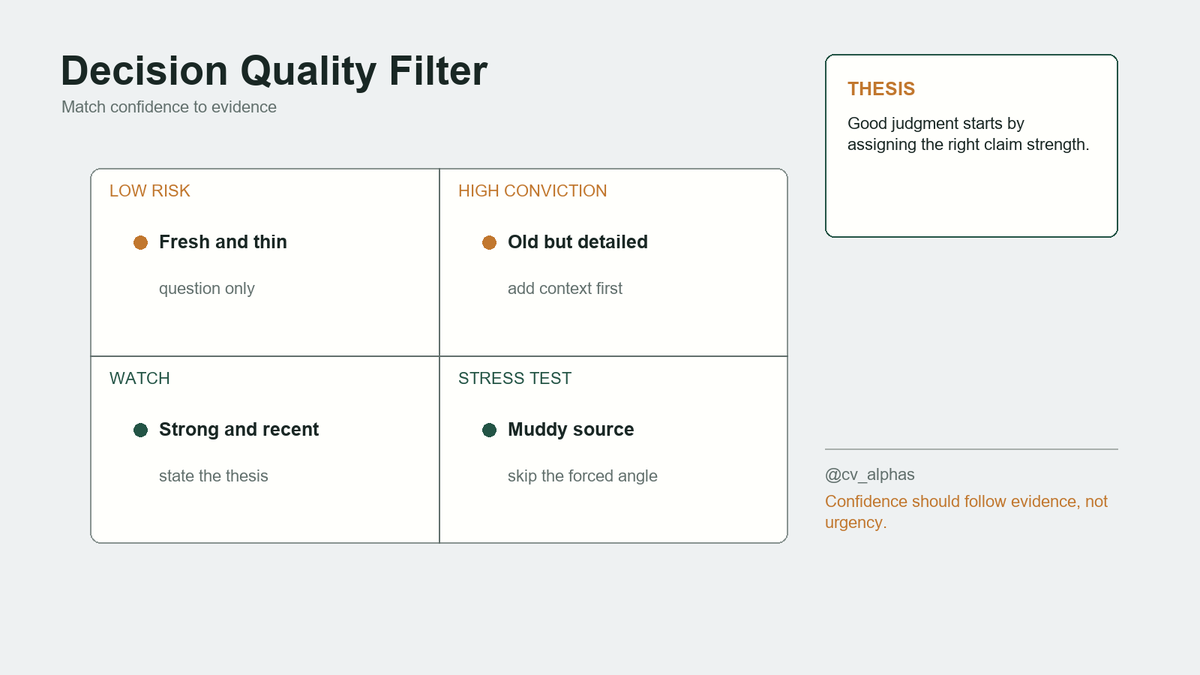
A lot of bad calls start the same way: weak evidence gets promoted too fast.
I keep the rule blunt because it saves a lot of fake certainty:
Fresh but thin gets a question, not a thesis.
Old but detailed needs context before it deserves a new angle.
Strong and recent can carry the direct claim.
Muddy source? Skip the forced post.
The same rule works for investing, content, and product work: match confidence to evidence.
It is better to sound slightly less certain than to train readers to distrust your confidence.
122
104
1,001
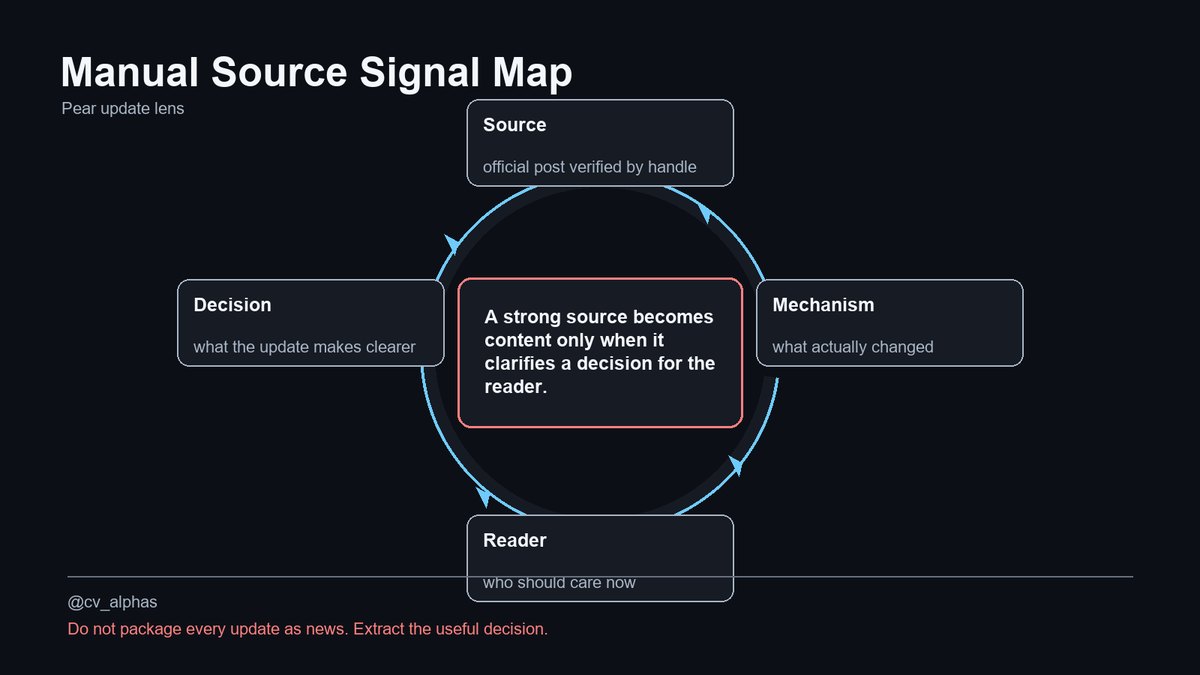
The useful way to read a source is to ask what it changes for the reader.
A strong source makes one decision easier, exposes one risk boundary, or shows a behavior pattern that was hidden before.
If the answer is no, the post should stay small.
If the answer is yes, the content does not need to become a recap. It can become a sharper operating rule: what changed, who should care, and what should be watched next.
That is the difference between using a link as evidence and turning every link into news.
The source detail I used here: ETH - 1k5 y c phi ng coin tt nht th trng crypto ca ae khng? Mnh bt u DCA cho ma mi C BTC c BNB Nhng khng c ETH V n l ci tn mnh lot DCA u tin.

76
70
694