Reporter for CIDRAP News. Former radio guy. New York Mets fan. cdall@umn.edu
Joined August 2010
- Tweets 5,916
- Following 1,030
- Followers 877
- Likes 11,277
253 Photos and videos








Chris Dall retweeted

#DanielDennett on “black box science” and #AI: It's so easy to do black box science by pushing a few buttons to get an output generated by an artificial system... But are we starting to abandon our fundamental capacity to understand how things work?
5
10
43
4,011

Chris Dall retweeted

Mar 11
“Until antibiotic discovery is funded at a scale that matches the threat posed by AMR, efforts will be reactive instead of proactive, costing money and lives,” cidrap.umn.edu/antimicrobial…
3
6
407

Dentists still write millions of prescriptions a year for an antibiotic with life-threatening risks
Dentists wrote more than 27 million antibiotic prescriptions last year, many of them unnecessary. Part 1 of a 3-part series by @lizszabo.bsky.social
cidrap.umn.edu/antimicrobial…
1
9
21
15,915
Chris Dall retweeted
Feb 7
In this video I discuss antibiotic resistant bacteria and how people acquire these infections
4
3
8
877
Chris Dall retweeted
Feb 7
In this @cvdall @CIDRAP piece I’m quoted about E.coli infections, their burden, and antibiotic resistant versions. cidrap.umn.edu/antimicrobial…
1
1
338
Chris Dall retweeted
12 Dec 2025
In this @CIDRAP @cvdall piece I’m quoted about drug resistant gonorrhea and the potential of zoliflodacin, a novel and promising antibiotic developed using an innovative partnership cidrap.umn.edu/antimicrobial…
1
1
286
Chris Dall retweeted

14 Nov 2025
Aaron Siri is misrepresenting flu vaccine evidence by selectively citing studies.
Doing this after the deadliest non-pandemic pediatric flu season on record — 280 children dead, 89% of whom were not fully vaccinated — is unconscionable.
Here’s what the data actually show. 🧵
42
39
159
19,609
Chris Dall retweeted
30 Oct 2025
In this video I give a brief overview of Long COVID
1
5
391
Chris Dall retweeted

29 Oct 2025
There are two different KFF numbers about the ACA out there. Both are accurate, but mean different things.
114%: The average increase in out-of-pocket premiums if enhanced tax credits expire.
26%: The average increase in what insurers are charging for benchmark ACA plans.
4
36
63
13,166
Chris Dall retweeted
2 Oct 2025
“they had received care at the veterinary teaching hospital when it was experiencing its CPE outbreak. They likely became colonized with the bacteria at the hospital and then spread it to their owners.” cidrap.umn.edu/antimicrobial…
1
2
485
Chris Dall retweeted
18 Sep 2025
Unlike MMRV (which carries a small, well-documented increase in febrile-seizure risk for the 1st dose), there’s no new safety signal to justify changing hepatitis B policy. Today’s ACIP briefs show hep B birth-dose safety and highlight risks of rescinding it. The birth dose reduces failure points in real-world care and serves as a safety net when screening or documentation is missed.
We know what happens without the birth dose:
- Maternal screening misses cases
- Babies get infected from household contacts
- ~90% of infected infants develop chronic infection leading to lifelong liver disease, cancer, and premature death
Before universal infant vaccination, thousands of U.S. infants and young children were infected each year despite targeted strategies.
The graph shows 30 years of uninterrupted success.
Tomorrow they vote to reverse it.
For what — to appease “public concerns”? To score political points?
This is how diseases return: by undoing proven prevention without scientific cause.
Watch tomorrow’s vote closely. This is bigger than one vaccine — it’s about whether evidence or ideology drives U.S. health policy.
5
15
51
2,127

12 Sep 2025
RT @greg_folkers: .@CIDRAP : Experts warn loss of USAID endangers the fight against deadly TB
bit.ly/3VMl7YU t.co/QnLt…
1
Chris Dall retweeted
11 Sep 2025
"TB has always been smarter than us, but we're giving it good conditions to continue to do its damage," cidrap.umn.edu/tuberculosis/…
1
1
636
Are you a driven science journalist with a passion for infectious diseases? Join the CIDRAP News team and a great work environment.
We are hiring a general-assignment writer/editor and an investigative reporter. Apply today
hr.myu.umn.edu/jobs/ext/3701…
hr.myu.umn.edu/jobs/ext/3701…
7
9
2,242
11 Sep 2025
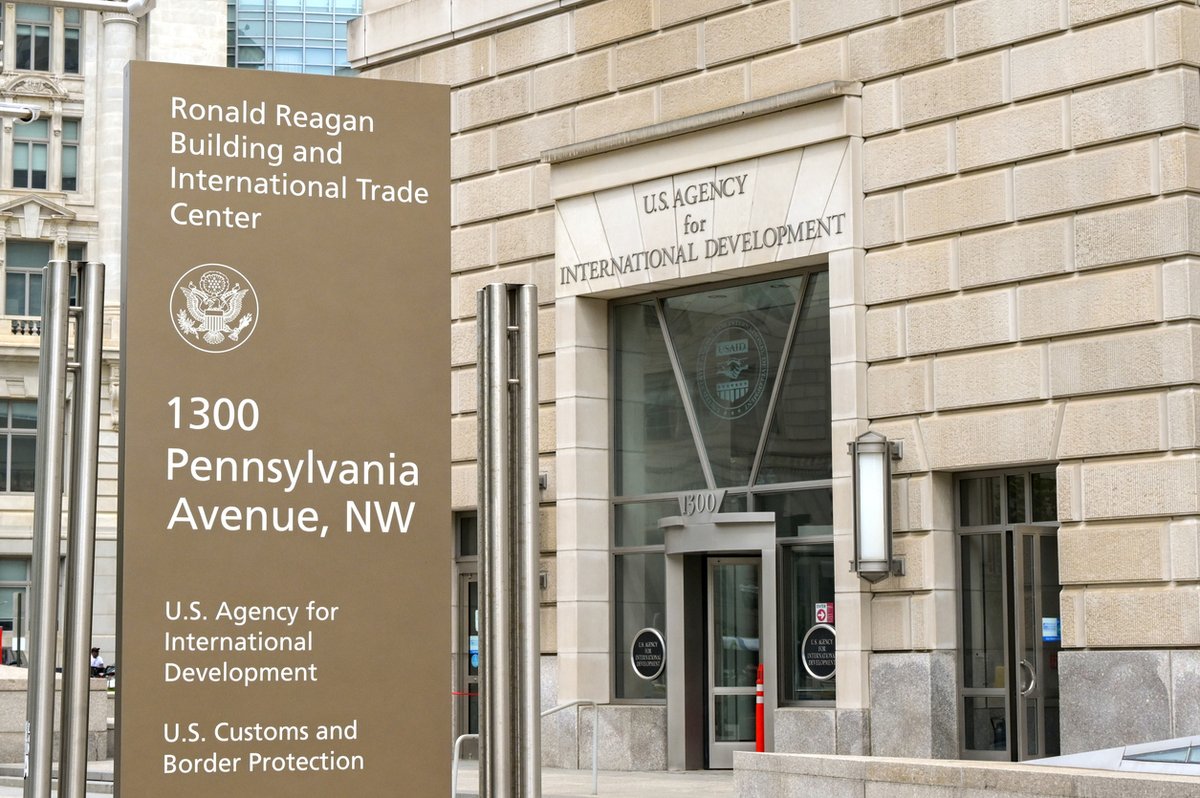
For my latest CIDRAP News long-read, I spoke with several tuberculosis experts and NGO officials about the impact from the loss of USAID funding. Here's what they told me.

Experts warn loss of USAID endangers the fight against deadly TB
In high-burden countries around the world, the loss of USAID funding has had a devastating impact on critical TB intervention and treatment efforts.
cidrap.umn.edu/tuberculosis/…
54
Chris Dall retweeted
4 Sep 2025
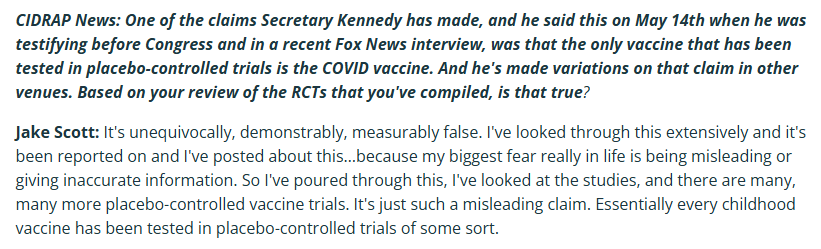
This claim that @SecKennedy continues to make about childhood vaccines not being tested in placebo-controlled trials is total BS. As I told @cvdall last June, "essentially every childhood vaccine has been tested in placebo-controlled trials of some sort."
cidrap.umn.edu/adult-non-flu…
18
113
293
12,360
Chris Dall retweeted
1 Sep 2025
@RandPaul is wrong about hepatitis B vaccination. Here's why universal birth dosing matters:
🧵

No medical reason to give newborns Hep B vaccine if mother is not infected. All mothers who deliver in a hospital are tested. This “scientist’s” fetish for vaccines not supported by the data
2
3
7
1,158
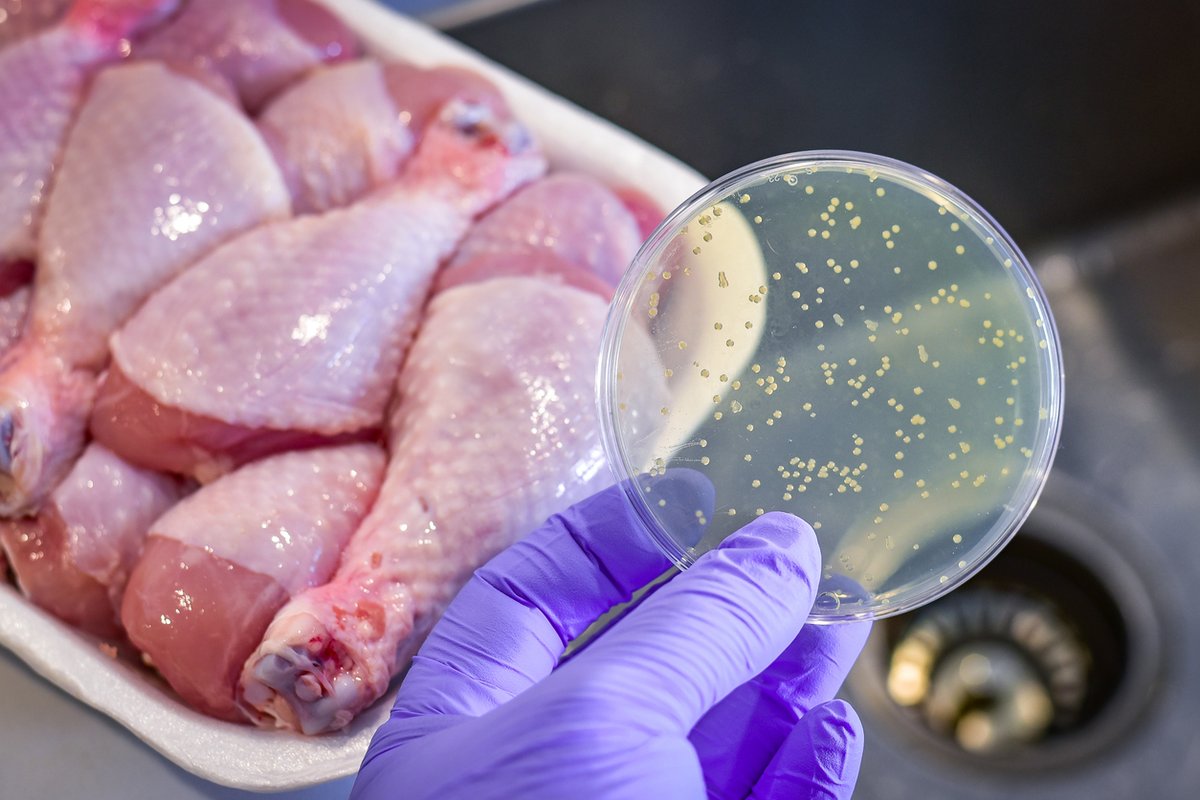
CDC cuts back foodborne illness surveillance program
The CDC's FoodNet program has reduced required surveillance from eight foodborne pathogens to two, a move some experts warn could leave the country more vulnerable to outbreaks.
cidrap.umn.edu/foodborne-dis…
224
1,242
2,713
4,132,733
Chris Dall retweeted

28 Aug 2025
CDC is now not a functional agency. At this point professional societies, state health departments, industry, academic groups, self-organized expert groups, internatioanal groups must do their best to fill the hole left by the destruction launched by Kennedy and his stooges

Susan Monarez is no longer director of the Centers for Disease Control and Prevention. We thank her for her dedicated service to the American people. @SecKennedy has full confidence in his team at @CDCgov who will continue to be vigilant in protecting Americans against infectious diseases at home and abroad.
1
14
28
2,282