
Joined April 2025
- Tweets 71
- Following 16
- Followers 158
- Likes 95
25 Photos and videos







Pinned Tweet

26 Oct 2025
We’re an end-to-end robotics toolbox.
Hardware selection
Integration
Teleoperation
Autonomy
Unified on Cyberwave
4
1,741
We're ready to hack with you this Saturday. Are you? 🦾
This Saturday in Milan we're running the Robotic Agents Hackathon.
You spend the day building an AI agent that controls a real robot.
Come build with us:
luma.com/mmc68m0b
4
10
269
Cyberwave retweeted
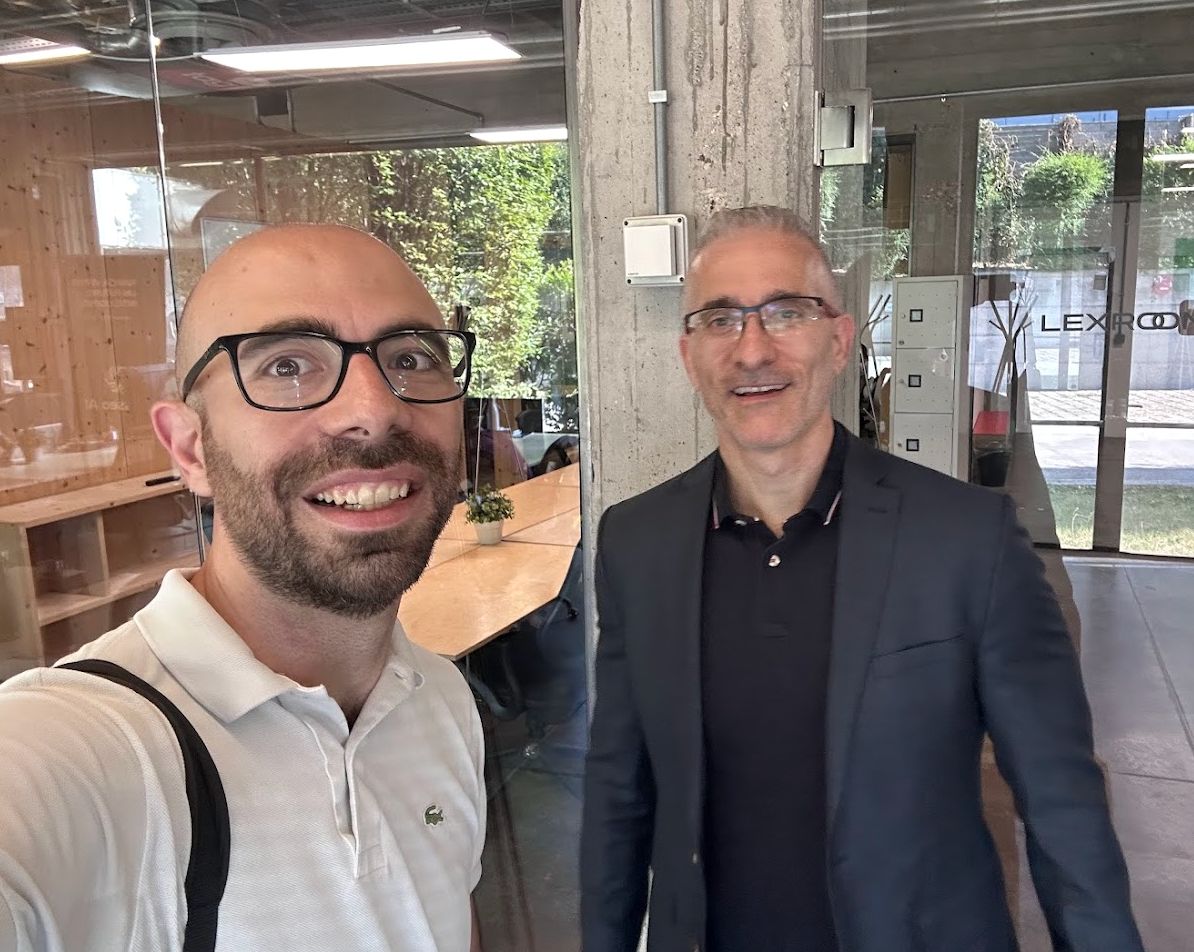
I met @cybermax thanks to @simonedisomma
He has a massive pedigree in hardware & robots. I come from the software world.
Before @cyberwave_com, I never had to think "Would this office be ok for a 200kg robotic arm?".
For Max it was just Tuesday.
1
1
2
43
Jun 11
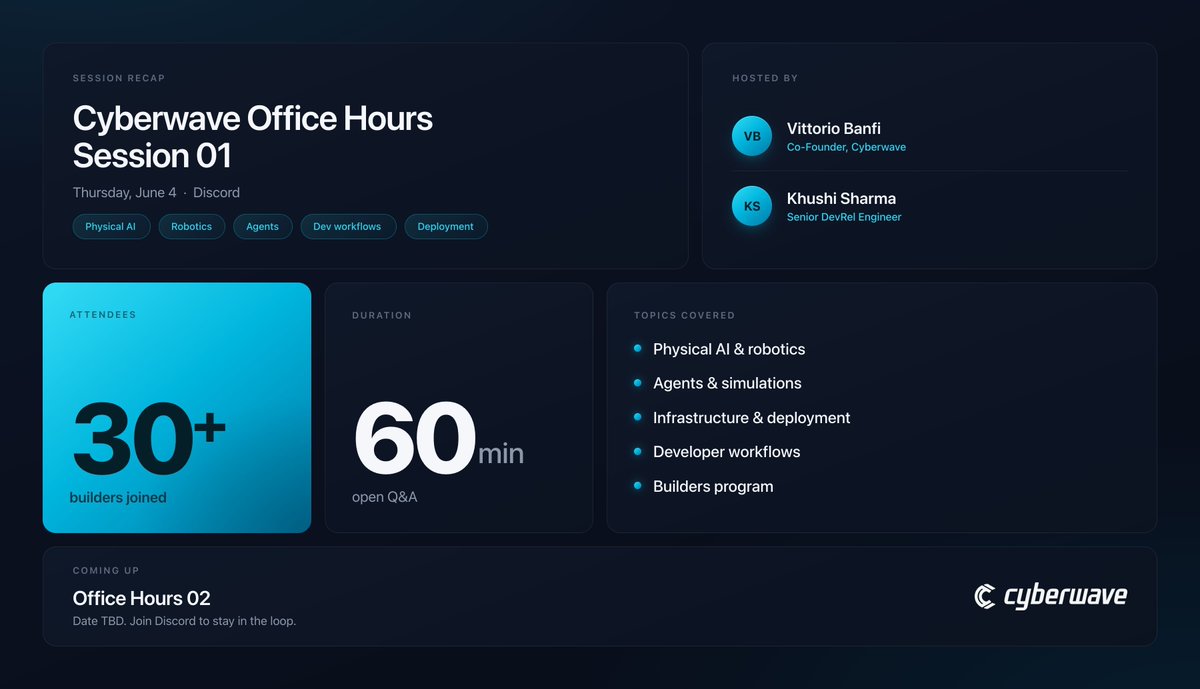
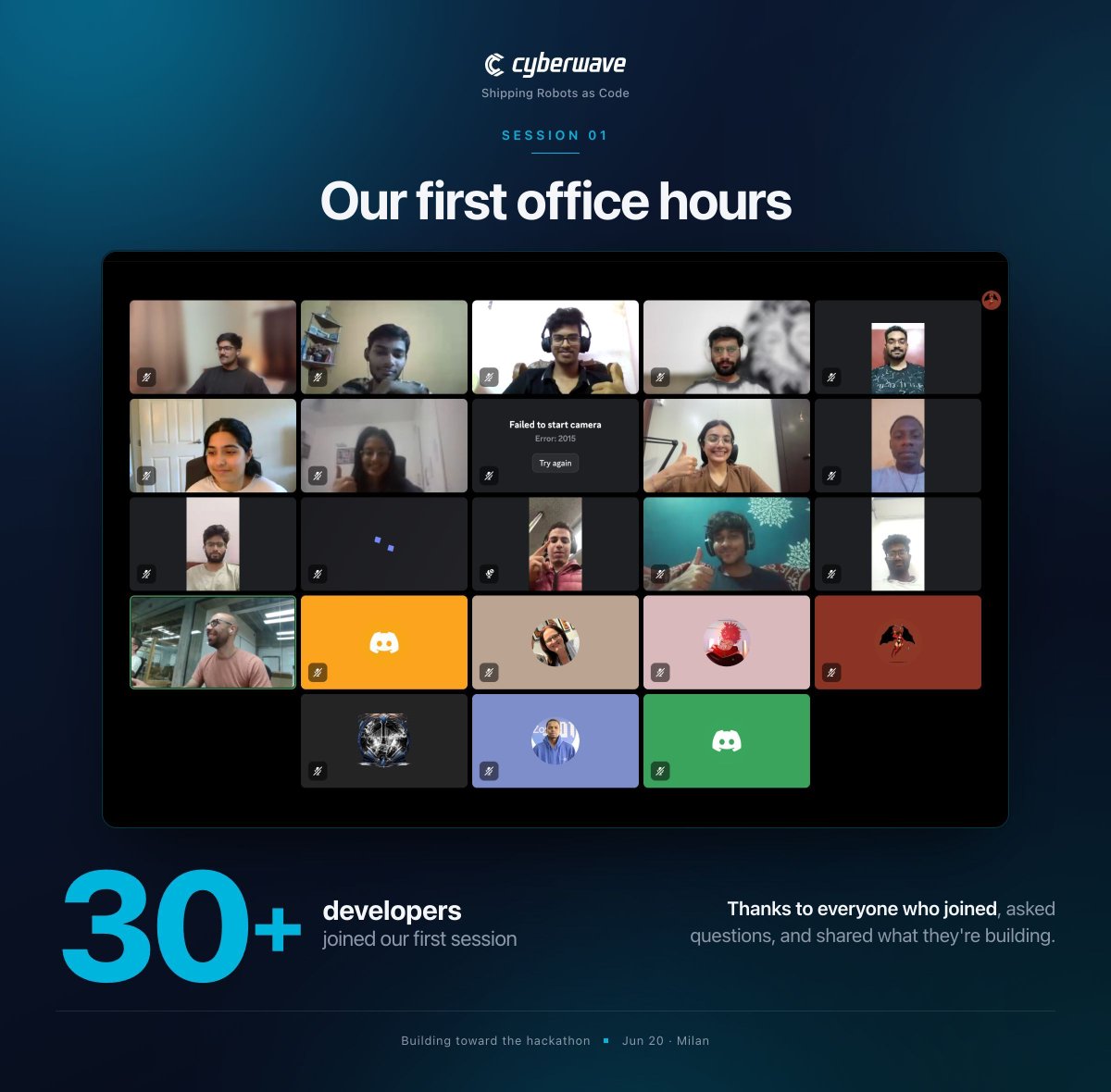
Here's a recap of our first ever Office Hours.
What's the one thing you'd want to bring to session two? 👇
1
6
120
Jun 11
We’re nine days out from the Robotic Agents Hackathon in Milan on June 20.
You get ten hours, real robots, a €5,000 prize pool, and the winning teams take their robots home. 🦾
Sign up today:
luma.com/mmc68m0b
1
3
11
1,965

Jun 9
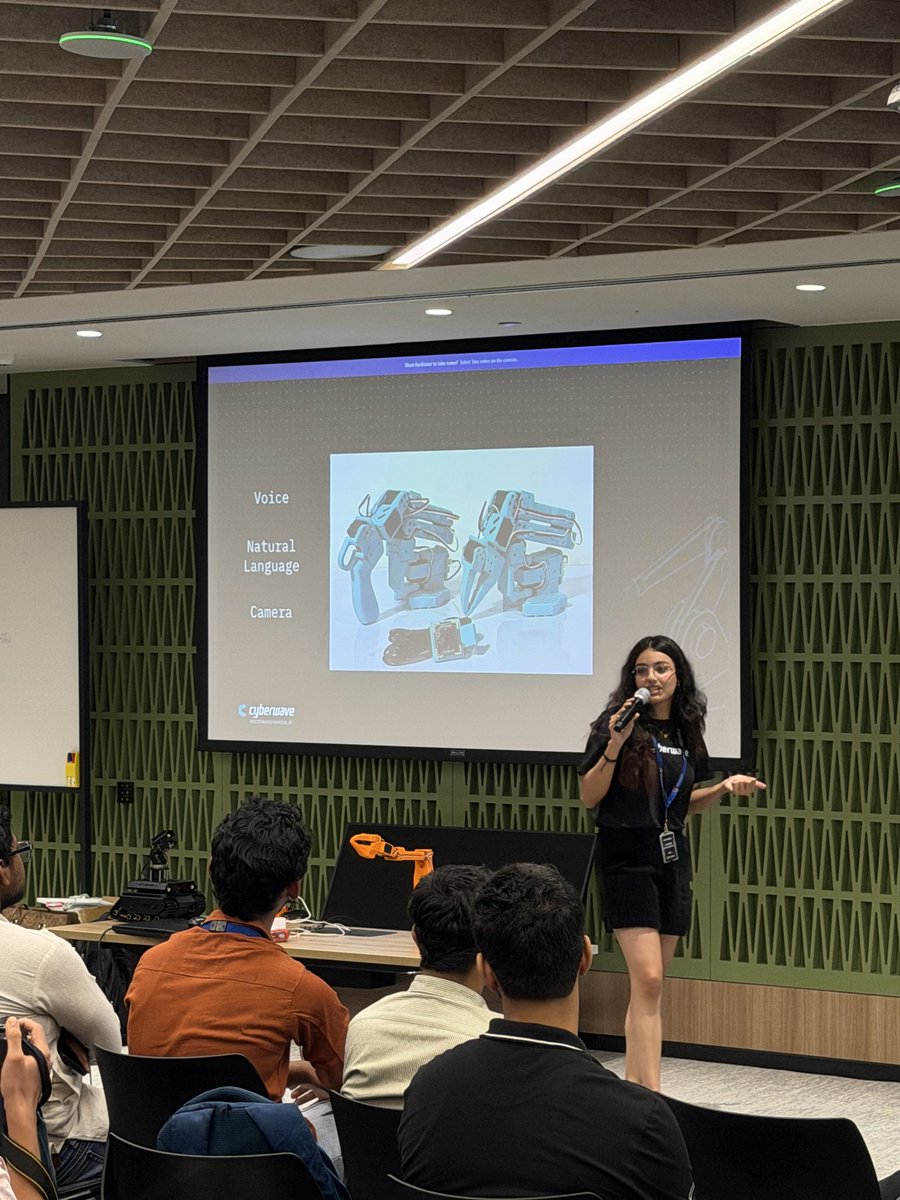
Our Office Hours Session one is done and honestly, the best way to spend a Thursday afternoon.
Thanks to everyone who showed up. See you at the next one 🫶
3
10
3,138
Cyberwave retweeted
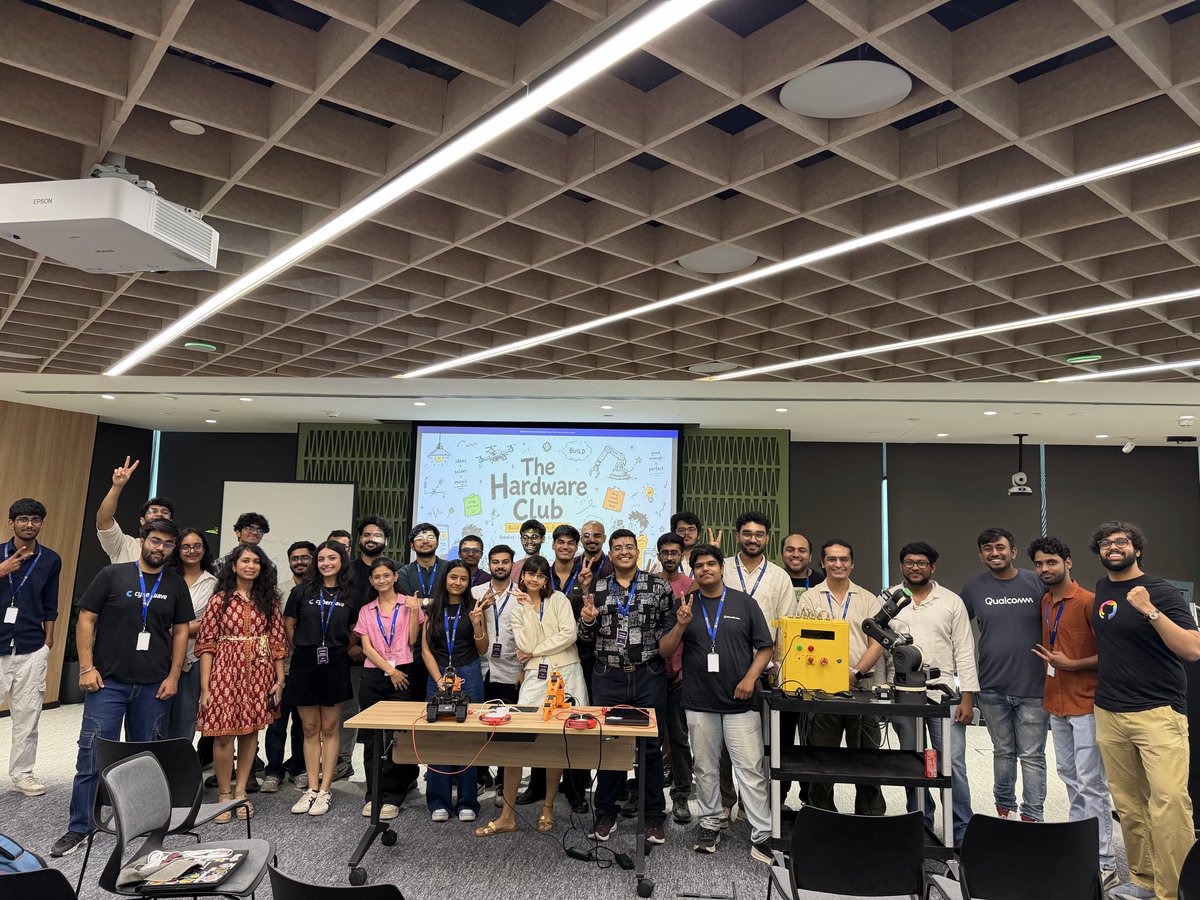
The Hardware Club #1
The first one where we saw a perfect balance of voice agents, beginner robots and industrial machines.
Hardware access doesn’t stop you anymore from building in physical AI.
Onto the next one!
@cyberwave_com @knowShubhangi @carrycooldude
8
4
63
3,610
Jun 4
When a robot understands plain language, you can just ask it for what you want.
That opens physical AI for everyone. 🦾
Watch the full tutorial here ↓
1
2
11
1,289
Jun 4
This is your reminder.
Today, 5:30 PM CET on Discord.
Come talk Physical AI, robotics, dev workflows, whatever's on your mind.
@Vittoriobanfi and @khushiSharma_22 will be there to help you get unstuck.
See you in a few hours 👇
Jun 1

Our first ever Office Hours is happening June 4th on Discord 🗓️
Come hang with @Vittoriobanfi and @khushiSharma_22 to talk about Physical AI, robotics, simulations, dev workflows, or whatever's on your mind.
8:30 AM PST / 5:30 PM CET / 9 PM IST
Link to join ↓
1
1
10
1,466
Jun 4
Link to join Office hours today:
calendar.google.com/calendar…
Link to our Discord server: discord.gg/dFMvgpGBrJ
86
Cyberwave retweeted
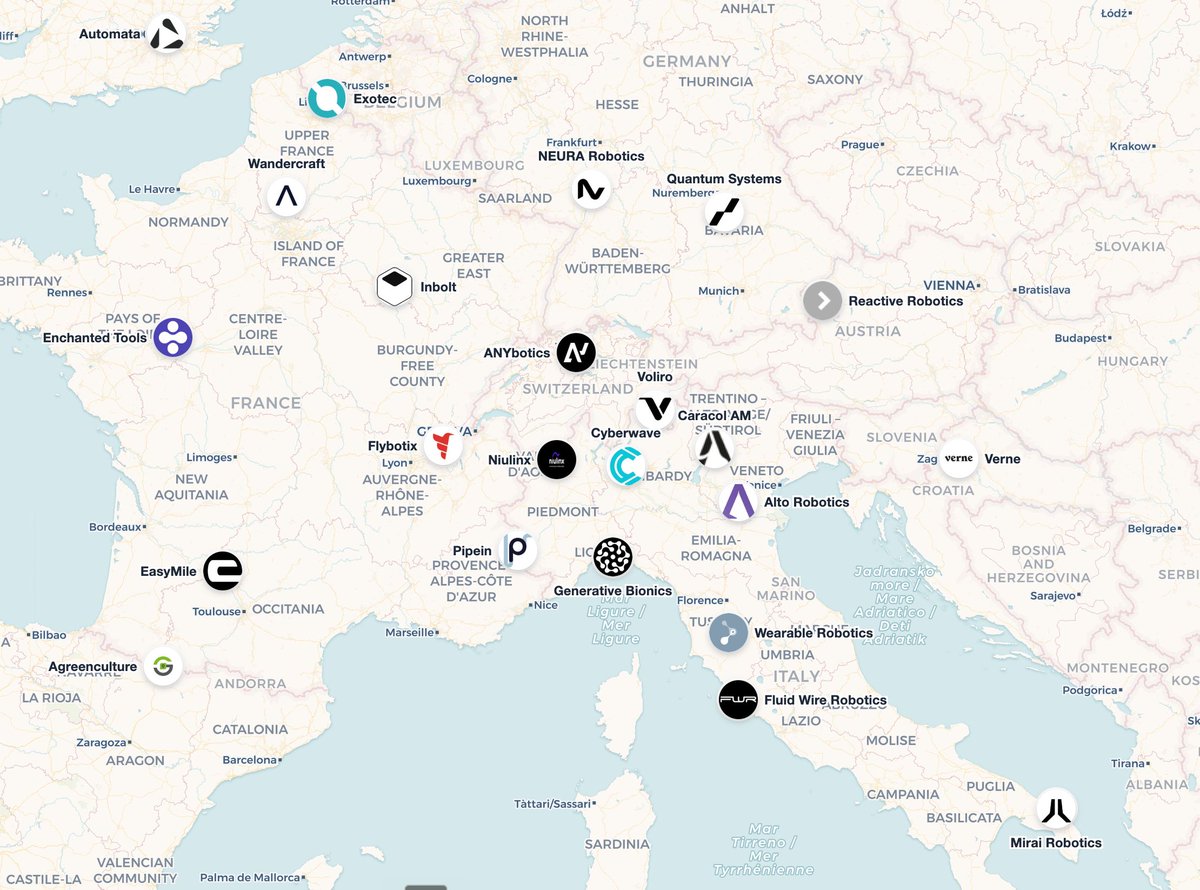
Has anyone built a GOOD map of European physical AI ventures? 🇪🇺 🦾
I had a first go, putting together some of our friends in the space a bit of research.
It’s inspiring to see this vertical grow while everyone complains Europe is dead in tech.
1
1
3
112
Jun 2
Imagine building a physical AI agent with real robotic hardware in 10 hours.
That's literally what's happening June 20 in Milan.
Arms, rovers, drones, Go2s, all yours to hack on.
$6K in prizes top teams keep the hardware.
No robotics background needed, join in ↓
1
4
11
1,490
Jun 1
Our first ever Office Hours is happening June 4th on Discord 🗓️
Come hang with @Vittoriobanfi and @khushiSharma_22 to talk about Physical AI, robotics, simulations, dev workflows, or whatever's on your mind.
8:30 AM PST / 5:30 PM CET / 9 PM IST
Link to join ↓
2
1
6
2,354
Cyberwave retweeted

May 26
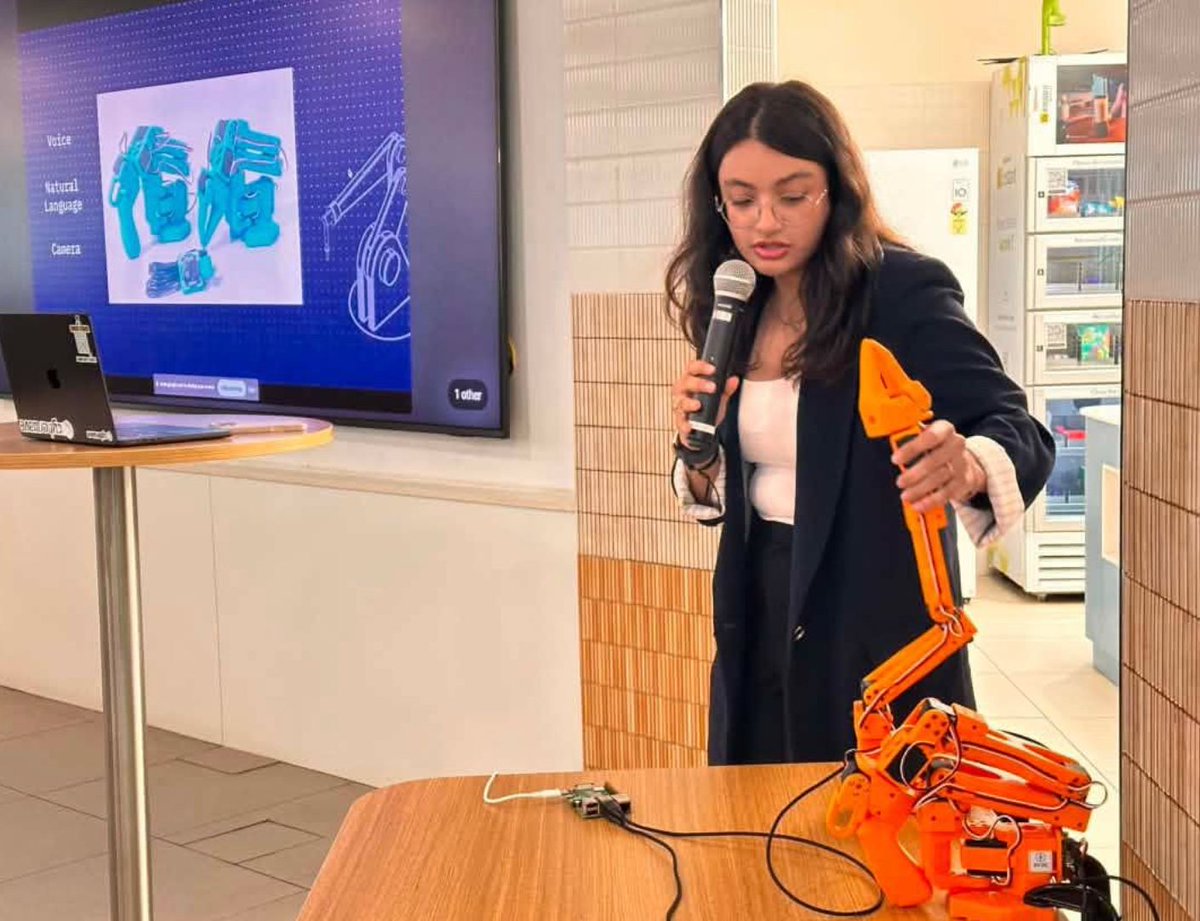
Claude Code can be the brain of your robot.
But it needs @cyberwave_com
@khushiSharma_22 took Anthropic's CLI to a New Delhi meetup and plugged it into our SDK.
90 devs watched an LLM stop printing text and start moving a physical arm.
2
1
13
2,237
May 13
Tactile feedback may be the missing fast loop for VLA robots.
AT-VLA uses adaptive tactile injection dual streams: slow vision-language reasoning, fast tactile control at ~0.04s.
Physical AI needs both: generalist brains, reflexive hands.
arxiv.org/abs/2605.07308
1
2
200
Cyberwave retweeted

22 Dec 2025
I think the disagreement is largely one of vocabulary.
I object to the use of "general" to designate "human level" because humans are extremely specialized.
You may disagree that the human mind is specialized, but it really is. It's not just a question of theoretical power but also a question of practical efficiency.
Clearly, a properly trained human brain with an infinite supply of pens and paper is Turing complete.
But for the vast majority of computational problems, it's horribly inefficient, which makes it highly suboptimal under bounded resources (like playing a chess game).
Let me give an analogy: in theory, a 2-layer neural net can approximate any function as close as you want. In practice, almost every interesting function requires a impractically large number of units in the hidden layer. So we use multi-layer networks (that's actually the raison d'être for deep learning).
Here is another argument: the optic nerve has 1 million nerve fiber. Let's make the simplifying assumption that the signals are binary. A vision task is therefore a boolean function from 1E6 bits to 1 bit.
Among all the possible such functions, what proportion are implementable by the brain?
The answer is: an infinitesimal proportion.
The number of boolean functions of 1 million bits is 2^(2^1E6), which an unimaginably large number, about 2^(1E301030) or 10^(3x1E301029).
Now, assuming that the human brain has 1E11 neurons, and perhaps 1E14 synapses, each represented on, say, 32 bits. The total number of bits to specify the entire connectome is at most 3.2E15. This means the total number of boolean function representable (computable) by the entire human brain is at most 2^(3.2E15).
This is a teeny-tiny number compared to 2^(1E301030).
Not only are we not general, we are *ridiculously* specialized.
The space of possible function is vast.
We don't realize it because most of those functions are unfathomably complicated to and us and look completely random.
I love this quote from Albert Einstein: "the most incomprehensible thing about the world is that the world is comprehensible"
It's pretty incredible that among all the random ways the world could be organized, we can actually find a way to understand a tiny part of it.
The part we don't understand, we call entropy.
Most of the information content of the universe is entropy: things we simply cannot understand with our feeble minds and choose to ignore.
224
239
3,038
258,230
22 Dec 2025
Our @cybermax telecontrolling a @UnitreeRobotics GO2 from Zurich to Milan.
👉 youtube.com/shorts/QKMSVj3Xc…
1
1
1
615