🇺🇸 🇵🇷Qb @LUMuskieFB 28’ AMDG 170lbs 6’ Aspiring College Football Coach
Joined February 2017
- Tweets 17,070
- Following 5,520
- Followers 1,377
- Likes 43,822
1,019 Photos and videos



Pinned Tweet

19 Nov 2025
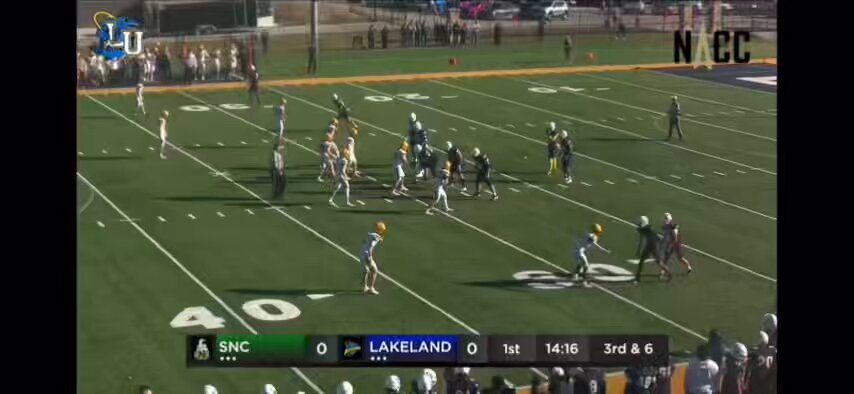
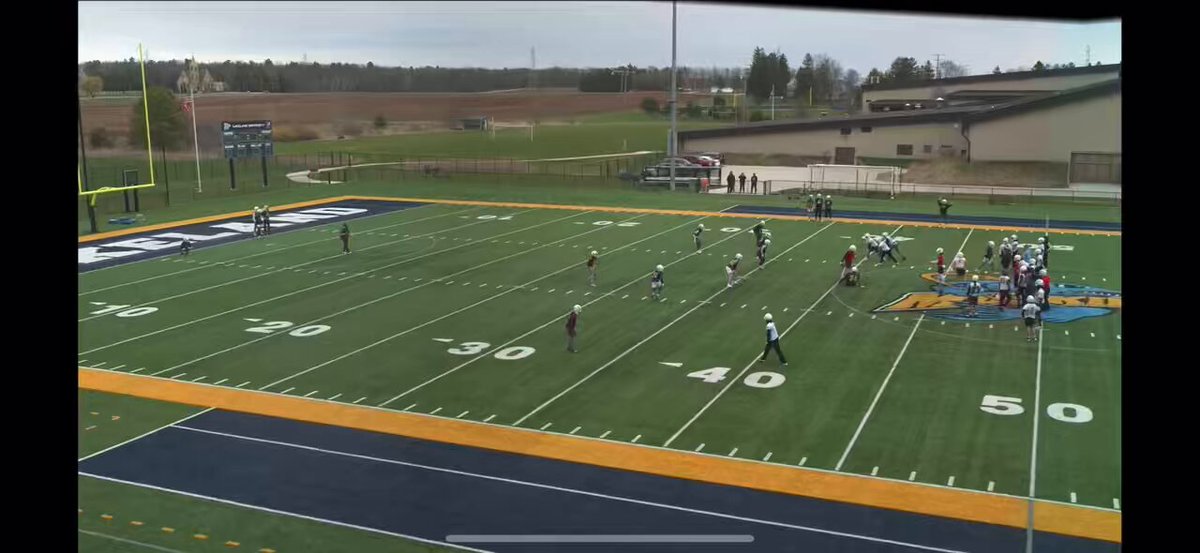
Finally got my first Collegiate passing touchdown! Went 3/5 for 72 yards. Can’t wait for next season with @LUMuskieFB @LUCoachBruton @LUCoachFeest @LUCoachLock #Rollskiesss
4
1
24
1,445
Cy Lumbano-Larson retweeted

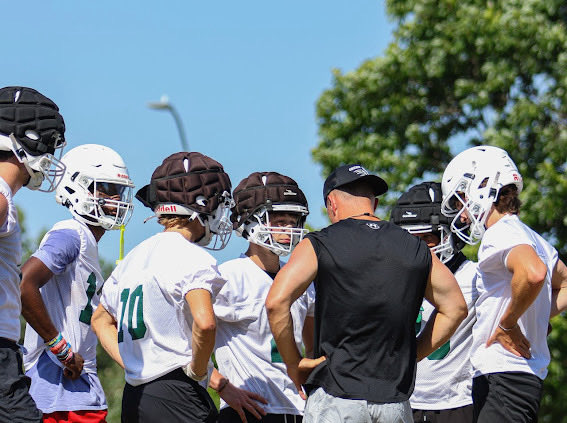
Starting yr 10 as Head Coach tomorrow night, some themes for summer:
🏈Trust the process & be 111% locked in on the moment
🏈Do not compare yourself or status with others (put blinders on).
🏈You’re either growing or decaying
🏈It’s okay to be different
🏈HAVE FUN…it’s okay!
1
4
41
1,917
Cy Lumbano-Larson retweeted

Jun 14
✍️ Visio-Quality Drawing on the iPad

7
12
186
48,528
Cy Lumbano-Larson retweeted

Jun 13
What if you could get Visio quality diagrams on an iPad?
It’s here:
2
8
108
31,161
Cy Lumbano-Larson retweeted
Jun 14
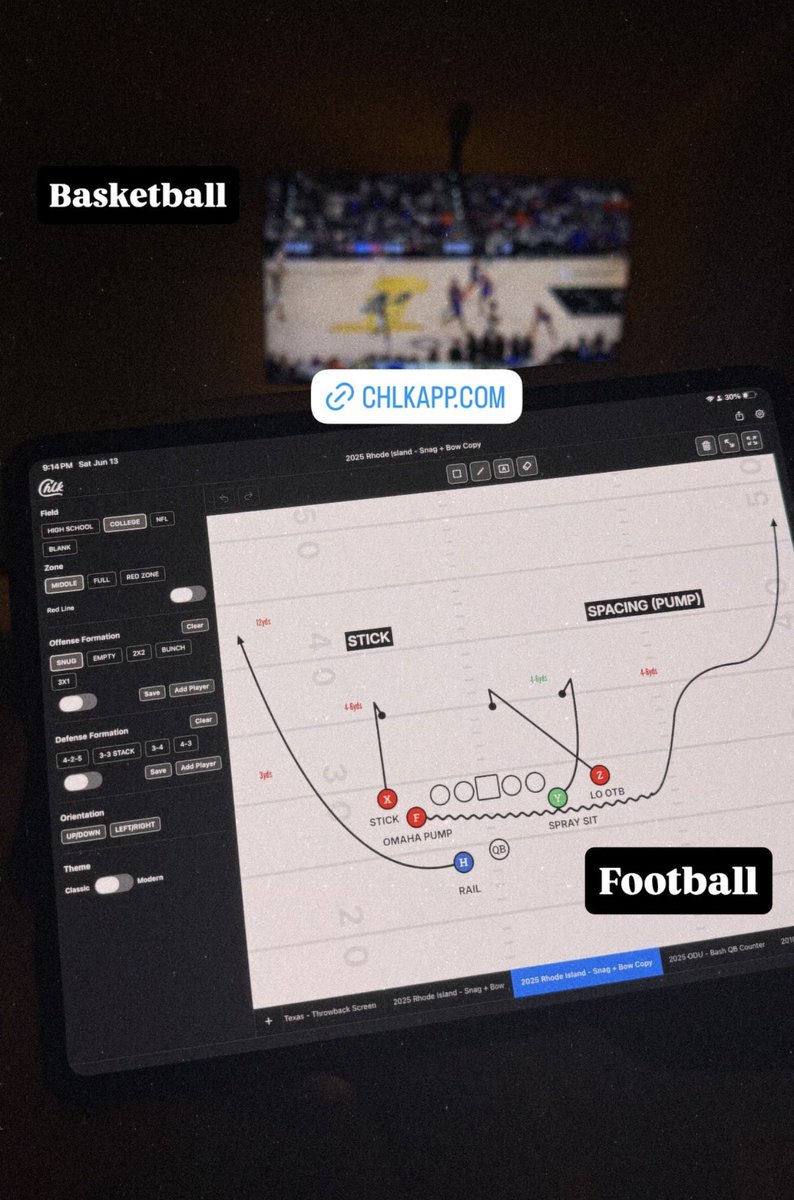
3 years ago we started building @chlkapp because diagramming plays shouldn't suck.
You should be able to achieve an NFL-Quality, Visio-Style Diagram from the iPad.
You should be able to draw by hand not just clicking a mouse.
Drawing up plays is the fun part - enjoy it!
I genuinely hope you enjoy it as much as I do. The goal was to build something I would WANT to use everyday and I think we did that.
@chlkapp | @R_Bates7
5
9
148
30,153
Cy Lumbano-Larson retweeted
Jun 13
Diagramming plays used to suck.
Now it’s the fun part.
19
54
894
457,536

Cy Lumbano-Larson retweeted

Jun 11
It's summer, and that means camp season. One of our camp offerings is our @LUMuskieFB camp in July for youth entering grades 4-8. This will be the 20th edition of our fun three-day camp introducing techniques and fundamentals of the sport. More info ⤵️
lakelandmuskies.com/news/202…
2
6
258
Cy Lumbano-Larson retweeted
CANT WAIT TO WATCH/LISTEN/LEARN!
youtu.be/ddc5w7Mp8-E?si=XwNJ…

Really enjoyed this episode on shallow concept with @Jackrabbits2026 ! Coach has great experience at the JUCO and HS level and will do great things for Mesa High. youtu.be/1enINx5HWC8?si=Mi_e… @Run_TheDamnBaII @AZFBnetwork @AzFBCoaches @CodyTCameron
2
1
8
2,349
Cy Lumbano-Larson retweeted
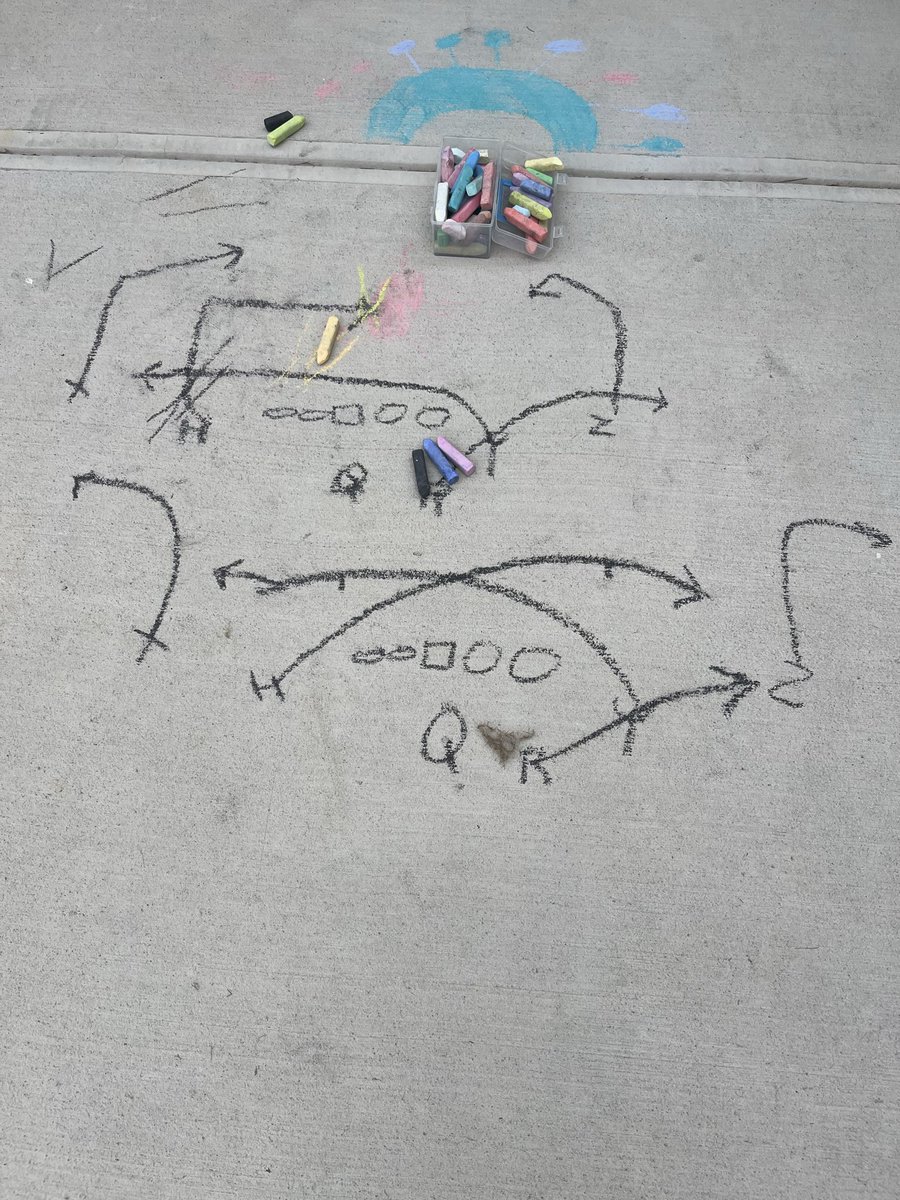
Teaching him young!! 🏴☠️🏴☠️🏴☠️
🏈Mesh
🏈Y- Shallow
3
2
37
2,083
Cy Lumbano-Larson retweeted

Jun 10
The World Cup begins tomorrow, and many will watch the matches. Soccer reminds us of something we must not forget: life is not a race to show off on our own, but a path we learn to walk together. Anyone who does not know how to pass the ball, even if they have talent, has not yet understood the game. Anyone who does not know how to live with and for others has not yet understood life. #ApostolicJourney
1,524
15,265
102,004
5,476,907
Cy Lumbano-Larson retweeted

Jun 10
Outlaw (s/o @stanbedwell) was great for us last year. Get your dudes in space & let em work. @TalinBaker
2
12
1,439
Cy Lumbano-Larson retweeted

I had a great time kicking at The Swamp @RaginCajunsFB camp this last week. Thank you @coachtfountain and @CoachMGiuliani for having me! Here’s a 75 yd 4.0s KO from camp.
@ACPFootball17 @ACPAthletics @RecruitingACP @JRutt_4 @HKA_Tanalski @Briggs_bourg @MovePerformance @steverausch17 @AZKicking @__Coach_D @GP_Recruiting @Coach_LaPlante @MentalGamePro
9
34
2,477
Cy Lumbano-Larson retweeted

Jun 9
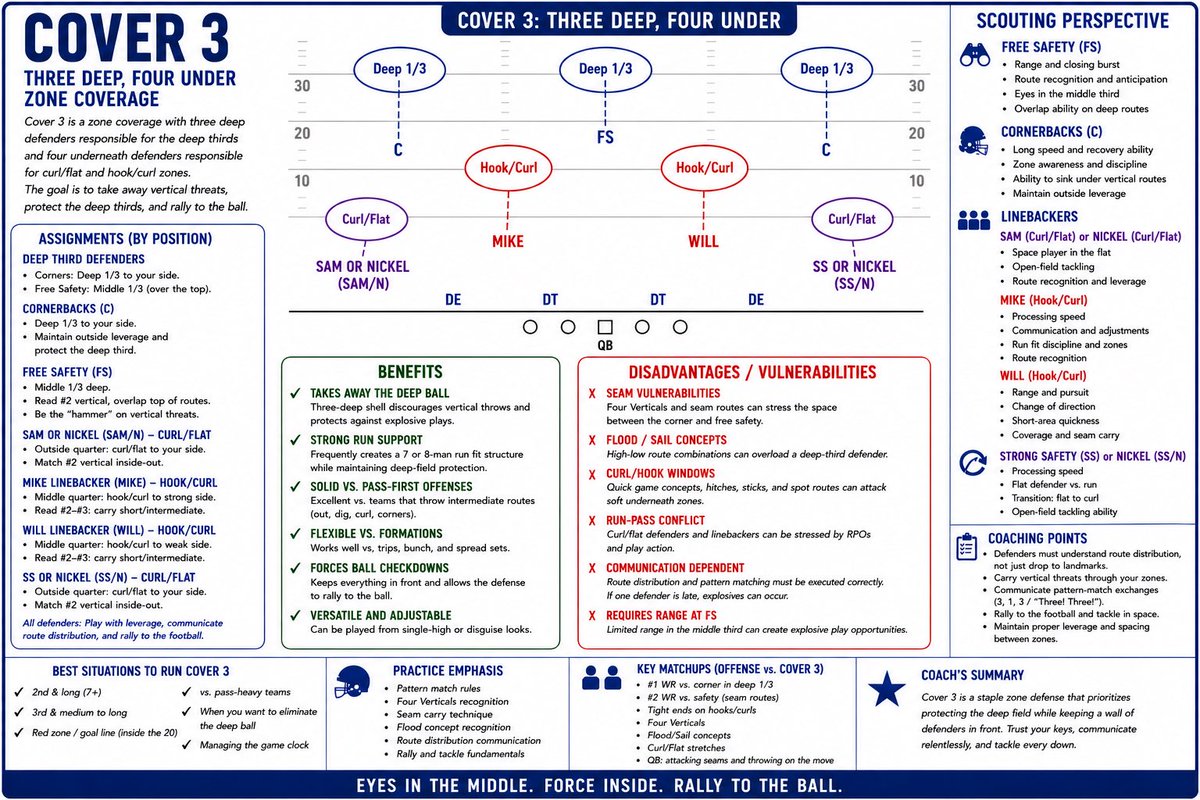
Cover 3 remains one of the most widely used coverages in football because it provides a strong balance between defending the pass and supporting the run
With three defenders responsible for the deep thirds and four underneath defenders controlling the Hook/Curl and Curl/Flat zones, the coverage is designed to eliminate explosive plays, keep the ball in front of the defense, and force offenses to execute long, mistake-free drives
From a coaching perspective, success in Cover 3 comes down to discipline, communication, route recognition, and proper zone spacing
Defenders must understand route distribution, carry vertical threats through their zones, and rally to the football once the ball is thrown underneath
Modern Cover 3 concepts often incorporate pattern-match principles, requiring defenders to react to routes rather than simply dropping to landmarks
From a scouting perspective, Cover 3 places a premium on instincts, awareness, range, and football intelligence. Evaluators are looking for defenders who can process information quickly, play with proper leverage, and consistently execute their assignments within the structure of the coverage
🔹 Key Coaching Points:
• Eliminate explosive plays and force offenses to be patient
• Maintain proper leverage and spacing between zones
• Carry vertical routes and communicate route distribution
• Rally to the football and tackle in space
• Match route concepts without compromising zone integrity
🔹 What Scouts Are Evaluating:
• Safety range, instincts, and anticipation
• Cornerback discipline and ability to protect the deep third
• Linebacker route recognition and seam-carry ability
• Curl/Flat defenders who can transition quickly between run and pass
• Overall communication, awareness, and football IQ
🔹 Common Cover 3 Stress Points:
• Four Verticals and seam routes
• Flood and Sail concepts
• Curl/Hook windows underneath
• RPOs and play-action conflicts
• Communication breakdowns versus motion and formations
3
24
187
11,980
Cy Lumbano-Larson retweeted

Jun 8
Georgia Tech featured
1) Gap Screen
2) Wide Zone Solid Screen
3) Trap Screen (Outside and Inside WR)
4) DBP Tunnel Screen
They had a really nice Wide Zone Solid screen package that they used off of both Pistol Run Fake, and, off of Jet Sweep.
Jun 8

For anyone wondering what SMU did
#1 Stack/Condensed OWR Now Screen
- 2 and 3 Man Stacks/Bunches
#2 Trap Screen (usually to OWR)
#3 Gap Screen (usually off of Power)
#4 Tunnel Screen (DBP Screen)
1
1
50
11,511
Cy Lumbano-Larson retweeted
Jun 8
For anyone wondering what SMU did
#1 Stack/Condensed OWR Now Screen
- 2 and 3 Man Stacks/Bunches
#2 Trap Screen (usually to OWR)
#3 Gap Screen (usually off of Power)
#4 Tunnel Screen (DBP Screen)
Jun 8

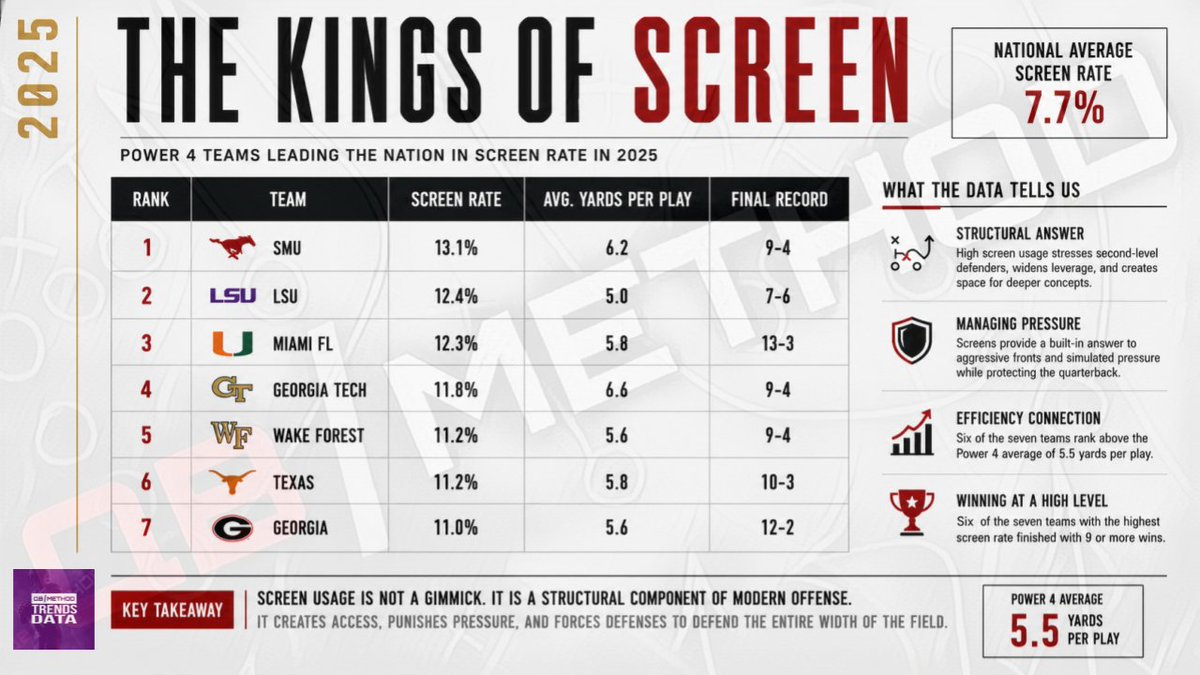
Screens are not gimmick offense.
In 2025, the Power 4 average screen rate was 7.7%. SMU, LSU, Miami, Georgia Tech, Wake Forest, Texas, and Georgia were all at 11% or higher.
That tells us something about how some teams choose to utilize screens to neutralize opponents.
The screen game is a structural answer. It slows down the rush, creates access touches, stresses second-level defenders, and forces perimeter players to tackle in space.
It also protects the quarterback from bad situations. When pressure indicators show up, when the box gets heavy, or when the defense majors in chaos, the screen game gives the offense a built-in efficiency answer.
The best offenses are not choosing between explosives and control. They are sequencing both.
Screens slow down the defense, often protecting drop back passes and core runs, while getting touches to your best players.
1
8
62
30,910
Cy Lumbano-Larson retweeted

Jun 8
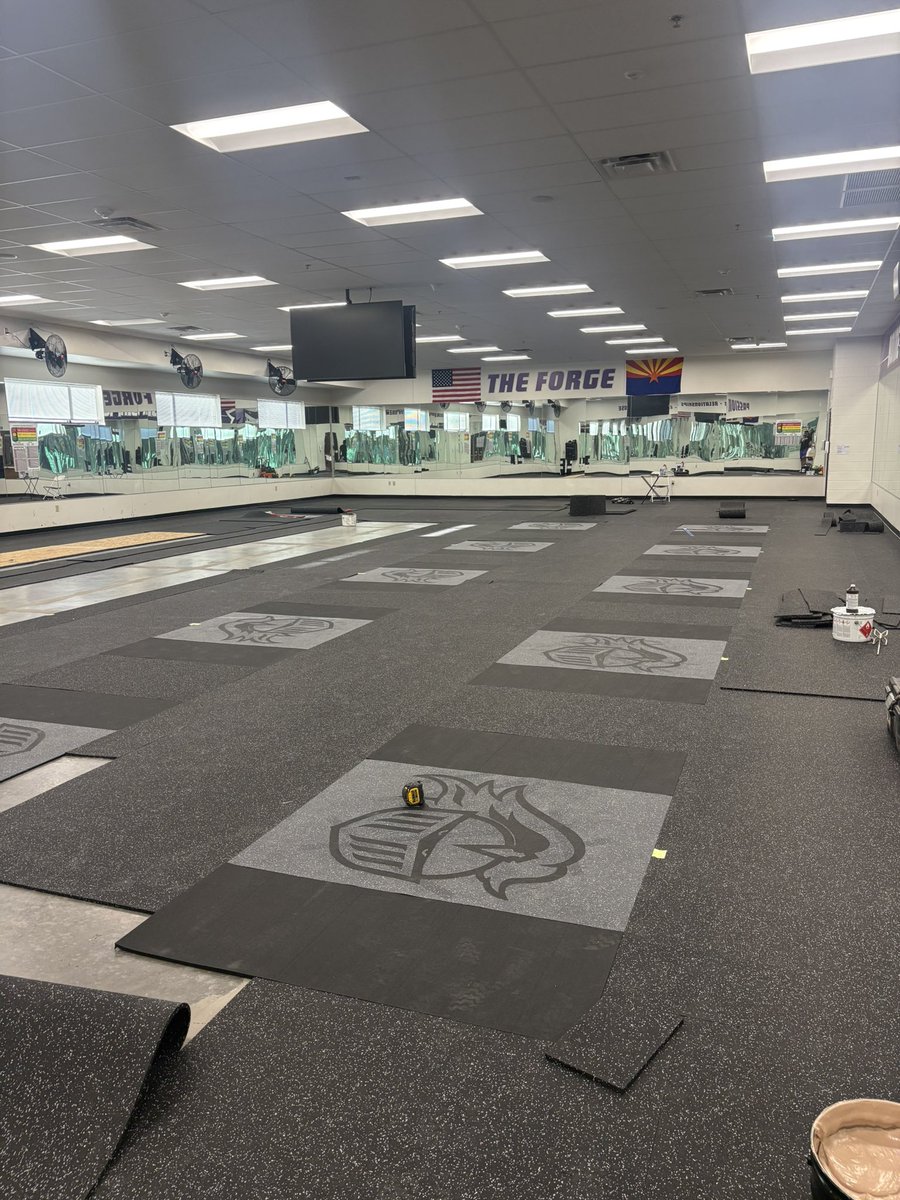
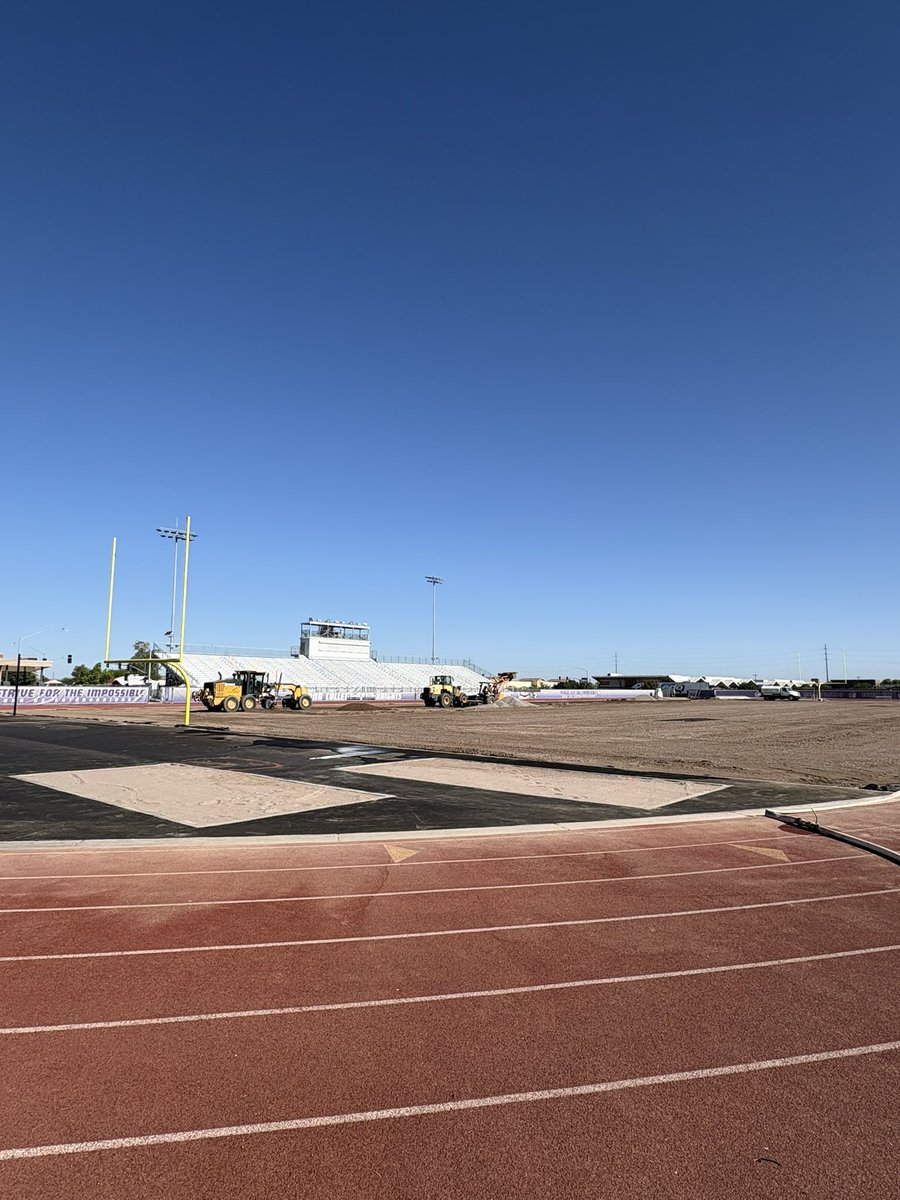
HUGE upgrades coming to ACP! New weight room floors with custom logo platforms and turf game field being installed with TWO jump pits in the endzone. Truly, second to none! @CUSDAthletics @ACPAthletics
11
56
4,090
Cy Lumbano-Larson retweeted

23 Oct 2023
Check out my highlight - hudl.com/v/2MFgyh
Great season at WLA , with the unfortunate loss Friday we finished 8-2 , here are some of my season highlights
1
2
6
738
Cy Lumbano-Larson retweeted

Jun 7
2025 North Texas — Stick Family Variations
1
22
227
44,846
Cy Lumbano-Larson retweeted

Jun 6
REAL FOOTAGE OF OMAHA BEACH | 4K COLORIZED
37
1,898
11,743
597,685
Cy Lumbano-Larson retweeted

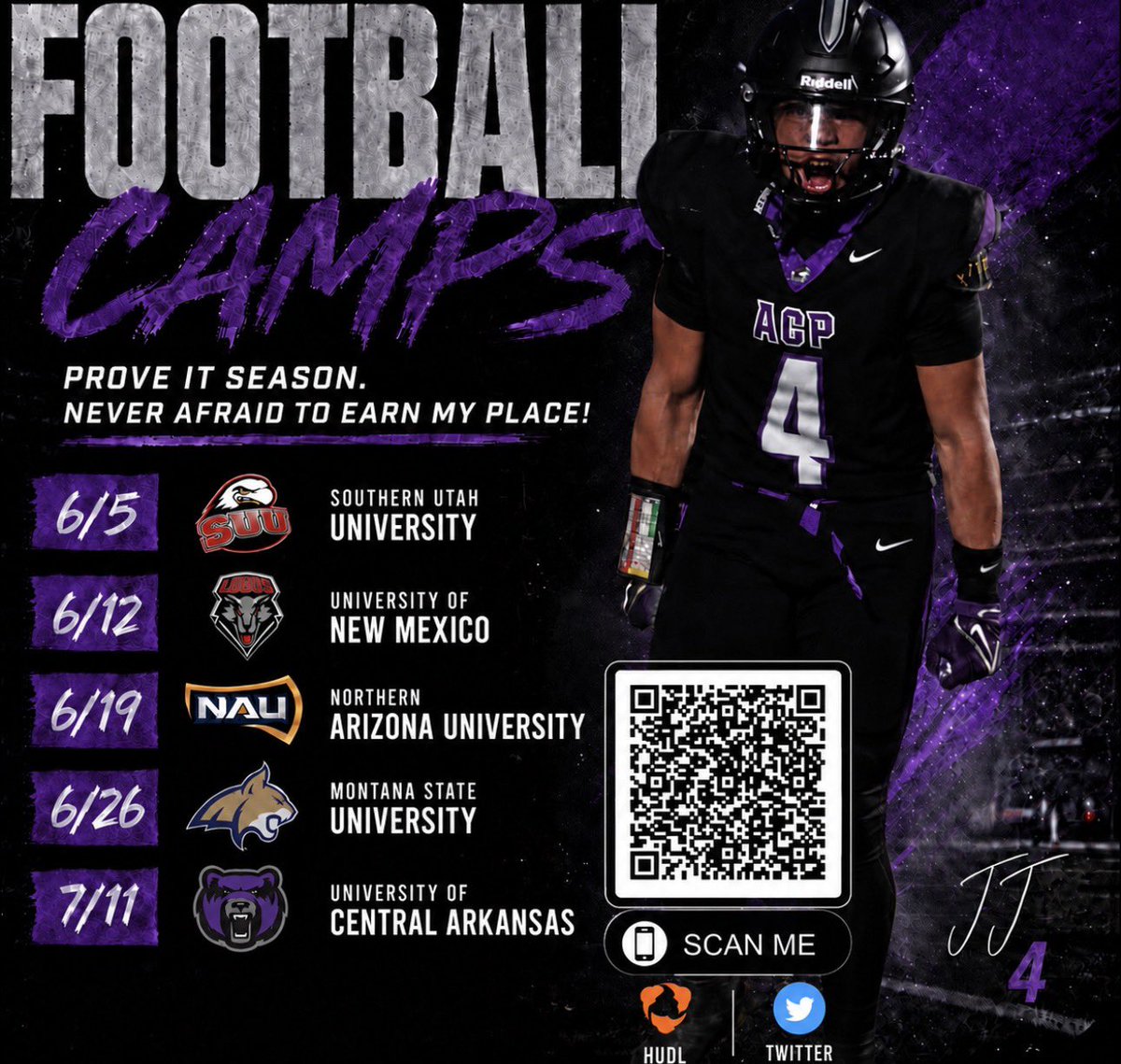
Appreciate the personal invites! I’m excited for the opportunity to come compete, showcase my skills, and earn a chance to play at the next level. Looking forward to getting out there and working with you all!
@Horne34Life
5
13
251