
I love cool tech
Joined July 2022
- Tweets 2,954
- Following 191
- Followers 246
- Likes 4,480
95 Photos and videos










Apr 13
Testnet > Mainnet soon 💪

The AegisPQ upgrade has now activated on the testnet!
This upgrade brings:
- MLDSA87 Post-Quantum Signatures
- DVG for improved on-chain governance
- Extended 48-byte address format
27

The Ixios AetherForge Testnet is now live after a successful genesis. This ephemeral testnet is fundamental to ensuring security and robustness prior to the AegisPQ Upgrade activation on the mainnet.
In less than 24 hours, AegisPQ will activate on this testnet!
ixios-af.ixoflow.io
9
23
46
1,121
daniel retweeted

Feb 24
We've just published a breakdown of the Foundation's expenditures and grants to date. It covers security audit, infrastructure, development, integrations, deliverables, and more.
See the Financial Transparency Report below:
ixiosfoundation.org/transpar…
4
7
24
440
daniel retweeted

5 Nov 2025
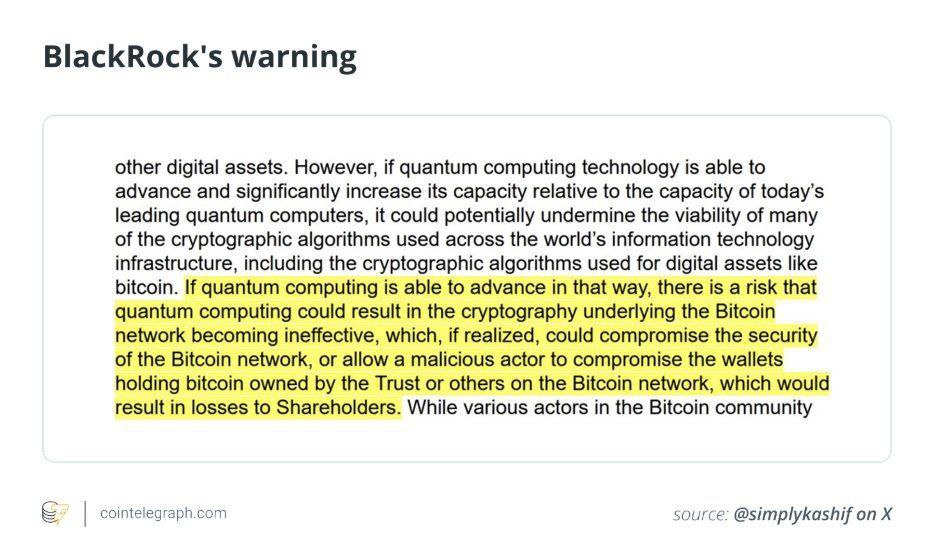
This is a likely scenario. Bitcoin has upside, but for the first time since its inception we are seeing tangible evidence that BTC security *might be* compromised.
$BTC is perceived as a risk asset, the intensifying rumor of the relevance of QCs makes *them* uncomfortable.
5 Nov 2025

Institutional buying is drying up. Treasury Company flywheel slowing (mNAV collapse). What could be the driver? Why is interest falling? Why are long-term holders nuking their holdings? Could it perhaps be that Quantum breaking Bitcoin years in advance of every other encrypted system is discounting long-term value?
We need to upgrade Bitcoin ASAP.
10
6
16
930
19 Sep 2025
$IXIOS is officially listed on coinstore, first of many listings as the goal is to be listed everywhere.
3
104
daniel retweeted

17 Sep 2025
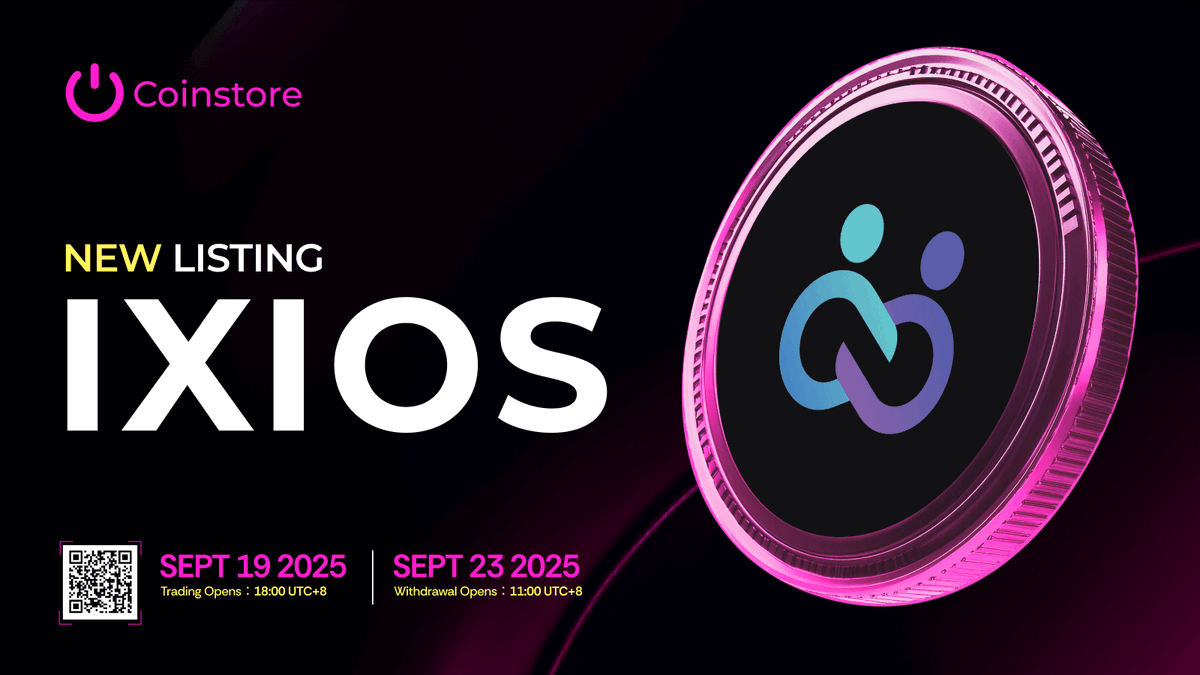
🪐 Coinstore New Listing: $IXIOS 🛰️
@ixios_io
💠 Trading Pair: $IXIOS/USDT
💠 Trading Opens: 19 Sept 18:00 (UTC 8)
💠 Deposit Opens: 23 Sept 11:00 (UTC 8)
💠 Withdrawal Opens: 23 Sept 11:00 (UTC 8)
🔗 More details: support.coinstore.vip/hc/en-…
Official Website: ixios.io
Official Telegram: t.me/ixios_io
75
72
109
6,232
daniel retweeted
22 Aug 2025
Regardless of what the ETA to have a CRQC is we need to be prepared way ahead.
Reaching consensus on what the best solution is requires time.
Big companies, banks in general are upgrading to PQC.
The *public* informations tell us QCs are a thing.
What about the non public ones?
21 Aug 2025
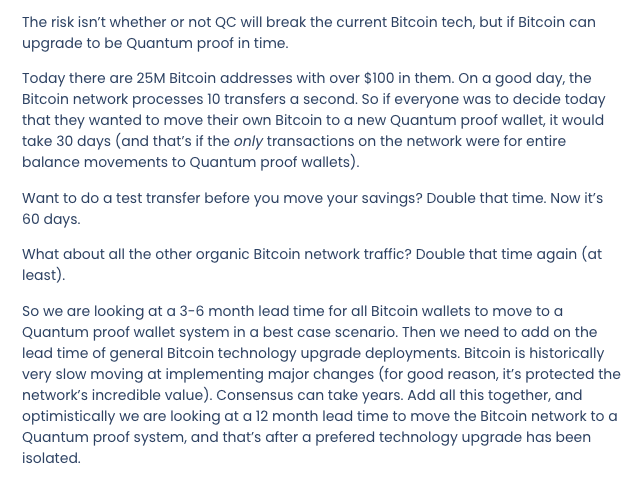
Quantum Computing is Bitcoin's biggest existential threat. We have a 12 month lead-time to solve it, once a solution has been selected. Which are we choosing?
9
21
50
1,543
10 Aug 2025
Great listen, knowledge on quantum cryptography and advancement is a must, especially since its in every sector
10 Aug 2025

Might want to listen @IanSmith_HSA
Discussing quantum advancements, companies at the forefront, revenue models and the risk on Cryptocurrencies.
x.com/i/spaces/1BRKjmgYbAWxw
17
Massive upgrade coming for Ixios in IxiosSpark V1.1
$IXIOS

9 Aug 2025
A huge protocol advancement is coming for $IXIOS V1.1
Conceptualized for years, engineered to greatly enhance blockchain performance
Every serious protocol will look at it and potentially there's gonna be an interest spike which will lead to blockchains racing to integrate
16
35
74
4,534
daniel retweeted
9 Aug 2025
A huge protocol advancement is coming for $IXIOS V1.1
Conceptualized for years, engineered to greatly enhance blockchain performance
Every serious protocol will look at it and potentially there's gonna be an interest spike which will lead to blockchains racing to integrate
16
19
48
6,077
The Roadmap to Quantum-Resistance
As the Ixios blockchain network continues to hum forward, let's review some of the key development steps required to achieve a truly quantum-resistant blockchain.
Post-Quantum Cryptography (PQC): All digital signatures must use PQC, such as CRYSTALS-Dilithium or SPHINCS
Extended Address Format: Addresses must be sufficient size to achieve post-quantum security.
Peer Discovery Protocol: The p2p discovery protocol must use PQC key derivation or signatures.
Secure Key Management: Wallet encryption must not rely on encryption such as AES-128, and instead must use a quantum-safe alternative.
With the foundational elements in place, we look ahead to the network's evolution.
17
33
84
1,028,630
daniel retweeted

30 Jun 2025
Some minor corrections. #BIP360 is a solid plan for Bitcoin migration to safety. The exposed 6.2 million BTC is over 35%.
Ethereum won't be able to force migration without destroying a lot of wallets. Vitalik demands a self destruct button.
Algorand does not have a head start, they have a harder road ahead because data is owned and managed by legacy addresses.
Only PQC chains are $CELL $QRL $MCM $qBTC and coming soon, $QEVM. Ixios is mid migration and I look forward to their success. CKB has a wallet, but doesn't appear to understand what that means and they advocate that ECC is actually PQ.
cryptonews.com/news/quantum-…
17
18
67
4,045
Why Quantum Computing Threatens Current Cryptography
In modern digital security, everything from online banking to encrypted messages relies on mathematical problems that are easy to do in one direction, but hard to reverse without a key. Two main systems used today are:
RSA (Rivest-Shamir-Adleman): Based on the difficulty of factoring large numbers.
ECC (Elliptic Curve Cryptography): Based on the difficulty of solving elliptic curve discrete logarithms.
These systems are currently secure against classical computers, but not against future quantum computers.
1. Breaking Encryption: Shor's Algorithm
Quantum computers can efficiently run Shor's algorithm. This means:
RSA and ECC would be broken.
Digital signatures used to verify identity and transactions, can be forged.
Key exchanges used to start a secure connection, can be intercepted.
Confidential data, like login credentials and encrypted messages, can be decrypted.
This would undermine the entire security layer of:
- Mobile banking
- E-commerce platforms
- Fintech services
- Cryptocurrencies and blockchain applications
2. Retroactive Risk: Harvest Now, Decrypt Later
Even though quantum computers aren't breaking encryption today, attackers can store encrypted data now and decrypt it later when quantum computers become viable.
This is known as the "store now, decrypt later" attack.
What’s at risk:
- Personal emails and private messages
- Health records
- Financial transactions
- Corporate secrets
- Government communications
In short, anything encrypted with classical encryption today, can be compromised in the future.
3. Blockchain Vulnerability
Blockchains like Bitcoin and Ethereum depend on ECC for wallet security and transaction validation:
Each wallet is tied to an ECC keypair.
To spend or transfer funds, you sign transaction messages with the private key.
A sufficiently large quantum computer could:
Derive private keys from public keys
Forge digital signatures
Steal funds directly from wallets
Why PQC (Post-Quantum Cryptography) Matters
PQC is a new set of cryptographic algorithms designed to be secure against quantum attacks. These algorithms are based on mathematical problems not vulnerable to known quantum algorithms.
PQC is still being standardized and adopted, creating a dangerous window of vulnerability.
13
38
84
2,387
daniel retweeted
9 May 2025
🔥COMING SOON ON COINSTORE🔥
👏Welcome: @ixios_io $IXIOS👏
👇Watch this space for more👇
🌎Official Website: ixios.io
👩👦Official Telegram: t.me/ixios_io
125
141
186
7,829
daniel retweeted

4 Apr 2025
$IXIOS getting ready for mainnet launch. Last chances to scoop before snapshot is taken. The future of quantum resistant layer 1 blockchains.
THIS IS GONNA BE LIT
10
5
19
591