
Husband, Father x6, attorney, Utah State Senator. My timeline is hockey, golf, baseball, USU sports, and Jesus Christ.
Joined February 2011
- Tweets 7,145
- Following 1,364
- Followers 6,489
- Likes 36,412
1,230 Photos and videos



Pinned Tweet

May 29
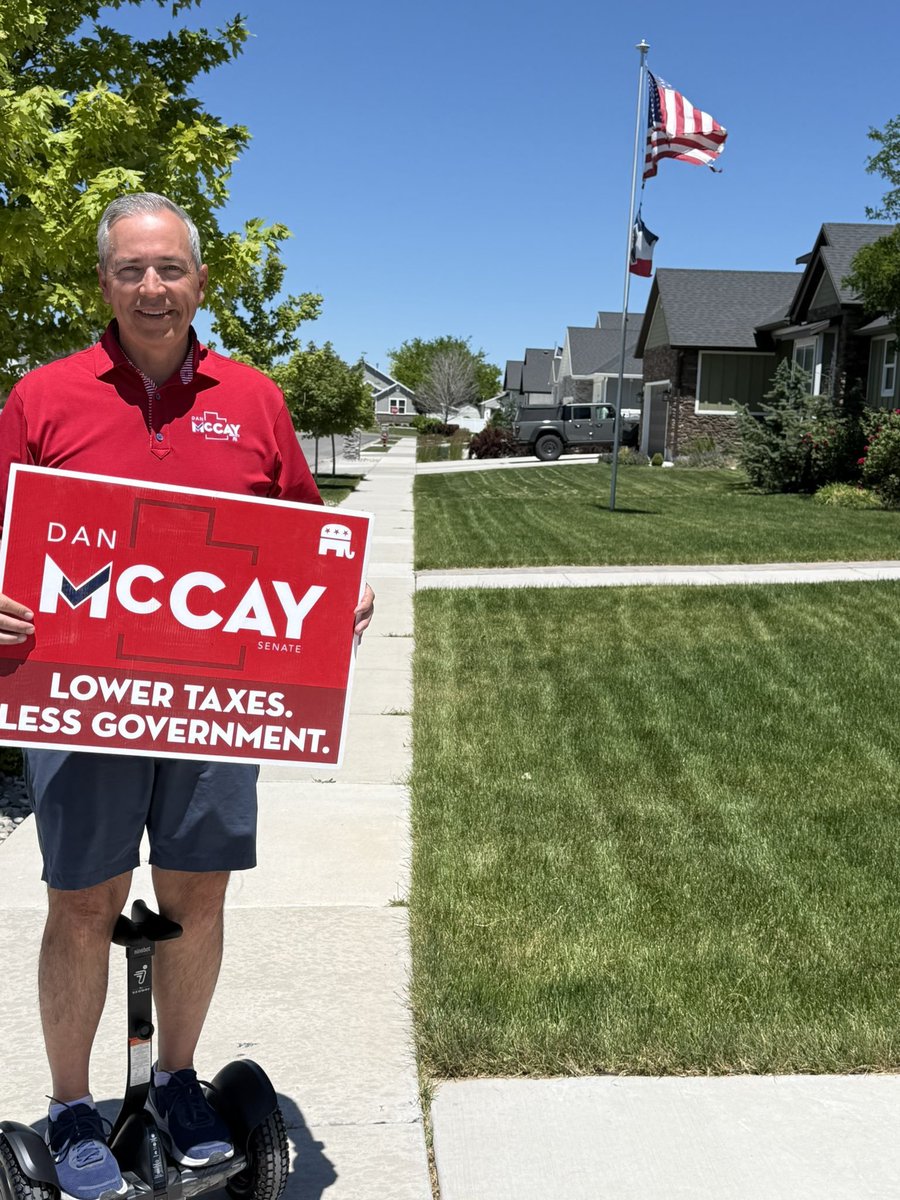
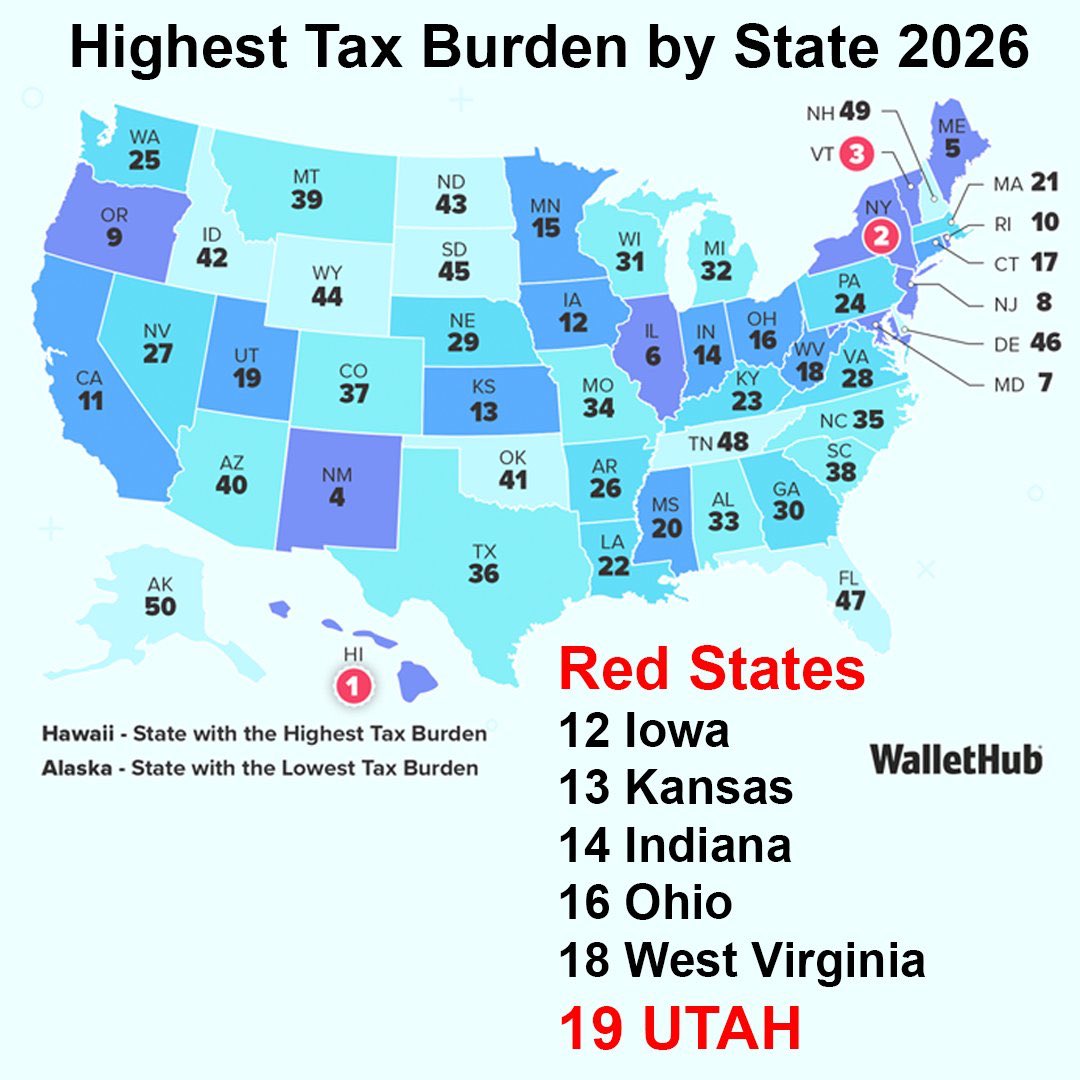
I'm the only candidate in this race with a proven record of delivering tax relief and getting things done for you.
Everywhere I go, people talk about how life keeps getting more expensive. I was raised by a hard-working single mom and now I have a family of my own. Protecting the quality of life for Utah families isn't politics, it's personal.
That's why I fought to deliver over $1.5 billion in tax relief, pushed back against rising property taxes, and supported policies that strengthen schools and create good-paying jobs right here in Utah. I'll continue working to lower taxes and make Utah stronger and more affordable for families today and generations to come.
I hope to earn your vote.
22
14
98
21,863
The judicial nomination process is likely the most important role of the Senate. If you'd like to learn more, you can tune in here:
le.utah.gov/committee/commit…

Just listened to the hearing this morning. Very well done. I don’t remember a confirmation hearing with so many questions focused on judicial philosophy. In my opinion, that’s the most important question. Looking forward to Monday.
2
230
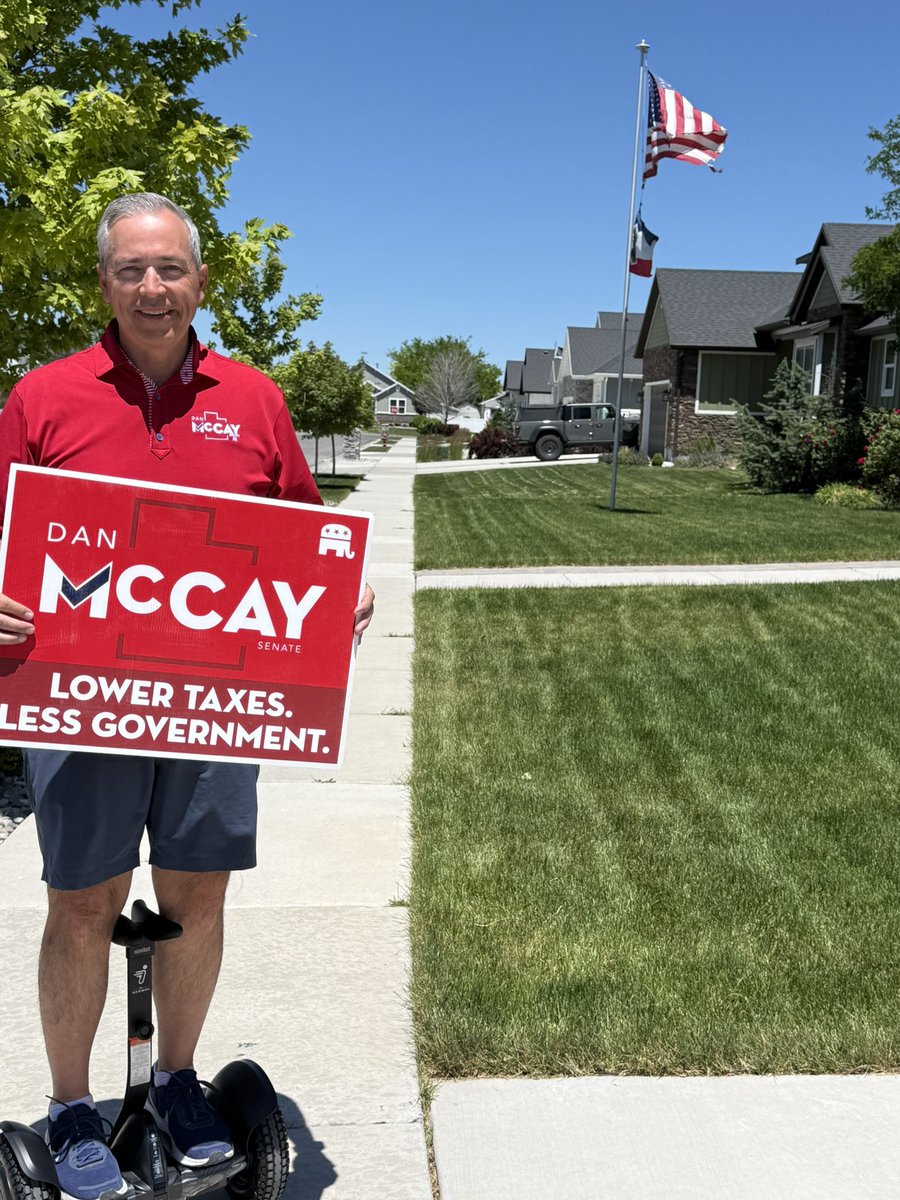
Celebrated Team McCay knocking 17,000 doors today by crashing the Segway and breaking a rib.
Don't worry, the Segway is ok.
Please don't make me laugh! (Photo @TeeplesCY)
4
32
1,059
Daniel McCay retweeted

Spent some time knocking on doors as Senator McCay’s junior companion. Smart guy. Good guy.

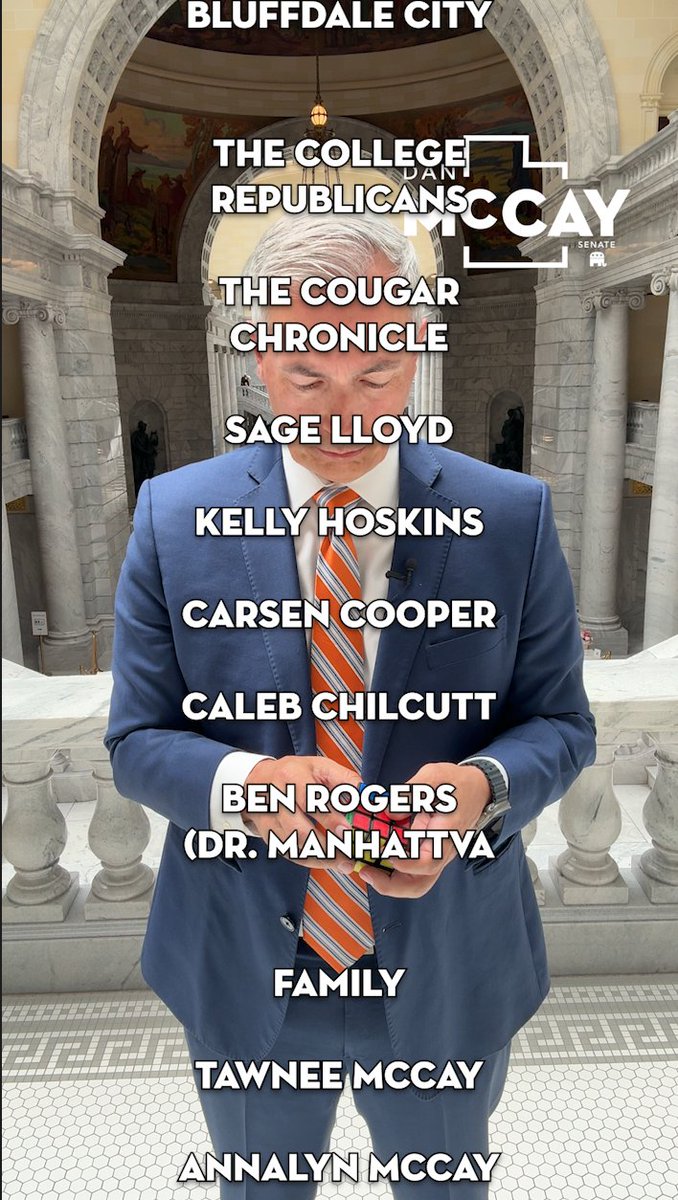
Apparently we’re doing endorsement videos now...
While others are focused on collecting endorsements, I’m focused on solving problems.
But here are some of mine if you care about them. #utpol
3
2
41
2,519
Apparently we’re doing endorsement videos now...
While others are focused on collecting endorsements, I’m focused on solving problems.
But here are some of mine if you care about them. #utpol
7
5
36
4,259
Jun 12
On the docket this morning is the first of 2 confirmation hearings for Utah Supreme Court nominees, Jay T. Jorgensen and Stephen P. Dent.
What questions would you ask?
(Can’t be partisan or about issues before the court).
14
2
11
5,418
Jun 12
Jay Jorgensen’s beliefs on the values that a judge should have:
1 Open mindedness
2 Fairness/Impartiality
3 Promptness
2
1
479
Jun 12
“When a judge acts outside the scope of the judicial role they are stealing power from the people.” Jay T. Jorgensen
1
6
296
Jun 12
I can’t freaking wait until this is Utah! @RyanQualtrics
Jun 12

Downtown Raleigh watching the Hurricanes take a 3-2 game lead in the Stanley Cup Finals tonight.

1
9
419
Jun 12
My first house was $97K in Logan, Utah. Today the red tape for building a house is more than my first house.
finance.yahoo.com/economy/po…
5
2
24
1,242
Daniel McCay retweeted
May 29
I'm the only candidate in this race with a proven record of delivering tax relief and getting things done for you.
Everywhere I go, people talk about how life keeps getting more expensive. I was raised by a hard-working single mom and now I have a family of my own. Protecting the quality of life for Utah families isn't politics, it's personal.
That's why I fought to deliver over $1.5 billion in tax relief, pushed back against rising property taxes, and supported policies that strengthen schools and create good-paying jobs right here in Utah. I'll continue working to lower taxes and make Utah stronger and more affordable for families today and generations to come.
I hope to earn your vote.
22
14
98
21,863
Jun 10
Dear Congress,
Social Security insolvency in 2032 is a threat to this country. Please fix it.
washingtonpost.com/politics/…
Thank you for your attention to this matter.
4
2
19
619
Jun 9
This happens every day in the Church of Jesus Christ of Latter Day Saints.

2
1
9
514
Daniel McCay retweeted

The Conservative Case for Dan McCay
If conservatives are going to judge Dan McCay by his record, they should judge the whole record.
McCay is seeking re-election to the Utah Senate, and like any long-serving legislator, he has votes that make some grassroots conservatives frustrated. SB-54 will always be near the top of that list.
But the conservative case for McCay does not rest on one vote from 2014. It rests on a broader legislative record that is recognizably conservative in several of the areas Utah voters care about most: taxes, property rights, parental authority, religious liberty, school choice, pro-life policy, and resistance to government overreach.
The clearest part of McCay’s record is taxes.
Over the last several sessions, Utah has repeatedly cut taxes, and McCay has been one of the key legislators involved in that work. In 2026, he sponsored SB-60, which reduced Utah’s income and corporate tax rate from 4.5 percent to 4.45 percent. That may sound modest, but it is part of a larger pattern of continued tax relief in a state that has maintained strong reserves and a relatively disciplined budget.
For conservatives, that is a serious point in his favor.
Tax policy is not only about numbers on a spreadsheet. It is about whether government views the people’s money as something it is entitled to keep or something it should return when it can. McCay’s record places him firmly on the taxpayer side of that question.
The same pattern shows up in his work on government overreach.
McCay has repeatedly pushed for stronger legislative oversight of agencies, administrative rules, emergency powers, and surveillance. His record includes bills dealing with administrative rule reauthorization, general oversight, public surveillance, and pandemic-era public health orders.
That is one of the most conservative through-lines in his record. McCay’s view is that government power should be accountable, visible, and limited by elected representatives rather than buried inside agencies and bureaucratic processes.
That approach is especially relevant after COVID, when many Utahns saw how quickly emergency authority could reshape daily life, school, work, worship, and family routines. McCay was one of the legislators who pushed back against that kind of permanent emergency posture.
His property-rights record also deserves attention.
McCay has carried and supported legislation dealing with utility easements, public infrastructure districts, right-of-way disposal, and local ordinances that impose burdens on property owners. In each case, the theme is similar: property owners should not be casually overridden by cities, agencies, or infrastructure schemes that shift costs and control away from the people who actually own the land.
That record will appeal to conservatives who believe property rights are foundational, not decorative.
Then there is the family-policy side of McCay’s record.
McCay has supported policies aimed at giving parents more authority over minors’ online lives. Utah’s social media legislation, including SB-152, was built around the idea that parents should have more control over children’s access to social media platforms, direct messages, nighttime use, data collection, and online harms.
Reasonable conservatives can debate the best way to regulate technology. But the principle behind the bill is easy to understand: parents should have more power than platforms.
That same family-centered instinct appears in McCay’s support for homeschooling protections, educational choice, adoption reforms, and religious liberty in schools. He has supported efforts to protect homeschooling families and has backed a vision of education that gives families more room to make decisions outside the one-size-fits-all district model.
For religious conservatives, his support for religious curriculum and student religious expression is also significant. McCay has argued that public education should be able to teach the historical role of religion and religious liberty in American constitutional government, and that students should not be penalized for expressing religious beliefs in schoolwork.
His pro-life record is also clear. McCay sponsored Utah’s SB-174, the abortion prohibition bill that barred elective abortions with limited exceptions after Roe v. Wade was overturned.
That tells us something important about his worldview.
McCay’s conservatism is best understood as limited-government social conservatism. He wants government restrained when it interferes with taxpayers, property owners, parents, families, and religious expression. He is also willing to use state power on moral questions involving unborn life, children, and the family.
Some libertarians will see tension there. Many religious conservatives will see coherence.
That does not erase SB-54. It does not answer every criticism. It does not mean McCay has never made a mistake or taken a position that frustrated the grassroots.
But it does mean the conservative case for Dan McCay is real.
He has cut taxes. He has defended property rights. He has pushed back on administrative overreach. He has supported parents, homeschoolers, religious expression, school choice, and pro-life legislation.
Voters can weigh the whole record.
And the whole record is much more conservative than his critics often admit.
6
5
27
1,727
Jun 8
Never attribute to malice that which is adequately explained by stupidity
- Hanlon’s Razor

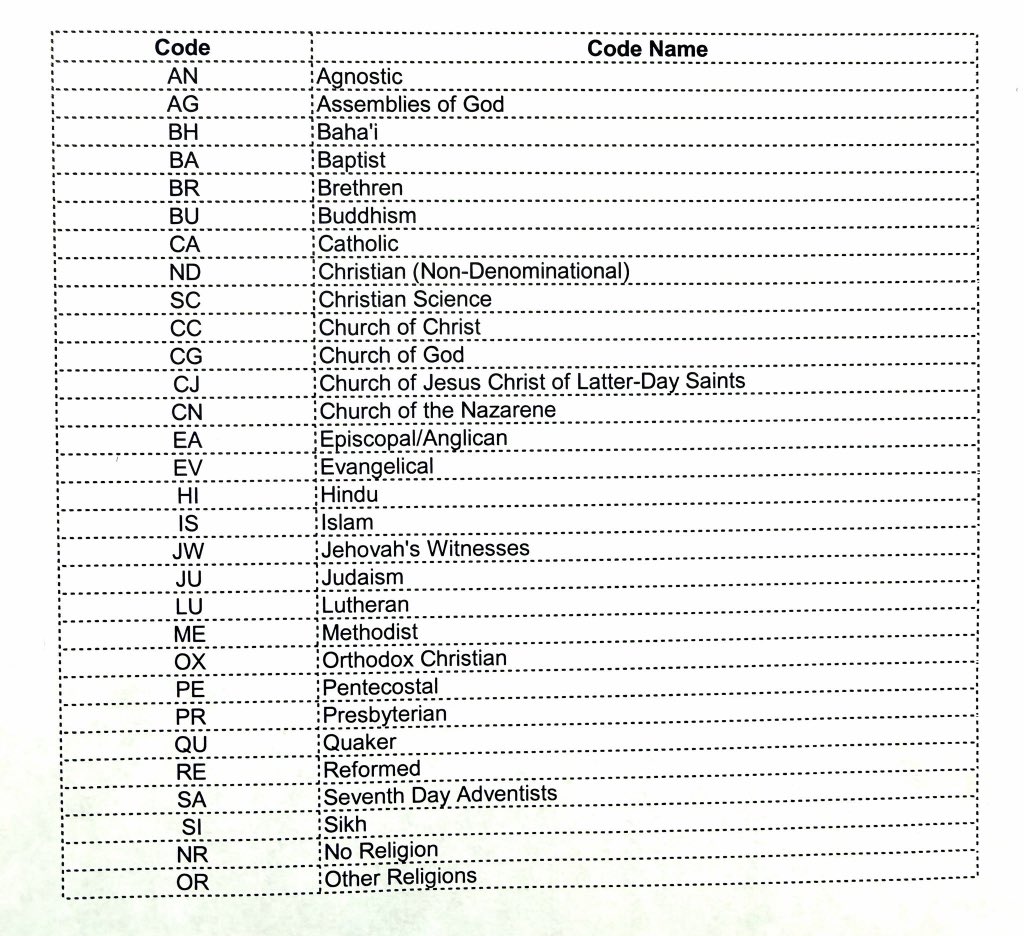
Last week, a proposed list of simplified faith codes was released to the media. The Pentagon list included redundant and unnecessary labeling, and the mistake has been fixed.
The goal of this effort is to simplify a previously out-of-control “belief” coding system that had ballooned to over 200 codes.
In order to clarify the work of chaplains, and simplify the work of commanders, the Pentagon has consolidated and simplified the list to roughly thirty codes — using the previously used labels for faiths.
The Pentagon’s job is not to adjudicate theological debates, but instead to ensure sincerely-held faith is respected and encouraged in our ranks.
Below is the updated Religious Affiliation Codes (RAC) list:
2
2
19
1,241
Jun 8
"When I first got elected, I thought I knew everything. Now that I've been in office for a while, I realize I wasn't even asking the right questions."
- Norm Bangerger, Former Utah Governor and Former Speaker of the House of Representatives
2
15
612
Jun 7
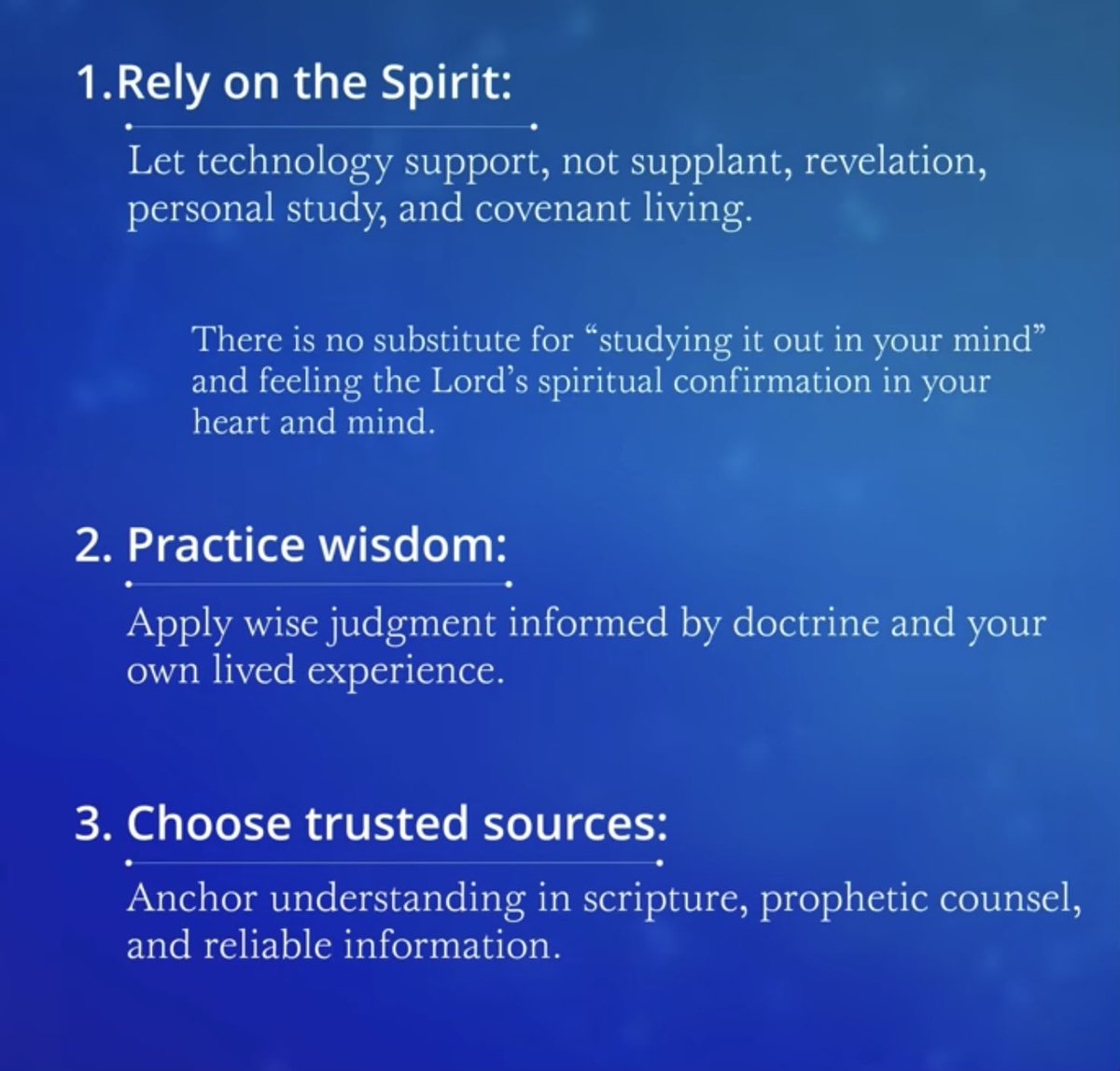
Elder @GerritWGong provides these three principles to help guide people of faith through this age of AI. I recommend the full video.
youtu.be/Ts5Z64A0Vv4
1
13
420
Daniel McCay retweeted

Jun 7
Read the Book of Mormon.
Cover to cover.
Pray about it, asking sincerely to know whether it’s true (the final chapter provides specific guidance on this point).
Then tell me whether Latter-day Saints believe in Jesus Christ.
Will you accept that challenge?
6,631
517
4,634
2,359,564
Jun 7
This is the way.
Thank you for your service @DanShaha!

I've waited a few days to say anything about the recent Department of War (DoW) decision to not list The Church of Jesus Christ of Latter-day Saints as a Christian religion. I wanted to make sure my opinion wasn't being driven by an emotional response.
I think it's a good thing. Initially, The Church of Jesus Christ of Latter-day Saints was listed as a Protestant Christian religion when it was recognized by the US Military. The way that religions are listed have a few second and third order of effects, specifically manning requirements for Chaplains and Chaplain assistants across the force.
When The Church of Jesus Christ of Latter-day Saints was listed as a Protestant Christian religion then, from the DoW standpoint, any Protestant Chaplain can meet the religious needs of LDS Service members. When it comes to manning requirements, an LDS Chaplain and a Protestant Chaplain become interchangeable, meaning that if an LDS service member is in an area that has the required number of Protestant Chaplains then there is no need and potentially no positions for LDS Chaplains at that location. Even if the majority of Christian-affiliated service members are LDS, as far as the DoW is concerned, their religious needs are being met by the Chaplains already assigned to that location.
Listing the LDS Church as a non-Christian religion means that the DoW now needs to ensure that they have a minimum number of LDS Chaplains among their ranks to meet specific religious needs. This opens up opportunities for promotion and advancement for LDS Chaplains currently serving, as well as a potential increased need for LDS Chaplains across the force.
Plus, and this is my opinion, Church leadership probably also had a say in how the LDS Church was listed by the DoW. The Government would have consulted Salt Lake, just like they would have consulted the Vatican and major Protestant associations, in ensuring their religion was accurately listed with the DoW. Otherwise it opens the government and DoW to lawsuits related to religious freedoms.

2
1
20
1,785