Joined May 2015
- Tweets 17,869
- Following 246
- Followers 196
- Likes 79,422
678 Photos and videos

Jun 15
💯
Jun 15

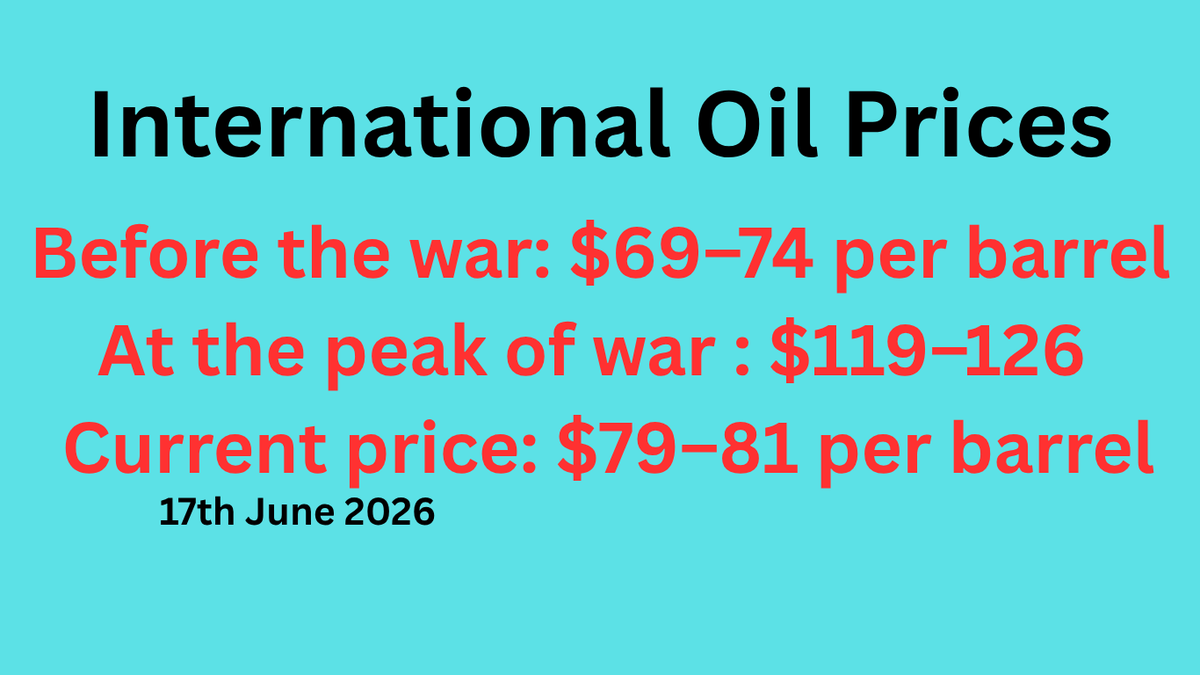
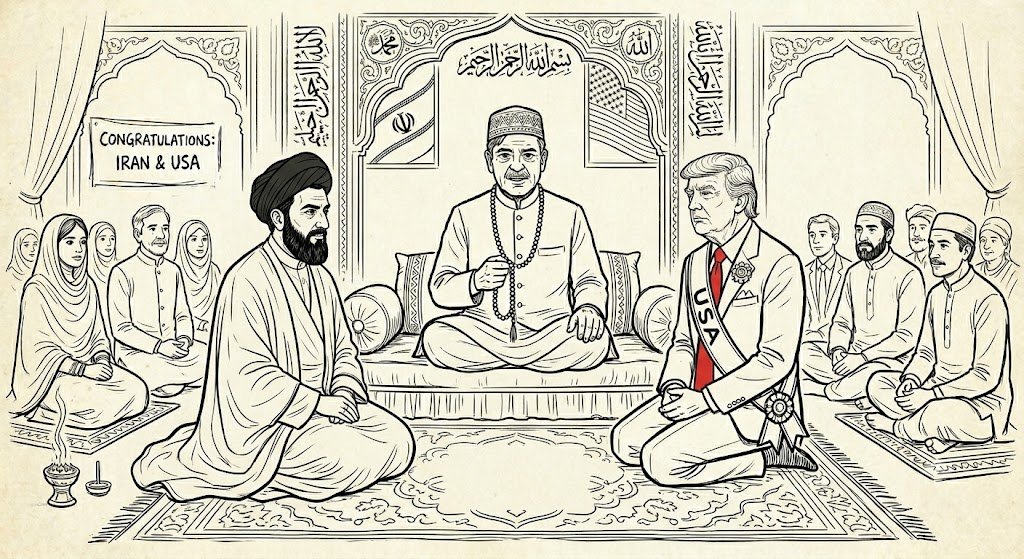
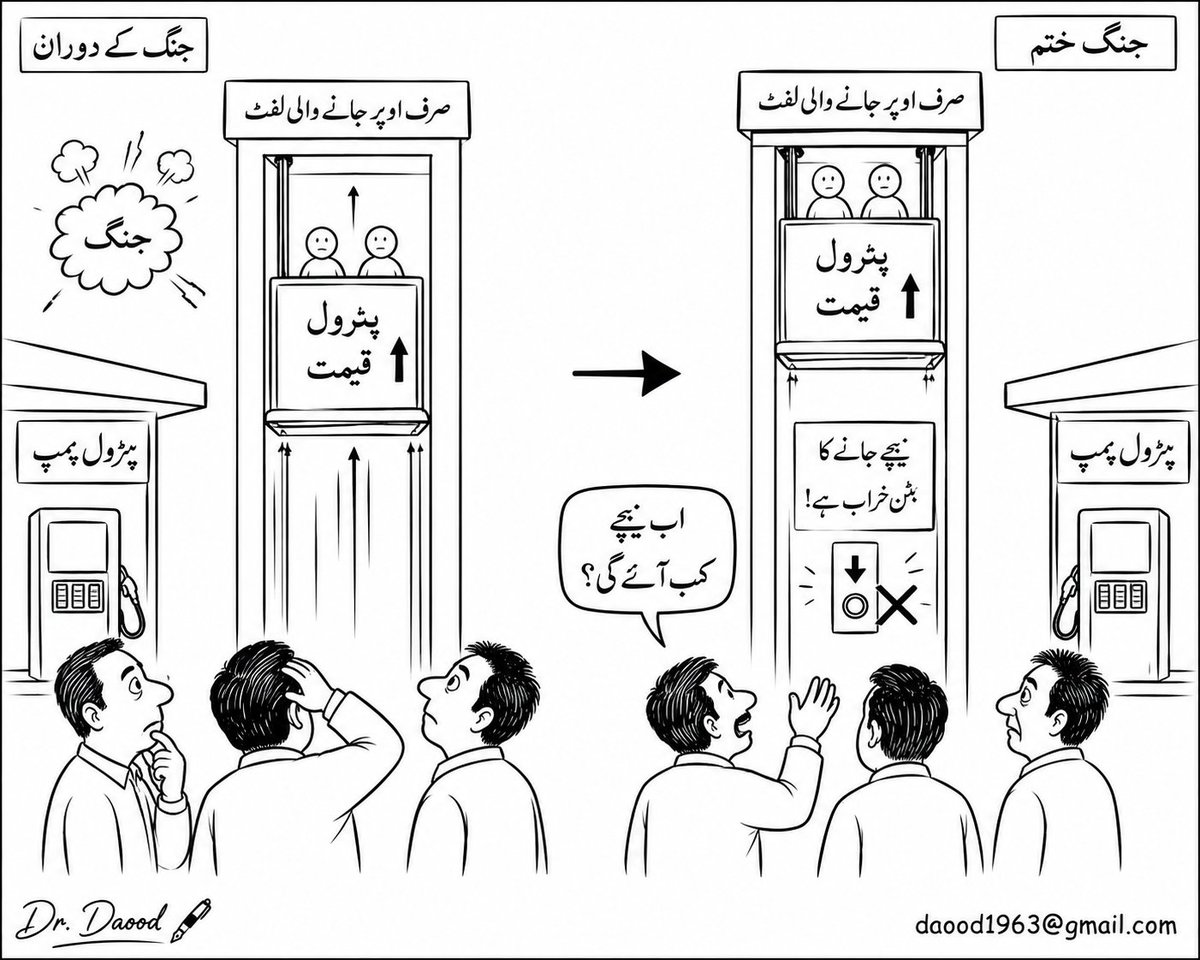
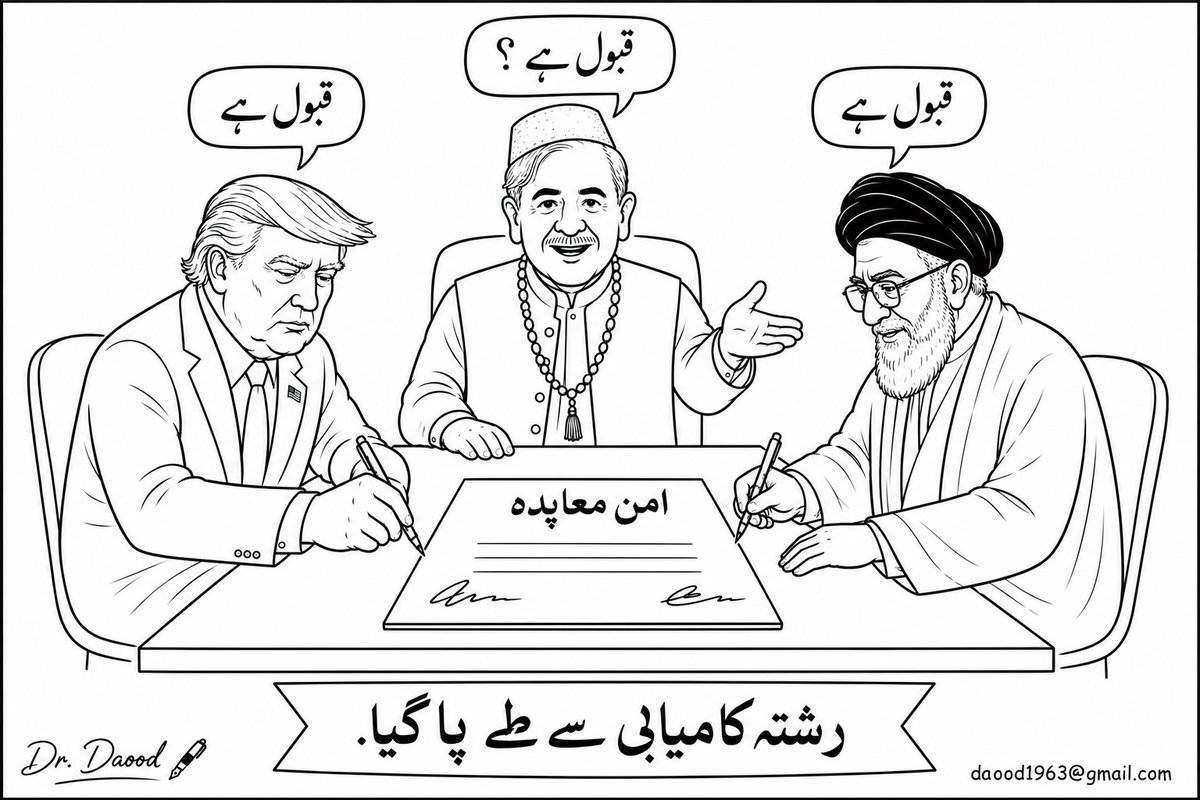
خوشخبری۔ ایران امریکہ جنگ کا خاتمہ ہوتے ہی عالمی منڈی میں تیل کی قیمت 80 ڈالر فی بیرل تک گر گئی۔
شہباز شریف صاحب۔ اب پاکستانی عوام کو پونے چار سو روپے فی لیٹر پیٹرول بیچنے کا کوئی جواز نہیں۔
حکومت کو ابھی اور اسی وقت پیٹرول کی قیمت میں ٹھیک ٹھاک کمی کرنی چاہئے۔ اب یہ ظلم فوری طور پر بند ہونا چاہئے۔
15
Jun 14
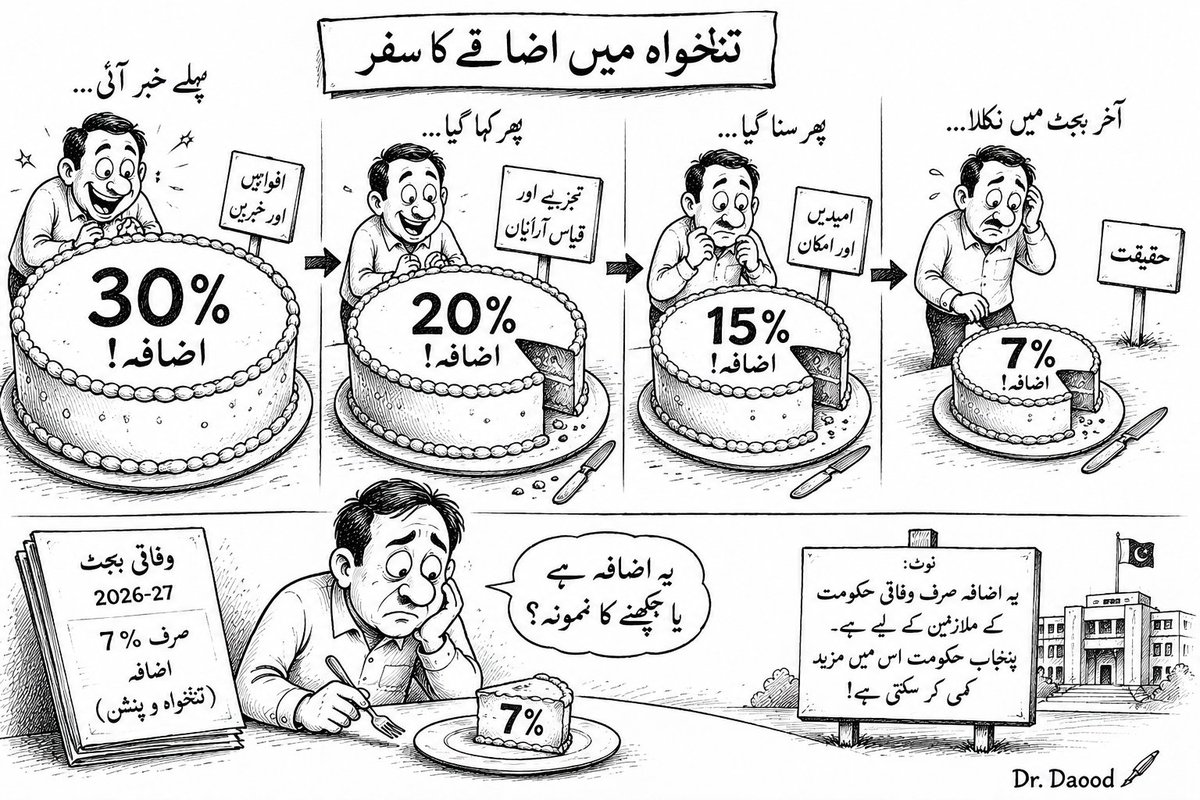
Parody:
ہزاروں خواہشیں ایسی کہ ہر خواہش پہ دم نکلے
ہزاروں نوکریاں ایسی کہ ہر نوکری پہ رش نکلے
ہم کو معلوم ہے جنت کی حقیقت لیکن، دل کے خوش رکھنے کو غالب یہ خیال اچھا ہے
ہم کو معلوم ہے بجٹ کی حقیقت لیکن، دل کے خوش رکھنے کو یہ اعلان اچھا ہے
قرض کی پیتے تھے مے لیکن سمجھتے تھے کہ ہاں، رنگ لائے گی ہماری فاقہ مستی ایک دن
قرض پہ چلتے تھے ملک لیکن سمجھتے تھے کہ ہاں، رنگ لائے گی ہماری پالیسی ایک دن
ستاروں سے آگے جہاں اور بھی ہیں
ٹیکسوں سے آگے ٹیکس اور بھی ہیں
خودی کو کر بلند اتنا
تنخواہ کو کر بلند اتنا
پرواز ہے دونوں کی اسی ایک فضا میں، کرگس کا جہاں اور ہے شاہیں کا جہاں اور
رہتے ہیں دونوں ایک ہی شہر میں لیکن، وزیروں کا جہاں اور ہے عوام کا جہاں اور
بول کہ لب آزاد ہیں تیرے
بول کہ وائی فائی چل رہا ہے تیرا
ہم دیکھیں گے
ہم سنیں گے
سنا ہے لوگ اسے آنکھ بھر کے دیکھتے ہیں
سنا ہے لوگ پٹرول بھر کے روتے ہیں
شاید مجھے کسی سے محبت نہیں ہوئی
شاید مجھے کسی سے تنخواہ نہیں ملی
کتنے عیش سے رہتے ہوں گے کتنے اتراتے ہوں گے
کتنے عیش سے رہتے ہوں گے جو بجلی بھر پاتے ہوں گے
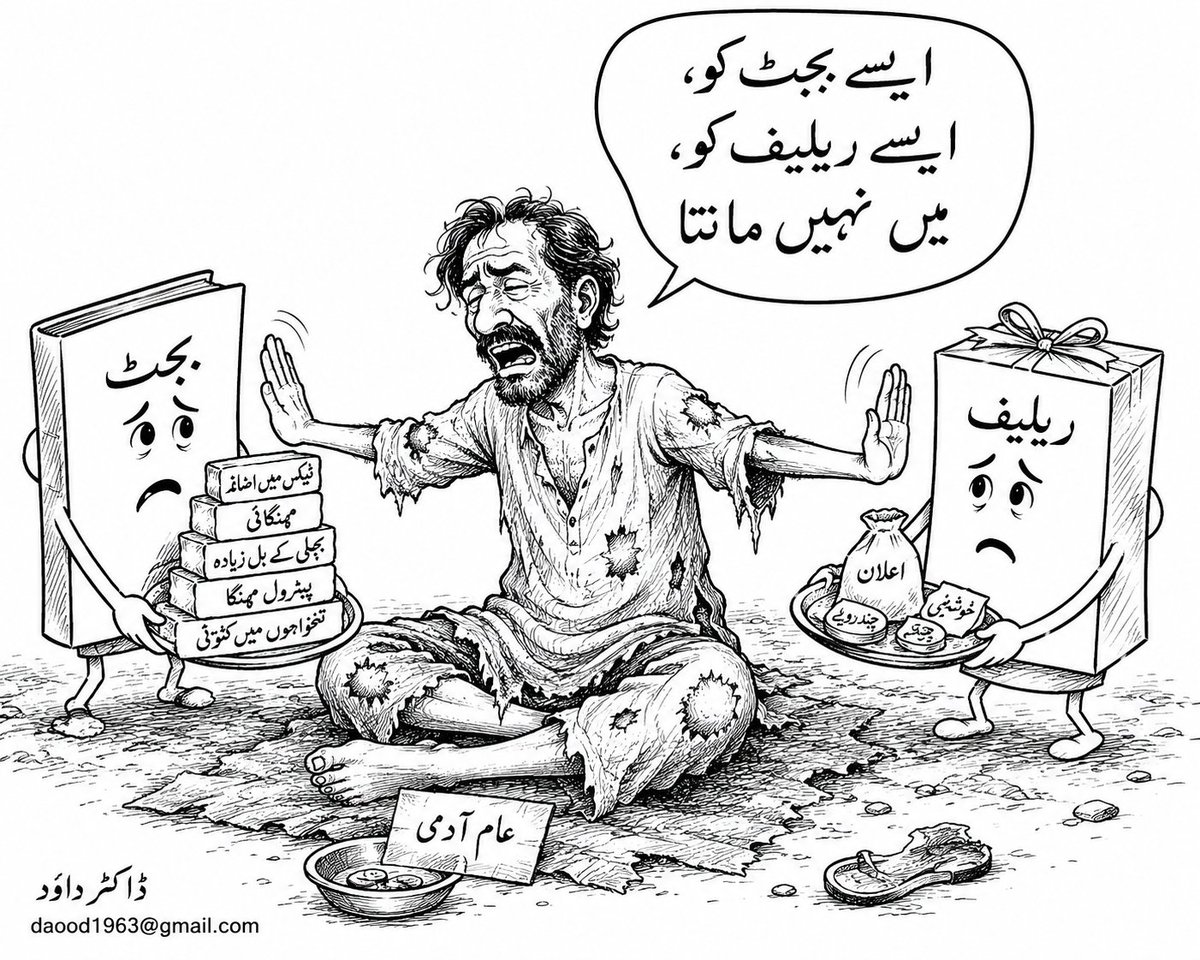
ایسے دستور کو صبح بے نور کو، میں نہیں مانتا
ایسے بجٹ کو ایسے ریلیف کو، میں نہیں مانتا
پتہ پتہ بوٹا بوٹا حال ہمارا جانے ہے
دکاں دکاں ٹھیلا ٹھیلا نرخ ہمارا جانے ہے
بازیچۂ اطفال ہے دنیا میرے آگے
سیاسی تماشا ہے دنیا میرے آگے
کوئی امید بر نہیں آتی، کوئی صورت نظر نہیں آتی
کوئی اسکیم بر نہیں آتی، کوئی رعایت نظر نہیں آتی
رنج سے خوگر ہوا انساں تو مٹ جاتا ہے رنج
مہنگائی سے خوگر ہوا انساں تو مٹ جاتا ہے رنج
اب تو گھبرا کے یہ کہتے ہیں کہ مر جائیں گے
اب تو گھبرا کے یہ کہتے ہیں کہ گھر جائیں گے
نکلنا خلد سے آدم کا سنتے آئے ہیں لیکن، بڑے بے آبرو ہو کر ترے کوچے سے ہم نکلے
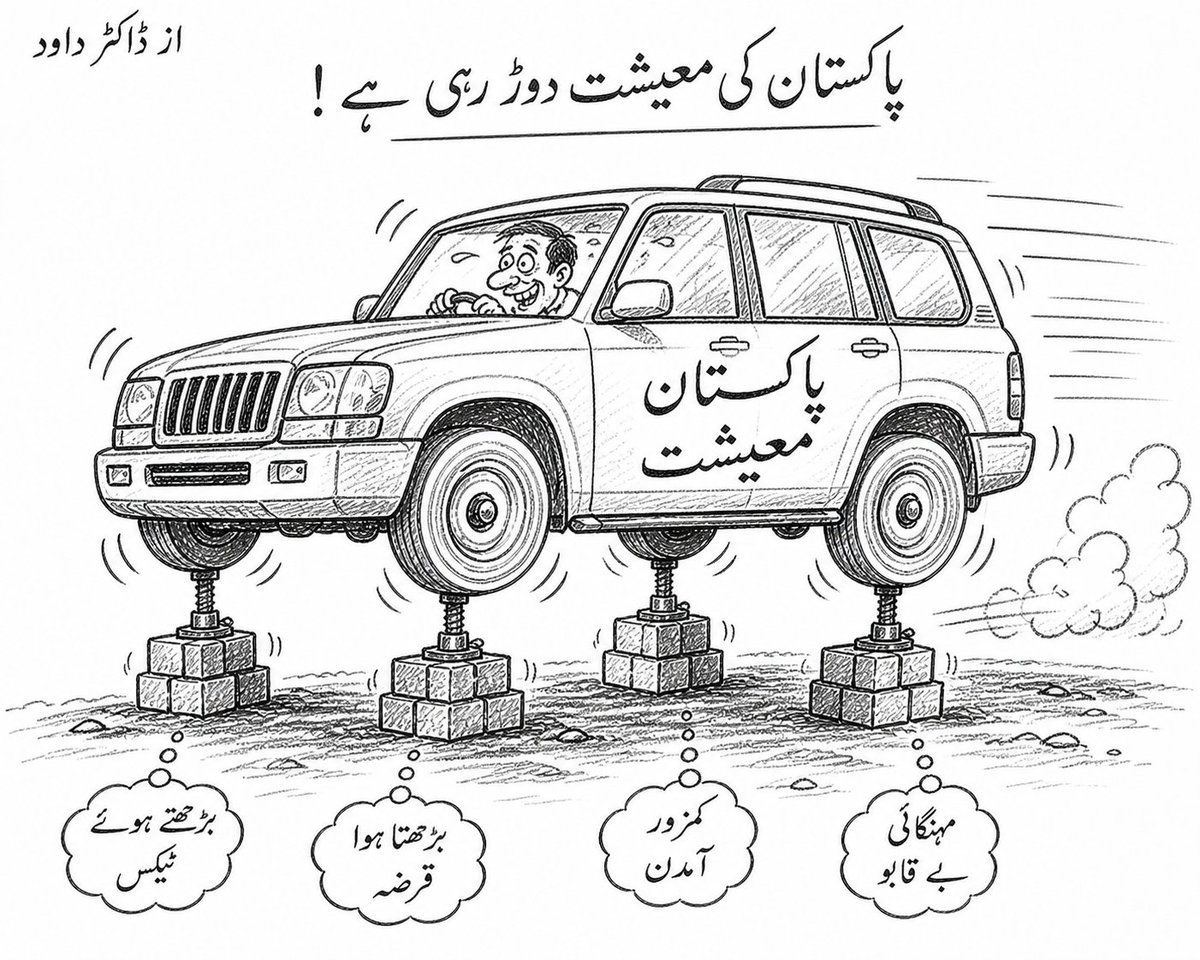
نکلنا قرض سے قوموں کا سنتے آئے ہیں لیکن، بڑے مقروض ہو کر ہم معیشت سے نکلے
یہ داغ داغ اجالا یہ شب گزیدہ سحر
یہ قسط قسط اجالا یہ بل گزیدہ سحر
متاعِ لوح و قلم چھن گئی تو کیا غم ہے
متاعِ تنخواہ و الاؤنس چھن گئی تو کیا غم ہے
ہم پرورشِ لوح و قلم کرتے رہیں گے
ہم پرورشِ فائل و دفتر کرتے رہیں گے
دشت تو دشت ہے دریا بھی نہ چھوڑے ہم نے
ٹیکس تو ٹیکس ہے بل بھی نہ چھوڑے ہم نے
تمہاری یاد کے جب زخم بھرنے لگتے ہیں
تنخواہ کے جب زخم بھرنے لگتے ہیں
محبت اب نہیں ہوگی
خریداری اب نہیں ہوگی
دل ناامید تو نہیں ناکام ہی تو ہے
عوام ناامید تو نہیں پریشان ہی تو ہے
نہ تھا کچھ تو خدا تھا، کچھ نہ ہوتا تو خدا ہوتا
نہ تھا قرض تو سکون تھا، کچھ نہ ہوتا تو سکون ہوتا
عشق پر زور نہیں ہے یہ وہ آتش غالب
مہنگائی پر زور نہیں ہے یہ وہ آتش غالب
دل ڈھونڈتا ہے پھر وہی فرصت کے رات دن
دل ڈھونڈتا ہے پھر وہی سستی کے رات دن
1
1
46
Jun 14
16
Jun 14
16
Jun 14
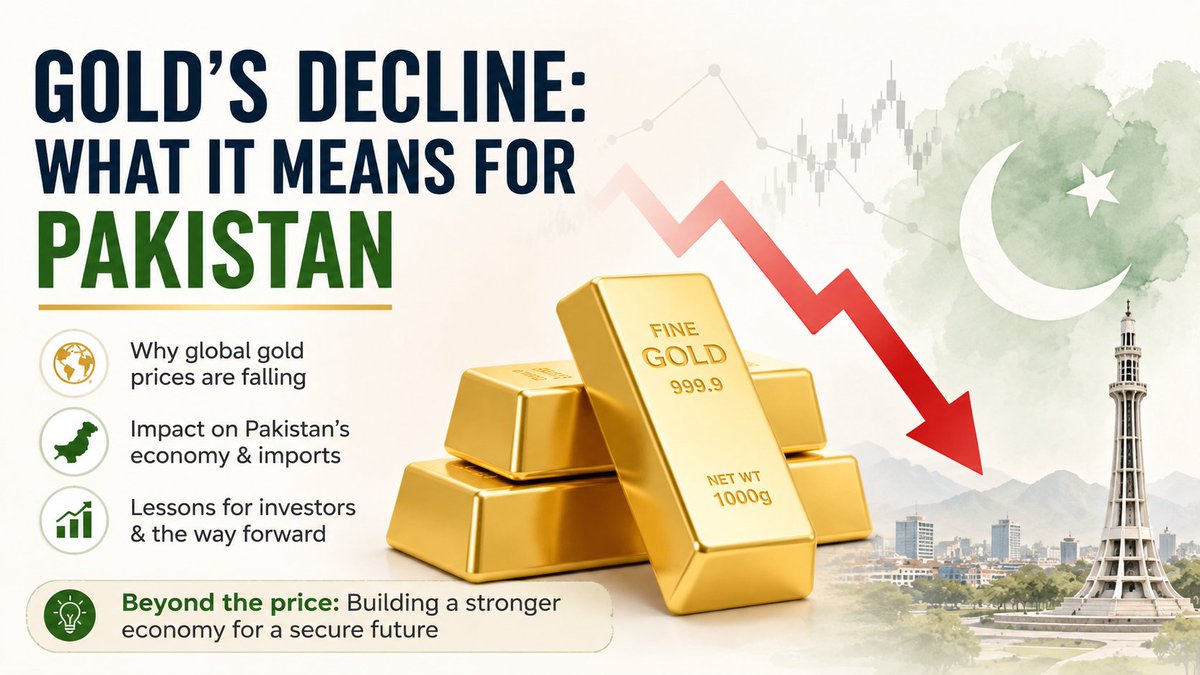
Gold's Decline: A Warning Signal for Pakistan, Not Just a Market Correction
By Dr. Daood
Gold has been the traditional store of wealth for hundreds of years. But in Pakistan, gold is more than an investment asset. It is a cultural institution, a hedge against uncertainty and for many households the closest thing to a private savings account. That’s why the recent fall in world gold prices deserves a lot more attention than it’s getting.
At first sight falling gold prices seem like good news. The lower prices could be good news for consumers planning weddings, families buying jewellery and investors seeking entry points. But beneath lies a more complex economic story with important implications for Pakistan.
Historically gold tends to pick up in times of geopolitical instability. Investors tend to flock to the yellow metal during wars, political crises, fears of inflation and general economic uncertainty. But gold has recently been pointing down even as tensions remain in the Middle East and worries persist about the global economy. This seeming contradiction is the story of a changing world financial landscape.
The main driver of the decline is the renewed strength of the U.S. dollar and expectations that interest rates in major economies could stay higher for longer than previously expected. Gold doesn’t earn interest or dividends. When government bonds and other financial instruments offer attractive returns, investors tend to move money out of gold. Gold has to compete for global capital essentially with interest-bearing assets.
For Pakistan, the fallout extends beyond jewellery shops and bullion dealers.
The country’s import bill may first get some relief from lower international gold prices. “Pakistan imports a huge amount of precious metals so a decline in international prices can help save foreign exchange reserves. The impact is much smaller than fluctuations in oil prices, but every dollar counts for a country still grappling with external financing pressures.
Second, the decline is a blow to an investment mind-set that is deeply ingrained. Gold has long been seen by many Pakistanis over the past decade as one of the safest ways to preserve purchasing power against inflation and repeated currency depreciation. This perception was strengthened by sharp rises in domestic gold prices as the Pakistani rupee depreciated. But the current downturn is a reminder that gold is not a one-way-bet. As with any asset class, it has cycles, corrections and changes in investor sentiment.
Third, the development raises wider questions about financial literacy and portfolio diversification in Pakistan. Much of the household wealth is still in the form of real estate, foreign currency or gold. Most people cannot invest in diversified portfolios. Many families find themselves over-exposed when one asset class becomes volatile. The lesson here isn’t that you should throw your gold out the window, but rather that it should be part of a larger investment portfolio, not a guaranteed way to protect your wealth.
But it would be premature to pronounce gold's death knell.
The metal is still being supported by several longer-term factors. Central banks worldwide are boosting their gold reserves in recent years. Global debt levels are still at record highs. Geopolitical rivalries between the major powers are growing. These structural trends are positive for the continuation of demand for gold. What we may be seeing is not a collapse of a safe-haven asset, but a temporary reassessment by global investors.
For Pakistan, the main gain is strategic rather than speculative. The economic vulnerability of the country is not about the price of gold per se, but about inflationary pressures, currency instability and weak savings mechanisms. It demonstrates a lack of confidence in alternative financial instruments when citizens feel the need to protect their wealth by purchasing gold. A healthier economy would mean less reliance on precious metals as a defensive investment.
Gold’s recent decline is not just a commodity story. It is a reminder that the world of financial markets is evolving, that traditional assumptions are being challenged and that Pakistan must continue to build a more resilient economic infrastructure. If gold goes up or down in the next few months, the real measure of economic security will not be the price of an ounce of metal but the strength of the institutions that support our national prosperity.
At the end of the day the greatest asset of any nation is not gold in its vaults but confidence in its economy.
ALT Gold market Pakistan
1
80
Jun 13
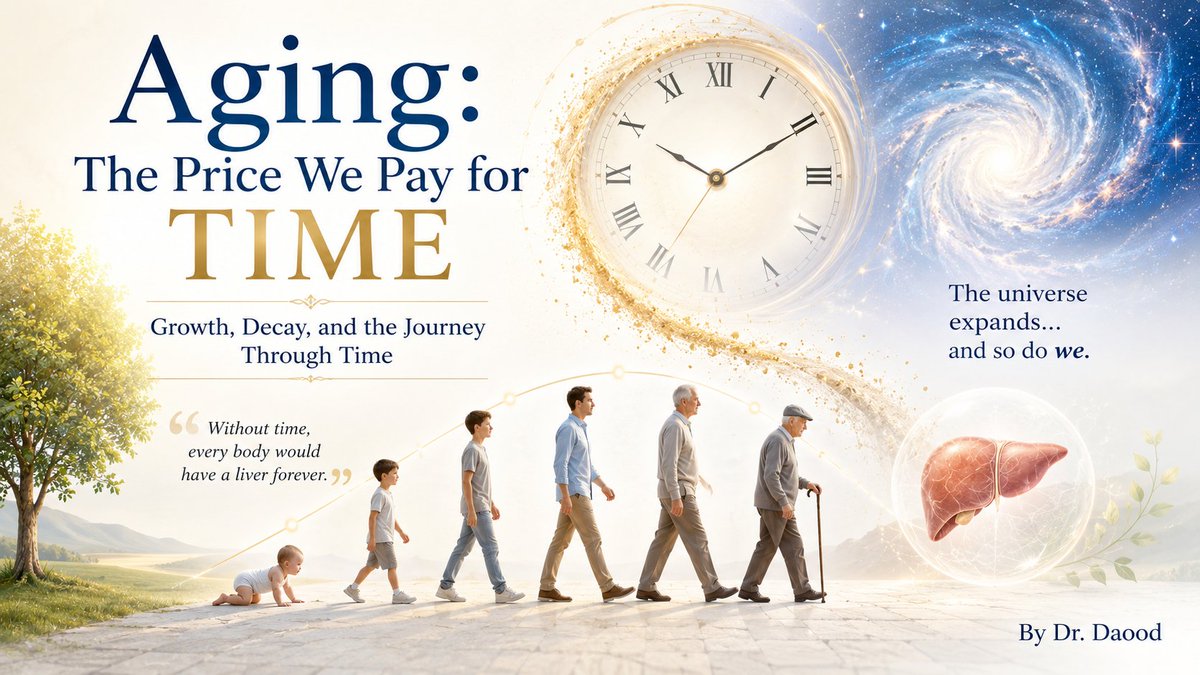
Ageing: The Cost of Time
You Are Not Aging—You Are Traveling Through Time
Written by Dr Daood
Humans have always dreamed of conquering ageing. From ancient stories of fountains of youth to contemporary studies on anti-aging therapies, individuals have been looking for ways to stay youthful and increase longevity. But maybe we have asked the wrong question. Instead of asking why we age, we should be asking a deeper question: What does ageing cost?
My answer is simple: time is the toll of ageing.
The universe itself offers a significant clue. Modern astronomy tells us that the universe has been expanding since the Big Bang. Stars are born and die , galaxies are moving away from each other , the structures of the universe are always changing . Nothing is certain. Change appears to be an inherent characteristic of being.
Human life is very similar. A child grows into an adult, an adult becomes an old person; a newborn becomes a child. Most people think that growth stops at maturity, but maybe this is an illusion. Growth doesn’t really stop, it changes direction. The body moves forward in time. In youth the changes are constructive. They become destructive in old age. The process is still continuous.
If we plot a graph of human life, it is not one of growth suddenly halting. Instead it reaches a peak, then slowly falls off. It’s the same power that enables a child to grow taller, but eventually makes muscles weaken and bones become brittle. Ageing is a consequence of the same passage of time that makes maturity.
This observation leads to a very profound thought. What if it is time that produces both growth and decay?
Every change we observe takes time. But the seed becomes a tree because time passes. But a wound heals because time passes.” Time passes, and knowledge accumulates. Similarly, hair turns grey, skin wrinkles, and organs become less efficient with the passage of time.
Imagine a universe with no time at all for one moment.
Nothing could change in such a universe. A child would stay a child forever. Never would a flower bloom or die. A mountain never wears down. A star would never light up or die. More importantly, it would keep the human body healthy forever. The liver of a young adult would never grow old: ageing itself requires time.
Without time, there would be no progression of disease, no ageing of cells, no decline of biology. All objects would be frozen in an everlasting now. Change and time go hand in hand.
The idea is that ageing is not only a biological process. It is a phenomenon of time. Cells age because they travel through time. Organs go bad because they are on the timeline of existence. Perhaps death itself is not a failure of biology, but rather the final destination of a temporal journey.
This concept can also be understood through the fourth dimension. We normally think of ourselves as living in three dimensions of space, length, width and height. But physics also teaches us that time is a dimension. We are not static things. We are wanderers, forever wandering through time.
Seen in this way a person’s whole life is already there, a path from birth to death. The present moment, as we experience it, is only where we are in that path. We’re a second further on it every second. The visible evidence of the movement is ageing.
There is a beautiful symmetry here. Living things march through time The universe grows through space. Galaxies are moving away. Stars change. The cells split. Bodies get old and fall apart. Every thing is involved in a universal process of change.
Maybe nothing can be permanent because time itself disallows it.
Yet, there is another side to this story. Time is the price of ageing. But time also gives us all that we care about. Time is what no growth, no learning, no love, no achievement, no wisdom could exist without. A universe without time would be without age but also without life as we know it.
No child would ever become a doctor.
A student would never turn teacher.
A dream would never come to pass.
All achievement depends on the passage of time.
So ageing should not be seen only as a tragedy. It’s also proof that we’ve lived and learned and experienced and changed. Wrinkles are time’s signature. Grey hair is the record of years travelled. Old age is the shadow of the force which makes life to happen.
The final paradox is that we fear old age because we value life, but life itself is impossible without the passage of time. They are one and the same.
So ageing may not be a flaw of nature but one of its deepest principles. The inevitable consequence of existing in a time-dominated universe. Time moves us forward and we grow. Time's relentless nature makes us age.
And in the end, ageing is not an enemy or a failure. It is just the cost of being on the greatest journey of all, the journey through time.
ALT Aging & Time
2
98
Jun 13
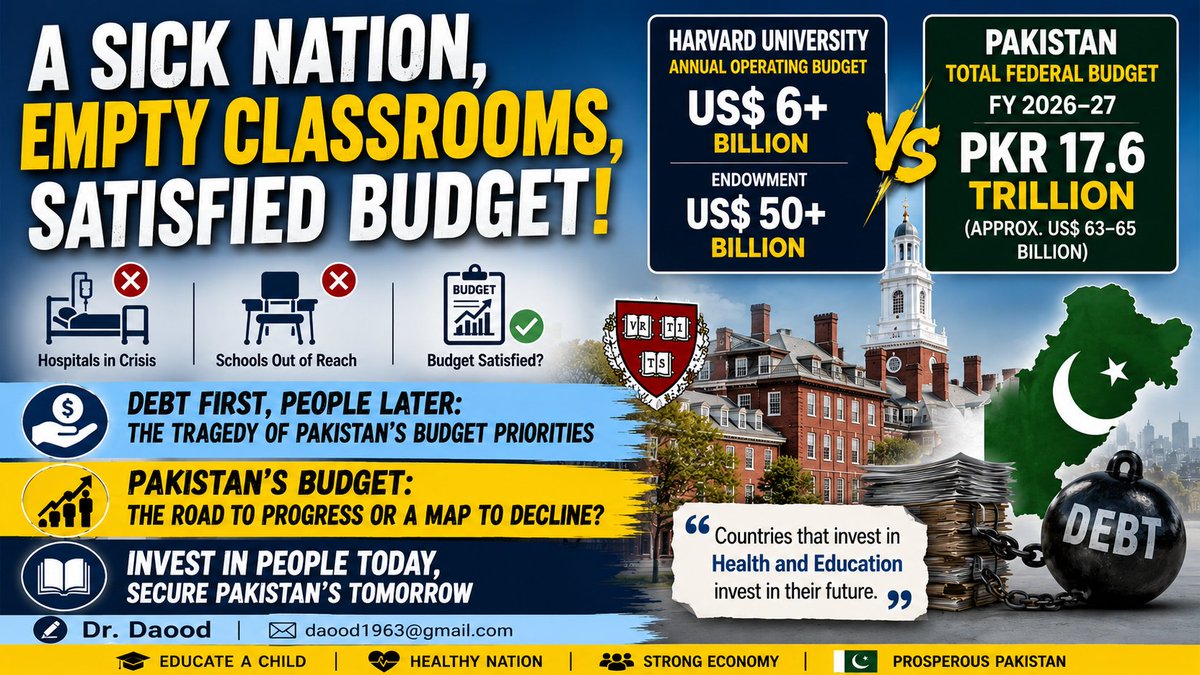
A Sick Nation, Empty Classrooms, and a Satisfied Budget!
What Pakistan’s health and education budget says about the priorities of a nation
Written By: Dr Daood
Budgets are more than just accounting documents. They are moral and political statements that reveal what a nation holds most dear. Governments make choices about where to spend every rupee of money. Once again, Pakistan’s Federal Budget 2026-27 raises an uncomfortable question: Are we spending enough on the health and education of our people to guarantee a prosperous future?
Pakistan ranks among the world’s youngest populations. Nearly two-thirds of the population is under thirty. Such a demographic structure can be a tremendous economic asset, but only if the young are educated, skilled, healthy and productive. Otherwise it risks becoming a demographic liability of unemployment, social tensions and economic stagnation.
Pakistan has historically invested significantly less in health and education than most of its peers. Total public expenditure on education is still around 2 per cent of GDP. Public health expenditure is around 1 per cent of GDP. These figures are among the lowest in South Asia and far below international recommendations.
The difference to neighbouring countries is striking.
India, with its own problems, spends much more on education and health. The Indian Union Budget 2025-26 allocated approximately INR 1.28 trillion for education and about INR 0.99 trillion for health and family welfare. More importantly, Indian states are major players in these sectors leading to much higher combined spending: India’s expenditure on education is estimated to be 4–4.5 percent of GDP and health expenditure is steadily rising over the last decade.
A more telling comparison is Bangladesh. Bangladesh, long considered to be economically weaker than Pakistan, has consistently invested in primary healthcare, maternal health, immunisation, female education, and social development. Now the country has better indicators in several areas of public health, such as life expectancy, infant and maternal mortality. Its progress shows how sustained investment in human capital can change national outcomes, even in the context of resource-poor environments.
Perhaps the most surprising comparison is with the United States.
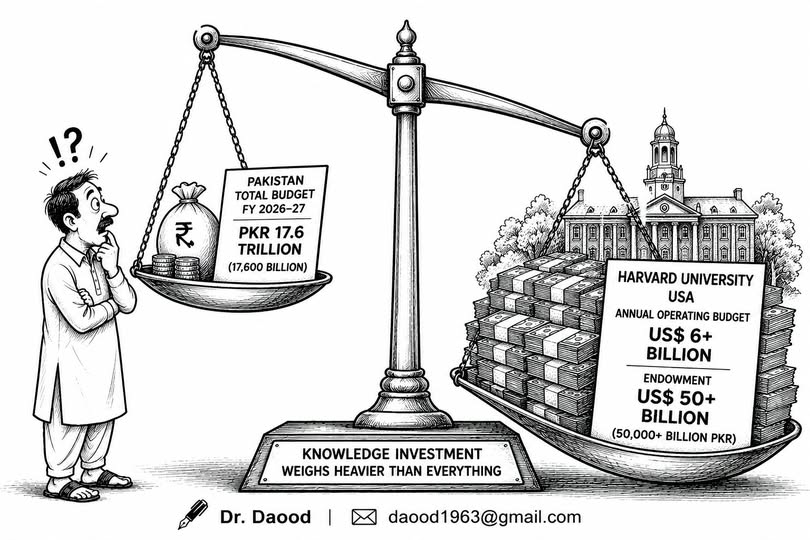
Just look at Harvard University. It has an annual operating budget of over US$6 billion and an endowment of more than US$50 billion. Stanford University has a budget of about US$9 billion per year. The system has an annual budget well in excess of US$50 billion.
The comparison is startling when you convert it into Pakistani Rupees. One elite American university system can command resources that are near or above the combined annual budgets allocated to major sectors of Pakistan’s federal government. The comparison isn't perfect because universities and governments do different things, but it gives you a sense of how seriously advanced economies take knowledge creation, research, innovation and human development.
The message is crystal clear. And more and more of modern wealth is created by educated minds, not by natural resources. Continuous investments in universities, research institutions, and health care systems have produced Silicon Valley, biotechnology, artificial intelligence, pharmaceuticals, advanced manufacturing, and digital services.
Pakistan’s problem is not just lack of money. It is the distribution of the resources that are available. A huge portion of the public expenditure is spent on debt servicing. Before even considering development priorities much of government spending is taken up. “Education and health get the scraps, not the meat.”
The effects are visible everywhere. There are millions of children out of school. Learning outcomes are weak. Universities have a problem with research funding. The public hospitals are short of equipment and medicines and trained personnel. Brain drain continues as skilled professionals move abroad for better opportunities.
It’s a vicious cycle. Poor education cripples productivity. Weak productivity drags on economic growth. Growth is slow, limiting government revenues. Limited revenues constrain future investment in health and education.
Successful nations do the opposite.” They are creating a virtuous cycle by investing heavily in human capital. Good education results in skilled workers. “Skilled workers are the engine of productivity and innovation. Economic growth generates more revenue. More revenues equal more investment in health and education.
The real question for Pakistan is not whether it can afford more spending on health and education . The question is whether it can afford to.
All the rich countries of the world got rich by investing in their people over the long term. South Korea, Singapore, Finland, Ireland, and increasingly Bangladesh teach the same lesson. This is no social cost but the highest economic investment a country can make: human capital.
While Pakistan debates fiscal deficits, taxation and debt burdens, policymakers need to remember a simple truth: roads, buildings and infrastructure are important, but a nation’s greatest asset walks into classrooms every morning and enters hospitals every day.
A budget shows priorities. If Pakistan truly wants economic change, then health and education must shift from the margins of public spending to the centre of national strategy.
The future will not be decided by how much money Pakistan spends. It will depend on how Pakistan decides to spend.
ALT Pakistan Health & Education Budget 2026-2027
135