
Engine Net/MP code at @MediaMolecule TBA project. prev: Dreams, Intel Net, Avalanche engine, Mad Max, Just Cause 3 4, Rage 2, Contraband, Hunter CoTW, Hiber3d.
Joined August 2009
- Tweets 6,695
- Following 155
- Followers 899
- Likes 1,449
928 Photos and videos









Pinned Tweet

9 Aug 2020
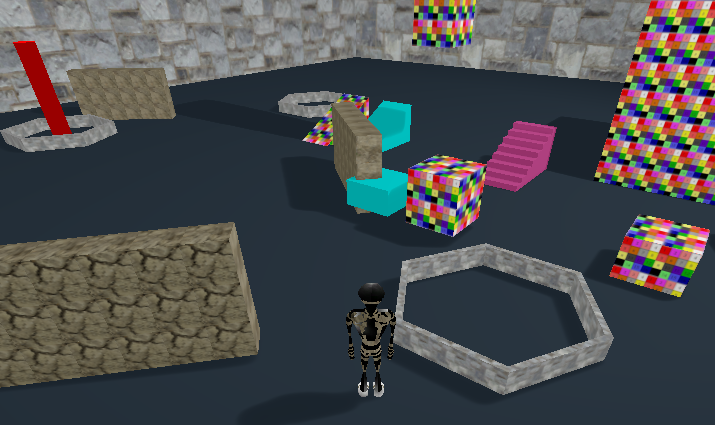
I made a web page for my hobby project.
Listing features, what libraries I use, and a few videos.
jahej.com/project.html
1
14
Where are the police raids of AI companies in the same way they did for ThePirateBay?
The difference is the AI companies actually downloaded all the warez, TPB merely provided meta-links.
1
2
3
155
Jun 10
Latest @VS_Debugger 2026 keeps failing and locking up for seconds or minutes when stopping a C debugging session.
VS2022 never had these problems.
2
6
961
Jun 10
I'm of course using marketplace.visualstudio.com… if that makes a difference.
A real pain to not use it when creating multiple processes.
1
1
103
Jun 13
@VS_Debugger vs2026 is unusable until you fix it and its extension linked above.
I'm returning to vs2022.
Been putting off learning the RAD-debugger, but I guess I have to soon as you keep breaking and adding junk instead of making it better.
2
40
Jun 11
Updated my Acer Swift 5 laptop to Windows 11 some time ago, then noticed there's no support for the hdmi-ouput anymore...
Today when booting, it has no audio device anymore to drive the internal speakers.
Is this standard practice by @Acer ? Do I have to install Win10 again?
1
3
1,620


Niklas Lundberg retweeted

May 31
Number 1 Problem with Linux
43
25
671
32,706
May 31
Generating AI-slop for hobby programming, is like paying to skip levels in Angry Birds.
3
91
Niklas Lundberg retweeted

May 23
Open source will be greatly diminished due to mass obfuscated license infringement. Your licenses may as well be letters to Santa. The path forward will be paywalls and codesharing within curated communities.

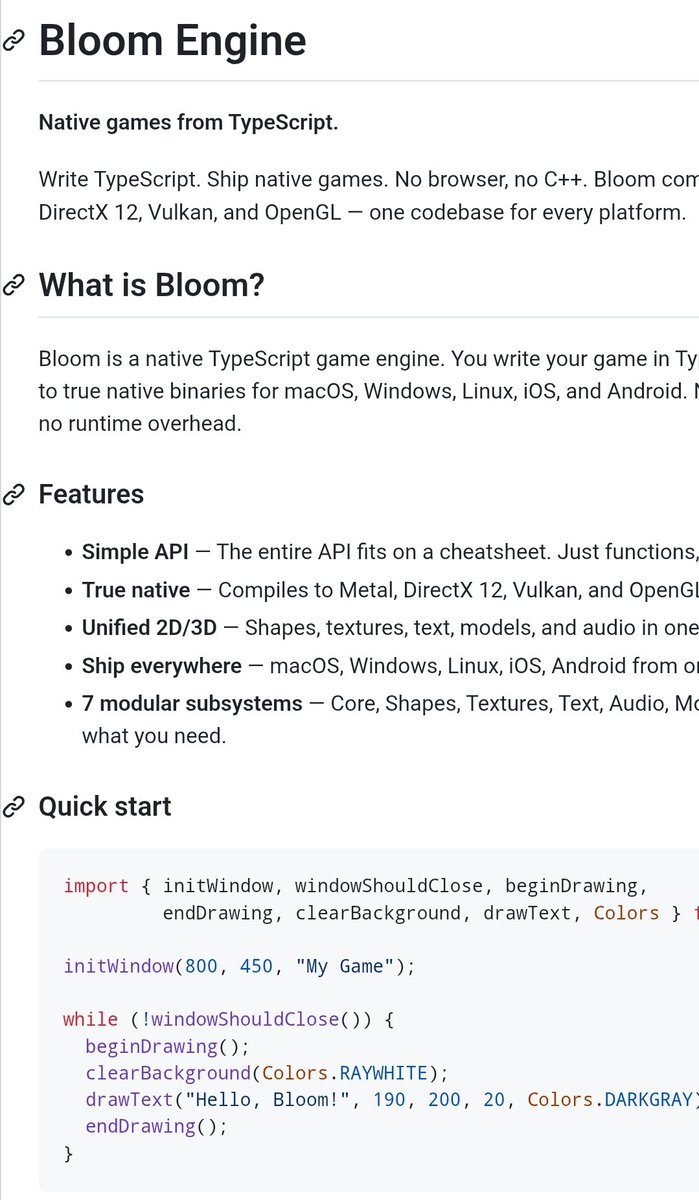
Wow! It seems somebody already vibe-coded a game-engine with an extremely similar API to raylib... unfortunately no mention to raylib, at all... 😓
55
64
1,004
101,210
Niklas Lundberg retweeted

May 18
The AI panic is really unbelievable today. The level of delusion and hype have grown to mythic proportions.
Has AI beaten Pokemon Red yet? Like a normal 6 year old does, by looking at the screen? Oh it hasn't. But all jobs are over in 18 months? This website is full of idiots.
165
258
4,059
259,587
Niklas Lundberg retweeted

May 15
I strongly believe there are entire companies right now under heavy AI psychosis and its impossible to have rational conversations about it with them. I can't name any specific people because they include personal friends I deeply respect, but I worry about how this plays out.
I lived through the great MTBF vs MTTR (mean-time-between-failure vs. mean-time-to-recovery) reckoning of infrastructure during the transition to cloud and cloud automation. All those arguments are rearing their ugly heads again but now its... the whole software development industry (maybe the whole world, really).
It's frightening, because the psychosis folks operate under an almost absolute "MTTR is all you need" mentality: "its fine to ship bugs because the agents will fix them so quickly and at a scale humans can't do!" We learned in infrastructure that MTTR is great but you can't yeet resilient systems entirely.
The main issue is I don't even know how to bring this up to people I know personally, because bringing this topic up leads to immediately dismissals like "no no, it has full test coverage" or "bug reports are going down" or something, which just don't paint the whole picture.
We already learned this lesson once in infrastructure: you can automate yourself into a very resilient catastrophe machine. Systems can appear healthy by local metrics while globally becoming incomprehensible. Bug reports can go down while latent risk explodes. Test coverage can rise while semantic understanding falls. Changes happens so fast that nobody notices the underlying architecture decaying.
I worry.
512
1,901
15,326
1,586,501
Niklas Lundberg retweeted

May 13
It's 2026 and your CEO just sent you a 2,400 line pull request.
You get a cup of coffee and sit down to review it.
It's a disaster. A dozen unrelated refactors. Unused methods with names like `convertFromBase10` and `normalizeBeforeSerialization`.
You catch a few hardcoded API keys, but that's ok. It's part of the dance. They didn't consider that someone might look at this diff. Here's a comment buddy.
They respond in an hour (after Copilot, qodo, CodeRabbit and Greptile finish their reviews) saying we shouldn't worry about "implementation details" anymore, those are relics of the past. Hey let's jump into a room and figure it out. We can't just agree to disagree, this is probably my last job in tech and I can't watch this fucker burn the place to the ground.
The PR merges and goes to prod. You feel a shared sense of apathy and dread with Hannah the intern (she has to review his AI generated social media posts ever since Grok got too imaginative).
That night you go to sleep and have nightmares of that code. You can still see the shapes of it on the backs of your eyelids.
You go to work the next day ready to quit. You no longer understand the system. There is no foundation. Time to use those savings and an SBA loan to buy a liquor store and never login to GitHub again.
May 12

It’s 2018 and your coworker just sent you a 400 line pull request.
You get a cup of coffee and sit down to review it.
It’s beautiful. Elegant micro-refactors. Crispy method names.
You catch a few things, but that’s ok. It’s part of the dance. They didn’t consider extensibility on part of their API. Here’s a comment buddy.
They respond in an hour saying they think we should do one piece differently than your comment. Hey let’s jump into a room and figure it out. We can’t just agree to disagree, this code is too important.
The PR merges and goes to prod. You feel a shared sense of ownership and accomplishment.
That night you go to sleep and dream of that code. You can still see the shapes of it on the backs of your eyelids, your IDE syntax highlighting sparking neurons in your reptile brain.
You go to work the next day ready to go. You understand the system. N is your foundation. Time to build n 1.
94
258
4,399
396,112
May 14
Probably why all windows computers rebooted with an update yesterday github.com/Nightmare-Eclipse…
170
Niklas Lundberg retweeted
May 10
“Vibecoding”, i.e. ~hands-off usage of LLMs to rapidly generate code without regard for the actual code’s contents, for novel applications, can literally never be non-slop, because—as I’ve described before—there is not enough bits of information content in prompts to express the user’s exact desires in sufficient detail, and the desired solution is not expressed in training data (due to the problem’s novelty).
Only a sentient human developer can relate to another human user to determine what is desirable, and design the software such that it accomplishes this desirable outcome, and carefully verify that it is doing that, rather than something else (potentially undesirable).
This is true even for the combinatoric space implied by the training data, for instance if the novel problem is merely novel in that it combines pieces of existing solutions. There needs to be a guiding force to know what to combine and how.
The more detailed the prompt becomes, the more human oversight (the more human-guided round trips with the LLM), the closer it becomes to actual code (i.e. detailed execution instructions for a computer).
May 10

Contradiction of terms
56
61
895
54,580
May 9
Web icloud.com/notes checkboxes are now black squares and doesn't change looks when clicked.
(you had one Jobs!)
Suggestions for alternatives? Preferably self-hosted.
79
May 9
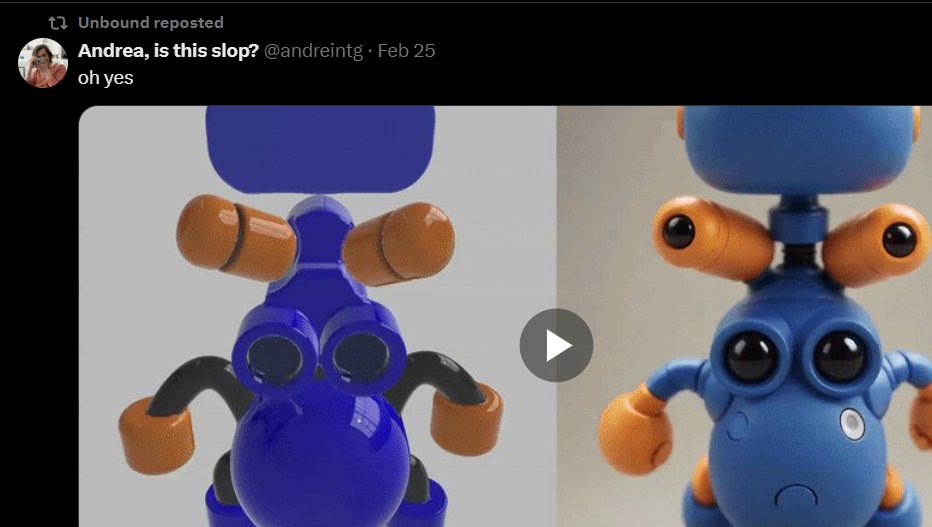
Old naming: AI generated images.
New: Computer-Rendered Artificial Pictures (CRAP)
1
106
May 9
The opposite of a CRT shader

SNES Edge-Enhancers for all console revisions are restocked at voultar.com and available right now!
Please spread the word, and thank you so much for the support.
Service installs are going out with these too. I’m still updating tracking numbers. Thank you!

134