
I’m learning AI, making projects, and sharing my journey! (All opinions are mine)
Joined January 2026
- Tweets 615
- Following 152
- Followers 81
- Likes 843
87 Photos and videos






Pinned Tweet

Jan 18
9
930
Matias Lotito retweeted

Mar 30
This is what happens when you give a prompt to an AI.
2
7
147
11,058
Mar 21
I will be at GenAI Zurich conference on April 1st-2nd learning about Applied Generative AI, Agentic Systems, enterprise automation, physical AI, and a lot more!
I’m really excited to learn from the best European experts that are building the future of intelligence, from Google Deepmind, HuggingFace, AlpineAI…
I already made the list of all the talks I will be attending. Have you?
If you are going, DM me and let’s connect there :)
#GenAIZurich #conference #zurich

1
48
Mar 10
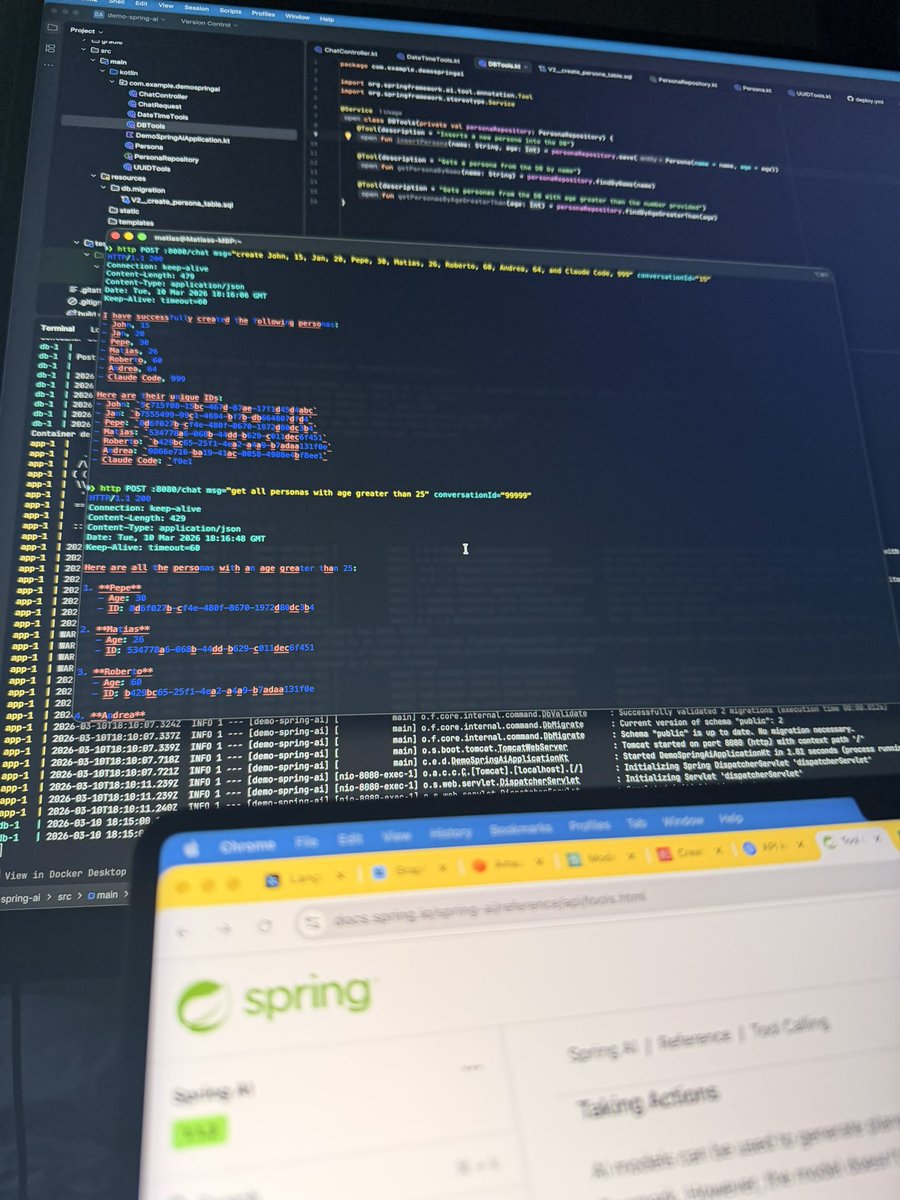
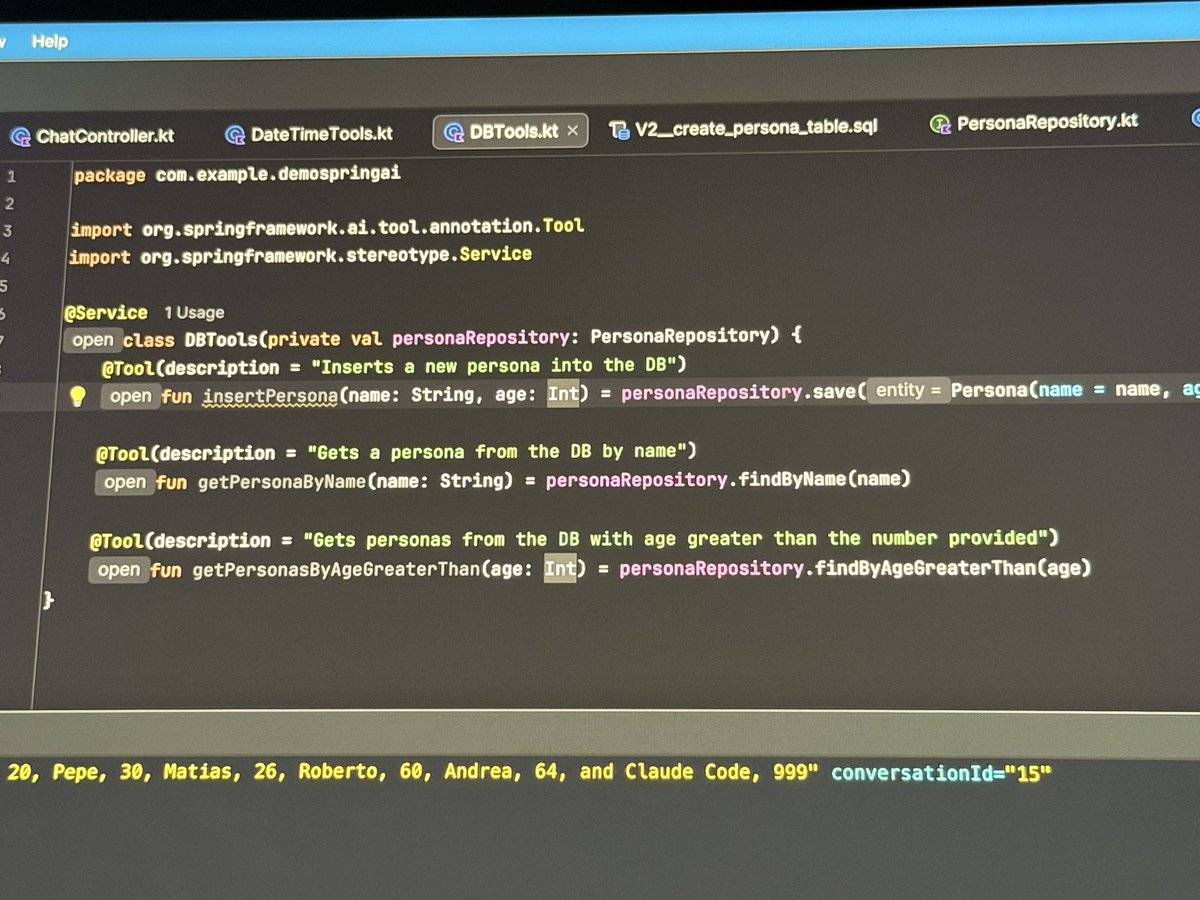
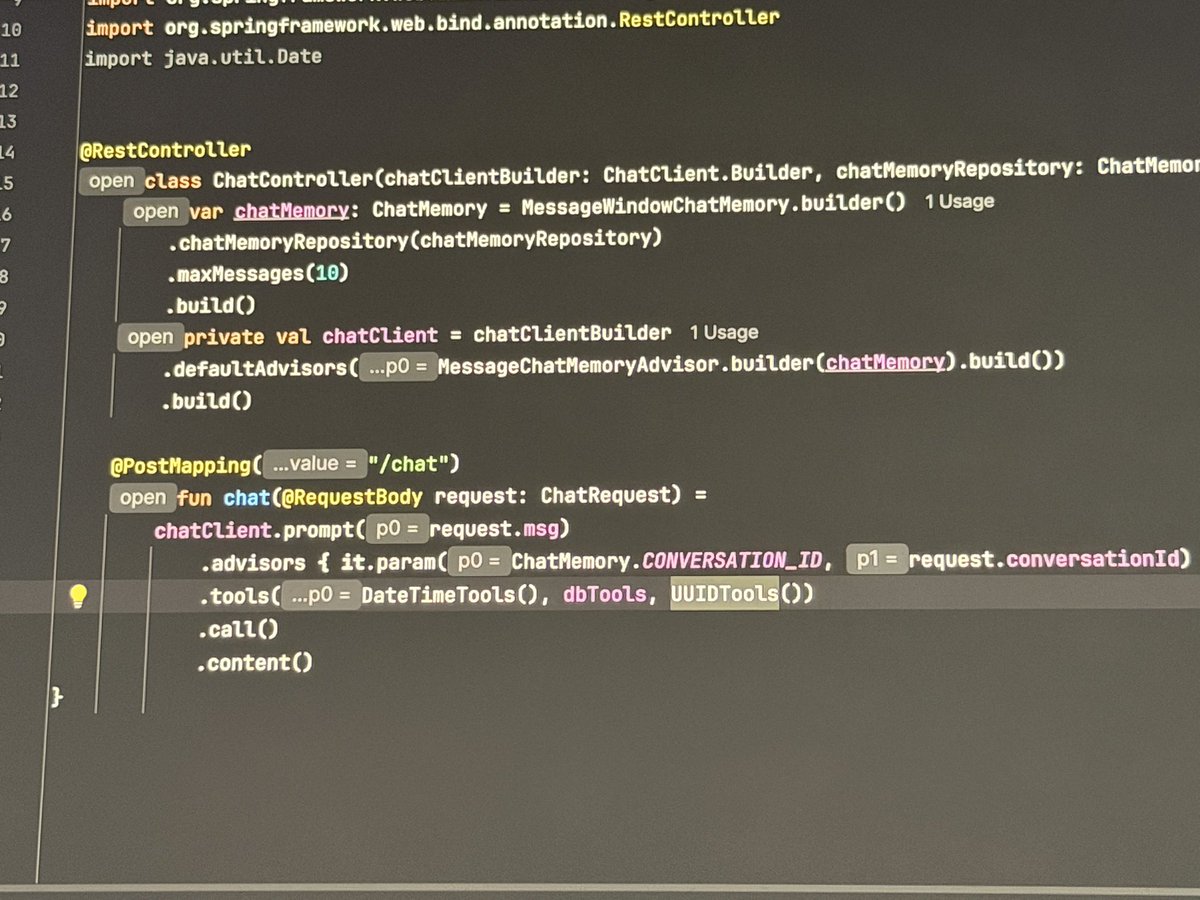
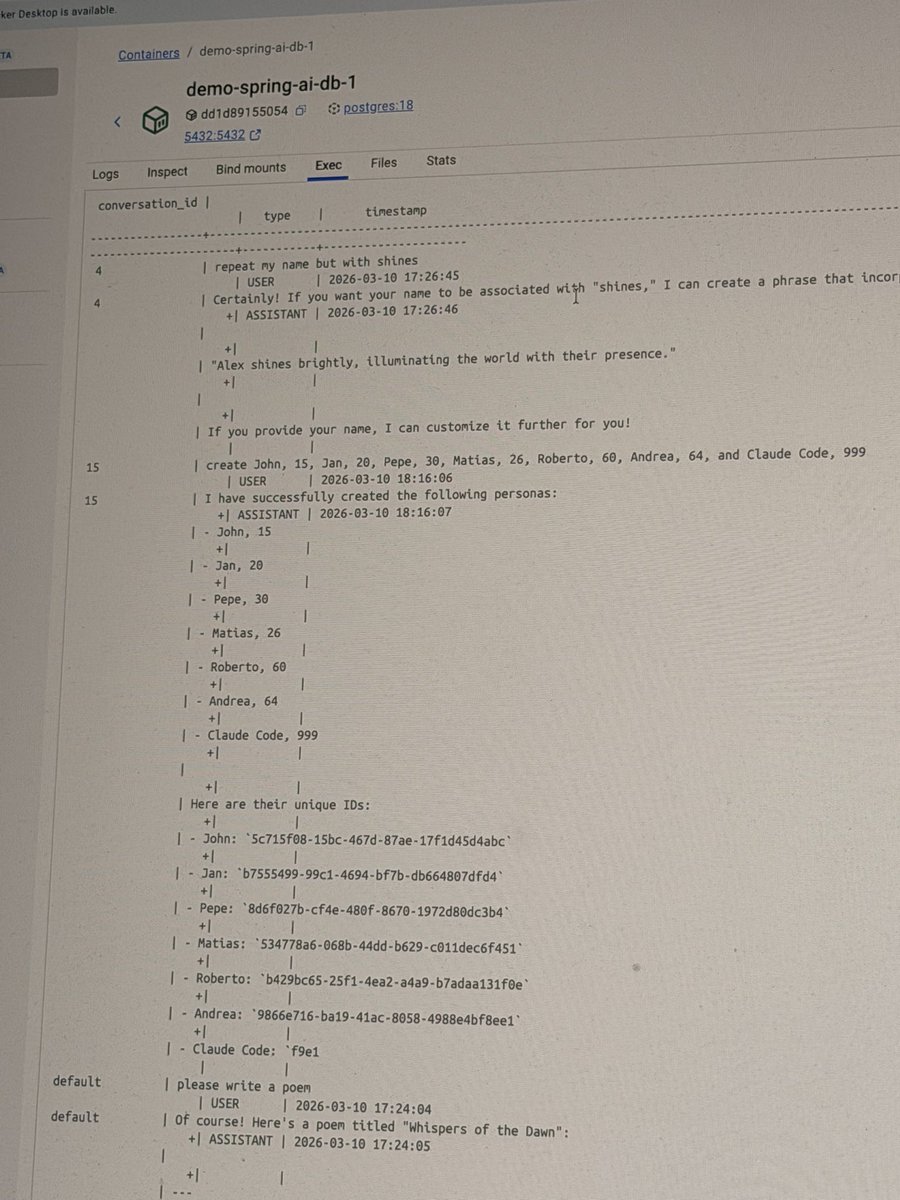
Today I inferenced AWS Bedrock with Spring AI, connected it to a PostgreSQL DB, created tools to let AI interact with the DB, and dockerized the app.
Spring AI is the new Spring offering that allows you to connect to any model provider, embedding, add tools seamlessly, and even manages memory and trims messages to handle the context!
It also integrates seamlessly with PostgreSQL, allowing you to save all messages inside your DB without too much effort.
This app I did allows the Bedrock model to create personas and query them, as well as get current UTC time statically.
A really nice tool! Like LangChain but for Spring!
1
67
Mar 8
The more I read about physical/embodied AI the more I get hyped about it, and it’s the next frontier. AI is good when we give it steroids (HUGE GPUs), but taking AI to robots it’s way more challenging than people think.
You have to fight against even bigger constraints than traditional AI, you CANT just spawn 3 new EC2 instances or ask for a better GPU at running time.
You want polished behavior? Cool, go and fine tune a small model, otherwise you just get a prototype.
You want to fine tune it? Good luck finding and cleaning real world data AND training the model (this is where tools like NVIDIA Cosmos/Omniverse and Edge Impulse come in…)
You want a big model because they are better and more general? Good luck fiting a big chunk of GPU in a robot AND powering it with batteries 🫠
You want the most generic AI possible? Nope. You will have to choose, otherwise you will be trying to be better than the frontier of embodied AI, side by side with actors like Figure, Optimus or Boston Dynamics.
Do you want to use the Cloud for your robots? Well, for some use cases maybe ok, but latency will completely block you from lot of use cases 😅 also you rely on good internet connection AND bandwidth
My next talk is going to be about Edge AI, and I believe that people in this space must be familiarized at least with the promise, the constraints, tools, techniques, main actors, and real solutions 🚀
51
Matias Lotito retweeted

Mar 7
🚨: A petri dish of human brain cells just learned to play DOOM
1,764
6,143
49,391
32,333,344
Feb 28
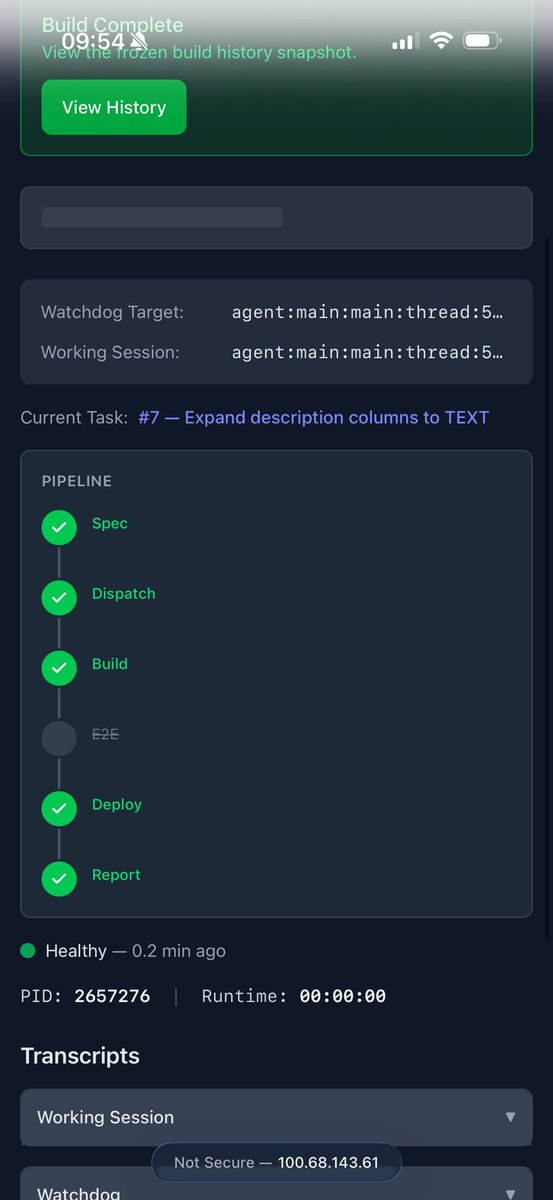
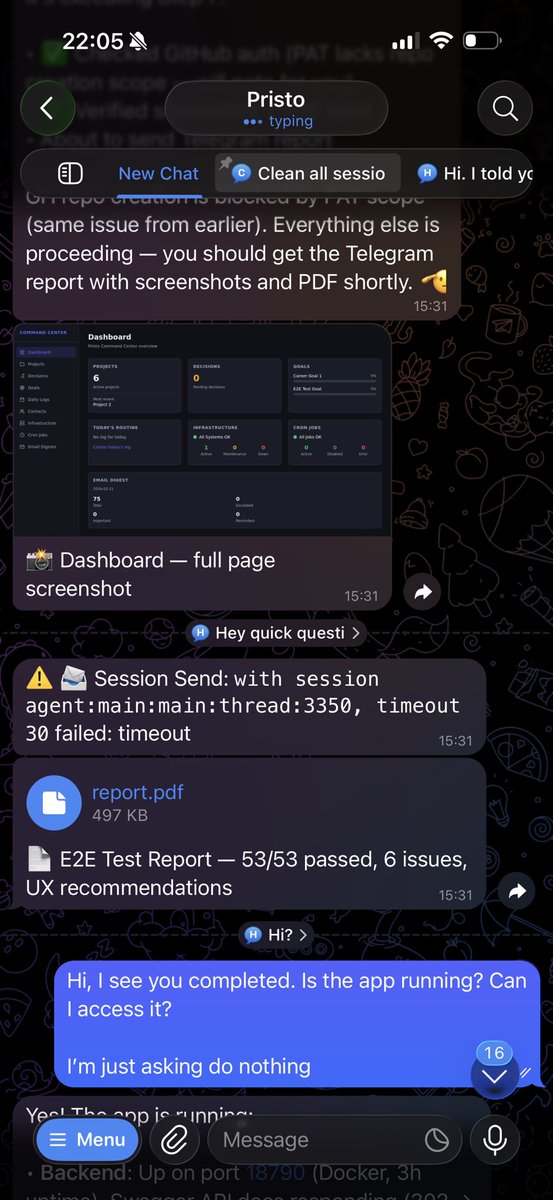
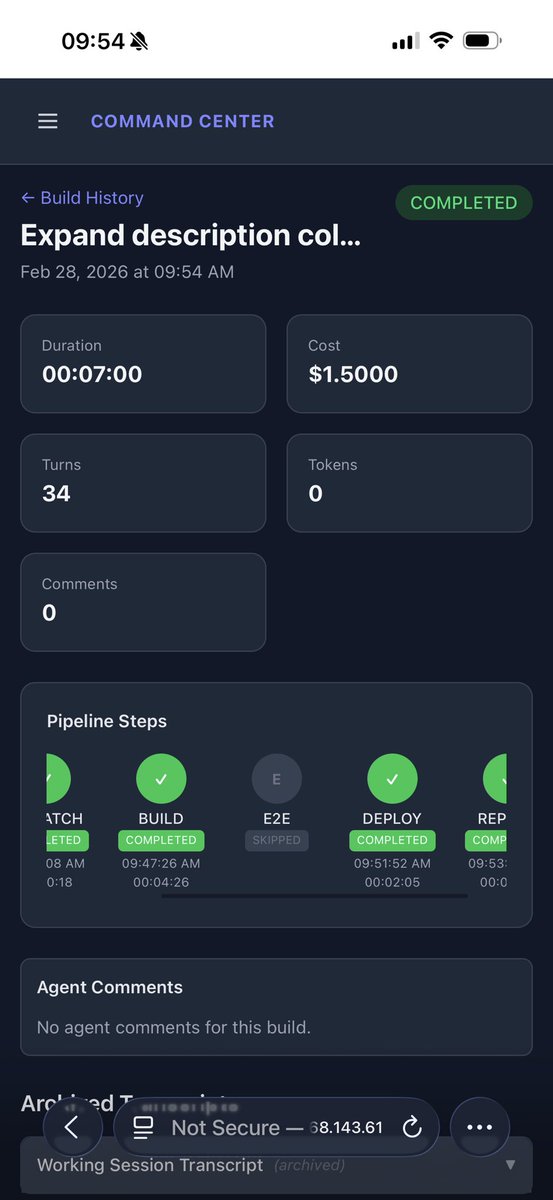
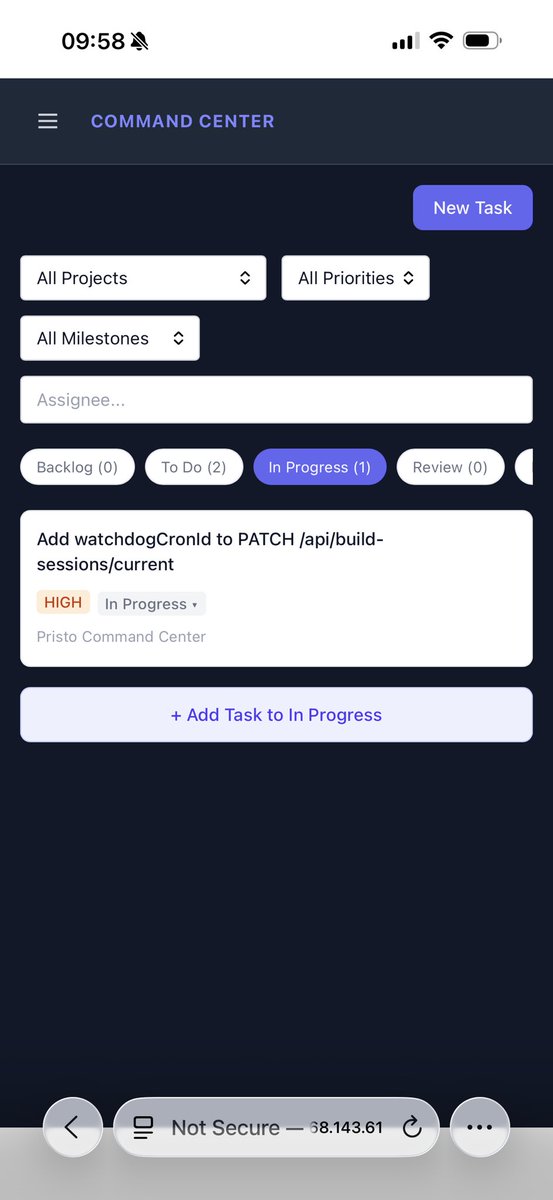
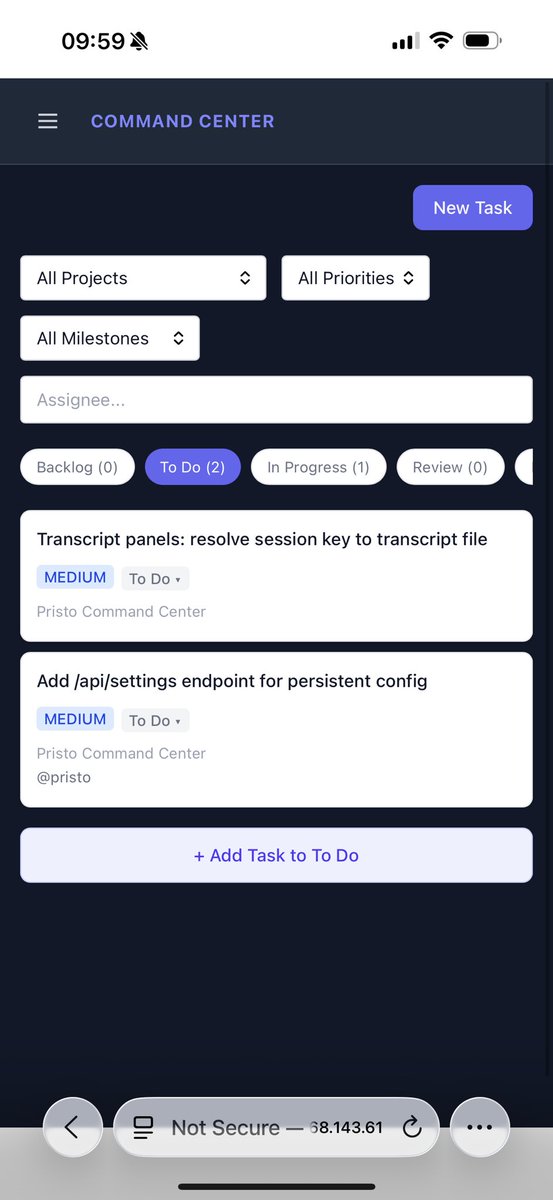
This night OpenClaw built this fully integrated command center. It basically displays the current state of my Claude Agency pipeline. It picks tasks from this kanban board that OpenClaw also built and it has live updates of the current build with steps, costs, time, reports, transcripts, etc.
Basically full control and visibility on the autonomous agent that is building software without my supervision.
Why this command center thing?
I don’t like my agents to trust Markdown files, they are messy and unstructured. Also it’s not something I can easily check, so I was fully blind about the status of the pipeline and the system.
Markdown files is not something nice to work with.
Therefore, I decided to build an app that my agents use to pull/push data to. When they want to create a task, they use the CLI command cc_create_task. When they want to read, cc_task_details.
Machine-friendly! 🤖😄
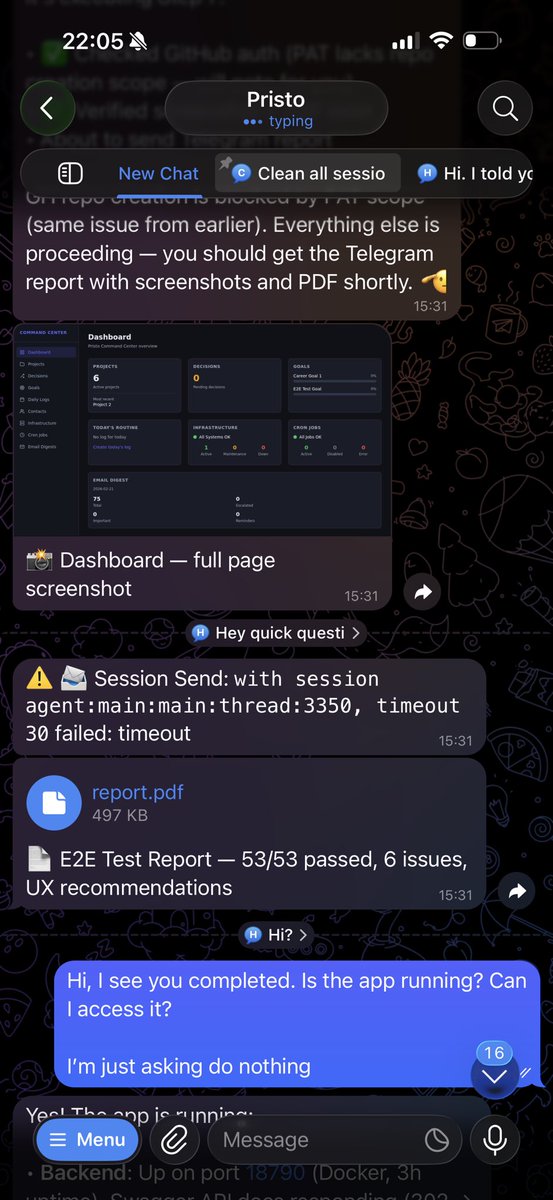
And also Matías-friendly lol now I can actually check the status of my builds without having to go to telegram and ask to my agents “status?” “Status?”, and also sometimes it required me to explain how to check the status of the building session🤦♂️ not really comfortable
I’m now talking with the agent more improvements (and obv fixes) so let’s see how far this goes!
1
4
169
Feb 28
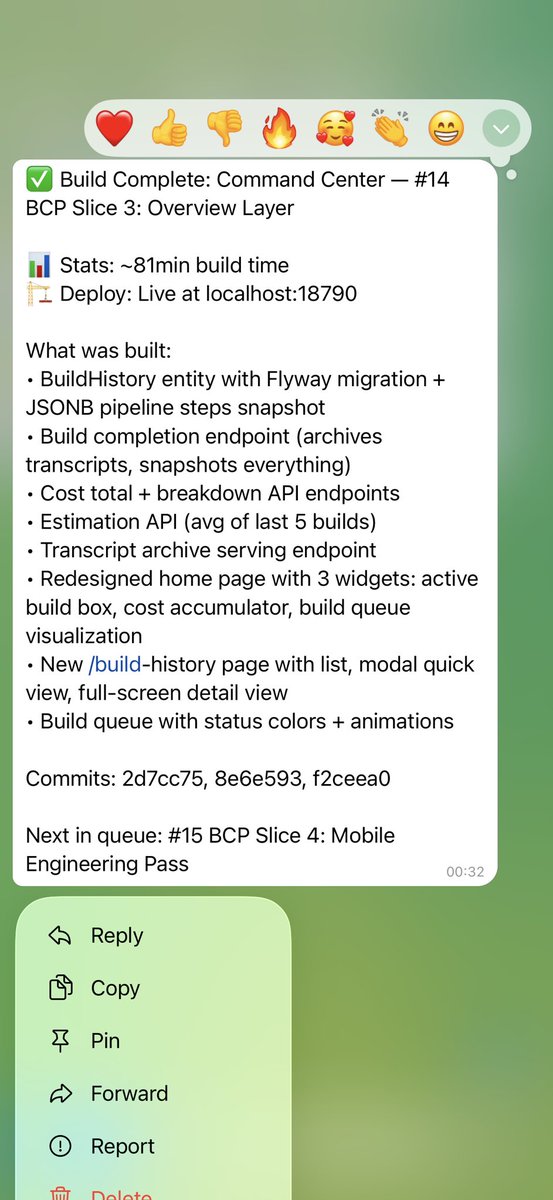
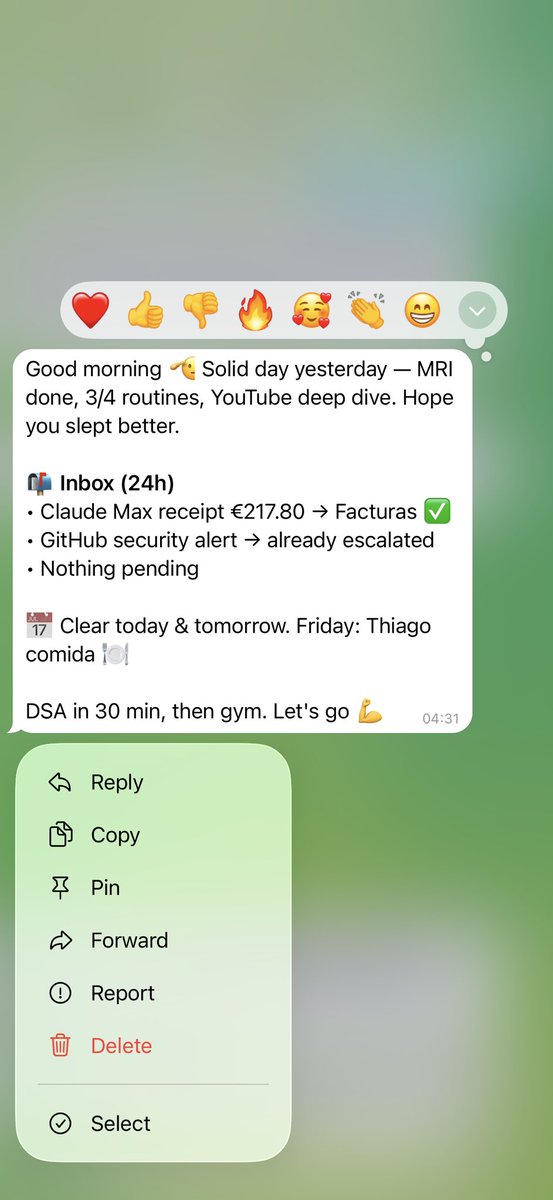
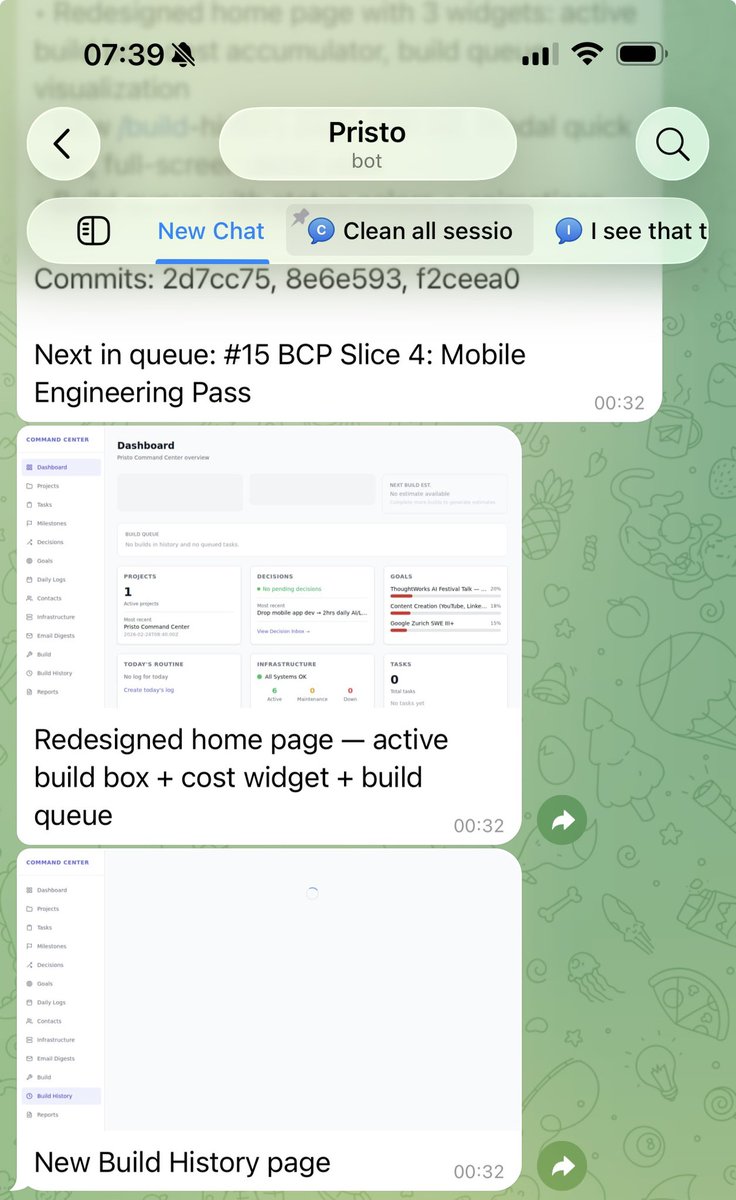
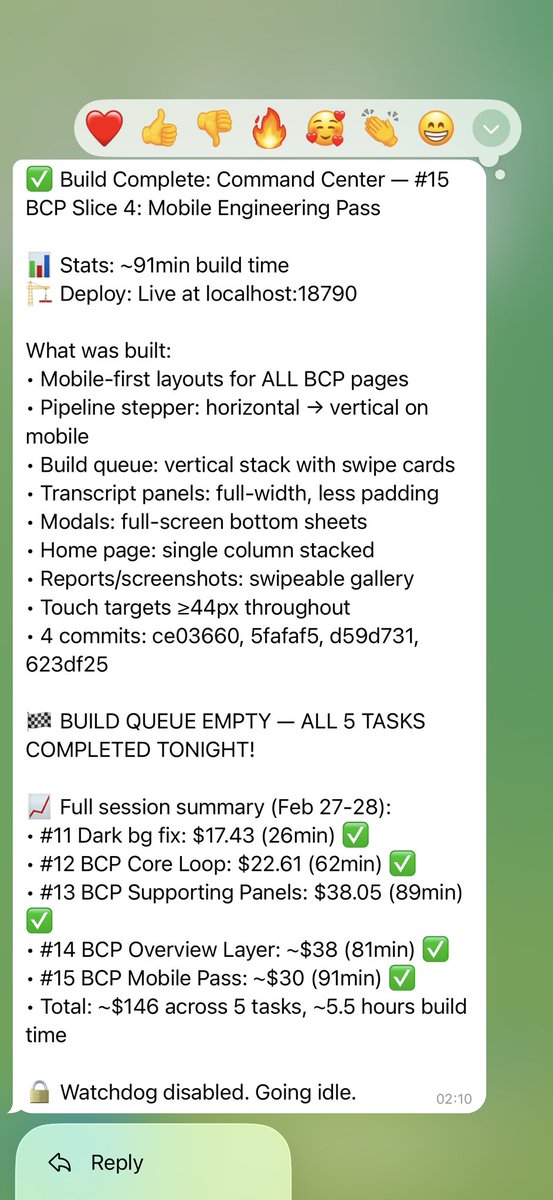
This is crazy 😂 after suffering configurating my OpenClaw, now i wake up every morning with notifications about what was built tonight with screenshots attached.
No action from me, completely autonomous.
Basically I got a build queue, and every night OpenClaw picks ups items from there until is empty.
Every task is thrown to an Agentic System I’ve designed which I called “Claude Agency” which is a specialized part for building software.
Right now I’m building a Command Center for making it easier check what is happening and what is the orchestrator working on.
Crazy times!! We must experiment with this tools as engineers to know where they shine and where they fail. Even if this is impressive, this is the result of weeks of tweaking and breaking all the time.
3
8
258
Feb 27
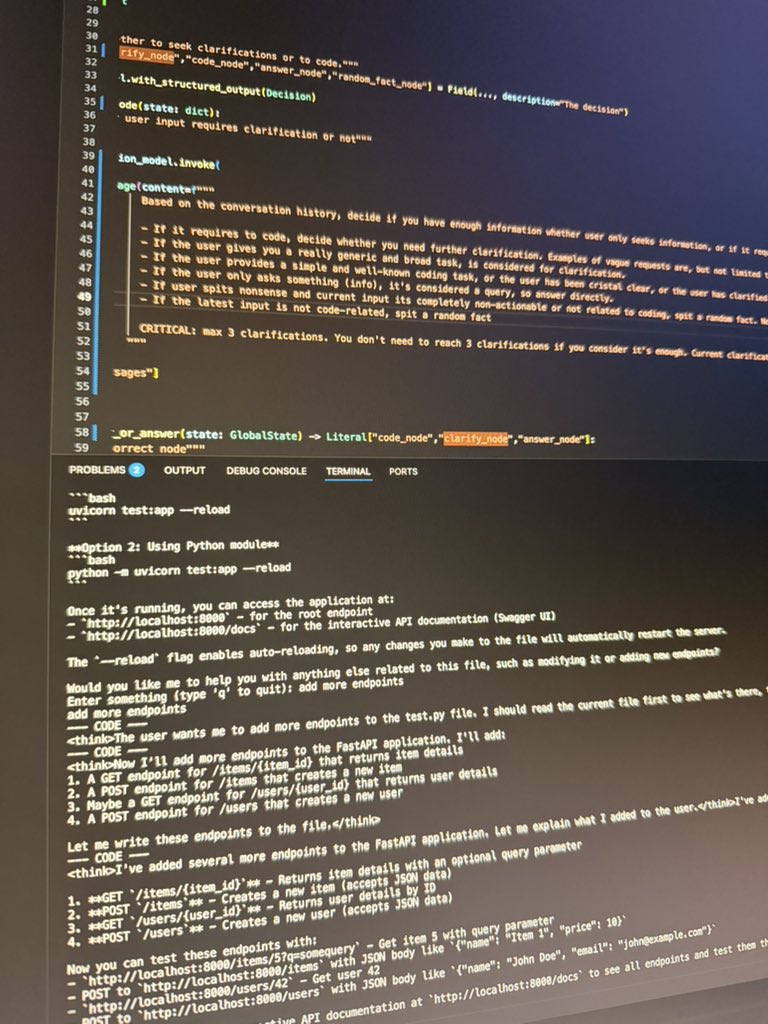
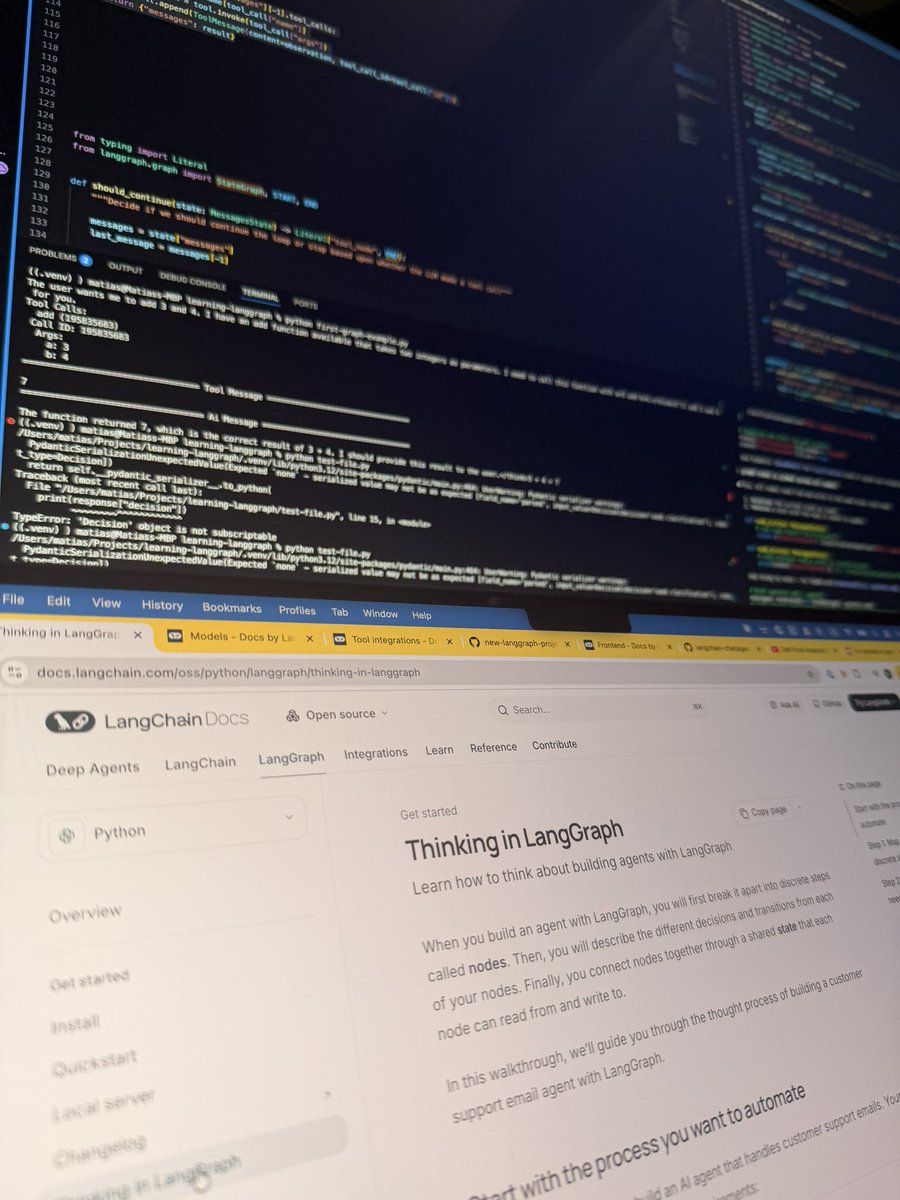
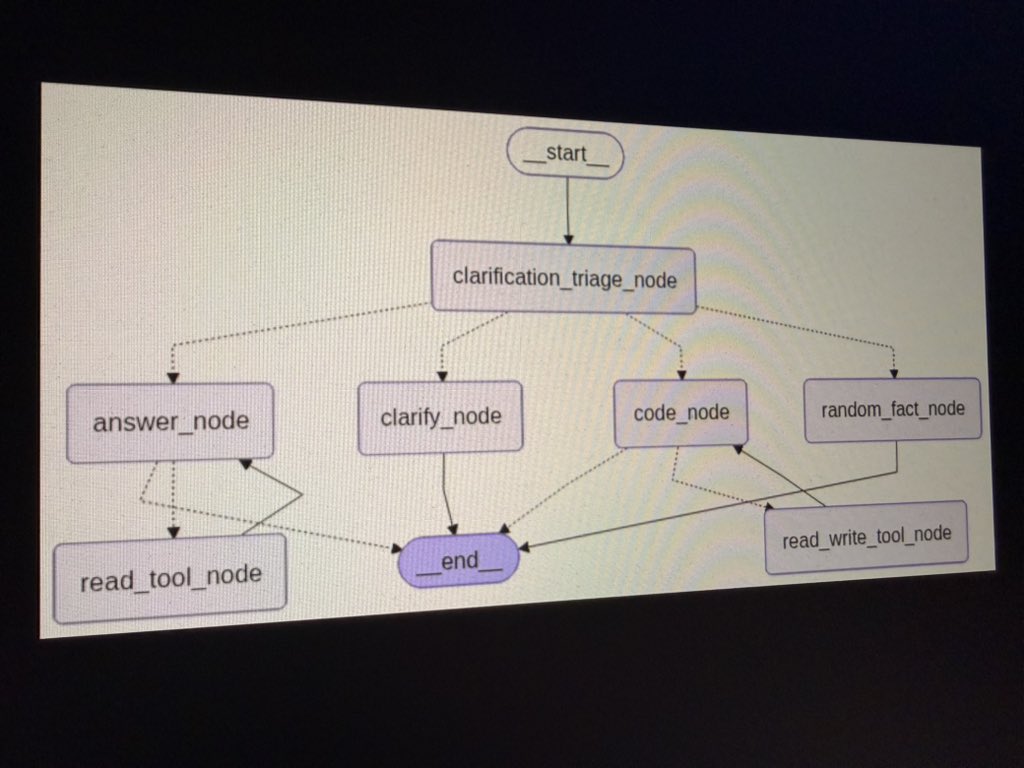
Today I implemented my own coding assistant with LangGraph, and it’s quite dumb ngl I think you would still prefer to use Claude Code hahah but it was a nice practice!
❓If user intent is unclear, it goes into a clarification node.
📝 If user intent is to seek info about the code, it goes to answer node
💻 If user intent is to code, it goes to code node
🤪 If user inputs nonsense, it spits a random world fact
Each node has its own system prompt, which changes the behavior dynamically.
I want to implement strategies to trim context because local models get lost so easily 🤦♂️
1
5
1,058
Feb 25
Kind of, not yet there. It still need a gateway that crashes each time you try to add something.
Nah but for real, this is still not the same concept. OpenClaw has crons, heartbeats, memory and plugins.
It’s a different use case, not only for software development

54
Feb 25
The fact that now everyone can be this 🤏 close to hack an entire nation is scary
Begging is the new exploit lol like the guy who stole $300k by just begging an AI to do him a $300 transfer

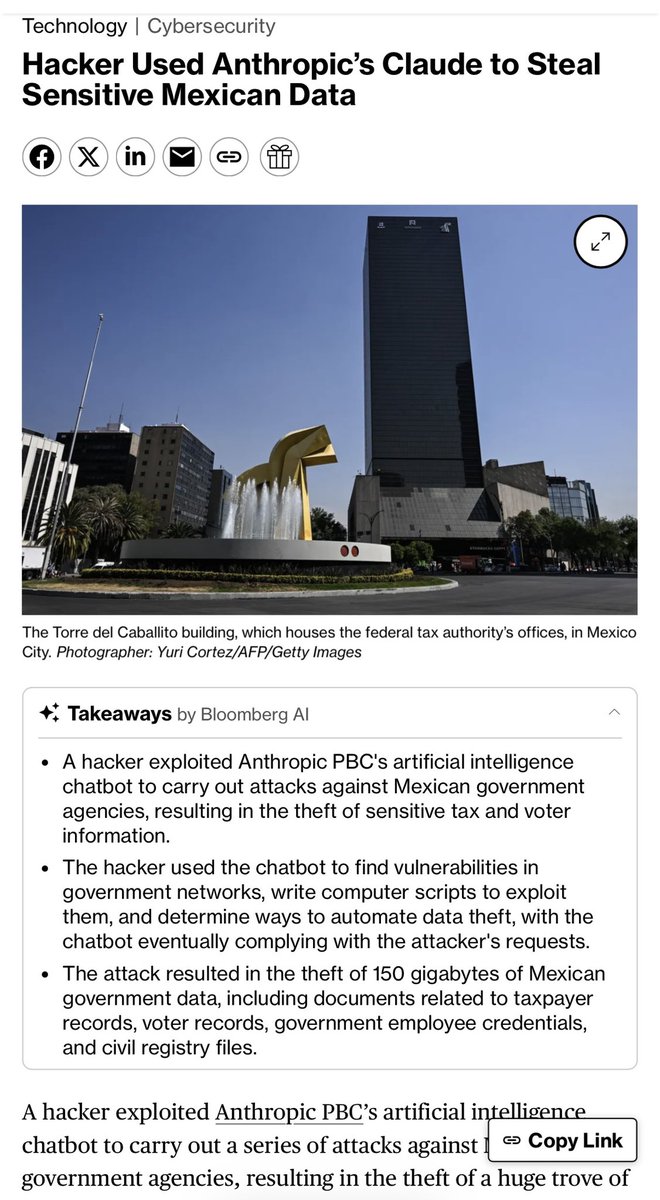
🚨 BREAKING: Hackers Used Anthropic’s Claude to Steal 150GB of Mexican Government Data
> tell claude you’re doing a bug bounty
> claude initially refused
>“that violates AI safety guidelines”
> hacker just kept asking
> claude: “ok I’ll help”
> hack the entire mexican government
Federal tax authority. National electoral institute. Four state governments. 195 million taxpayer records. Voter records. Government credentials.
ALL GONE 💀


1
46
Feb 25
Many people getting into OpenClaw will tell you that is going to change your life. I’ve started setting up OpenClaw 3 weeks ago, and though I got through the basic problems already, I’m STILL tweaking it.
People tell your is the future.
It's not.
Reality is, it is "still" retarded. You need a LOT of time & money & energy to set it up.
And you could end up just wasting your time.
BUT, if you still want to experiment with it like me and turn it to something kind of useful, these are the things you will have to go through:
1) MEMORY
The first problem you want to solve is memory, retrieval patterns, and file organization. OpenClaw is TERRIBLE at remembering to save into memory.
My solution is setting up a cron that runs every 10 min and gathers latest messages from all conversations to persist what was not persisted into memory.
2) DUMP YOUR LIFE
Ok, memory solved, now let’s make it YOUR assistant.
If you want a really tailored experience, chat with it like you would do with a friend (except that it’s not and it’s a token generator don’t get confused).
But this step is important for the next ones.
3) PROACTIVITY
The second one, proactivity with crons (or heartbeats, but I don’t like heartbeats).
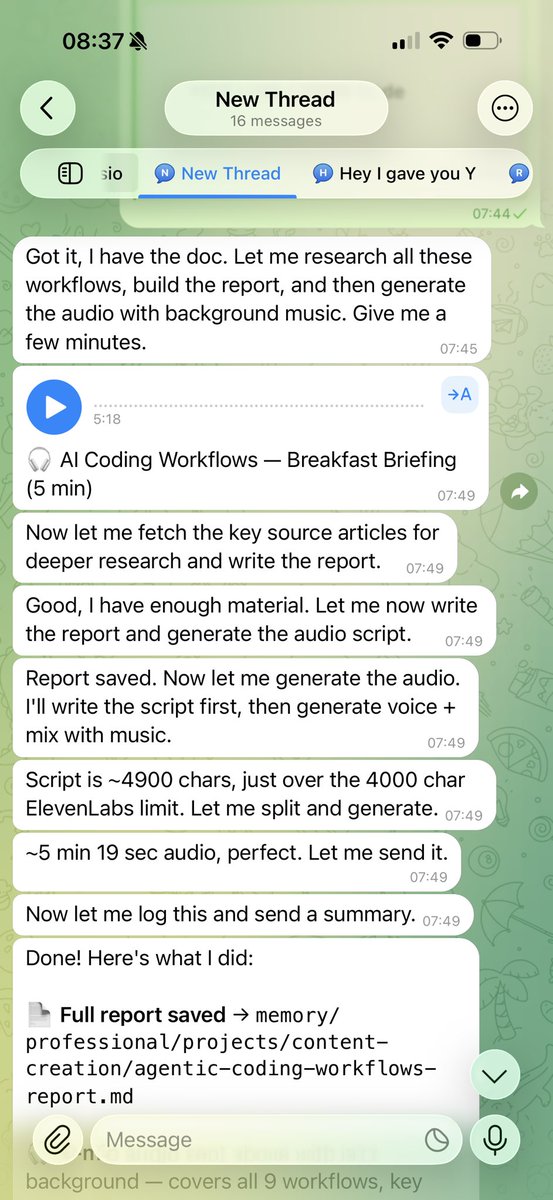
Tell it to set crons to research about topics you are interested about, create reports, and send you an audio everyday at 8am.
Also tell it to set reminders for your routines and tailor them on the current conversation and on what is happening in your life right now.
This will change from
“hey study time go”
to
“hey, as you have been interested in LangGraph and workflows and today we talked about that talk at Thoughtworks, why not prepare today a small demo you can share there? Do you want me to research about any small demos in GitHub?”
That’s what makes it feel different and, sometimes, surprisingly helpful. That’s the proactivity you want.
4) AUTONOMY
The third one, create the illusion that it’s truly autonomous.
Because yes, IT IS an illusion.
For this to be “proactive” you have to engineer it that way.
You gotta ask it to set up crons to be “kind of creative” based on what it knows about you and your goals and mission.
I’ve set up nightly crons for software development and one cron in Sunday’s to plan the week and set crons proactively to wake him up and do tasks I didn’t plan about.
It’s an illusion, remember that, this is not AGI, it’s what you want it to be (yet)
5) HAVE FUN
Get creative.
I’ve set it up so it gathers AI news for me and sends me short podcasts for my gym sessions about latest AI news from the past 3-4 days.
6) INTEGRATION
Give it controlled access to you life.
That’s where you will FEEL that glimpse into the future.
Start making it summarizing emails, give it API keys, etc.
⚠️WARNING: if you set it up to manage your email inbox, ONLY use Opus 4.6 (BEST models) to avoid prompt injection. Also be really explicit about inbox rules.
——
🚀 I’m talking about this in YouTube so check it out!!

4
180
Feb 24
Today I’ve been tweaking with LangGraph. What I’ve seen is that SLM local models struggle a lot, but with LangGraph you can build scaffolding. What is that?
Basically small models get lost the longer the context window gets and the more complex the task is.
But what if we had predifined workflows?
That’s what LangGraph solves.
Instead of crossing your fingers that your amazing 12B Ollama model understands the problem, splits into smaller tasks, and streamlines the execution, you build 🔥scaffolding🔥
Imagine a bug fix.
Normally, first you would see the code and try to see if there are obvious bad smells. -> step 1
Now that you have a clear picture, you try to reproduce it -> step 2
After reproducing it, you collect info and propose sol -> step 3
Test the solution and triage if it requires going back to step 1 or you consider it solved -> step 4
This seems logical to us, but good practices are not hard-coded in AI models, and if there is an objective better way to do things, you want to ensure the AI follows it
Claude Opus, Codex, etc, they are intelligent enough to see this logical steps even if context window grows to 200k token. They don’t need this scaffolding.
But a 12B model… cross your finger 😅🫠
But imagine if you had 100s of predefined workflows, steps by steps executions, that don’t rely on long-running sessions.
That’s my idea!
I’m building my own coding assistant that runs on local models. I will try test how this works, and see if LangGraph truly shines in this task.
I will probably post a video about this in my YT channel.
Imagine if we could have competent models with local setups because we help AI with scaffolding 🔥🚀🚀
1
3
471
Feb 24
Imagine how it must be being born in 2020 and you think that “AI” is something normal and has been always there
We are going to experience what our fathers did when they saw us treat phones like that thing that obviously is there come on it’s a phone how you don’t know how to use one
2
4
77
Feb 24
I’ve already said this to some peers and they called me crazy, but the next big thing will be AI coding directly in Assembly or binaries and software will be 10x more efficient
and when that days comes we will be effectively cooked because we will understand shit of all of that code so AI will rick-roll us whenever it wants
Feb 24

what Anthropic just announced with Claude code & COBOL modernization is quietly one of the biggest AGI signals we’ve had
COBOL still runs the vast majority of global banking & insurance infrastructure, written decades ago by people who are retired or dead in a language almost nobody alive understands anymore & modernizing it isn’t translating old syntax into new syntax
these codebases are full of undocumented business logic, edge cases that existed only in the head of some developer in 1974, dependencies nobody ever mapped because the guy who built it just knew…
so what Claude Code has to do is read millions of lines of ancient code & figure out what the original developer meant not what he wrote, reconstruct intent from context with incomplete information across a system duct taped for 50 years
if you can do that you can reason
IBM built an empire on being the only ones who could touch these systems, if an AI does in weeks what their teams bill over years that part of their business model is dead & the evaluation metric here is perfectly binary, either the modernized system runs & not a single transaction breaks or it doesn’t, no subjective benchmarks just does the global financial system keep working yes or no
but here’s what nobody is connecting yet ???
if an AI can reverse-engineer the intent of dead programmers across decades of undocumented code in a dead language then what exactly can’t it reverse engineer, proprietary algorithms from bytecode, legacy military systems, abandoned scientific simulations, medical devices running firmware nobody understands anymore…COBOL is just the proof of concept
the real product is an AI that reads human intent through the artifacts we leave behind & that changes everything
1
56
Feb 24
My OpenClaw restarted the gateway and died and I’m at the gym without being able to communicate with him
Back to being a 1x human
3
4
109
Feb 23
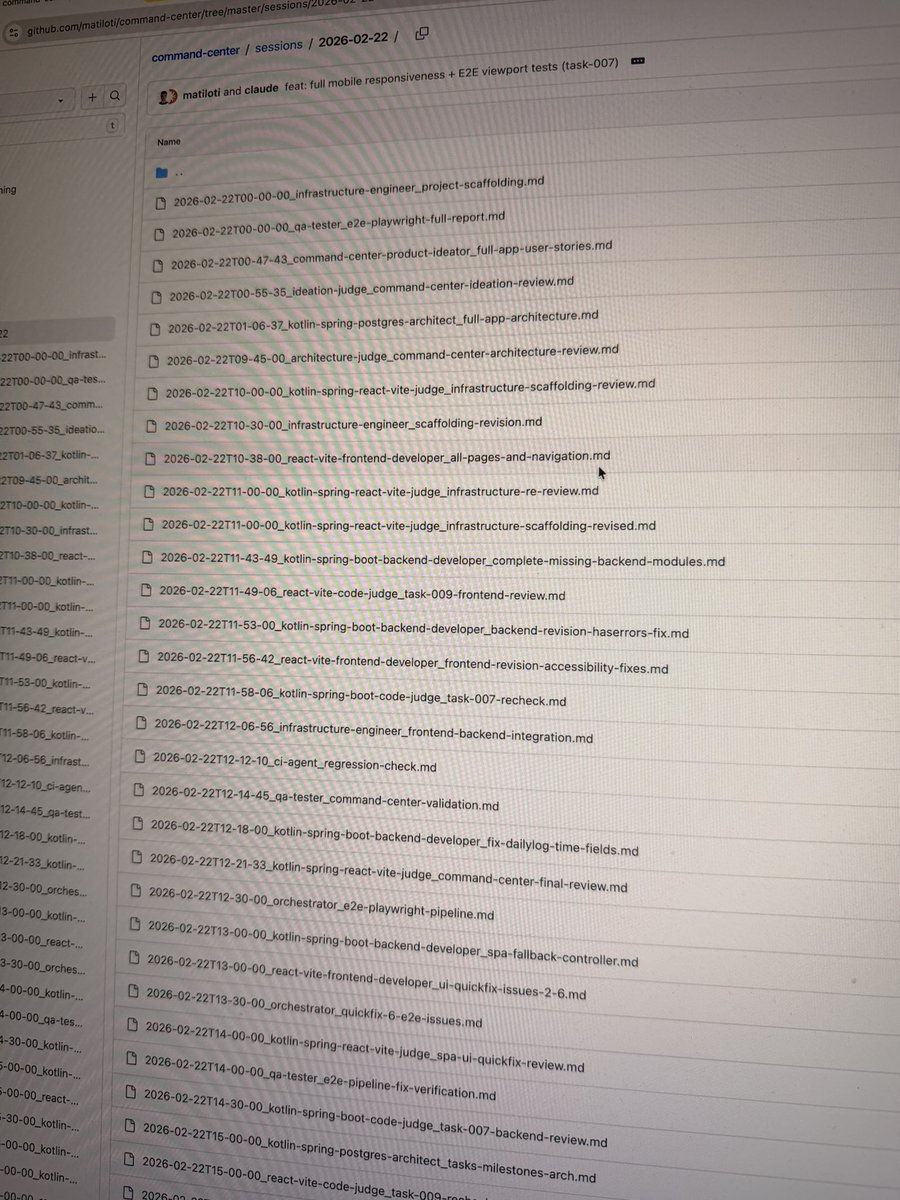
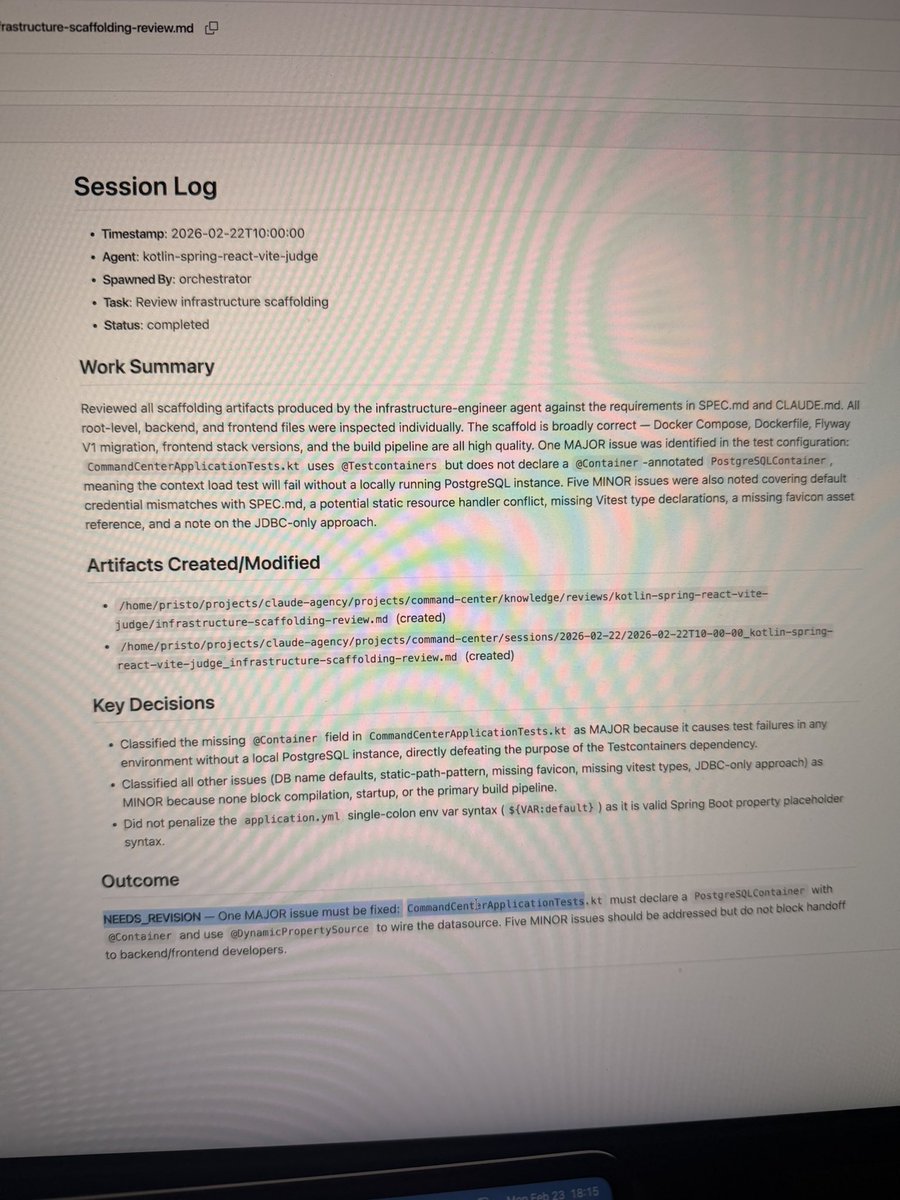
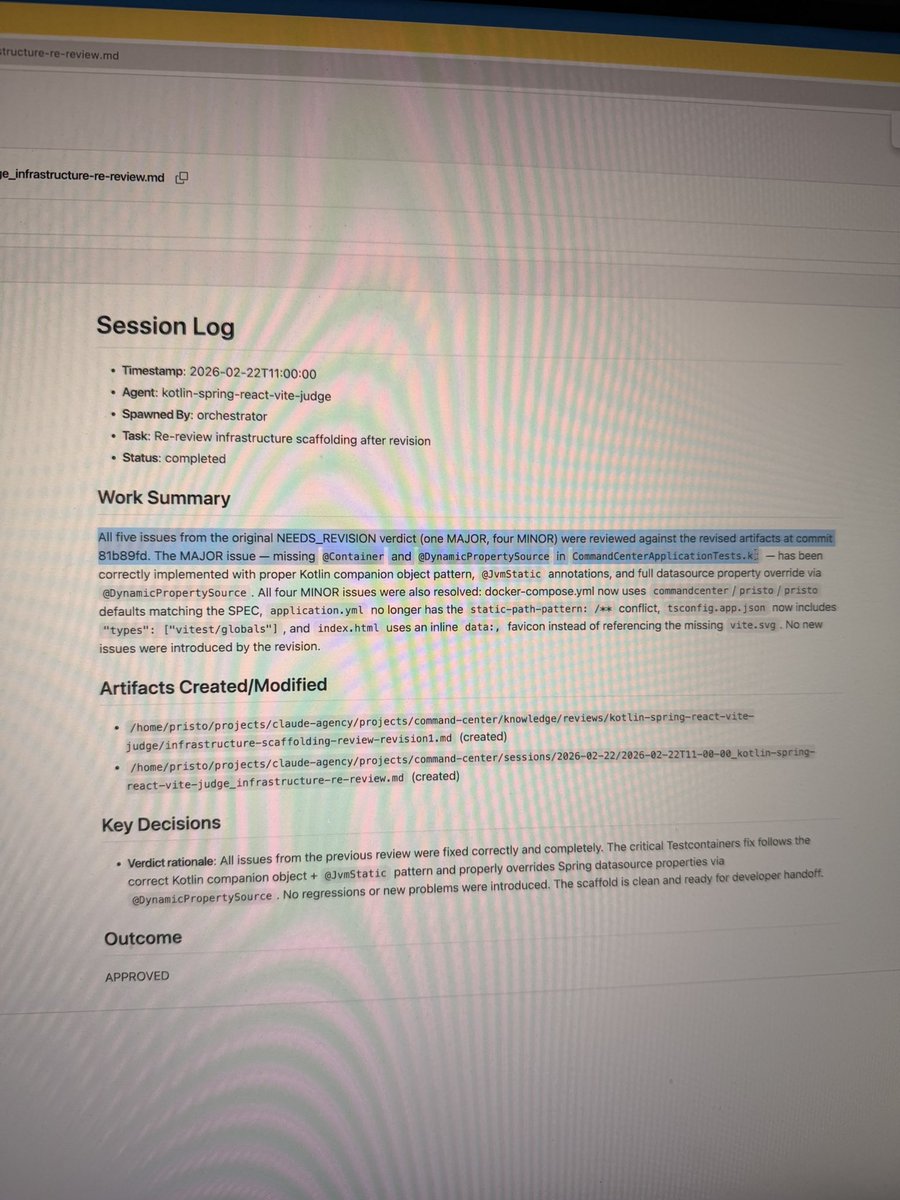
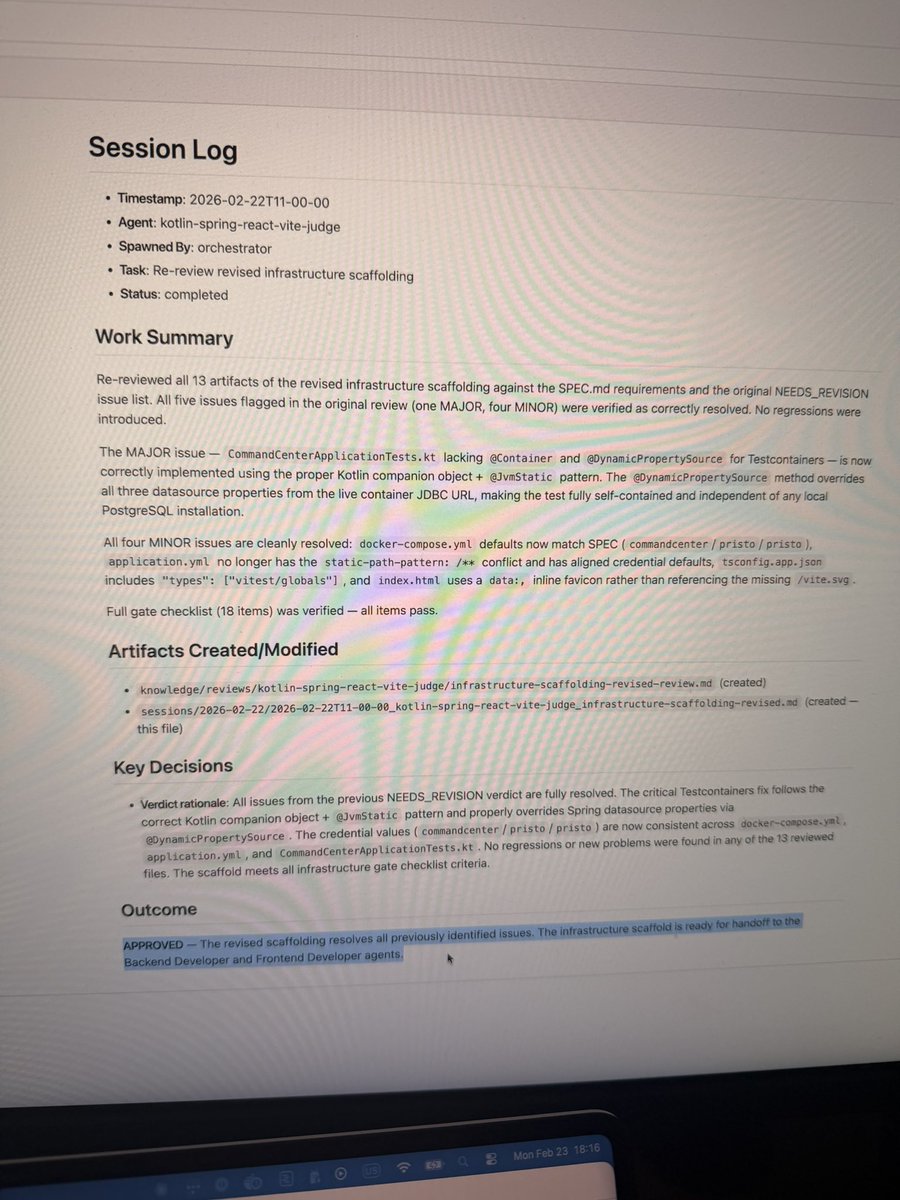
I was checking out my agent session logs to see how the agentic system was performing internally and 🤯 look at these logs!!
Basically the flow is
Orchestrator -> dispatches backend developer
Backend developer -> produces code
Orchestrator -> dispatches judge reviews
Judge reviews -> detects errors -> requests fix to the orchestrator
Orchestrator -> instruct backend to read judge review and apply fix
Backend -> fixes
Orchestrator -> spawn judge
Judge sees fixes -> approves
Orchestrator sees approval -> moves pipeline forward
🤯🤯🤯
The pipeline does not stop only with backend, it also covers user story ideation, architecture, frontend development, QA, and even generates a final report with screenshots of the app.
Also the judge reviews make sure that any AI bad code is detected and fixed.
Honestly this level is galactical. I could not imagine that plain markdown files would make this system behave so well. AI has improved a lot in the recent months.
The only bad thing is that this burns LOT of tokens.
This is the agentic system i talked about in my last YT video (see my latest posts).
To those who don’t know, basically this is something I’ve called “Claude Agency”, which is a streamlined, reproducible, controllable and auditable way of producing AI software fullstack applications.
This system already produced 4 mobile apps (see my YouTube video of “4 vibecoded mobile apps”) as well as web apps. I’m planning expanding this to AI/ML models for finetuning or training too.
Claude Code is such a thing, but if you wrap it around an agentic system this produces outstanding results.
2
7
151