
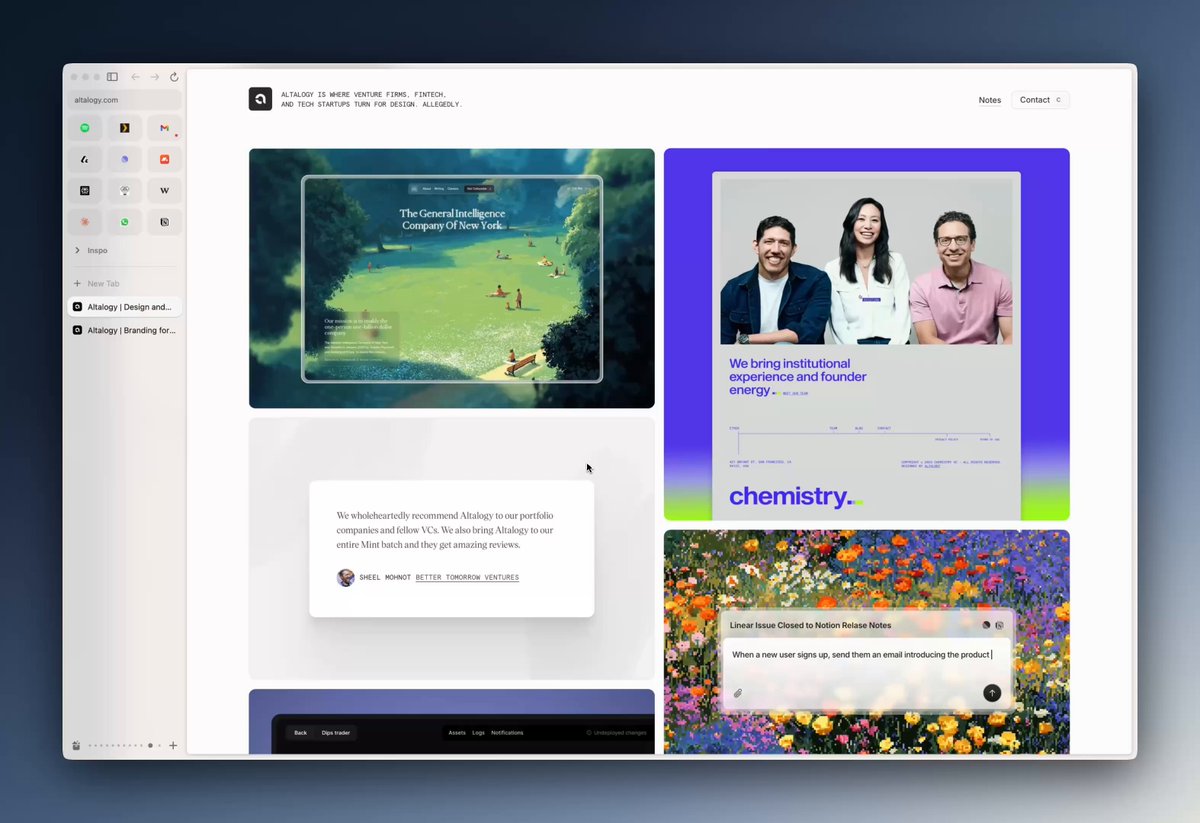
working on @altalogy - a design and engineering studio behind @rollupsHQ, @morningbrew, @chemistry, @hummingbirdvc, @intelligenceco and more.
Joined April 2014
- Tweets 4,707
- Following 1,005
- Followers 2,292
- Likes 18,951
609 Photos and videos




Dawid Cedrych retweeted

May 25
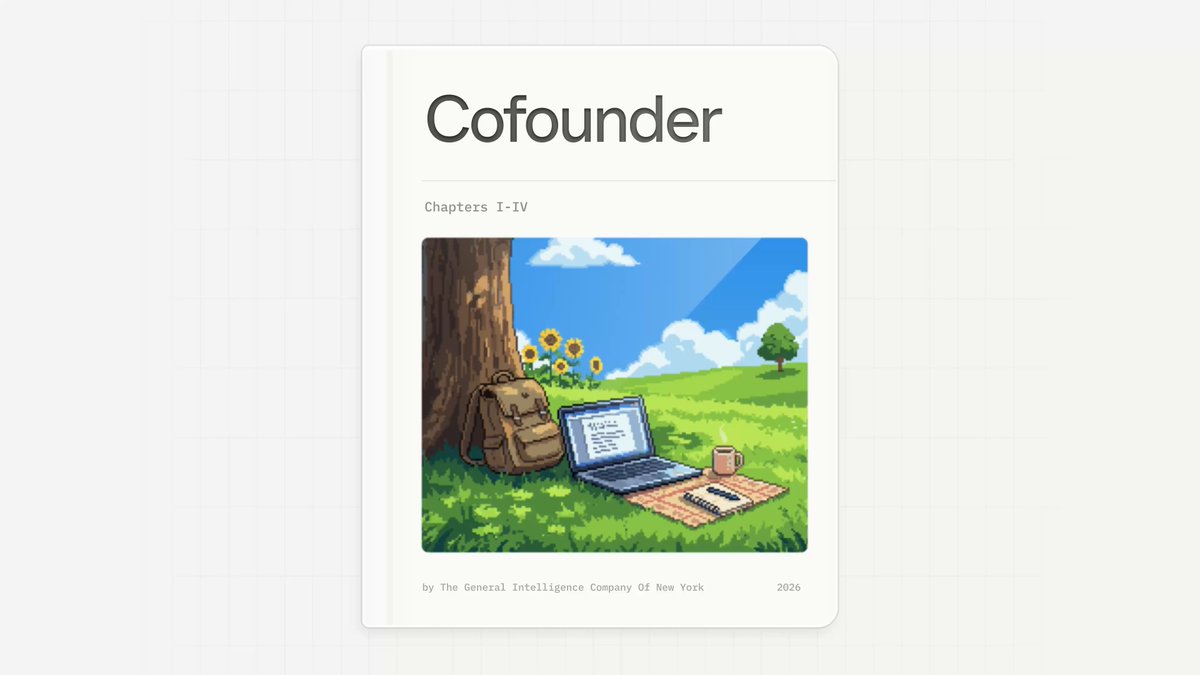
Cofounder shiny card interaction 🎴✨
7
21
586
18,402

May 12
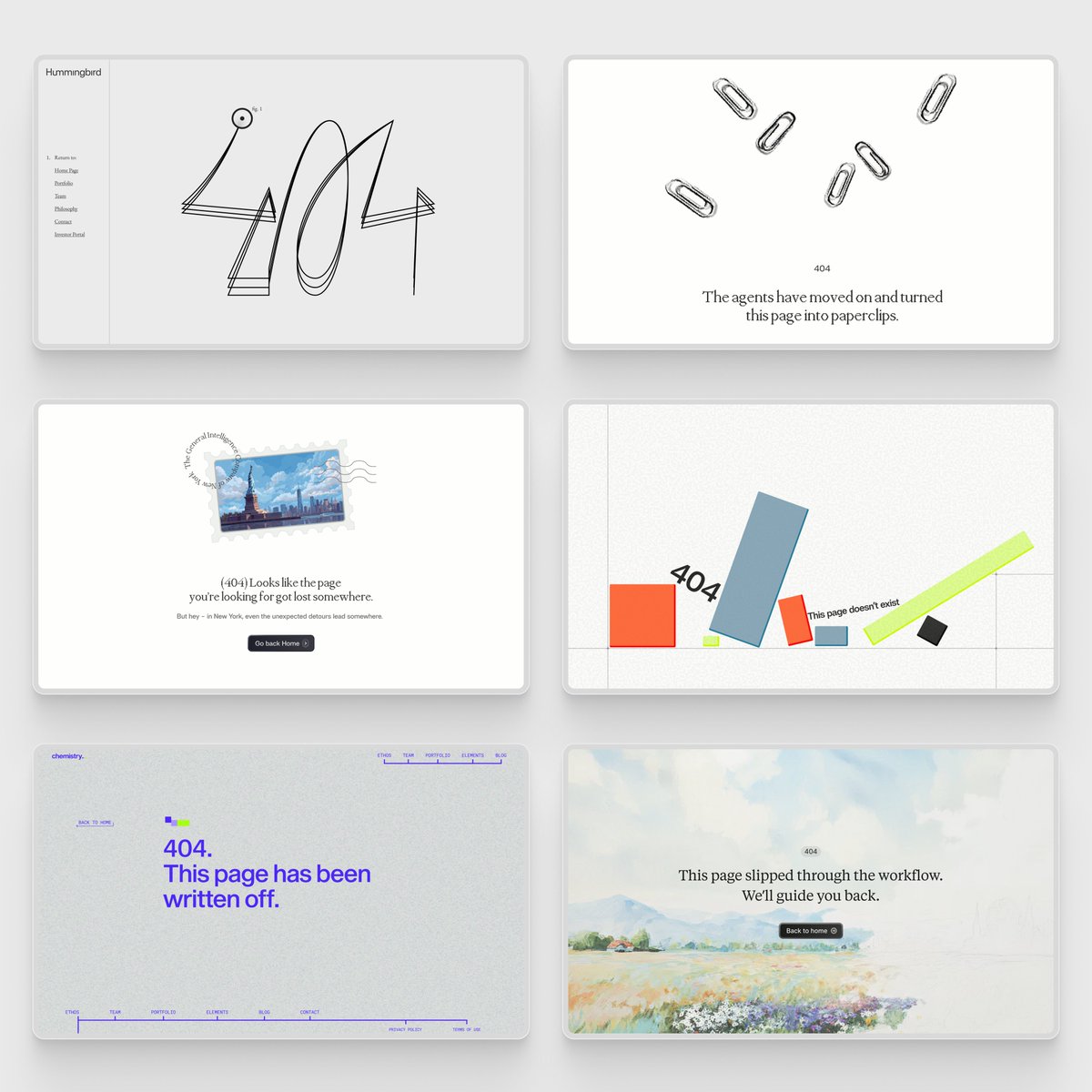
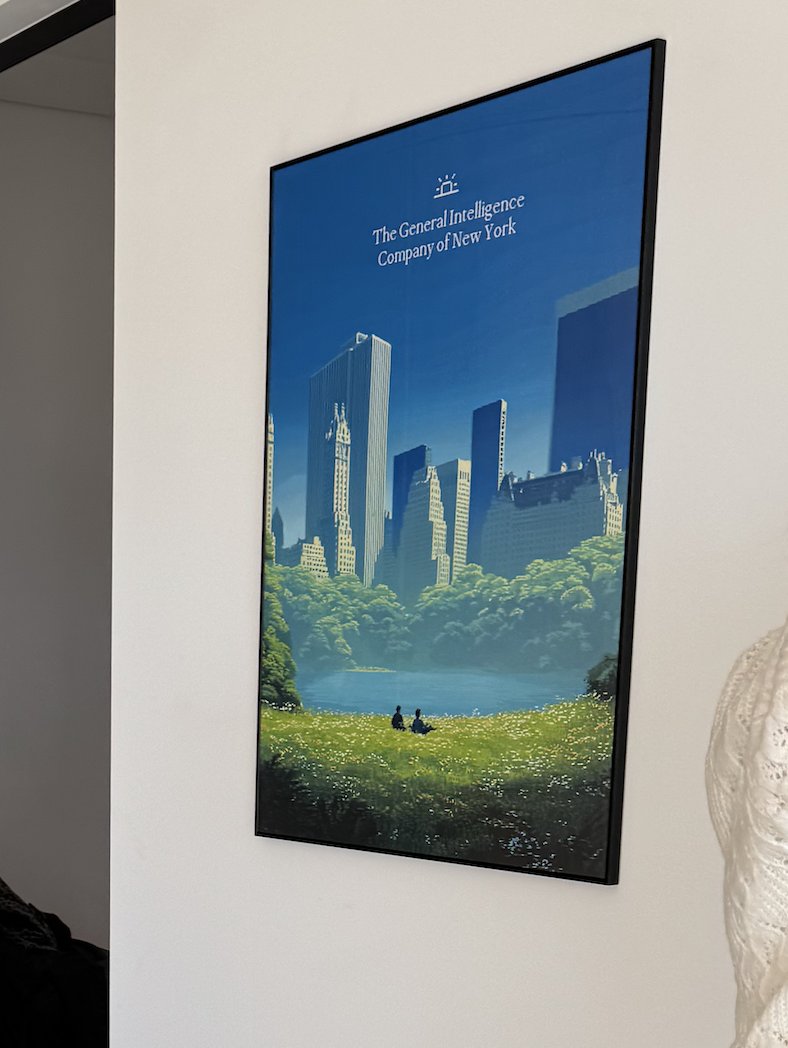
Killed a lot of darlings on the way to the final @intelligenceco Cofounder 2 website, well worth it!
16
8
132
275,681
Dawid Cedrych retweeted

May 8
new langfuse.com, new brand.
same mission: open source LLM engineering platform.
s/o to @altalogy for the great work.
7
10
78
22,339
May 6
Personally big fan of Ania ❤️
May 6

Nice thing about working at @altalogy : you get to work on things outside your job title when you want to. Lately that meant building a couple of small apps for a client alongside the usual design and Webflow work. Link in comments if you're curious. 👇
2
317
Dawid Cedrych retweeted

May 5
@altalogy cooked with the new cofounder site
so many amazing details and interactions
3
4
23
2,122

May 4
Andrew is the kind of client who pulls the best work out of you. S-tier founder, opinionated on design, obsessive attention to detail.
Working with @ndrewpignanelli , @samarthgwalani and the @intelligenceco team these past two months has been a highlight. @altalogy crew:
design & creative direction: @muamartaw , supported by @dorotaresovie
engineering: @klijakub , supported by @tomasz_antas and @arcadius_c

Announcing Cofounder 2: Run an entire company with agents.
It's the infrastructure for the one person billion dollar company - orchestrating agents across engineering, sales, marketing, ops, and design.
(and yes that's my real grandma in the video)
3
6
29
1,563
May 1
Everything recorded before 2010 shows people who aren’t addicted to the screens.
Think about it.
133
Apr 30
My version:
You see people building startups. You quit your 9-5 thinking you gonna build one too.
You don’t know how to code, you don’t know how to sell, you don’t know how to market.
You’ll learn all three on the fly.
You take on freelance jobs for pennies to pay the bills. When the gig is over, you build your own thing, only to slow down to find another small project thay will pay your bills.
You drop the startup idea to build a company that builds for others
Clients abuse you. They know you suck, they know you need them like oxygen, way more they need you.
You constantly do more than you ageeed on, constantly paid less that your work is worth.
You see friends flashing apartment keys, rave about asia trips over drinks
You code 14 hours a day to pay a salary of your first employee.
Every new hard won client feels like an inflection point. Almost never is.
You learn to code better at nights because you know it will all come to 0 eventually, and you’ll need to get back to looking for a FTE job, and you’re scared of the idea of being rejected on an interview by a 20 y.o programmer way smarter than you.
One day you wake up and these problems are gone. You’re not rich but you don’t have to fight for your existence anymore.
But the memories of the uncertain times will become the time you keep coming back to in your dreams
Apr 29

You became a founder.
You quit the 9-to-5. You raised a little money. Everyone called you "brave" over drinks. You spent your nights building and your days pitching "the future," convinced that the next launch would change your life forever.
Then a year passes.
Flatline traction. $0 salary. Your co-founder quit via Slack. Your girlfriend left for someone with a 401k and a "stable" future. Your friends are posting house keys while you’re staring at a bowl of ramen, rehearsing the same tired lies to your parents about why the "big break" is just around the corner.
Is this the end? You start wondering if you made a mistake.
No. You keep telling yourself every founders went through this at some points. But you don’t stop.
Logic says quit. Your ego says run. But there’s a sickness in you that won't let go. You’d rather fail at this than succeed at anything else. You tell yourself it’s just one more launch, one more pivot, one more "yes."
You’re not delusional; you’re committed.
You’ll miss this.
Not the stress, but the electricity. The raw doubt that forced you to grow. The quiet fire of building while the world slept. The pure, unrefined dopamine of that very first user.
These aren't just "hard years", they are the years that forge you. One day, when the bank account is full but the mystery is gone, you’ll find yourself wishing you could feel this hungry again.
They all do.
1
3
282
Apr 25
Thanks to AI, the golden era of thoughtful letter/manifesto sections is over
98
Apr 21
Client work vs. our website
The shoemaker's children are ill-shod

2
4
243
Apr 16
🤫
We have a new website coming in ~2 weeks that absolutely did not take 4 hours with claude code. Excited to share the other side of the coin here 😉
1
176
Apr 12
I saw the best designs of my generation destroyed by the madness of unlimited Claude Code tokens in the hands of non-designers, dragging themselves through the frenzy of merging unreviewed PRs at dawn, (not) looking for a design system fix.
3
213
Apr 7
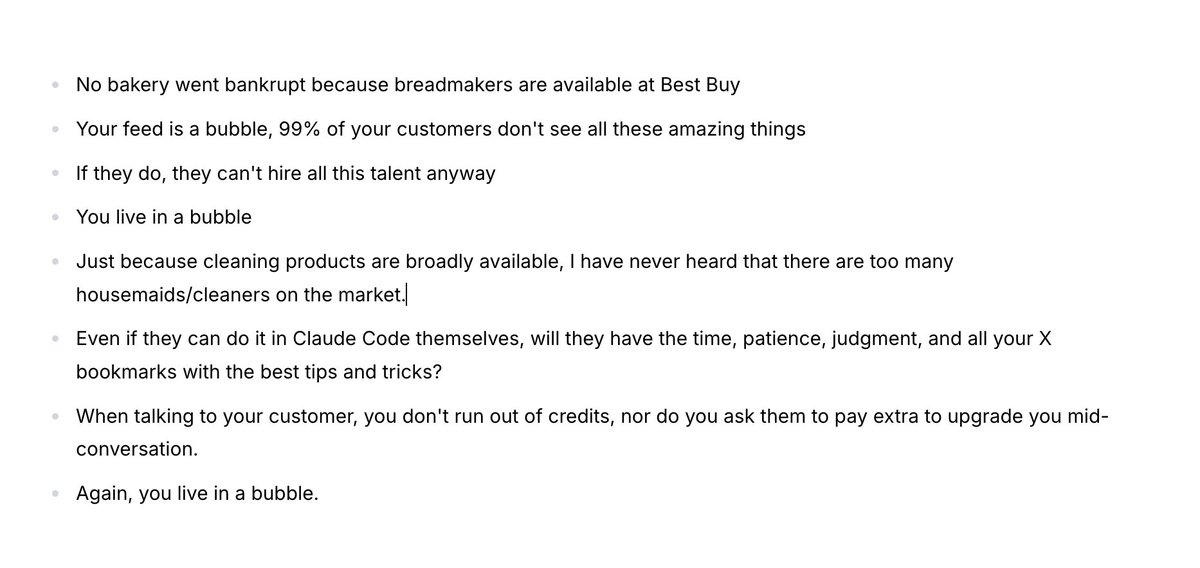
Just a few notes to self to stay sane in the AI era as a creative studio owner
4
134
Mar 19
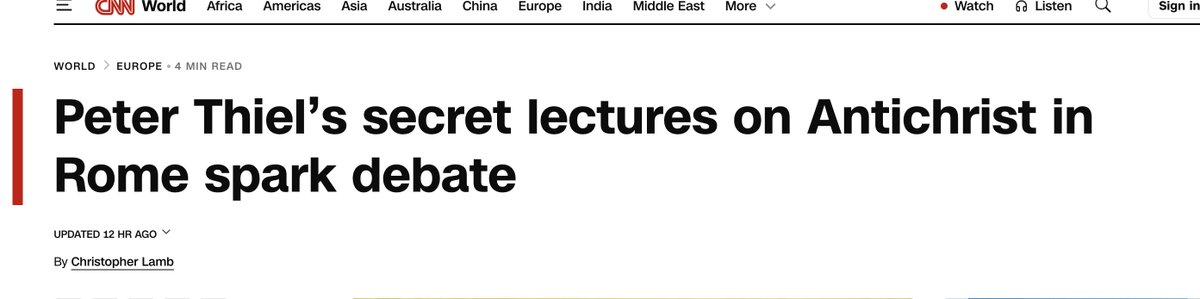
You and I visit Rome to drink a spritz near the Trevi Fountain.
Peter casually attends private lectures on the Antichrist.
We're not the same
184
Mar 12
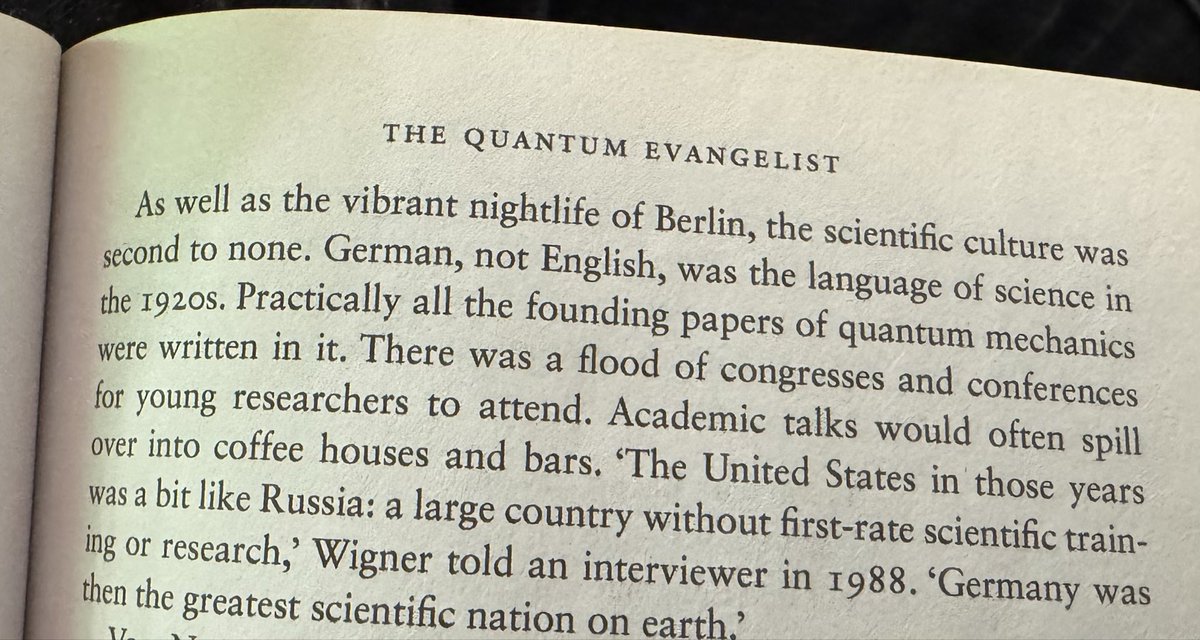
Do you think Albert Einstein would have ever published Special Relativity if he’d checked every comma and grammar in claude?
144
Dawid Cedrych retweeted

Mar 6
THE BLEAKNESS OF THE BRAND AGE...
PG’s essays on builders and innovation are some of the clearest thinking about the startup world. They are essential. But when he writes about art and design, he tends to apply an engineer's lens that flattens the subject.
In this piece he frames design as something to solve and brand as something like the decorative facade constructed when real innovation runs out... He goes on that at the end of golden ages we are met with a bleak reality that the hollowness of brand is all we can compete on. Early industries compete on technological advancement. Later, when products become indistinguishable, companies compete on brand. He frames it as a cosmetic layer applied to otherwise solved problems. He makes a similar move in his essay How Art Can Be Good, resolving artistic quality as something judged objectively by an audience rather than as personal expression (I find this take particularly jarring given his background studying painting at RISD, one of the more intuitively-driven art schools.).
The premise assumes that the only meaningful axis of improvement is technical performance. Once precision, efficiency, or cost reach a plateau, the remaining differentiation is treated as superficial, or worse, as a distortion.
But value rarely evolves that way...
In most product categories, value tends to evolve in layers. At first, the question is functional: does it work at all? Then it becomes experiential: how well does it work, and how does it feel to use? Eventually the frontier becomes cultural: what does this object express, and who does it belong to?
Engineering dominates the first phase. Design often shapes the second. Brand emerges in the third, when products begin to carry shared meaning.
As industries mature, competition shifts toward these cultural and human needs: what identity a product signals, what kind of world it helps create. As makers, we start by solving the functional problem. Over time the work moves up the ladder of human needs. Those dimensions are often symbolic rather than purely functional, but they are not trivial. They are where design often differentiates.
PG is right that brand can become hollow: his account of Patek Philippe cynically creating an asset bubble through artificial scarcity is convincing, and the "comb-over effect" of individually rational steps producing something freakish is well observed (see: Richard Mille). But he makes the mistake of treating this endpoint as the definition of brand itself. Brand at its best is not manufactured scarcity or centrifugal weirdness. It is what happens when product, design, and point of view become coherent to people and begin to signal shared meaning.
The watch example he builds the entire essay around actually illustrates the shift.
Once quartz solved the problem of precision, watches didn't become irrelevant, their significance as cultural objects was enhanced. They became artifacts of craftsmanship, history, identity, and taste. The engineering problem was solved, but the human one remained. PG sees this transition and concludes that the remaining activity is empty. A designer sees it and recognizes a different kind of problem being solved.
His strongest claim, that branding is “centrifugal” while design is “centripetal,” deserves a direct response. It's true that good design often converges.
But convergence on what exactly?
PG assumes it converges on functional optima: the thinnest case, the most accurate movement. Design converges on human optima: on how something communicates, on the relationship between an object and the person holding it.
Brian Eno (whose writing on creative practice is akin to PG’s for startups) has a useful frame here called axis thinking. Most fields get stuck optimizing along a single axis, and the real leap comes from shifting to a different axis entirely. That's what happens when watches move from precision to cultural meaning. It's moving to a different center. That center is just as real, even if it can't be measured with a chronometer. When PG writes that “there's no function for form to follow” in the brand age, he's defining function too narrowly. Expressing identity, signaling values, triggering emotions, these are very real functions. They're just not engineering functions.
If his interpretation were correct, if everything beyond technical performance were decorative, whole domains of human creation would stop making sense.
Why design new chairs once ergonomics are understood?
Why design new garments when we have ones that work perfectly well?
Why open new restaurants when we already know how to cook?
The answer is that these fields serve a hierarchy of needs that extends well beyond the functional, and the work of addressing those higher needs is not lesser work.
This matters now more than it has in decades. As AI compresses the cost of building software toward zero, we are entering a new version of the quartz crisis: one that affects nearly every product built on code.
PG's framework would predict that what follows is a rather bleak brand age: superficial differentiation over commoditized technology.
But if value evolves in layers, what actually follows is a design age, a period where the human dimensions of product become the primary frontier. When done well, design, taste, point of view, brand, and cultural meaning won't be regarded as decoration applied after the engineering is done, but rather be the work that matters most.
Engineering solves problems. Design and brand determine what those solutions mean to people.
Mar 5

The Brand Age: paulgraham.com/brandage.html
23
32
297
52,918