
I create ideas & words that cut thru the clutter & generate response / Started at David Ogilvy's ad agency / $1B in successes for clients from P&G to startups
Joined June 2008
- Tweets 9,755
- Following 1,201
- Followers 8,710
- Likes 13,325
79 Photos and videos






Pinned Tweet

18 Sep 2023
The "secrets" of my success...
1. Starting at Ogilvy and getting a first-class introduction to "Madison Avenue" ad agency advertising (it's where I learned to balance great creativity with great salesmanship)
2. Working on direct response for super-savvy clients like Boardroom/Bottom Line, Rodale, Agora, Procter & Gamble, and so many others — and constantly seeing the results of my efforts
3. Teaming up with great writers and seeing how they work, getting their critiques, and picking their brains — including Jim Rutz, Jim Punkre, Dan Rosenthal, and John Carlton
4. Competing against great writers, which forced me to constantly up my game
5. Working on many different types of projects, from traditional radio and TV commercials and print ads to direct mail, infomercials, VSLs, online ads, and online sales pages (not to mention a few jingles)
6. Working on an incredibly wide variety of products and services — from toilet cleaner and laundry detergent to industrial o-rings to $20,000 high-end seminars
7. Getting exposure to hundreds of different markets and niches, where I learned the best practices of each
8. Having been at this for awhile
53
22
330
43,953
Jun 9
One of my most successful sales letters was headlined: “Treat Any Disease by Taking Advantage of Its Hidden Weakness.”
And I believe the main reason it worked so well was that it took something seemingly impossible and showed that it was plausible.
It’s what Walt Disney calls “the plausible impossible” principle. In cartoons it's when Donald Duck gets flattened by a steamroller and springs right back up.
In copy, it's when you make your audience go, "That's impossible! Or is it...?"
My latest article goes deeper, and even includes a guest appearance by Walt himself. (Link in the first comment.)
2
12
594
Jun 5
Here's a story I tell my students and clients who use AI to write copy…
I was once creative director for a direct response agency that hosted elaborate dinners for our clients. The president was particularly fussy about one thing: the water glasses. They could only be the finest crystal.
When I asked him why he would pay $150 per glass for high-end crystal, he gently tapped one of the empty glasses. It rang like a bell and seemed to want to go on vibrating forever.
“That’s why,” he said.
Test your copy — especially AI-assisted copy — the same way. Give it a tap by reading it aloud. Does it vibrate with life as if there’s clearly a living, breathing, feeling human behind it?
Or does it clunk like cheap glassware?
3
2
22
1,709
May 29
Every writer wants to be able to write with the clarity and simplicity of Hemingway.
But few are willing to put in the real effort that it takes.
Here's a start...
Take his opening paragraph of A Farewell to Arms.
"In the late summer of that year we lived in a house in a village that looked across the river and the plain to the mountains. In the bed of the river there were pebbles and boulders, dry and white in the sun, and the water was clear and swiftly moving and blue in the channels."
Read it over a few times. Then look away and try to reproduce it. Notice where you struggle. Now go back and re-read the actual paragraph.
See how he solved the problems you struggled with, how he was able to be simple yet physically and emotionally evocative.
Try again. Notice how you're starting to appreciate what Hemingway does on a much deeper, more actionable level.
This is what learning scientists call "productive failure," and I explore it more deeply in an article I just posted. (Check it out in the first comment.)
5
6
33
1,397
May 29
Here's the link to the article on how to use productive failure to excel: ddeutsch.substack.com/p/f1c2…
7
334
May 22
There was an article the other day in the Wall Street Journal about how writers, driven by the growing antipathy for “AI slop,” are deliberately trying to disguise AI-generated copy.
They’re inserting typos and colloquialisms such as “hey,” “yo,” and “for real.”
They’re deleting or double-dashing em-dashes, and covering up AI’s incriminating mannerisms, such as “It’s not X, it’s Y,” and doing away with phrases like “essential for” and “rather than.”
I’m reminded of the movie Weekend at Bernie’s, where the main characters try to make a corpse (Bernie) seem alive by shoving sunglasses on him, propping him up, and pushing him around in a wheelchair to parties.
Copy that resonates as real doesn't just avoid superficial AI "tells." It has humanness baked into it from the start.
5
2
34
1,611
May 15
Find a niche and specialize in it, they say.
Not so fast, I say.
I shudder to think what I would have missed out on if I hadn't worked with so many different companies in so many different niches...
All the smart and talented people I met... the many exciting (and profitable) opportunities that opened up for me, the many techniques I was able to take from one industry to another...
And most importantly, all the sharpening of my thinking and copywriting skills that was only possible because of the endless variety of whetstones I got to hone myself against.
If you want to find out more about what I saw, experienced, and learned, I just wrote an article about it.
Link is in the first reply...
6
1
40
4,306
May 8
I've reviewed and transformed thousands of pieces of copy for hundreds of clients and copywriters I coach.
And my advice invariably boils down to…
More contrast.
More contrast with what their competitors are doing.
More contrast with what people mistakenly believe — or are being lied to about.
And — perhaps biggest of all — more contrast with how prospects expect to be sold to.
As AI perpetuates its epidemic of sameness, contrast begets an ever more powerful advantage.
13
6
72
2,036
May 6
I never thought I'd find myself sympathetic to the Luddites.
"Luddite" is such a brain-tickler of a word, isn't it — with that funny “udd” sound, like Elmer Fudd.
But there was nothing funny about them at the time.
These 19th-century English textile workers were furious that new tech was threatening their livelihoods.
They lashed out by destroying the newfangled knitting machines, power looms, and spinning frames.
I used to look upon them with both wry amusement at their resistance to what was so clearly good and inevitable, and pride in my own willingness to embrace change.
But today I find myself in sympathy with them. Not quite ready to pick up a sledgehammer and head to the nearest AI data center. But I’m getting there.
Because I see so many people and companies misusing AI to their (and my!) detriment.
Not just written and visual AI slop. But sloppy thinking. No thinking. More mistakes. More inefficiency. More work created because tasks were handed to AI without enough thought, judgment, or human oversight.
And the biggest danger is that small errors — in copy, strategy, or workflow — multiply as they’re built upon. Like a pilot who makes an error setting his course by just a few degrees. At first, he's only off course by a small amount. But over a few hundred miles, he's headed for the wrong city altogether.
So don't get taken in by all the hype about how AI is going to make millions of jobs completely unnecessary because AI will supposedly do it all so well, or how it will enable you to create and run a billion-dollar company with the touch of a button.
Above all, resist AI's seductive "let me do it all for you" sweet talk.
Instead, stay at the controls from takeoff to landing with your thinking, your creativity, and your oversight.
For now, keep the AI autopilot disengaged.
9
505
Apr 28
A friend texted me that she was going to "workout" today.
Grammatical obsessive that I am, I had to point out:
"Since it’s a verb, you 'work out' at your 'workout.' Just as you 'set up' a 'setup,' 'log in' with your 'login' and 'pick up' a 'pickup.'"
"Wow," she replied, "you learn something new everyday."
I didn’t have the heart to tell her it should be "every day."
9
1
40
1,070
Apr 24
I give up.
If you can't beat 'em, join 'em.
See the link in the first comment to my new article: "How to Write Like AI"...
8
1
20
1,074
Apr 16
“Stop thinking with your fingers.”
This was the advice given to acclaimed non-fiction author Robert Caro by his creative writing teacher at Princeton.
It perfectly encapsulates my philosophy that good writing is more about thinking than writing.
His solution was to write his first drafts in longhand, a practice he continues to this day. (And his Lyndon Johnson biography alone is 4 volumes — so far! — with each volume around 1,000 pages.)
Here’s what I find works for me:
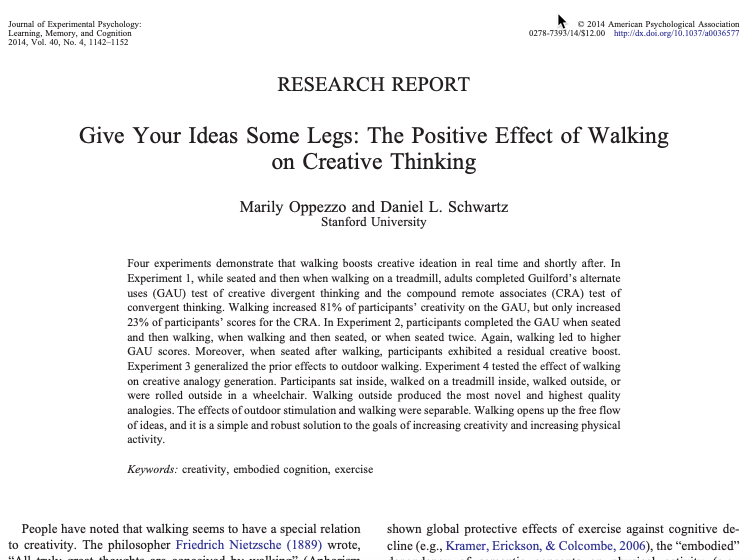
✅ Taking a walk or just sitting in silence
✅ Writing and sketching on my reMarkable tablet
✅ Talking over what I’m writing about with others
You?
4
2
15
624
Apr 14
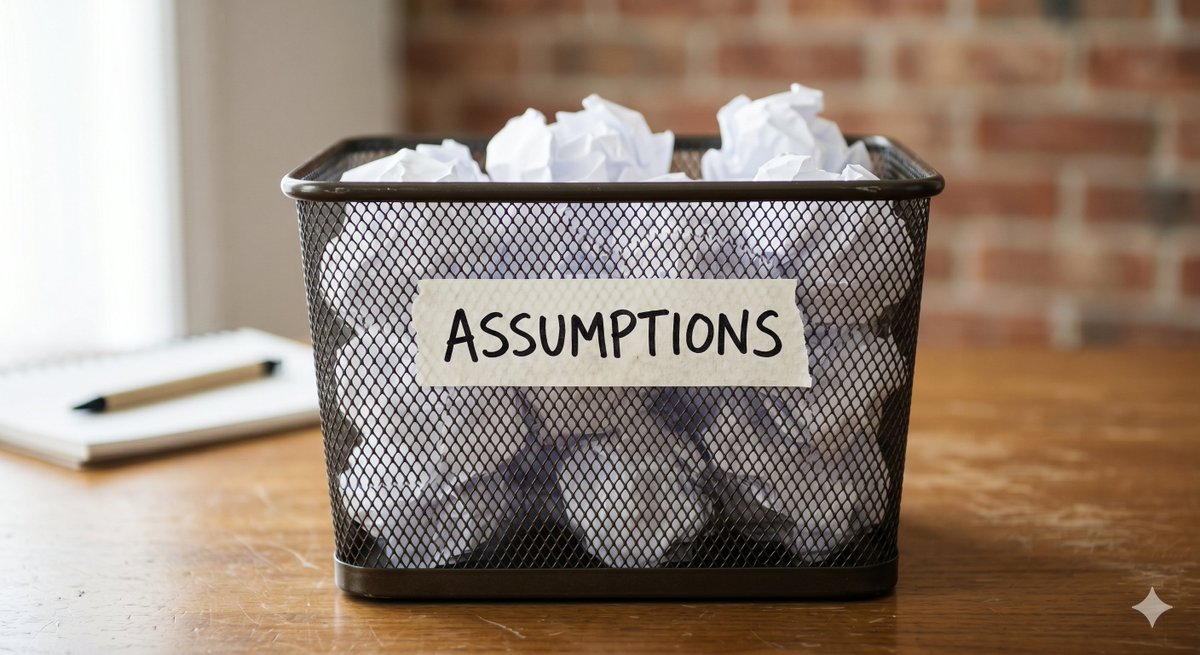
Even the most well-written copy will fail if it's based on wrong assumptions.
And in my latest article, I break down the biggest ones copywriters are making today, and how to correct them...
2
1
27
1,123
Apr 13
Working for a company that markets a lottery app taught me this...
Lottery players aren't bad at math. In fact, most of them know the odds are terrible.
What they're actually buying is the possibility of a different life.
This is also what drives gym memberships, online courses, investment newsletters, and many other products?
People don't just buy outcomes. They buy the right to imagine outcomes.
12
5
57
2,019
Apr 10
In sales copy, don't be too sure that your well-told story is having the effect you think it is.
Because the story that matters isn't yours. It's the one prospects tell themselves.
You can make your story vivid, specific, and true. But your prospects will still edit what doesn't fit what they think and feel.
Trial lawyers know this. The prosecution says: the defendant broke in and stole the money. The defense says: he was asleep at home. The jurors each construct their own story to decide guilt or innocence.
That's one reason lawyers test their stories on mock juries. And why you should always test your sales story and your copy.
3
2
25
745