
Joined June 2018
- Tweets 2,965
- Following 1,194
- Followers 21,113
- Likes 2,952
92 Photos and videos







Declan Fox retweeted
The next challenge is enabling institutions to settle assets and cash across chains without exposing sensitive data or creating new settlement risk.
Linea and @bermudabayzk show that private, atomic and verifiable settlement is possible.
Blog post ↓
linea.build/blog/atomic-dvp-…
15
26
123
6,945
Declan Fox retweeted

Another great post from @joechalom and @Sharplink. It is great to see Joseph highlight the remarkable milestone of 1 million lifetime developers that have built or build on Ethereum.
Joseph also touches on some key factors that will lead to the many L2s, and private permissioned Besu Ethereum chains becoming fully composable with each other and L1: credible neutrality, modularity, culture and composability. He sketches the synchronous and near-synchronous composability work that the @Linea team is doing and others including @Zisk and @gnosis_ are doing similar work. Atomic bridgeless execution zones and real-time unification of liquidity fragments will be the benefits and a unified extended Ethereum ecosystem will be the major result. ETH will be resident on all of these networks and used to pay fees for inclusion in multi-network activity to synchronizers who aggregate ZK proofs from the various networks. Ethereum is growing into an increasingly globally systemically important infrastructure, and ETH is about to also become globally systemically important as it will be the fuel and currency that powers transactions, storage, staking and many other functions on the world's main global digital asset processing and settlement layer.
Amusingly, I found this my DevCon5 Osaka keynote entitled "When 1 Million Eth Devs?" We got there. And the keynote does a pretty decent job of sketching how Ethereum will become systemically infrastructure, from way back in 2019.
youtube.com/watch?v=Sp8ZjaWg…

16
56
325
31,449

Governance now matters as much as technology in institutional infrastructure. Open source alone is not enough, and code neutrality is what reduces dependency risk and builds long-term trust.
@DeclanFox14 of @LineaBuild and @rojotek of @Consensys on the Main Stage at ETHConf.



1
3
19
850
Declan Fox retweeted

May 29
145
413
2,042
777,183
Declan Fox retweeted

May 19
"The biggest anti-pattern today is the belief that institutions still need their own private, permissioned L1"
@DeclanFox14 at @ParisBlockWeek on the Institutional Crypto Stack.
ZK proofs changed what's possible. Banks and FMIs can keep their permissioned setup and still connect to Ethereum, without giving up compliance or privacy.
24
42
219
16,396

Leading Ethereum stewards @Consensys and @ethereumJoseph have joined DeFi United with up to 30,000 ETH in financial support for the rsETH recovery effort, with ongoing strategic advisory from @Sharplink.
Their contributions are a substantial component of the broader DeFi United effort to restore rsETH's backing and normalize market conditions, and the recovery would not be progressing as it is without them.
DeFi United.
129
182
1,240
208,029
Declan Fox retweeted

Apr 13
Building a zkEVM from scratch is tough, especially when writing raw arithmetization constraints by hand.
At @LineaBuild, the team built ZK Assembly (zkASM), a custom assembly language to make constraint generation faster and easier.
Here is how it works. 🧵👇
5
9
79
4,020
Declan Fox retweeted

Apr 9
The @LineaBuild prover just got cheaper, faster and lighter.
Our cryptography team just released Small Fields.
Switching to 31-bit Small Fields (KoalaBear) zkASM is a fundamental re-architecture of Ethereum state proving.
→ Proofs are now dramatically faster & lighter
→ RAM footprint drops and prover decentralization becomes realistic
→ We’re one big step closer to real-time finality
No security trade-offs. Just pure cryptographic engineering.
If you’re a builder working on ZK, L2 scaling or decentralized provers, this is the kind of innovation that changes what’s possible.
Apr 9

The Linea prover just got cheaper, faster and lighter.
Our cryptography team just released Small Fields.
Let's have a look 🧵
5
16
99
6,058

Declan Fox retweeted
Apr 3
EIP-7702 is live on Linea.
Your existing wallet can now execute smart contract logic, transaction batching, gas sponsorship, session keys, account recovery, without changing your address or migrating to a new account.
29
60
284
18,488
Declan Fox retweeted
Mar 30
🚨 Yield Boost is now officially live on Linea.
We're converting idle bridged ETH into sustainable ecosystem liquidity:
→ Without new tokens
→ Without rebasing
→ Without renting capital
Here's how it works 🧵

42
102
358
88,945
Declan Fox retweeted

Welcome to the Ethereum Economic Zone (EEZ), a framework for synchronously composable rollups.
What does that mean?
One deployment. Shared liquidity. Single transactions across L1 & L2. Identity verified anywhere. Smart wallets connected everywhere. No additional trust assumptions.
This means L2s that are as credibly neutral, economically aligned, and publicly governed as the base layer itself.
EEZ furthers Ethereum as the leading decentralized economy.

209
269
1,141
380,791
Declan Fox retweeted
Mar 29
Our cryptographic researcher @alexand_belling revealed yesterday at @eth_proofs that Linea is moving to RISC-V.
After 3 years of directly arithmetizing the EVM, producing a 1000 page spec and one of the most rigorous proving system in production, we’re changing course.
Here’s why 🧵
46
61
352
50,337
Declan Fox retweeted

Mar 23
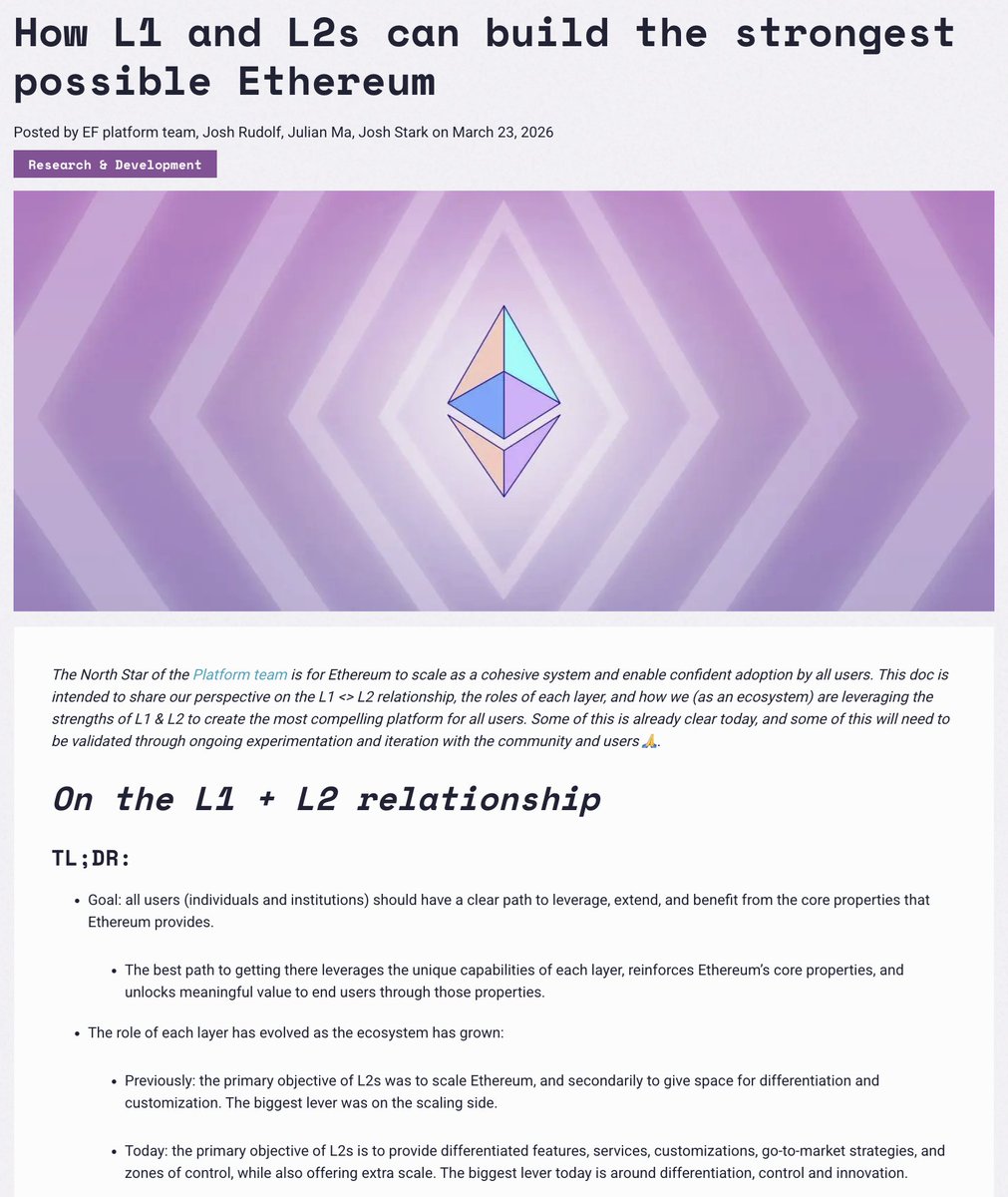
1/ How L1 and L2s can build the strongest possible Ethereum
tldr: we should continue to lean into the unique capabilities of each layer, and make sure all users have a clear path to securely and seamlessly benefit from the core properties of Ethereum
63
84
358
127,016
Declan Fox retweeted

Mar 9
The $LINEA claim window for MetaMask Rewards has come to a close.
🔥 The remaining 380M tokens that were not claimed will be burned. 🔥
Thank you for participating!
106
66
643
118,554
Declan Fox retweeted

Feb 24
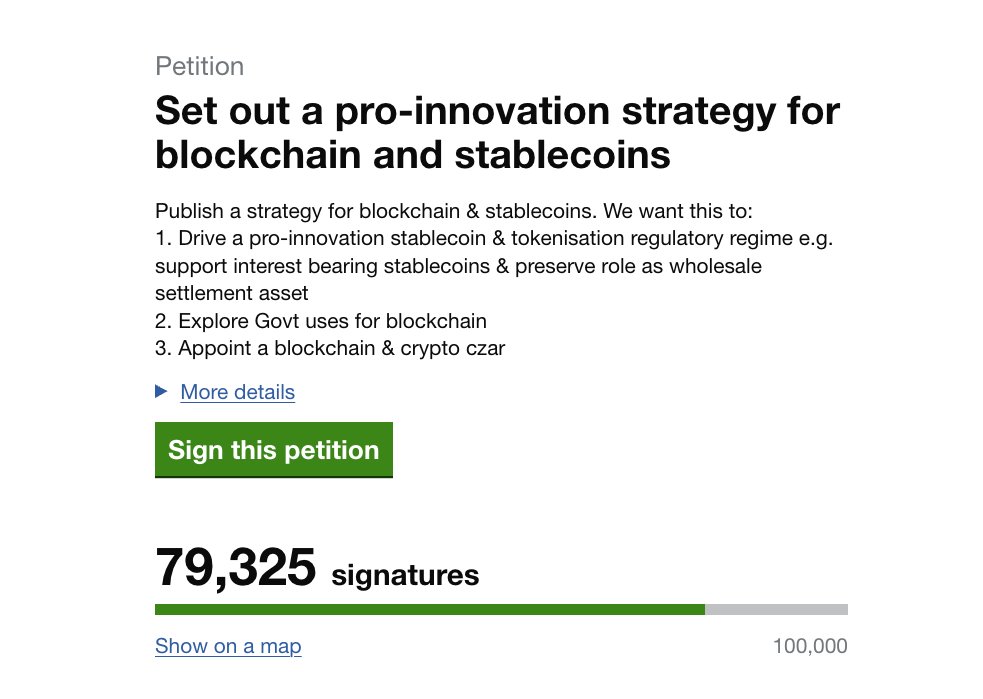
Stablecoin rules in the UK are being finalized, and are at risk of preventing the UK from being globally competitive in the digital economy.
For example, the Bank of England is proposing a cap on stablecoin holdings for individuals and businesses.
The UK has a long history of being a financial hub. Embracing and encouraging innovation, especially when other countries are moving fast here, is important for maintaining that. The current direction of the rules does the opposite, and will act as an innovation blocker.
If you're from the UK you can sign the petition by @StandWCrypto_UK to set out a pro-innovation strategy for blockchain and stablecoins. Link below.
333
606
2,982
173,333
Declan Fox retweeted

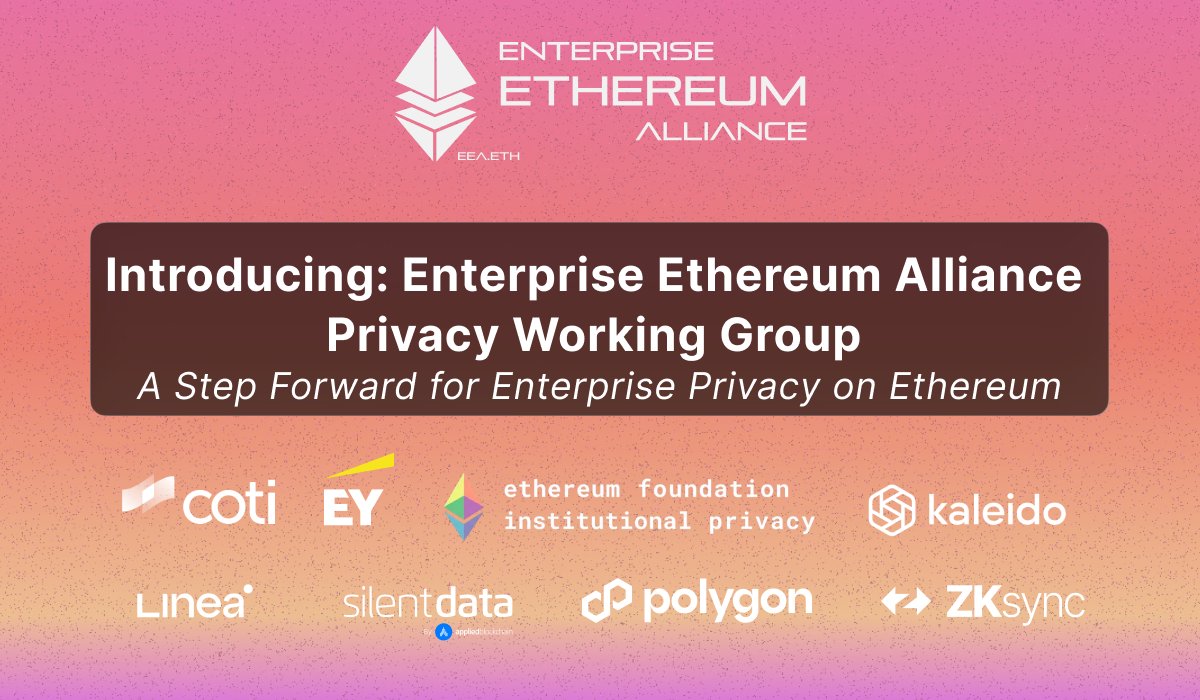
We're thrilled to introduce the EEA Privacy Working Group!
This group brings together industry leaders to provide clear guidance on privacy technologies for enterprises deploying on Ethereum and L2s.
Initial contributors:
> @AppBlockchain
> @Consensys @LineaBuild
> @COTInetwork
> @EYnews (Nightfall)
> @0xPolygon
> @zksync
> @Kaleido_io
> @ethereumfndn
Covering ZK Proofs, TEEs, MPC, Garbled Circuits, these are real solutions for finance, healthcare and supply chains.
49
60
254
84,181

Feb 18
This much is clear: the future of Trust will be coordinated using EVM

Introducing EVMbench—a new benchmark that measures how well AI agents can detect, exploit, and patch high-severity smart contract vulnerabilities. openai.com/index/introducing…
30
4
95
6,872
Declan Fox retweeted
Feb 17
Announcing the Platform team
a new team at the EF with one goal:
deliver the strongest possible Ethereum platform, where L1 and L2s are best positioned to support users, apps, and all groups building on Ethereum
see more in link below & stay tuned for updates 🫡
56
55
468
40,962
Declan Fox retweeted
Feb 9
At Linea, we don't just use gnark, we build it.
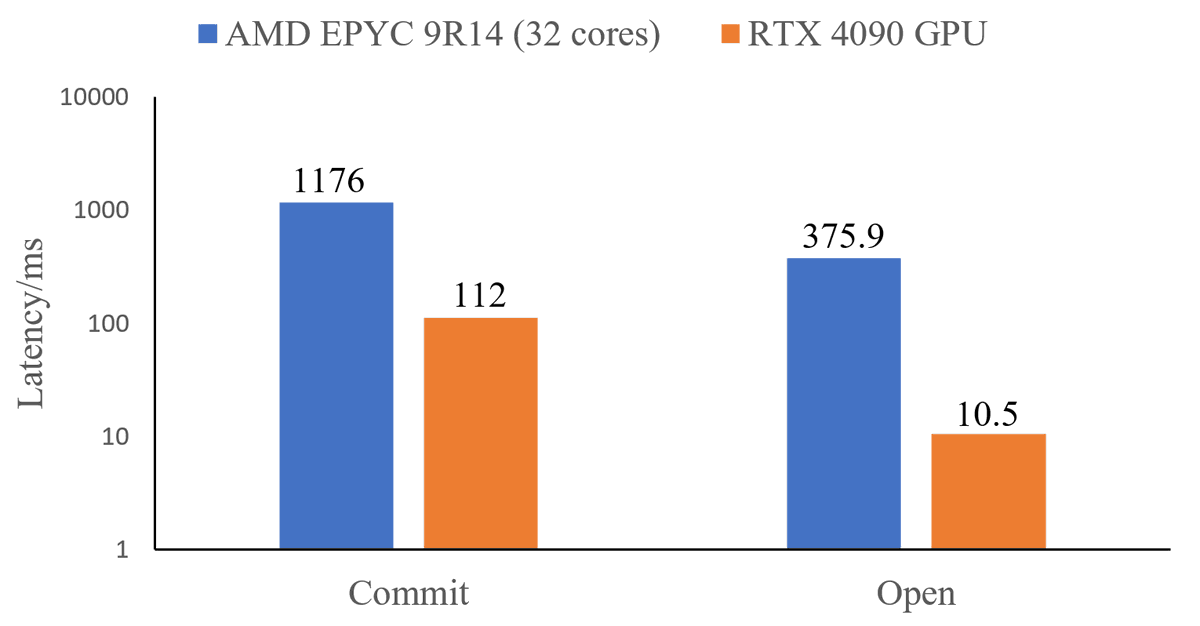
Vortex polynomial commitments now benchmarked at:
- 3.7× faster than Plonky3 FRI (CPU)
- 9.6× GPU boost on commit
- 35.8× GPU boost on open
Thanks to @AntChainOpenLab for the hardware acceleration work and to our cryptography team @gnark_team.
2 Dec 2025

Gnark-crypto's Vortex commitment is 3.7× faster than Plonky3's FRI PCS.
Our Hardware team further improved the performance of Vortex commitment by 9.6× using GPU.
Additionally, Vortex's Open was accelerated by 35.8×.
@alexand_belling @zkgbo @YaoGalteland @LineaBuild
58
44
238
25,569