Filecoin / Cardano / Midnight / Andamio / Frontiers Lab / Open Source Cowboy
Joined July 2023
- Tweets 2,507
- Following 791
- Followers 734
- Likes 2,313
408 Photos and videos









Pinned Tweet
Open Source Sustainability Beyond Governance to True Independence
We must look far beyond repairing DAO voting and governance mechanisms. Those are important, but they represent only a narrow slice of the real challenge. Authentic self sustainability in open source demands robust onboarding and offboarding frameworks that actively guide projects and contributors away from perpetual reliance on handouts and toward genuine, independent viability.
The dOSPO, OMF, and Chinstrap frameworks deliver exactly that.
Initial Treasury Funding as a Strategic Launchpad
dOSPO and OMF establish structured Maintenance Funds paired with activation reserves. Treasury capital is never a permanent crutch. It functions as high leverage ignition capital. It funds foundational scaffolding: data driven audits, bus factor mitigation, operational redundancy, and security hardening. This groundwork transforms fragile projects into stable, investable assets capable of attracting sustained external revenue: corporate sponsorships, commercial partnerships, enterprise contracts, and diversified grants.
Educational Infrastructure and Commercial Roadmaps
The Chinstrap Community closes the critical education gap with hands on workshops, legal templates, and proven blueprints for building viable commercial open source businesses, all while preserving core open principles. This drives a necessary cultural shift: the industry must treat open source contributions as vital digital infrastructure, not indefinite free labor.
Practical Operational Focus for Real World Resilience
While many DAO conversations fixate on voting systems, dOSPO targets the daily operational vulnerabilities that actually kill projects: maintainer burnout, succession planning, dependency risks, contributor pipelines, and knowledge continuity. OMF serves as the execution engine, delivering concrete programs, playbooks, and support structures that turn long term stability from aspiration into operational reality.
Balancing Immediate Relief with Long Term Independence
Effective public goods funding must serve dual timelines. It delivers immediate support through direct payouts, active bounties, and paid maintenance roles. At the same time, it equips teams for independence by teaching commercial strategies and unlocking diverse revenue channels. This is especially vital for open source native businesses and products, where the wisest use of taxpayer and philanthropic funds can catalyze self sustaining ecosystems rather than dependency cycles.
A dedicated layer of pure tooling and non commercial infrastructure will always require ongoing support. These are foundational public goods. Yet even here, innovative instruments (blended finance, revenue share models, impact linked bonds, and ecosystem revenue pools) can rescue and multiply traditional grant funding, stretching impact further while reducing long term burden on public resources.
Strategic Partnerships for Broader Impact
This work serves as both a rallying call and practical marketing framework for developers and open source communities seeking real sustainability. It simultaneously extends an invitation to Web2 organizations, traditional enterprises, and leading financial institutions, including firms like Draper, to partner on the commercial products and business side. By aligning incentives, we create hybrid models where open source foundations gain stability, enterprises reduce risk through secure infrastructure, and investors back viable open source native companies with proven traction.
The Ultimate Vision
Build a resilient base layer of self sustaining open source technologies. A stable, secure, well maintained foundation dramatically lowers systemic vulnerabilities and security incidents, making it the natural choice for enterprises to build upon. From there, ecosystem leaders can confidently integrate commercial open source models, venture networks, accelerators, and specialized nonprofit invention initiatives.
The result is genuine momentum, reduced waste, and long term systemic health for the entire digital commons.
To learn more, explore implementation strategies, or discuss partnership opportunities, visit opensourcecowboy.com.
1
6
1,765
Christian Taylor retweeted

Just create the server already.
Each time Charles posts out engages on X, Crypto media and KOLs have fuel for their X feeds.
It would be 100% in Cardano’s best interest if comms is moved to Discord.
Majority of the community will be here still. We aren’t ditching X. This is where crypto lives.
But if they don’t have content delivered to them on a silver platter to spin, then they will actually have to work to find something to FUD.
Create the Server, let Charles post there.

43
13
201
11,252

Jun 12
The lack of builder incentive, lack of GTM, and governance participation incentive is the downfall of 2026.
There was only grant funding via Catalyst to keep things going and that’s a shell of its former itself if it does comeback this year.
Everything went to infra, which let’s be real, only supported 1 major vendor, at least alt nodes are coming.
Cardano will now downsize but not in areas it needed.
Governance will lose DReps, let’s see how CC election goes too. I’m calling it Givernance because that’s what it is here.
Tools and Builders will begin to exit, which will not assist.
The only content creators or event teams we had will move on also or sponsor with other chains that care.
We are now back to post ICO days, where it’s the chain building again but for what this time? Who knows the Vision 2030 doc is probably not even being achieved outside infra. Goals.
Cardano has no target market identified, there is no objective aimed at the actual users of the chain now, we aim for potentials that have not or never shown up.
Even if it is FE lead, hire a real Product guy from Silicon Valley and use some of the R&D to build one product that will get users!
The community has zero capital to do anything and is pinching every lovelace to find markets while the real investment is building new stuff for science.
You can do both, it’s doesn’t have to be 99% rd and infra!
Cardano as a unit literally achieved an ecosystem famine until summer 2027 in worst market of the last few years, it’s a lot of teams and people at fault that achieved this.
At least there are some notable highs but literally this ecosystem has been about chasing bad narratives on the chain, and driving those trying to do good out. If nothing changes, I hope the last few holders enjoy a lot of worthless ada.
Side note too, yes we have teams asking for Ada funds because there is no market to support them, we are literally trading amongst the same folks, we need a unified GTM and some stipends until an ARR on network revenue can be achieved.
I just finished listening to a lot of other ecosystems GTM’s and I’m sad for Cardano, I think we have made ourselves a ghost chain.
There is only do or do not, there is no try.
So I’m calling on those trying to build, let’s unify or meet or something, I’ll sponsor the slack or zoom, whatever is needed to build a market consortium and work with Draper and Chinstrap teams to pilot a GTM movement with who’s left, let’s do something with a 90 day plan. This is my personal last attempt to get something going.
Sincerely one really angry cowboy
4
2
19
1,238
Christian Taylor retweeted

Jun 12
GM #Cardano believers.
@Cardano has been recognized by @FortuneMagazine as one of the Crypto Innovators of 2026, selected from over 150 nominations and featured among the 30 projects helping push the digital asset industry forward.
Innovation, resilience, and steady building always win. 💙
#Cardano #ADA #GMCardanoCommunity
1
16
92
1,025
Jun 12
Last 3 weeks in news:
Cardano is dead, Cardano founder leaves, revised Cardano founder takes a break, Cardano founder returns, Cardano is in UNDP, Cardano is talking to German parliament, Cardano has forensic systems at 100k transaction scale, Cardano governance etc
We were dead and now we’re alive; it’s like unless you’re active in the ecosystem, crypto news is a waste sometimes to know what is actually going on.
9
293
Christian Taylor retweeted

Jun 11
🧵80% of publicly funded scientific data is gone within 20 years
TL;DR: Odds of finding a dataset fall 17% per year.
Moving 5PB off AWS costs $450K in egress.
SETI, Cornell, Internet Archive store on Filecoin. The scientific record needs verifiable infrastructure.
5
4
32
54,057
Christian Taylor retweeted

Jun 11
Cardano Community, it is time to cast your vote!
The 5am earth Foundation proposal is officially live and waiting for your support. This is a massive leap for real-world assets (RWA) on our network.
The proposal funds an open, Cardano-anchored trust layer that connects smallholder farmers to global financial systems, credit, and fair pricing using self-sovereign identity and verifiable on-chain data.
Here is what is on the line for Cardano
Scale from the current 500 daily Mainnet registrations to 500,000 farmers across India, Cambodia, and Kenya.
Drive toward Vision 2030 targets, 3 million active users, $900 million TVL, and 16 to 20 million ADA in annual protocol revenue.
Prove that Cardano can host enterprise-grade, public good infrastructure that generates real economic activity.
Link in the first comment👇
4
25
94
4,169
Jun 11
To all DREPS and CC save some time and just conclude your votes on the dOSPO proposal by saying No or unconstitutional.
I value y’all’s time, don’t waste it on this currently. There’s a revised version in the depending on NCL limits left
1
2
215
Jun 11
Just wanna say with a volunteer force of DReps doing sidechains, budget processes, and hydra tools doesn’t really improve anything in sense of increasing engagement, after 2 years of observation.
People will always want bare minimum and least path of resistance, the onchain direct proposal method is the way, change the architecture of you want to force a meaningful change.
1
1
5
235
Jun 11
Btw I did my proposal the direct way because I couldn’t risk intersect vetoing, since it overlaps with ongoing OSC proposal.
3
61
Jun 11
It not a Cardano problem I hold HBAR, XRP, ADA, FIL, ETH, SOL, and Bitcoin, markets tanked everything same curve in each one.
5
140
Jun 11
Jun 11

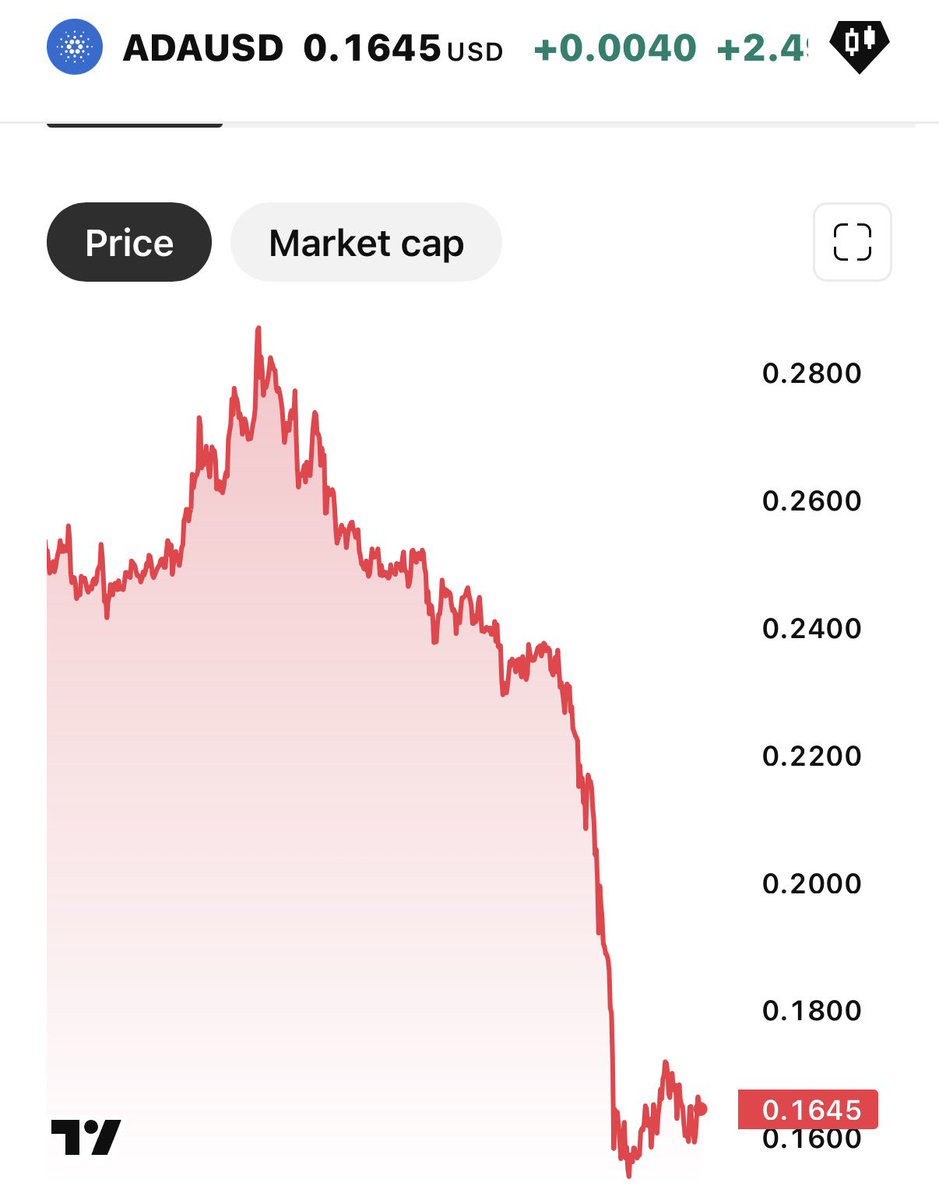
If you think paying for marketing and content creators doesn’t do anything, look at what just happened to Cardano.
You’ve just witnessed the power of social engineering and narratives led by influencers & media who completely changed the public opinion of Cardano, sending the price from 24 cents to 15 cents in just a week.
Crypto is not a competition of best tech it’s a competition of public perception.
The market has repeatedly shown that being technologically superior is not enough.
Just look at Solana. Despite outages and technical issues, it climbed to the top because it captured marketing. Ethereum is still number two despite being expensive to use.
Yet Cardano still likes to believe that investors solely buy based on tech, decentralization, and infra.
”build it and they’ll come“
- they won‘t.
The majority of people buy based on public attention (marketing) and perceived upside.
Infrastructure improvements may excite developers, but developers are not the market.
I strongly believe we’re in a good place right now to really push what we have already built, but it looks like this will be yet another year we let projects and public attention die for the sake of funding even more infrastructure that won’t change a thing for the majority of the end user.
1
266
Christian Taylor retweeted
Jun 11
Wrapping up in NY this week has shown me the maturity that Cardano needs in GTM, some ecosystems are building market demand aligned products for their users needs, not potential user needs, big difference.
Be nice to see Cardano do a better treasury spend with 40% Ops, 30% GTM, 10% gov, and 20% R/D.
Like Cardano needs actual product building Web2 individuals to save it. Tech for potentials is not a survival method.
1
1
71
Christian Taylor retweeted

Jun 11
The conversation around 5am.Earth is growing — beyond @Cardano. 🌍
Peter Maina Njoroge, an AgriTech founder and operator from Kenya, just shared why our model stands out — and he's actually related to the Ethereum Foundaiton.
"The farmer is not informal. The system is blind."
"Data is not paperwork. Data is collateral. Data is market access. Data is trust."
This is what happens when you build infrastructure that actually solves a problem. People notice. Regardless of what chain they're on.
Check out the full article there : linkedin.com/posts/pmproject…
🗳️ Share our treasury proposal with your DRep:
→ 5am.earth/cardano-proposal
#Cardano #5amEarth
@YoramBenzvi @udaisolanki @ZengateGlobal @andamio_teams @AiquantTech
1
11
21
1,073
Christian Taylor retweeted

Jun 10
🚨BREAKING🚨
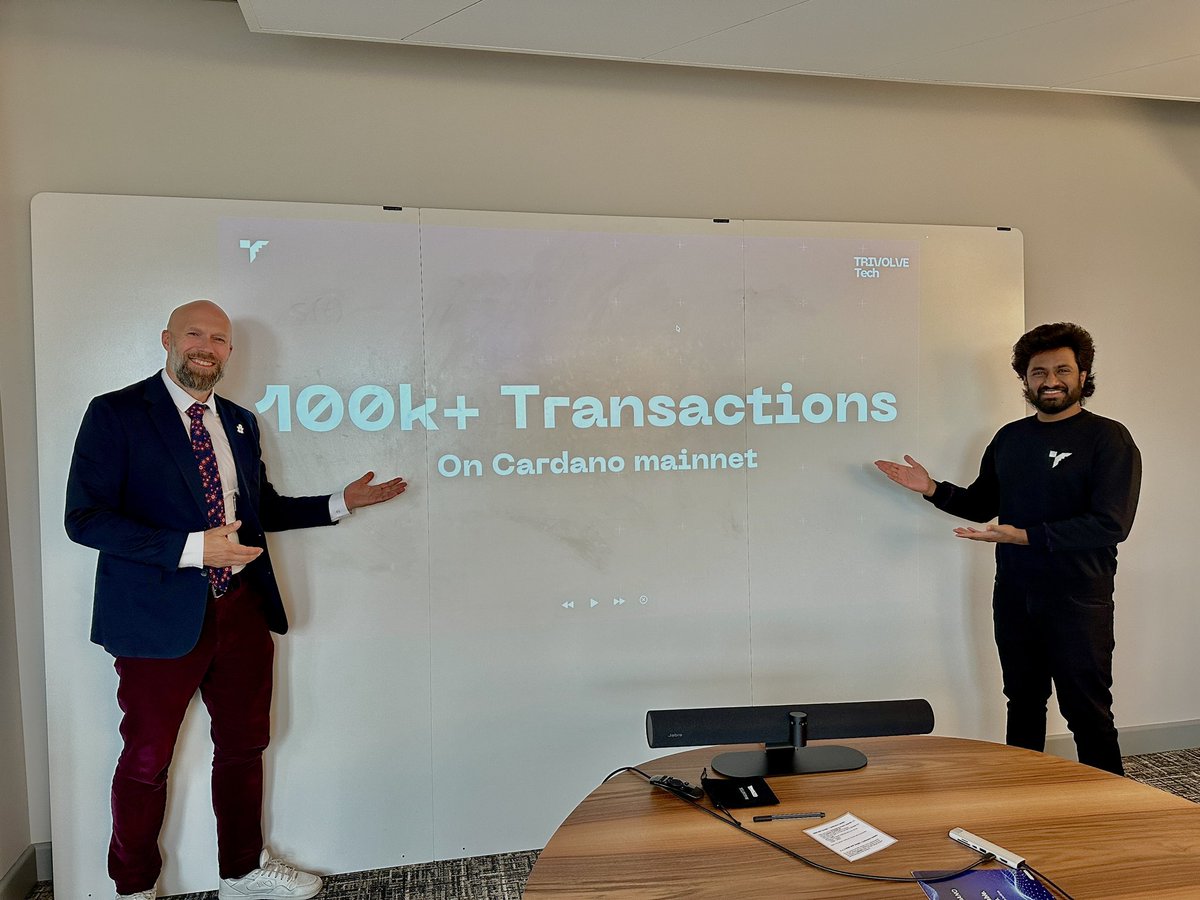
Our Forensic Management System is the FIRST EVER enterprise grade project to surpass 100,000 transactions on Cardano mainnet!
A huge thank you to the entire @Cardano ecosystem for your support. 🙏
36
76
339
25,671
Christian Taylor retweeted

Jun 9
Fighting together against external narratives > internal bickering...
Can we cut the drama off at the knees and agree that Iagon brought Fireblocks to Cardano (with a couple provisions) and Pentad is working to further expand the capabilities so we don't get into another round of squabbling semantics and name calling?
🙏🤞🙏🤞🥺
40
71
446
18,624